
How to Keep Your Shower Drain From Clogging: 12 Easy Preventive Tips
To prevent your shower drain from clogging, incorporate these simple habits into your routine. Start by using a fine-mesh strainer to catch hair and debris, and clear away visible hair after each use. Flush the drain with hot water weekly, and perform a deep clean monthly using baking soda and vinegar or an enzyme treatment. Keep a drain snake and Zip-It on hand for minor clogs, and inspect the traps quarterly. If you experience persistent backups, don’t hesitate to call a plumber. By following these 12 practical tips, you can avoid damage, odors, and costly repairs while ensuring your drains remain clear and flowing.
Why shower drains clog and how prevention saves time and money
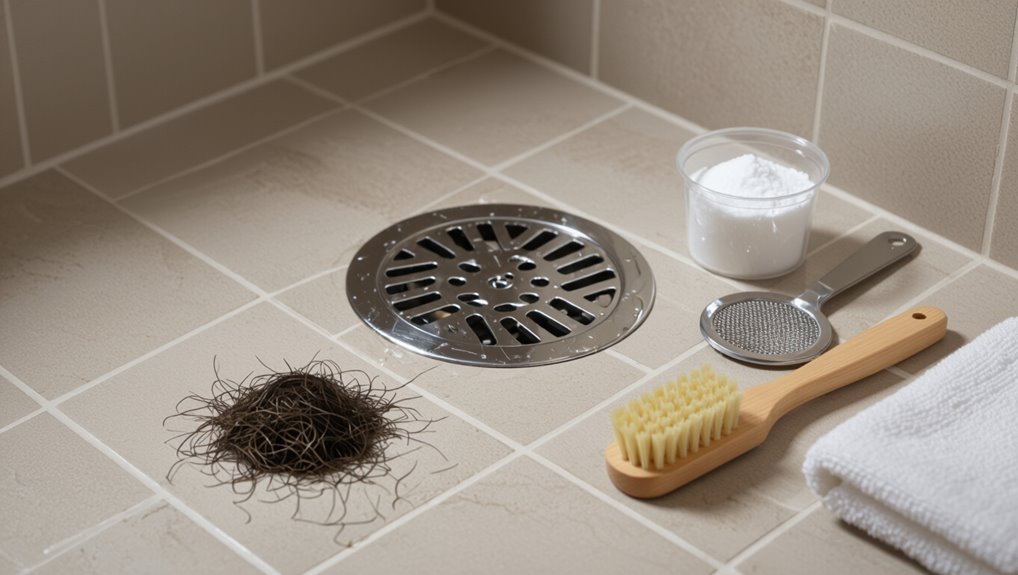
Shower drains routinely clog from hair, soap scum, mineral deposits, and the occasional foreign object, which gradually narrow flow and trap debris.
Over time these deposits build up—first causing slow drainage and intermittent gurgling, then complete blockages if unchecked.
Ignoring early signs can lead to odors, water damage, and higher repair or replacement costs, so simple preventive steps save both time and money.
Common causes of shower drain clogs (hair, soap scum, mineral buildup, foreign objects)
Although often out of sight, drain clogs form from predictable sources—hair, soap scum, mineral deposits, and foreign objects—that combine to slow or block water flow.
Regular removal of hair and rinsing reduce buildup, illustrating how to keep shower drain from clogging.
Hard-water minerals glaze pipes; small items like jewelry or cotton swabs trap debris.
Preventive habits cut maintenance time and expense.
How clogs develop over time and signs of an impending clog
Because buildup accumulates slowly, a drain that functions fine today can become restricted in weeks or months as hair, soap residue, and mineral deposits adhere to pipe walls and each other.
Gradual narrowing reduces flow, trapping more debris and accelerating blockage.
Early signs include slower drainage, gurgling noises, water pooling around the drain, and faint soap odors.
Prompt preventive action halts progression and avoids repair inconvenience.
Costs and risks of ignored clogs (water damage, slow drainage, odors)
When ignored, a partially clogged drain can escalate from a minor nuisance to an expensive problem, producing slow drainage, persistent odors, and hidden water damage that compounds repair costs.
Untreated blockages allow mold growth, structural decay, and fixture corrosion. Emergency plumbing, tile replacement, and mold remediation quickly exceed routine maintenance costs.
Timely prevention reduces expense, preserves property value, and minimizes health risks.
12 easy preventive tips to keep your shower drain from clogging
Preventive maintenance can keep showers flowing and avoid costly blockages. The following practical steps focus on stopping hair and residue before they reach the trap. Consistent, simple actions make long-term upkeep easy.
- Install a quality drain strainer and choose the right type for the drain.
- Clean the strainer regularly and set a cleaning schedule.
- Use a hair catcher in addition to the strainer for long-hair households.
- Wipe down walls and tub after each use to reduce soap scum and residue.
- Rinse the shower with hot water weekly to loosen buildup.
Install a quality drain strainer and choose the right type
Install a quality drain strainer to catch hair and debris before they enter the pipes; choosing the right type can greatly reduce clogs and maintenance.
Select a durable, corrosion-resistant model sized to the drain opening. Consider fine mesh for hair capture or coarse for higher flow.
Magnetic or threaded designs stay put. Match material to shower finish for aesthetics and longevity.
Clean the strainer regularly and set a cleaning schedule
Regularly cleaning the strainer keeps hair and soap scum from building up and turning a small blockage into a stubborn clog.
Establish a simple schedule—weekly for heavy use, biweekly otherwise—and inspect during cleaning.
Remove debris, rinse with hot water, and scrub with a brush or vinegar solution if residue remains.
Record dates on a calendar or app to maintain consistency and prevent gradual buildup.
Use a hair catcher in addition to the strainer for long hair households
For households with long hair, adding a dedicated hair catcher over the strainer greatly reduces the amount of hair that reaches the drain.
A removable silicone or mesh catcher captures strands before they enter plumbing, simplifying disposal and reducing buildup.
Select a size that fits the drain, clean it after each shower, and replace worn catchers to maintain effectiveness and prevent odors.
Wipe down walls and tub after each use to reduce soap scum and residue
Wipe down shower walls and the tub with a squeegee or microfiber cloth after each use to prevent soap scum and residue from building up and eventually washing into the drain.
Regular wiping removes shampoo, conditioner, and soap films before they harden, reducing greasy deposits and soap-blend clumps that attract hair.
Quick, consistent wiping minimizes frequency of deep cleans and protects plumbing.
Rinse the shower with hot water weekly to loosen buildup
After removing surface residue with a squeegee or cloth, running hot water through the shower once a week helps soften and wash away remaining soap scum, oils, and loose hair before they cling to the drain.
The hot rinse loosens microscopic buildup within the drain cover and trap, reducing accumulation. It complements routine cleaning and prolongs drain flow without harsh chemicals.
Perform monthly baking soda and vinegar maintenance flushes
Mix a half cup of baking soda with a cup of white vinegar and pour the baking soda down the drain followed by the vinegar to create a foaming reaction that loosens soap scum, oils, and hair-binding residue.
After fifteen minutes, flush with hot water to rinse dislodged debris.
Repeat monthly to prevent gradual buildup; use a drain screen to catch larger particles.
Use enzyme-based drain cleaners periodically instead of harsh chemicals
Following a monthly baking soda-and-vinegar rinse, homeowners can further protect their shower drain by using enzyme-based drain cleaners on a periodic schedule.
These biological formulas break down organic buildup—hair, soap scum, oils—without corroding pipes or harming septic systems.
Applied according to labels, they maintain flow, reduce odors, and are safer for plumbing and the environment than caustic chemical alternatives.
Avoid flushing solids down the drain (cotton, floss, wipes, etc.)
Prevent throwing solids such as cotton swabs, dental floss, and disposable wipes into the shower drain, since these items do not dissolve and quickly trap hair and soap residue.
Such materials accumulate, form stubborn blockages, and complicate maintenance. Instead, dispose of them in a trash bin.
Regularly check drain baskets and remove any nonbiodegradable debris before it migrates deeper into plumbing.
Trim long hair or bundle hair before showering to prevent shedding
Trimming long hair or securing it into a bun or braid before showering reduces the amount of loose strands that fall into the drain, minimizing buildup from the start.
Regular trims, tying hair high, or using a shower cap cut shedding considerably. Fewer loose hairs mean less frequent manual removal and lower risk of slow drains, extending time between deeper cleanings and reducing plumbing issues.
Install a removable pop-up or easy-clean drain cover for deep cleaning
Install a removable pop-up or easy-clean drain cover to catch hair and debris before they enter the pipe, allowing quick surface removal without tools.
Choose durable, corrosion-resistant materials and a design that lifts easily for periodic rinsing.
Empty captured debris into a trash receptacle, rinse the cover, and reinstall.
Regular inspection prevents buildup and reduces reliance on chemical cleaners or professional snaking.
Check and maintain water softener settings to minimize mineral deposits
After keeping hair and surface debris out with an easy-clean drain cover, attention should turn to water quality: hard water leaves mineral deposits that accumulate inside pipes and on fixtures, slowing drainage over time.
Homeowners should verify softener regeneration frequency, confirm salt levels and settings match local hardness, and flush system periodically. Proper calibration reduces scale buildup and preserves flow.
Schedule professional inspections for older plumbing or recurring clogs
When drains repeatedly slow or the plumbing is several decades old, scheduling a professional inspection helps identify hidden damage, corrosion, or misaligned pipes before they cause major clogs or leaks.
A licensed plumber can perform camera inspections, test flow rates, and recommend targeted repairs or pipe replacement.
Regular professional checks reduce emergency repairs, extend system lifespan, and guarantee preventive maintenance addresses underlying causes.
Tools and products to keep on hand for prevention and quick fixes
A small kit of the right tools and products makes routine shower drain care quick and effective.
Recommended items include strainers and hair catchers, safe cleaners like baking soda, vinegar, or enzyme-based solutions, and simple mechanical tools for clearing clogs.
Also keep basic protective gear and spare parts such as gaskets and seals on hand for fast repairs.
- Fine-mesh strainer or hair catcher
- Baking soda, white vinegar, and enzyme drain cleaner
- Drain snake, plunger, or Zip-It tool
- Nitrile gloves and safety goggles
- Replacement gaskets, O-rings, and seals
Recommended strainers, hair catchers, and drain covers
Several simple tools reliably prevent most shower clogs: basket strainers, silicone hair catchers, and low-profile drain covers.
Mesh or stainless steel strainers fit over drains to trap debris. Silicone catchers conform to shapes and are easy to empty.
Low-profile covers reduce spray and catch larger items while preserving aesthetics. Choose rust-resistant materials and sizes matching the drain for effective, low-maintenance protection.
Safe cleaning agents: baking soda, vinegar, enzyme cleaners
Keep a small kit of safe, effective cleaners on hand—baking soda, distilled white vinegar, and enzyme-based drain treatments—to prevent buildup and handle quick blockages without harsh chemicals.
Sprinkle baking soda, follow with vinegar, wait 15–30 minutes, then flush with hot water.
Use enzyme cleaners weekly to digest hair and soap residue safely.
Store products labeled and out of children’s reach.
Mechanical tools: drain snake, plunger, zip-it tool
Stock a small set of mechanical tools—a handheld drain snake, a cup plunger, and a flexible “zip-it” hair remover—to tackle most shower clogs quickly without chemicals.
Keep them accessible; use the zip-it for surface hair, the snake to retrieve deeper tangles, and the plunger to dislodge partial blockages.
Inspect and clean tools after use to maintain effectiveness and prevent odor.
Protective gear and replacement parts (gaskets, seals)
Gather basic protective gear and a small supply of common replacement parts to handle routine shower drain maintenance and quick fixes.
Gloves, safety glasses and a mask protect against debris and chemicals.
Keep silicone plumber’s grease, replacement gaskets, rubber seals, O-rings and a spare strainer handy.
Having washer kits and a small tube of plumber’s putty reduces downtime and prevents minor leaks.
Step-by-step quick maintenance routines (weekly, monthly, quarterly)
A concise maintenance schedule helps prevent clogs before they form. Each week a five-minute routine removes surface hair and residue.
While a monthly deep-clean uses natural cleaners to break down buildup. Every quarter a brief inspection of the drain and trap catches issues early for simple repairs.
Weekly 5-minute routine to prevent buildup
Performing a five-minute weekly check prevents hair and soap scum from accumulating into stubborn clogs.
Remove visible hair from the drain cover, lift and rinse the strainer, and flush with hot water for one minute.
Run the shower briefly to dislodge residue.
Wipe the tub edge and faucet area to stop debris migration.
Record any slow drainage for follow-up.
Monthly deep-clean routine with natural cleaners
Once each month, a focused deep-clean using natural cleaners removes soap scum and dissolved hair before they form clogs.
Pour baking soda down the drain, follow with vinegar, wait 15 minutes, then flush with boiling water.
Scrub the shower surface and drain grate with a baking soda paste.
Rinse thoroughly and replace the grate, ensuring clear flow and fresh scent.
Quarterly inspection checklist for drain and trap
Quarterly inspections of the shower drain and trap guarantee minor issues are caught before they become blockages or odors.
Inspect grate and surrounding seal for cracks, remove visible debris, and test drainage speed.
Detach and examine the trap for buildup or corrosion, flush with hot water, and reassemble securely.
Note odors, slow flow, or leaks for professional repair if persistent.
How to safely clear minor clogs without damaging pipes
When a shower drain begins to slow, simple tools and methods can clear minor clogs without harming pipes.
Start with natural remedies—pouring hot water or a baking soda and vinegar mixture—then use a plunger, Zip-It tool, or a hand drain snake as appropriate for hair and debris.
Avoid harsh chemical drain cleaners and improvised metal tools that can corrode or scratch plumbing and worsen blockages.
When to use a plunger, drain snake, or Zip-It tool
Many common shower clogs can be resolved with simple tools if the right one is chosen for the situation.
A plunger suits shallow, water-backup clogs; use firm, controlled pumps.
A drain snake reaches deeper obstructions and hair tangles; rotate gently to avoid pipe damage.
A Zip-It tool excels at removing surface hair and debris around the drain opening before escalation is needed.
Natural unclogging methods to try first (hot water, baking soda + vinegar)
After trying a plunger, snake, or Zip‑It for surface or shallow blockages, homeowners can attempt gentle, pipe-safe remedies before resorting to tools or chemicals.
Run several liters of boiling (not scalding) water slowly, then pour a half cup baking soda followed by half cup white vinegar; wait 15–30 minutes, flush with hot water.
Repeat once if needed; these methods soften soap and hair buildup.
What not to do: harsh chemicals and improper tools that cause damage
Avoid pouring strong drain cleaners or forcing oversized tools into a narrow pipe, as both can corrode fittings, soften PVC, or push a clog deeper; instead, choose methods that dissolve organic buildup gradually and use tools sized for the drain opening to avoid bends, fractures, or seal damage.
Professionals recommend a plunger, a plastic drain snake, or enzyme cleaners; avoid metal augers, chemical cocktails, and excessive force.
When to call a professional plumber and what to expect
When basic methods fail or water backs up repeatedly, a professional plumber should be contacted to diagnose underlying causes and recommend durable fixes. Typical services include targeted clearing, component repairs, or more intensive methods that protect the plumbing system.
Homeowners should know which questions to ask and how to obtain clear cost estimates before work begins.
- Recognize signs that need pros: persistent backups, foul odors, slow drains in multiple fixtures, or recurring clogs
- Common professional solutions: hydro-jetting to clear buildup, trap and drain cleaning, pipe repairs or replacements
- Questions to ask: scope of work, timeline, warranties, and required permits
- How to get cost estimates: request written quotes, compare hourly vs. flat rates, and ask for itemized pricing
- Prepare for the visit: clear access, document symptoms, and confirm payment and emergency policies
Signs a clog requires professional attention
How can a homeowner tell if a shower clog has outgrown DIY fixes?
Persistent slow drainage after multiple attempts, wastewater backing up into other fixtures, foul sewage odors, gurgling sounds, recurrent clogs shortly after clearing, or visible signs of water damage and mold indicate professional attention.
A plumber diagnosis guarantees accurate assessment, safety, and prevents escalation to costly structural or sanitary problems.
Common professional solutions (hydro-jetting, trap cleaning, repairs)
A professional plumber typically evaluates the problem and selects from targeted solutions—hydro-jetting to blast away deep buildup, trap cleaning to remove hair and debris from accessible P-traps, or localized repairs for damaged pipes and seals—depending on clog severity and location.
Technicians may inspect with a camera, test drain flow after service, advise on underlying causes, and perform necessary fixes to restore reliable drainage.
Questions to ask your plumber and how to get cost estimates
Why call a plumber now rather than later? A homeowner should contact a plumber when slow drains, recurring backups, foul odors, or water damage appear.
Ask about diagnosis methods, recommended fixes, warranties, timeline, and licensing. Request written itemized estimates, call-out fees, and alternative options.
Compare two to three quotes, check references, and confirm payment terms before authorizing work.
Long-term habits and household strategies to minimize future clogs
Households can reduce future clogs by establishing clear family rules about what goes down the drain and by training occupants to use strainers and avoid disposing of hair and greasy products in showers.
Scheduling routine maintenance and keeping a simple service history helps catch developing issues early and informs when professional cleaning is needed.
Strategic upgrades—such as trap-friendly drain designs, water softeners to cut mineral buildup, or targeted shower remodels—further lower the long-term risk of blockages.
Family rules for preventing drain misuse
Many simple, consistent rules can dramatically reduce drain misuse and prevent recurring clogs.
Households should ban flushing solids, dispose of hair in bins, use strainers, rinse soap scum into trash, and limit greasy products.
Assign responsibility for emptying traps, teach children proper disposal, post concise reminders near showers, and encourage prompt reporting of slow drainage to prevent escalation.
Scheduling regular maintenance and tracking service history
Regularly scheduled maintenance and a clear record of service work are key to preventing recurring shower clogs and catching small problems before they escalate.
Homeowners should set reminders for biannual inspections, note dates, tasks performed, and technician findings. A simple log—paper or digital—helps spot patterns, justify hiring professionals, and optimize cleaning frequency.
Consistent tracking prolongs plumbing life and reduces emergency repairs.
Upgrades that reduce clogs (improved drains, water softeners, shower remodeling)
Several practical upgrades can greatly reduce the frequency of shower clogs and extend plumbing lifespan.
Installing strainer-equipped or larger-diameter drains improves debris flow.
Water softeners prevent mineral buildup on pipes and fixtures.
Replacing textured tile and narrow channels with smooth, gently sloped pan designs minimizes hair accumulation.
Upgrading to removable-trap assemblies and accessible cleanouts simplifies maintenance and reduces emergency repairs.
Comparison of common prevention methods and effectiveness
Natural, enzyme-based, and chemical cleaners each offer distinct mechanisms, costs, and safety profiles that affect their suitability for routine shower drain maintenance. A concise comparison helps readers choose based on effectiveness against hair and soap scum, environmental impact, and risk to pipes and skin. The table below summarizes key contrasts to guide practical decisions.
| Method | Key notes |
|---|---|
| Natural (vinegar/baking soda) | Mild, inexpensive, safer for pipes; limited on heavy clogs |
| Enzyme cleaners | Target organic build-up, safe for plumbing and septic systems |
| Chemical drain cleaners | Fast and strong on hair clogs, corrosive and hazardous |
| Use case | Natural for routine upkeep, enzymes for recurring organic build-up, chemicals for stubborn blockages (sparingly) |
Natural cleaners vs enzyme cleaners vs chemical drain cleaners
How do different drain-care options compare in effectiveness and safety? Natural cleaners (vinegar, baking soda) are mild, safe, limited on hair. Enzyme cleaners target organic buildup, safe for pipes, slower but effective. Chemical cleaners act fast on clogs, corrosive, hazardous to users and plumbing if overused. Choose based on clog type, urgency, and safety priorities.
| Type | Key traits |
|---|---|
| Natural | Mild, safe |
| Enzyme | Targeted, safe |
| Chemical | Fast, corrosive |
Quick troubleshooting guide for specific clog symptoms
When a shower drains slowly without backing up, the cause is often soap scum or hair trapped near the trap and can usually be cleared by manual removal or a hand auger.
Gurgling drains that affect multiple fixtures point to venting problems or a main line obstruction and warrant prompt inspection.
Persistent foul odors should be assessed to distinguish routine biological buildup from the more serious possibility of sewer gas entering the home.
Slow drain but no backup likely soap scum or hair near the trap
A slow shower drain with no backup usually points to a localized clog of soap scum, hair, or a combination caught near the trap or the strainer.
Inspect the visible grate, remove hair and trapped debris, then run hot water.
Use a plunger or a hand auger if flow remains reduced.
Repeat maintenance monthly and consider a mesh cover to prevent recurrence.
Gurgling drains and multiple fixtures affected possible venting or main line issue
If a single slow shower was traced to soap scum or hair, persistent gurgling and multiple affected fixtures indicate a broader venting or main-line problem rather than a local trap clog.
Investigate roof vent blockages, collapsed or clogged sewer lines, and shared branch drains.
Observe when gurgling occurs (toilet flushes, heavy flow).
Call a plumber if air noises persist, backups appear, or DIY vent checks are unsafe.
Foul odors from drain biological buildup vs sewer gas risk
Several common causes produce foul smells from shower drains, but distinguishing between benign biological buildup and dangerous sewer gas is essential.
Biological buildup (hair, soap scum, biofilms) emits sour, musty odors localized to the shower and responds to cleaning.
Sewer gas smells like rotten eggs, may appear elsewhere, and indicates trap dryness, venting failure, or sewer line breach—call a plumber if suspected.
Maintenance log template and cleaning schedule to download
A simple maintenance log and cleaning schedule helps track tasks and prevent buildup before it becomes a clog. The template can include example weekly, monthly, and annual checklist entries and notes on adjusting frequency for different household sizes.
Users can download and customize the schedule to match bathroom usage and maintenance preferences.
- Weekly: clear hair strainer, wipe drain cover, check for slow drainage
- Monthly: use enzymatic cleaner, inspect P-trap, tighten fittings if needed
- Annual: remove and clean drain trap, inspect plumbing for corrosion or leaks
- Customization tip: increase frequency for larger households or pets, reduce for single-occupant homes
- Download formats: printable PDF, editable spreadsheet, and mobile checklist file
Example weekly, monthly, and annual checklist entries
When establishing a maintenance routine, clear weekly, monthly, and annual checklist entries provide concise, actionable steps for preventing shower drain clogs.
Weekly: remove visible hair, run hot water, and use a drain strainer.
Monthly: deep-clean with baking soda and vinegar, inspect trap, and clear buildup with a brush.
Annual: remove and inspect trap, flush with enzyme cleaner, document findings.
How to customize the schedule for different household sizes
Household size directly influences drain maintenance frequency and task allocation, so schedules should scale from solo occupants to large families: single residents may stick to a minimal weekly and monthly routine,
couples add moderate weekly checks and biweekly strainer clearing, while households of four or more benefit from daily hair removal, twice-weekly hot-water runs, and staggered monthly deep-cleans.
A simple downloadable log templates task timing, responsible person, and notes.
Conclusion
Regular preventive care transforms shower drains from liabilities into quiet, reliable fixtures. Like a well-tended garden that resists weeds, consistent habits—hair traps, routine cleaning, and prompt responses to slow drainage—keep pipes flowing and extend plumbing life. Small investments in tools and simple maintenance routines avert costly repairs, reduce hassle, and promote household hygiene. With thoughtful habits and occasional professional checks, shower drains remain functional and trouble-free for years to come.
