
How to Get Something Out of a Bathroom Sink Drain: Simple Steps to Retrieve Small Items Quickly
If you’ve dropped something into your bathroom sink drain, you can retrieve it quickly by following these simple steps. First, stop the water flow and unplug any nearby devices to ensure safety. Cover any overflow openings to prevent the item from going further down the drain. Next, identify the type of stopper and carefully remove it. Use tools like tweezers, needle-nose pliers, a magnet, or a straightened hanger to reach for the item. If it’s out of reach, place a bucket under the sink, remove the P-trap, and retrieve the object. Remember to clean and reassemble the parts afterward, taking care to avoid corrosion and sharp edges. For detailed guidance and troubleshooting tips, continue reading.
What to Do Immediately When Something Falls Down a Bathroom Sink Drain
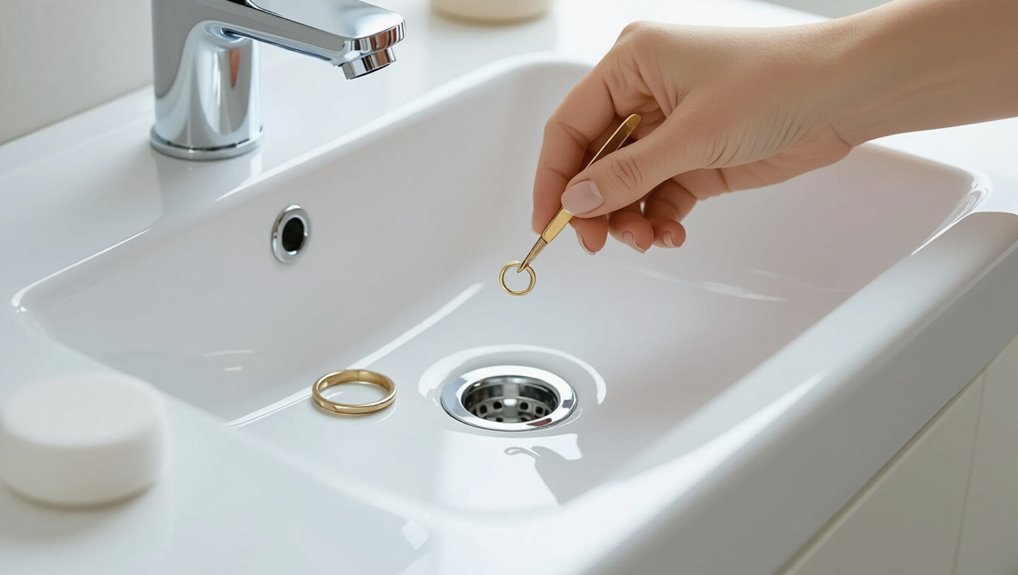
When an item drops into a bathroom sink drain, a quick assessment of hazards—running water, sharp edges, and electrical appliances nearby—should be made before any action.
Next, simple measures such as turning off the tap, unplugging nearby devices, and placing a towel or bowl over the overflow can slow or stop the object from moving deeper.
These immediate steps set up safer, more effective retrieval attempts.
Quick safety checks before attempting retrieval
If an item slips into a bathroom sink drain, pause and assess the situation before attempting retrieval.
Check for sharp edges, electrical devices nearby, and water level to avoid shocks. Confirm whether the stopper is engaged and note item size and material.
Evaluate whether protective gloves, goggles, or tools are needed.
Prioritize safety over speed when considering how to get something out of a bathroom sink drain.
Fast methods to stop the item from going further
Act quickly to minimize the chance of the item moving deeper into the drain by cutting off water flow and securing the stopper.
Then remove excess water from the basin, cover the overflow openings with tape or a cloth to prevent suction, and avoid running hot water.
If accessible, tighten or engage any pop-up mechanism to trap the object near the drain for easier retrieval.
How to Retrieve Small Items from a Sink Drain Step-by-Step
The following steps outline a practical sequence for recovering small items from a bathroom sink drain.
First, the person should turn off the water and clear the area, then remove the stopper or pop-up assembly to gain access.
If the item is visible, use tweezers, needle-nose pliers, or a magnetic pickup; for deeper reaches, try a straightened coat hanger or flexible grabber.
If necessary, access the P-trap safely to retrieve objects below the drain.
Step 1 Turn off water and clear the area
Shut off the faucet and, if available, close the water supply valves under the sink to prevent accidental flow while working.
Clear the countertop and remove toiletries, towels, and breakables to create an organized workspace.
Place a towel or shallow pan beneath the drain to catch spills.
Gather gloves, a flashlight, and small tools so the retrieval proceeds safely and efficiently.
Step 2 Remove the sink stopper or pop-up assembly
Begin by inspecting the stopper or pop-up assembly to determine its type—lift-and-turn, push-pull, ball-and-socket, or levered—so the correct removal method is used.
For lift-and-turn, unscrew; for push-pull, pull up after releasing catch; for ball-and-socket, lift and tilt out; for levered assemblies, loosen the pivot nut under the sink.
Keep parts organized for reassembly.
Step 3 Use visible retrieval tools (tweezers, needle-nose pliers, magnetic pickup)
Reach for visible tools next: tweezers, needle-nose pliers, or a magnetic pickup should be selected based on the object’s size, material, and location.
Use tweezers for small, reachable items; pliers for firmer grips or awkward angles; a magnetic pickup for ferrous objects.
Work gently to avoid pushing items deeper, angling tools under the object, and withdrawing slowly once a secure hold is achieved.
Step 4 Use a coat hanger or flexible grabber for deeper reaches
When items lie beyond the reach of tweezers or pliers, a straightened coat hanger or a flexible grabber provides the extended reach and maneuverability needed to retrieve them. The wire should be formed into a small hook or loop and guided down the drain until it can snag or encircle the object.
The tool should be inserted slowly, rotated gently to engage the item, then withdrawn steadily to avoid dropping it deeper.
Step 5 Access the P-trap safely to retrieve items below the drain
If tugging with a hanger or grabber fails because the object has moved beyond the tailpiece, the next step is to access the P-trap beneath the sink to retrieve items lodged in the U-bend.
Turn off water, place a bucket under the trap, loosen slip nuts with pliers, and carefully remove the curved section.
Retrieve the item, inspect for damage, and clean debris before replacing components.
Step 6 Reassemble the drain and test for leaks
Begin reassembling the drain by aligning the P-trap and tailpiece, then hand-tighten the slip nuts to seat the washers evenly.
After tightening with a wrench about a quarter turn, restore any removed stopper and run water to check for leaks.
Inspect joints for drips, tighten slightly if needed, then run hot and cold water together to confirm a secure, watertight connection.
Tools and Materials to Keep Handy for Drain Retrieval
A concise kit of tools and materials can make retrieving items from a sink drain quicker and safer.
Consider keeping these on hand when attempting removal:
- Pliers, tweezers, a straightened coat hanger, and a suction cup
- Specialized grabbers and magnetic pickup tools
- Protective gloves, eye protection, and disinfectant wipes
- A flashlight and a bucket or tray for recovered items and debris
Manual tools (pliers, tweezers, coat hanger, suction cup)
Reach for simple manual tools first: pliers, tweezers, an unbent wire coat hanger, or a small suction cup can often retrieve items without disassembling the drain.
Pliers grasp slippery objects; long tweezers reach narrow gaps; a straightened coat hanger forms a hook for snagging; a small suction cup lifts items from the stopper area.
Use gloves and steady, gentle motions to avoid pushing objects deeper.
Specialized grabbers and magnetic tools
Consider specialized grabbers and magnetic tools when manual implements fail or the item lies beyond fingertip reach.
Telescoping claw grabbers, flexible retrieval picks, and magnetized rods reach deep trap bends without dismantling plumbing.
Choose slim, corrosion-resistant designs and small, strong neodymium magnets for metal items.
Use gentle, controlled motions to avoid pushing objects further; repeat attempts or switch tools if the first approach proves ineffective.
Safety gear and cleaning supplies
Wear appropriate safety gear and assemble basic cleaning supplies before attempting drain retrieval to reduce injury risk and protect plumbing surfaces.
Gloves, safety glasses, and a mask prevent cuts, splashes, and inhalation.
Keep disposable towels, a bucket, mild detergent, and a soft brush to clean removed debris.
Have a flashlight and small sealable bag for recovered items to avoid contamination.
How to Choose the Right Method Based on Item Type and Location
Selection of a retrieval method depends on the object’s material and size: metal items may be pulled with a magnet or grabber, small electronics require careful handling to avoid water damage, and delicate jewelry calls for gentle extraction.
The item’s visible position guides the approach—attempt recovery from the sink top for objects near the strainer, but access the P-trap when the item has passed deeper into the drain.
If efforts require excessive force, repeated disassembly, specialist tools, or risk further damage, professional assistance is advised.
Retrieving metal items vs. small electronics vs. jewelry
Different materials and device types demand distinct approaches: metal objects often withstand prying and magnet-based extraction.
Small electronics require careful handling to prevent water and static damage, and jewelry calls for delicate retrieval to avoid loss or scratching.
Assess depth and visibility, choose nonabrasive tools, dry and insulate electronics before handling, and use soft-tipped tweezers or magnets per item to minimize damage.
When to try from the sink top vs. when to access the P-trap
After evaluating an item’s material and fragility, the next decision is whether to attempt retrieval through the sink top or to access the P‑trap beneath the basin.
Items visible near the strainer, lightweight or delicate, suit top retrieval with magnets, tweezers, or wire hooks.
Heavier, opaque, or lodged items and anything past the trap seal require P‑trap access for safe, effective recovery.
Signs the item is beyond DIY retrieval
Recognize when a retrieval crosses the line into professional territory: if the item is sharp, electrically connected, chemically reactive, deeply lodged past the P‑trap, or causes persistent leaks or drainage issues, DIY efforts risk injury or greater damage.
Professionals are advised when visibility is poor, specialized tools or camera inspection are required, multiple failed attempts loosen seals, or water contamination and structural concern exist.
Common Obstacles and How to Overcome Them
Common retrieval attempts are often complicated by stubborn stoppers and corroded fittings that resist removal.
Accumulated blockages or buildup can prevent access to trapped items and may require targeted clearing.
Fragile or water-damaged objects demand gentler techniques and careful handling to avoid further harm.
Stubborn stoppers and corroded fittings
Stubborn stoppers and corroded fittings often block access to drain debris, turning a simple retrieval into a frustrating task. Seized pivot rods, mineral buildup, and rusted nuts resist standard tools and require targeted techniques to release them without causing damage.
Use penetrating lubricant, allow dwell time, apply heat carefully, and use strap or basin wrenches. Replace irreparably corroded parts to prevent recurrence.
Blockages or buildup preventing access
Blockages from hair, grease, soap scum, and mineral deposits can form compact, stubborn masses that prevent tools or hands from reaching trapped items in a sink drain.
The advised approach uses a small hook, flexible grabber, or plumbing snake to dislodge debris, combined with enzymatic cleaner or warm water to soften buildup.
Wear gloves, work incrementally, and clear fragments to restore access.
Handling fragile or water-damaged items
Approach fragile or water-damaged items with steady, deliberate movements to prevent further harm: assess the object’s material and condition, note any swelling, flaking, or loosened components, and choose retrieval tools—fine-tipped tweezers, a plastic scoop, or a soft-bristled brush—that minimize pressure and abrasion.
Stabilize with gentle support, lift slowly, rinse saline if appropriate, and place on absorbent padding to air-dry; avoid heat.
When to Call a Professional Plumber
Indicators such as sharp odors, visible corrosion, trapped electrical components, or attempts that risk breaking pipes signal the need for a professional plumber.
The article will outline typical service-call costs, what tools and access a technician will require, and common pricing structures to help readers anticipate expenses.
It will also explain quick steps to minimize water flow and avoid further damage while awaiting professional retrieval.
Safety or complexity red flags
If a retrieval attempt involves persistent leaks, damaged pipes, sewer odors, or repeated clogs despite basic fixes, a professional plumber should be contacted promptly.
Other red flags include corroded fittings, visible structural damage, gas or chemical smells, electrical proximity, or inability to access the trap safely.
Professionals prevent further damage, health risks, and costly mistakes when complexity or safety concerns exceed DIY skills.
Estimated costs and what to expect from a service call
After noting safety or complexity red flags that warrant professional involvement, homeowners should also consider the likely costs and outcomes of a service call.
Typical fees include a diagnostic or trip charge ($75–$150) plus labor ($50–$150 per hour) and any parts.
Expect straightforward retrievals to be inexpensive; complex blockages or trap replacements increase time and total cost.
Preventing further damage during professional retrieval
Call a professional when the risk of worsening leaks, damaging fixtures, or contaminating plumbing outweighs DIY attempts.
A licensed plumber assesses scope, isolates water, uses proper tools, and prevents pipe stress or seal failure. They document damage, recommend safe retrieval methods, and advise on repairs to avoid recurring problems.
Hiring prevents costly mistakes, preserves warranties, and guarantees sanitary handling of contaminated drains.
Preventive Measures to Avoid Losing Items Down the Drain
Preventive measures can greatly reduce the chance of items slipping into the drain by promoting simple habits like checking pockets and using both hands when handling small objects.
Installing strainers, silicone sink covers, or pop-up stoppers provides a physical barrier that catches jewelry and debris.
Thoughtful storage and organization—designated trays, magnetic dishes, or small drawers near the sink—keeps daily items off wet surfaces and within easy reach.
Simple habits to reduce future incidents
A few simple habits can greatly reduce the chance of losing small items down the sink drain: routinely securing drain covers, keeping jewelry and small tools away from the basin during use, and placing a shallow dish nearby for temporary storage.
Additionally, drying hands before handling valuables, working over a towel, and checking pockets before washing prevent slips. Consistent routines minimize accidental drops.
Recommended strainers, covers, and sink modifications
When small items are at risk of slipping into the plumbing, well-chosen strainers, secure sink covers, and a few simple sink modifications can greatly reduce losses; selecting the right combination depends on sink type, drain size, and user habits.
Recommend fine-mesh stainless strainers, silicone pop-up covers, and magnetic drain inserts for metal fixtures.
Consider removable basket traps, longer tailpieces, and anti-slip mats near sinks.
Storage and organization tips for small daily items
Clear, designated spots for everyday items—jewelry dishes, small trays, or drawer organizers—dramatically reduce the chance that rings, screws, or hairpins wander toward the sink.
Consistent habits—placing items in labeled compartments, using shallow trays by the faucet, and installing magnetic strips for metal pieces—prevent accidental drops.
Routine checks and evening resets keep counters clear and minimize recovery efforts if something nears the drain.
Quick Troubleshooting Checklist After Retrieval
After retrieving an item, the first step is to inspect fittings and seals for leaks and confirm the drain is reassembled correctly.
Next, the sink and any tools used should be thoroughly cleaned and sanitized.
Finally, water flow should be restored and the drainage tested to verify normal operation.
Checking for leaks and proper reassembly
A brief systematic inspection guarantees the sink functions correctly and prevents water damage.
The plumber or homeowner tightens connections, aligns seals, and hand-tests the P-trap for drips.
Run water while observing joints and beneath the cabinet for leaks.
Reassemble fixtures to manufacturer torque specs, replace worn washers, and retest.
Address any persistent seepage before declaring the repair complete.
Cleaning and sanitizing the sink and tools
Sanitize the work area and tools promptly to prevent odors, stains, and bacterial growth after retrieving debris from the drain.
Remove visible residue with disposable paper towels.
Disinfect metal tools and the sink surface with an appropriate cleaner or diluted bleach solution, then rinse thoroughly.
Allow items to air-dry or wipe with a clean cloth.
Dispose of waste safely and wash hands thoroughly.
Restoring water flow and testing drainage
Begin by running lukewarm water into the sink for several minutes while observing the drain and listening for smooth, unobstructed flow; this confirms whether debris removal restored normal drainage or if further action is required.
If slow, check the P-trap and reseat connections, clear remaining hair or residue with a plunger or drain snake, then retest.
Note any persistent backups for professional service.
Comparison of Retrieval Methods by Speed, Cost, and Risk
Compare common retrieval methods—manual reach, magnet or hook tools, disassembly, and professional service—across three practical dimensions: speed, cost, and risk. Each option balances these factors: manual is fast but risky; tools are low-cost and moderate-speed; disassembly is thorough yet time-consuming; professionals are highest cost but lowest personal risk.
| Method | Speed | Risk |
|---|---|---|
| Manual reach | Fast | High |
| Magnet/hook | Moderate | Low |
| Disassembly/pro | Slow | Moderate |
Conclusion
To summarize, the quick, methodical steps outlined help most homeowners recover small items from bathroom sink drains without professional help. Notably, plumbers report that roughly 30% of residential service calls involve retrieving items or addressing blockages caused by foreign objects, underscoring how common this issue is. By acting promptly, choosing appropriate tools, and following preventive measures, individuals can often avoid costly repairs and reduce the frequency of such calls with simple habit changes.
