How to Get Rid of Sulfur Smell in Sink: Fast, Safe Fixes That Work
If you’re dealing with a sulfur (rotten-egg) smell in your sink, it’s often caused by hydrogen sulfide from bacteria, a dry or clogged P-trap, sewer gas, or contaminated water. To quickly eliminate the odor, try pouring boiling water down the drain, flushing with a mixture of baking soda and vinegar, using activated charcoal, or running an enzyme cleaner. For a more thorough solution, remove and scrub the P-trap, clean the overflow and stopper, and inspect the vents or supply lines. Regular maintenance and targeted repairs will help prevent the smell from returning. Continue reading for detailed step-by-step guidance and diagnostics.
Why Your Sink Smells Like Sulfur (Rotten Egg Odor)
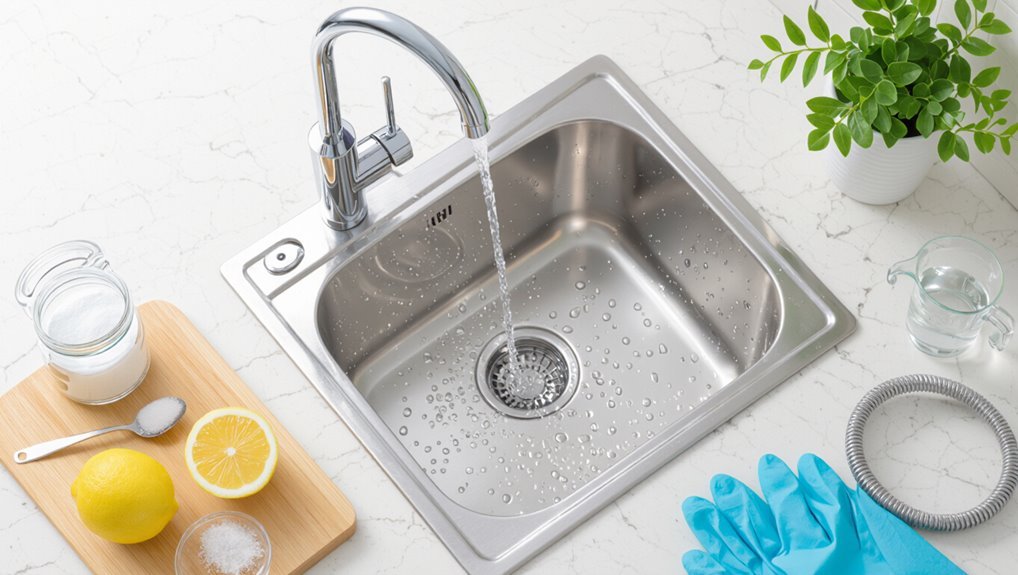
A sulfur or rotten-egg smell in a sink often stems from a few common causes: bacterial growth in the drain, trapped organic matter, or sulfur compounds in the water supply.
Anaerobic bacteria can produce hydrogen sulfide gas as they break down organic debris in pipes, while a persistent odor from the tap may indicate contaminated well or municipal water.
Determining whether the source is plumbing or the water itself is important for both effective remediation and addressing any health or safety concerns.
Common causes of sulfur smell in sinks
When a sink emits a sulfur or rotten-egg odor, it typically signals the presence of hydrogen sulfide or bacterial activity in the drain system.
Common causes include stagnant organic buildup, clogged P-traps, sewer gas leaks, corroded pipes, and contaminated water supply.
Homeowners researching how to get rid of sulfur smell in sink should inspect traps, vents, seals, and water quality to pinpoint sources.
How bacteria produce hydrogen sulfide in drains
Microbial communities in household drains break down sulfur-containing compounds and produce hydrogen sulfide as a byproduct of their metabolism.
Anaerobic bacteria, such as sulfate-reducers, use sulfate as an electron acceptor, reducing it to H2S while consuming organic residues.
Biofilms trap nutrients and create low-oxygen microenvironments, sustaining continuous H2S generation until disrupted by cleaning, oxidation, or removal of organic matter.
When the smell comes from plumbing vs. water supply
Differentiation between plumbing-origin and water-supply sulfur odors hinges on where hydrogen sulfide is produced or released within the household system.
Plumbing-origin smells stem from anaerobic bacteria in drains, P-trap dry-out, or sewer gas leaks; they appear at fixtures and vary by use.
Water-supply odors indicate dissolved hydrogen sulfide in source water or water heater reactions, affecting multiple taps consistently.
Health and safety considerations
Although often dismissed as merely unpleasant, a sulfur or “rotten egg” odor in a sink can signal health and safety issues that merit attention:
Hydrogen sulfide exposure, mold growth, or bacterial contamination may cause respiratory irritation, nausea, or headaches.
Persistent odors warrant investigation, water testing, and plumbing inspection.
Avoid DIY gas-line tampering; ventilate areas and contact professionals for suspected contamination or structural sources.
Quick Fixes to Eliminate Sulfur Smell Immediately
Immediate, practical steps can neutralize a sulfur odor without professional help.
Simple options include pouring boiling water down the drain, using a vinegar-and-baking-soda fizz to break up residues, or applying a commercial enzyme drain cleaner for rapid biological action.
These fast deodorizing methods are effective short-term measures while investigating any underlying causes.
Fast deodorizing methods you can try right now
Act quickly to neutralize and mask sulfur odors with a few simple techniques that require no tools or expertise.
Sprinkle baking soda into the sink, let sit 10–15 minutes, then wipe away.
Pour a small cup of white vinegar into the drain and let fizz, then rinse with cold water.
Place a shallow bowl of activated charcoal or coffee grounds nearby to absorb lingering smells.
Using boiling water safely to flush the drain
Pouring boiling water down the drain can quickly flush out the bacteria and trapped debris that produce a sulfur odor.
One cautious person heats water, pours slowly in stages to prevent pipe damage, and avoids scalding by using insulated gloves.
This method suits metal and some PVC pipes; confirm local pipe material and avoid repeated boiling-water pours on old, weakened plumbing.
Vinegar and baking soda routine for immediate neutralization
Combine household vinegar and baking soda for a quick chemical neutralization of sulfur odors in sinks:
Pour half a cup of baking soda into the drain, follow with one cup of white vinegar, cover the drain to contain fizz, wait 10–15 minutes, then flush with hot water.
Repeat once if odor persists.
This neutralizes volatile sulfur compounds and clears light organic buildup.
Commercial enzyme drain cleaners for quick relief
One effective immediate option is a commercial enzyme drain cleaner, which uses live enzymes and beneficial bacteria to break down organic material that produces sulfur odors.
These products digest hair, grease, and biofilm safely without harsh chemicals.
Application is simple: pour as directed, allow extended dwell time, then flush with hot water.
Regular use prevents recurrence and is septic-system safe.
Step-by-Step Cleaning and Treatment to Remove Odor for Good
The following steps outline the tools and supplies required and the targeted cleaning actions needed to eliminate persistent sulfur odors.
Instructions cover deep-cleaning the P‑trap and trap seal, clearing the sink overflow and stopper assembly, and flushing and sanitizing drain lines with safe disinfectants.
Guidance also notes when to remove and clean the aerator and faucet cartridges to prevent recurrence.
Tools and supplies you’ll need
Several basic tools and a few common supplies are necessary to address sulfur smells effectively. Recommended items include rubber gloves, safety goggles, a bucket, adjustable wrench, pliers, and a flashlight.
Cleaning supplies: baking soda, white vinegar, mild dish soap, and an enzymatic drain cleaner.
Also useful: pipe brush, old toothbrush, microfiber cloths, and plumber’s tape for minor seals.
Deep-cleaning the p-trap and trap seal
Begin by placing a bucket beneath the sink to catch water and debris.
Then put on gloves and goggles before loosening the slip nuts that secure the P-trap.
Remove the trap, empty contents, and scrub interior with a brush and mild detergent.
Inspect trap seal and replace worn washers.
Rinse, reassemble, tighten snugly, then run water and test for leaks and odor reduction.
Cleaning the sink overflow and stopper assembly
Inspect the sink overflow and stopper assembly closely before disassembly to identify scale, hair, and biofilm that trap sulfurous odors.
Remove the stopper, clean with a small brush and mild detergent, and flush the overflow tube with water.
Use a cloth soaked in vinegar or a diluted enzyme cleaner to dissolve residue.
Reassemble, test drain action, and repeat if odor persists.
Flushing and sanitizing drain lines with safe disinfectants
Flush the drain lines with an appropriate disinfectant to remove lingering hydrogen sulfide-producing bacteria and organic buildup.
Use food-safe bleach or enzymatic drain cleaner per label instructions, run hot water to circulate the solution, then let sit the recommended time.
Rinse thoroughly with boiling or very hot water.
Repeat weekly for persistent odors and after heavy organic use to prevent recurrence.
When to clean the aerator and faucet cartridges
When should the aerator and faucet cartridges be cleaned?
They require cleaning when persistent sulfur odor returns after drain treatment, when water flow is uneven or reduced, or when visible mineral buildup appears.
Regular inspection every three to six months is advised in hard-water areas.
Cleaning prevents bacterial reservoirs, restores flow, and complements drain sanitization to eliminate recurring rotten-egg smells.
Diagnosing Underlying Plumbing or Water Supply Problems
A few simple tests can determine whether the sulfur smell comes from the municipal supply or the home’s plumbing by comparing water from an outdoor spigot to the sink and running the hot and cold separately.
If the issue is confined to the sink, inspection should focus on the p-trap, drain vents, and seals for blockages or damage, with replacement of a faulty p-trap as needed.
Persistent or widespread odors, signs of sewer gas, or uncertainty about septic system integrity warrant calling a licensed plumber for diagnosis and repair.
How to test if the odor originates from municipal water vs. house plumbing
How can one determine whether the rotten-egg smell comes from the municipal supply or the home’s plumbing?
Compare water from an outdoor spigot or neighbor’s tap: if smell appears there, municipal source likely.
Fill a clean pan, boil a sample (hydrogen sulfide dissipates with heat) and sniff after cooling.
Test both hot and cold taps; isolate fixtures to narrow house plumbing causes.
Inspecting and replacing a faulty p-trap or vent blockage
Begin by visually and manually inspecting the sink’s P-trap and vent system for obvious signs of damage, leaks, or blockage that can allow sewer gases to bypass the water seal and produce a sulfur-like odor.
Remove and clean the P-trap, clear vent obstructions with a plumber’s snake, replace cracked or corroded parts, and retest for odors; call a professional if odor persists.
Identifying sewer line leaks or septic system issues
If cleaning or repairing the P-trap and vents does not eliminate the sulfur odor, the problem may originate further down the line in the sewer lateral or septic system.
Signs include persistent odor outside near cleanouts, soggy or unusually lush yard areas, slow drains housewide, gurgling toilets, or sewage backups.
Confirm via visual inspection, smell mapping, and monitoring for recurring symptoms before pursuing repairs.
When to call a professional plumber
When simple fixes and basic inspections fail to stop recurrent sulfur odors, it is appropriate to engage a professional plumber to diagnose deeper plumbing or water-supply issues.
A plumber can perform camera inspections, pressure tests, water quality analysis, and sewer/septic evaluations to pinpoint hydrogen sulfide sources.
Call a licensed professional when odors persist, appear in multiple fixtures, or accompany discolored water, gurgling drains, or poor drainage.
Long-Term Prevention Strategies
Long-term prevention focuses on routine care and targeted upgrades to keep sulfur odors from returning.
Recommended measures include scheduled cleaning of drains and P-traps, choosing enzyme-based cleaners over harsh chemicals when appropriate, and adopting habits that limit organic buildup.
When sulfur originates in the water supply, installing aeration devices, activated carbon filters, or other suitable fixtures can provide ongoing control.
Regular maintenance schedule for drains and traps
A simple, consistent maintenance schedule greatly reduces the likelihood of sulfur odors returning by keeping organic buildup and dry P-traps from developing.
Inspect drains monthly, run water through seldom-used fixtures weekly, and clear visible debris.
Flush traps with hot water biweekly and check seals quarterly.
Record actions and address slow drains promptly to prevent anaerobic bacterial growth and recurring odors.
Using enzyme cleaners vs. harsh chemicals: pros and cons
Choose cleaning agents carefully, as enzyme-based products and harsh chemical cleaners tackle sulfur odors through different mechanisms and carry distinct trade-offs. Enzymes digest organic build-up gently; chemicals oxidize or disinfect fast but can harm pipes and plumbing seals. Balance effectiveness, safety, and environmental impact when selecting treatments.
| Type | Action | Trade-off |
|---|---|---|
| Enzyme | Digest organics | Slow, eco-friendly |
| Chemical | Oxidize/disinfect | Fast, corrosive |
| Hybrid | Combine benefits | Costlier |
Preventative habits to stop bacterial growth
After weighing enzyme and chemical options, prevention focuses on habits that deny sulfur-producing bacteria the conditions they need to thrive.
Regularly flushing drains with hot water, removing food debris, and avoiding oil buildup reduce organic food sources.
Periodic mechanical cleaning of P-traps, keeping sink surfaces dry when idle, and scheduling occasional enzyme treatments maintain balance and prevent recurring odors.
Installing fixtures or filters to reduce sulfur in water
Installing point-of-entry or point-of-use fixtures and filters can considerably reduce hydrogen sulfide and other sulfur compounds entering sinks, addressing the source rather than just masking odors.
Options include activated carbon, catalytic carbon, manganese greensand, and aeration systems. Selection depends on concentration, water chemistry, and flow rates.
Regular maintenance and periodic testing guarantee continued effectiveness and prevent bacterial regrowth within treatment components.
Safe Products and DIY Solutions to Use and Avoid
The section outlines recommended household ingredients and proven commercial products for neutralizing sink sulfur odors.
It also highlights chemical cleaners and misuse risks that should be avoided for health and plumbing safety.
Finally, it compares effective eco-friendly alternatives that minimize toxicity while maintaining results.
Recommended household ingredients and commercial products
Select household ingredients and commercial products based on effectiveness, safety, and plumbing compatibility to remove sulfur (rotten egg) odors from sinks.
Recommend gentle, noncorrosive options first; test small areas and ventilate.
Consider enzyme cleaners for organic buildup and mild abrasives for grime.
- Citrus oil: invigorating, lifts residue
- Baking soda: neutralizes, safe
- White vinegar: dissolves mineral films
- Enzyme cleaner: targets bacteria
- Commercial odor eliminator: long-lasting
Chemical cleaners and safety risks to avoid
Many common chemical cleaners can quickly remove sulfur odors but also pose risks if mixed, overused, or applied to incompatible plumbing materials.
Strong acids, bleach, and drain solvents can corrode pipes, damage seals, and release toxic gases when combined.
Use products per labels, ventilate, wear gloves and eye protection, avoid mixing bleach with acids or ammonia, and consider professional help for persistent or complex plumbing issues.
Eco-friendly options that work
Start with gentle, eco-conscious methods that eliminate sulfur smells without harsh chemicals: enzymatic drain cleaners, baking soda followed by vinegar, and citrus-based cleaners break down organic matter and neutralize odors while posing minimal risk to pipes and septic systems.
Regular boiling water flushes, vinegar rinses, and enzyme treatments prevent buildup.
Avoid bleach and bleach+acid mixes; they create toxic gases and damage plumbing and septic bacteria.
Cost and Time Estimates for Common Fixes
Typical do-it-yourself remedies—such as flushing the drain with baking soda and vinegar, replacing a P-trap, or clearing a vent—generally take 30 minutes to a few hours and cost from a few dollars up to $50 for basic parts.
Hiring a plumber commonly ranges from $100 to $400 for service calls and minor repairs, with higher charges for parts, difficult access, or sewer-line work.
Price and time vary with the problem’s complexity, required parts, and local labor rates.
DIY timeline and likely costs
A brief DIY timeline and cost estimate helps homeowners decide whether to tackle a sulfur smell themselves or call a pro; simple fixes like cleaning the P-trap or running water and vinegar typically take 15–45 minutes and cost under $10–$25 in supplies.
While mid-level tasks—replacing a P-trap, cleaning venting with a snake, or replacing a faucet aerator—usually require 1–2 hours and $20–$100 in parts.
More extensive work such as diagnosing sewer line issues or replacing trap primers can take several hours to a day and range from $200 to $1,000+ depending on labor and scope.
Typical professional repair costs and what affects price
When homeowners hire a professional to eliminate a sulfur odor, costs vary widely based on the underlying cause, labor rates, and regional market conditions.
Simple service calls for diagnosing and cleaning a P-trap or replacing a faucet aerator commonly run $75–$200.
Mid-range repairs such as replacing a P-trap, clearing a vent with a power snake, or reinstalling a trap primer typically cost $150–$500.
Complex jobs—sewer-line repairs, camera inspections, or replacing extensive plumbing components—can range from $500 to $2,000 or more depending on materials, required permits, and the time involved.
Factors affecting price include emergency fees, accessibility, diagnostic time, parts quality, and contractor experience.
Signs the Problem Is Serious and Requires Immediate Attention
Persistent rotten-egg odor that remains after routine cleaning can signal a deeper plumbing or sewer issue.
Accompanying signs such as gurgling drains, slow drainage, or sewage backing up into fixtures indicate the problem may be active and worsening.
Any health-related red flags—dizziness, nausea, or persistent respiratory irritation—warrant immediate professional assessment and possible evacuation.
Persistent odors after cleaning
If foul sulfur smells return shortly after cleaning, it likely indicates a deeper plumbing or sewer issue rather than surface residue. Such recurring odors can signal broken traps, dry vents, sewer line leaks, or bacterial buildup in hard-to-reach places.
Persistent scent warrants prompt inspection by a professional plumber to locate and repair hidden faults, replace damaged components, and eliminate entrenched biofilm to prevent health risks and recurrence.
Additional symptoms: gurgling drains, slow drainage, sewage backup
Several additional signs—gurgling drains, noticeably slow drainage, or actual sewage backup—indicate the sulfur odor stems from a serious plumbing or sewer problem rather than a simple surface issue.
These symptoms suggest blocked vents, damaged sewer lines, or collapsed pipes causing trapped gas and backflow.
Immediate professional inspection and repair are recommended to prevent worsening damage, property contamination, and costly emergency remediation.
Health-related red flags
When sulfur-like odors in the sink coincide with headaches, nausea, dizziness, shortness of breath, or eye and throat irritation, the issue may pose an immediate health risk and requires prompt attention.
Seek fresh air, evacuate vulnerable occupants, and contact emergency services if symptoms worsen.
Arrange professional inspection for gas leaks, sewer gas, or contaminated water; avoid ignition sources and do not ignore persistent or spreading symptoms.
Real-World Examples and Simple Case Walkthroughs
Three concise examples illustrate common causes and fixes for sulfur odors in sinks.
One case describes bacterial buildup cleared with an enzyme treatment.
Another involves a venting problem corrected by a plumber.
A third shows sulfur-rich well water mitigated with a filtration system.
Each walkthrough highlights symptoms, diagnostic steps, and the practical remedy applied.
Case 1: Bacterial buildup resolved with enzyme treatment
Although a persistent rotten-egg odor often signals hydrogen sulfide produced by anaerobic bacteria, a homeowner in this case found the smell traced to organic buildup in the P-trap and drain lines.
After confirming slow drainage and recurring odor despite routine cleaning, an enzyme-based drain cleaner was applied according to label directions and the smell dissipated within 48 hours as bacterial colonies broke down.
Subsequent preventive enzyme treatments kept odors away.
Case 2: Venting issue fixed by a plumber
Because sewer vents can become blocked by debris, bird nests, or ice, a persistent sulfur-like odor that resists drain cleaning often points to a venting problem rather than localized bacterial buildup.
A homeowner called a plumber who inspected roof vents, cleared a bird nest, and rebalanced airflow. The odor dissipated immediately.
The plumber recommended periodic vent inspections and installed a screened cap to prevent recurrence.
Case 3: Sulfur in well water treated with filtration
Encountering a persistent rotten-egg smell throughout a house prompted a homeowner with a private well to test the water, which revealed elevated hydrogen sulfide levels.
Treatment through targeted filtration and aeration resolved the odor and improved water quality. A professional installed an oxidizing media filter plus air-injection aeration and periodic maintenance.
Post-treatment tests showed H2S reduced to non-detectable levels and improved taste.
Quick Reference Checklist: Steps to Remove Sulfur Smell from a Sink
Begin by isolating the source of the odor and gather basic tools: gloves, a flashlight, bucket, plumber’s snake or wire, baking soda, white vinegar, and a pipe brush.
Follow a concise checklist: inspect, clear trap, snake drain, flush with vinegar and baking soda, and air out.
Prioritize safety and call a pro if persistent.
- Relief
- Confidence
- Urgency
- Cleanliness
- Calm
Conclusion
The guide reassures readers that most sink sulfur smells stem from removable buildup or bacterial growth, and the recommended steps — from quick rinses to deep cleaning and water-source checks — resolve them without expensive plumbing. If one worries visual instructions are needed, simple diagrams of trap removal and enzyme cleaner placement make procedures clear and safe. Following the checklist prevents recurrence, and professional help remains advised if odors persist after thorough treatment.