
How to Get Dirt Out of a Hot Tub Quickly: Step-by-Step Cleaning Guide
To quickly clean dirt out of your hot tub, start by lowering or draining the water below the jets. Next, skim the surface debris with a fine-mesh net and use a handheld vacuum for any settled dirt. Wipe down the shell and jets with a microfiber cloth and a mild cleaner, then rinse thoroughly and refill the water to the proper level. After balancing the sanitizer, pH, and alkalinity, run the jets and finish with a shock treatment. This efficient routine effectively removes most grime and sets the stage for further cleaning tips and prevention measures.
Quick practical summary for removing dirt from a hot tub fast
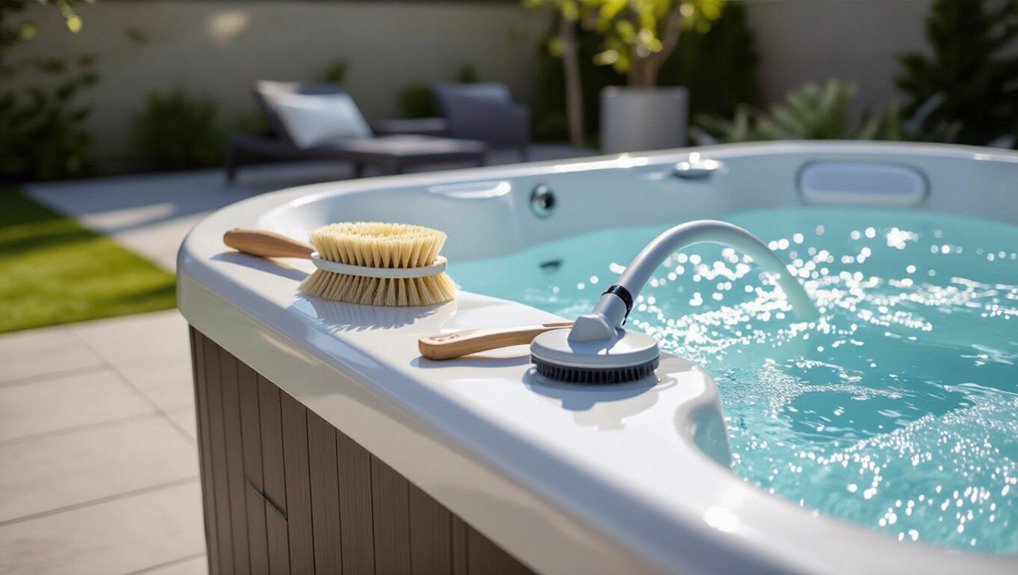
A concise action plan lists immediate steps: drain or skim, brush high-traffic areas, vacuum or wipe, refill and balance chemicals.
Essential tools include a skimmer net, soft brush, wet/dry vacuum or hand vacuum, microfiber cloths, and a multi-purpose spa cleaner plus sanitiser.
Following this checklist lets maintenance begin quickly and efficiently.
One-paragraph action plan to follow immediately
When dirt must be removed quickly, start by draining the tub or lowering the water level below the jets.
Inspect surfaces, skim floating debris, and vacuum settled grime.
Wipe shell and around jets with a microfiber and mild cleaner, paying attention to crevices.
Rinse thoroughly, refill to proper level, balance chemicals, and run jets briefly to circulate and confirm cleanliness—this is how to get dirt out of hot tub fast.
Tools and products to have on hand for a fast clean
If debris must be removed quickly, keep a compact kit ready: a skimmer net, a handheld wet/dry vacuum or submersible cleaner, microfiber cloths, a soft brush for jets and crevices, and a mild, non-abrasive cleaner formulated for hot tub shells.
Essential extras streamline work:
- Spare filter cartridge
- pH test strips and sanitizer
- Disposable gloves
- Small bucket for rinsing
Safety and preparation before cleaning
Before beginning any cleaning, the reader should gather personal protective equipment and follow basic safety precautions to avoid chemical exposure and slips.
They should know when to switch off power and whether the job requires draining the tub or can be done in place.
A quick check of water chemistry will confirm safe handling of chemicals and inform any necessary pre-clean adjustments.
Personal protective equipment and safety precautions
Several essential pieces of personal protective equipment (PPE) should be used to minimize chemical exposure and slips during hot tub cleaning.
Gloves, chemical-resistant goggles, and non-slip footwear protect skin, eyes, and footing. A respirator is recommended when using strong cleaners or drain treatments.
Protective clothing prevents splashes on regular garments.
Verify adequate ventilation and keep a first-aid kit and emergency contact information nearby.
When to turn off power and drain vs. clean in place
When should power be cut and the tub drained rather than cleaned in place?
Power and drain are required if electrical components, jets, or plumbing show visible damage, persistent black biofilm, heavy sediment, or if water chemistry has been neglected long enough to cause scum line buildup.
Drain for deep shell cleaning, filter replacement, or when manufacturer guidance dictates; otherwise, spot-cleaning suffices.
Checking water chemistry before starting
How should the water be assessed before any cleaning begins?
The technician tests pH, total alkalinity, sanitizer (chlorine/bromine), and calcium hardness using test strips or a kit.
Readings are compared to recommended ranges; adjustments are made to avoid skin irritation or equipment damage.
Shock treatments or sanitizer boosts are applied if levels are off, then circulating pumps run to evenly distribute chemicals.
Rapid hot tub cleaning step-by-step process
The rapid cleaning procedure prioritizes five focused actions for quick restoration.
First, surface debris is skimmed, filters are removed and rinsed, and settled dirt is vacuumed.
Finally, the shell and jets are spot-cleaned before a shock treatment and sanitization to speed water turnaround.
Step 1 Skim surface debris quickly
Begin by quickly scanning the water and removing leaves, insects, and floating debris with a fine-mesh skimmer or soft net.
Work methodically across the surface, emptying the skimmer into a bucket as needed.
Focus on corners and behind headrests where buildup collects.
Repeat until the surface is clear and light debris is gone, enabling faster downstream cleaning steps.
Step 2 Remove and rinse filters fast
Once the surface is clear, attention moves to the filters: remove each cartridge carefully to prevent dislodging trapped debris.
Rinse filters with a high-pressure hose, directing water between pleats to flush grime.
Inspect for tears or heavy buildup; swap for a spare if needed.
Allow filters to air-dry upright while circulating clean water; reinstall only when completely dry and intact.
Step 3 Vacuuming settled dirt efficiently
Move a low-suction wet/dry vacuum or dedicated spa vacuum slowly along the floor and around seats to lift settled debris without stirring up cloudiness.
Work methodically in overlapping passes, emptying the collection canister as needed. Target corners, steps, and jet intakes.
Pause if suction clogs; clear hoses promptly. Finish when water runs visibly clearer and most particulate is removed.
Step 4 Spot-clean shell and jets
With settled debris removed, attention shifts to the shell and jets to eliminate residue, scum lines, and buildup that vacuuming missed.
A soft microfiber cloth and a nonabrasive cleaner wipe the shell; a small brush or toothbrush targets jet faces and crevices.
Remove and rinse removable jet inserts if accessible, flushing passages gently.
Dry surfaces to prevent streaks and inspect for lingering deposits.
Step 5 Shock and sanitize for speedy water turnaround
Begin by applying a chlorine- or non-chlorine shock to rapidly raise sanitizer levels and oxidize organic contaminants that normal dosing missed.
Allow recommended contact time, keeping the cover open for ventilation.
Test free chlorine or bromine and pH, adjusting to ideal ranges.
After oxidation, add a maintenance sanitizer dose.
Record treatment to track turnaround and avoid over-chemicaling.
Step 6 Restart filtration and circulation
Restarting the filtration and circulation system reintroduces flow essential for distributing sanitizer, removing remaining debris, and stabilizing water chemistry.
The technician restarts pumps and filters, checks for proper pressure and noise, and verifies filter alignment.
Timed circulation cycles run continuously or per manufacturer settings.
Observations of clarity, foam, or odor guide additional filtration, backwashing, or cartridge cleaning until water remains clear and balanced.
Cleaning tools, products, and equipment overview
A concise inventory of tools and products helps streamline hot tub maintenance, from handheld skimmers and brushes to vacuums and automated cleaners.
The overview will compare quick-use skimmers and brushes, recommend vacuum types and robotic options, and list chemicals for rapid dirt removal.
It will also clarify when enzymatic cleaners are preferable to routine use and when shock oxidizers are needed for heavy contamination.
Best handheld skimmers and brushes for quick use
Several compact handheld skimmers and brushes make quick surface cleaning efficient and reliable; each tool targets specific debris types and spa finishes to minimize effort and prevent damage.
Essential options include fine-mesh skimmers for leaves, foam skimmers for oils, soft-bristle brushes for acrylic walls, and nylon scrubbing pads for stubborn grime.
Choose ergonomic handles and corrosion-resistant materials for durability.
- Fine-mesh skimmer
- Foam surface skimmer
- Soft-bristle brush
- Nylon scrubbing pad
Recommended vacuums and automated options
Many compact and full-size vacuums—manual suction models, battery-powered handhelds, and fully automated robotic cleaners—address different cleaning needs and spa sizes.
Choose based on debris type, power source, and ease of maintenance. Consider filter capacity and maneuverability.
- Manual suction vacuums for spot cleaning
- Battery handhelds for quick pickups
- Corded electric units for deep clean
- Robotic cleaners for full-coverage automated cycles
Chemicals and cleaners for rapid dirt removal
When a quick turnaround is needed, targeted chemicals and purpose-built cleaners remove oils, scum, and organic matter that vacuums and brushes can’t fully address; selecting the right product depends on the contamination type, surface material, and whether the treatment must be spa-safe for circulation.
Practical options include:
- Mild nonabrasive surface cleaner for acrylic shells
- Scale and metal sequestrant
- pH adjusters and clarifiers
- Spa-safe drain and filter detergents
When to use enzymatic cleaners vs. shock oxidizers
How should one decide between enzymatic cleaners and shock oxidizers for a hot tub?
Enzymatic cleaners target organic buildup—oils, lotions, biofilm—working over days to break residues and protect filters.
Shock oxidizers (non-chlorine or chlorine) rapidly oxidize contaminants and restore water clarity after heavy use or cloudy water.
Use enzymes for preventive maintenance; use shock for acute contamination or immediate sanitization.
Deep-clean steps if quick methods don’t work
If surface cleaning fails, a full drain followed by a manual scrub and a checklist-based refill becomes necessary.
The plumbing and jets should be inspected and cleaned to remove buildup, and filters must be either replaced or subjected to a thorough deep-clean.
These steps reduce contaminants and restore proper circulation and sanitation.
Full drain, manual scrub, and refill checklist
Drain the hot tub completely and prepare for a focused deep-clean by gathering tools and turning off power to the unit.
Remove filters and accessories, wipe shell with appropriate cleaner and nonabrasive brush, rinse thoroughly, and inspect surfaces for stains.
Reinstall or replace filters, refill with fresh water, balance chemicals, and run circulation briefly to confirm clarity before resuming normal use.
Cleaning and inspecting plumbing and jets
Begin by turning off power to the hot tub and removing access panels to expose pump and plumbing lines for inspection.
Technicians flush lines with a manufacturer-safe plumbing cleaner, running circulation to dislodge biofilm and debris.
Jets are removed, soaked in a vinegar-based solution if mineral buildup persists, rinsed, and reinstalled.
Reassemble panels, restore power, and test for leaks and proper jet function.
Replacing or deep-cleaning filters thoroughly
With plumbing and jets inspected and tested, attention moves to the filters, which often harbor trapped debris, oils, and mineral deposits that reduce circulation and filtration efficiency.
Remove filters, rinse with a hose, then soak overnight in a filter cleaner per label instructions.
Inspect for tears or permanent clogging; replace damaged or aged filters.
Reinstall or replace, then run the pump to verify improved flow.
Common causes of dirt buildup and how to prevent it
Users often introduce dirt by entering the tub without rinsing off lotions, sweat, or makeup.
A consistent maintenance schedule—filter cleaning, weekly water testing, and monthly shock treatments—minimizes the need for frequent deep cleans.
Proper water care, including balanced chemical levels and routine circulation, reduces sediment and biofilm formation.
User habits that introduce most dirt
Many common sources of hot tub contamination trace back to routine user habits—entering the tub without a pre-shower, wearing cosmetics or lotions, and bringing in outdoor dirt and debris are among the leading contributors to grime and sanitizer demand.
Regularly rinsing, removing makeup, keeping pets out, using clean towels, and enforcing a no-food policy greatly reduce organic load, protecting water clarity and equipment.
Maintenance schedule to minimize future quick cleans
A simple, consistent maintenance schedule is the most effective way to prevent the common causes of dirt buildup—body oils, cosmetics, organic debris, and mineral deposits—so that quick cleans become rare instead of routine.
Weekly skimming, twice-weekly filter rinses, monthly deeper filter soaks, and quarterly cover and shell inspections reduce sources of dirt and keep routine cleaning minimal.
- Skim daily
- Rinse filters twice weekly
- Soak filters monthly
- Inspect quarterly
Water care tips to reduce sediment and biofilm
Keep water chemistry balanced and circulation consistent to limit sediment and biofilm formation.
Regular testing and adjustment of pH, alkalinity, and sanitizer levels prevents organic buildup.
Run circulation pumps daily and clean filters biweekly to capture particles.
Shock regularly and use enzyme or clarifier treatments as needed.
Drain and refill periodically to reset total dissolved solids and remove persistent contaminants.
Troubleshooting persistent dirt and cloudiness
When dirt and cloudiness persist despite routine care, attention should shift to diagnosing filter condition, circulation problems, and chemical balance.
If these checks do not resolve the issue or reveal complex equipment faults, a professional technician should be contacted.
While waiting for service, temporary measures such as shocking the water, running the pump continuously, and using a clarifier can help improve clarity.
Diagnosing filter, circulation, or chemical issues
Several common causes can produce persistent dirt and cloudiness in a hot tub: clogged or damaged filters, poor water circulation, and imbalanced chemistry.
Inspect and clean or replace filters; run jets to verify circulation and listen for pump strain.
Test sanitizer, pH, alkalinity, and calcium hardness.
Adjust chemicals, shock if organic load is high, and retest after several hours to confirm clarity.
When to call a professional
How should a hot tub owner decide that professional help is needed for persistent dirt and cloudiness?
If repeated cleaning, filter replacement, and chemical corrections fail, or if water remains cloudy, has recurring contaminants, strong odors, staining, or unexplained pressure or pump noises, a professional assessment is warranted.
Technicians can diagnose hidden plumbing, heater, or biofilm issues and perform safe remedies beyond routine maintenance.
Temporary fixes to use while waiting for service
While awaiting professional service, a hot tub owner can apply a few targeted temporary fixes to reduce visible dirt and cloudiness and keep the system from worsening.
Skim debris, run jets with filter cleaner, shock the water per label, and vacuum settled particles.
Adjust pH and sanitizer to safe ranges.
Avoid heavy chemical mixtures or extended use until inspected by a technician.
Time-saving routines and checklist for regular fast cleans
The article shifts to practical, time-saving routines that keep a hot tub serviceable with minimal effort.
It outlines a concise 5-minute daily checklist for quick visual checks, skimming, and filter spot-cleaning.
It then summarizes weekly and monthly quick-maintenance tasks to prevent buildup and reduce the need for deep cleans.
5-minute daily checklist
A five-minute daily checklist keeps a hot tub ready for use with minimal effort: skim the surface for debris, quickly test and adjust sanitizer levels, check that the cover is secure, inspect the waterline for oils or scum, and run the circulation briefly if needed.
- Skim surface debris
- Test and correct sanitizer
- Secure and inspect cover
- Run circulation briefly
Weekly and monthly quick-maintenance checklist
Weekly and monthly quick-maintenance routines consolidate small tasks into efficient checklists that prevent buildup and reduce the need for deep cleans.
They save time and maintain water quality through brief, regular attention.
Suggested checklist items:
- Test and adjust sanitizer and pH levels.
- Skim surface and empty skimmer baskets.
- Wipe down shell and cover.
- Clean or rotate filters monthly for ideal flow.
Cost and time estimates for quick cleaning methods
A concise comparison outlines how long each quick-clean method typically takes, from a 10–20 minute surface skim to a 1–2 hour rapid drain-and-wipe.
It also summarizes estimated supply costs for a fast-clean session, usually ranging from a few dollars for basic chemicals and wipes to $20–40 if using specialty cleaners or filter treatments.
These estimates help readers choose the fastest, most budget-friendly option for their routine.
Typical time required for each method
Quick-clean methods typically require between 15 minutes and one hour depending on scope and supplies: a surface skim and chemical check take about 15–20 minutes, filter rinsing and replacement about 20–30 minutes, and a concentrated shock or sanitizer treatment with brief circulation runs 30–60 minutes including setup.
| Method | Time | Notes |
|---|---|---|
| Skim/check | 15–20 min | Quick debris removal |
| Filter work | 20–30 min | Rinse or swap |
| Shock/circulate | 30–60 min | Includes brief run |
Estimated cost of supplies for a fast-clean session
Several common supplies are typically needed for a fast-clean session, and their combined cost usually ranges from $10 to $40 depending on brand and whether items are bought individually or in multipacks. Typical items include shock, sanitizer, a skimmer, and a sponge; bulk purchases lower per-item cost. Expected time: 15–45 minutes per quick clean.
| Item | Typical price |
|---|---|
| Shock | $5–$15 |
| Sanitizer | $5–$15 |
| Skimmer | $3–$10 |
| Sponge/cloth | $1–$5 |
Conclusion
Beneath the steam, the cleared tub becomes a small lake of glass, each ripple a promise of restoration. Dirt pulled away like fallen leaves reveals the hot tub’s true calm—an island for quiet renewal. Quick, careful cleaning is a bridge built of hands and simple tools, returning warmth and clarity. In that renewed surface, users find everyday ritual transformed into a gentle act of care, letting routine become refuge.