How to Fix a Short Cycling Furnace: Troubleshooting Steps to Stop Rapid On/Off Cycling
To fix a short cycling furnace, start by identifying the cause of the rapid on/off cycling. Common issues include airflow blockages, thermostat malfunctions, safety switch failures, or fuel supply problems. Begin by confirming the short cycling, then take these steps: replace a dirty air filter, clear any obstructions in vents and ducts, check thermostat settings and wiring, and inspect flame sensors and limit switches. While simple fixes can often be completed in minutes, more complex issues may require a licensed HVAC technician. Continue reading for detailed diagnostics, repair options, costs, and safety tips.
Why Your Furnace Is Short Cycling: Quick Overview
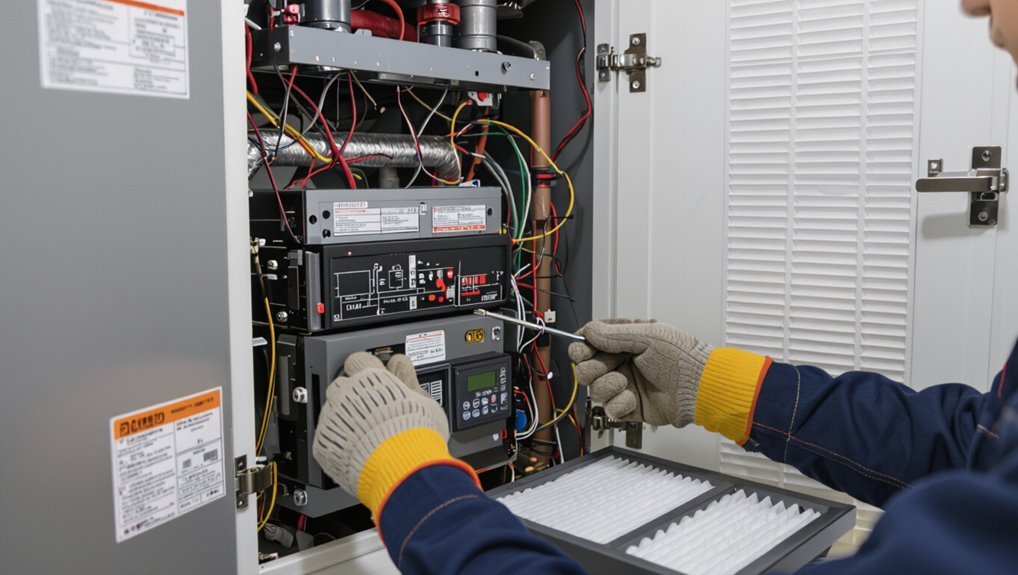
Short cycling occurs when a furnace turns on and off repeatedly without completing a full heating cycle, reducing comfort and increasing wear and energy use.
It can indicate problems such as a dirty filter, malfunctioning thermostat, oversized unit, or blocked airflow.
Identifying the likely causes helps prioritize simple fixes and when to call a professional.
What short cycling means and why it’s a problem
Cycling on and off repeatedly in rapid succession, a furnace that short cycles never completes full heating cycles and fails to sustain the set temperature.
This wastes energy, increases wear, and shortens component lifespan. Occupant comfort suffers from temperature swings and uneven heating.
Prompt diagnosis and repair, including consulting a technician or following guidance on how to fix short cycling furnace, prevent increased costs and failures.
Common causes at a glance
Having established why rapid on/off operation is problematic, the next step is a succinct rundown of the common causes so a homeowner or technician can narrow possibilities quickly.
- Dirty or clogged air filter restricting airflow
- Oversized furnace cycling due to mismatched capacity
- Faulty thermostat or poor sensor placement
- Shorted or failing safety switches, e.g., limit switch or flame sensor
How to Diagnose Short Cycling: Step-by-Step Checks
Before beginning any inspection, the technician should power off the furnace and follow basic safety precautions, including shutting off gas and wearing protective gear.
They should then observe the unit in operation to confirm short cycling—timing on/off intervals and noting any error codes—before proceeding to checks.
Systematic checks follow: verify thermostat function and settings, inspect and test the air filter, and evaluate airflow through vents, registers, and ductwork.
Safety precautions before inspecting the furnace
Although a short-cycling furnace may seem like a simple mechanical annoyance, safety must guide every inspection step.
Technicians and homeowners should first cut power to the unit, shut off the gas supply if applicable, and make certain the area is well-ventilated and free of combustibles.
Use proper PPE—gloves, eye protection—and verify carbon monoxide detectors function.
If unsure, call a qualified technician.
How to observe and confirm short cycling behavior
With safety steps completed and power and fuel secured, the next task is to observe the furnace in operation to confirm short cycling.
Note cycle frequency, duration, and intervals: repeated on/off shifts within 5–10 minutes indicate short cycling.
Log times, sounds, burner ignition behavior, blower starts/stops, and failure codes.
Correlate with thermostat calls and external events for accurate diagnosis.
Check thermostat function and settings
When diagnosing short cycling, the thermostat should be inspected first because faulty settings or signals are a common and easily corrected cause.
Verify temperature setpoint, mode (heat/auto), and differential or cycle rate settings. Confirm thermostat level, clean contacts, replace batteries, and guarantee proper wiring and secure mounting.
Test by raising setpoint briefly to observe consistent run time before reverting.
Inspect and test the air filter
After confirming the thermostat is functioning properly, attention should shift to the air filter, a common mechanical cause of short cycling.
Inspect the filter for dirt, tears, or improper size. Remove and hold against light; significant blockage warrants replacement.
Test operation by installing a clean filter and cycling the furnace. If short cycling stops, the filter was the issue; otherwise continue diagnostics.
Evaluate airflow: vents, registers, and ductwork
One essential area to evaluate is the system’s airflow through vents, registers, and ductwork, since restricted or imbalanced flow commonly triggers short cycling.
Technicians should check for closed or blocked registers, guarantee supply and return balance, inspect visible ducts for disconnections, leaks, or crushed sections, and verify grills are clean.
Measure airflow where possible to confirm proper distribution and pressure.
Examine the blower motor and fan controls
Inspect the blower motor and fan controls to identify electrical or mechanical faults that cause rapid on-off cycling.
Technicians check capacitor condition, motor bearings, and overheating protection for intermittent trips.
Verify fan relay and control board signals, inspect wiring and connectors for shorts or corrosion, and confirm correct blower speed settings.
Replace faulty components or tighten connections to restore stable operation.
Inspect the flame sensor and ignition system
Check the flame sensor and ignition system next, since faults there commonly cause furnaces to start briefly and then shut down.
Inspect the flame sensor for soot or corrosion; gently clean with fine emery cloth or alcohol.
Verify the pilot or electronic igniter sparks reliably and electrode gaps.
Replace malfunctioning sensors or igniters and retest.
If uncertainty remains, contact a qualified HVAC technician for safe diagnosis.
Check the heat exchanger for overheating or cracks
Examine the heat exchanger as a potential cause of short cycling because overheating or hairline cracks can trigger safety shutoffs and reduce combustion efficiency.
Visually inspect for discoloration, warping, corrosion, or visible fissures. Use a flashlight and mirror for hard-to-see areas.
If signs of overheating or cracking appear, recommend professional evaluation and replacement to prevent carbon monoxide leaks and restore reliable furnace operation.
Test the high-limit switch and other safety controls
One of the most common causes of short cycling is a tripped high-limit switch or other safety controls that shut the furnace down when temperatures or pressures exceed safe limits.
Technicians visually inspect switches, measure continuity with a multimeter, and verify proper wiring and setpoints.
Replace faulty switches, clean associated sensors and ducts, and retest to confirm normal run cycles before returning system to service.
Assess fuel supply issues (gas valve, pressure) or electrical problems
When short cycling persists after safety controls test normal, diagnostic focus shifts to fuel supply and electrical systems. These areas commonly produce intermittent operation through a failing gas valve, inadequate fuel pressure, or unstable electrical feed.
Inspect gas valve operation, manifold and inlet pressures, and regulator function.
Check wiring, voltage stability, control board connections, and transformer output.
Replace defective components and retest system for stable run cycles.
Step-by-Step Repairs and Solutions
The next section outlines practical repairs and solutions for a furnace that short cycles.
It separates simple, safe tasks a homeowner can perform from intermediate jobs suited to those with tools and experience.
Clear indicators for when to contact a licensed HVAC technician are also provided.
Simple repairs you can do yourself
A homeowner can often correct short cycling with a few straightforward tasks that improve airflow and control settings.
Common do-it-yourself steps include the following list:
- Replace or clean the air filter
- Reset and calibrate the thermostat
- Clear vents and registers
- Check for obvious obstructions around the furnace and ductwork
These actions are quick, low-cost, and frequently restore normal cycling.
Replacing or cleaning the air filter
Replace or clean the furnace air filter to restore proper airflow and reduce short cycling.
Inspect the filter monthly, remove accumulated dust, and either wash reusable filters or replace disposable ones per manufacturer guidance.
Use the correct size and MERV rating to balance filtration and airflow.
Proper maintenance prevents airflow restriction, improves efficiency, and often eliminates rapid on/off cycling without complex repairs.
Resetting and calibrating the thermostat
Several simple thermostat resets and calibrations can resolve short cycling by ensuring the control device accurately reads room temperature and communicates correctly with the furnace.
Power-cycle the thermostat, replace batteries, and verify settings (heat/cool, cycle rate, temperature differential).
Recalibrate using manufacturer instructions or a separate thermometer.
Confirm wiring connections at the furnace and thermostat to rule out signal faults before seeking professional service.
Clearing vents and improving airflow
With thermostat checks completed, attention shifts to the home’s vents and ductwork, since restricted airflow is a common cause of furnace short cycling.
Homeowners are advised to remove and clean vent covers, vacuum registers, and guarantee furniture or curtains do not block airflow.
Replace dirty filters, inspect accessible ducts for disconnections or heavy dust, and consider simple sealing with foil tape to restore consistent circulation.
Intermediate tasks for handy homeowners
For homeowners comfortable with basic tools, a few intermediate checks can resolve short cycling without calling a technician.
Common tasks include cleaning sensors, servicing the blower, and swapping a faulty thermostat; each requires careful attention to safety and procedure.
Suggested items to address in sequence:
- Clean the flame sensor and igniter
- Lubricate and tighten blower components
- Inspect and replace a malfunctioning thermostat
- Verify airflow and filter condition before reassembly
Cleaning the flame sensor and igniter
Cleaning the flame sensor and igniter removes soot and corrosion that can prevent proper ignition and cause short cycling.
Technicians shut power and gas, locate and remove the sensor and igniter, gently clean the sensor with fine emery cloth and the igniter with a soft brush, inspect for damage, reassemble, restore power, and test multiple cycles.
Replace components if cracking or persistent faults occur.
Lubricating and tightening blower components
Begin by powering down the furnace and disconnecting electrical supply to confirm safety before accessing the blower assembly.
Inspect fan blades, motor mounts, and belt for wear. Clean debris, tighten mounting screws and belt tensioner, and verify shaft and bearings move freely.
Apply a few drops of manufacturer-recommended oil to oil ports if present.
Reassemble, restore power, and test for steady operation.
Replacing a malfunctioning thermostat
Replace the thermostat when inconsistent temperature control, rapid cycling, or error codes point to a malfunction beyond simple recalibration.
Power is cut at the breaker, wiring is labeled, and the old unit is removed.
A compatible replacement is mounted level, wires secured to matching terminals, and settings programmed.
After restoring power, operation and cycle timing are verified; professional help is advised if issues persist.
When to call a professional HVAC technician
Some furnace issues require a professional’s tools and training to diagnose and repair safely.
Consider calling a licensed HVAC technician for tasks that involve major safety risks, complicated components, or specialized equipment.
Common examples include:
- Replacing the high-limit switch or control board
- Repairing the heat exchanger or gas valve
- Complex electrical diagnostics and motor replacement
- Any problem involving gas, combustion, or suspected carbon monoxide leaks
Replacing the high-limit switch or control board
When short cycling persists after checking airflow, thermostat settings, and flame conditions, attention should turn to the high-limit switch and the furnace control board—components that shut the system down to prevent overheating or manage safety faults.
A qualified technician diagnoses switches and board faults, verifies wiring and sensors, and replaces defective parts using model-specific components. This ensures correct calibration, secure connections, and safety checks before restoring normal operation.
Repairing the heat exchanger or gas valve
If replacing the high‑limit switch or control board does not stop short cycling, the issue may lie deeper in the combustion system: a cracked or corroded heat exchanger can cause overheating and safety shutdowns, while a failing gas valve can produce unstable burner operation and flame loss.
A technician should inspect for cracks, test gas pressure and valve modulation, then repair or replace defective components to restore safe operation.
Complex electrical diagnostics and motor replacement
Begin troubleshooting electrical issues only after confirming basic components and safety interlocks are intact, because complex diagnostics and motor replacement involve live circuits, specialized tools, and risk of further damage.
Technicians perform voltage and continuity testing, inspect control boards, capacitors, relays, and ECM motors.
Motor replacement requires correct sizing, wiring, and programming.
Recommend hiring a licensed HVAC professional for accurate diagnosis and safe repair.
Troubleshooting by Specific Symptom
The troubleshooting section groups common short-cycling scenarios by specific symptom to guide targeted diagnosis.
Cases covered include rapid on-off behavior, cycling triggered by small thermostat adjustments, continuous run followed by sudden shutdown, and abnormal noises during short cycles.
For each symptom, probable causes and recommended checks are presented in concise, actionable steps.
Furnace turns on for a minute then off repeatedly
A furnace that runs for only a minute before shutting off repeatedly is exhibiting short cycling, which reduces efficiency and stresses components.
Possible causes include blocked airflow (dirty filter, closed vents), faulty flame sensor or ignition, overheating from restricted return ducts, or a malfunctioning limit switch or control board.
Recommend visual inspection, filter replacement, and professional diagnosis for sensors, pressure switches, and combustion safety controls.
Furnace cycles only when thermostat calls for small temperature change
When short cycling appears only during small thermostat setpoint changes, it points to control sensitivity or airflow balance rather than gross combustion faults.
The technician checks thermostat deadband, anticipator settings, and wiring for bouncing signals.
Verify fan and return airflow, clean filters, and confirm proper blower speed.
Adjust thermostat differential or install a setback/programmable model to reduce frequent short cycles during minor setpoint shifts.
Furnace runs continuously then shuts down suddenly
Inspecting a furnace that runs continuously and then shuts down suddenly requires focusing on intermittent safety trips and control failures that force an abrupt stop after extended operation.
Technicians should check overheating triggers (blocked vents, dirty filters, failed limit switch), flame or pressure sensing faults, and intermittent electrical connections or control board faults.
Log runtimes and error codes; replace faulty sensors or controls to restore stable operation.
Furnace makes unusual noises during short cycles
Listen for patterns and sources of noise—rattles, bangs, squeals, or clunks—since distinct sounds during short cycling point to different mechanical or airflow problems.
Metallic bangs suggest loose panels or motor mounts; squeals indicate slipping belts or bearing failure; rattles suggest debris in the blower or ductwork; clunks often signal improper draft inducer or ignition issues.
Note timing and frequency before inspection or calling a technician.
Preventive Maintenance to Stop Future Short Cycling
A regular maintenance schedule helps prevent short cycling by catching issues before they worsen.
Seasonal tasks—such as changing filters, inspecting vents and heat exchangers, and verifying thermostat calibration—keep the system operating efficiently.
Consider upgrades like programmable thermostats and variable-speed blowers to reduce cycling and improve comfort.
Recommended maintenance schedule
Regular, planned maintenance reduces the risk of short cycling by catching common causes—dirty filters, clogged condensate lines, faulty thermostats, and worn components—before they trigger repeated on/off cycles.
A clear schedule keeps inspections timely and documents interventions.
- Inspect and replace air filter: monthly to quarterly
- Check thermostat calibration: annually
- Clean condensate lines: quarterly
- Professional tune-up: annually
Seasonal tasks to maintain proper operation
Seasonal tasks build on the recommended maintenance schedule by aligning checks and actions with changing weather and system load to prevent future short cycling.
Inspect and replace filters before heavy-use seasons, clean condensate drains and pans, verify thermostat placement and batteries, test safety switches, lubricate motors if applicable, check venting and flue integrity, and schedule professional tune-ups to catch emerging issues early.
Upgrades that reduce cycling (programmable thermostats, variable-speed blowers)
When homeowners invest in targeted upgrades like programmable thermostats and variable-speed blowers, the furnace runs more efficiently and experiences fewer short cycles.
Programmable thermostats smooth temperature swings, reducing frequent starts. Variable-speed blowers maintain steady airflow and reduce stress on heat exchangers and controls.
Combined, these upgrades improve comfort, lower energy use, and extend equipment life, decreasing the likelihood of recurring short cycling.
Costs, Timeframes, and When Replacement Makes Sense
Typical repair options for short cycling—such as thermostat recalibration, flame sensor cleaning, or replacing a control board—carry distinct cost ranges and should be compared against the age and condition of the unit.
Each fix has a predictable timeframe, from under an hour for sensor cleaning to several hours for control-board replacement, which affects labor costs and downtime.
Clear signs that replacement is more sensible include frequent failures, repair costs approaching half the value of a new furnace, and units older than 15–20 years.
Typical cost ranges for common fixes
Repair costs for a short-cycling furnace vary widely depending on the cause, labor rates, and regional pricing; simple fixes like cleaning or replacing an air filter often cost under $100 and take less than an hour, while more involved repairs—thermostat replacement ($100–$300, 1–2 hours), blower motor repair or replacement ($300–$1,200, 2–6 hours), or refrigerant/heat exchanger issues ($500–$3,000+, multiple hours to a day)—raise both price and downtime.
| Repair | Typical cost range |
|---|---|
| Air filter/cleaning | <$100 |
| Thermostat | $100–$300 |
| Blower motor | $300–$1,200 |
| Heat exchanger/refrigerant | $500–$3,000+ |
Expected time to complete each repair
Most short-cycling furnace fixes can be completed within a single service visit, with simple tasks like filter changes or control cleaning taking 15–60 minutes.
Mid-range jobs such as thermostat replacement or capacitor swaps require 1–2 hours.
Major interventions—blower motor replacement or heat exchanger repairs—take several hours to a full day depending on parts availability and system access.
Technicians schedule accordingly; diagnostics add 15–45 minutes.
Signs it’s time to replace the furnace instead of repairing
After estimating diagnostic time and repair scope, homeowners and technicians must consider whether ongoing costs, diminished efficiency, or major component failures make replacement the better option.
Replacement is advisable when repair costs approach 50% of furnace value, age exceeds 15–20 years, reliability declines, safety concerns exist, or efficiency gains and warranty benefits offset installation time and expense.
Compare lifecycle cost, not just immediate repair price.
Safety Considerations and Carbon Monoxide Risks
The section addresses detection and response to gas leaks and carbon monoxide alarms, including immediate actions occupants should take.
It outlines when the furnace should be shut off and the home evacuated to guarantee safety.
It also summarizes key safety inspections a technician must perform before returning the system to service.
Detecting and responding to gas leaks or CO alarms
Recognize that a gas leak or carbon monoxide (CO) alarm signals an immediate threat: occupants should evacuate the premises, call emergency services from a safe location, and avoid reentering until professionals declare the area safe.
After evacuation, report symptoms, note alarm patterns and appliance status, and inform responders of furnace issues.
Do not attempt diagnostics or repairs; await trained technicians for leak detection, ventilation, and system inspection.
When to shut off the system and evacuate
When should occupants shut off a malfunctioning furnace and leave immediately?
If sensing gas odor, hearing persistent pilot issues, or if a CO alarm sounds, occupants should power down the furnace, exit the building, and call emergency services.
If anyone experiences dizziness, nausea, headaches, or confusion, evacuate at once.
Reentry is only safe after professionals declare the premises clear and the source corrected.
Important safety checks technicians should perform
Several essential safety checks should be completed before any diagnostic work begins: verify power is isolated, gas supply is secure, and ventilation is adequate.
The technician should inspect flame patterns, burner integrity, and heat exchanger for cracks or corrosion.
Install and test carbon monoxide detectors, measure CO levels, and guarantee occupant evacuation protocols are understood.
Document findings and use PPE throughout.
Quick Reference Checklist for Fixing Short Cycling
Start with a concise checklist outlining the most common causes and immediate checks for a short cycling furnace: thermostat settings and placement, air filter condition, blower motor and limit switch function, refrigerant levels (for heat pumps), draft and venting issues, and recent maintenance history.
- Verify thermostat calibration and location
- Inspect and replace air filter
- Test blower, limit switch, and safety interlocks
- Check venting, combustion, and refrigerant/service records
Conclusion
Short cycling undermines furnace performance and comfort like a hiccup in a heartbeat; diagnosing thermostat, airflow, and safety-switch issues first, then addressing clogged filters, blocked vents, improper sizing, or failing components, usually restores steady operation. Small repairs or routine maintenance often suffice; persistent, recurring cycling or costly component failures signal replacement. Prioritize safety—watch for carbon monoxide—and consult a licensed technician when uncertainty or dangerous symptoms arise to guarantee reliable, efficient heating.