How to Safely Dissolve Paper Towels in the Toilet (What Works and What to Avoid)
Introduction: Paper towels should never be flushed down the toilet, as they do not break down easily and can lead to clogs in pipes and sewage systems. Instead, it’s best to dispose of them in the trash or compost clean towels. If you’ve accidentally flushed paper towels, stop using the toilet immediately and try using a plunger or retrieval tools. If that doesn’t work, contact a plumber instead of resorting to chemical cleaners. For practical tips and prevention steps, continue reading.
Can You Flush Paper Towels Down the Toilet? A Clear Answer
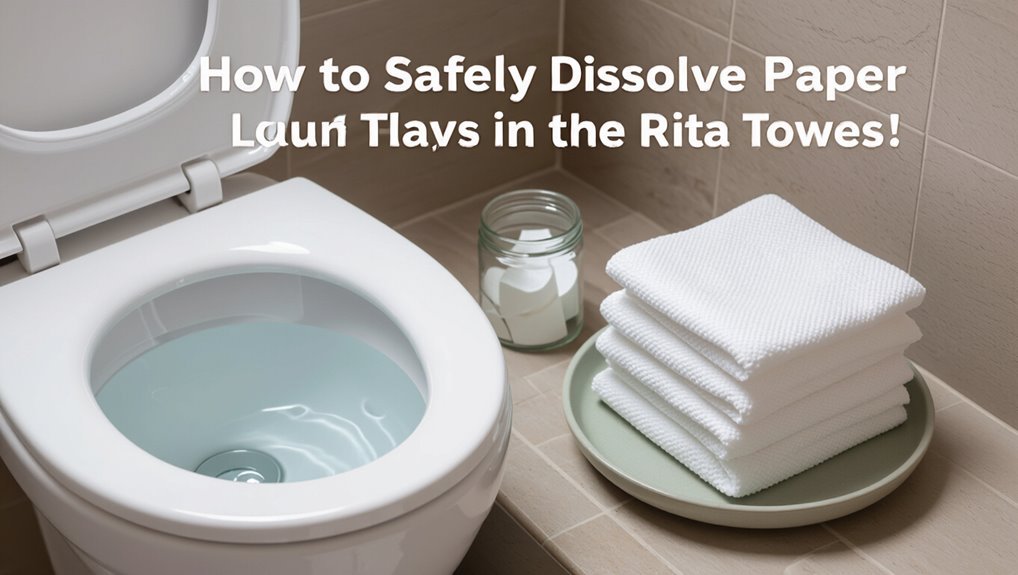
Paper towels are manufactured for strength and absorption, using fibers and binders that resist breaking apart in water, so they do not disintegrate like toilet paper.
Because they can clog pipes and overwhelm septic systems, flushing paper towels is generally unsafe. Homeowners and renters are advised to dispose of used paper towels in the trash rather than the toilet.
Why paper towels behave differently from toilet paper
Examine how paper towels differ from toilet paper: they are manufactured with longer, stronger fibers and often treated or woven for durability, so they resist breaking down in water and can clog pipes and septic systems rather than disintegrating like toilet paper.
This structural contrast explains why guidance about how to dissolve paper towels in toilet focuses on mechanical removal, specialized chemicals, and professional solutions.
Short summary recommendation for homeowners and renters
Most homeowners and renters should treat paper towels as non-flushable waste: they are engineered to resist disintegration and can cause blockages in plumbing and septic systems.
Dispose used paper towels in trash or compost if uncontaminated. Only flush toilet paper and human waste.
For exceptional situations, consult local waste guidelines or a plumber before attempting any dissolving methods, as risks often outweigh benefits.
How Paper Towels React in Plumbing and Sewers
Paper towels are made from thicker fibers and higher absorbency than toilet paper, which makes them slower to break apart when wet.
Their dissolution rate is consequently markedly lower than that of toilet paper, increasing the risk of clogs in household plumbing.
In municipal sewer systems and septic tanks, accumulated paper towel fibers can obstruct pipes, interfere with treatment processes, and raise maintenance costs.
Material composition and absorbency of paper towels
Towel fibers are typically a blend of wood pulp and long cellulose strands chemically processed for strength and absorbency. These structural choices determine how they behave in plumbing and sewers.
High-density, multi-ply towels swell, tangle, and retain water, increasing blockage risk.
Looser, single-ply or biodegradable formulations absorb less and fragment more readily, reducing but not eliminating sewer impacts.
Dissolution rate compared to toilet paper
Differences in fiber processing and ply construction directly influence how quickly a wipe breaks down once flushed; toilet paper is engineered to fragment rapidly under shear and moisture, whereas paper towels are manufactured for tensile strength and liquid retention, so they resist disintegration.
Consequently, paper towels remain intact longer, requiring prolonged mechanical agitation or chemical action to break fibers apart, increasing blockage risk in confined plumbing.
Effects on municipal sewer systems and septic tanks
When flushed, paper towels behave very differently from toilet paper in municipal sewers and septic systems: their stronger fibers and higher tensile strength allow them to travel farther without disintegrating, where they can accumulate at pipe bends, junctions, and pump stations, obstructing flow and increasing the likelihood of blockages and sanitary sewer overflows.
They resist breakdown in septic tanks, reduce microbial digestion, increase pumping frequency, and raise maintenance costs.
Immediate Risks of Flushing Paper Towels
Flushing paper towels can quickly create blockages at common pinch points such as trap bends, toilet jets, and narrow household drainpipes.
Accumulated material may also travel downstream to obstruct sewer mains and complicate municipal treatment processes.
In properties with septic systems, fibrous towels can impair tank function and clog leach fields, leading to costly repairs.
Clogging points in household plumbing
Paper towels can quickly create blockages at several vulnerable points in household plumbing, including the toilet trap, the drain line bends, and the sewer lateral where solids accumulate.
They resist breakdown, compacting into dense mats that impede flow. Accumulation narrows pipes, increases backpressure, and promotes sewage backups into fixtures.
Slow drains, gurgling sounds, and localized overflow commonly signal such obstructions.
Risks to sewer lines and municipal infrastructure
Problems that start at the toilet trap and in household drain bends can escalate beyond the home into the public sewer network.
Flushed paper towels may accumulate in mains, narrowing flow and increasing blockage risk.
Debris can combine with grease and wipes to form obstructions, cause sanitary sewer overflows, raise maintenance costs, and require emergency crew intervention, disrupting service and public health protection.
Potential damage to septic systems and leach fields
Introduce significant strain on septic systems when non-dispersible materials enter the household plumbing: paper towels resist breakdown, settle in the septic tank, and reduce available treatment capacity.
Accumulation accelerates sludge buildup, necessitating more frequent pumping. Solids can clog distribution lines, impair leach field percolation, cause backups, and contaminate groundwater.
Repair or replacement of leach fields is costly and disruptive.
Safe Alternatives to Flushing Paper Towels
The discussion turns to practical, safer options for disposing of paper towels instead of flushing them. Recommendations will cover which wastes belong in regular trash, which biodegradable towels can go to compost, and when sealed bags or professional disposal are warranted.
Clear criteria help prevent plumbing damage and environmental harm.
- Distinguish household waste: use regular trash for non-biodegradable or contaminated towels.
- Composting suitability: accept plain, unsoiled biodegradable paper towels in home compost or industrial facilities.
- Sealed trash bags: use for wet, greasy, or potentially infectious towels to contain odors and leakage.
- Disposal services: consider bulk or hazardous-waste pickup for large volumes or medically contaminated materials.
Trash disposal options for different types of waste
When paper towels cannot be safely flushed, households should choose disposal methods that protect plumbing and municipal systems while minimizing environmental impact.
Non-biodegradable wipes and heavily soiled towels belong in sealed trash bags for landfill collection.
Lightly soiled or dry paper towels may be placed in regular trash or recycled organics where accepted.
Hazardous-contaminated towels require follow-local hazardous waste guidelines to prevent contamination.
Composting suitability for biodegradable paper towels
If biodegradable paper towels are clean or used only for food scraps and natural spills, they can be suitable for backyard or municipal composting systems because they break down more readily than synthetic wipes.
Users should confirm product labeling, avoid towels contaminated with chemicals, grease, or human waste, and shred or layer them with carbon-rich materials to accelerate decomposition and prevent clumping in compost piles.
When to use a sealed trash bag or disposal service
Consider sealed disposal whenever paper towels are soiled with grease, chemicals, or human waste, or when a plumbing system or local regulations prohibit flushing.
In these cases, placing them in a tightly closed trash bag or using a specialized waste pickup prevents clogs, protects sanitation workers, and reduces contamination risks.
Use heavy-duty bags, double-bagging if needed, label hazardous contents, and arrange municipal or commercial disposal for large volumes.
Emergency Steps If a Paper Towel Is Flushed
If a paper towel is accidentally flushed, immediate steps should focus on preventing a full blockage by stopping further flushing and removing excess water from the bowl.
Practical retrieval or breakup methods—using a plunger, a toilet auger, or gloved hands and a grab tool—can often resolve the issue without chemicals.
If these measures fail, or if water levels rise or backups occur, contact a plumber rather than continuing DIY attempts.
What to do immediately to reduce clogging risk
Act quickly to minimize blockages: stop additional flushing, remove any visible paper towel with gloved hands or a toilet-safe tool, and place a bucket or towels on the floor to catch any overflow.
Then run a small amount of hot (not boiling) water into the bowl to soften fibers, avoid chemical drain cleaners, and call a plumber promptly if water remains slow or rises.
Tools and techniques to retrieve or break up the towel
Reach for basic tools that can either retrieve or dislodge the paper towel without forcing it further down the trap: a pair of heavy-duty gloves plus a toilet-safe grabber, a plastic coat hanger shaped into a hook with smooth ends, and a plunger designed for toilets (flange-style) are primary options; a wet/dry vacuum can be effective when available and used carefully.
Use gentle probing, repeated plunges, or vacuum suction to pull material free; avoid aggressive scraping that could damage porcelain or push debris deeper.
When to call a plumber vs. DIY fixes
Determine quickly whether the situation can be handled safely at home or requires a professional: minor clogs caused by a single flushed paper towel can often be cleared with plunging, a toilet auger, or careful retrieval.
While persistent backups, sewage odors, gurgling drains, multiple fixtures affected, or repeated failures indicate a deeper blockage or sewer-line issue that warrants calling a licensed plumber.
DIY attempts should stop if water rises, smells persist, or tools fail.
Preventing Future Incidents
Preventive measures reduce the chance of paper towels entering the toilet again.
Clear household rules and visible signs in restrooms set expectations for proper disposal, while specific guidance for guest or public bathrooms helps maintain consistency.
Installing lidded, child- and pet-proof waste bins and providing easily accessible trash options further lowers the risk.
Household rules and signage to discourage flushing
When households establish clear, consistent rules about what can and cannot be flushed, the likelihood of paper towel-related clogs drops considerably.
Clear signage near toilets reinforces rules, listing acceptable items and explicitly prohibiting paper towels. Sign placement and concise wording increase compliance.
Regular reminders during household meetings and assigning responsibility for sign upkeep sustain awareness and reduce accidental flushing incidents.
Best practices for bathrooms used by guests or public
For bathrooms that are used by guests or the public, rules and signage should be adapted for broader audiences with varying habits and language comprehension.
Use clear, multilingual icons, brief phrases, and prominent placement near toilets and bins.
Provide easily visible waste bins with lids and liners, schedule frequent emptying, and train staff or hosts to remind visitors politely to dispose of paper towels in bins, not toilets.
Kid- and pet-proof disposal solutions
Although accidents happen, designing disposal systems that limit access by children and pets greatly reduces repeat incidents. Secure, clearly labeled bins with lockable lids, weighted bases, or wall-mounted containers keep paper towels out of reach while preserving convenience for adults.
Caregivers should combine signage, routine emptying, and education with childproof mechanisms and pet-resistant placement to prevent flushing, accidental ingestion, and plumbing damage.
Safe Disposal of Wet Wipes, Paper Towels, and Similar Products
Proper disposal of wet wipes, paper towels, and similar products reduces clogs and protects sewer systems while complying with local rules and manufacturer guidance. Readers should learn to read labels that distinguish truly flushable items from those meant for trash, follow a simple hygiene-waste workflow, and consult local regulations when uncertain.
Clear habits—separating waste streams and using designated bins—prevent costly plumbing problems and environmental harm.
- Check packaging for specific “flushable” certification, materials listed, and warning statements before assuming an item can go down the toilet.
- For hygiene-related waste, use a designated sealed bin, tie and dispose of liners regularly, and avoid flushing any product unless explicitly certified.
- Review municipal sewer guidelines and waste-collection rules, since local policies and wastewater treatment capabilities vary.
- When in doubt, follow manufacturer disposal instructions and prioritize trashing items over flushing to reduce risk.
How to distinguish flushable vs. non-flushable labels
How can a consumer reliably tell whether a wipe or paper towel is safe to flush?
Look for explicit “flushable” certification from recognized standards (e.g., INDA/EDANA), soluble or dispersible claims, and manufacturer testing details.
Avoid vague marketing like “septic safe” without evidence.
Check for disintegration testing data on packaging or the company’s website and prefer single-material, water-soluble products.
Disposal workflow for hygiene-related waste
Sort waste by designated destination before disposal to minimize plumbing blockages, protect septic and sewer systems, and reduce environmental harm.
Place non-flushable hygiene items—wet wipes, paper towels, feminine products, cotton pads—in sealed bins or bags for trash.
Use composting options only for certified compostable products.
Label containers, train household members, and schedule timely collection to prevent odors and accidental flushing.
Local regulations and manufacturer guidance
Where do local rules and manufacturer instructions intersect when disposing of wet wipes, paper towels, and similar products?
Guidance varies: municipalities set sewer and waste-collection rules, while manufacturers label flushability and composition.
Users should follow local disposal ordinances first, then consult product packaging and manufacturer websites.
When conflicts arise, prioritize municipal requirements to prevent blockages, fines, and environmental harm.
Tools, Products, and Techniques That Help Clear or Prevent Clogs
Practical tools and appropriate products can resolve paper-towel blockages and help prevent recurring toilet clogs when used correctly.
The following list outlines common mechanical options, chemical and biological treatments with guidance on effectiveness and safety, and simple maintenance routines that reduce buildup. Readers should weigh risks and local plumbing standards before selecting methods.
- Effective plungers, hand augers, and small hydro-jet alternatives for dislodging compacted fibers.
- Enzyme-based drain additives, safe chemical cleaners, and which harsh chemicals or combinations to avoid.
- Regular maintenance routines: periodic flushing, enzyme treatments, and mindful waste habits.
- When to call a professional plumber and how to document issues for warranty or municipal guidance.
Effective plungers, augers, and hydro-jet alternatives
When a paper-towel clog resists simple flushing, a focused set of tools—plungers, drain augers, and hydro-jet alternatives—offers the most reliable means of dislodging or breaking the blockage without resorting to harsh chemicals.
A flange plunger creates a strong seal; a toilet auger reaches and breaks compacted fibers.
Compact electric drain snakes and portable pressurized-water kits mimic hydro-jetting for stubborn obstructions.
Enzyme-based products and chemical cleaners’ what works and what to avoid
Although enzyme-based cleaners and chemical solvents both target organic buildup, they operate by fundamentally different mechanisms and suit different situations.
Enzyme products slowly break down cellulose and organic matter safely over hours, ideal for minor clogs and septic systems.
Strong chemical solvents act fast but can damage pipes, seals, and porcelain and should never be mixed or used with mechanical tools; follow labels precisely.
Maintenance routines to keep drains clear
Establishing a regular maintenance routine prevents most clogs before they form by combining simple tools, targeted products, and consistent habits.
Monthly inspections, occasional mechanical snaking, and periodic enzyme treatments break down organic buildup.
Use strainers, avoid flushing non-dissolvable items, and run hot water after use.
Keep a plunger accessible and schedule professional drain cleaning yearly for preventive care and to address recurring blockages promptly.
Signs a Flush-Related Blockage Is Getting Worse
A flush-related blockage often begins with subtle indicators such as slow draining, gurgling sounds, or frequent partial backups.
If ignored, these can progress to standing water, foul odors, and sewage rising into fixtures—signs of a more serious obstruction.
Advanced blockages increase risks to health and property through contaminated wastewater, mold growth, and costly structural damage.
Early warning signs vs. advanced symptoms
Recognition of a developing flush-related blockage hinges on subtle changes in toilet performance that precede outright failure.
Early warning signs include slow draining, gurgling noises, and occasional partial flushes.
Advanced symptoms manifest as repeated complete clogs, water rising close to the rim, strong persistent odors, and backups during multiple fixture uses.
Timely response prevents escalation.
Health and property hazards from sewage backups
When a flush-related blockage advances to sewage backup, the risks shift from mere inconvenience to tangible health and property threats: contaminated water can carry pathogens and toxins that endanger occupants, while prolonged moisture and waste exposure accelerate structural damage, mold growth, and costly repairs.
Signs of escalation include persistent odors, gurgling drains, slow flushing, multiple fixtures backing up, and visible sewage or staining.
When Professional Help Is Needed
When signs point to a persistent paper-towel blockage, a licensed plumber will typically inspect the line using a camera and determine whether mechanical removal, hydro-jetting, or partial pipe replacement is required.
Common repairs range from snaking and hydro-jetting to localized excavation, with costs varying widely by method and location.
Homeowners should ask about the diagnostic findings, recommended alternatives, warranties, and a clear written estimate before authorizing work.
How plumbers diagnose paper-towel-related clogs
A plumber begins diagnosis of a paper-towel clog by evaluating symptoms and performing targeted inspections to determine severity and location.
They check toilet function, listen for gurgling, and inspect visible trap and access points.
If needed, a snake or camera assesses blockage depth and composition.
Water level, backups, and fixture coordination guide decision-making and safety precautions before repair.
Typical repair options and expected costs
Having identified the clog’s location and severity, the plumber will outline repair options ranging from simple to invasive along with their typical costs.
Options include:
- Snaking or hydro-jetting ($100–$600)
- Chemical or enzymatic treatments ($50–$200)
- Partial pipe replacement or rerouting ($500–$2,500+)
- Full sewer line replacement ($3,000–$10,000+)
Estimates vary by access, materials, and local labor rates.
Questions to ask a contractor before authorizing work
What should be asked before authorizing work?
The homeowner should request license and insurance verification, written estimates detailing scope and materials, timelines, warranty terms, and disposal plans.
Inquire about experience with toilet/clog issues, references, subcontractor use, and payment schedule.
Confirm permitting needs, change-order procedures, and cleanup responsibilities.
Require a clear written contract before any work begins.
Quick Reference Guide: Do’s and Don’ts for Paper Towel Disposal
Follow clear do’s and don’ts when disposing of paper towels to prevent clogged pipes, septic damage, and unnecessary plumbing costs. A concise checklist helps users choose proper disposal and avoid risky flushing behaviors.
| Do | Don’t |
|---|---|
| Dispose in trash or compost where appropriate | Flush paper towels or wipes |
| Use biodegradable options for composting | Rely on septic systems to break them down |
| Check local guidelines | Assume all “flushable” labels are accurate |
Conclusion
Practical prudence prevails: paper towels, porous and persistent, pose plumbing peril. Their propensity to puff, pack, and persist can produce punishing, pricey problems, promoting pipe pressure and sewer strain. Sensible solutions—seal, separate, and send to trash—safeguard sanitation. Swift, smart steps stave structural stress; skilled service stops spiraling situations. Mindful management minimizes mess, mitigates maintenance, and preserves plumbing peace, prompting practical prevention over perilous, pointless flushing.