
How to Fix Brown Hot Water Quickly: Causes, DIY Fixes, and When to Call a Plumber
If you’re dealing with brown hot water, it’s likely caused by rust, sediment, or corroded plumbing. Start by checking the clarity of your cold water; if it’s clear, stop using hot water for drinking. If you suspect burning or heavy corrosion, turn off your water heater immediately. A simple flush of the water heater and pipes or replacing a depleted anode rod can often resolve the issue. However, if discoloration persists or you notice corrosion or odors, it’s best to contact a licensed plumber or water specialist. Follow along for detailed diagnostics, easy DIY fixes, and guidance on when to seek professional help.
Why Your Hot Water Is Brown Quick Summary and Immediate Actions
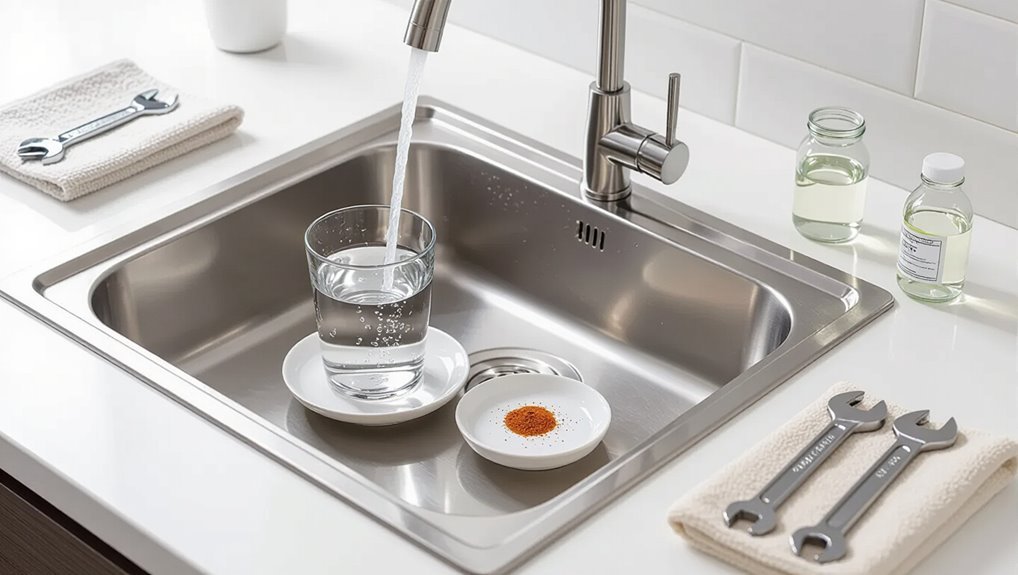
A few quick safety checks can help determine if brown hot water is a hazard or a temporary nuisance: inspect for visible leaks, test cold water to see if discoloration is isolated to the hot supply, and shut off the water heater if there is any sign of corrosion or burning smells.
To avoid exposure, running only cold water for drinking and cooking and using bottled water until the issue is resolved is advised.
If discoloration persists after these steps, contact a plumber to diagnose and repair the source.
Fast safety checks to perform right now
How quickly the situation is assessed can prevent injury and further damage when hot water turns brown; immediately shut off the water heater’s power source (electric breaker or gas pilot) and stop using hot taps.
Check for leaks, inspect pressure relief valve discharge, note smell or sediment, and confirm cold-water clarity.
Document observations for professionals.
These steps guide how to fix brown hot water safely and promptly.
How to temporarily stop using discolored hot water safely
Because brown hot water can signal corrosion, sediment, or contamination, occupants should immediately stop using hot water for drinking, cooking, bathing, or laundry until the source is identified.
Temporarily switch to cold municipal or bottled water for consumption and food prep.
Shut off the water heater if safe, isolate hot supply valves, avoid using appliances that draw hot water, and contact the water provider or a plumber for testing and repairs.
Common Causes of Brown Hot Water
Brown hot water commonly stems from a few identifiable sources that affect water quality at the heater or within the supply lines.
Typical causes include rusting inside older water heater tanks, corroded pipes and fittings, and sediment buildup in the heater itself.
Disturbances in municipal mains or hydrant flushing can introduce temporary discoloration.
In homes on wells, high iron, manganese, or organic contaminants in the source water also produce brown tinting.
Rust in old water heater tanks
When an older water heater’s internal lining corrodes, iron from the tank can leach into the hot water, producing the telltale rusty tint.
Sediment and rust accumulate on the bottom, accelerating corrosion and discoloration.
Reduced anode effectiveness, long service life, and lacking maintenance increase risk.
Temporary flushing may help, but persistent rust often indicates tank deterioration requiring repair or replacement for reliable water quality.
Corroded plumbing pipes and fittings
Corrosion inside supply lines and fittings can also produce rusty hot water, especially in homes with older plumbing or mixed-metal connections.
Flaking metal and corroded joints introduce iron and debris into hot-water lines, causing discoloration and metallic taste. Localized corrosion may affect only certain fixtures.
Inspection, targeted replacement of affected sections, and correcting galvanic corrosion with dielectric fittings resolve the issue.
Sediment buildup in the water heater
Sediment accumulation in a water heater occurs as minerals and particulate matter settle to the tank bottom, where they compact into an insulating layer that reduces heating efficiency and stirs up discolored water during drawdowns.
Over time, loose sludge and rust fragments get agitated by incoming cold water, producing brown or rusty hot water. Regular flushing and occasional professional descaling prevent recurrence.
Disturbance in municipal water mains or hydrant flushing
Occasional disturbances in municipal water mains or routine hydrant flushing can dislodge built-up rust, biofilm, and mineral deposits within distribution pipes, sending brown or rusty water into homes for a short period.
Residents may notice discoloration in cold and hot taps; flushing faucets until clear, avoiding washing, and reporting the event to the water utility are appropriate immediate actions.
Well water iron, manganese, or organic contaminants
When municipal line disturbances are ruled out or discoloration appears only from the hot tap, attention shifts to private wells, where elevated iron, manganese, or naturally occurring organic material commonly causes brown water.
Well minerals and tannins oxidize in the water heater, staining tanks, pipes, and fixtures. Testing identifies contaminants; treatment options include filtration, water softeners, or oxidation systems.
Regular maintenance prevents recurrence.
Anode rod failure or sacrificial rod corrosion
Although out of sight, the water heater’s sacrificial anode rod plays a central role in preventing rust. Its corrosion or failure is a common source of brown hot water.
When the anode is depleted, tank steel corrodes, releasing rust into hot lines.
Inspection and timely replacement restore protection; neglect accelerates tank failure and persistent discoloration, often requiring professional replacement if advanced.
How to Diagnose the Source Step-by-Step
To diagnose brown hot water, one should first determine whether discoloration appears only in hot taps or in cold water as well.
Next, isolate individual fixtures to see if the issue is confined to a single outlet or affects the whole house.
Then, inspect the water heater—its age, visible condition, and pressure behavior.
Finally, test for iron, manganese, or bacterial contamination (using at‑home kits or a lab), and examine accessible pipes, valves, and fittings for corrosion.
Determine if problem is hot-water-only or affects cold water too
Where does the discoloration appear—only from the hot tap or from both hot and cold?
A simple test: run cold-only, hot-only, then both. If only hot is brown, the issue likely originates in the water heater or its inlet.
If both are discolored, corrosion or supply-side contamination is more probable.
Record observations, times, and fixture locations for next troubleshooting steps.
Isolate fixtures to narrow down location (single fixture vs whole house)
How widely is the problem appearing? The homeowner checks multiple taps: kitchen, bathroom, laundry.
If brown water appears only at one fixture, local plumbing or faucet aerator likely at fault.
If every hot outlet shows discoloration, the issue is upstream—main lines or water heater.
Record which fixtures and whether discoloration is constant or intermittent to guide next diagnostic steps.
Checking the water heater: visual, age, and pressure checks
If discoloration appears at multiple hot outlets, the water heater becomes the primary suspect and should be inspected next.
Examine tank exterior for rust, leaks, or corrosion around fittings. Check the unit’s age via manufacture or install date; units older than 8–12 years are likelier to shed rust.
Verify incoming and hot-side water pressure for irregularities and listen for sediment-related noises during heating cycles.
Testing for iron, manganese, and bacterial presence (at-home kits vs lab)
Why test next: because identifying whether iron, manganese, or bacteria cause brown hot water narrows corrective steps and prevents unnecessary plumbing work.
Home test kits give quick, qualitative results for iron and manganese and basic bacteria indicators; they’re inexpensive but less accurate.
Certified lab analysis provides quantitative concentrations and species-level bacterial identification, necessary for treatment plans, legal compliance, or persistent, unexplained discoloration.
Inspecting visible pipes, valves, and fittings for corrosion
Begin by visually examining all accessible hot-water pipes, valves, and fittings from the water heater outward, looking for rust-colored stains, flaking metal, greenish corrosion on copper, and wet spots that indicate active leaks.
Note loosened joints, crusty deposits, swollen insulation, or discolored solder.
Photograph findings, mark suspect areas, and prioritize replacement of heavily corroded sections or failing valves to stop contamination.
When municipal issues are likely how to confirm with the water utility
When municipal contamination is suspected, the homeowner should confirm whether the issue originates upstream by contacting the water utility and gathering specific, time-stamped information about service-wide events, recent maintenance, and water quality reports.
Ask if hydrant flushing, main breaks, or treatment changes occurred nearby. Request boil advisories, recent turbidity readings, and estimated resolution times.
Record names, reference numbers, and timestamps.
DIY Fixes to Clear Brown Hot Water Quickly
This section outlines practical DIY steps to clear brown hot water quickly, covering flushing a water heater with the right tools and safety precautions, replacing a corroded anode rod, and bleeding plumbing after municipal work.
It also summarizes short-term fixes such as point-of-use and sediment filters and addresses well-water options like shock chlorination and basic filtration.
Clear, step-by-step procedures and timing guidance are provided so a homeowner can assess which actions to take safely and when to call a professional.
Flushing the water heater tools, step-by-step procedure, and safety tips
Gather the necessary tools—garden hose, adjustable wrench, bucket, screwdriver, safety glasses, and work gloves—before draining a water heater to remove rust and sediment that cause brown hot water.
Turn power/gas off, close cold inlet, attach hose to drain valve, open hot faucet upstairs, open drain slowly, flush until clear, close valves, refill, restore power.
Wear protection and avoid scalds.
Replacing a corroded anode rod when and how
Check the anode rod for heavy corrosion or depletion as the next step in diagnosing persistent brown hot water; a worn rod can no longer sacrificially protect the tank, allowing rust to form and discolour the water.
If corroded, shut off power/gas and water, drain enough to expose the rod, remove with proper socket, replace with compatible magnesium or aluminum rod, retighten and refill.
Bleeding and flushing plumbing lines after municipal work
After municipal water main work, homeowners should immediately bleed and flush affected plumbing lines to remove dislodged sediment and rust that can cause brown hot water.
Open all cold and hot faucets, starting lowest to highest, run until clear, then flush toilets and outdoor taps.
Inspect water heater after flushing for residual discoloration; repeat if necessary.
Wear gloves and collect samples if problems persist.
Using point-of-use filters and sediment filters as short-term fixes
Install or place a point-of-use or inline sediment filter on the affected fixture or supply line to trap rust and particulate that cause brown hot water.
Filters offer immediate clarity while diagnosing source. Replace cartridges frequently and monitor flow reduction.
- Choose micron rating (5–20 µm) for visible sediment.
- Use clear housing to inspect buildup.
- Temporarily bypass for hot water-only fixtures.
Treating well water: shock chlorination and basic filtration options
Begin with a targeted shock chlorination to eliminate iron-bacteria and organic buildup that commonly discolors well water.
Then follow with basic filtration to remove remaining particulates and oxidized iron.
After chlorination and aeration, install a sediment prefilter plus an iron-specific filter (greensand, Birm, or catalytic carbon) and a carbon postfilter.
Monitor water clarity and retest for bacteria and iron before resuming normal use.
When to drain and refill the tank versus partial flushing
A quick flush of a household water heater can clear sediment-discolored hot water in minutes, but a full drain and refill is warranted when heavy rust, persistent cloudiness, or metallic taste returns after flushing.
Partial flushing is suitable for minor sediment or occasional discoloration.
Drain and refill or tank replacement is recommended for recurring contamination, visible corrosion, or after long neglected maintenance to fully remove deposits.
Preventive Maintenance to Avoid Recurrence
Preventive maintenance focuses on regular actions that reduce sediment buildup and corrosion before they cause brown hot water.
Recommendations include flushing schedules tailored to tank type and local water quality, periodic anode rod inspections and replacement, and installing whole-house sediment or iron filters.
Homeowners should also watch for early signs—rusty-tinted cold water, increased sediment in the drain, or noisy heaters—that indicate a need for service.
Recommended water heater flushing schedule by tank type and water quality
When scheduled to match tank construction and local water chemistry, flushing intervals minimize sediment buildup and extend heater life.
Steel tanks in hard-water areas: flush every 3–6 months.
Glass-lined tanks with moderate hardness: flush annually.
Stainless or high-capacity commercial tanks: quarterly to biannually based on sediment load.
Soft-water or treated systems may extend intervals to 18–24 months with periodic checks.
Anode rod inspection and replacement timeline
Corrosion control relies heavily on the sacrificial anode rod, which sacrifices itself to protect the tank interior and reduce rusty water incidents.
Regular inspections—initially at 12 months after installation and thereafter every 6–12 months depending on water chemistry—identify depletion before significant tank corrosion occurs.
Replace a rod when more than 50% consumed, when heavily pitted, or when testing shows loss of protective function to prevent brown water recurrence.
Installing whole-house sediment and iron filters
A whole-house sediment and iron filtration system offers a proactive barrier against particulate and dissolved iron that can stain fixtures and discolor hot water. It captures sand, rust flakes, and iron precipitates before they reach the water heater.
Professional sizing and proper prefiltration prevent pressure loss. Choose media rated for iron removal, schedule cartridge or media changes, and install bypass valves for maintenance.
Signs to monitor that indicate early corrosion or sediment problems
How can homeowners detect early signs of corrosion or sediment buildup before staining or equipment damage occurs? Observers should note rusty or metallic taste, faint discoloration in short warm-water runs, rattling or sediment noises from the heater, reduced water flow, and fluctuating temperatures.
Periodic inspection of drain pans, anode rods, and faucet aerators reveals scaling or particulate accumulation needing prompt cleaning or replacement.
When to Call a Plumber or Water Treatment Professional
If brown hot water persists despite basic checks, a professional should evaluate safety risks and complex failures beyond homeowner skill.
Licensed plumbers are recommended for tank replacement, significant pipe corrosion, active leaks, and code-related repairs, while water treatment specialists or well contractors are appropriate for source contamination, filtration system issues, and well-related problems.
Before the visit, provide clear descriptions, recent water test results if available, and dated photos of the water color, water heater label/serial, piping, and any visible corrosion or leaks.
Safety and complexity thresholds that require a pro
When corrosion, sediment, or bacterial contamination is suspected beyond simple flushing or filter replacement, the situation crosses into professional territory; licensed plumbers and water treatment specialists have the diagnostic tools and safety protocols to identify source problems, assess risks, and perform repairs or treatments that homeowners should not attempt.
Call a pro when diagnostics, chemical disinfection, pressure testing, or confined-space work is required for safety and compliance.
Problems best handled by licensed plumbers (tank replacement, pipe corrosion, leaks)
Although some hot-water issues can be resolved by homeowners, certain problems—such as failing water heaters, extensive pipe corrosion, or active leaks—require a licensed plumber because they involve complex diagnostics, code-sensitive repairs, and safety risks that exceed DIY scope.
Licensed plumbers assess tank condition, replace failing heaters, repair or replace corroded piping, locate concealed leaks, and guarantee work meets local codes and safety standards.
When to hire a water treatment specialist or well contractor
Call a water treatment specialist or well contractor when brown hot water traces back to source issues beyond typical household fixes—such as well contamination, sediment-laden supply lines, malfunctioning filtration systems, or persistent discoloration after basic flushing and tank maintenance.
They assess wells, test water chemistry, inspect and repair filtration, recommend media replacement or chlorination, and design long-term treatment or source remediation plans when homeowner measures fail.
What information and photos to provide before the service call
What details and images should be ready before the technician arrives? Provide location (city, well or municipal), recent symptom timeline, which taps/showers are affected, water temperature and color photos (close-up and wide), recent maintenance or changes, water test results if any, age/type of heater and filtration, visible leak or sediment photos, and permission/access notes. Clear, timestamped images speed diagnosis.
Cost Estimates and Timeframes for Fixes
Typical do-it-yourself remedies like flushing the tank or tightening fittings generally cost under $50 in parts and take one to two hours.
Professional diagnostic and repair services vary widely, often ranging from $100–$400 for diagnosis and minor repairs to $800–$2,500 or more for full tank replacement.
Final cost and time depend on tank age, water quality, and whether specific replacement parts are required.
Typical DIY cost and time for flushing and minor repairs
A basic DIY flush and small repairs usually require only common tools and parts, with most homeowners completing the work in one to three hours and spending between $10 and $150 depending on parts needed.
Typical expenses include hose, wrench, replacement anode rod sections, or new drain valve.
Time varies with tank size and sediment level; simple cleanouts are fastest.
Professional service cost ranges: diagnosis, repair, and replacements
How much will professional diagnosis and repair cost, and how long will it take? A plumber’s visit for inspection typically costs $75–$200 and takes 30–90 minutes. Minor repairs range $100–$400 (1–3 hours). Major replacements cost $700–$2,500+ and require a day or more.
| Service | Typical cost | Typical time |
|---|---|---|
| Inspection | $75–$200 | 30–90 min |
| Minor repair | $100–$400 | 1–3 hr |
| Replacement | $700–$2,500+ | 1+ day |
Cost factors: tank age, water quality, required replacement parts
Tank age, water quality, and the availability of replacement parts together determine both the likely fixes and their costs: older tanks are more prone to corrosion and sediment buildup.
Hard or iron-rich water accelerates wear and can necessitate filter or anode replacements.
Uncommon or discontinued parts raise labor and procurement expenses.
Costs vary: minor part swaps run low, while extensive tank replacement or filtration installs cost considerably more.
Preventive Products and Accessories to Recommend
Recommended whole-house sediment filters and point-of-use inline filters can prevent particulate buildup that causes discoloration in hot water.
Water heater treatment accessories—such as sacrificial anode rods, corrosion-resistant drain valves, and flushing kits—help extend tank life and reduce rust and sediment accumulation.
Simple at-home water testing kits that measure iron, manganese, pH, and total dissolved solids give homeowners actionable data to choose the right preventive products.
Recommended whole-house sediment filters and inline filters
Clear filtration at the point of entry prevents iron, rust, and sediment from reaching fixtures and appliances throughout the home.
Recommended options include durable whole-house sediment housings and bypass valves plus cartridge upgrades. Inline filters protect individual lines and appliances.
Consider:
- 20″ sediment cartridge, 5 micron
- Backwash-capable media tank for heavy load
- Inline 1/2″ filter for boiler or washing machine
Water heater treatment accessories: anode rods, drain valves, and flushing kits
Several essential accessories extend water heater life and reduce brown water incidents by addressing corrosion and sediment at the source: sacrificial anode rods to slow tank deterioration, durable drain valves to enable routine flushing, and compatible flushing kits to remove settled particulate.
Select anode material for water chemistry, replace at recommended intervals, install ball-type drain valves for reliability, and use pressure-assisted flushing kits for thorough sediment removal.
At-home water testing kits and what they detect
After addressing corrosion and sediment with anode rods, reliable drain valves, and flushing kits, homeowners should verify water quality directly with at-home testing kits.
These kits detect iron, manganese, chlorine, pH, hardness, bacteria, and nitrates, offering colorimetric strips, reagent vials, or digital meters.
Results guide maintenance decisions and indicate when professional lab analysis or plumber intervention is necessary.
Real-World Scenarios and Solutions
The article presents concrete scenarios with targeted remedies, beginning with a step-by-step protocol for brown hot water following municipal flushing.
It then outlines likely causes and straightforward fixes when discoloration is confined to a single faucet.
Finally, an intermittent brown water troubleshooting flowchart guides users through prioritized checks and actions.
Scenario: Brown hot water after municipal flushing step-by-step remedy
Many homeowners encounter brown hot water immediately following a municipal water main flushing, which typically stirs iron and sediment in older distribution lines and forces it into household plumbing.
Recommended steps: avoid using water, run cold taps to clear lines, flush the water heater by draining a few gallons until clear, check aerators, and contact the utility if discoloration persists beyond several hours.
Scenario: Brown hot water only at one faucet likely causes and fixes
When brown hot water appears at a single faucet, it usually indicates a localized issue—such as rusty supply pipes, a failing fixture cartridge, or sediment in the faucet’s mixing valve—rather than a problem with the water heater or municipal system.
Inspect and flush the faucet, remove and clean or replace the cartridge/aerator, check nearby supply lines for corrosion, and isolate or replace affected piping as needed.
Scenario: Intermittent brown water troubleshooting flowchart
Having addressed single-faucet causes like rusty supply lines and a failing cartridge, the focus shifts to intermittent brown water issues that appear sporadically across one or more fixtures.
A concise troubleshooting flow: note timing and affected fixtures, run cold then hot to isolate heater, flush affected lines, check recent plumbing work or mains disturbance, test water heater and sediment, call a plumber if unresolved.
Visual Guide: What Different Shades of Brown Indicate
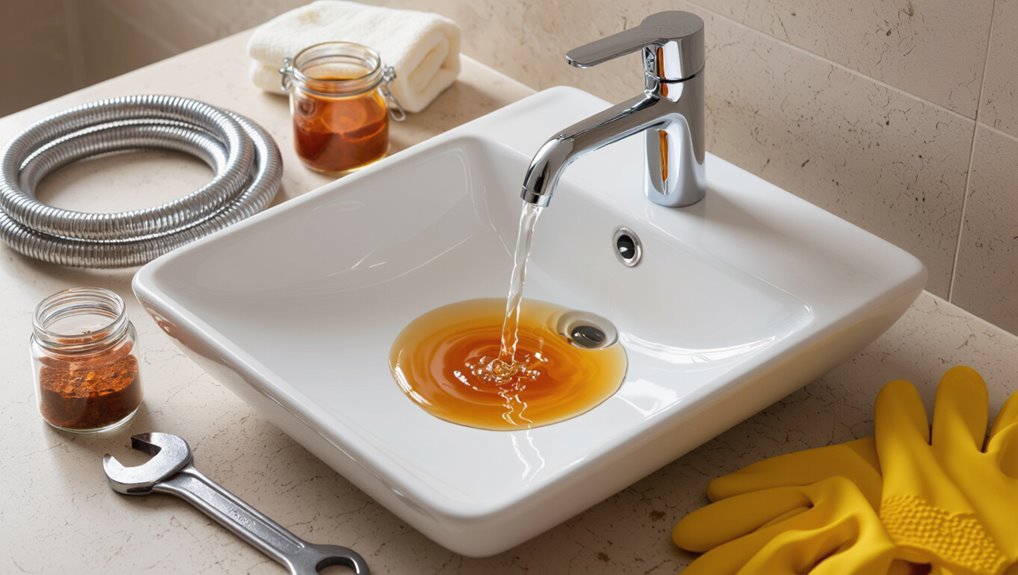
A quick visual assessment can help identify likely causes of brown hot water.
Light tea-colored water typically points to minor sediment or low levels of iron, while dark brown to reddish water often indicates heavy rust or corrosion in pipes or the water heater.
Cloudiness or visible particles may distinguish sediment from potential biological contamination and should prompt further testing.
Light tea-colored water likely minor sediment or iron
Light tea-colored hot water usually signals minor sediment or dissolved iron rather than a major plumbing failure.
It often appears after pipe work, tank disturbance, or seasonal flow changes. Flushing the water heater and running cold taps clears particles; installing a sediment filter or treating well water reduces recurrence.
Testing for iron confirms the cause and guides appropriate, targeted remedies.
Dark brown or red water likely heavy rust or corrosion
If tea-colored water often stems from minor sediment or dissolved iron, noticeably darker brown or reddish hot water usually points to heavier rust or active corrosion within the water heater or connected piping.
This indicates metal degradation, flaking anode rods, or corroded interior tank surfaces.
Immediate flushing, inspecting the sacrificial anode, and checking pipe condition are advised; replacement may be required to prevent failures.
Cloudy or discolored with particles sediment vs biological causes
How can one distinguish cloudy, particle-filled hot water caused by sediment from discoloration driven by biological growth?
Sediment yields gritty particles, settles quickly, and clears after filtration or flushing.
Biological causes produce slimy film, odor (musty or swampy), slow-settling floaters, and may reappear after treatment.
Test: strain sample, smell, and run cold vs. hot to isolate tank or supply contamination; call pros if uncertain.
Summary Checklist: Quick Steps to Fix Brown Hot Water
The article presents a concise checklist covering immediate safety actions, short-term DIY fixes to try now, and indicators for scheduling professional service.
It advises turning off affected water sources and avoiding ingestion until the cause is identified.
It then outlines quick tests and temporary remedies, followed by clear signs that a plumber or utility technician should be called.
Immediate safety actions
Begin by cutting power to any electric water heaters and shutting off gas to gas-fired units to eliminate immediate ignition and electrocution risks; then close the cold-water supply valve to the heater to prevent further contamination or flushing before assessment.
Next, avoid using affected taps, run only cold water where needed, ventilate if odors are present, and document discoloration for professionals.
Short-term DIY fixes to try now
After completing immediate safety actions, a homeowner can try several short-term DIY steps to clear brown hot water before calling a professional.
Flush cold and hot taps individually, run cold until clear, then hot.
Drain and refill the water heater per manufacturer guidance.
Check and replace corroded faucet aerators and showerheads.
Monitor water color; repeat flushing if minor sediment returns.
When to schedule professional service
When brown hot water persists despite repeated flushing, visible corrosion, or a sudden change in color or odor, homeowners should arrange professional service promptly. These signs indicate internal plumbing or water‑heater issues that require diagnostic testing, part replacement, or system flushing beyond typical DIY scope.
A plumber evaluates sediment, anode rod, tank corrosion, and supply lines. They recommend repairs or replacement and verify water safety and compliance.
Conclusion
Brown hot water often signals rust, sediment, or disturbed pipes; about 60% of residential discoloration cases stem from aging water heaters or nearby plumbing work. Quick DIY checks—running cold water, flushing the heater, and inspecting anode rods—resolve many issues, but persistent or foul-smelling brown water warrants a professional. Regular maintenance and simple filters reduce recurrence, making brown water both preventable and usually fixable without major repairs.
