How to Cover Hot Radiator Pipes Safely: Materials, Steps, and Expert Tips
To cover hot radiator pipes safely, use high-temperature insulation materials like mineral wool, fiberglass with foil, or closed-cell foam designed for the pipe’s temperature. Incorporate rigid guards or wooden chases that maintain necessary clearances and allow for service access.
Begin by shutting off the system, measuring the pipes, and installing the insulation tubing or wrap. Secure seams with fireproof tape and test for any heat buildup afterward. Follow these steps carefully, and refer to code notes and expert tips for additional guidance.
Why You Should Cover Hot Radiator Pipes Risks and Benefits
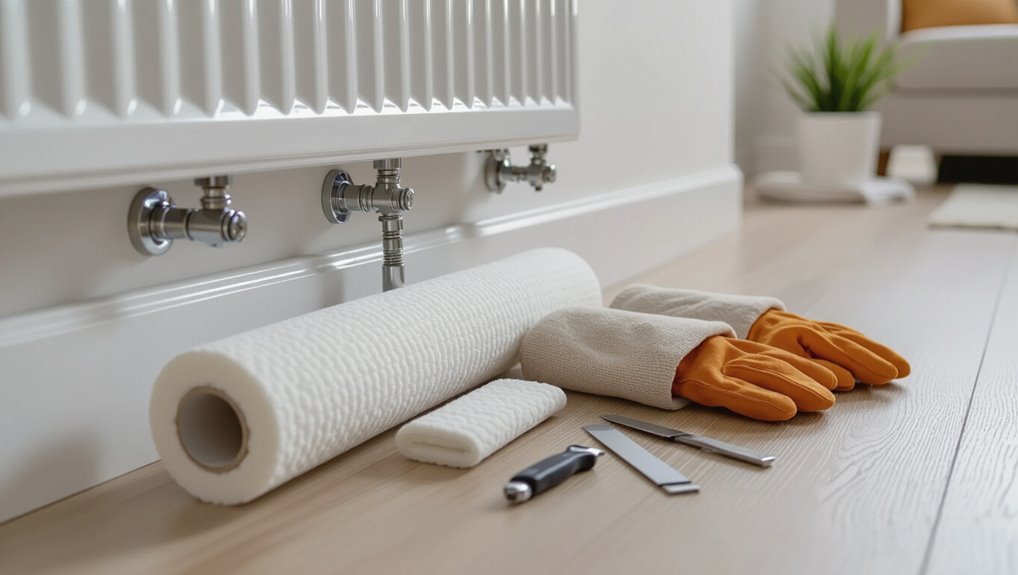
Exposed hot radiator pipes pose clear burn and injury hazards, particularly for children and pets, making protective measures a safety priority.
Covering pipes can also improve energy efficiency and promote more even heat distribution by reducing unwanted heat loss.
Additionally, pipe covers offer aesthetic improvements and can free up usable space or integrate with shelving and décor.
Burn and Injury Risks from Exposed Pipes
Touching an uncovered hot radiator pipe can cause immediate burns, especially for children, the elderly, and pets whose skin is thinner or more vulnerable.
Burns range from painful blisters to deeper tissue damage; indirect contact can pull clothing alight or trip caretakers.
Guidance on how to cover hot radiator pipes reduces accidental contact, limits scald risk, and helps prevent household injuries and liability.
Energy Efficiency and Heat Distribution Benefits
Covering hot radiator pipes can improve a home’s thermal performance by reducing unwanted heat loss and directing warmth into living spaces more efficiently.
Proper insulation and targeted enclosures minimize conductive and convective losses, stabilizing room temperatures and lowering heating demand.
Even short pipe runs benefit, reducing boiler cycling and energy waste.
Well-fitted covers maintain heat flow while preventing cold spots and drafts.
Aesthetic and Space-Use Advantages
While often overlooked in favor of purely functional fixes, concealing hot radiator pipes yields clear aesthetic and practical gains: neatly clad runs blend with interior decor, reduce visual clutter, and create usable ledges or recessed spaces for storage and display.
Covered pipes also protect finishes, permit coordinated paint or trim, and enable multifunctional elements—benches, shelving, or window seats—without compromising access for maintenance.
Quick Safety Summary Can You Cover Radiator Pipes?
A brief safety assessment distinguishes situations where covering radiator pipes is acceptable from those where it poses hazards, such as obstructing ventilation or trapping heat.
Applicable safety standards and local building codes often dictate allowable materials, clearances, and permanence of covers.
Homeowners should consult those requirements before installing any pipe coverings.
When Covering Is Safe vs. When to Avoid It
When radiator pipes run at moderate temperatures and are properly insulated, it is generally safe to add external covers that do not trap heat or restrict airflow; however, if pipes reach very high temperatures, are part of a sealed steam system, show signs of corrosion or leaks, or are located near combustible materials, they should not be covered without consulting a qualified heating professional.
Covers are appropriate for low-heat, accessible runs; avoid covering compromised, high-heat, steam, or poorly ventilated installations.
Key Safety Standards and Local Code Considerations
Why check local codes before installing a cover on radiator pipes? Regulations may dictate clearances, materials, fire resistance, and accessibility for maintenance.
Consult building codes, HVAC standards, and insurer requirements. Verify prohibited coverings, required vents, and contractor licensing.
When in doubt, obtain permits or professional guidance to guarantee compliance and avoid safety hazards, fines, or voided warranties.
Materials for Covering Hot Radiator Pipes
The discussion outlines common options for insulating materials such as foam, fiberglass, and rubber designed to reduce heat loss and surface temperature.
It also covers protective covers and guards that prevent burns and physical damage, plus appropriate fasteners and heat-resistant sealants for secure installation.
A brief list of recommended tools needed for cutting, fastening, and sealing completes the materials overview.
Insulating Materials
A range of insulating materials is available to reduce heat loss and lower surface temperatures on hot radiator pipes.
Each option—fiberglass pipe insulation, closed-cell foam tubing, mineral wool wraps, and high-temperature silicone sleeves—offers different thermal properties, durability, and installation methods.
Selection should match pipe temperature, space constraints, and safety requirements.
- Fiberglass pipe insulation
- Closed-cell foam tubing
- Mineral wool wraps
- High-temperature silicone sleeves
Fiberglass Pipe Insulation
Installers often choose fiberglass pipe insulation for its combination of heat resistance and sound-dampening properties. It resists high temperatures, reduces heat loss, and limits surface temperature exposure.
Available in preformed sleeves and wraps, it requires vapor barrier jackets in moist areas. Proper cutting and secure mechanical fastening prevent gaps.
Suitable for exposed radiator runs where noncombustible material is required and space allows.
Closed-cell Foam Tubing
Closed-cell foam tubing offers a lightweight, moisture-resistant option for insulating hot radiator pipes, combining a closed-cell structure that limits water absorption with flexible, pre-slit jackets for straightforward installation.
It provides good thermal resistance for moderate temperatures, resists mold, and reduces surface heat. Fasteners or adhesive secure sections; seams should be taped.
Suitable for exposed runs where low profile and corrosion prevention matter.
Mineral Wool Wraps
Several layers of mineral wool wraps provide high-temperature insulation for hot radiator pipes, combining excellent thermal resistance with non-combustible performance.
They resist moisture, compress to fit irregular shapes, and tolerate sustained temperatures higher than many foams.
Installation requires overlapping seams, mechanical fastening or high-temperature tape, and an outer protective jacket to prevent fiber shedding and guarantee durable, code-compliant coverage.
High-temperature Silicone Sleeves
High-temperature silicone sleeves provide a flexible, durable option for insulating hot radiator pipes, combining heat resistance with ease of installation.
They resist temperatures up to several hundred Celsius, repel moisture, and tolerate vibration. Cut-to-fit designs slip over pipes and secure with clamps or adhesive.
They are low maintenance, non-toxic, and suitable for visible runs where neat appearance and reliable thermal protection are required.
Protective Covers and Guards
Protective covers and guards offer a practical way to reduce burn risk and conceal unsightly radiator pipes while allowing for necessary heat transfer. Choices range from durable metal guards to ventilated wooden boxes or softer wraps suited for cooler sections.
Each option balances protection, appearance, and airflow differently and should be chosen for the specific pipe temperature and location.
- Metal pipe guards and boxes for high-heat areas
- Wooden or MDF covers with venting for finished interiors
- Fabric or leather wraps for low-temperature sections
- Combination solutions tailored to temperature and aesthetics
Metal Pipe Guards and Boxes
A range of metal pipe guards and boxes provide durable, heat-resistant barriers that reduce burn risk and protect pipes from damage.
Constructed from steel or aluminum, they offer rigid mounting, tamper resistance, and easy cleaning.
Perforated or slotted designs allow convective heat release while shielding occupants.
Proper sizing and secure fastening guarantee safe clearance and service access for maintenance.
Wooden or MDF Covers with Venting
Several styles of wooden or MDF covers with venting offer a balance of aesthetics and safety when enclosing hot radiator pipes.
Constructed from heat-rated, sealed MDF or kiln-dried wood, they incorporate louvers or perforations to allow convective flow.
Proper clearance, fire-retardant paint, and secure fastening prevent contact and deformation.
Regular inspection for warping or paint failure preserves function and safety.
Fabric or Leather Wraps for Low-Temperature Areas
Wooden or MDF housings suit higher-temperature runs, but fabric or leather wraps serve well where pipe surfaces remain relatively cool.
Lightweight cotton, canvas, or treated leather protect against scratches and reduce heat transfer modestly. Secure with nonmetallic ties or Velcro, avoid direct flame exposure, and inspect for wear.
Choose breathable, fire-retardant materials and replace degraded wraps promptly to maintain safety and appearance.
Fasteners, Sealants, and Tools Needed
Prepare the right fasteners, sealants, and tools before beginning any radiator pipe covering project to guarantee secure, heat-resistant installation and safe maintenance access.
Recommended items include corrosion-resistant clamps, high-temperature silicone or RTV sealant, heat-resistant tape, and insulated mounting brackets.
Use basic hand tools and PPE.
- Stainless steel pipe clamps
- High-temp silicone sealant
- Heat-resistant foil tape
- Insulated mounting brackets
How to Choose the Right Covering Material
Selection of a pipe covering should begin with evaluating the pipe’s operating temperature to guarantee the material’s heat tolerance and thermal conductivity are appropriate.
Fire resistance, durability, and moisture performance must be weighed alongside effects on indoor air quality.
Finally, the chosen material should meet local code requirements and be compatible with the HVAC system to avoid performance or safety conflicts.
Matching Material to Pipe Temperature
When choosing a covering, the material must be matched to the pipe’s operating temperature to confirm safety and longevity.
Specify the maximum continuous surface temperature, then select materials rated above that value.
Consider thermal expansion, contact insulation, and adhesive limits.
For variable temperatures, choose materials with broad service ranges.
Verify manufacturer specifications and factor in ambient conditions to prevent degradation and ascertain reliable performance.
Fire Resistance and Thermal Conductivity Considerations
Evaluate both fire resistance and thermal conductivity together, since they determine a cover’s ability to limit heat transfer while resisting ignition or charring.
Select materials rated for high temperatures and low thermal conductivity—ceramic fiber, mineral wool with proper facing, or intumescent coatings—ensuring tested fire ratings.
Balance insulating value with codes: avoid combustible foams and verify manufacturer specifications and certification for radiator applications.
Durability, Moisture Resistance, and Indoor Air Quality
Because radiator covers are long-term installations exposed to heat, humidity, and household activity, material choices should prioritize durability, moisture resistance, and low emissions.
Durable metals and sealed hardwoods resist warping and wear; PVC and closed-cell foam tolerate moisture.
Select low-VOC paints, adhesives, and certified materials to minimize off-gassing.
Regular inspections and easy-to-clean surfaces extend lifespan and protect indoor air quality.
Code Compliance and HVAC Compatibility
Although aesthetics and safety matter, adherence to building codes and HVAC requirements determines whether a radiator cover is legally and functionally acceptable. Installers must verify local regulations on clearances, fire ratings, and materials and confirm that coverings will not impede heat output, airflow, or mechanical controls.
Specify noncombustible or rated materials, maintain required clearances, allow convection paths, and coordinate with HVAC technicians to preserve system efficiency and safety.
Step-by-Step Guide to Safely Cover Hot Radiator Pipes
The following steps outline a practical workflow for safely covering hot radiator pipes, beginning with preparing the workspace and shutting off the heating system.
Measurements and a coverage plan guide the selection and installation of insulation tubing or the wrapping of high-temperature sections with mineral wool or foil.
Where needed, the process concludes with construction and secure mounting of metal or wooden guards to protect the finished installation.
Preparing the Workspace and Shutting Off the System
Begin by clearing the area around the radiator to create an unobstructed, well-lit workspace; remove furniture, rugs, and loose items that could catch heat or impede movement.
Next, allow the system to cool, then shut off the boiler or radiator valve per manufacturer instructions.
Drain or depressurize if required, isolate electrical components, and place warning signs.
Verify temperature drop before starting work.
Measuring Pipes and Planning Coverage
Measure each exposed section of hot radiator pipe carefully before selecting covers or insulation to guarantee a precise fit and adequate thermal protection.
Record lengths, diameters, bends, and nearby obstructions. Map coverage segments and mark seams or joints needing flexible pieces.
Calculate material quantities with waste allowance. Choose compatible thickness for heat reduction and clearance for valves, supports, and access for future maintenance.
Installing Insulation Tubing Stepwise
Prepare a clean, accessible work area and gather the pre-measured insulation tubing, a utility knife, adhesive or tape specified by the tubing manufacturer, a tape measure, and protective gloves.
Cut tubing to length, slit along the seam if required, fit snugly over pipes, align joints, secure seams with manufacturer-approved adhesive or tape, trim excess, and inspect for gaps.
Allow adhesive to cure before restoring heat.
Wrapping High-Temperature Pipes with Mineral Wool or Foil
When wrapping high-temperature radiator pipes with mineral wool or foil, the installer should select materials rated for the pipe surface temperature and local fire codes.
Wear heat-resistant gloves, and work systematically from one end of the run to the other to maintain consistent coverage.
Cut mineral wool to fit, compress lightly, wrap foil facing outward, secure seams with high-temperature tape, and maintain service access.
Building and Mounting Metal or Wooden Guards
After insulating runs with mineral wool or foil, a rigid guard provides physical protection and a finished appearance while keeping required clearance and access.
Measure pipe runs and clearances, cut sheet metal or plan and rip wood panels, form vents for heat dissipation, and attach brackets to studs or masonry avoiding pipe contact.
Use noncombustible fasteners for metal, corrosion-resistant screws for wood, and removable panels for service.
Sealing Joints, Penetrations, and Wall Pass-Throughs
One clear step is to seal joints, penetrations, and wall pass-throughs to prevent heat loss, drafts, and moisture while maintaining required clearances around hot radiator pipes.
Use high-temperature, non-combustible sealants or mineral wool with fire-rated caulk. Confirm seals are snug but allow pipe movement.
Inspect for gaps, avoid combustible insulation, and label sealed penetrations for future maintenance access.
Restoring System Operation and Initial Inspection
Begin the restoration by performing a systematic visual and functional inspection of the radiator piping and surrounding areas to confirm seals, clearances, and coverings are secure and compliant.
Verify insulation placement, fasteners, and firestops.
Restore valves and bleed radiators slowly, checking for leaks and pressure stability.
Monitor temperature gradients and recheck clearances after heat-up.
Document findings and report anomalies for corrective action.
Special Situations and Advanced Techniques
Special situations and advanced techniques address installations where standard covers do not fit or interfere with required access.
Topics include solutions for tight or concealed spaces, keeping valve and union access clear, protecting vertical runs and stairwell exposures, and working around thermostatic and control devices.
Practical strategies prioritize safety, maintainability, and compliance with heating system requirements.
Covering Pipes in Tight or Concealed Spaces
When space is limited or pipes are hidden behind walls, in crawlspaces, or within cabinetry, standard insulating wraps and guards often cannot be used and require alternative approaches that prioritize access, ventilation, and fire safety.
Removable sectional insulation, thin closed‑cell foam sleeves, heat‑resistant paint, and routed access panels allow protection while preserving serviceability; guarantee clearances, maintain airflow, and follow local codes and manufacturer temperature limits.
Radiator Valve and Union Access Solutions
Addressing radiator valves and unions demands solutions that preserve service access while minimizing burn and leak risks. These components require tailored protection because they combine exposed hot surfaces, moving parts, and frequent adjustment or maintenance needs.
Removable, insulated collars or split-sleeve guards permit quick access; heat-resistant gaskets and clearance slots prevent pressure on fittings. Labeling and documented removal procedures guarantee safe, repeatable servicing.
Covers for Vertical Runs and Stairwell Exposures
Vertical runs and stairwell exposures present unique challenges because pipe length, heat transfer, and proximity to traffic increase burn and fire risks while constraining access and aesthetics.
Use continuous, ventilated metal or insulated composite covers anchored to structure, allowing expansion and inspection.
Include kickplates or rail guards where pedestrian contact is likely.
Prioritize noncombustible finishes, removable sections for maintenance, and secure fastenings to prevent vibration and tampering.
Working Around Thermostatic and Control Devices
Because thermostatic valves, sensors, and control actuators are integral to system performance, covers must be designed to protect them without impairing function or access.
Install removable panels or hinged sections, maintain clearances for airflow and wiring, and avoid insulating directly over sensing elements.
Label and document locations for maintenance, use nonconductive mounting, and verify device operation after installation.
Common Mistakes and How to Avoid Them
Common errors when covering hot radiator pipes can compromise safety, equipment function, and compliance.
Typical pitfalls include using materials that are not heat-resistant, blocking ventilation or access needed for maintenance, creating insulation that traps heat or causes condensation, and ignoring local codes or manufacturer instructions.
Addressing these issues early prevents damage and reduces risk.
- Using non–heat-resistant materials
- Blocking required ventilation or service access
- Over-insulating, causing overheating or condensation
- Ignoring local codes and manufacturer guidance
Using Non to Heat-Resistant Materials
Using materials that cannot withstand prolonged heat exposure is a frequent error when covering radiator pipes, and it can lead to melting, off-gassing, or even fire hazards.
Installers sometimes choose plastics, vinyl, or untreated fabrics for aesthetics; instead, recommend certified heat-resistant options (metal, mineral wool, silicone-coated fabrics).
Emphasize temperature ratings, manufacturer guidance, and periodic inspections to prevent degradation and dangerous failures.
Blocking Required Ventilation or Service Access
After selecting heat-resistant materials, attention must turn to preserving airflow and maintenance access around radiator piping.
Covers should include removable panels or hinged sections for inspection and service. Maintain manufacturer-specified clearances and avoid sealing vents.
Secure fastenings must not obstruct valves or gauges. Periodic checks guarantee ventilation remains unobstructed and technicians can access components without dismantling permanent coverings.
Over-Insulating Causing Overheating or Condensation
Over-insulating radiator pipes can trap excessive heat, leading to higher surface temperatures, reduced system efficiency, and localized overheating that stresses joints and valves.
It can also create cold exterior surfaces where moisture condenses if insulation blocks convective heat flow unevenly.
Avoid thick, continuous wraps; allow designed air gaps, use vapor-permeable materials where condensation risk exists, and monitor temperatures after installation.
Ignoring Local Codes and Manufacturer Guidance
Mistakes in insulating practice can compound when installers ignore local building codes and manufacturer instructions for radiator pipes.
Noncompliance risks voided warranties, safety violations, and incompatible materials that cause corrosion or overheating.
Proper procedure: consult codes, follow manufacturer thermal clearances, document approvals, and use certified products.
Regular inspections guarantee continued compliance and reduce liability while preserving system performance and occupant safety.
Inspection, Maintenance, and Lifespan of Pipe Covers
Regular visual inspections and simple safety tests help verify that pipe covers remain secure and effective.
Attention should be paid to cracks, discoloration, melting, or any signs that increase fire risk.
When insulation or guards show significant wear or fail tests, replacement should follow manufacturer guidance rather than further repair.
Routine Visual Checks and Safety Tests
Inspectors should perform routine visual checks and simple safety tests on radiator pipe covers at least seasonally and after any impact or repair.
They verify secure fastenings, intact insulation, correct clearances, and absence of moisture.
Simple tests include gentle pressure on mounts, heat sensing for unexpected hotspots, and confirming covers remain stable when pipes expand.
Record findings and schedule repairs or replacements promptly.
Signs of Degradation or Fire Risk
When did a protective cover last show signs that it could become a hazard?
Inspectors note fraying, melting, burns, stains, or discoloration indicative of heat exposure.
Loose seams, gaps, crushed insulation, or warping reduce effectiveness and raise fire risk.
Odors, soot, or scorch marks on adjacent surfaces signal elevated temperatures.
Document findings, isolate the area, and schedule prompt professional assessment.
When to Replace Insulation or Guards
How often should pipe insulation and guards be replaced to remain effective and safe?
Regular inspections every 6–12 months are recommended; replace immediately if damage, compression, moisture, mold, brittle insulation, torn guards, or loosened fasteners are found.
Replace older materials every 5–10 years depending on material quality and environment.
After any heat-related discoloration or odor, remove and replace without delay.
Cost, Time, and DIY vs. Professional Installation
Typical material costs and a simple budget for foam, metal, or fabric covers are summarized to help readers plan.
Estimated time ranges for measuring, cutting, and fitting common pipe-cover jobs are provided so homeowners can compare DIY efforts with professional timelines.
Guidance is given on when to hire an HVAC or plumbing professional based on complexity, safety risks, and local code requirements.
Typical Costs and Materials Budget
Budgeting for covering hot radiator pipes generally requires estimating materials, labor, and time with attention to safety and local codes.
Typical DIY material costs range $20–$150 for insulation, covers, brackets, and fireproof sealant; professional installation adds $150–$600 depending on complexity and finish.
Include permit fees, specialized fittings, and contingency (10–20%) for unexpected repairs or code upgrades.
Time Estimates for Common Jobs
Time estimates for covering hot radiator pipes vary with scope, materials, and access: simple insulation wraps or foam sleeve installs commonly take 30–90 minutes for a single run, while custom boxed covers or built-in enclosures can require 2–6 hours per section.
Multiple runs, complex bends, and decorative finishes add time.
DIY projects often stay shorter; detailed finishing and coordination extend timelines.
When to Hire an HVAC or Plumbing Professional
Deciding whether to hire an HVAC or plumbing professional depends on pipe accessibility, system complexity, local code requirements, and the homeowner’s skill level.
Simple foam sleeves or wrap insulation can be DIY, but enclosed covers, steam systems, or pipes within walls often warrant licensed expertise to guarantee safety, proper ventilation, and compliance.
Professionals provide accurate cost estimates, faster completion, warranty, and permit handling when required.
Real-World Examples and Before/After Scenarios
The following real-world examples illustrate practical approaches and measurable outcomes for different radiator pipe challenges. Each case compares the initial condition with the post-covering result to show safety, aesthetics, and efficiency improvements. Readers can use these snapshots to match solutions to similar situations in their own buildings.
| Scenario | Before / After |
|---|---|
| Case 1: Residential Exposed Radiator Run | Exposed hot run along baseboard / Covered with low-profile insulated chase, reduced burn risk |
| Case 2: Multi-story Building Vertical Stack | Uninsulated vertical stack with heat loss / Insulated jacketed stack, improved efficiency and noise control |
| Case 3: Historic Home with Decorative Radiators | Visible piping marred appearance / Custom-matched covers preserved aesthetics and safety |
| Notes | Measurements include temperature reduction at touch points and homeowner feedback |
Case 1 Residential Exposed Radiator Run
When radiator pipes run exposed along baseboards and through living spaces, residents often face safety, aesthetic, and heat-loss concerns that prompt practical interventions.
One homeowner replaced bare pipes with painted metal covers and added low-profile foam insulation underneath; another installed ventilated wooden boxing that preserves heat output while hiding pipes.
Both projects improved appearance, reduced burn risk, and maintained system efficiency with minimal disruption.
Case 2 Multi-story Building Vertical Stack
Moving from single-floor runs to vertical stacks in multi-story buildings introduces different constraints: access shafts, firestopping, noise transmission, and shared heating schedules.
Case studies show insulated metal chase installations within shafts, with intumescent seals at each floor and isolation mounts to cut vibration.
Before: exposed hot risers, tenant complaints.
After: enclosed, code-compliant stacks, reduced noise, improved thermal efficiency and easier maintenance access.
Case 3 Historic Home with Decorative Radiators
In a turn-of-the-century rowhouse, ornate cast-iron radiators once admired for their craftsmanship became liabilities—scald risks, uneven heat, and visible surface corrosion—prompting owners to seek respectful upgrades.
Preservation-minded contractors installed slim insulating covers painted to match trim, added removable wooden guards for safety, and improved valve insulation.
Results: retained aesthetic, safer surfaces, modest efficiency gains, and reversible interventions satisfying historic guidelines.
Practical Safety Tips and Expert Recommendations
Practical safety tips and expert recommendations focus on choosing appropriate materials, preparing for emergencies, and planning for seasonal changes and long-term durability.
Professionals emphasize simple rules of thumb for material selection, clear emergency precautions including smoke and fire detection, and adjustments for winter and summer conditions. Following concise guidance helps reduce risk and extend the lifespan of radiator pipe coverings.
- Choose non-combustible, heat-resistant materials and verify temperature ratings.
- Install and test smoke and heat detectors; keep a clear escape path and fire extinguisher nearby.
- Account for seasonal expansion, insulation needs, and moisture control.
- Plan for periodic inspection and replacement to maintain safety over time.
Quick Rules of Thumb for Material Selection
A few clear rules of thumb guide safe material selection for covering hot radiator pipes: prioritize noncombustible or high–temperature-resistant materials, guarantee sufficient insulation thickness to reduce surface temperature below burn-risk thresholds, and choose coverings that allow ventilation and access for maintenance.
Select durable, moisture‑resistant options; avoid painted or treated woods near heat; verify manufacturer temperature ratings and compatibility with pipe materials.
Emergency Precautions and Smoke/Fire Detection
How should occupants respond if a covered radiator pipe begins to emit smoke or an unusual smell?
Occupants should immediately evacuate the area, close doors to limit airflow, and call emergency services.
If safe, shut off heat source at the boiler or radiator valve.
Do not attempt to remove hot covers or extinguish unknown fires.
Use installed smoke detectors and inform others until professionals declare the area safe.
Seasonal Considerations and Long-Term Planning
After addressing immediate dangers such as smoke or unusual odors from covered radiator pipes, occupants should consider how seasonal changes and long-term planning affect cover selection, placement, and maintenance.
Rotate inspections with seasons, removing covers for deep cleaning and corrosion checks in spring. Choose durable, fire-resistant materials rated for thermal cycling.
Plan for replacement timelines, professional assessments, and clearances to accommodate HVAC adjustments and future renovations.
Conclusion
Covering hot radiator pipes reduces burn risk and heat loss while introducing potential moisture and airflow issues that must be managed. Choosing materials—insulating wraps, metal cladding, or decorative covers—depends on temperature tolerance, durability, and aesthetics. Proper installation and routine inspection prevent trapped condensation and corrosion. When done correctly, it’s a small investment that pays dividends: an ounce of prevention keeps accidents at bay, blending safety, efficiency, and curb appeal into a tidy, practical solution.