
How to Use a Flat Sewer Rod: Step-by-Step Guide for Clearing Blockages Safely
To clear clogs in shallow sinks, showers, and floor drains safely, use a flat sewer rod. This tool works by inserting its flexible tape into the drain and employing controlled push–rotate–pull motions to break up or extract debris. Always wear gloves, eye protection, and a mask before starting. Remove any covers or traps for better access, and stop if you encounter heavy resistance or backups. Remember to periodically retract the rod to clear the head, check for leaks, and sanitize your tools after use. Continue reading for detailed step-by-step techniques, troubleshooting tips, and guidance on when to call a professional.
What a Flat Sewer Rod Is and When to Use It
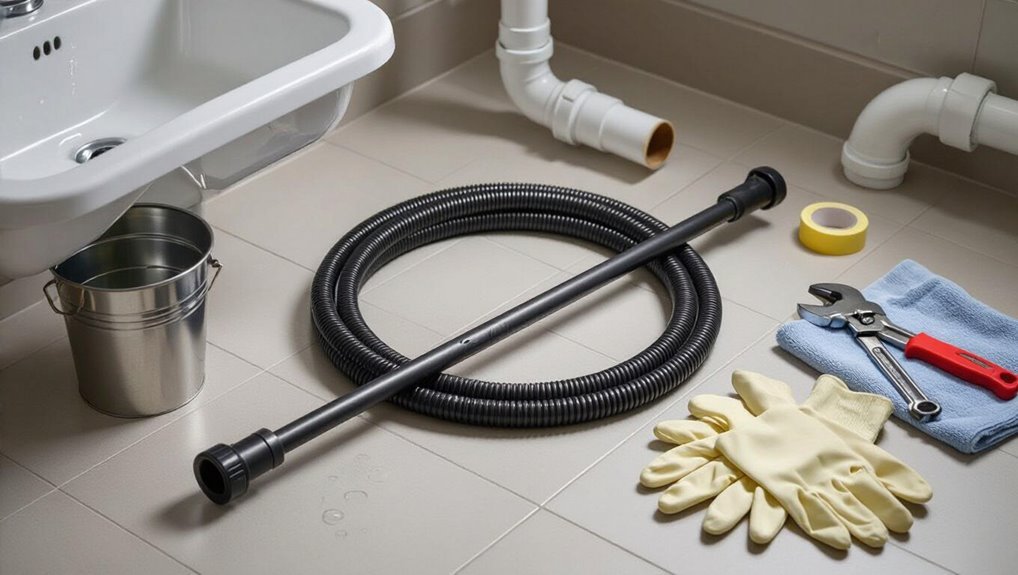
A flat sewer rod, also called a drain rod or closet auger in some regions, is a slender, rigid tool designed to pass through narrow drainage runs.
It is commonly used for clearing clogs in sinks, floor drains, and showers, and occasionally for toilets when a flexible auger is unsuitable.
Compared with plungers or motorized augers, it excels at reaching shallow, linear blockages but is limited by length, lack of cutting heads, and reduced effectiveness on deep or solid obstructions.
Definition and common names
Flat sewer rods, often called flat rods, sewer tape, or drain rods, are thin, flexible steel or fiberglass strips designed to slide through narrow pipe joints and under obstructions to dislodge blockages or guide camera equipment.
Known also as sewer wands or ribbon rods, they permit manual probing and feeding; instructional materials on how to use flat sewer rod emphasize careful insertion, rotation, and controlled withdrawal to avoid damage.
Typical applications (sink, floor drain, shower, toilet?)
Having established what flat sewer rods are and how they function, the next focus is where they are most useful.
They suit accessible, shallow clogs in sinks, lavatory basins, and utility floor drains. Compact showers with removable grates also work.
They are generally unsuitable for deep toilet traps or main sewer lines; those require different equipment or professional service.
Advantages and limitations compared with other drain tools
While not as powerful as motorized augers or as versatile as a traditional snake, the flat sewer rod offers a straightforward, low-risk option for clearing shallow blockages in accessible fixtures.
It excels at gentle debris removal, low cost, and minimal training.
Limitations include reduced reach, inability to cut roots or grease, and ineffectiveness for deep or rigid obstructions, where augers or hydrojets are preferable.
Safety Precautions Before You Start
Before using a flat sewer rod, the operator should put on appropriate personal protective equipment such as gloves, eye protection, and a mask.
They should assess the nature of the blockage and the plumbing layout to determine access points and risks.
If the obstruction is severe, unknown, or causing backups beyond the immediate fixture, work should stop and a professional plumber should be called.
Personal protective equipment to wear
Safety requires appropriate personal protective equipment to reduce exposure to contaminants, sharp edges, and splash hazards when using a flat sewer rod.
Wear chemical-resistant gloves, eye protection (goggles or face shield), and a long-sleeved waterproof apron or coveralls.
Use non-slip, waterproof footwear and consider a disposable mask or respirator if odors or aerosols are present.
Replace damaged PPE promptly.
Assessing the blockage and plumbing layout
Although exact pipe layouts vary, the operator should first identify the fixture, drain access points, and visible signs of blockage (slow drainage, gurgling, backups) to determine the likely location and severity of the obstruction.
Next, trace accessible pipe runs, note bends, traps, and cleanouts, and verify nearby vents or shared lines to plan rod insertion length and angle while minimizing damage and unnecessary force.
When to stop and call a professional
If the obstruction resists repeated attempts, emits sewage odors, or involves sewage backing into multiple fixtures, the operator should stop and call a professional.
Persistent blockages, damaged pipes, unknown pipe materials, or visible sewage exposure require trained inspection.
Professional plumbers have cameras, diagnostic tools, and safe disposal methods.
Attempting further DIY risks injury, contamination, and costly damage; timely escalation protects property and health.
Tools and Materials You’ll Need
The author lists common flat sewer rod types and sizes, from short 3–6 foot models for sinks to longer, sectional rods for main lines.
Recommended accessories include protective gloves, a bucket, absorbent towels, and a flashlight to aid visibility and cleanup.
Guidance also covers chemical cleaners and warns against mixing products (especially bleach with acids or ammonia) to prevent dangerous reactions.
Types and sizes of flat sewer rods
Flat sewer rods come in several styles and diameters to match different drain widths and blockage locations: solid fiberglass rods suit longer runs and tougher clogs, wire-core rods balance stiffness and flexibility for general household use, and braided or telescoping rods provide extra maneuverability for tight bends.
Common diameters range from about 1/4 inch for small sink and tub traps up to 3/8 inch or more for larger sewer lines, while lengths vary from 10 to 50 feet or longer, chosen to reach the blockage without excessive slack.
Selection should match pipe size, bend severity, and clog type for safe, effective clearing.
Optional accessories (gloves, bucket, towels, flashlight)
Gather basic accessories to make a sewer-rodding job safer, cleaner, and more efficient.
Wear sturdy, chemical-resistant gloves to protect hands; keep a bucket for debris and rinse water.
Have absorbent towels or rags for spills and quick cleanup.
Use a bright flashlight or headlamp to inspect drains and guide the rod.
Select items durable and easy to sanitize afterward.
Chemical cleaners and when not to combine them
Although chemical drain cleaners can clear minor clogs quickly, they carry risks and limitations that users should understand before reaching for a bottle.
They can damage pipes, harm skin and eyes, and produce toxic fumes. Never mix different cleaners (acidic with caustic or bleach with ammonia), as reactions can release deadly gases.
Use sparingly, follow label instructions, and prefer mechanical methods first.
Step-by-Step Guide to Clearing a Blockage with a Flat Sewer Rod
The procedure begins with preparing the work area and safely removing any drain covers or traps to gain clear access.
The rod is then inserted with controlled technique, using a combination of pushing, rotating, and retracting motions to break up or hook the obstruction.
Different materials—hair, grease, or small objects—require slight adjustments in approach and retrieval strategy.
Preparing the work area
A clear, well-lit workspace minimizes mistakes and makes the task quicker.
The technician secures access, clears surrounding items, and lays down absorbent cloths or plastic to protect surfaces.
Tools and safety gear—gloves, eye protection, bucket—are organized within reach.
Ventilation is checked and water sources are turned off.
Communication devices remain accessible for emergencies.
Removing drain covers and traps safely
With the area secured and tools within reach, attention shifts to accessing the clogged drain.
The person dons gloves and eye protection, removes grate screws or clips, then lifts covers carefully to avoid chip or splash.
For P-traps, place a bucket under the trap, loosen slip nuts slowly, and lower the trap gently.
Inspect seals and set parts aside cleanly.
Inserting the rod correctly
Begin by aligning the flat sewer rod with the drain opening, keeping the body clear of the immediate line of work and maintaining a firm, steady grip.
Feed the rod slowly, watching for resistance. Keep joints straight to prevent kinking.
Use controlled, incremental advancement until the rod seats without force.
Pause periodically to check alignment and prevent damage to the pipe or fittings.
Techniques for pushing, rotating, and retrieving the obstruction
Start by advancing the rod steadily toward the obstruction while maintaining firm control and watching for changes in resistance.
When the rod meets resistance, apply gentle forward pressure combined with slow, deliberate rotation to work the head through or around the blockage.
Retract occasionally to clear debris from the head, reinsert with slight angle adjustments, and repeat push–rotate–pull cycles until normal flow resumes, checking for leaks.
Handling different obstruction types (hair, grease, small objects)
After establishing a rhythm of push–rotate–pull cycles to locate and break through resistance, the operator adjusts technique based on the obstruction type: hair mats require repeated slow rotations and occasional sharp pulls to gather strands on the head.
Grease buildup responds better to firm, sustained pressure with small angle changes to shear and push residue forward.
Small solid objects are best dislodged by carefully probing around them and using short, controlled thrusts to nudge or hook the item for retrieval.
Throughout, the operator watches resistance changes, clears debris from the head frequently, and avoids aggressive force that could damage pipes.
Reassembling the drain and testing flow
Once the obstruction is cleared and the rod head is cleaned, the operator carefully reassembles the trap and fittings, ensuring all seals and gaskets are seated correctly and threaded connections are hand-tightened before final snugging with tools.
They restore any access panels, run water to observe steady drainage, check for leaks at joints, and repeat plunging or rod work if flow remains sluggish.
Troubleshooting Common Problems
The troubleshooting section outlines likely causes and remedies when the rod will not advance and recommends steps for safe extraction if it becomes stuck.
It also covers how to assess and address persistent slow drainage after clearing and identifies signs that the obstruction lies beyond the rod’s reach.
Practical, safety-focused guidance is provided to help determine when to continue and when to call a professional.
Rod won’t advance causes and fixes
When a flat sewer rod fails to advance, common causes include kinks in the rod, debris or scale clogging the pipe, improper feeding angle at the entry point, or a worn coupling that slips under torque.
Inspect for visible kinks, straighten or replace damaged sections, adjust feed angle, clear surface buildup with rotating action, tighten or replace couplings, and test movement before deeper pushing.
Rod gets stuck safe extraction methods
If a flat sewer rod becomes stuck, assess the situation calmly to avoid worsening jams or causing hose, coupling, or pipe damage.
Retract gently, reverse rotation if applicable, and try slight rocking motions to free catches.
Apply steady, controlled force; avoid sudden yanks.
If resistance persists, stop, inspect from access points, and call a professional to prevent tool or pipe harm.
Persistent slow drainage after clearing
Notice persistent slow drainage even after using a flat sewer rod signals that a partial obstruction, residual buildup, or downstream issue remains; simple clearing at the access point does not guarantee full restoration of flow.
The operator should re-inspect the line, flush with water, repeat gentle rod passes, and check nearby fixtures for shared slow flow.
If sluggishness persists, consult a plumber for camera inspection or targeted cleaning.
Signs the blockage is beyond rod reach
Persistent slow drainage after rod use can indicate problems that extend beyond what the tool can reach; recognizing signs that a blockage lies further down the line helps determine whether to stop attempts or call a professional.
Additional indicators include recurring backups despite repeated rodding, gurgling noises from multiple fixtures, sewage odors, backups from main cleanouts, or water rising in basement drains—situations requiring inspection or mechanical clearing.
Maintenance and Prevention Tips
A concise maintenance plan helps keep the flat sewer rod effective and extends its service life.
Recommended steps include a regular cleaning schedule, simple preventive habits to minimize clogs, and proper drying, coiling, and storage after each use.
Clear guidelines on these practices reduce emergency repairs and guarantee reliable performance.
Regular cleaning schedule recommendations
Several weekly or monthly intervals should be established based on pipe usage and local conditions to keep a flat sewer rod effective and prevent buildup.
Inspect and clear accessible drains monthly in high-use areas; quarterly checks suffice for seldom-used lines.
Record dates, observed issues, and rod condition.
Increase frequency after heavy weather or renovation.
Schedule professional inspections annually to confirm system integrity.
Preventive habits to reduce clogs
Establish practical habits that minimize debris entering the system and reduce the need for rod use: install strainers on sinks and showers, flush only biodegradable waste and dilute liquids, and avoid pouring grease or thick chemicals down drains.
Encourage mindful disposal of hair and food scraps, schedule periodic inspections, use enzyme cleaners sparingly, and promptly address slow drains to prevent buildup and avoid emergency blockages.
Proper storage and care for the flat sewer rod
The rod’s longevity depends on consistent cleaning, proper drying, and secure storage to prevent corrosion, warping, or damage to the blade and joints.
After use, rinse debris, wipe with a cloth, and air-dry fully. Apply light lubricant to connections.
Store coiled or hung in a dry, ventilated area away from chemicals and heat.
Inspect before each use for wear or damage.
Comparison: Flat Sewer Rod vs. Other Drain-Clearing Methods
A brief comparison highlights how a flat sewer rod performs versus other methods across common clog types, and how cost, effort, and safety vary. The table below summarizes key differences to aid quick assessment. This sets up a focused discussion on when a flat sewer rod is the most appropriate choice.
| Method | Best for | Cost / Effort / Safety |
|---|---|---|
| Flat sewer rod | Hair, small debris | Low cost / Moderate effort / Low hazard |
| Chemical cleaners | Grease, organic buildup | Low cost / Low effort / High hazard |
| Mechanical auger (snake) | Stubborn blockages | Moderate cost / High effort / Moderate hazard |
Effectiveness by clog type
Compare performance across common clog types to determine when a flat sewer rod is the most effective choice.
Flat rods excel on hair, soap scum, and compacted toilet paper in accessible trap bends, providing direct mechanical removal.
They are less effective on grease cakes, deep tree roots, and solid objects, where augers, hydro-jetting, or professional excavation offer superior disruption and extraction.
Cost, effort, and safety comparison
When weighing cost, effort, and safety across methods, a flat sewer rod typically offers the lowest upfront expense and minimal equipment training compared with motorized augers, hydro-jetters, or excavation.
Though its labor intensity and limited reach can increase time investment on stubborn clogs; conversely, powered tools and professional services raise monetary cost and safety risks (electrical hazards, high-pressure injury, confined-space exposure) while reducing manual effort and improving effectiveness on deep or severe blockages.
Simpler maintenance and PPE keep rods safe, but complexity and hazards escalate with mechanized or chemical alternatives.
When to Hire a Plumber
Persistent backups, sewage odors, repeated clogs after using a flat sewer rod, or visible pipe damage are red flags that warrant professional intervention.
A plumber will assess the issue with diagnostic tools, explain the scope of work and costs, and perform repairs or safe removal of obstructions.
Knowing these expectations helps readers decide when DIY efforts should stop and a licensed technician should take over.
Red flags that indicate professional help is needed
Caution guides the decision to call a professional: if a flat sewer rod fails to clear a blockage after several careful attempts, if water backs up into multiple fixtures, or if there are signs of sewage leakage, a licensed plumber should be engaged.
Persistent foul odors, recurring clogs, sudden sink or floor drain collapse, visible pipe corrosion, or electrical risks from water intrusion also warrant immediate professional intervention.
What to expect from a professional service
If a homeowner decides to call a licensed plumber, they can expect a professional assessment that quickly identifies the blockage’s location and cause, followed by a clear explanation of repair options and an estimate of costs and time required.
The technician will advise on safe removal methods, use specialized tools or camera inspection, provide warranty details, and recommend preventive measures to reduce recurrence.
Quick Reference Checklist
A concise checklist guides immediate actions for clearing an emergency clog with a flat sewer rod.
The reader is shown a clear, step-by-step sequence to follow under pressure while prioritizing safety and effectiveness.
The list below summarizes the essential steps for rapid response.
- Shut off water and remove standing waste before accessing the drain.
- Position and feed the flat sewer rod to reach the blockage, using steady, controlled pushes.
- Break up or extract the obstruction, then retract the rod slowly while checking for debris.
- Flush the line, inspect for flow restoration, and sanitize tools and the work area.
Step-by-step action list for emergency clog clearing
Begin by gathering necessary items and securing the area: gloves, eye protection, the flat sewer rod, a bucket, rags, and a flashlight.
Make certain nearby drains and fixtures are closed to prevent backflow.
Assess blockage, insert rod gently, push then pull with controlled strokes, clear debris into bucket, inspect progress visually, repeat as needed.
Disinfect tools, wash hands, and restore normal flow.
Conclusion
A flat sewer rod offers a practical, low-cost way to clear minor blockages without chemicals. When used with proper PPE and technique it resolves many routine clogs—studies show DIY drain methods fix about 60% of household blockages without professional help. For persistent, recurring, or deep obstructions, however, a licensed plumber remains essential. Regular maintenance and cautious use will prolong pipe life and reduce the likelihood of costly interventions.