
How to Clean a Composite Granite Sink: Step-by-Step Guide for Stain-Free Shine
To keep your composite granite sink stain-free and shiny, rinse and wipe it daily with a damp microfiber cloth. Weekly, clean it with warm water and a mild detergent, gently scrubbing with a soft nylon brush, and dry it to prevent mineral spots. For tougher stains, use a paste of baking soda or diluted vinegar for hard water issues, but steer clear of bleach, abrasive pads, and hot pans. Monthly deep cleaning and occasional descaling will help maintain its finish. Further instructions are available for targeted stain removal and repairs.
What a Composite Granite Sink Is and Why Proper Cleaning Matters
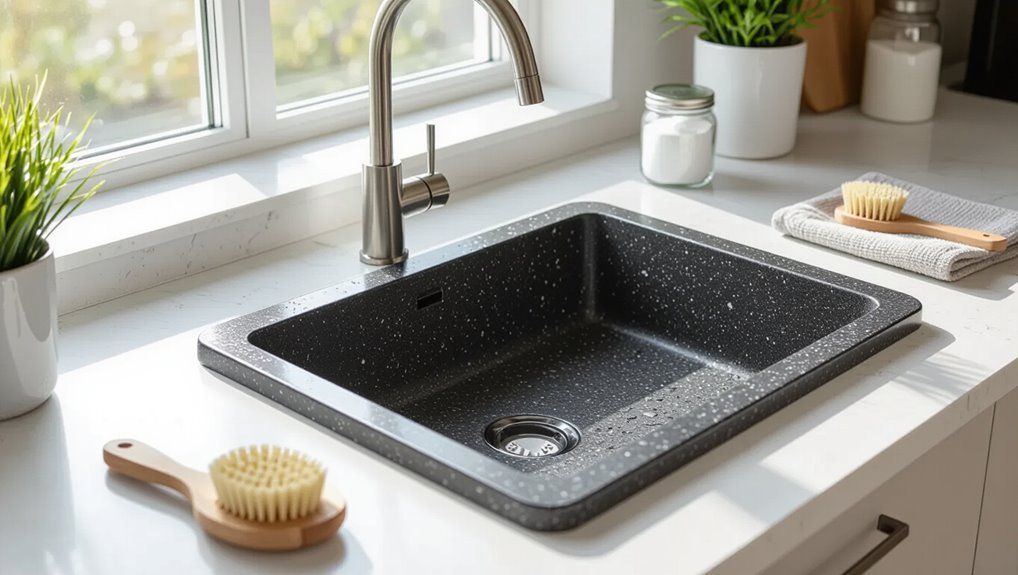
A composite granite sink is described as a mix of crushed stone and resin with matte, semi-gloss, or high-gloss finishes that affect appearance and care.
Improper cleaning can cause stains, surface etching, dulling, or damage to seals and coatings.
Regular rinsing after use and a weekly gentle clean help preserve the finish and extend the sink’s lifespan.
Composition and common finishes of composite granite sinks
Composite granite sinks combine crushed stone—typically quartz or granite—bound with acrylic or polyester resins to create a dense, nonporous surface that mimics natural stone while improving durability.
Finishes range from matte to semi-gloss; color is integral, not surface-applied.
Understanding composition and finishes informs routines for how to clean composite granite sink surfaces, ensuring appropriate cleaners and tools preserve appearance and finish integrity.
Typical stains and damage risks from improper cleaning
Because composition and finish determine how the surface responds to everyday use, improper cleaning can produce predictable stains and damage. Residue, bleach, abrasives and heat cause discoloration, dulling, scratches and weakened seals. Below is a concise risk table.
| Cause | Likely Damage |
|---|---|
| Bleach | Fading |
| Abrasive pads | Scratches |
| Hot pans | Warping |
| Oil buildup | Staining |
Recommended cleaning frequency for longevity
When maintained on a regular schedule, a composite granite sink retains its finish and resists staining far longer than if cleaned sporadically.
Daily rinsing and wiping prevent residue buildup; weekly gentle scrubbing with mild detergent and a soft brush removes grime.
Monthly deeper cleaning and inspection address mineral deposits or sealant wear.
Adjust frequency for heavy use, hard water, or staining incidents.
Quick Answer: Best Way to Clean a Composite Granite Sink
For everyday maintenance, a simple wipe with a soft cloth and mild dish soap followed by rinsing and drying preserves the finish.
Keep on hand a nonabrasive sponge, a gentle cleaner (pH-neutral or baking soda paste), and a spray bottle of diluted white vinegar for immediate stain treatment.
These items and the single-step routine address most common spots quickly and safely.
Single-sentence cleaning method for everyday maintenance
Wipe the sink daily with a soft cloth or sponge, mild dish soap, and warm water, then rinse and dry to prevent soap scum and mineral spots.
For routine upkeep, perform this single-step action after each use, ensuring no standing water, wiping edges and drain area, and drying thoroughly to maintain finish and prevent residue buildup without abrasive scrubbing or specialized cleaners.
Products and tools to have on hand for immediate stain removal
A compact kit of a soft non-abrasive sponge, microfiber cloths, a gentle pH-neutral dish soap, a paste-form baking soda cleaner, white vinegar, and a spray bottle of diluted bleach-free disinfectant provides the essentials for immediate stain response on composite granite sinks.
Include a nylon-bristle brush for crevices, rubber gloves, a plastic scraper for dried residues, and disposable wipes for quick blotting.
Step-by-Step Daily and Weekly Cleaning Routine
A concise supplies checklist—soft cloths, a non-abrasive sponge, mild detergent, and a squeegee or microfiber for drying—sets up the routine.
Daily care consists of rinsing debris, wiping the basin with a damp cloth, and thoroughly drying to prevent stains.
Once weekly, a gentle scrub with mild detergent and a non-abrasive sponge followed by drying and light polishing removes buildup and minimizes water spots.
Supplies checklist for routine cleaning
Several essential supplies make routine cleaning of a composite granite sink simple and effective.
The checklist guarantees safe, efficient maintenance without harsh chemicals. Ideal items support stain prevention and surface care.
- Soft microfiber cloths or nonabrasive sponges
- Mild dish soap or pH-neutral cleaner
- Baking soda for gentle scrubbing
- Small soft-bristle brush for drains and seams
Daily quick-clean steps (rinse, wipe, dry)
Begin each day by rinsing, wiping, and drying the composite granite sink to prevent mineral buildup, food residue, and water spots from accumulating.
Use warm water to flush debris, a soft cloth or microfiber to remove residue, and a dry towel to prevent streaks.
Pay attention to faucet bases and drain edges; quick daily maintenance preserves finish and reduces need for deeper interventions.
Weekly deeper clean with mild detergent and non-abrasive sponge
Perform a weekly deeper clean using warm water, a mild dish detergent, and a non-abrasive sponge to remove light stains, grease, and lingering residue without harming the composite granite finish.
Work methodically across the basin, around the drain, and under the rim. Rinse thoroughly, checking for remaining spots.
Repeat gentle scrubbing on persistent areas, then rinse again to guarantee a clean, residue-free surface.
Drying and polishing to prevent water spots
Wipe the composite granite sink dry after each use to prevent mineral deposits and water spots from forming. A soft microfiber cloth removes residue; occasional buffing with a dry cloth restores sheen. For weekly care, apply a small amount of stone-safe polish, then buff. Avoid abrasive pads and harsh chemicals to preserve finish and color.
| Action | Frequency |
|---|---|
| Dry with microfiber | Daily |
| Buff lightly | Daily |
| Apply polish | Weekly |
| Inspect finish | Weekly |
Removing Specific Stains and Problems
The section outlines targeted techniques and products for common sink blemishes.
It covers removal of hard water and mineral deposits, stepwise methods for coffee, tea, and food stains, and safe approaches for rust spots and metal marks.
It also explains effective treatments for oil, grease, and adhesive residue.
Hard water deposits and mineral stains method and products
When hard water evaporates on a composite granite sink, it leaves mineral deposits—primarily calcium and magnesium—that appear as white or cloudy stains and can dull the finish.
Addressing them promptly prevents buildup and preserves appearance.
Use a mild acidic cleaner (diluted white vinegar or a commercial lime remover), apply briefly, scrub with a nonabrasive pad, rinse thoroughly, and dry.
Repeat for stubborn spots.
Coffee, tea, and food stains stepwise removal
Tackle coffee, tea, and food stains promptly to prevent them from penetrating the composite granite surface; gentle, targeted cleaning removes discoloration without harming the finish.
Blot excess residue, rinse with warm water, then apply a mild, nonabrasive cleaner or baking soda paste.
Gently scrub with a soft cloth or nylon brush, rinse thoroughly, and dry.
Repeat for stubborn spots, avoiding harsh chemicals.
Rust spots and metal marks safe removal techniques
Address rust spots and metal marks promptly to prevent pitting and permanent discoloration of composite granite surfaces. Use a paste of baking soda and water or a commercial non‑abrasive rust remover; test in an inconspicuous area first. Gently scrub with a soft brush, rinse, and dry. Repeat if needed. Restore finish with a granite-safe polish.
| Tool | Purpose |
|---|---|
| Baking soda paste | Lift rust |
| Soft brush | Agitation |
| Rust remover | Stubborn stains |
| Dry cloth | Prevent spots |
Oil, grease, and adhesive residue effective solutions
After treating metal marks, attention should turn to oil, grease, and adhesive residues, which cling to composite granite and can attract dirt or dull the surface.
Use a mild dish soap and warm water for fresh oil; apply isopropyl alcohol or citrus-based adhesive remover sparingly for sticky residues, blotting gently.
Rinse thoroughly and dry with a soft cloth to restore sheen.
Dealing with Tough Stains and Discoloration
For persistent marks, a thick paste of baking soda and water applied briefly and gently scrubbed often lifts embedded grime without harming the finish.
For organic stains or light discoloration, diluted hydrogen peroxide or a manufacturer‑approved mild bleach can be used cautiously and only after testing an inconspicuous area.
If home remedies fail, a commercial cleaner formulated for granite or composite surfaces provides a stronger, safe alternative when used according to the label.
Baking soda paste method for stubborn stains
When tougher stains and discoloration resist routine cleaning, a mild abrasive like a baking soda paste can lift residue without harming the composite granite surface. Apply paste, let sit 10–15 minutes, scrub gently with a soft brush, then rinse and dry. Repeat if needed. Wear gloves and test hidden area first.
| Step | Time | Tool |
|---|---|---|
| Apply | 0–2 min | Cloth |
| Wait | 10–15 min | N/A |
| Scrub | 2–5 min | Soft brush |
| Rinse | 1–2 min | Warm water |
Hydrogen peroxide and gentle bleaching options (when safe)
Use hydrogen peroxide sparingly as a targeted, mild oxidizer to lighten organic stains (tea, coffee, wine) on composite granite without the harshness of chlorine bleach.
Apply 3% solution to a cloth or cotton swab, blot stained area, let sit 5–10 minutes, then rinse thoroughly.
Test in an inconspicuous spot first. Avoid prolonged exposure and never mix with other cleaning chemicals.
When to use commercial granite/composite cleaners
Consider commercial granite/composite cleaners as a targeted step for persistent stains or widespread discoloration that do not respond to mild household remedies.
Select products labeled safe for composite granite, follow manufacturer instructions, test in an inconspicuous area, and use recommended dwell times and rinsing.
Avoid abrasive pads or acidic formulas unless specified.
If staining persists, consult manufacturer or a professional restoration service.
Tools, Cleaners, and Natural Alternatives
Recommended non-abrasive tools and soft-bristle brushes are outlined to prevent surface scratching while scrubbing.
The section contrasts safe commercial cleaners formulated for composite granite with cautionary notes on when to avoid harsh chemicals.
It also explains how and when to use natural options—vinegar, baking soda, and lemon—and when those alternatives should be avoided to protect the finish.
Recommended non-abrasive tools and brushes
Select non-abrasive tools and brushes specifically designed for composite surfaces to prevent scratching while effectively removing grime.
Preferred tools combine soft bristles, gentle scrubbing pads, and ergonomic handles for control. Avoid metal or harsh scouring pads.
Recommended options:
- Soft nylon bristle brush for textured areas
- Microfiber cloths for wiping and polishing
- Non-abrasive melamine sponge for spots
- Silicone-tipped detail brush for seams and drains
Safe commercial cleaners for composite granite
When choosing commercial cleaners for composite granite, prioritize products labeled safe for engineered stone or composite surfaces to guarantee compatibility and avoid dulling or etching the finish.
Select pH-neutral, non-abrasive formulas designed for quartz or solid-surface use. Avoid bleach, ammonia, and acidic cleaners.
Follow manufacturer instructions, test in an inconspicuous spot, and rinse thoroughly to remove residues that might attract grime.
Natural solutions: vinegar, baking soda, lemon when to use and avoid
After covering compatible commercial products, attention turns to common household alternatives and their proper use on composite granite.
Vinegar is acidic and should be avoided for regular use—occasional dilute spots may help mineral buildup but risk dulling finish.
Baking soda provides gentle abrasion for stains when made into a paste and rinsed thoroughly.
Lemon juice is acidic; use sparingly and never leave to sit.
What Not to Use: Products and Practices That Damage Composite Granite
The section outlines common products and actions that can harm composite granite, including abrasive pads, strong acids, and bleach which can etch or discolor the surface.
It also warns against placing very hot pots directly in the sink or allowing heavy impacts that may crack or chip the material.
Finally, typical homeowner mistakes—such as leaving staining substances in contact for long periods or scrubbing with unsuitable tools—are identified as causes of stains and loss of shine.
Abrasive pads, harsh acids, and bleach risks
Avoid abrasive pads, strong acids, and bleach on composite granite, as these cleaners and tools can dull the surface, etch the finish, or weaken the resin binder. Use mild detergent and soft cloths instead. Immediate rinsing prevents damage. For stubborn spots, a paste of baking soda and water applied gently is safer.
| Wrong | Safer alternative |
|---|---|
| Steel wool | Soft sponge |
| Bleach | Mild detergent |
| Drain cleaners | Baking soda paste |
| Acid cleaners | Warm water rinse |
High-heat items and impact damage to avoid
Place hot pots and pans on a trivet or heat-resistant pad rather than directly on composite granite, since sudden or prolonged high temperatures can scorch the resin binder, cause discoloration, or create small surface cracks.
Likewise, heavy impacts from dropped cast-iron cookware, ceramic dinnerware, or metal utensils can chip or fracture the stone-like composite.
Handlers should lift rather than drag and use gentle placement to prevent damage.
Common homeowner mistakes that cause stains or dullness
Homeowners often unknowingly dull or stain composite granite by using harsh cleaners, abrasive pads, or acidic substances that degrade the resin binder and mineral finish.
Other harmful practices include leaving bleach, oven cleaner, or undiluted vinegar on the surface; scrubbing with steel wool; and dragging heavy cookware.
Regularly ignoring spills, heat mats, or recommended gentle cleaners accelerates discoloration and surface wear.
Maintenance Tips to Keep a Stain-Free Shine Long-Term
Routine maintenance preserves the sink’s finish, including periodic sealing if the manufacturer recommends it and inspecting for wear at least annually.
Preventive habits—using mats, keeping the drain clear, and wiping up spills immediately—minimize staining and abrasive damage.
A set schedule for weekly light cleaning and monthly deeper cleans, with professional attention when stains or chips persist, helps maintain a long-term stain-free shine.
Sealing needs and frequency (if applicable)
How often should a composite granite sink be sealed, and is sealing even necessary for all brands?
Manufacturers vary: many modern composite sinks are pre-sealed and require no routine sealing.
If recommended, sealing every 6–12 months protects against staining and restores sheen.
Always consult the sink’s care guide; perform a simple water-drop test to determine current porosity before applying a compatible stone sealer.
Preventive habits: mats, drain care, and immediate cleanup
After confirming whether sealing is needed, attention shifts to daily habits that prevent stains and wear.
Use silicone or rubber mats to cushion dishes and reduce impact marks.
Rinse and clear the drain regularly to avoid buildup and odors.
Wipe spills immediately, especially acidic or oily substances.
Routine gentle drying prevents mineral deposits and keeps the surface uniformly clean and resilient.
Periodic deep-clean schedule and professional care indicators
Because daily care only delays buildup, a scheduled deep clean every 4–8 weeks is recommended to remove embedded grime, mineral films, and dulling residues; frequency depends on water hardness and sink use. Signs for professional care include persistent stains, chips, or sealant failure. Follow a preventive schedule and consult a specialist when restoration or resealing is needed.
| Task | Interval | Trigger |
|---|---|---|
| Deep clean | 4–8 weeks | Mineral films |
| Descale | 3–6 months | Hard water |
| Repair | As needed | Chips/dullness |
| Reseal | 1–3 years | Seal failure |
Troubleshooting and When to Call a Professional
Visible deep scratches, large chips, persistent discoloration, or a weakened sink surface indicate the need for professional restoration.
Homeowners can apply temporary fixes—such as color-matched fillers or sealants—but these often mask problems rather than correct structural damage, which requires permanent repair techniques like resurfacing or replacement of sections.
Professionals typically assess the damage, recommend and perform restoration or replacement, and charge based on scope—minor repairs may cost under a few hundred dollars while full resurfacing or replacement runs higher.
Signs your sink needs professional restoration
A composite granite sink may show specific, measurable signs that indicate professional restoration is needed rather than routine cleaning or DIY fixes. Visible deep scratches, widespread pitting, persistent staining after proper cleaning, and adhesive or sealant failure warrant expert assessment.
| Sign | Description | Threshold |
|---|---|---|
| Deep scratches | Penetrate finish | >1 mm depth |
| Pitting | Multiple pits | >5 per area |
| Stains | Non-removable | After standard treatment |
Temporary fixes vs permanent repairs
After identifying scratches, pitting, or stubborn stains that exceed DIY thresholds, homeowners should weigh temporary fixes against permanent repairs.
Temporary measures—gentle abrasives, sealants, or color-matching kits—mask damage and buy time.
Permanent repairs—professional filling, resurfacing, or replacement—restore integrity and appearance.
Decisions hinge on damage extent, longevity desired, and risk tolerance; prioritize lasting solutions for structural or widespread defects.
Estimated costs and what professionals typically do
When damage goes beyond simple cleaning or spot treatments, homeowners should assess expected costs and the typical services professionals provide to decide whether to hire a pro.
Estimates vary by severity; minor repairs cost less than refinishing or replacement.
Typical professional services include:
- Surface assessment and color matching
- Chip and crack filling with epoxy
- Sanding and blending
- Full resurfacing or replacement estimates
Conclusion
Like a lighthouse guiding ships through fog, proper care keeps a composite granite sink steady and luminous amid daily storms. Regular gentle cleaning, prompt stain treatment, and avoidance of abrasive foes preserve its finish and function. When stubborn blemishes arise, targeted remedies or professional aid restore calm. With consistent maintenance rooted in the steps above, the sink endures—reliable, resilient, and quietly radiant—ready for whatever domestic tides may bring.
