How to Clean Brushed Gold Faucets Without Damaging the Finish: Step-by-Step Guide
To clean brushed gold faucets without damaging the finish, use gentle, non-abrasive methods. Start with diluted mild dish soap or a pH-neutral metal cleaner applied with a soft microfiber or cotton cloth. For stubborn mineral spots, lightly dab a 1:1 white vinegar solution onto a cloth—never scrub with abrasive pads. Rinse and dry the faucet immediately to prevent residue buildup. Additionally, inspect and descale aerators monthly, and promptly address any leaks to avoid corrosion. Follow these steps for effective cleaning, targeted treatments, and ongoing maintenance tips.
What Makes Brushed Gold Faucets Different from Other Finishes
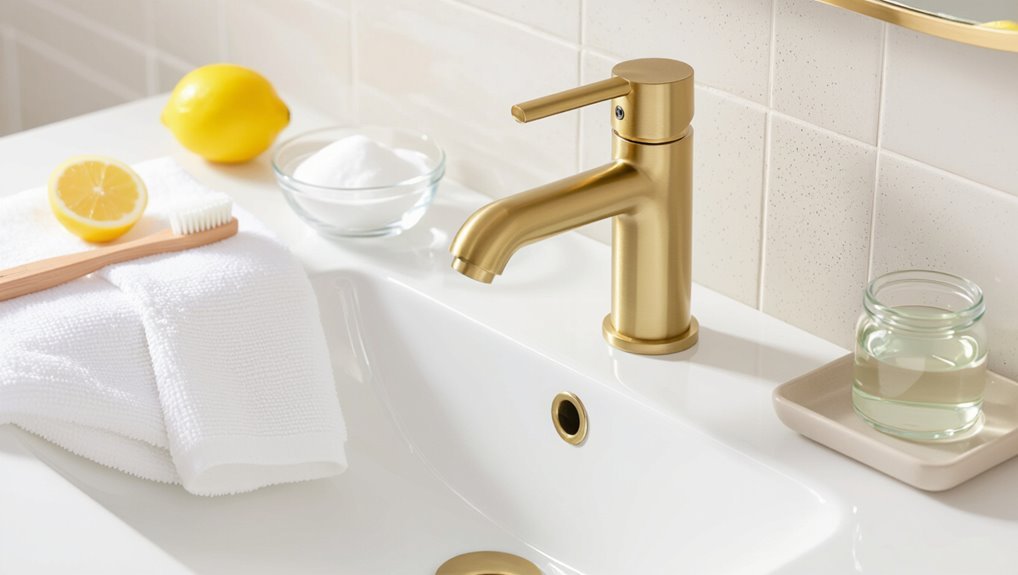
Brushed gold faucets feature a matte, linear texture produced by mechanical brushing over a thin gold plating or PVD coating, which affects both appearance and wear.
Manufacturers offer variations—real gold plating, gold-tone PVD, and baked-on finishes—each with specific care recommendations printed in product literature.
Because the finish layer can be thin and chemically sensitive, abrasive pads and harsh cleaners can strip or discolor the coating.
Characteristics of brushed gold plating and coatings
A warm metallic sheen combined with a subtly textured surface distinguishes brushed gold plating from other faucet finishes. Its appearance comes from fine directional abrasions applied to a gold-toned coating rather than a polished mirror or simple paint.
The coating often includes protective layers (PVD or lacquer) that resist corrosion and wear, influencing maintenance steps and informing best practices for how to clean brushed gold faucets.
Common types of brushed gold finishes and manufacturer notes
Different formulations of gold-toned finishes—ranging from physical vapor deposition (PVD) coatings to lacquered and electroplated layers—create distinct surface properties, durability levels, and care requirements.
Manufacturers note PVD as highly durable and scratch-resistant, electroplating as variable depending on base metal and plating thickness, and lacquer as protective but wear-prone.
Care instructions often specify mild, nonabrasive cleaners and routine gentle maintenance.
Why brushed gold is sensitive to harsh cleaners
Treating gold-toned faucets like ordinary chrome or stainless fixtures risks damage because their surface layers are engineered differently: thin decorative coatings—such as PVD, electroplating, or lacquer—provide color and texture but can be chemically or mechanically compromised by strong alkaline, acidic, or abrasive cleaners.
Reaction, tarnishing, coating lift, and micro-scratches accelerate wear; manufacturers advise mild pH-neutral soap and soft cloths to preserve finish integrity.
Quick Answer: Safe Way to Clean Brushed Gold Faucets
A soft microfiber cloth and mild soapy water gently remove everyday grime from brushed gold without harming the finish.
For stubborn mineral buildup or visible damage, a nonabrasive cleaner specifically labeled safe for gold finishes may be used sparingly.
If the finish is pitted, heavily scratched, or the fixture requires disassembly, a professional should be consulted.
One-sentence recommended method
Use a soft microfiber cloth dampened with warm water and a mild, pH-neutral soap to gently wipe the brushed gold surface.
Then rinse with clean water and dry immediately to prevent water spots.
For regular maintenance, repeat weekly; for stubborn deposits, soak the cloth in the same solution and apply briefly, avoiding scrubbing or abrasive pads that can remove the finish.
When to call a professional
When should a professional be contacted for a brushed gold faucet?
A professional should be called if corrosion, deep scratches, loose internal parts, persistent leaks, or finish flaking appear, or if previous DIY attempts failed.
Also consult a pro when specific manufacturer warranty procedures are required or when plumbing access is complex.
Expert service prevents further damage and preserves warranty coverage.
Materials and Tools You’ll Need
The section lists recommended safe cleaning solutions, including simple homemade options and vetted commercial products.
It also describes soft tools and textiles that are suitable for brushed gold and those to avoid to prevent scratches.
Finally, it covers protective supplies for surrounding surfaces to prevent damage from spills or drips.
Safe cleaning solutions (homemade and commercial)
Gathering the right materials and tools guarantees effective cleaning without damaging brushed gold finishes.
Recommended safe solutions include mild dish soap diluted in warm water, a 1:1 white vinegar and water mix for mineral spots (used sparingly), and a commercial non-abrasive, pH-neutral metal cleaner formulated for gold finishes.
Visualize:
- Soap suds on a microfiber cloth
- Light vinegar mist
- A labeled gentle cleaner bottle
Soft tools and textiles to use and avoid
After selecting gentle cleaning solutions, attention turns to the tools and textiles that will contact the brushed gold surface.
Soft, nonabrasive options minimize scratching; avoid steel wool, rough brushes, and harsh scouring pads.
Recommended items include:
- Microfiber cloth for buffing and drying.
- Soft cotton cloths for applying cleaner.
- Soft-bristled toothbrush for crevices and seams.
Protective supplies for surrounding surfaces
A few simple protective supplies keep countertops, fixtures, and finishes safe while cleaning brushed gold faucets.
Use microfiber towels as liners, absorbent cloths to catch drips, and folded towels or silicone mats to shield surfaces.
Painter’s tape protects adjacent grout or caulk.
Plastic drop cloths prevent splashes.
Keep a small bucket for diluted cleaner to avoid accidental spills on surrounding materials.
Step-by-Step Cleaning Process for Brushed Gold Faucets
The section outlines a clear, step-by-step approach beginning with simple preparation and safety measures before any cleaning begins.
It then separates a daily light-clean routine from a targeted deep-clean procedure for stubborn spots and mineral buildup, including non-abrasive methods to remove water spots without scrubbing.
Finally, it covers safe polishing techniques to restore the brushed gold’s subtle sheen.
Preparation and safety steps
Before cleaning, prepare the workspace and prioritize safety: turn off water supply if necessary, cover nearby surfaces and drains, gather soft, nonabrasive cloths, mild pH-neutral cleaner, a soft toothbrush, and gloves, and guarantee adequate ventilation to avoid inhaling fumes from any cleaning solution.
Inspect the faucet for loose parts, remove aerators if needed, test cleaner on an inconspicuous area, and secure electrical items.
Daily light-clean routine
Once the workspace is set and safety checks are complete, daily light cleaning can begin to keep brushed gold faucets looking their best.
Use a soft microfiber cloth dampened with warm water to wipe surfaces gently.
Dry immediately with a separate dry cloth to prevent water spots.
For fingerprints, add a drop of mild dish soap to the damp cloth, then rinse and dry.
Deep-cleaning procedure for stubborn spots
Begin by assembling supplies: a soft microfiber cloth, a non-abrasive sponge, mild liquid dish soap, white vinegar diluted 1:1 with water, a soft-bristled toothbrush, and clean water for rinsing.
Wet cloth with soapy water, gently wipe affected area.
Apply diluted vinegar sparingly with sponge for persistent grime, agitate lightly with toothbrush along grain.
Rinse thoroughly and pat dry to prevent streaks.
Removing water spots and mineral buildup without scrubbing
After rinsing away soap and any loosened grime, attention shifts to water spots and mineral buildup that resist gentle scrubbing.
A vinegar-water (1:1) solution is applied via soaked cloth or paper towel, wrapped around fixtures for 10–15 minutes to dissolve minerals.
Rinse thoroughly with warm water, blot dry with a microfiber cloth, and repeat briefly if residue remains, avoiding abrasive actions.
Polishing and restoring subtle sheen safely
Restore the brushed gold’s subtle sheen by using gentle, nonabrasive methods that preserve the finish.
A microfiber cloth and a mild, pH-neutral cleaner remove grime without abrasion. For light dullness, buff with circular motions using a dry microfiber cloth.
Avoid harsh polishes, abrasive pads, or acidic solutions. Test any product on an inconspicuous area first and rinse thoroughly after polishing.
Stain- and Damage-Specific Treatments
Specific treatments address common issues such as hard water deposits, soap scum and body-oil films, and localized discoloration or tarnish while preserving the brushed gold finish.
Gentle, targeted methods can remove buildup without stripping coatings, and light polishing or filling can minimize minor scratches and dull spots.
The following guidance outlines safe materials and techniques for each condition.
Removing hard water deposits
Tackle hard water deposits with targeted, nonabrasive methods that dissolve mineral buildup without harming brushed gold finishes. Apply a diluted vinegar solution briefly, rinse thoroughly, then pat dry; avoid scrubbing pads. Repeat for persistent rings, using cotton swabs in crevices. Restore warmth with a soft microfiber cloth.
| Relief | Trust | Pride |
|---|---|---|
| Calm | Care | Shine |
| Soft | Safe | Renew |
| Gentle | Clean | Bright |
| Restore | Respect | Joy |
Treating soap scum and body-oil films
For soap scum and body‑oil films, use gentle, degreasing approaches that lift residue without abrading or dulling the brushed gold finish.
Apply a mild dish soap solution with a soft microfiber cloth, rubbing lightly along the grain. Rinse thoroughly with warm water and dry immediately.
For persistent build-up, repeat using diluted white vinegar sparingly, then neutralize with water and dry.
Handling discoloration or tarnish without stripping finish
Address discoloration and light tarnish with methods that restore appearance while preserving the brushed gold’s protective coating.
Use a mild paste of baking soda and water applied gently with a soft cloth; rinse promptly and dry.
For stubborn tarnish, apply diluted white vinegar briefly, then neutralize with water and dry.
Avoid abrasive pads, harsh chemicals, and prolonged acid contact to prevent finish loss.
Repairing minor scratches and dull spots
When minor scratches or dull spots appear on brushed gold faucets, they can often be minimized without refinishing by using gentle, targeted techniques that respect the factory coating.
Assess by cleaning first, then reduce visibility with a non-abrasive metal polish applied sparingly with a soft microfiber in the grain direction.
For deeper marks, consult a professional or use a matching touch-up lacquer designed for plated finishes.
Cleaning Methods to Avoid
The section outlines cleaning methods that should be avoided to preserve a brushed gold finish.
It warns against harsh chemicals and abrasive products that can etch or discolor the surface, as well as tools or techniques that scratch or strip the coating.
Common mistakes that accelerate wear are highlighted to help prevent premature damage.
Harsh chemicals and abrasive products that damage finish
Avoid harsh chemicals and abrasive cleaners that strip or scratch the brushed gold finish, leaving it dull or permanently damaged.
Strong acids, bleach and ammonia-based solutions can corrode plating. Scouring powders and rough pads cause fine scratches.
- Pitted acid stains
- Chalky bleach residue
- Micro-scratch lines from pads
Use mild soap and water or manufacturer-recommended cleaners instead.
Tools and techniques that scratch or strip coating
Scrubbing with metal brushes, abrasive pads, or rough sponges can quickly wear away a brushed gold faucet’s protective coating, exposing softer metal beneath.
Avoid tools and techniques that scratch or strip the finish:
- Steel wool creating visible grooves and dullness.
- Scouring pads grinding away satin texture.
- Power washers blasting off delicate coatings and accelerating corrosion.
Mistakes that accelerate wear
When homeowners use harsh cleaners, abrasive tools, or excessive force, the brushed gold finish deteriorates faster than from normal wear alone.
Other damaging mistakes include leaving acidic residues, scrubbing with steel wool or rough pads, using bleach or ammonia, and applying high-pressure steam.
Neglecting gentle drying allows mineral spotting and corrosion.
Following manufacturer recommendations and testing products on inconspicuous areas prevents accelerated wear.
Maintenance Schedule and Care Tips
A concise maintenance schedule helps preserve the brushed gold finish by outlining daily, weekly, and monthly tasks such as gentle wiping, periodic mild cleaning, and mineral-build-up checks.
Recommended practices—using soft cloths, nonabrasive cleaners, and prompt drying—extend the finish’s lifespan.
Maintenance frequency should be adjusted based on water quality, with hard water requiring more frequent attention.
Daily, weekly, and monthly maintenance checklist
Regular, simple actions prevent buildup and preserve the finish on brushed gold faucets: daily wiping with a soft microfiber cloth, weekly inspection and gentle cleaning of handles and crevices with a mild soap solution, and monthly deeper care such as descaling aerators, checking for loose fittings, and applying a manufacturer-recommended protective polish.
- Daily: wipe and dry surfaces.
- Weekly: clean crevices, test operation.
- Monthly: descale, tighten, polish.
Best practices to extend finish lifespan
Building on the daily, weekly, and monthly checklist, a clear maintenance schedule and a few targeted care practices will greatly extend the finish lifespan of brushed gold faucets.
Schedule gentle cleaning, immediate spot-wipe of spills, monthly protective oiling with a microfiber cloth and approved product, and prompt repair of leaks.
Use nonabrasive tools, avoid harsh chemicals, and document inspections for consistent care.
How water quality affects maintenance frequency
Because water composition directly influences mineral buildup and corrosion risk, homeowners should adjust cleaning frequency based on local water quality.
Hard water necessitates weekly gentle wiping and monthly descaling with a mild, nonabrasive solution; soft or treated water allows biweekly to monthly maintenance.
High-chloride or acidic supplies require more frequent inspections and immediate rinsing after exposure to prevent pitting and finish dulling.
When to Replace or Refinish a Brushed Gold Faucet
When wear, deep pitting, or plating loss exposes base metal, the finish is often beyond simple cleaning and may require intervention.
The options include professional refinishing to restore appearance or full replacement when structural damage or long-term durability is a concern.
Decisions typically hinge on comparative costs, expected lifespan after repair, and warranty or resale considerations.
Signs the finish cannot be restored
A visibly compromised finish on a brushed gold faucet signals the need to contemplate replacement or professional refinishing.
Deep pitting, widespread flaking, bare metal exposure, or large areas of discoloration that persist after gentle cleaning indicate irreversible damage.
Loose or peeling plating, structural corrosion around mounting points, and compromised valve seals are additional signs that simple restoration will not suffice.
Options for professional refinishing vs replacement
Decide between professional refinishing and full replacement by evaluating the extent of surface damage, underlying corrosion, and the faucet’s overall value.
Professional refinishing restores finish when damage is cosmetic or shallow; confirm technician uses compatible coatings.
Replacement is advised if internal components fail, corrosion breaches structural integrity, or matching aesthetics matter.
Arrange removal, verify warranty transfer, and document condition before service.
Cost and durability considerations
Cost-benefit analysis guides whether to refinish or replace a brushed gold faucet, balancing upfront expense against expected longevity and performance.
Minor wear and intact valves favor refinishing; it’s cheaper and restores appearance for several years.
Severe corrosion, persistent leaks, or outdated functionality justify replacement despite higher cost, offering longer-term durability, warranties, and modern features that may offset initial investment.
Comparison: Brushed Gold vs Other Faucet Finishes
Brushed gold is compared to chrome, stainless, and matte black regarding durability and routine care, with each finish showing different resistance to water spots, scratches, and cleaning agents.
Maintenance needs can vary: chrome and stainless often tolerate harsher cleaners, while brushed gold benefits from gentle, nonabrasive care to preserve its patina.
Visually, brushed gold offers a warm, upscale look that complements certain kitchen and bathroom styles differently than cooler-toned or high-contrast finishes.
Durability and maintenance differences
Many homeowners find that brushed gold faucets balance aesthetic appeal with practical resilience, but their durability and upkeep differ from chrome, nickel, and matte-black finishes in specific ways. Brushed gold resists fingerprints and hides wear but needs gentle cleaners; chrome tolerates harsher scrubs; matte-black shows water spots; nickel balances both. Emotional resonance:
| Finish | Care feeling |
|---|---|
| Brushed gold | Calm pride |
| Chrome | Practical confidence |
Visual and style considerations for kitchens and bathrooms
How should a faucet finish be chosen to complement both kitchen and bathroom design schemes?
Brushed gold offers warmth and subtle sheen, pairing well with warm woods, marble, and neutral palettes.
Stainless steel and chrome read contemporary and minimalist; matte black adds contrast and drama.
Selections should consider existing hardware, lighting, and maintenance tolerance to guarantee cohesive, durable aesthetics across spaces.
Supplier and Product Recommendations
A brief overview of recommended suppliers and products can help readers select safe commercial cleaners and polishers formulated for brushed gold.
The section will highlight specific brands known for durable brushed gold finishes and list cleaning products that avoid harsh abrasives or acidic ingredients.
Practical buying tips and warranty considerations from reputable faucet manufacturers will be provided.
Safe commercial cleaners and polishers for brushed gold
Several reputable household and specialty brands offer cleaners and polishers formulated to be safe on brushed gold finishes; choosing products labeled non-abrasive, pH-neutral, and free of bleach or strong acids minimizes risk of damage.
Recommended types include:
- Mild liquid cleaners for routine wiping.
- Microfiber-safe polish creams for gentle restoration.
- Water-based protective sprays for sheen and residue prevention.
Recommended brands of faucets with durable brushed gold finishes
Durability and finish quality vary across manufacturers, so selecting faucets from brands with proven brushed gold processes—such as PVD coating or multi-stage plating—helps guarantee long-term color stability and scratch resistance.
Recommended options emphasize warranty-backed finishes and corrosion testing:
- Luxury brand with PVD finish and extended warranty.
- Mid-range maker using multi-stage plating and corrosion tests.
- Value line offering sealed finishes and replaceable trim.
Conclusion
In the end, the brushed gold faucet emerges not merely as a fixture but as a tiny, dignified sun in the bathroom—its matte sheen holding court against water spots and soap scum like a benevolent monarch. With gentle, regular care—soft cloths, mild cleaners, immediate spot treatment—its muted glow will persist, refusing to dull or shrivel into a sad metallic coin. Neglect, however, can send it into a grim, tarnished exile beyond easy rescue.