
How to Clean a Copper Tub Without Damaging the Finish: Safe, Step-by-Step Methods
To clean a copper tub without damaging its finish, use pH-neutral, nonabrasive methods. Begin by rinsing the tub with warm distilled water. Then, gently wipe it down with a microfiber cloth and mild dish soap. For any mineral spots, apply a brief soak with vinegar or a lightly applied baking soda paste. Avoid using scrubbing pads, bleach, or strong acids, as these can strip the patina. After cleaning, dry and buff the tub with a soft cotton cloth. Additional steps include techniques for restoration, maintenance, and specific stain treatments.
What to Know Before You Clean a Copper Tub
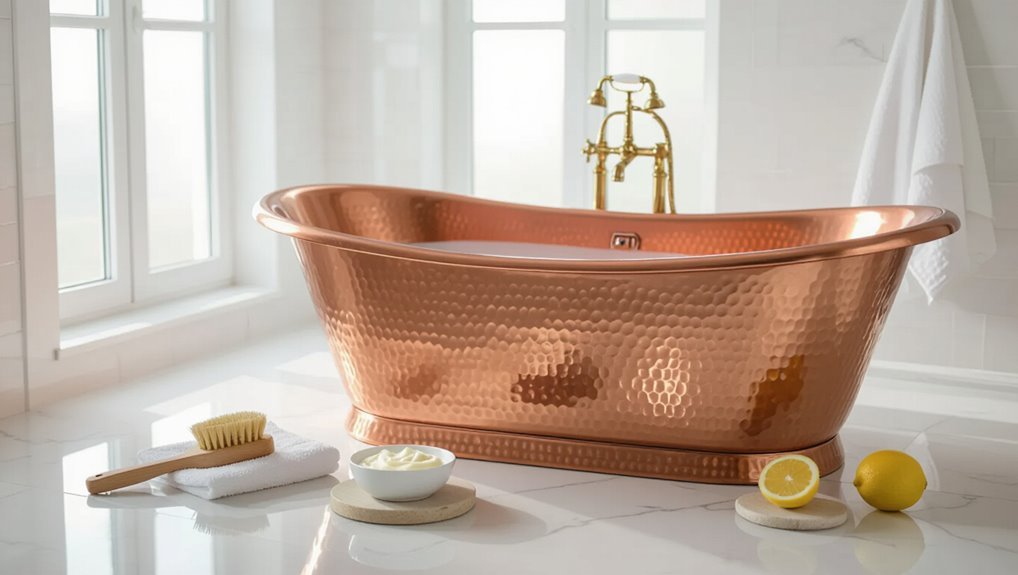
Copper requires gentle, specific care because its softness and reactive nature make it prone to scratching and chemical damage.
Different finishes—polished, lacquered, or patinaed—respond differently to cleaners and techniques, so identifying the finish guides safe maintenance.
Before cleaning, occupants should guarantee good ventilation, wear gloves, and perform a small patch test to protect both the tub and themselves.
Why copper needs special care
Recognize that copper is a soft, reactive metal whose surface develops a protective patina and can be easily scratched or discolored by harsh cleaners.
Consequently, anyone learning how to clean a copper tub should use pH-neutral, nonabrasive products, mild tools, and gentle techniques.
Temperature extremes, prolonged moisture, and acidic agents accelerate tarnish or damage, so preventive care and cautious cleaning extend the tub’s lifespan and appearance.
Types of copper finishes and how they affect cleaning (polished, lacquered, patinaed)
Having noted how softness and reactivity dictate gentle care, attention then turns to the finish, since surface treatment determines both susceptibility to damage and suitable cleaning methods.
Polished copper tolerates mild, nonabrasive cleaners.
Lacquered surfaces require only dusting and gentle soap to avoid coating breakdown.
Patinaed tubs need pH-neutral cleaners and minimal abrasion to preserve the intentional aged layer.
Test locally before full cleaning.
Safety precautions for you and your tub (ventilation, gloves, patch testing)
Because cleaning agents and techniques vary in hazard and effect, users should prioritize basic safety measures before beginning work on a copper tub.
Guarantee adequate ventilation—open windows or run exhaust fans—to disperse fumes. Wear chemical-resistant gloves and eye protection.
Test cleaners on a hidden patch to check for finish reaction. Follow manufacturer instructions, avoid mixing products, and rinse thoroughly after treatment.
Quick Answer: Safe Method to Clean a Copper Tub Without Damaging the Finish
A soft cloth, mild dish soap, and a diluted vinegar solution applied gently will remove most dirt and light tarnish without harming the lacquered finish.
Persistent stains, deep pitting, or flaking lacquer warrant contacting a professional restorer to avoid irreversible damage.
For routine care, follow manufacturer guidance and schedule expert service when corrosion or structural concerns appear.
One-sentence recommended approach
Use a gentle, nonabrasive cleaner—such as a diluted dish soap solution or a paste of baking soda and water—and soft cloths to remove dirt and stains, rinsing thoroughly and drying immediately to protect the patina and avoid scratching the copper finish.
Apply light, circular motions, avoid abrasive pads and acidic cleaners, test any product on an inconspicuous area first, and reapply minimal polishing only when needed.
When to call a professional
When should a professional be contacted for a copper tub: when stains, corrosion, deep scratches, or persistent mineral buildup resist safe home methods and risk compromising the finish.
A professional assessment is warranted for structural damage, patina preservation, or uncertainty about chemical interactions.
Technicians can perform gentle restoration, corrosion control, lacquer repair, or recommend safe refinishing.
Hire licensed specialists with copper experience and clear estimates.
Supplies and Tools You’ll Need
The section lists gentle commercial cleaners and simple homemade solutions suitable for copper care.
It also outlines soft tools and protective materials such as microfiber cloths, nonabrasive sponges, and gloves.
Finally, it names products to avoid, including abrasive powders, ammonia-based cleaners, and bleach.
Gentle cleaners and homemade solutions
Gather basic, nonabrasive supplies and simple household ingredients suitable for copper’s soft surface: mild dish soap, baking soda, white vinegar or lemon juice, a soft sponge or microfiber cloth, a non-scratch nylon brush, and cotton towels for drying.
Practical gentle cleaners include diluted dish soap, a baking soda paste, or a vinegar/lemon solution.
Visualize use:
- Paste
- Spray
- Soak
Soft tools and protective materials
Choose soft, nonabrasive tools and protective materials that preserve copper’s finish while enabling effective cleaning: a microfiber cloth or soft sponge for wiping, a non-scratch nylon brush for crevices, cotton towels for drying, and latex or nitrile gloves to protect skin and prevent oils from transferring.
- Soft cloth for surfaces
- Nylon brush for seams
- Cotton towels for buffing
Products to avoid (abrasives, ammonia, bleach)
Avoid abrasive cleaners, ammonia-based products, and bleach when caring for copper, as each can irreversibly damage the metal’s surface, remove protective patina, or cause discoloration.
Also avoid scouring pads, powdered cleansers, and acidic degreasers. Instead, select pH-neutral, nonabrasive cleaners and mild soaps.
Test any new product on an inconspicuous area before full use to preserve finish and longevity.
Step-by-Step Cleaning Procedures
This section outlines clear, practical steps for maintaining a copper tub, from a daily gentle wipe-down to targeted treatments for common residues.
Instructions cover mild soap-scum and body-oil removal, safe descaling for mineral deposits, and methods to restore shine on unlacquered copper without stripping its patina.
Separate guidance is provided for cleaning lacquered copper to protect the coating while removing grime.
Daily light cleaning routine (gentle wipe-down)
Wipe the copper tub gently each day to prevent soap scum, hard-water spots, and fingerprints from building up.
Use a soft microfiber cloth dampened with warm water, wrung nearly dry. Move in circular motions, rinsing and rewringing the cloth as needed.
Dry immediately with a separate soft towel to avoid watermarks. Inspect for areas needing deeper cleaning later.
Removing soap scum and body oils mild method
Start by assembling mild supplies: a soft sponge or microfiber cloth, a pH-neutral dish soap or a dedicated copper cleaner diluted per instructions, a spray bottle with warm water, and two clean towels for rinsing and drying.
Spray the surface lightly, apply a small soap solution with the sponge, work in gentle circular motions, rinse thoroughly with warm water, and dry immediately to prevent streaks.
Dealing with mineral deposits and hard water stains safe descaling
Tackle mineral deposits and hard water stains on a copper tub by using a gentle, acidic descaling approach that dissolves calcium and lime without harming the metal.
Mix equal parts white vinegar and water, apply with a soft cloth, let sit 5–10 minutes, then gently scrub with a nonabrasive sponge.
Rinse thoroughly, dry with a soft towel, and repeat for stubborn spots.
Restoring shine on unlacquered copper without stripping patina
To restore shine on unlacquered copper without removing its patina, proceed with a deliberate, gentle cleaning routine that targets surface grime while preserving the metal’s aged character.
Use a soft cloth and mild, pH-neutral soap; rinse thoroughly.
For spots, apply a paste of baking soda and water sparingly, buff gently, then finish with a microfiber polish and light coat of mineral oil to enhance warmth.
Cleaning lacquered copper tubs without damaging the coating
Several straightforward steps protect a lacquered copper tub’s finish while removing dirt and soap scum.
Use mild, pH-neutral soap and warm water with a soft sponge; rinse thoroughly.
Dry with a microfiber cloth to prevent water spots.
Avoid abrasive pads, harsh chemicals, or acidic cleaners.
Test any new cleaner on an inconspicuous area first and follow manufacturer care recommendations.
Addressing stubborn stains and discoloration safely
After preserving the lacquered finish with gentle daily care, attention can shift to removing persistent stains and areas of discoloration without harming the coating.
Begin with a soft cloth and mild pH-neutral cleaner, rinsing promptly.
For stubborn spots, apply a paste of baking soda and water, test an inconspicuous area, rub lightly, then rinse.
Dry thoroughly and reapply protective wax if needed.
Restoration and Maintenance for Long-Term Protection
After cleaning, attention turns to restoration and ongoing care to protect the copper surface.
Guidance covers reapplying or preserving lacquer and other sealants, choosing between polishing and maintaining a natural patina based on aesthetic and protective goals, and simple preventative habits to reduce future cleaning.
These measures extend the tub’s appearance and reduce the need for intensive maintenance.
How to reapply or preserve lacquer/sealants
Preserve a newly cleaned or restored copper tub by properly inspecting and preparing its surface before applying or renewing any lacquer or sealant.
Remove residues with solvent, sand lightly with fine grit, and guarantee dryness.
Choose a marine-grade clear lacquer or polyurethane formulated for copper.
Apply thin, even coats per manufacturer instructions, allow full curing, and perform periodic inspections to touch up chips or worn areas.
Polishing vs. preserving natural patina: when to choose each
Once a copper tub’s surface has been cleaned and sealed, the owner must decide whether to polish the metal to a bright finish or to maintain its natural patina, as each approach affects appearance, protection, and maintenance demands.
Polishing restores showroom luster, simplifies washing but may require re-sealing.
Preserving patina emphasizes character, offers corrosion resistance, and accepts gradual color changes with gentler upkeep.
Preventative habits to minimize future cleaning
Regular, simple habits greatly reduce the need for intensive cleaning and prolong a copper tub’s finish.
Rinse after each use, dry with a soft cloth to prevent water spots, and avoid abrasive cleaners or metal tools.
Use pH-neutral soaps, place protective mats to reduce scratches, and address spills immediately.
Schedule gentle inspections and occasional light polishing to maintain protection and appearance.
Comparison of Common Cleaning Methods and Their Risks
A clear comparison of cleaning approaches helps identify trade-offs between effectiveness and potential harm to the copper surface. The table below summarizes key contrasts among homemade remedies vs. commercial products, abrasive tools vs. soft applicators, and acidic cleaners vs. neutral pH options. Readers can use this framework to choose methods that balance results with safety.
| Method Category | Typical Examples | Primary Risk |
|---|---|---|
| Homemade vs. Commercial | Vinegar/baking soda vs. branded copper cleaners | Variable concentration; inconsistent results |
| Abrasive vs. Soft Applicators | Steel wool/scrub pads vs. microfiber/soft cloths | Surface scratching vs. gentle but sometimes less effective cleaning |
| Acidic vs. Neutral pH | Acid-based tarnish removers vs. mild soaps/neutral cleaners | Etching or discoloration vs. safer long-term finish preservation |
Homemade remedies vs. commercial products
Cleaning choices for copper tubs split broadly into homemade remedies and commercial products, each offering different trade-offs in effectiveness, safety, cost, and impact on the metal.
Homemade solutions (vinegar, lemon, baking soda) are inexpensive and mildly effective but risk uneven patina or etching if misused.
Commercial cleaners promise consistent results and protective formulations yet can contain harsher chemicals and higher cost.
Abrasive tools vs. soft applicators
Choose tools with the metal’s finish in mind: abrasive pads, steel wool, and harsh scouring powders remove tarnish and stains quickly but can scratch, dull, or strip protective patina.
On the other hand, soft cloths, nonabrasive sponges, and gentle brushes preserve surface integrity yet may require more time and repeated effort to remove stubborn deposits.
Select abrasives only for heavy corrosion; test in inconspicuous areas and finish with gentle polishing to restore sheen.
Acidic cleaners vs. neutral pH options
While acidic cleaners remove tarnish and mineral deposits rapidly by chemically dissolving oxides, they also carry higher risks of pitting, discoloration, and damage to any lacquer or patina if left too long or used at full strength.
Neutral pH solutions and mild detergents clean gently, preserving finishes though requiring more time and elbow grease; choose based on finish, severity, and testing on an inconspicuous area.
Common Mistakes That Damage Copper Finishes and How to Avoid Them
Common mistakes that strip or stain copper finishes are straightforward to spot and prevent.
Typical offenders include:
- Scrubbing with abrasive pads
- Using strong acids or bleach
- Neglecting to dry the tub after cleaning
A clear understanding of these errors helps preserve the patina and longevity of the tub.
Scrubbing with abrasive pads
Scrubbing copper with abrasive pads can quickly remove grime but also strip protective layers and scratch the metal if used improperly.
Use only nonabrasive sponges or ultra-fine pads labeled safe for copper. Test in an inconspicuous area first.
Apply gentle pressure, rinse frequently, and avoid circular scrubbing that magnifies scratches.
Finish by drying and reapplying any manufacturer-recommended protective coating.
Using strong acids or bleach
Avoid using strong acids or household bleach on copper finishes, as these chemicals aggressively etch and discolor the metal, often causing irreversible pitting and loss of protective coatings.
Instead, select mild, pH-neutral cleaners or specially formulated copper products.
Rinse thoroughly after cleaning, test any product in an inconspicuous spot, and consult manufacturer guidelines to preserve patina and finish integrity.
Neglecting to dry the tub after cleaning
Failing to dry a copper tub after cleaning allows mineral-rich water and residual cleaners to sit on the surface, which can cause spotting, accelerated tarnish, and eventual pitting of the finish.
To avoid damage, immediately towel-dry using a soft, lint-free cloth, then air-dry briefly.
Regular drying prevents water spots and chemical residue, preserving the patina and structural integrity of the copper over time.
Troubleshooting Specific Problems
Troubleshooting addresses common issues such as white chalky lime deposits, dull or spotted patches after cleaning, and minor lacquer flaking or scratches.
For each problem, professionals recommend targeted, finish-safe methods to remove residue, restore luster, or perform light repairs.
Clear steps and suitable products help prevent further damage while maintaining the tub’s appearance.
Removing white chalky buildup (lime) without harming finish
When white, chalky lime deposits appear on a copper tub, gently dissolve them with a mild acidic solution—such as diluted white vinegar or lemon juice—applied briefly and rinsed thoroughly to prevent damage to any protective patina or lacquer.
Test in an inconspicuous spot first. Use a soft cloth or sponge, avoid abrasive scrubbing, rinse well, and dry to stop new mineral buildup.
Fixing dull or spotted areas after cleaning
After removing mineral deposits, some areas of the copper tub may still appear dull, cloudy, or spotted due to residual cleaners, watermarks, or slight oxidation.
These issues require targeted, gentle correction rather than heavy scrubbing. Use a soft microfiber cloth with distilled water and a few drops of mild dish soap to blot spots.
Rinse, dry thoroughly, and if needed, buff lightly with a soft cotton cloth.
Repairing minor lacquer flaking or scratches
Address minor lacquer flaking or light scratches on a copper tub by first evaluating the affected area to determine whether touch-up or full refinishing is needed; small, isolated flakes and surface scratches can often be corrected without stripping the entire finish.
Clean gently, sand lightly with fine grit, apply matching lacquer or clear coat sparingly, feather edges, cure fully, and blend polish to match sheen.
Recommended Products and Homemade Formulas
The section lists safe commercial cleaners formulated for copper, highlighting labels and ingredients to watch for.
It also provides a few simple DIY recipes with exact measurements for mild polishing and stain removal.
Finally, it recommends durable tools and accessories—soft cloths, nonabrasive pads, and appropriate brushes—that are worth investing in.
Safe commercial cleaners for copper tubs
Which cleaners are both effective and safe for copper tubs depends on the formulation and the tub’s finish; homeowners should choose products labeled for use on copper or non-ferrous metals and avoid harsh abrasives or ammonia-based cleaners that can damage patina and protective coatings.
Recommended options include commercially formulated copper polish, mild non-abrasive metal cleaner, or pH-neutral bathroom cleaner.
- Polished paste
- Cream cleanser
- Spray rinse
Simple DIY cleaning recipes with measurements
Mix simple, measured ingredients to make gentle cleaners that remove grime without harming copper or its patina.
Recipes include room-temperature blends, applied with soft cloths and rinsed promptly.
- 1 tbsp white vinegar + 1 tsp salt + ½ cup warm water — paste for spots.
- 2 tbsp baking soda + 1 tbsp water — mild scrub.
- ¼ cup lemon juice + 2 tbsp olive oil — polish and protect.
Tools and accessories worth investing in
Several small investments can save time and protect a copper tub’s finish over years of use.
Recommended items include a soft microfiber cloth, nonabrasive sponge, natural-bristle brush, pH-neutral copper cleaner, and a spray bottle for diluted solutions.
Consider a silicone sink mat, plumbers’ grease for fittings, and distilled white vinegar for homemade descalers.
Proper tools reduce scratches and chemical damage.
When to Seek Professional Refinishing or Repair
Visible cracks, deep pitting, widespread corrosion, or coatings that peel indicate the tub likely needs professional attention.
A refinishing or repair service typically includes surface assessment, stripping or filling damaged areas, and applying a durable finish, often with a warranty.
Expect costs to vary by severity and region, commonly ranging from a few hundred dollars for minor repairs to over a thousand for full refinishing.
Signs your tub needs professional attention
A handful of clear indicators show when a copper tub has outgrown DIY care and needs professional refinishing or repair: persistent deep stains that resist appropriate cleaners, widespread pitting or corrosion through the metal, noticeable warping or cracks, and areas where the original finish has flaked or worn away exposing bare copper. Additional signs include recurring leaks, loose seams, and structural instability affecting safe use.
What to expect from refinishing services and estimated costs
When those warning signs appear—stubborn stains, pitting, warping, or breached finish—homeowners should understand what professional refinishing or repair typically involves and what it will cost.
Technicians assess damage, strip or abrade the surface, repair dents or pits, apply bonding primers and durable patina-safe coatings, then polish and seal.
Typical costs range $400–$1,800 depending on tub size, severity, and local labor rates.
Aftercare Checklist and Seasonal Maintenance Schedule
Regularly following a concise aftercare checklist and a seasonal maintenance schedule preserves a copper tub’s finish and prevents common issues like tarnish and spotting.
Quarterly inspections, gentle cleaning, and immediate rinse after use form the core routine.
Recommended steps:
- Wipe and rinse after each use.
- Mild soap and soft cloth weekly.
- Inspect sealer and reseal annually or as needed.
Conclusion
In short, keeping a copper tub gleaming is not a mere chore but a tiny domestic miracle: with gentle cleaners, soft cloths, and routine care, even the dullest basin can reclaim its original luster without a single scratch. Follow the safe steps, dodge harsh abrasives, and the tub will seem to sing under running water—an almost mythical revival that proves patience and the right methods can transform tarnish into triumph again and again.