How to Get a Reliable Water Supply to a Field: Practical Methods for Farming and Irrigation
To ensure a reliable water supply for your field, it’s essential to select the right sources, conveyance methods, and storage options tailored to your farm’s size, climate, and crop requirements. Start by evaluating your soil, topography, rainfall patterns, and any legal restrictions. Consider utilizing rainwater harvesting, shallow wells, boreholes, reservoirs, or river diversions as water sources. For conveyance, choose between gravity channels, pipes, pumps, and tanks to effectively manage flow. Depending on your budget and efficiency needs, opt for surface, sprinkler, or micro-irrigation systems. Additionally, implement maintenance and monitoring plans to enhance resilience. The following sections will detail practical sizing and installation techniques.
Reliable Water Supply Options for Fields Quick Overview
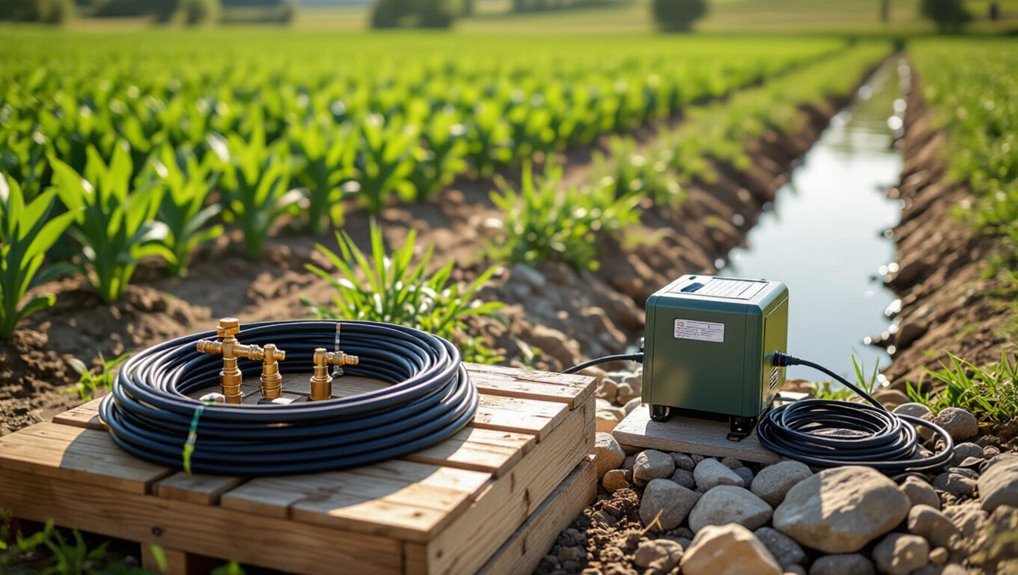
Most practical water-supply methods are matched to farm size and local climate, from rainwater harvesting and small pumps for small plots to wells, reservoirs, and irrigation networks for larger operations.
Choosing the best option requires evaluating field water needs, reliable water sources, infrastructure costs, and maintenance capacity.
Decision-making should prioritize reliability, affordability, and resilience to local weather variability.
Direct answer: Most practical methods by farm size and climate
Although site conditions and crop needs vary, the most practical water-supply methods can be grouped by farm size and climate to guide selection.
Small humid plots: rain barrels, shallow wells, drip kits.
Small arid plots: rainwater harvesting, tanker delivery, solar pumps.
Medium farms: dug wells, boreholes, surface reservoirs.
Large farms: irrigation canals, pumped groundwater, reservoirs, river diversions.
How to get a water supply to a field depends on scale.
How to choose the best option for your field
How should a farmer select a water-supply option for a field?
Evaluate water needs, source reliability, cost, energy and labor requirements, soil and crop compatibility, legal and environmental constraints, and long-term sustainability.
Prioritize systems matching scale and climate: gravity or canal for large, perennial sources; wells and pumps for decentralized supply; rainwater harvesting or storage for intermittent rainfall.
Model costs and risks before committing.
Understanding Water Needs and Site Assessment
A practical assessment of water needs begins with calculating crop water requirements and irrigation duty to match supply with demand.
Soil texture and water-holding capacity, infiltration rates, topography, field layout and drainage must be evaluated alongside local climate, rainfall variability and drought risk.
Legal, environmental and permitting constraints are then reviewed to guarantee any supply or infrastructure plan is compliant and sustainable.
Calculating crop water requirements and irrigation duty
Calculating crop water requirements and irrigation duty begins with quantifying the crop’s evapotranspiration needs and translating them into the volume and rate of water that must be delivered to the field.
This requires crop coefficients, reference evapotranspiration data, effective rainfall estimates, and knowledge of root depth and critical growth stages.
Apply scheduling intervals, leaching requirements, system application efficiency, and peak demand to size pumps, pipes, and emitters accurately.
Soil type, infiltration and water-holding capacity
Soil texture and structure determine how quickly water enters the root zone, how evenly it moves, and how much is retained for crop use; sandy soils infiltrate rapidly but hold little plant-available water, while clayey soils store more water yet may impede infiltration and root growth.
Organic matter, bulk density and aggregation modify retention and percolation; matching irrigation frequency and volume to these properties optimizes efficiency.
Topography, field layout and drainage considerations
Several landscape features — slope, aspect and microrelief — dictate how water moves across and through a field and consequently shape irrigation layout and drainage needs.
Field shape, contouring, and access roads determine pipe runs and pump placement.
Low spots require outlets or subsoil drains; steep areas need erosion control and terracing.
Design balances uniform application, runoff routing and maintenance access.
Local climate, rainfall patterns and drought risk
Because climate governs both water availability and crop demand, evaluating local temperature, evapotranspiration rates, seasonal rainfall distribution, and frequency of extreme events is essential for sizing storage, scheduling irrigation, and planning resilience measures.
Historical rainfall records, drought recurrence intervals, and onset/length of wet seasons inform crop selection, water budgeting, and supplemental supply needs.
Climate trends and variability guide contingency planning for water shortages.
Legal, environmental and permitting constraints
While evaluating on-farm water needs, stakeholders must also map the legal, environmental, and permitting framework that governs water use and infrastructure.
Since regulatory limits, protected habitats, and permit timelines directly shape feasible supply options, it is essential to assess water rights, withdrawal limits, protected species and wetlands, pollution controls, buffer zones, and reporting requirements.
Factor permit durations, appeal risks, and mitigation obligations into project design, costs, and scheduling.
On-Farm Water Sources
On-farm water sources encompass surface supplies like ponds, rivers and streams, groundwater from wells or boreholes, and harvested rainwater stored in tanks or reservoirs.
Recycled or treated wastewater and greywater reuse, as well as municipal or bulk supply connections, provide additional options where available.
Each source differs in reliability, quality and cost, so suitability should be assessed against crop needs and site conditions.
Surface water sources: ponds, rivers, streams
Although subject to seasonal variation and regulatory oversight, surface water sources such as ponds, rivers, and streams provide accessible and often cost-effective irrigation and livestock watering options for farms. Their reliability depends on watershed characteristics, legal water rights, and appropriate intake and storage infrastructure.
Proper siting, screening, sediment control, minimal ecological impact, and contingency storage enhance consistency and protect water quality for agricultural use.
Groundwater: wells and boreholes
Groundwater accessed via wells and boreholes offers a generally reliable, year-round water supply for irrigation and livestock when properly sited, constructed, and managed.
Proper hydrogeological assessment, licensed drilling, casing and grouting, and pump selection guarantee sustainable yield and water quality.
Regular testing, maintenance, and monitoring of drawdown prevent contamination, over-abstraction, and aquifer depletion, safeguarding long-term farm water security.
Harvested rainwater: tanks, reservoirs and catchment systems
When properly designed and maintained, harvested rainwater systems—comprising roofs or other catchments, conveyance, storage tanks or reservoirs, and simple treatment—provide a low-cost, dependable supplemental water source for irrigation, livestock, and domestic needs.
Collection area sizing, first-flush diversion, filtration, covered storage, and overflow routing maximize supply and quality.
Seasonal buffering, gravity-fed distribution, and routine inspection reduce contamination, losses, and maintenance demands.
Recycled/treated wastewater and greywater reuse
Following harvested rainwater strategies, many farms supplement supply with recycled and treated wastewater, including greywater from domestic sources, to extend irrigation capacity and reduce freshwater demand.
Treated effluent and segregated greywater can irrigate nonfood crops, orchards, or pasture after appropriate treatment, storage, and monitoring.
Safe reuse requires pathogen reduction, salinity control, nutrient management, and compliance with regulations to protect soil, crops, and human health.
Municipal or bulk water supply connections
How can a farm integrate municipal or bulk water connections into its water portfolio effectively?
A farm assesses permits, delivery reliability, and cost; negotiates supply contracts or bulk-tanker arrangements; installs meters, backflow preventers, and compatible fittings; plans storage buffering for demand peaks; and integrates municipal supply with on-site sources for redundancy, ensuring regulatory compliance, quality monitoring, and contingency protocols.
Conveyance and Storage Methods
Conveyance and storage methods determine how reliably water reaches fields and is held for use, ranging from open canals and furrow systems to buried pipelines and mains.
Storage options—ponds, tanks, reservoirs and small temporary cisterns or totes—require attention to capacity, lining, siting and maintenance.
Pump selection and placement, including type and power, must match conveyance layout and storage strategy to guarantee efficient delivery and minimize losses.
Open canals, furrows and lined channels
Open channels, furrows and lined trenches form the simplest and most widespread methods for moving and storing irrigation water on farms, using gravity and modest infrastructure to deliver flow from sources to fields.
They offer low-cost, easily repaired conveyance, permit field-level distribution and infiltration control, and reduce erosion when properly graded and lined.
Regular maintenance, sediment management and gated outlets optimize efficiency and uniformity.
Pipelines and buried mains
Where gravity-fed channels give way to routes requiring greater control, pipelines and buried mains offer a pressurized, enclosed alternative for moving and storing irrigation water.
They reduce losses, contamination and evaporation while enabling flow control, metering and connection to pumps and valves.
Selection balances material, diameter, pressure rating, joint type and trench depth.
Installation demands correct bedding, corrosion protection and access for maintenance.
Storage ponds, tanks and reservoirs design considerations
Water storage—whether as lined ponds, elevated tanks, or engineered reservoirs—forms the backbone of dependable irrigation systems by buffering supply against variable inflows and aligning delivery with crop demand.
Design considerations include siting for gravity feed, capacity sized to crop water needs and drought frequency, lining and seepage control, overflow and spillway safety, access for maintenance, sediment management, and water quality protection.
Pumps: types, selection and placement
Pumps move stored or sourced supply into irrigation systems and determine energy use, reliability, and achievable head and flow. Selecting the right type—centrifugal, positive-displacement, submersible, or turbine—depends on required flow rate, lift (head), solids handling, power availability, and maintenance capacity.
Placement minimizes suction lift, avoids air ingress, enables priming and maintenance access, protects from floods, and matches pipe sizing and control valves for efficient operation.
Small-scale temporary storage (cisterns, totes)
After determining pump type and placement, attention shifts to short-term storage options that buffer supply, stabilize delivery, and reduce pump cycling.
Small cisterns, polyethylene totes, and intermediate tanks provide modular, low-cost buffering. Placement near fields minimizes friction losses; elevated or pressurized setups improve flow.
Incorporate inlet filtration, overflow protection, and secure covers. Regular inspection prevents contamination and prolongs service life.
Irrigation Delivery Systems
Irrigation delivery systems determine how stored and conveyed water reaches crops, ranging from traditional surface methods—flood, furrow, and basin—to pressurized sprinkler systems like center pivot, lateral move, and portable units.
More targeted options include micro-irrigation (drip, micro-sprinklers, trickle lines) and subsurface installations that reduce evaporation and runoff.
Choices between automated and manual operation affect labor, timing precision, and water-use efficiency.
Surface irrigation: flood, furrow, basin
Surface irrigation methods—flood, furrow, and basin—deliver water across a field by gravity, relying on land slope, soil infiltration, and field layout to control distribution.
These methods suit low-tech, low-energy contexts. Flood covers entire plots; furrows channel water between crop rows; basins confine water around individual trees or plots.
Efficiency depends on grading, flow control, and timely cutoff to minimize runoff and deep percolation.
Sprinkler systems: center pivot, lateral move, portable sprinklers
Sprinkler systems apply water under pressure through nozzles to simulate rainfall, offering controlled, uniform delivery suitable for a wide range of crops and terrains.
Center pivots provide efficient circular coverage with automated travel. Lateral-move systems offer linear coverage for rectangular fields, and portable sprinklers deliver flexible, low-cost irrigation.
Selection depends on field shape, water source, crop needs, and labor or capital constraints.
Micro-irrigation: drip, micro-sprinklers and trickle lines
Delivering water directly to the root zone, micro‑irrigation systems—including drip lines, micro‑sprinklers, and trickle tapes—maximize water use efficiency and reduce evaporation and runoff.
They enable precise scheduling, lower labor and energy needs, and minimize weed growth.
Installation requires filtration, pressure regulation, and routine maintenance to prevent clogging.
Suitable for row crops, orchards, and high‑value horticulture where targeted, uniform moisture promotes yield and quality.
Subsurface irrigation options
Explore subsurface irrigation methods that place water below the soil surface—through buried drip lines, porous tubing, or subirrigation channels—to supply moisture directly to crop root zones with minimal evaporation and reduced foliar wetting.
These systems improve water use efficiency, limit weed growth, and lower disease risk.
Proper installation depth, soil type matching, maintenance access, and periodic flushing prevent clogging and guarantee uniform distribution for consistent crop performance.
Automated vs manual delivery systems
While both automated and manual irrigation delivery systems aim to supply consistent moisture, they differ markedly in control, labor requirements, and responsiveness to changing conditions.
Automated systems use timers, sensors, and controllers to optimize timing and conserve water with minimal labor but require capital and maintenance.
Manual systems offer low-tech flexibility and lower upfront cost yet demand regular labor and can be less precise under variable weather or crop stress.
Designing a Reliable Water Supply System
Designing a reliable water supply system begins with matching source capacity to crop demand, including peak season flow, and selecting pumps, pipes, and filters sized for efficient operation.
Appropriate storage capacity and redundancy are planned to buffer variability, while layouts are adapted to field scale—from small plots to large farms.
Where feasible, integrating multiple sources (wells, surface water, rainwater) enhances resilience against droughts and equipment failures.
Matching source capacity to crop demand and peak season flow
Because irrigation needs vary seasonally and by crop, sizing a water source to meet both average consumption and peak season demand is essential for reliable supply. Assess crop evapotranspiration, growth stage peaks, and climate extremes. Include storage or staged withdrawals to buffer variability. Monitor real yields versus estimates and adjust allocation.
| Metric | Action |
|---|---|
| Average demand | Base capacity |
| Peak flow | Buffer/storage |
| Seasonal timing | Scheduling |
| Safety margin | Contingency |
Sizing pumps, pipes and filters for efficiency
After matching source capacity to crop demand, attention turns to the hydraulic components that deliver water: pumps, pipes and filters must be sized to move the required volumes at the needed pressures with minimal energy loss and reliable operation.
Selection uses head and flow calculations, pipe diameter for acceptable velocity and friction, pump curves for efficiency, and filter capacity to prevent clogging while allowing required throughput.
Storage sizing and redundancy planning
A reliable storage strategy balances daily demand, emergency reserves, and system uptime by sizing tanks and reservoirs to cover routine irrigation cycles, peak drawdowns, and contingencies such as pump failure or source interruption.
Capacity calculations consider crop evapotranspiration, refill frequency, and seasonal variability.
Redundancy includes parallel tanks, backup pumps, cross-connections, and prioritized zones to maintain supply during maintenance or component failure.
Layout examples for small, medium and large fields

Layout diagrams illustrate how source, storage, conveyance, and control elements are arranged to meet field size and operational needs.
Small fields use a single pump, compact tank, short lateral runs and manual valves.
Medium layouts add zoned mains, multiple hydrants, modest storage and a backup pump.
Large fields require sectional mains, booster stations, substantial reservoirs, automated controls and pressure regulation for uniform delivery.
Integration of multiple sources for resilience
Moving from field-scale arrangement to system-level reliability, integrating multiple water sources strengthens supply resilience against drought, pump failure, and contamination.
A coordinated system couples wells, surface water, stored rain, and treated reuse with prioritized supply tiers, automated switching, and monitoring.
Redundant conveyance and diversified quality treatments reduce single-point failures, support adaptive allocation, and maintain consistent irrigation during variable demand and unexpected outages.
Water Management Practices to Increase Reliability
Effective water management combines timing, technology and soil conservation to make supply more reliable.
Scheduling and irrigation management tools, soil moisture sensors, and strategies such as surge or deficit irrigation optimize delivery, while mulching, cover crops and conservation practices reduce losses.
Coordinated water budgeting and seasonal planning tie these measures to crop needs and available resources.
Scheduling and irrigation management tools
Scheduling aligns water delivery with crop needs and system capacity to maximize reliability and efficiency.
Managers use crop calendars, evapotranspiration estimates, and rotation plans to set timings and volumes. Automated controllers, flow meters, and programmable valves enforce schedules, while contingency plans address supply interruptions.
Recordkeeping and periodic audits refine schedules, improving uniformity, reducing waste, and sustaining yield under variable water availability.
Soil moisture monitoring and sensors
Soil moisture monitoring systems provide objective, real-time data that facilitate precise irrigation decisions and reduce uncertainty in water delivery.
Sensors (tensiometers, capacitance, FDR, gypsum blocks) measure root-zone moisture, informing timing and volume of irrigation.
Data loggers and telemetry integrate with controllers and scheduling tools.
Proper sensor placement, calibration, and maintenance guarantee reliable readings that optimize water use and protect crop health.
Mulching, cover crops and conservation practices
When applied consistently, mulches, cover crops, and conservation tillage reduce surface evaporation, enhance infiltration, and stabilize soil structure to make water availability more reliable for crops.
These practices increase organic matter, improve aggregate stability, and support root networks that retain moisture. They suppress weeds, moderate soil temperature, and reduce erosion, lowering irrigation demand and buffering crops against short dry spells without altering watering schedules.
Surge irrigation and deficit irrigation strategies
Adopting surge and deficit irrigation techniques can make water use more efficient and crops more resilient by matching supply to crop needs and field conditions.
Surge irrigation pulses water to improve infiltration and reduce runoff on furrowed fields.
Deficit irrigation intentionally applies less than full crop water requirements during tolerant growth stages to conserve water while maintaining acceptable yields and quality.
Water budgeting and seasonal planning
Building on field-level tactics like surge and deficit irrigation, water budgeting and seasonal planning align farm-scale supply with crop demand across the year.
Planners estimate seasonal allocations, prioritize crops by value and sensitivity, schedule planting and irrigation windows, and reserve buffer storage for dry spells.
Monitoring, historical climate analysis, and flexible allocation rules reduce risk and optimize water use efficiency across seasons.
Energy and Cost Considerations
Energy and cost trade-offs shape which water-supply methods are practical for a given farm, comparing upfront capital against ongoing operating and maintenance expenses.
Fuel, grid electricity and renewable pumping options each carry different price profiles, lifecycle projections and potential financing or incentive pathways.
Practical cost-saving measures — from efficient pumps and demand management to phased investments and tailored financing — influence long-term reliability and total cost of ownership.
Capital vs operating costs for each method
Compare capital and operating costs to determine the most appropriate water-supply method for a given farm: Decisions balance upfront investment (infrastructure, pumps, wells) against recurring expenses (maintenance, repairs, water fees). Lower-capital options may incur higher long-term operating costs; robust capital investments often reduce ongoing expenses. Evaluate lifecycle costs, payback period, and scale to match water needs and cash flow.
| Method | Capital cost | Operating cost |
|---|---|---|
| Surface diversion | Low–medium | Medium |
| Dug well | Medium | Medium–high |
| Borehole + pump | High | Low–medium |
| Storage reservoir | Medium–high | Low |
Fuel, electricity and renewable energy options for pumping
When choosing a pumping source, farmers must weigh fuel and electricity options against renewable alternatives to match water demand, reliability, and cost constraints.
Diesel and petrol generators offer mobility and high power but incur fuel and maintenance costs. Grid electricity provides steady supply where available.
Solar and wind reduce operating expenses and emissions but require adequate sizing, storage or backup, and site-specific assessment of resource consistency.
Cost-saving measures and financing options
Having weighed fuel, grid, and renewable pumping options, farmers can reduce overall costs through targeted efficiency measures and tailored financing.
Bulk purchasing, demand-based irrigation scheduling, and high-efficiency pumps cut operating expenses.
Grants, low-interest loans, cooperative financing, and performance contracts spread capital costs and mitigate risk.
Strategic subsidy use and phased upgrades optimize cash flow while preserving water supply reliability and operational resilience.
Lifecycle and maintenance cost projections
Projecting lifecycle and maintenance costs requires quantifying energy consumption, component longevity, and routine service needs across the system’s expected operational life.
Estimates should include capital replacement schedules, fuel or electricity rates, spare parts, labor for preventive maintenance, and downtime risk.
Discounted cash flow yields total lifecycle cost per irrigated hectare, enabling comparison of pump types, power sources, and automation levels for informed investment decisions.
Risks, Common Problems and How to Prevent Them
Common failure points in farm water systems include pump breakdowns, clogs, leaks, and contamination from biofouling, sediment, or salinity.
Chronic threats such as drought, low river flows, and groundwater depletion require demand management and source diversification.
Effective prevention centers on routine maintenance, sediment and salinity controls, and clear emergency contingency and redundancy plans.
Common failure points: pump, clogging, leakage, contamination
While a reliable water supply is essential for crop health and yield, irrigation systems face predictable failure points—pumps, clogs, leaks, and contamination—that can quickly disrupt operations if unaddressed.
Regular pump maintenance, pressure monitoring, strainers and filters, routine pipe inspections, and backflow prevention reduce risks.
Rapid detection, spare parts, scheduled cleaning, and water testing create resilience and minimize downtime.
Drought, low river flows and groundwater depletion responses
Severe and protracted dry periods, declining river flows, and falling groundwater levels pose interconnected risks to irrigation reliability and long-term farm viability by reducing available water, increasing pumping costs, concentrating contaminants, and triggering regulatory restrictions.
Anticipating these outcomes requires monitoring hydrological indicators, prioritizing water use, and investing in conservation measures such as efficient irrigation technologies, supplemental storage, and managed aquifer recharge to prevent irreversible resource depletion.
Farmers should implement drought contingency plans, tiered allocation, crop switching, and financial risk tools while coordinating with basin management to sustain supplies.
Biofouling, sediment and salinity management
Reduced water availability and altered flow regimes can exacerbate problems with biofouling, sediment buildup, and salinity by concentrating contaminants, increasing stagnation in storage, and forcing greater reliance on marginal water sources.
Regular mechanical and chemical cleaning of intakes and filters, sediment traps and settling basins, managed flushing, source blending, soil and drainage management, and monitoring salinity and biofilm indicators reduce risks and maintain irrigation efficiency.
Emergency contingency plans and redundancy measures
Because water systems for farming are vulnerable to unexpected failures, droughts, and contamination events, robust emergency contingency plans and built-in redundancies are essential to sustain crop production and protect assets.
Plans should include alternative water sources, backup pumps and power, storage reserves, prioritized crop watering schedules, rapid contamination response protocols, regular drills, clear communication chains, and maintenance of critical spare parts to minimize downtime and losses.
Installation, Operation and Maintenance Best Practices
Routine inspections and concise maintenance checklists help guarantee system reliability and catch wear before failures occur.
Regular attention to filters, valves, and pipelines—plus clear seasonal start-up and shut-down procedures—reduces downtime and prolongs equipment life.
Basic repairs can often be handled by the farmer, but documented thresholds for complexity and safety should trigger a professional service call.
Routine inspections and maintenance checklists
A concise, regular inspection schedule paired with clear maintenance checklists secures irrigation systems and water infrastructure remain reliable and efficient. It identifies wear, leaks, and performance declines before they escalate into crop-threatening failures.
Personnel follow standardized logs, prioritize critical components, and record corrective actions. Checklists specify inspection frequency, responsible staff, and escalation triggers to guarantee timely repairs.
- Prioritize critical risks
- Track findings and repairs
- Schedule recurring reviews
Filter, valve and pipeline maintenance
Maintain filters, valves, and pipelines according to clear installation and operation standards to secure consistent flow, prevent contamination, and minimize downtime.
Inspect strainers and replace media per schedule, test valve seating and actuators, clear sediment and biofilm, and repair leaks promptly.
Monitor pressure differentials and flow rates, document maintenance actions, stock critical spare parts, and train staff on safe, standardized procedures to guarantee system reliability.
Seasonal start-up and shut-down procedures
Seasonal start-up and shut-down procedures establish clear, timed actions to shift irrigation systems between active and dormant states while protecting equipment and water quality.
Inspect and test pumps, filters, valves, and controllers; flush lines and bleed air; replenish corrosion inhibitors and lubricants; calibrate sensors and backflow preventers; document dates, observations, and corrective actions; secure winterization for freezes and recommissioning checklists for spring activation.
When to call a professional vs DIY repairs
Judgment guides whether a farmer or technician should tackle irrigation repairs: routine tasks with low risk and clear instructions suit DIY, while complex, hazardous, or warranty-sensitive work requires a professional.
Farmers may handle filter cleaning, valve adjustments, and simple pipe fixes.
Call a licensed sprinkler contractor or well technician for electrical faults, pump failures, pressure issues, permitting, structural leaks, or when safety and guarantees matter.
Case Studies and Practical Examples
The section presents concise case studies illustrating water-supply strategies across scales.
Examples include a smallholder using rainwater harvesting with drip irrigation, a medium commercial farm relying on a well and sprinkler system with storage, and a large-scale operation combining surface water, reservoirs and automation.
Practical low-cost adaptations for water-scarce regions are also highlighted to show transferable solutions.
Smallholder farm: rainwater harvesting + drip irrigation
When water is scarce, smallholder farmers often combine simple rainwater-harvesting systems with low-pressure drip irrigation to stretch supplies and raise yields; practical examples from diverse regions illustrate how modest investments in gutters, storage tanks, filters, and microtubing translate into reliable watering schedules, reduced labor, and higher crop survival.
Case studies show household-scale catchments, gravity-fed emitters, seasonal rationing, and crop-specific emitter layouts improving resilience.
Medium commercial farm: well + sprinkler system with storage
Several medium-scale commercial farms combine bore or dug wells with pressurized sprinkler networks and modest storage reservoirs to guarantee consistent irrigation across hectares while smoothing pump demand.
Operators size storage to buffer peak evapotranspiration, install variable-speed pumps and pressure regulators, and zone sprinklers for uniform coverage.
Routine maintenance, water quality monitoring, and backup generator capacity preserve reliability and protect crop yields during short supply interruptions.
Large-scale farm: blended surface water, storage reservoirs and automation
Although blending surface water with stored reserves and automated controls demands careful planning, large-scale farms achieve resilient, cost-effective irrigation by combining river or reservoir intakes, pumped storage reservoirs sized for seasonal deficits, and centralized automation for allocation and scheduling.
Operators integrate real-time monitoring, predictive models, and prioritization rules to optimize deliveries, maintain water quality, reduce pumping costs, and guarantee equity across crops and fields.
Low-cost adaptations for water-scarce regions
Because resources are limited in many arid regions, smallholder and community farms increasingly rely on simple, low-cost adaptations—such as rainwater harvesting tanks, lined micro-reservoirs, treadle pumps, mulching, and drip kits assembled from locally available materials—to stretch supplies and stabilize yields.
Case studies show combined tactics—soil moisture conservation, targeted drip irrigation, seasonal storage, and cooperative maintenance—raise reliability, reduce risk, and enable modest intensification without heavy capital.
Decision Checklist and Implementation Roadmap
A concise step-by-step checklist guides planning and installation of a reliable farm water supply, from site assessment and design selection to procurement and commissioning.
The implementation roadmap outlines a timeline with required permits, key milestones, and responsible parties to keep the project on schedule.
Defined metrics for system performance, water use efficiency, and financial returns enable monitoring of success and calculation of ROI post‑implementation.
Step-by-step checklist to plan and install a reliable water supply
Begin by assembling a clear decision checklist and implementation roadmap that sequence the technical assessments, permitting steps, equipment selection, and installation milestones needed to deliver a dependable farm water system.
Then validate source capacity, map delivery routes, choose pumps/filters, estimate costs, and assign responsibilities.
Use staged testing and commissioning before handover.
- Verify source capacity and quality
- Select appropriate pumping and filtration
- Plan staged testing and commissioning
Timeline, permits and key milestones for project rollout
Having verified source capacity, selected pumps and filters, and outlined staged testing, the project now requires a clear timeline, permit schedule, and milestone map to guarantee coordinated rollout.
Establish permit lead times, application deadlines, and inspection windows. Sequence procurement, civil works, installation, commissioning, and contingency buffers.
Assign responsible parties, approval gates, and communication checkpoints. Document sign-offs and escalation pathways for timely execution.
Metrics to monitor success and ROI after implementation
Several key performance indicators (KPIs) and financial metrics should be defined up front to measure operational success and return on investment after system commissioning.
Track water delivery reliability, application efficiency, crop yield per hectare, energy use per cubic meter, maintenance frequency and downtime.
Financially monitor capital payback period, net present value, operating cost per season and benefit–cost ratio to validate performance and inform adjustments.
Conclusion
After pages of engineering, planning and earnest optimism, the field still waits for rain on schedule—because nature prefers improvisation. Farmers, engineers and planners laugh politely and install pumps, pipes and ponds as if control were a credential. Yet the real victory is modest: a resilient plan that admits failure, adapts quickly and spends money where it reduces worry. Ironically, reliability often arrives not from certainty, but from prepared humility and practical redundancy.