
How to Tell if Your Boiler Circulator Pump Is Working: Quick Tests and Signs
To determine if your boiler circulator pump is functioning properly, look for steady movement of hot water through the pipes, a consistent low hum with minimal vibration, and warm supply and return lines without leaks or corrosion. Signs of trouble include uneven radiator heat, unusual noises like grinding or squealing, visible rust, or tripped breakers. You can perform simple checks such as feeling pipe temperatures, listening for the motor’s sound, confirming thermostat demand, and bleeding air from the system. For more detailed guidance, explore hands-on tests and electrical checks, and know when to contact a professional.
How to Quickly Tell if Your Boiler Circulator Pump Is Working
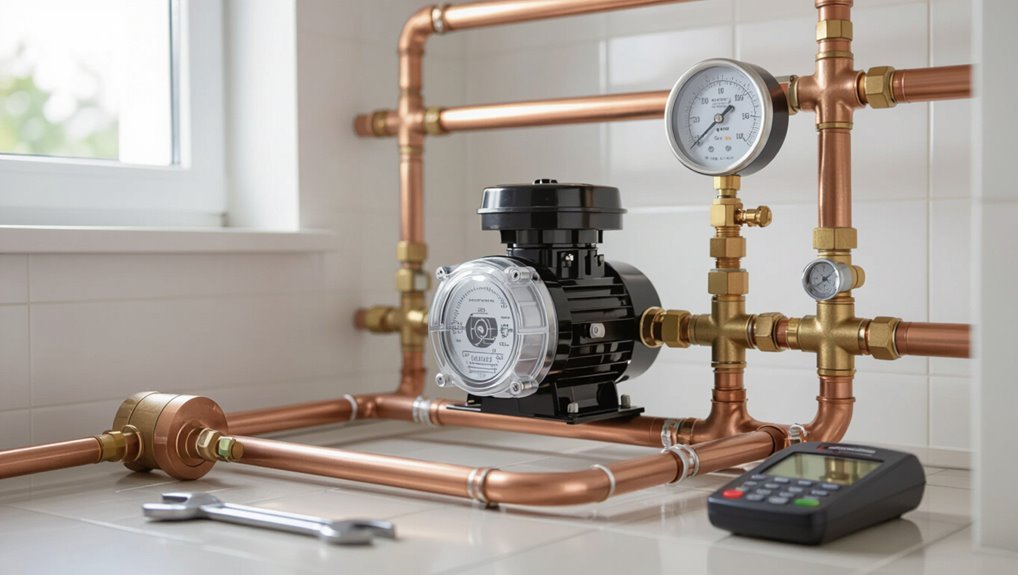
A boiler circulator pump moves heated water through the system, ensuring radiators or baseboards receive heat.
To quickly assess function, a technician or homeowner can perform a few fast yes/no checks—power at the pump, audible motor operation, and noticeable flow or temperature difference between supply and return lines.
These simple checks indicate whether deeper troubleshooting is required.
What a Boiler Circulator Pump Does and Why It Matters
Understanding the role of a boiler circulator pump clarifies why its operation is essential to a heating system’s performance.
The pump moves hot water from the boiler through radiators or baseboards, ensuring consistent heat distribution and system efficiency.
Detecting diminished circulation helps owners learn how to tell if boiler circulator pump is working and prevents cold spots, higher fuel use, and premature component wear.
Fast yes/no checks to perform before troubleshooting
How quickly can a homeowner rule out obvious circulator failure?
Simple yes/no checks save time:
- Is the boiler circulating noise present when calling for heat?
- Are radiators heating unevenly?
- Is the pump shaft vibrating or visibly turning?
- Is the power and thermostat demand confirmed?
- Any closed zone valves or air-bound sections?
If all answers are no/yes as appropriate, proceed to deeper troubleshooting.
Visual and Audible Signs of a Working or Failing Pump
A functioning circulator pump usually appears clean, dry, and free of vibration, producing a steady low hum when running.
Loud or irregular sounds—grinding, squealing, or knocking—often signal bearing wear, misalignment, or cavitation.
Visible leaks, rust, or heat discoloration are clear signs the pump or its seals are failing and require attention.
What a healthy pump looks and sounds like
Signs of a healthy boiler circulator pump are often visible and audible: steady, low-level humming, minimal vibration at the mount, and warm, consistently circulating pipes indicate proper operation, while irregular noises, excessive shaking, or fluctuating pipe temperatures point to wear, obstruction, or failing bearings.
Externally, casing shows no leaks or corrosion; shaft coupling remains aligned; flow indicators or gauges show steady pressure and consistent flow.
Common noises that indicate problems (grinding, squealing, knocking)
Beyond steady humming and minimal vibration, certain sounds clearly signal malfunction and warrant prompt attention.
Grinding suggests worn bearings or debris contacting the impeller.
Squealing often indicates belt slippage or failing motor bearings.
Knocking or banging can mean cavitation, air in the system, or a loose mounting.
Persistent or worsening noises merit immediate inspection and professional servicing to prevent further damage.
Visible leak, corrosion, or overheating indicators
When metal discoloration, pooling fluid, or blistered paint appears around the pump housing, it often indicates leaking seals, corrosion, or overheating that require prompt attention.
Visible leaks reduce system pressure and promote corrosion; rust flakes or green deposits signal electrolyte attack. Overheated components show warped or scorched surfaces.
Such signs warrant immediate isolation, pressure check, and professional inspection to prevent failure or water damage.
Quick Hands-On Tests You Can Do Safely
Before any hands-on checks, the technician confirms power is off where appropriate, uses gloves and eye protection, and follows boiler-specific safety instructions.
They then verify electrical and control signals — thermostat calls, zone valve positions, and breaker status — before feeling radiators and supply/return pipes to detect flow and comparing pump body temperature and vibration.
Finally, a brief test of operation can be done by carefully opening an air vent or bleed valve to see if water movement or pressure changes indicate circulation.
Safety precautions before testing the pump
Exercise caution and treat the boiler and circulator pump as potentially hazardous systems before any hands-on testing.
Wear safety gloves and eye protection, allow components to cool, and relieve pressure per manufacturer guidance.
Isolate mechanical access—secure moving parts and lock covers.
Verify clear workspace and good lighting.
Keep combustible materials and bystanders away, and have emergency shutoff knowledge and a fire extinguisher nearby.
Check power and control signals (thermostat, zone valves, breakers)
With safety measures in place and the system cooled and isolated, attention turns to verifying electrical power and control signals that command the circulator pump.
Inspect breakers and fuses for tripped or blown components, confirm thermostat calling for heat, and observe zone valve positions or end switches.
Use a multimeter to check voltage at the pump terminals and control wiring continuity before proceeding.
Feel-for-flow test at radiators and pipes
How can a quick tactile check confirm circulator operation? A technician or homeowner feels radiators and supply/return pipes when the system runs: warm supply lines and cooler returns indicate flow.
Compare multiple radiators—consistent temperature progression toward radiators shows circulation. Cold radiators or identical supply/return temperatures suggest no flow.
Perform cautiously; avoid burns and use insulated gloves if needed.
Check pump body temperature and vibration
Because the circulator transfers mechanical energy into moving water, its casing and mounting reveal useful clues: a warm, evenly heated pump body usually indicates operation; an unusually cold or hot spot suggests stalled rotor or blocked flow.
Light to moderate vibration is normal; strong shaking, buzzing, looseness, or steady screeching indicates bearing wear, imbalance, or mounting failure and warrants service.
Test pump operation by briefly opening an air vent or bleed valve
If pump-body warmth and vibration clues suggest operation but uncertainty remains, a quick hands-on check is to briefly open a nearby air vent or bleed valve while the system is running.
A steady stream or steady spray of hot water indicates circulation; sputtering, no flow, or only air suggests trapped air or pump failure.
Close valve promptly and use a rag to catch spills.
Electrical and Mechanical Checks for Homeowners
The homeowner should first confirm the pump is receiving power by checking switches, fuses, and using a multimeter safely.
Next, they can distinguish a humming motor from actual rotor movement by listening and, if safe, attempting a manual rotation to free a stuck impeller.
Finally, basic checks for airlocks and correct system pressure help determine whether circulation or pressure issues are causing the problem.
Verifying the pump has power (switches, fuses, multimeter basics)
Before opening any panels, the homeowner should confirm whether the circulator pump is receiving electrical power, since loss of power is a common and easily diagnosed cause of pump inactivity.
Check accessible switches and the boiler’s fused disconnect. Inspect fuses or breakers for tripping.
If comfortable, use a multimeter to verify voltage at the pump terminals, following safety precautions and manufacturer guidance.
Listening for motor hum vs. motor rotation
After confirming the circulator has power, attention should shift to distinguishing an energized motor from one that is actually turning.
A steady humming without vibration or shaft noise may indicate electrical supply but a stalled rotor. A smooth rotational sound, light whir or faint clicking usually signals proper rotation.
Sudden grinding, scraping or intermittent chirps suggest bearing or impeller issues needing further inspection.
Manual rotation test for stuck impeller (when safe)
Carefully checking whether the impeller turns by hand helps confirm a mechanical seizure when power is off and the system is depressurized.
With electrical isolation and drained pressure, the pump shaft can be gently rotated via the coupling or rotor nut.
Resistance, roughness, or immobility indicate seized bearings or debris.
Refrain from forcing; document findings and consult a qualified technician for repairs or replacement.
Checking for airlocks and proper system pressure
Several simple checks can reveal whether trapped air or incorrect system pressure is causing poor circulation: inspect the system pressure gauge for the normal operating range (typically 1–1.5 bar cold, slightly higher when hot).
Listen for gurgling or intermittent flow noise at radiators and near the pump, and observe uneven heating that improves after bleeding individual radiators.
If pressure is low, top up via the filling loop and recheck; repeat bleeding until stable.
Diagnostic Steps for Technically Skilled Users
Technically skilled users should begin with electrical tests — using a multimeter to check motor windings and supply voltage and a clamp meter to verify current draw against manufacturer specifications.
Next, a mechanical inspection of the shaft, coupling, and bearings can reveal wear or binding.
If indicated, the pump should be safely isolated, drained, and removed for impeller inspection following proper lockout/tagout and manufacturer procedures.
Using a multimeter to test motor windings and voltage
When diagnosing a boiler circulator, using a digital multimeter to check motor windings and supply voltage reveals whether the pump motor is electrically sound or receiving proper power.
Measure resistance across windings, comparing to manufacturer specs for open or shorted coils.
Verify AC voltage at terminals under no-load and running conditions.
Record readings, isolate power before disassembly, and interpret deviations as electrical faults.
Using a clamp meter to check current draw against specifications
One clear way to confirm a boiler circulator’s mechanical and electrical health is to measure its operational current with a clamp meter and compare the reading to the pump’s rated full-load amperage.
With the pump running, clamp a meter around one supply conductor, record steady and startup currents, and compare to nameplate/specs.
Significant overcurrent or low draw indicates binding, electrical faults, or impeller issues requiring further diagnostics.
Inspecting the shaft, coupling, and bearings
Begin by de-energizing the pump and isolating the boiler circuit.
Then remove the coupling guard to access the shaft, coupling, and bearing housings.
Visually inspect for misalignment, scoring, corrosion, or play.
Rotate the shaft by hand to detect roughness or binding.
Check coupling fasteners and keyways for looseness.
Listen for bearing noise and feel housings for abnormal heat indicating wear or lubrication failure.
How to safely remove and inspect the pump impeller
Carefully de-energize the pump, isolate the boiler loop, and relieve system pressure and temperature before attempting impeller removal to prevent injury and equipment damage.
With appropriate PPE, drain fluid, disconnect electrical and piping connections, and unbolt the housing.
Extract the impeller using correct tools; inspect for corrosion, pitting, cracks, or wear.
Verify shaft alignment and clearances; replace damaged impellers or seals per manufacturer specifications.
When the Pump Is Running but Radiators Stay Cold
If the circulator runs but radiators remain cold, the problem may be poor circulation rather than a loss of heat from the boiler.
The technician should compare signs of circulation failure (cold supply/return differences, pump vibration without flow) against heat-loss issues and then inspect zone valves, thermostats, and piping for faults.
They should also check for airlocks and imbalance by bleeding radiators and adjusting flow to restore proper circulation.
Signs of circulation problems vs. heat loss issues
When a boiler circulator pump appears to run but radiators remain cold, distinguishing true circulation failure from heat loss or isolation issues requires checking flow, temperature differentials, and valve positions.
Simple indications such as a warm boiler with cold radiator inlets point toward a circulation problem, while uniformly cooling radiators and significant heat loss near windows or poorly insulated walls suggest distribution or retention issues rather than pump malfunction.
Inspect inlet/outlet temps, cold spots, and bleed valves.
Diagnosing zone valve, thermostat, and piping issues
Why are some radiators cold even though the circulator pump runs? Possible causes include closed or stuck zone valves preventing flow to specific circuits, thermostat or control wiring faults failing to call heat, incorrect zone sequencing, or mis-piped loops and isolation valves left closed.
Inspect zone valve indicators, confirm thermostat calls and wiring, and verify piping layout and valve positions before assuming pump failure.
How to detect and fix airlocks and balancing issues
How can airlocks and improper balancing leave radiators cold even with the circulator running? Air trapped in pipes blocks flow; closed or poorly adjusted balancing valves divert hot water away.
To detect, bleed radiators, listen for gurgling, and check flow at return headers.
To fix, vent air, adjust lockshield valves for even flow, and flush system if persistent.
Recheck temperatures and repeat as needed.
Common Causes of Pump Failure
Pump failures typically stem from a handful of identifiable issues.
Electrical faults and control failures can stop the motor, while mechanical wear—worn bearings, leaking seals, or a damaged impeller—reduces performance or causes seizure.
System problems such as sludge buildup, trapped air, low pressure, freezing, or incorrect pump sizing and installation also commonly impair operation.
Electrical faults and control failures
Several common electrical faults and control failures can prevent a boiler circulator from running or cause intermittent operation.
Faulty wiring, loose connections, blown fuses or tripped breakers interrupt power.
Failed relay, relay socket corrosion, or malfunctioning thermostat/zone controller can misroute signals.
Defective start capacitors, worn motor windings, or improper voltage supply reduce performance.
Regular electrical inspection and testing of controls identifies these issues.
Mechanical wear: bearings, seals, impeller damage
Electrical issues often interrupt operation, but mechanical wear is a leading non-electrical cause of circulator failure: bearings can wear or seize, shaft seals can leak or harden, and impellers can erode or become unbalanced from corrosion and debris.
These defects cause vibration, noise, reduced flow, overheating, and premature motor strain. Routine inspection and timely replacement of worn components prevent sudden failure and efficiency loss.
System-related causes: sludge, air, low pressure, freezing
System-related issues such as sludge buildup, trapped air, low system pressure, and freezing can undermine a circulator’s performance even when its motor and bearings are sound.
Sludge and debris restrict flow and load the impeller; air causes noise, cavitation, and intermittent circulation; low pressure reduces flow and causes pump cavitation; freezing can block lines or damage the impeller, halting circulation.
Incorrect pump sizing or installation errors
Problems originating within the boiler loop are not the only causes of circulator failure; mistakes in pump selection and installation frequently produce similar symptoms.
Undersized pumps struggle to overcome system head, while oversized units short-cycle or cavitate.
Incorrect piping, wrong rotation, poor alignment, or inadequate electrical supply cause noise, overheating, or early bearing wear.
Proper sizing, orientation, and wiring prevent many failures.
Quick Temporary Fixes and When to Call a Professional
The section outlines a few safe, short-term remedies homeowners can try, such as power-cycling the pump, checking electrical connections, and bleeding radiators to remove trapped air.
It then specifies situations that require a licensed technician—persistent noise, leaks, failure to circulate, or electrical faults.
Finally, it lists the key details to have for a service call: boiler make and model, any error codes, recent symptoms, and when the issue began.
Short-term remedies homeowners can try safely
When a circulator pump shows signs of failing—noisy operation, uneven heating, or loss of flow—homeowners can try a few safe, temporary fixes before calling a technician.
Power-cycle the boiler and pump, check and tighten electrical connections, bleed radiators to remove air, confirm valves are open, and clear nearby debris.
These measures may restore operation briefly; monitor performance and schedule professional service if issues persist.
Situations that require a licensed technician or boiler service
Certain symptoms indicate a circulator pump issue beyond homeowner fixes and warrant a licensed technician:
- persistent loud grinding or screeching noises,
- complete loss of flow despite correct settings and bled radiators,
- visible leaks from the pump body or seals,
- tripped breakers or burned wiring,
- overheating or pressure excursions on the boiler gauge.
Also call for intermittent operation, burning smells, or when repairs require disassembly, electrical work, or gas/boiler controls.
What information to have ready for the service call
Need help preparing for a service call? The homeowner should note model and serial numbers, installation date, recent symptoms, error codes, thermostat settings, and any recent maintenance or repairs.
Record audible noises, vibration, water temperature, and visible leaks. Provide access details, boiler type, fuel source, and photos or short videos.
Clear, concise information speeds diagnosis and repair.
Preventive Maintenance to Keep Your Circulator Pump Healthy
A concise preventive maintenance plan helps prolong a circulator pump’s life and prevent unexpected failures.
It should include a routine inspection checklist, a recommended maintenance schedule with seasonal tasks, and clear criteria for repair versus replacement.
Following these steps enables straightforward decisions about troubleshooting, servicing, or replacing the pump.
Routine inspection checklist
Regular visual and operational checks form the backbone of preventive maintenance for a boiler circulator pump.
Inspect for leaks, corrosion, and secure mounting. Verify noise level and vibration during operation. Confirm electrical connections are tight and insulation intact. Check flow indicators and temperature differentials for consistency.
- Leak and corrosion inspection
- Mounting and vibration check
- Electrical and wiring review
- Flow and temperature verification
Recommended maintenance schedule and seasonal tasks
Maintenance rhythm guarantees the circulator pump remains reliable and efficient throughout the year.
Quarterly visual inspections, monthly vibration and noise checks during heating season, and biannual lubrication (if applicable) prevent wear.
Flush and bleed the loop each spring and autumn, verify electrical connections before winter, and replace worn seals annually.
Document actions and dates to track performance and predict service needs.
When to replace vs. when to repair the pump
When should a circulator pump be repaired and when is replacement the wiser choice? Assessment hinges on age, symptom severity, and cost.
Minor leaks, noisy bearings, or electrical faults often justify repair.
Recurrent failures, significant corrosion, seized impellers, or motors beyond serviceable limits favor replacement.
Also replace when repair costs approach or exceed 50–60% of a new pump plus labor and downtime.
Typical Costs and Parts to Expect
Typical costs for diagnostics, repairs, and full circulator replacements are outlined next to help readers budget for common scenarios.
Expected expenses range from modest service fees and part swaps to higher charges for motor or pump replacement.
Common replacement parts—impellers, seals, motors and control modules—are noted with brief compatibility considerations for different pump models.
Estimated costs for diagnostics, repairs, and replacements
A breakdown of likely expenses helps homeowners set realistic expectations. Typical diagnostics range $75–$150. Minor repairs (seals, bearings) $100–$300. Motor or pump replacements increase costs.
| Service | Typical Cost |
|---|---|
| Diagnostic fee | $75–$150 |
| Minor repair | $100–$300 |
| Full pump replacement | $300–$900 |
Common replacement parts and compatibility notes
Common parts that often require replacement include the circulator motor, impeller, shaft seal, bearings, and gasket sets; costs vary by part and pump model.
Replacement compatibility depends on pump make, model number, flange size, voltage, and flow specs.
OEM parts guarantee fit and warranty; generic options may reduce cost but require verification.
Labor, shipping, and core charges affect final expense.
Quick Troubleshooting Flowchart
A concise flowchart guides the reader from a “no heat” report through targeted checks to a resolution.
It presents a clear decision path: verify power and thermostat, inspect the circulator pump and valves, then determine repair or replacement.
Each step points to the next actionable test to minimize guessing and downtime.
Step-by-step decision path from no heat to resolution
One clear path guides a technician from “no heat” to a resolved circulator-pump issue: start with simple checks, progress through electrical and mechanical diagnostics, and finish with targeted repairs or replacements.
A concise stepwise decision path:
- Verify power, thermostat, and boiler operation.
- Listen for pump noise; check for vibration.
- Test motor voltage and continuity.
- Inspect impeller, bearings; repair or replace as indicated.
Conclusion
In the end, one might note that a boiler circulator pump’s occasional reluctance is best regarded as a gentle suggestion rather than a catastrophe. Subtle signs—noise, warmth patterns, or a hesitant rotor—tend to hint that attention is advisable before a matter becomes more assertive. Timely checks, simple remedies, and professional help when needed allow systems to continue their quiet, dependable work, preserving comfort while avoiding the more conspicuous inconveniences of outright failure.
