How to Ignite a Boiler Safely: Step-by-Step Guide for Homeowners and Technicians
To safely ignite a boiler, follow these essential steps: perform pre-checks, ensure controlled fuel and power isolation, and verify proper ventilation. Start by checking for gas odors, inspecting fuel lines and electrical controls, and confirming pressure and safety interlocks. Purge any air from the supply lines, then prepare the pilot or electronic ignition. Light the pilot or start the ignition cycle while carefully monitoring the flame, combustion characteristics, and system pressures. If any anomalies occur, shut down the system immediately and consult a licensed technician for ongoing issues. For detailed procedures and safety precautions, continue reading.
Overview of Boiler Ignition and Safety Essentials
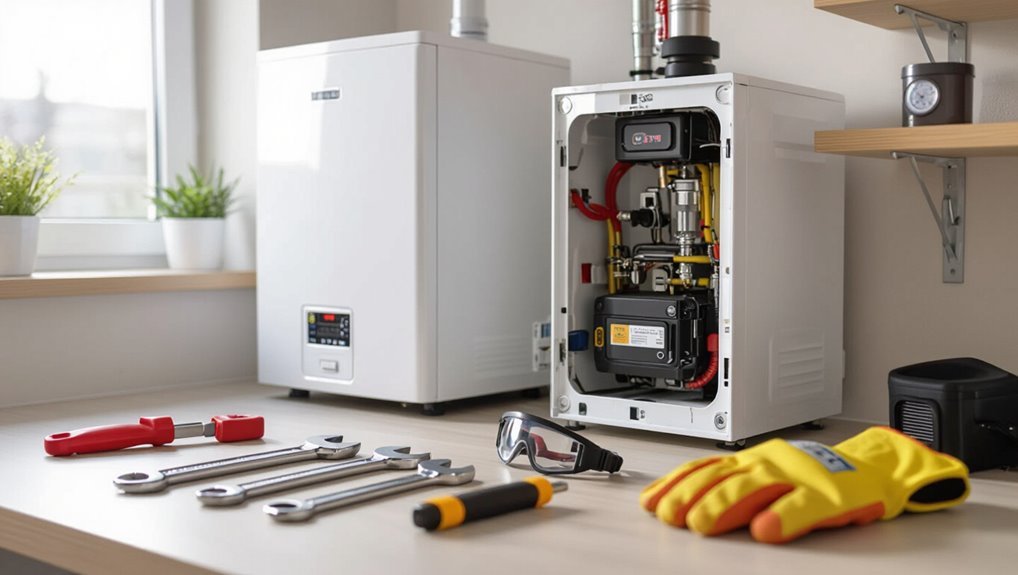
Proper ignition is essential to guarantee safe, efficient heating and to prevent carbon monoxide leaks or fire hazards in homes and businesses.
Different boiler types—such as combi, system, and conventional units—use distinct ignition systems (pilot, electronic, or intermittent) that affect startup procedures and maintenance.
Compliance with local codes and manufacturer instructions governs who may light a boiler and what safety checks are required.
Why Proper Ignition Matters for Homes and Businesses
Safety underpins effective boiler ignition for homes and businesses, because a correct start-up prevents hazards, reduces wear, and secures efficient operation.
Proper ignition guarantees consistent heat delivery, lowers fuel consumption, and extends service life.
Clear procedures for how to ignite a boiler minimize human error, prevent carbon monoxide risks, and reduce emergency repairs, protecting occupants, assets, and operational continuity.
Types of Boilers and Their Ignition Systems
Having established why correct ignition protects occupants, equipment, and efficiency, attention now turns to the different boiler types and how their ignition systems function.
Boilers include combi, system, and conventional models; ignition methods span standing pilots, intermittent pilot, direct spark, and hot surface ignition.
Each system demands specific safety controls, flame detection, and ventilation checks to guarantee reliable, safe startup and operation.
Legal and regulatory considerations for boiler ignition
Because ignition ties directly to fuel handling and combustion control, legal frameworks impose clear requirements on installation, commissioning, and ongoing operation of boilers to protect health, property, and the environment.
Regulations mandate certified technicians, permitted equipment, safety interlocks, emissions limits, regular inspections, and documented maintenance.
Compliance guarantees liability protection, efficient performance, and reduced risk; noncompliance can trigger penalties, shutdowns, or civil exposure.
Quick Safety Checklist Before Attempting Ignition
Before attempting ignition, the operator should confirm the presence of appropriate personal protective equipment and the correct tools for the task.
Any signs of gas odor, visible leaks, damaged components, or unusual noises warrant immediate shutdown and contact with a professional.
Ignition attempts should be limited to qualified, licensed technicians for complex faults or when local regulations require certification.
Personal protective equipment and tools needed
A concise checklist of personal protective equipment (PPE) and tools helps guarantee ignition proceeds safely by minimizing exposure to burns, fumes, and mechanical hazards.
Proper PPE and calibrated tools enable controlled, repeatable actions while reducing risk.
- Heat-resistant gloves and face shield
- Respirator or mask rated for fumes
- Insulated hand tools and spark lighter
- Flashlight and multimeter for diagnostics
Pre-ignition signs to stop and call a professional
When unusual odors, visible damage, or persistent system faults are present, operators should stop and call a qualified professional.
Signs requiring immediate professional attention include gas smell, corrosion or leaks, cracked heat exchanger, soot or yellow flame, repeated pilot failures, water in combustion chamber, tripped safety controls, and unexplained pressure or temperature fluctuations.
Do not attempt ignition until inspected and cleared.
When ignition should only be performed by a licensed technician
If ignition involves suspected gas leaks, damaged controls, or any condition that could compromise combustion safety, only a licensed technician should proceed.
A professional is required for persistent pilot failure, irregular flame, carbon monoxide detection, unusual odors, corroded or altered safety devices, or unknown alterations to venting and fuel systems.
Unauthorized attempts risk injury, property damage, and code violations; call a certified service provider.
Preparing the Boiler and System for Safe Ignition
Before ignition, the boiler and associated systems are inspected to guarantee all components are intact and functioning.
This includes examining the exterior and combustion chamber, verifying fuel lines and fuel quality, checking electrical connections and controls, confirming ventilation and flue integrity, and assuring correct water pressure, level, and safety interlocks.
Any deficiencies are addressed or a qualified technician is called before proceeding.
Inspecting the boiler exterior and combustion chamber
A thorough visual and physical inspection of the boiler exterior and combustion chamber verifies that the unit is intact, clean, and free of hazards that could impair safe ignition.
The inspector checks for corrosion, leaks, loose panels, insulation damage, soot, obstructions, and signs of overheating.
Fasteners, gaskets, access doors, and vent connections are confirmed secure and properly sealed before proceeding.
Checking fuel supply lines and fuel quality (gas, oil, propane)
With the exterior and combustion chamber verified, attention shifts to the fuel system, where integrity and quality determine safe ignition.
Inspect supply lines for corrosion, leaks, loose fittings, and proper support. Confirm correct fuel type and adequate pressure or tank level.
Check oil or propane for contamination, water, or degradation. Address defects and purge air before proceeding to ignition.
Verifying electrical connections and control systems
Verify all electrical connections and control systems to guarantee safe, reliable ignition.
Inspect wiring for damage, secure terminals, and confirm proper grounding.
Test safety interlocks, pressure and temperature sensors, and limit switches for correct operation.
Verify control panel settings, correct mains voltage, and functional circuit breakers.
Run diagnostic routines and document any faults for repair before attempting ignition.
Ensuring proper ventilation and flue integrity
Before ignition, the ventilation pathways and flue system must be confirmed intact and unobstructed to verify safe combustion and exhaust removal.
Inspect vents, air intakes, and flue for blockages, corrosion, cracks, or disconnections.
Confirm seals and dampers operate correctly and that termination points are clear.
Verify manufacturer and local-code clearances.
If defects exist, repair or replace components before proceeding.
Confirming water pressure, level, and safety interlocks
After confirming ventilation and flue integrity, attention turns to the boiler’s water systems and safety interlocks to guarantee combustion will occur within safe operational limits.
The operator verifies correct static pressure and water level, checks low-water cutoff and pressure relief valve functionality, inspects gauges and switches for proper settings, and confirms interlocks preventing ignition under fault conditions are tested and reset before attempting startup.
Step-by-Step Ignition Procedure for Gas Boilers
The technician first guarantees power and fuel are shut off for inspection, then purges air from the gas lines using approved procedures.
After verifying the system is clear, gas valves and the pilot assembly are reset to their correct positions.
Finally, the pilot or electronic ignition is started and combustion and flame characteristics are observed for proper operation.
Turning off power and fuel for inspection
Shut down all electrical and fuel supplies to the boiler to guarantee a hazard-free inspection; this includes switching off the main power at the breaker or service switch and closing the gas shutoff valve.
Verify isolation with a non-contact voltage tester and confirm gas valve position.
Lockout/tagout as required, post warning notices, and consult the boiler’s manual before proceeding with visual or internal inspections.
Purging air from gas lines safely
With electrical and fuel sources secured and isolation verified, attention moves to removing trapped air from the gas lines before any ignition attempt.
The technician opens a downstream bleed or purge point, slowly introducing gas at low pressure until steady, bubble-free flow appears.
Monitor for leaks, vent gases outdoors, and maintain ventilation.
Stop when pure gas, not air, issues from the outlet.
Resetting gas valves and pilot assembly
Begin by confirming that all upstream isolation valves remain closed and electrical power to the boiler is still disabled.
Next, verify valve bodies and linkage are intact, then slowly open appliance shutoff to pressurize the regulator for leak checks.
Inspect pilot assembly for carbon, secure thermocouple and pilot tubing fittings, replace damaged seals, and guarantee manual valve returns smoothly to OFF before proceeding.
Lighting the pilot or electronic ignition sequence
After confirming valves are closed, power is off, and the pilot assembly and fittings are clean and secure, the operator can proceed to lighting.
For a standing pilot, open the gas control to pilot, press the pilot button, and apply a flame or igniter until steady ignition occurs.
For electronic systems, restore power, initiate the ignition cycle per manufacturer procedure, and monitor for successful spark and fuel delivery.
Observing combustion and flame characteristics
Observe the burner flame immediately after ignition to verify proper combustion and identify any irregularities.
The flame should be steady, primarily blue with minimal yellow tips, centered on the ports and free of flicker.
Note flame height, shape, and color uniformity across burners.
Detect soot, popping sounds, or odor of combustion byproducts; if present, shut down and arrange inspection before continued operation.
Restoring full system power and monitoring startup
Restore main power only after all pre-start checks and safety interlocks have been confirmed; energizing the system prematurely can mask faults or create hazardous conditions.
After power is applied, verify control panels initialize normally, then monitor boiler pressure, flow, burner ignition sequence, and flame stability.
Watch for alarms, unusual noises, leaks, or temperature excursions. If anomalies occur, shut down and troubleshoot per safety procedures.
Step-by-Step Ignition Procedure for Oil-Fired Boilers
The procedure for igniting an oil-fired boiler begins with inspection of the fuel filter, pump, and nozzle to guarantee proper condition.
The technician then primes the fuel system to remove air pockets, sets burner controls and ignition electrodes, and initiates the burner while confirming a stable flame.
Final adjustments to combustion are made to optimize efficiency and minimize emissions.
Checking fuel filter, pump, and nozzle condition
Inspect the fuel system components before ignition to confirm reliable delivery and proper atomization.
The technician visually examines and replaces clogged fuel filters, checks pump pressure against manufacturer specifications, and inspects the nozzle for wear, carbon buildup, or incorrect spray pattern.
Faulty parts are replaced, seals and fittings tightened, and leaks corrected to confirm safe, efficient combustion and stable flame establishment.
Priming the fuel system and eliminating air pockets
Before ignition, the technician primes the fuel system to purge air pockets that can prevent steady fuel flow and cause failed starts or smoky combustion.
They open the bleed valve at the pump or filter, operate the manual priming control until continuous fuel flows without sputter, then close the valve.
They inspect seals and fittings for leaks, repeating priming if air reappears.
Setting burner controls and ignition electrodes
With the fuel system bled and confirmed free of air, attention shifts to setting burner controls and positioning ignition electrodes for a reliable lightoff.
The technician adjusts fuel pressure, primary air, and timing per manufacturer specs, verifies electrode gap and alignment, and secures connections.
Safety interlocks and flame safeguard settings are checked.
All adjustments are documented before proceeding to ignition.
Initiating the burner and verifying stable flame
Initiate the burner sequence by energizing the control circuit and engaging the fuel pump while observing the start timer and interlock responses.
Watch for reliable ignition within the prescribed attempt window. Confirm continuous flame via the detector, ensuring no flicker or dropout.
Monitor oil pressure and pump sound for anomalies.
If flame fails or detector trips, shut down, troubleshoot ignition components, and follow lockout procedures.
Adjusting combustion for efficiency and emissions
Adjust combustion settings methodically to balance fuel economy and emissions while maintaining safe flame characteristics:
Technicians monitor stack temperature, CO, O2 and smoke; adjust air shutter, draft and fuel pump pressure incrementally.
Record readings after each change, targeting manufacturer specifications and regulatory limits.
Validate stable, complete combustion with minimal smoke and acceptable excess air, then lock adjustments and document final settings.
Step-by-Step Ignition Procedure for Electric Boilers
Before energizing an electric boiler, the operator verifies the electrical supply, breaker positions, and control settings to guarantee correct voltage and input parameters.
The heating element is then energized while observing current draw, element temperature rise, and expected system response.
Finally, safety shutdowns and thermal cutouts are tested to confirm they operate promptly under fault or overtemperature conditions.
Confirming electrical supply and control settings
Verify the electrical supply and control settings methodically to guarantee safe ignition of an electric boiler.
A qualified person confirms mains voltage, phase balance and proper earthing before proceeding.
Control panels are inspected for correct wiring, intact fuses and secure terminal connections.
Thermostat, timer and high-limit settings are validated against manufacturer specifications, and lockouts or fault indicators are cleared prior to startup.
Initiating the heating element and monitoring response
Energize the control circuit and engage the heating element circuit according to the manufacturer’s startup sequence.
Then observe instrument readings and audible/visual indicators for correct operation.
Verify gradual current ramp, steady voltage, and expected rise in boiler temperature.
Confirm circulator/pump activation and flow rate.
Record baseline readings, note unusual noises, smells, or vibrations, and remain prepared to isolate power if abnormalities occur.
Safety shutdown checks and thermal cutouts
Having confirmed normal startup behavior and baseline readings, the operator proceeds to the safety shutdown checks and thermal cutouts to guarantee protective systems will act if parameters exceed safe limits.
They verify manual and automatic shutdown switches, test high-limit thermostats and thermal fuses, confirm correct wiring and sensor calibration, simulate overtemperature conditions where safe, and document responses before returning the system to normal operation.
How to Verify a Successful and Safe Ignition
After ignition, the operator inspects the flame for correct color, steady behavior, and proper burner position while monitoring pressure, temperature, and safety cutoffs.
They listen and smell for unusual noises, odors, or signs of leakage and take immediate action if any abnormalities appear.
All readings and observations are recorded and compared to recommended startup and run-in checks for verification.
Flame inspection: color, stability, and position
A careful visual inspection of the flame provides immediate, reliable evidence that ignition is successful and combustion is safe.
The flame should be steady, mainly blue with minimal yellow tips, and centered on the burner ports.
Flickering, lifting, or soot indicates poor mixing, draft issues, or blockage.
Any persistent abnormality warrants shutdown and professional investigation before continued operation.
Monitoring pressure, temperature, and safety limits
Visual flame characteristics offer an immediate check, but confirmed safe ignition requires measurable verification of system parameters.
The technician verifies boiler pressure against manufacturer range, monitors water temperature and differential limits, and guarantees pressure relief and high-limit switches are functional.
Record readings, compare to specifications, and wait for stabilization.
Any out-of-spec value prompts shutdown and troubleshooting before normal operation resumes.
Checking for unusual noises, smells, or leaks
Listen for changes in sound, sniff for unusual odors, and inspect for moisture or stains to confirm a safe ignition.
Technicians or homeowners should note hissing, banging, or rattles, persistent fuel or burning smells, and any visible drips, puddles, or corrosion.
Immediate shutdown and professional assessment follow if abnormalities appear; document location, type, and severity for repair planning.
Recording startup data and recommended run-in checks
After addressing any unusual noises, odors, or leaks and securing the unit as needed, technicians should record baseline startup data and perform a set of run-in checks to verify safe ignition.
They document pressures, temperatures, voltages, flame characteristics, and control responses.
Then they monitor for stable combustion, correct venting, proper circulation, and absence of fault codes during an initial timed run, noting deviations and corrective actions.
Common Ignition Problems and How to Troubleshoot Them
Common ignition problems are outlined with concise diagnostic steps for failures to light, intermittent sparks and electrical faults, and fuel delivery interruptions.
The discussion covers combustion irregularities and safe burner adjustment limits, plus corrective actions for clogged lines, valves, and filters.
Clear criteria are given for when to stop attempting repairs and contact a qualified technician.
Failure to light causes and diagnostic steps
Diagnosing a boiler that fails to light begins with methodically checking the most frequent causes—fuel or power supply interruption, ignition component faults, and safety interlocks—so technicians can prioritize tests and avoid unnecessary parts replacement.
Systematic steps include verifying fuel/voltage, inspecting igniter/pilot, testing flame detection, and confirming interlock statuses.
Visualize common fault scenarios:
- Empty fuel line or closed gas valve
- Burnt igniter tip or clogged pilot orifice
- Faulty flame sensor with soot buildup
- Tripped pressure or temperature safety switch
Intermittent ignition and electrical fault troubleshooting
Investigate intermittent ignition and electrical faults by isolating variables and testing components under realistic load conditions.
Check ignition transformer, electrode gap and condition, flame sensor continuity, wiring integrity, connectors and grounding.
Measure voltages during startup, watch for voltage drops, relay chatter or control board resets.
Replace or secure corroded connectors, retest operation, and document intermittent occurrences for further guided diagnosis or technician intervention.
Fuel delivery issues and corrective actions
After checking ignition transformers, electrodes, and sensors, attention shifts to fuel delivery, since many intermittent flame failures originate there.
Inspect fuel lines, filters, pumps, and valves for blockages, leaks, pressure loss, or air entrainment.
Verify fuel pressure and regulator settings against specifications.
Replace clogged filters, tighten fittings, bleed trapped air, and repair or replace faulty pumps or valves before retesting ignition.
Combustion problems and when to adjust burners
When flames burn unevenly, produce soot, or fail to sustain despite correct ignition components and fuel delivery, the issue often lies in combustion rather than the ignition circuit.
Technicians should inspect air-to-fuel ratio, burner ports, and flame sensors.
Adjust primary air, clean or replace nozzles, and correct fuel pressure to restore stable blue flame and proper CO/soot levels; document adjustments and retest combustion parameters.
When to stop troubleshooting and call a professional
How should a technician decide to stop further troubleshooting and call a professional?
A technician should cease when safety risks, unfamiliar systems, persistent faults after standard checks, or lack of proper tools are present.
Escalate for suspected gas leaks, electrical hazards, sealed combustion access, complex control failures, or warranty-covered components.
Document findings and inform the owner before deferring to a certified service provider.
Maintenance Practices to Prevent Ignition Failures
A regular maintenance regimen reduces the risk of ignition failures by ensuring components function as designed.
Scheduled inspections and seasonal checks, thorough cleaning of burners, nozzles, and electrodes, and timely replacement of filters, seals, and worn parts address common physical causes.
Calibration of controls, safety devices, and software completes the program by verifying reliable operation.
Routine inspection schedule and seasonal checks
Regularly scheduled inspections and targeted seasonal checks form the backbone of preventive maintenance for boiler ignition systems. Technicians document intervals, verify controls, and note wear before problems escalate.
Seasonal checks address shifting loads and fuel quality changes to guarantee reliable starts.
- Cold-weather pre-start checklist on exterior components
- Spring combustion and vent integrity review
- Summer idle preservation inspection
- Autumn full functional run test
Cleaning burners, nozzles, and electrodes
Inspecting and cleaning burners, nozzles, and electrodes is essential to maintain consistent ignition and efficient combustion. Deposits, carbon buildup, and electrode pitting degrade spark quality and spray patterns, increasing misfires and fuel waste.
Technicians should remove soot and varnish with appropriate brushes and solvent, verify nozzle orifice integrity, gently clean electrode tips, check alignment and gap specifications, and document condition for follow-up maintenance.
Replacing filters, seals, and worn components
Replace worn filters, seals, and components promptly to preserve proper fuel flow, pressure integrity, and ignition reliability.
Inspect fuel and air filters, gasketed joints, pump seals, and valve seats on a scheduled basis.
Replace per manufacturer specifications with correct parts and torque.
Use compatible materials, document part numbers and dates, and verify leak-free assemblies and consistent pressure before attempting ignition.
Software, controls, and safety device calibration
Calibrate and verify boiler software, control parameters, and safety device settings according to manufacturer procedures to maintain reliable ignition and prevent nuisance shutdowns.
Technicians should update firmware, confirm PID tuning, and validate interlocks, flame sensors, and pressure/temperature cutouts.
Record settings, test alarm thresholds, and perform simulated fault checks.
Restore documented baselines after adjustments and schedule periodic recalibration to guarantee consistent, safe operation.
Safety Incidents, Emergency Procedures, and Liability
When signs such as gas odors, visible leaks, or soot buildup appear, occupants should evacuate, shut off fuel supply if safe, and notify emergency services.
In the event of fire, explosion, or suspected carbon monoxide exposure, trained responders must secure the area, provide medical aid, and confirm system isolation before reentry.
Thorough incident documentation, prompt reporting to authorities and service providers, and clear allocation of homeowner and technician responsibilities are essential for legal compliance and liability mitigation.
Immediate actions for gas odors, leaks, or soot buildup
If a strong gas odor, visible leak, or heavy soot accumulation is detected, occupants should evacuate the area immediately, keeping clear of ignition sources and alerting others to the hazard.
Once safe, contact the gas utility and emergency services; do not re-enter until cleared.
Shut off external gas supply if trained and accessible.
Document the scene and notify the boiler service provider promptly.
Fire, explosion, and carbon monoxide emergency response
Following evacuation and notification of utilities, attention shifts to coordinated emergency response for fire, explosion, and carbon monoxide incidents.
Responders assess hazards, establish perimeters, and ventilate spaces if safe. Fire suppression and medical aid proceed under trained direction.
Gas supply remains isolated until qualified personnel confirm safety. Continuous monitoring for flammable gases and CO guides re-entry decisions; equipment integrity checks precede restart.
Documentation, reporting, and homeowner/technician liability
Any recorded safety incident requires clear, timely documentation that assigns responsibility, outlines actions taken, and preserves evidence for later review.
Reports must include date, time, personnel, conditions, and photos. Notify authorities and insurers per law and contract.
Technicians should retain copies and communicate findings to homeowners.
Liability depends on adherence to codes, training, and documented maintenance; legal counsel may be needed.
Tools, Parts, and Products Recommended for Ignition and Maintenance
A concise set of tools, parts, and reference resources is critical for safe ignition and ongoing boiler maintenance.
Technicians rely on diagnostic meters and combustion analyzers, while maintenance crews keep a stock of common replacement parts and consumables to minimize downtime.
Clear access to up-to-date manuals, local code guidance, and professional support channels completes a practical preparedness strategy.
- Digital multimeter and combustion gas analyzer
- Replacement igniters, gaskets, and filters
- Threaded fittings, pressure relief valves, and seals
- Manufacturer manuals, code books, and certified service contacts
Essential diagnostic tools for technicians
Essential diagnostic tools for boiler ignition and maintenance equip technicians to quickly identify faults, verify safe operation, and perform precise repairs.
Recommended instruments include multimeters for electrical checks, combustion analyzers for flue gas and efficiency, differential manometers for pressure and draft, flue thermometers, leak detectors, and insulated hand tools.
Portable gas detectors and data-logging infrared cameras enhance troubleshooting and documentation.
Recommended replacement parts and consumables
Having armed themselves with diagnostic instruments, technicians should stock a concise set of replacement parts and consumables that directly support ignition reliability and safe operation.
Recommended items include ignition electrodes and lead assemblies, spark igniters, flue and combustion chamber gaskets, pressure and temperature sensors, pilot assemblies, fuel valves, flame detectors, washable filters, high-temp sealants, approved lubricants, and manufacturer-specified spare fuses.
Resources for manuals, codes, and professional support
When technical questions arise or compliance must be verified, technicians should consult up-to-date manufacturer manuals, local and national codes, and certified training resources to confirm safe ignition and maintenance practices.
Independent reference libraries, OEM parts catalogs, and accredited training providers support correct procedures. Professional support guarantees liability protection and code compliance.
- Stacked manuals on a workbench
- Digital code library on a tablet
- OEM-labeled replacement parts
- Technician consulting a schematic
Comparison of DIY vs Professional Ignition Services
A comparison between DIY and professional ignition services highlights trade-offs in cost, risk, time, and warranty that affect decision-making. The table below summarizes key considerations and typical scenarios where each approach is most appropriate. Readers should weigh savings against safety and warranty implications before choosing a course of action.
| Aspect | DIY vs Professional |
|---|---|
| Cost | Lower upfront cost for DIY; higher labor but potential long-term value with professionals |
| Risk | Higher personal safety and equipment damage risk when DIY; professionals mitigate hazards |
| Time | DIY may be quicker for simple fixes; technicians save time on complex or unfamiliar issues |
| Warranty/Scenarios | DIY suited for basic maintenance and simple restarts; hire a technician for warranty-covered work, complex faults, or gas-related issues |
Cost, risk, time, and warranty considerations
Although DIY ignition can reduce upfront expense, a careful comparison of cost, risk, time, and warranty implications often favors professional service for most homeowners.
Professionals incur higher labor fees but reduce liability, minimize repair recurrence, and preserve manufacturer warranties.
DIY may save immediate money but can void coverage, increase accident and misdiagnosis risk, and consume significant homeowner time when troubleshooting or sourcing parts.
Scenarios best suited for DIY and for hiring a technician
Many situations call for DIY ignition—simple tasks like relighting a pilot, replacing accessible batteries, or clearing visible debris from vents—while others clearly require a technician, such as persistent ignition failure, gas odor, electrical faults, or work affecting sealed components or warranty.
Homeowners can handle basic checks and routine maintenance; technicians should be hired for diagnostics, gas or electrical interventions, complex controls, or safety-critical repairs.
Quick Reference: One-Page Ignition Safety Cheat Sheet
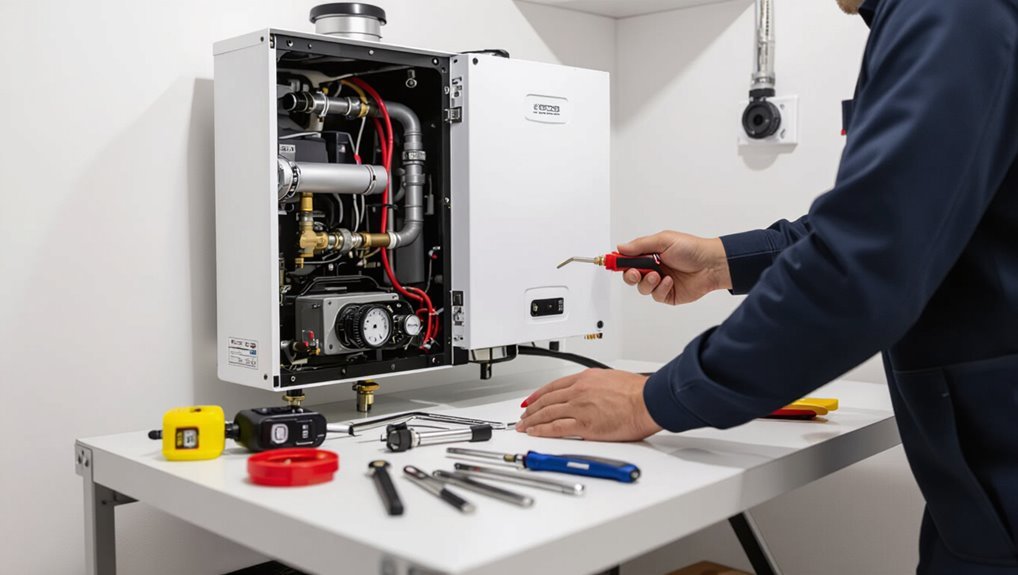
One concise page summarizes the essential steps, checks, and emergency actions required to ignite a boiler safely, serving as an on-the-job reminder for technicians and operators.
The cheat sheet lists required PPE, pre-ignition checks (venting, gas supply, electrical isolation), ignition sequence, flame confirmation, monitoring parameters, common fault codes, shutdown procedure, and emergency actions including gas isolation, evacuation, and contacting qualified service.
Conclusion
Proper ignition of a boiler requires attention to safety, procedures, and appropriate tools. For example, a homeowner in Portland followed the checklist, detected a loose gas connector, shut off supply, and called a technician—preventing a leak and costly damage. Adhering to protocols, knowing when to stop and call a pro, and maintaining regular inspections minimizes risks and guarantees reliable, efficient boiler operation for both homeowners and technicians.