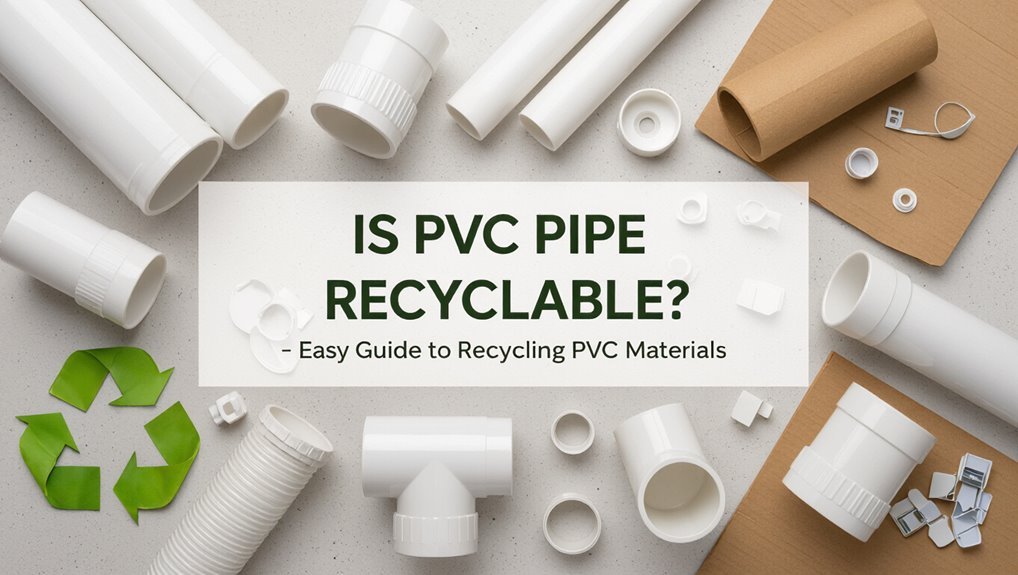
Is PVC Pipe Recyclable? Easy Guide to Recycling PVC Materials
Yes, rigid PVC pipe is recyclable, but whether it can be accepted for recycling depends on local programs and the cleanliness of the material. Clean, unpainted white or gray offcuts and unused lengths are generally accepted by dedicated PVC processors and some municipal recycling centers. However, contaminants such as embedded metals, paints, adhesives, or chemical treatments may result in the material being disposed of or processed at a lower value. To enhance acceptance, it’s advisable to clean the pipe and remove any fittings. In cases of heavy contamination, special handling may be necessary. For further information on practical steps, identification tips, and finding a recycler, continue reading.
What Search Intent Does This Guide Satisfy?
What motivates someone to read this guide? The piece addresses informational and transactional search intent: readers seek clear facts about PVC recyclability and practical steps for disposal or recovery.
It serves DIYers, contractors, and facility managers wanting actionable guidelines, local recycling options, and safety considerations. It anticipates queries about environmental impact, sorting, and material compatibility while refraining from immediate verdicts.
It connects intent to outcomes—knowledge to act—by prioritizing concise explanations, resource directions, and steps that reduce contamination. The guide does not presume prior expertise, instead enabling informed decisions about handling, preparing, and locating appropriate recycling or disposal services.
Quick Answer: Is PVC Pipe Recyclable?
After explaining who reads this guide and why, the question of recyclability can be answered succinctly: rigid PVC pipe is technically recyclable but not widely accepted in curbside programs, while flexible or contaminated PVC is rarely recycled.
Recycling depends on local infrastructure, collection streams, and contamination level. Clean, sorted rigid PVC finds markets for industrial reprocessing into profiles, conduit, or compound blends.
Mixed plastics, additives, and residues complicate sorting and lower economic viability. Consumers should verify municipal rules and specialized recyclers.
Proper identification, separation from other plastics, and avoiding contamination improve chances of diversion from landfill.
What To Do Right Now: Immediate Steps After Removing PVC Pipe
On removal, the pipe should be inspected, cleaned of dirt and loose debris, and categorized by type and condition. The person should cut to manageable lengths, separate heavily contaminated or painted pieces, and set aside fittings and mixed plastics. Label and bag sections for recycling, reuse, or disposal. Record quantities and take photos if required by local programs. Transport responsibly to a recycling center or arrange pickup. If unsure, consult municipal guidelines before transport.
| Action | Condition | Destination |
|---|---|---|
| Cut | Intact | Recycle |
| Clean | Dirty | Wash/Reuse |
| Separate | Painted | Disposal |
| Label | Mixed | Specialty recycler |
What Is PVC Pipe And How Is It Made?
Polyvinyl chloride (PVC) is a synthetic thermoplastic made primarily from vinyl chloride monomer, often modified with additives such as plasticizers, stabilizers, pigments, and impact modifiers to meet performance and durability requirements.
The manufacturing process typically involves polymerization of the monomer, compounding with additives, and extrusion or molding into pipes followed by cooling and quality inspection.
Understanding the chemical composition, processing steps, and role of additives helps clarify both the material’s properties and the challenges in recycling it.
PVC Chemical Composition
Composed primarily of repeating vinyl chloride units, PVC is a thermoplastic polymer produced by polymerizing the monomer vinyl chloride through a free-radical chain reaction. Its backbone consists of carbon atoms with alternating hydrogen and chlorine substituents, the chlorine content conferring rigidity, chemical resistance, and flame-retardant properties.
Commercial PVC formulations include additives: plasticizers for flexibility, stabilizers to prevent thermal and UV degradation, lubricants for processing, pigments for color, and fillers to adjust mechanical properties and cost. Additive selection determines final properties—rigid versus flexible grades, impact resistance, weatherability, and suitability for piping applications—while the polymer’s intrinsic chlorine affects recycling considerations.
Manufacturing Process Steps
Having outlined PVC’s chemical makeup and typical additives, the discussion now shifts to how those raw materials are turned into finished pipe. Resin and additives are blended, then melted and extruded through a die to form continuous pipe. Cooling stabilizes dimensions, followed by sizing, cutting, and quality inspection. Production emphasizes controlled temperature, speed, and die design to guarantee wall thickness and certainty of flow characteristics.
| Stage | Purpose | Key Control |
|---|---|---|
| Compounding | Uniform mixture | Mixing time/temperature |
| Extrusion | Shape formation | Die profile/speed |
| Finishing | Cut/inspect | Cooling/measurement |
Additives And Stabilizers
Enhance performance, longevity, and manufacturability: that is the role of additives and stabilizers in PVC pipe formulations. Manufacturers blend impact modifiers, plasticizers, lubricants, fillers, and UV stabilizers to tailor mechanical properties, flexibility, processing behavior, and weather resistance.
Heat stabilizers prevent dehydrochlorination during extrusion and service, preserving color and strength. Lubricants control melt flow and tooling release. Fillers reduce cost and adjust stiffness; impact modifiers improve toughness.
Formulations vary by application—pressure, drainage, conduit—balancing durability with recyclability. Additive residues influence recycling streams and may require separation or stabilization during reprocessing to maintain material performance.
Why Recycling PVC Pipe Matters For The Environment And Cost
Recycling PVC pipe markedly reduces the volume of plastic sent to landfills, preserving space and lowering long-term environmental impacts.
Reprocessed PVC can offset the need for virgin material, translating into measurable cost savings for manufacturers and contractors.
Together, these effects make PVC recycling both an ecological and economic imperative.
Reduced Landfill Waste
By diverting used PVC pipe from municipal dumps into recycling streams, communities and companies substantially lessen the volume of long-lasting plastic waste occupying landfills.
Recycled PVC reduces accumulation of bulky, slow-degrading fragments that consume space and require long-term management.
This diversion extends landfill lifespan, delays the need for new disposal sites, and lowers associated environmental risks such as leachate generation and habitat disruption.
Systems that collect, sort, and process PVC shorten waste pathways and improve resource recovery rates.
Municipalities benefit from reduced tipping fees and operational demands, while residents gain from cleaner, better-managed waste facilities and neighborhoods.
Lower Material Costs
Significant cost savings can be achieved when reclaimed PVC pipe is reprocessed into usable feedstock for new products. Recycling reduces virgin resin purchases, lowers manufacturing expenses, and stabilizes supply chains by providing consistent secondary materials.
Organizations can allocate savings toward innovation or lower product prices, while municipalities benefit from reduced disposal fees. Quality controls and efficient collection systems maximize economic returns, making recycling attractive for producers and buyers alike.
Market demand for recycled PVC supports investment in sorting and reprocessing infrastructure, further driving down costs and encouraging circular material flows.
- Lower raw material expenditure
- Reduced disposal and landfill fees
- Stable supply availability
- Incentive for processing investment
- Competitive product pricing
Common Uses Of PVC Pipe That Affect Recyclability
In many applications—from potable water and sewer systems to electrical conduit and irrigation—PVC pipe’s end use influences how easily it can be collected, sorted, and reprocessed.
Pipes used in construction often reach demolition sites where contamination with mortar, adhesives, or metal fittings complicates recycling. Underground sewer and drainage pipes can be fouled by organic waste and require cleaning. Electrical conduit may contain paint or cable residue.
Agricultural irrigation pipe can be mixed with other plastics and degraded by UV exposure. Pressure-rated plumbing typically commands higher-grade recycling streams than mixed, visibly contaminated, or chemically treated PVC discarded from varied applications.
How To Identify PVC Pipe By Markings, Color, And Feel
Identification of PVC pipe relies first on molded markings and resin codes that indicate material type and standards compliance.
Color, surface texture, and relative weight provide quick visual and tactile clues to distinguish PVC from other plastics and plasticized variants.
Together these features guide sorting decisions for recycling and further inspection if necessary.
Markings And Resin Codes
How can one tell different PVC pipes apart without cutting them open? Observing printed markings and resin identification codes reveals formulation and planned use.
Manufacturer stamps often include material abbreviation (PVC or CPVC), schedule or pressure rating, standards (ASTM), production date, and size.
Recycling centers rely on resin identification numbers—typically a “3” denotes PVC—and specific abbreviations to sort material.
Faded or missing markings complicate identification; clear, legible stamps aid recycling decisions.
Visual inspection combined with documentation streamlines sorting for recyclers, preserving material value and preventing contamination in recycling streams.
- Check for “PVC” or “CPVC” text
- Locate resin code (often #3)
- Read ASTM or ANSI standards
- Note schedule/pressure markings
- Record manufacturer and date
Color Texture And Weight
By noting color, surface texture, and heft, recyclers and installers can often distinguish PVC variants without cutting the pipe.
Color indicates use: white or light gray for potable water, dark gray for electrical conduit, and blue, green, or purple for specific service lines.
Smooth, glossy surfaces usually signal virgin PVC with fewer contaminants; chalky or rough finishes may indicate fillers or weathering.
Heft correlates with formulation and wall thickness—CPVC feels denser, Schedule 40 lighter than Schedule 80.
Combined observation guides sorting and recycling decisions, reducing cross-contamination and improving material recovery efficiency.
How To Check The Resin Identification Code On PVC Pipe
Where is the resin identification code located on PVC pipe and what does it look like? The resin identification code (RIC) appears as a molded or printed triangle with a number, often “3” for PVC, or as plain “PVC” letters. It may be on the exterior surface, inside fittings, or on cut ends. Inspect under dirt or paint; feel for raised markings. Use good light and magnification for small pipes.
- Check outside wall near fittings or spigot
- Inspect inside of elbows and couplings
- Look at cut pipe ends
- Clean surface to reveal stamped marks
- Use flashlight and magnifier
When PVC Pipe Is Recyclable And When It Isn’t
Recyclability hinges on condition: clean, uncontaminated PVC that is sorted by resin code is generally accepted by recycling programs and retains value.
Pipes soiled with concrete, soil, adhesives, or lined with other materials often require disposal or specialized processing.
Mixed-material assemblies and heavily contaminated pieces typically cannot enter standard PVC recycling streams.
Clean, Uncontaminated PVC
When free of paints, solvents, soil, and non-PVC attachments, PVC pipe is broadly accepted by recyclers because uncontaminated material can be processed and remelted without compromising product quality.
Clean PVC typically includes offcuts, unused lengths, and pipes recovered from demolition when separated from other materials. Identification and sorting by resin type and color reduce downcycling risk.
Collections require minimal cleaning: a quick rinse and removal of labels or metal fittings suffice. Transport to dedicated PVC processors or municipal programs maximizes reuse potential.
Proper documentation of origin and grade further aids acceptance and traceability.
- Offcuts and scrap lengths
- Unpainted white or gray pipe
- Pipes free of adhesives
- PVC without embedded metals
- Sorted by resin code
Contaminated Or Mixed Materials
Contaminated or mixed PVC pipe presents recycling challenges because non‑PVC residues, coatings, or bonded materials can compromise melt quality and processing equipment; determining whether a given piece is recyclable depends on the type and extent of contamination.
Recyclers assess contamination such as soil, biological fouling, adhesives, paints, metal fittings, or elastomeric linings. Minor, removable surface dirt and detachable fittings often allow recycling after cleaning and separation.
Chemically bonded coatings, lead‑based stabilizers, or mixed polymer layers typically render material unsuitable for conventional PVC recycling and may require thermal recovery or disposal.
Clear labeling, segregation, and pre‑processing improve recovery rates and material value.
How Contamination Makes PVC Pipe Hard To Recycle
Introducing foreign materials and residues to used PVC complicates sorting, processing, and final product quality. Contamination increases inspection time, drives rejection rates, and forces downcycling into lower-value applications.
Soil, adhesives, metal fittings, paint chips, and biological residues each demand separate removal steps or render batches unusable. Cross-contamination from other plastics can alter melting behavior and mechanical properties, producing inconsistent pellets.
Recycling facilities face higher labor, energy, and disposal costs when contaminants are present, reducing economic viability. Cleaner feedstock yields more reliable recycled PVC and broader reuse options, so preventing contamination is central to efficient recycling.
- Soil and grit trapped inside pipe
- Metal fittings and fasteners
- Adhesives and sealants
- Paint and coating fragments
- Other plastics mixed in batches
How Additives And Stabilizers Change PVC Recycling Options
Additives can lower the purity of recovered PVC, making it less suitable for high-value applications.
Heat stabilizers and other formulations require adjusted processing conditions or separate streams to avoid degradation during recycling.
When additives or contaminants are present together they further restrict feasible recycling routes and end-use options.
Additives Affect Material Purity
When stabilizers, plasticizers, pigments, and impact modifiers are incorporated into PVC pipe, they alter the polymer’s chemical signature and physical behavior, influencing which recycling methods remain viable.
Additives can contaminate recyclate streams, reduce melt quality, and limit reuse applications.
Sorting and characterization become essential to maintain purity; incompatible blends may require downcycling or energy recovery.
Documentation and testing help determine acceptable contaminant thresholds.
Industry practices favor single-formulation batches for higher-value recycling.
Clear labeling and source separation reduce cross-contamination risks, improving material recovery rates while preserving performance for targeted secondary uses.
- Contamination of recyclate streams
- Reduced melt viscosity control
- Limited high-grade reuse
- Need for testing/characterization
- Benefits of labeling and separation
Stabilizers Alter Processing Methods
In the presence of heat and shear during recycling, stabilizers embedded in PVC pipe dictate processing windows and equipment choices by altering thermal stability, degradation pathways, and rheology.
Recyclers assess stabilizer type—lead, tin, calcium/zinc, or organic—because each modulates decomposition temperature and HCl release differently. Some stabilizers permit higher extrusion temperatures and longer residence times; others require cool, short-cycle processing or replacement via additive dosing.
Stabilizer interactions affect melt viscosity, die swell, and filtration needs, influencing screw design and downstream degassing.
Effective recycling plans include stabilizer identification, compatibility checks with reprocessing additives, and adjusted processing parameters to preserve polymer integrity.
Contaminants Limit Recycling Routes
Contaminants present in post-consumer and post-industrial PVC pipe constrain feasible recycling routes by interacting with stabilizers and altering thermal and chemical behavior during reprocessing. Contaminant–stabilizer interactions can cause discoloration, accelerated degradation, hazardous emissions, and reduced mechanical performance, narrowing reuse and downcycling options. Sorting and decontamination raise costs; incompatible additives prevent closed-loop recovery. Effective recycling requires contaminant profiling, tailored stabilizer blends, or selective separation to protect melt stability and product integrity. Decisions hinge on regulatory limits for additives and emissions, economic thresholds for purification, and the anticipated end-use tolerance for residual contaminants.
- Organics: oils, greases affect heat stability
- Metals: lead, tin change stabilization needs
- Fillers: calcium carbonate alter melt flow
- Paints/adhesives cause off-gassing
- PVC blends: differing additives conflict
Recyclability Of Common PVC Types (Schedule 40, Conduit, Flexible, Painted, Old)
Evaluating the recyclability of common PVC types requires distinguishing between formulations and conditions: rigid Schedule 40 and conduit pipes are widely accepted by industrial recyclers when clean and sorted, while flexible PVC, painted or coated sections, and aged or degraded pipe often face rejection or need specialized processing due to plasticizers, surface treatments, or embrittlement that complicates melting, contaminant removal, and material recovery.
Rigid, unpainted pipes yield consistent recyclate suitable for extrusion or compounding. Conduit with identification markings is preferred.
Flexible or plasticized PVC requires decommissioning protocols and dedicated recyclers. Painted, glued, or heavily weathered pieces typically enter waste or energy-recovery streams.
Can White Schedule 40 PVC Be Recycled?
White Schedule 40 PVC is recyclable under many industrial programs when it is clean, uncontaminated, and properly sorted by polymer type.
Facilities accept straight lengths free of fittings, adhesives, paint, or organics; clean off soil and labels.
Identification by resin code and absence of additives speeds processing.
Local drop-offs and construction recycling centers often require pre-cut sizes and separated colors.
Reclaimed material can be ground into regrind for new rigid PVC products or used as fuel in limited cement kiln operations, subject to local regulations and economics.
- Clean, uncontaminated pipe
- No paint or adhesives
- Separated by resin type
- Pre-cut to facility specs
- Accepted by industrial recyclers only
Can Gray Electrical Conduit PVC Be Recycled?
How readily can gray electrical conduit PVC be recycled? Gray conduit, often rigid PVC (PVC-U), is recyclable where facilities accept post-industrial or post-consumer rigid PVC. Contamination, fittings, adhesives, and embedded metal reduce recyclability. Collection, cleaning, and sorting determine acceptance. Recycled conduit typically becomes new conduit, profiles, or compound blends; quality drops with additives. Local regulations and contractor disposal practices affect diversion rates. Check local recycling centers or specialized PVC reclaimers. Below is a quick comparison of common factors affecting conduit recycling:
| Factor | Effect on Recycling | Notes |
|---|---|---|
| Contamination | High negative | Remove debris |
| Fittings | Moderate | Separate metals |
| Coatings | Negative | May need processing |
| Size | Neutral | Lengths can be cut |
| Market demand | Positive/Negative | Drives acceptance |
Can Flexible (Vinyline) PVC Be Recycled?
After considering rigid gray conduit, attention shifts to flexible vinyline PVC, a softer formulation used for hoses, cable jacketing, and vinyl flooring.
Recycling is possible but more complex: plasticizers and additives complicate separation and downgrade recovered resin.
Collection requires sorting by type and contamination level; specialized processors use solvent or thermal methods to recover material for lower-grade applications.
Market demand exists for park benches, flooring underlay, and composite materials when quality is controlled.
Challenges include mixed polymers, contaminant removal, and economic viability.
- Requires sorting and contamination control
- Plasticizer separation challenges
- Specialized processing needed
- Recycled for lower-grade uses
- Market-dependent economics
How Old, Painted, Or UV-Degraded PVC Pipe Affects Recycling Choices
Over years of exposure, PVC pipe can accumulate paint, surface oxidation, and UV-induced embrittlement that materially change its recycling options. Aging alters color, additives, and mechanical integrity; painted or degraded pieces often require separate handling. Market value drops when contaminants or brittle fractures reduce usable recycled content. Some facilities accept only clean, structural-grade material; others may downcycle weathered PVC into lower-grade products. Visual inspection, fragment size, and contamination level guide fate. Corroded fittings, flaking coatings, and chalky surfaces signal limitations for closed-loop reuse.
| Condition | Likely outcome |
|---|---|
| Painted | Downcycle or reject |
| UV-brittle | Shred for filler |
| Oxidized | Lower-grade use |
| Contaminated | Special processing |
How To Prepare PVC Pipe For Recycling: Cut, Clean, And Sort
When preparing PVC pipe for recycling, installers and homeowners should first assess condition, remove attached fittings and visible contaminants, then cut sections to manageable lengths for transport; this sequence minimizes contamination, simplifies sorting, and reduces processing time at the recycling facility.
The pipe is rinsed of soil, adhesive residues and loose paint chips; metal clamps, glued fittings and non‑PVC inserts are separated.
Clean, dry pieces are grouped by diameter and color where possible. Proper labeling and containment prevent cross‑contamination during storage and collection. Facilities receive sorted, contaminant‑reduced feedstock that improves recycling efficiency.
- Remove fittings and non‑PVC materials
- Rinse off dirt and residues
- Cut to transportable lengths
- Separate by size and color
- Store dry and labeled
How To Safely Cut PVC Pipe And Control Dust And Fumes
Selecting the right cutting tools—such as a pipe cutter for small diameters or a fine-tooth saw for larger sections—reduces ragged edges and heat buildup.
Local dust extraction and vacuum systems should be used to capture PVC particulates at the source.
Work in well-ventilated areas and use respiratory protection to limit inhalation of fumes generated during cutting.
Choose Proper Cutting Tools
Cutting PVC pipe demands the right tools to guarantee straight, clean cuts while minimizing dust and fumes that pose health and environmental risks. Suitable tools reduce heat, chatter, and plastic shavings; choosing low-friction blades and manual cutters limits melting and airborne particles.
Consider tool maintenance, blade type, and appropriate sizing for pipe diameter. Personal protective equipment remains essential. Avoid high-speed abrasive methods that increase fumes.
Match tool choice to task: quick field cuts, precise shop cuts, or thicker industrial pipe. Proper selection improves recycling quality by preserving clean edges and minimizing contamination during subsequent handling.
- Ratcheting PVC cutter for small diameters
- Fine-toothed miter saw blade
- Hacksaw with sharp blade
- Pipe scoring knife for thin wall pipe
- Reciprocating saw with slow-speed blade
Manage Dust With Extraction
Containing dust and fumes during PVC cutting is essential to protect workers and prevent contamination of recyclable material. Local extraction positioned at the blade or cut point captures particulates before dispersion; use a shrouded saw or vacuum adapter rated for fine dust.
Make extraction airflow and hood geometry match tool type to maintain capture velocity. Employ HEPA-filtered units to prevent recirculation and empty or replace filters per manufacturer guidance.
Ground and secure pipe to reduce vibration that creates extra dust. Regularly inspect hoses, seals, and collection bins to preserve system efficiency and avoid secondary contamination of recovered PVC.
Minimize Fume Exposure
Although PVC produces both fine particulates and volatile byproducts when thermally or mechanically stressed, minimizing fume exposure requires a combination of engineering controls, appropriate PPE, and work-practice controls.
Workers should favor cold cutting methods, use local exhaust ventilation with HEPA and activated carbon where heat or solvents are present, and avoid open burning.
Respirators with organic vapor cartridges plus particulate filters are recommended when controls are insufficient.
Maintain good ventilation, establish exclusion zones, and schedule work when fewer people are nearby.
Decontaminate tools and surfaces to prevent off-gassing.
- Use cold cutting tools
- Local exhaust with HEPA/carbon
- Appropriate respirators
- Ventilate and zone work
- Clean surfaces and tools
How To Decontaminate PVC Pipe Before Recycling
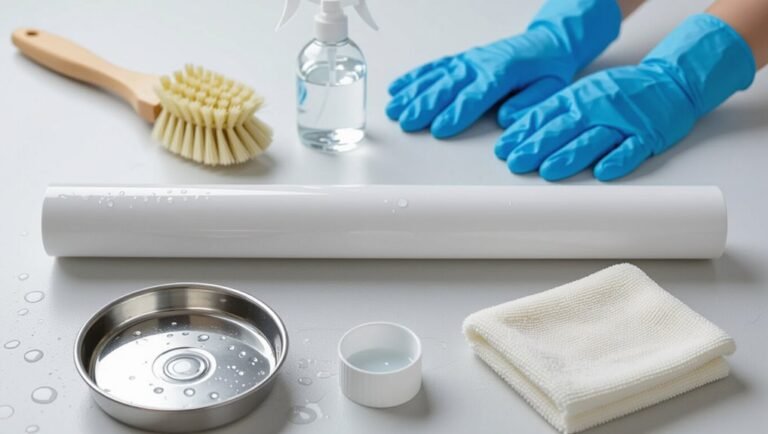
Before recycling, PVC pipe must be freed of residues and attachments that could contaminate sorting equipment or downstream products. Inspect pipes for adhesives, tape, fittings, paint, sealants, and visible chemical or biological residues.
Mechanically remove metal straps, clamps, and non‑PVC fittings with appropriate tools. Use scraping, wire brushing, or low‑abrasion sanding to eliminate surface coatings; collect debris for proper disposal.
For oily or greasy films, apply biodegradable degreasers and rinse with minimal water; capture washate for treatment. Avoid solvents that degrade PVC.
Allow pipes to dry thoroughly. Label or bag decontaminated sections to prevent recontamination during transport.
How To Sort PVC Pipe By Size, Type, And Cleanliness For Recyclers
Sort incoming PVC pipe by diameter, wall thickness, material grade, and visible cleanliness to maximize recovery value and streamline processing.
Personnel inspect and tag batches, separating rigid schedule 40/80, thin-wall conduit, and flexible vinyl.
Remove fittings, adhesives, and obvious contaminants; note stained or chemically exposed sections for downgraded streams.
Use simple gauges and calipers for consistent size sorting, and clear labeling for mixed-origin loads.
Keep clean, uncontaminated pieces distinct to preserve recyclate quality.
Maintain records of source, contamination level, and sorted category to inform end-market acceptance and processing steps.
- Measure diameter and wall thickness
- Identify material grade/type
- Remove external contaminants
- Tag contaminated or stained pieces
- Record batch details
How Municipal Recycling Programs Typically Treat PVC Pipe
Municipal recycling programs often exclude PVC pipe from curbside collection due to size limits and incompatible sorting equipment.
Residents may be directed to drop-off or transfer stations that can accept larger or construction-grade plastics.
Programs must still contend with contamination and the need for manual sorting, which raises handling costs and limits recycling options.
Curbside Collection Limits
Although curbside recycling programs vary widely, most do not accept rigid PVC pipe through regular household pickup due to size, contamination, and processing constraints.
Municipal bins and automated trucks are designed for bottles and paper; long, thick PVC clogs equipment and lowers sorting efficiency. Pipes often contain adhesives, fittings, or residues that contaminate streams. Some programs allow small, clean sections if bundled or flagged, but this is uncommon.
Residents are usually advised to check local guidelines and seek specialized collection options. Clear communication prevents rejected loads and safety issues at material recovery facilities.
- Size and rigidity hinder automated sorting
- Contamination risks (adhesives, residues)
- Equipment safety and maintenance concerns
- Occasional allowance for small, clean pieces
- Local guidelines dictate acceptance rules
Drop-Off And Transfer Stations
At many drop-off and transfer stations, rigid PVC pipe is accepted under different conditions than curbside programs because staff can handle bulky, irregular items and inspect materials on arrival. Operators often require pipes to be clean, cut to manageable lengths, and separated from mixed construction debris. Acceptance varies by facility; some offer dedicated PVC collection, others route materials to specialized recyclers. Fees or appointment requirements may apply. Bringing sorted, labeled loads speeds processing and may yield higher diversion rates. Check local facility guidelines before delivery to avoid rejection.
| Facility Type | Typical Policy | Notes |
|---|---|---|
| Municipal Transfer | Conditional | May accept with prep |
| Drop-off Center | Often accepted | Possible fee |
| Special Recycler | Preferred | Higher recovery rate |
Contamination And Sorting Challenges
Sorting rigid PVC pipe into municipal recycling streams poses significant contamination and processing challenges that influence whether programs accept it.
Municipal facilities often face difficulties identifying PVC among other plastics, removing embedded fittings, and handling long, rigid shapes that jam equipment. Contamination from soil, adhesives, paint, or metal fasteners raises processing costs and lowers material value, so many programs exclude or divert PVC to special facilities or disposal.
- Difficulty distinguishing PVC by visual/manual sort or infrared sensors
- Presence of mixed plastic types and composite fittings
- Soil, paint, adhesives, glue contamination
- Long pipes cause conveyor and shredder jams
- Small market demand increases rejection risk
How To Find Local Recycling Centers That Accept PVC Pipe
When locating local recycling centers that accept PVC pipe, homeowners and contractors should first compile nearby facility options by checking municipal waste department listings, regional recycling directories, and industry resources such as plastic recyclers’ associations.
Next, call facilities to confirm acceptance criteria: pipe size, cleanliness, labels, and whether mixed plastics are allowed.
Ask about preparation requirements (cutting, bundling, contaminant removal) and potential fees.
Verify drop-off hours and any appointment rules.
For large quantities, request commercial or contractor collection services and written acceptance confirmation.
Keep records of communications and receipts to guarantee proper disposal and regulatory compliance.
How To Use Online Directories And Apps To Locate PVC Pipe Recyclers
After contacting nearby facilities, users can expand their search with online directories and mobile apps that aggregate recyclers by material and location. These tools filter by PVC, offer contact details, hours, and accepted formats (pipe, fittings). Users should verify certifications, drop‑off rules, and any preparation requirements listed. Some platforms include user reviews and estimated fees. Regularly check listings for updates and confirm availability before travel.
- Search by material type (PVC, rigid vs. flexible)
- Filter results by distance and business hours
- Read recycler profiles for accepted items and fees
- Use direct contact links to confirm acceptance
- Save preferred recyclers for future projects
How Construction And Demolition (C&D) Facilities Handle PVC Pipe
At C&D facilities, PVC pipe is processed according to material stream protocols that prioritize safety, contamination control, and downstream marketability.
Incoming loads are sorted; clean, rigid PVC is separated from mixed plastics, metal‑reinforced sections, and contaminated pieces.
Personnel remove fittings, adhesives, and organic contaminants before size reduction.
Shredding and granulation produce uniform flakes for washing and density separation to remove residual soil or non‑PVC materials.
Quality control samples are taken to verify resin type and additive presence.
Recovered PVC bales are labeled with grade and contamination levels, then shipped to recyclers or reprocessors for compounding and remanufacture.
How Plumbing Supply Take‑Back And Manufacturer Programs Work
Plumbing suppliers and manufacturers increasingly offer structured take‑back programs to collect used PVC pipe from contractors and the public.
These initiatives range from retailer drop‑off points to manufacturer-led return logistics that consolidate, sort, and route material for recycling.
Understanding the distinctions between in‑store collection, scheduled pickups, and centralized processing clarifies options for return and reuse.
Retailer Take‑Back Programs
Through coordinated programs between suppliers, manufacturers, and contractors, retailer take-back initiatives collect post-consumer and post-installation PVC pipe for sorting, cleaning, and routing to recycling or reclamation streams.
Retailers act as local aggregation points, offering drop-off windows, vouchers, or scheduled pickups. Material acceptance policies prioritize clean, separated PVC; fees or credits vary by chain.
Collected pipe is documented for traceability, baled or cut to transport sizes, then sent to certified recyclers or reprocessors.
Communication with contractors guarantees proper staging and contamination avoidance, improving recycling yields and reducing landfill disposal.
- drop-off points and hours
- acceptance criteria and contamination rules
- incentive structures (credits/fees)
- logistics and transport arrangements
- documentation and chain-of-custody
Manufacturer Return Initiatives
As part of closed-loop efforts, manufacturer return initiatives enable plumbing suppliers and PVC producers to reclaim post-consumer and post-installation pipe for controlled recycling or remanufacturing.
These programs set standards for acceptable material, labeling, and contamination limits, often requiring pre-registration or account relationships with contractors and distributors.
Participating firms receive credits, discounts, or new material in exchange for returned pipe, aligning incentives with waste reduction.
Manufacturers coordinate quality inspections and segregate loads for grinding, washing, or chemical recovery at certified facilities.
Clear documentation and traceability guarantee regulatory compliance and help manufacturers quantify feedstock for recycled-content products and future circularity claims.
Drop‑Off And Logistics
In coordinated take-back systems, plumbing supply stores and manufacturers provide designated drop-off points and scheduled pickups to streamline the flow of returned PVC pipe from contractors and consumers. Logistics prioritize sorting, contamination control, and transport to recycling facilities. Participants follow guidelines for clean, labeled bundles; documentation tracks volumes and credits. Centralized hubs reduce handling costs and improve material quality. Communication networks coordinate collection frequency based on volume and storage capacity. Financial incentives or take-back credits encourage participation while ensuring regulatory compliance for waste handling and transportation.
- Designated drop-off hubs
- Scheduled pickups
- Contamination screening
- Volume tracking and credits
- Transport to recyclers
How To Sell Or Donate Usable PVC Pipe For Reuse
When preparing usable PVC pipe for sale or donation, sellers should first inspect lengths for cracks, warping, heavy discoloration, or embedded debris that could compromise reuse; clearly labeling dimensions, pressure ratings, and any fittings simplifies transactions and builds trust with buyers or recipients. After sorting by size and condition, packaging in bundles and photographing items aids listings. Use local classifieds, social media groups, habitat for humanity stores, or construction salvage networks. Arrange pickup or drop‑off logistics and set clear terms on condition and liability. Small fees or free pickup often speed removal and promote circular reuse.
| Action | Tip |
|---|---|
| List | Photo + specs |
| Delivery | Schedule pickup |
| Terms | Condition stated |
How PVC Pipe Is Mechanically Recycled Into New Products
Mechanical recycling of PVC pipe begins with collection and careful sorting to separate clean, compatible material from contaminants and other plastics.
Sorted pipe is then mechanically processed—shredded or ground into flakes or powder—before being remelted and compounded with stabilizers or fillers.
The resulting material can be extruded or molded into new products, closing the loop on PVC pipe waste.
Collection And Sorting
During collection and sorting, recovered PVC pipe is separated by type, grade, and contamination level to guarantee feedstock quality for mechanical recycling.
Facilities inspect, label, and document incoming batches; contaminants like metal fittings, soils, and other plastics are removed; suspect or multi-layer products are diverted to alternative processing or disposal; color and additive profiles are noted to aid downstream blending; and traceability records are maintained to meet regulatory and customer specifications.
- Visual inspection and manual removal of contaminants
- Automated separation (sensors, air classifiers)
- Segregation by resin grade and color
- Documentation and batch tracing
- Rejection and diversion protocols
Grinding And Remelting
After sorting, selected PVC pipe batches proceed to size reduction and thermal processing to convert recovered material into usable feedstock. Pipes are fed into grinders that produce uniform chips or powder; metal inserts, fittings and contaminants are removed either before or after comminution.
The clean PVC fraction is dried and conveyed to extruders or pelletizers where controlled heat softens the polymer without excessive degradation. Melted material passes through filtration screens to capture residual impurities, then is cut into pellets or reformed directly into profiles.
Quality tests assess melt flow, contamination and additive balance before materials reenter production streams.
How Chemical Recycling (Depolymerization) Applies To PVC Pipe
Explaining how chemical recycling via depolymerization applies to PVC pipe requires outlining the process, challenges, and potential benefits: depolymerization breaks PVC back into its monomers or other useful chemicals through targeted chemical reactions, offering a route to recover chlorine and vinyl chloride derivatives that are difficult to reclaim through mechanical methods; however, the presence of stabilizers, plasticizers, additives, and potential contamination complicates reaction control and product purity, while hazardous HCl release and energy intensity demand robust gas-treatment and process integration to be viable at scale.
- Controlled thermal or catalytic depolymerization processes
- Separation and neutralization of HCl emissions
- Pre-sorting and decontamination requirements
- Downstream purification of recovered chemicals
- Economic and regulatory feasibility considerations
Energy Recovery For PVC Pipe: Incineration And Waste‑to‑Energy Options
In evaluating end‑of‑life options for PVC pipe, energy recovery through controlled combustion—either in dedicated incinerators or integrated waste‑to‑energy (WtE) plants—offers a route to recover calorific value but introduces technical and environmental tradeoffs.
Combustion of PVC requires robust flue gas cleaning to neutralize hydrogen chloride and capture heavy metals, increasing capital and operating costs.
Modern facilities can meet emissions standards, but residual ash and scrubber brine demand hazardous waste management.
Energy recovery can complement recycling when material diversion is infeasible, yet it should be considered a lower‑rank option than material reclamation due to resource loss.
How PVC Recycling Yields And Economics Compare To Other Plastics
A comparison of recycling yields and economics places PVC against a range of other plastics by examining process costs, market demand, and net energy/emissions outcomes.
PVC often shows higher sorting and contamination costs than commodity polyolefins, while its market for recycled material can be narrower and more price‑sensitive.
Evaluating lifecycle energy use and emissions highlights cases where mechanical recycling of PVC is favorable versus alternatives that rely more on energy recovery.
Recycling Process Costs
Comparing recycling process costs for PVC with other common plastics reveals distinct economic trade-offs: PVC’s higher density and chlorine content increase processing complexity and disposal requirements for contaminants, raising per-ton treatment costs compared with PET or HDPE.
Recycling yields for PVC are lower due to sorting losses and contaminant removal; additional stabilization and testing add expenses.
Energy and equipment for safe thermal processing and reclamation are costlier, while transport costs rise with weight.
Economies of scale matter: large, clean streams lower unit costs.
Cost components include:
- Sorting and precleaning expenses
- Chemical stabilization additives
- Specialized thermal/pyrolysis equipment
- Hazardous residue handling
- Transportation by weight
Market Demand Differences
Shifts in cost structure and processing hurdles directly shape downstream market demand for recycled PVC versus other common plastics. Recyclers and buyers weigh lower yield, contamination sensitivity, and dechlorination needs against steady niche uses (profiles, conduits). Compared with PET or HDPE, PVC often commands lower feedstock value and requires specialized sorting, reducing scale economics. Market appetite concentrates on steady construction-grade outlets rather than consumer packaging. Investment decisions hinge on predictable volumes and contract stability more than spot pricing. Policy incentives and quality standards can narrow gaps, but intrinsic material challenges keep PVC demand subdued relative to higher-value recyclables.
| Attribute | PVC vs Other Plastics |
|---|---|
| Yield | Lower |
| Contamination tolerance | Lower |
| Processing cost | Higher |
| Typical end markets | Construction-focused |
| Price volatility | Lower |
Energy And Emissions
Weighing lifecycle impacts against operational costs, PVC recycling typically delivers lower energy and emissions savings per tonne than recycling PET or HDPE due to intensive sorting, dechlorination and lower recovery yields.
Compared to other common plastics, PVC often requires additional processing steps that raise energy use and generate chlorine-containing residues demanding treatment.
Economies of scale matter: facilities with high-throughput PVC streams cut per-unit emissions but rarely match PET/HDPE benchmarks.
Market value of recovered PVC is lower, weakening incentives for energy-intensive cleaning.
Policy, improved sorting technologies, and chemical recycling pathways can narrow gaps but require capital and regulatory alignment.
- Higher energy per tonne vs PET/HDPE
- Emissions from dechlorination processes
- Lower material recovery yields
- Economies of scale reduce but don’t eliminate gaps
- Policy/tech can improve outcomes
How To Estimate The Value Of Scrap PVC Pipe
Estimating the value of scrap PVC pipe begins with identifying its type, condition, and usable length—since different formulations (rigid PVC-U, CPVC, vinyl blends) and sizes fetch varying prices and recycling options.
Next, sort by diameter, wall thickness, and presence of fittings or contaminants; clean, continuous lengths command higher rates.
Weigh the sorted material to convert volume to pounds or kilograms, then check current market prices from local recyclers or commodity listings.
Factor in transportation, processing fees, and potential regrading costs for mixed streams.
Document provenance and any certifications to improve buyer confidence and final sale value.
How Regulations And Codes Affect PVC Pipe Recycling Locally
Local building codes determine which PVC pipe types and applications are eligible for reuse or require specific removal procedures.
Waste management policies influence collection, sorting, and recycling options available to contractors and homeowners.
Permits and inspection requirements can add time and cost, shaping whether PVC recovery is practical at the local level.
Local Building Codes
In many municipalities, building codes and plumbing standards determine whether PVC pipe can be accepted for on-site reuse, salvaged for recycling, or must be disposed of as construction waste, because regulations address material safety, fire ratings, and allowable applications; these rules vary by jurisdiction and directly shape local collection, sorting, and market demand for reclaimed PVC.
Local code officials interpret standards, require certification for recycled materials, and may restrict reclaimed PVC in potable or structural uses.
Compliance costs and permitting influence salvage decisions, while approved material lists and inspection practices determine which pipes enter recycling streams.
- Code-specific allowable uses
- Certification requirements
- Inspection and approval processes
- Fire and material safety limits
- Permitting and compliance costs
Waste Management Policies
Across municipalities, waste management policies and municipal codes shape the practical pathways for PVC pipe recycling by defining collection responsibilities, allowable diversion methods, and end‑use restrictions. Local ordinances determine whether PVC is accepted curbside, requires drop‑off, or must follow construction and demolition (C&D) waste streams. Producer responsibility laws, landfill bans, and incentives influence market demand for reclaimed PVC. Compliance obligations affect sorting, contamination limits, and documentation. Coordination among public works, waste haulers, and recyclers is essential to operationalize rules. Clear labeling and standardized codes reduce ambiguity and improve recovery rates for PVC pipe.
| Policy type | Effect on PVC recycling |
|---|---|
| C&D rules | Directs collection stream |
| Landfill bans | Increases diversion pressure |
Permits And Inspection
Through building permits, environmental permits, and inspection regimes, municipal codes translate policy goals into enforceable requirements that shape how PVC pipe is handled, stored, transported, and processed for recycling.
Local permitting determines allowable recycling sites, storage limits, and required containment to prevent contamination. Inspectors verify compliance with waste characterization, worker safety, and recordkeeping. Variations in codes affect collection accessibility, processing costs, and end‑market quality. Clear coordination between regulators, recyclers, and haulers reduces uncertainty and supports higher diversion rates.
- Site permitting and zoning constraints
- Storage and spill containment standards
- Transportation and manifest rules
- Inspection schedules and compliance records
- Occupational and environmental safety mandates
How Lead And Other Legacy Stabilizers Impact Recycling Legality
Regulators and recyclers must confront the legal complications that arise when PVC pipe contains legacy stabilizers such as lead, barium, or organotin compounds. Presence of restricted additives often classifies material as hazardous under waste and product laws, triggering transport, storage, and disposal regulations.
Recycling facilities may be prohibited from accepting such loads without permits, testing, and containment measures. Market acceptance falls when secondary material risks contaminant migration to new products.
Compliance requires chain-of-custody documentation, chemical analysis, and adherence to thresholds set by jurisdictions. Legal liability for improper handling or mislabeling further deters integration of legacy-stabilized PVC into mainstream recycling streams.
How Health And Safety Rules Apply When Handling Old Or Contaminated PVC Pipe
Guidance on protective equipment specifies gloves, eye protection, and respiratory gear when workers handle aged or contaminated PVC pipe.
Procedures for isolating and managing visibly degraded or chemically exposed sections should minimize dust generation and cross-contamination.
Clear protocols for decontamination and for disposal of non-recyclable or hazardous residues are required to meet regulatory and workplace safety standards.
Protective Equipment Required
When handling old or potentially contaminated PVC pipe, workers should always assess contamination risks and don appropriate personal protective equipment (PPE) based on the pipe’s condition and known or suspected contaminants.
Gloves resistant to chemicals and cuts shield skin from residues and sharp edges. Eye protection prevents splashes and dust exposure. Respiratory protection is selected according to airborne hazards, using masks or respirators with appropriate filters.
Protective clothing and disposable coveralls reduce cross-contamination. Foot protection and durable work boots guard against impact and puncture.
- Chemical-resistant gloves
- Safety goggles or face shield
- NIOSH-rated respirator or dust mask
- Disposable coveralls or washable protective clothing
- Steel-toe or puncture-resistant boots
Handling Contaminated Sections
Handle contaminated PVC sections with a systematic risk-based approach that aligns workplace health and safety rules to the specific contaminants, pipe condition, and work tasks.
Personnel should verify contamination type—biological, chemical, asbestos-containing joint compounds, or unknown—and apply controls accordingly.
Establish exclusion zones, limit personnel exposure time, and use appropriate PPE selected from hazard assessment results.
Require training in hazard recognition, safe handling, and emergency procedures.
Implement labeling and segregation for contaminated pieces to prevent cross-contamination.
Maintain documentation of assessments, incidents, and control measures.
Medical surveillance or reporting may be necessary when exposure limits are potentially exceeded.
Disposal And Decontamination
In evaluating disposal and decontamination of old or contaminated PVC pipe, employers must apply health and safety rules that address contaminant identification, risk control, worker protection, and regulatory compliance.
Procedures should classify contamination (chemical, biological, leaded paint), isolate affected sections, and document chain-of-custody.
Decontamination involves approved solvents, neutralization, and verification sampling.
Disposal follows local hazardous-waste rules; some PVC requires incineration with emission controls.
Training, PPE, and medical surveillance protect workers.
Recordkeeping and permits guarantee accountability.
Contractors and recyclers must be notified when materials are suspected of containing prohibited additives or contamination.
- Identify contaminant type and extent
- Isolate and label affected pipe
- Use validated decontamination methods
- Follow local hazardous-waste disposal rules
- Provide PPE, training, and documentation
How To Dispose Of Chemically Contaminated PVC Pipe Safely
Evaluating the contamination level and chemical type is the essential first step in disposing of chemically contaminated PVC pipe safely. The responsible party should identify residues via labels, material safety data sheets, or laboratory analysis.
Segregate contaminated lengths, avoid cutting or grinding that releases dust, and contain pipes in sealed, labeled containers. Contact local hazardous waste authorities or a licensed disposal contractor for classification, transport, and treatment options.
Follow applicable regulations for hazardous materials, including manifests and approved landfills or incinerators. Maintain documentation of chain-of-custody and disposal actions to assure regulatory compliance and protect health and environment.
How To Recycle PVC Fittings, Joints, And Glued Or Solvent‑Welded Sections
Recycling PVC fittings, joints, and solvent‑welded sections requires separating and preparing these components differently than straight pipe because adhesives, mechanical joins, and mixed-material assemblies affect recyclability and contamination risk.
The process prioritizes identification, segregation, and cleanliness: identify glued or combined pieces, remove non‑PVC parts if possible, and assess contamination.
Facilities may accept intact fittings if marked PVC and uncontaminated; some require shredding and sorting.
Documentation for waste streams speeds processing.
Recyclers decide on reuse, grinding, or disposal based on adhesive presence and material mix.
- Identify material codes and contamination
- Segregate glued assemblies
- Remove metal or rubber inserts
- Clean and dry items
- Label for recycler
How To Remove Solvent‑Welded Joints Before Recycling
Separate solvent-welded joints by softening the adhesive bond and mechanically loosening the connection, taking care to protect surrounding pipe.
Heat application with a controlled heat gun can soften aged solvent cement; apply evenly and avoid overheating to prevent melting.
Chemical softeners designed for PVC cement may assist but require ventilation and proper PPE.
Once softened, twist and pull fittings using padded pliers or a strap wrench to prevent scoring.
For stubborn joints, cut close to the fitting and remove adhesive residue by scraping or sanding to meet recycling facility acceptance.
Dispose of contaminated fittings per local regulations; keep separated clean PVC for processing.
How To Reuse PVC Pipe In DIY Projects Instead Of Recycling
After removing fittings and cleaning adhesive residue, leftover PVC pipe can find new life in a wide range of DIY projects. Salvaged lengths serve as modular components: organizers, garden supports, framing for lightweight furniture, and craft supplies.
Cutting, sanding, and painting customize appearance; caps and connectors create joints. Properly sealed ends and smooth edges guarantee safety.
Small offcuts work for hobby projects; longer lengths enable structural elements that avoid heavy loads. Reuse conserves resources and delays disposal while offering practical home solutions when durability and moisture resistance are required.
- Tool organizers and storage racks
- Garden trellises and stakes
- Lightweight shelving frames
- Kids’ play structures and forts
- Craft supplies and art installations
How Recycled PVC Is Used In Construction, Landscaping, And Consumer Products
In many sectors, recycled PVC is transformed into durable, moisture-resistant components for construction, landscaping, and consumer goods. Manufacturers produce decking, window frames, siding, and gutter components from reclaimed PVC, benefiting from its weather resistance and low maintenance.
Landscaping applications include edging, planters, and outdoor furniture that resist rot and pests. Consumer products span piping for non-potable uses, garden hoses, floor tiles, and storage containers.
Recycled PVC is also compounded into profiles, sheets, and pellets for extrusion and molding. These uses extend material life, reduce landfill waste, and supply cost-effective alternatives for manufacturers and builders.
How Recycled PVC Performs Compared To Virgin PVC
Evaluating performance, recycled PVC typically matches virgin PVC in basic mechanical properties such as tensile strength and stiffness when properly sorted and reprocessed, but differences can emerge in long-term durability, color stability, and contamination-sensitive applications.
Reclaimed material often suits rigid uses; however, additives, residual contaminants, and thermal history can reduce UV resistance and impact toughness.
Processing controls and selective blending mitigate many deficits, allowing recycled content in pipes, profiles, and non-structural components.
Cost-effectiveness and environmental benefits often offset modest performance gaps.
End-use selection considers exposure, required lifespan, and aesthetic tolerance.
- Comparable tensile strength and stiffness
- Reduced UV/color stability risks
- Possible lower impact toughness
- Contamination-dependent variability
- Improved performance via controlled blending
How Industry Standards And Testing Ensure Recycled PVC Quality
Through a framework of material specifications, test methods, and certification programs, industry standards translate the variability of recycled PVC into measurable acceptance criteria that manufacturers and buyers can rely on. Independent labs assess density, tensile strength, impact resistance, melt flow, and contamination limits. Pass/fail criteria and traceability requirements guarantee consistent feedstock grading. Certifications signal suitability for applications like conduit or drainage. Compliance reduces performance risk and simplifies procurement for downstream users. Regular audits and batch testing maintain confidence in reclaimed materials without prescriptive processing methods.
| Test Parameter | Purpose |
|---|---|
| Density | Verify polymer consistency |
| Tensile strength | Guarantee mechanical performance |
| Contamination | Limit impurities |
| Melt flow | Assess processability |
How Companies Are Innovating To Improve PVC Recyclability
Companies are developing targeted process and material innovations to make PVC more recoverable and higher-value when reclaimed. Firms pilot advanced sorting, solvent-based purification, and closed-loop manufacturing to reduce contamination and retain polymer properties.
Collaborative supply-chain programs increase collection rates and material traceability. Additive reformulation and compatibilizers enable blending reclaimed PVC into demanding applications. Technology firms and recyclers share performance data to accelerate adoption and scale processing capacity.
- Enhanced optical and sensor sorting
- Solvent and chemical recycling processes
- Closed-loop production partnerships
- Additive and compatibilizer development
- Shared data platforms for quality control
How To Choose PVC Products Designed For Easier Recycling
When selecting PVC products with recycling in mind, purchasers should prioritize clear labeling, minimal additive complexity, and compatibility with local recycling streams; these criteria make it easier for waste handlers to identify, sort, and reprocess material without compromising quality.
Buyers should choose single-resin items, avoid mixed-material assemblies, and prefer mechanical joins over permanent adhesives. Specifying standardized grades and avoiding unnecessary colorants or stabilizers reduces contamination.
Products designed for disassembly and with detachable fittings facilitate recovery. Favoring suppliers who provide technical data sheets indicating recyclability and processing temperatures aids downstream processors. Such choices streamline collection, improve material value, and support closed-loop recycling.
How To Ask Suppliers About Recycled Content And End‑Of‑Life Plans
Requesting clear information on recycled content and end-of-life plans helps procurement teams evaluate a supplier’s commitment to circularity and the practical recyclability of their PVC products.
Suppliers should be asked for percentage of post‑consumer and post‑industrial recycled content, certification or testing reports, and traceability documentation.
Clarify take‑back programs, repairability, and accepted contamination levels.
Request expected product lifespan, dismantling guidance, and any processing partners for recycling.
Compare responses across bidders to prioritize measurable circularity.
- Percentage and source of recycled content
- Third‑party certifications or test reports
- Product lifespan and dismantling guidance
- Take‑back or return programs
- Accepted contamination and processing partners
Add PVC Recycling To Your Project Waste Management Plan
As part of project planning, incorporate specific PVC recycling procedures into the waste management plan to guarantee segregation, storage, and handling practices that preserve material value and meet recycler requirements.
Specify acceptable PVC types, labeling, and contamination limits.
Assign responsibilities for on-site collection, interim storage locations, and secure transport arrangements.
Include protocols for cleaning, cutting, and stacking to minimize damage and contamination.
Document required documentation and communication channels with recyclers and waste coordinators.
Schedule training for workforce on sorting and safety.
Monitor compliance with simple audits and corrective actions to make certain materials remain eligible for recovery and end‑markets.
How To Calculate Carbon And Waste Savings From Recycling PVC Pipe
To quantify the environmental benefits of recycling PVC pipe, start by establishing a clear baseline of materials diverted and the emissions associated with producing equivalent virgin PVC; this requires measuring the mass of recycled PVC collected, applying an emissions factor (kg CO2e per kg) for virgin PVC production, and subtracting the emissions attributable to processing and transporting the recycled material.
Calculate waste diverted (kg), CO2e avoided, and energy saved using standardized factors.
Include credits for avoided landfill methane only if applicable.
Report uncertainty ranges and document data sources for transparency.
- Measure mass of PVC diverted
- Apply virgin PVC emissions factor
- Subtract recycling processing emissions
- Account for transport distances
- Report uncertainty and sources
How To Compare Disposal Costs: Landfill Vs Recycling Vs Reuse
Having quantified the material, energy, and greenhouse gas benefits from recycling PVC pipe, stakeholders can next assess the direct financial implications by comparing disposal costs for landfill, recycling, and reuse options. A concise cost-comparison evaluates tipping fees, transport, processing, and potential revenue from reclaimed material or reduced procurement. Landfill often has low upfront handling but rising long-term fees and externality costs. Recycling adds collection and processing costs but can recover value and avoid disposal fees. Reuse minimizes processing but may require inspection and refurbishment expenses. Decision-making should use local fee data and lifecycle cost-per-meter of pipe.
| Option | Typical Costs | Financial Outcome |
|---|---|---|
| Landfill | Low handling, rising fees | Short-term cheap |
| Recycling | Collection + processing | Recoverable value |
| Reuse | Inspection + refurbishment | Lowest lifecycle cost |
How To Get Started Today: Step‑By‑Step Checklist For Recycling PVC Pipe
Begin by evaluating the volume and condition of PVC pipe on-site and identifying immediate opportunities for reuse, recycling, or disposal; this establishes priorities for collection, storage, and required resources, and informs decisions about transportation, processing partners, and any inspection or refurbishment steps.
Next, document types, sizes, and contamination levels. Locate local recycling centers or take-back programs and request acceptance criteria. Prepare a simple handling plan with PPE, segregation zones, and signage. Arrange transport and verify pricing. Track material weights and destinations, and revisit procedures quarterly to improve diversion rates and reduce costs.
- Inspect and catalog materials
- Contact recyclers
- Segregate and store safely
- Schedule transport
- Record and review outcomes
Conclusion
Recycling PVC pipe isn’t just practical—it’s a smart environmental and budget move. Like finding treasure in plain sight, diverted PVC reduces landfill load, lowers emissions, and can cut project costs when planned into waste management. With knowledge of composition, local recycling options, and simple on-site handling, teams can measure carbon and cost savings, compare disposal routes, and implement a clear checklist to guarantee PVC moves from waste to resource rather than into the ground.