Is Green Corrosion on Copper Pipes Dangerous? What You Need to Know
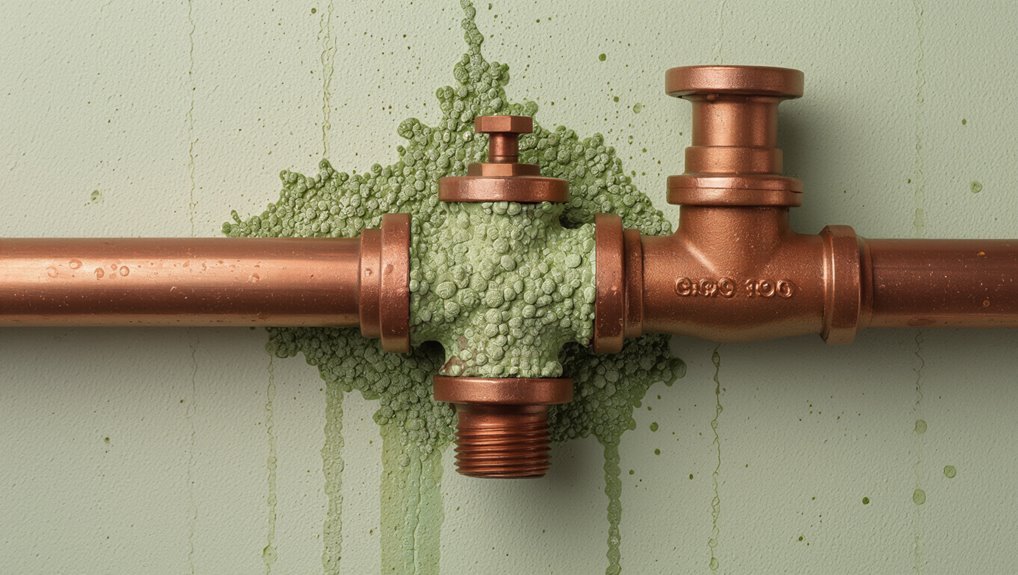
Green corrosion on copper pipes can indicate either a harmless patina or active verdigris, which is a sign of potential metal loss, leaks, or drinking-water contamination. It’s essential to pay attention to visual indicators such as powdery or flaky deposits, dampness, pinholes, or green streaks at joints, as these suggest an ongoing issue that requires immediate action to prevent leaks and pressure loss. To assess the risk, conduct simple checks like wiping the area, inspecting for moisture, and testing the water. For practical signs, immediate steps, and guidance on when to consult a professional, continue reading.
Does Green Corrosion on Copper Pipes Mean Danger?
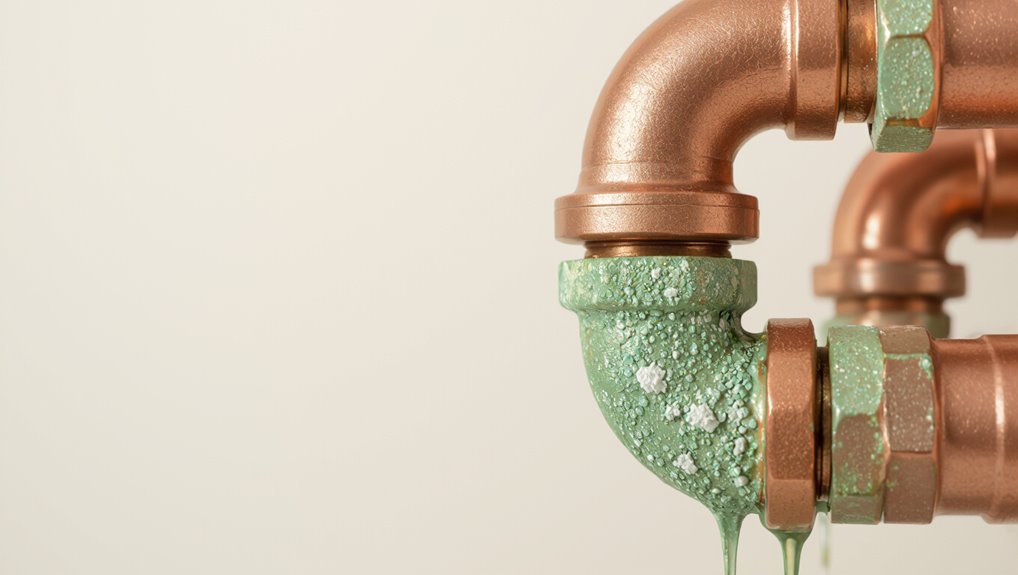
When green corrosion appears on copper pipes, it signals a chemical reaction rather than an immediate structural failure.
Observers note that the patina—copper carbonate or basic copper salts—often forms from moisture, oxygen, and airborne contaminants.
In many cases the discoloration indicates surface alteration without significant thinning; pipes remain serviceable.
However, persistent dampness, acidic conditions, or galvanic interaction with dissimilar metals can accelerate degradation over time.
Risk assessment depends on location, extent, and progression: small, stable patches differ from widespread, flaky deposits.
Professional evaluation clarifies whether monitoring suffices or corrective measures are warranted to prevent long-term damage.
What to Do Immediately If You Find Heavy Green Buildup?
Upon noticing heavy green buildup, the water supply should be shut off to prevent further corrosion or leaks.
Loose corrosion can then be gently removed to reveal the pipe surface for a clearer assessment.
A careful inspection should follow to check for active leaks or weakened sections needing repair.
Stop Water Supply
Shut off the main water valve immediately to prevent further flow through a pipe section exhibiting heavy green buildup; stopping the supply limits damage and reduces the risk of contaminated water entering the household system.
After shutting off water, open nearby faucets to drain residual pressure and minimize standing water in affected lines.
Avoid using affected fixtures, and keep children and pets away from the area.
If a leak is present, contain pooling with buckets or towels and protect finishes. Contact a licensed plumber promptly to assess corrosion, test water quality if discoloration occurred, and recommend repair or replacement options.
Remove Loose Corrosion
Carefully remove any loose green corrosion from the pipe surface to prevent further spreading and to allow inspection of the underlying metal. Gloves and eye protection should be worn; a soft brush or cloth gently dislodges flaky deposits without gouging the copper. Collect debris for disposal and avoid breathing dust. After removal, the area can be wiped with a damp cloth and mild detergent to clear residues. If stubborn buildup remains, light abrasive action by a nonferrous pad may be used cautiously. Record the cleaned area and condition for future reference.
| Action | Tool | Purpose |
|---|---|---|
| Brush | Soft nylon brush | Remove flakes |
| Wipe | Damp cloth | Clear residue |
| Protect | Gloves/ goggles | Safety |
| Dispose | Sealed bag | Contain debris |
Inspect For Leaks
If heavy green buildup is discovered, inspect the area immediately for active leaks by looking for dampness, staining, drips, or fresh verdigris that flakes away when touched.
If any signs of moisture are present, isolate the affected section by shutting off the nearest valve and place a bucket beneath drips.
Document locations with photos and note timing to show progression.
Avoid prolonged exposure to corroded water; use bottled water until repairs are complete.
Contact a licensed plumber to assess pipe integrity and perform necessary repairs or replacements.
Follow-up includes drying the area and monitoring for recurring discoloration or staining.
Is That Green Patina Harmless or Active Corrosion?
A green patina on copper pipes can be a stable, protective layer formed by long-term exposure to air and moisture, but it can also mask active corrosion.
Signs of active corrosion include powdery or flaky deposits, pinholes, wetness, or ongoing metal loss around joints and fittings. Visual inspection combined with simple tests—wiping the area to see if green residue transfers or checking for dampness—helps distinguish harmless patina from a worsening problem.
Green Patina Basics
When exposed to air and moisture, copper commonly develops a green surface layer whose appearance prompts the key question: is this patina merely a stable, protective film or an indication of active, damaging corrosion?
The patina forms as copper reacts with oxygen, carbon dioxide, and sulfur compounds, producing compounds like copper oxide, carbonate, and sulfate.
Over time these layers can adhere tightly and slow further metal loss, serving as a protective barrier.
Color, texture, and formation context help distinguish stable patina from problematic deposits, but assessment often requires close inspection or testing to confirm whether the layer is benign.
Active Corrosion Signs
Distinguishing harmless patina from active corrosion requires looking beyond color to specific symptoms that indicate ongoing metal loss.
Active corrosion manifests as pitting, flaking, or soft, powdery deposits rather than uniform, adherent green film. Leaks, progressive thinning, or sudden failures signal deterioration. Corrosion may produce white or bluish salts around joints, dampness, or staining on nearby surfaces.
Electrochemical activity often correlates with dissimilar metals, stray currents, or acidic water chemistry.
Routine inspection, thickness measurement, and prompt repair of compromised sections distinguish benign patina from hazardous corrosion that demands professional remediation to prevent leaks and structural damage.
What Exactly Is the Green Stuff : Patina vs. Verdigris?
How does one tell the decorative patina on a copper statue from the harmful verdigris forming on a pipe? Patina and verdigris are both green copper compounds, but their contexts and implications differ.
Patina is a stable, often intentional surface layer—valued aesthetically and protective when formed slowly under controlled exposure. Verdigris denotes active, sometimes powdery corrosion produced by chemical reactions with moisture, pollutants, or salts; it can indicate deterioration and potential leaks on plumbing.
Visual cues, texture, and location help differentiate them: smooth, uniform green suggests patina; flaky, powdery, or spreading deposits on joints and fittings suggest verdigris requiring inspection.
How Green Corrosion Forms on Copper: Main Causes
Across a range of environments, green corrosion on copper develops through electrochemical and chemical reactions that convert the metal’s surface into copper oxides, carbonates, sulfates, or chlorides.
Atmospheric exposure to oxygen and moisture initiates oxidation; pollutants like sulfur dioxide and chlorine accelerate formation of sulfates and chlorides.
Direct contact with acidic or alkaline materials promotes localized attack and ion migration.
Galvanic coupling with dissimilar metals drives electrochemical corrosion at junctions.
Mechanical damage that removes protective films exposes fresh metal, speeding reactions.
Time, temperature, and contaminant concentration determine layer thickness and adherence, influencing appearance and progression.
How Water Chemistry Raises Corrosion Risk
Water chemistry strongly influences copper corrosion through several measurable factors.
Low or high pH shifts accelerate metal loss, while higher dissolved oxygen levels promote oxidative reactions that form corrosion products.
Elevated chloride and sulfate concentrations disrupt protective films and increase localized attack.
pH Levels Impact Corrosion
Corrosion risk on copper pipes is strongly influenced by pH because acidity and alkalinity control the chemical forms and solubility of copper and its protective films.
Low pH (acidic) water increases copper ion solubility, accelerating metal loss and promoting green staining as soluble copper redeposits.
High pH can precipitate carbonate and hydroxide films that reduce corrosion but may be unstable if water chemistry shifts, causing localized attack.
Near-neutral pH often minimizes general corrosion but can encourage crevice or pinhole corrosion when coupled with other factors.
Monitoring and adjusting pH within recommended ranges helps manage corrosion rates and pipe longevity.
Dissolved Oxygen Effects
Rising dissolved oxygen levels accelerate electrochemical reactions on copper surfaces by serving as the primary cathodic reactant in aerobic corrosion cells, increasing metal dissolution rates and the likelihood of green copper deposits. Elevated oxygen increases cathodic current, destabilizes protective films, and promotes localized corrosion where flow or deposits expose fresh metal. Monitoring dissolved oxygen alongside temperature and flow helps predict risk. Oxygen control, deaeration, or corrosion inhibitors reduce attack. Laboratory measurements guide mitigation choices and validate treatment effectiveness.
| Factor | Effect | Mitigation |
|---|---|---|
| Oxygen | Increases cathodic reaction rate | Deaeration/inhibitors |
| Temperature | Accelerates reactions | Cooling/insulation |
| Flow | Exposes metal | Flow control |
Chloride And Sulfate Presence
While dissolved oxygen intensifies cathodic activity, the anionic composition of the water—particularly chloride and sulfate ions—strongly dictates the form and aggressiveness of copper attack.
Chloride promotes pitting and localized corrosion by destabilizing protective oxide and basic copper salt layers, enabling deep, rapid penetration.
Sulfate can either inhibit or accelerate corrosion depending on concentration and competing species: low levels may form less protective sulfide films, while high sulfate with oxygen fosters generalized corrosion.
Combined chloride and sulfate increase conductivity and disrupt passive films, raising risk.
Monitoring and controlling these ions through treatment or source selection reduces green corrosion hazards and pipe failure.
Can Green Corrosion Contaminate Drinking Water?
Green corrosion on copper pipes can raise concerns about drinking-water safety because the blue-green deposits signal metal oxidation and changing water chemistry that may mobilize copper ions.
Evidence shows localized corrosion and pitting can release elevated copper levels into water, especially when acidic, soft, or high-chloride conditions persist.
Visible patina alone does not confirm unsafe concentrations; testing water for copper and lead, pH, and conductivity provides objective assessment.
Remediation can include flushing, pH adjustment, corrosion inhibitors, or pipe replacement if tests exceed regulatory limits.
Regular monitoring and prompt repair minimize contamination risk and preserve water quality.
Is Green Corrosion Toxic to Touch or Breathe?
Surface contact with green corrosion on copper pipes can cause minor skin irritation or staining but rarely produces acute toxicity in healthy individuals.
Airborne particles or dust from corrosion may pose inhalation concerns for sensitive people, particularly with prolonged or heavy exposure.
Chronic exposure scenarios warrant attention because cumulative effects and underlying health conditions can increase risk and justify preventive measures.
Skin Contact Risks
Contact with the blue-green corrosion that forms on copper plumbing typically causes mild, short-lived irritation at most; the compound most often present, basic copper carbonate (verdigris), can stain skin and may cause redness or itching in sensitive individuals.
Direct contact rarely produces systemic poisoning because dermal absorption of copper salts is limited. Washing affected skin promptly with soap and water removes residues and reduces staining.
Individuals with open wounds, eczema, or metal hypersensitivity have higher risk of prolonged irritation or allergic contact dermatitis and should avoid handling corroded surfaces. Use gloves when cleaning or repairing corroded copper to prevent contact and staining.
Inhalation Concerns
Breathing air near corroded copper is generally low risk because the familiar blue-green patina—primarily basic copper carbonate—is a stable, nonvolatile solid that does not readily produce airborne particles under normal conditions.
Occasional dust from deterioration or abrasion can release small amounts of copper-containing particulates; acute inhalation at high concentrations can irritate mucous membranes but is uncommon in typical settings. Sensitive individuals may notice irritation. Proper maintenance and avoidance of sanding or grinding corroded surfaces indoors reduce risk. Use local ventilation and a respirator if disturbance is necessary.
- Particles form mainly during mechanical disturbance
- Typical indoor levels are negligible
- Irritation, not systemic poisoning
- Ventilate when disturbing corrosion
- Respirator for sanding or grinding
Long-Term Exposure
After noting that inhalation risk from intact green copper patina is generally low and that particle release mainly occurs during disturbance, attention turns to the effects of repeated skin contact and chronic low-level inhalation over months or years.
Evidence indicates that brief skin contact with copper salts rarely harms healthy individuals, though prolonged exposure can irritate sensitive skin or aggravate dermatitis.
Chronic inhalation of airborne copper or associated contaminants—most relevant during renovation or grinding—can cause respiratory irritation and, in high doses, systemic effects.
Vulnerable populations (children, pregnant people, immunocompromised) merit greater caution; preventive measures reduce cumulative risk.
Health Risks for Children, Pregnant People, and Pets
Children, pregnant people, and household pets are often more vulnerable to contaminants associated with green corrosion on copper pipes because smaller body size, developing organs, and different metabolic rates can increase absorption and sensitivity to copper and co-occurring metals.
Exposure risks include gastrointestinal upset, neurological symptoms, and developmental concerns at higher doses. Sensitive groups may also react to water taste and avoid intake, affecting hydration. Medical consultation is advised if symptoms arise. Preventive measures focus on limiting exposure and testing water.
- Increased absorption can raise internal copper levels
- Developing fetuses risk metabolic disruption
- Children may ingest contaminated water more per body weight
- Pets show rapid symptom onset
- Clinical testing clarifies exposure
How to Spot Early Signs That Corrosion Will Cause a Leak
Often, early signs that corrosion on copper pipes is likely to cause a leak appear as subtle changes in appearance, sound, or performance that, when noticed together, indicate progressing metal degradation.
Discrete greenish or bluish flecks along joints or bends, dulling or pitting of the copper surface, and white crusty deposits near fittings suggest active corrosion.
Intermittent dripping noises, faint hissing, or sudden pressure drops during specific fixtures’ use point to weakened sections.
Reduced water flow or occasional discoloration without visible moisture can precede failure.
Regular inspections focusing on these indicators enable timely maintenance before breaches occur.
Signs That Green Corrosion Is Already Causing a Leak
Visible green stains along joints or seams often indicate active corrosion breaching the copper surface.
Moist or consistently damp areas beneath pipes are a strong sign that that corrosion has progressed to a leak.
A noticeable drop in water pressure can confirm loss of flow from a corroded breach.
Visible Green Stains
How can green stains on copper pipes indicate an active leak? Visible verdigris often marks metal corrosion where moisture and oxygen meet; its presence on joints, fittings, or along seams strongly suggests ongoing metal degradation and fluid escape.
Observing color intensity, texture, and location helps assess severity without touching surfaces. Immediate inspection targets likely problem spots and prevents progression.
Typical indicators include:
- concentrated green deposits at soldered joints
- streaking following gravity lines
- flaky or powdery buildup on fittings
- localized discoloration near valves
- green staining paired with mineral crusts
Such signs warrant prompt evaluation to confirm and repair leaks.
Wet Or Damp Areas
In areas where green corrosion has advanced, dampness or persistent wet spots on or beneath copper pipes frequently signal an active leak. Moisture may collect on fittings, joints, or ceilings beneath piping runs, often accompanied by a musty odor or water stains.
Corrosion undermines metal integrity, creating tiny perforations that weep slowly before failing catastrophically. Detection requires inspection after dry periods to distinguish fresh dampness from old stains; placing paper or cardboard briefly underneath can reveal ongoing drips.
Prompt assessment by a qualified plumber or maintenance professional is advised to confirm source, mitigate water damage, and address the corroded section.
Decreased Water Pressure
When green corrosion eats into copper tubing, flow restriction often follows, producing noticeably lower water pressure at fixtures downstream.
Reduced pressure can signal internal pitting, partial blockages from corrosion products, or active leaks where flow diverts.
Homeowners may notice weak shower spray, slow filling toilets, or sluggish faucets despite appliance settings.
Prompt evaluation prevents progression to full breaches, contamination, or sudden failures.
A plumber inspects via pressure tests, visual checks, and sometimes cutting a section to confirm severity.
Remedies range from targeted repairs to pipe replacement depending on extent and location.
- Weak shower and faucet performance
- Slow toilet tank refill
- Intermittent pressure drops
- Localized pressure loss near corrosion
- Sudden reduction after long inactivity
Simple Safe DIY Cleaning Methods for Copper Pipes
For routine maintenance of copper pipes, several simple, nonabrasive DIY methods safely remove green corrosion without damaging the metal: mild acid solutions (such as diluted vinegar or lemon juice) loosen verdigris, baking soda paste neutralizes residues and polishes gently, and commercially available copper cleaners offer formulated options for tougher buildup—each approach requires appropriate dilution, brief contact time, and thorough rinsing to prevent pitting or accelerated corrosion.
Protective gloves and eye protection should be used. Work in a ventilated area, test a small inconspicuous section first, and avoid aggressive scrubbing.
Repeat treatments may be necessary; inspect for persistent corrosion that merits professional assessment.
Cleaning Methods to Avoid That Damage Copper
While gentle acids, baking soda, and commercial cleaners are generally safe with proper use, certain common cleaning methods can harm copper and should be avoided.
Abrasive scrubbing, strong alkaline bleach, and prolonged exposure to harsh chemicals strip protective patina, pit surfaces, and accelerate corrosion. To minimize damage, avoid these practices:
- Steel wool or coarse scouring pads that scratch and remove protective layers.
- Ammonia-based cleaners that react and discolor copper.
- Concentrated acids (e.g., undiluted vinegar or muriatic acid) that etch metal.
- Chlorine bleach left in contact, promoting pitting and weakness.
- High-pressure steam or power washing that forces contaminants into joints.
Which Corrosion Inhibitors and Coatings Work for Copper Pipes?
In evaluating protection strategies for copper pipes, corrosion inhibitors and durable coatings offer complementary approaches: inhibitors slow electrochemical reactions from within the fluid, while coatings provide an external barrier against moisture, oxygen, and pollutants.
Effective inhibitors include sodium molybdate, benzotriazole (BTA) and orthophosphates; each controls different corrosion mechanisms and requires correct dosing and monitoring.
Proven coatings include epoxy linings, polyurethane finishes and specialized acrylics formulated for metal adhesion and flexibility.
Selection depends on service environment, contact with potable water regulations, temperature and mechanical stress.
Laboratory compatibility testing and manufacturer data guide appropriate combinations to extend service life without compromising safety.
Practical Maintenance Tips to Prevent Future Green Corrosion
Regularly scheduled inspections and basic upkeep markedly reduce the risk of recurrent green corrosion on copper pipes. The article advises routine visual checks, prompt cleaning of patina where appropriate, controlling moisture and ventilation, and monitoring water chemistry to limit corrosive conditions. Simple preventive actions extend service life and reduce health concerns from leaching.
- Inspect joints, fittings, and insulation for dampness and residue.
- Clean exposed copper gently with appropriate nonabrasive cleaners.
- Maintain consistent indoor humidity and prevent standing water.
- Monitor and adjust water pH and hardness through treatment.
- confirm dielectric unions and proper pipe supports are intact.
When to Replace Copper Pipes (And Alternatives to Consider)
Evaluating when copper pipes should be replaced hinges on the extent of corrosion, the frequency of leaks, and evidence of water quality degradation; replacement becomes advisable when green patina is widespread behind insulation, pinhole leaks recur, or testing shows copper levels exceeding health or plumbing-code limits.
Age, water chemistry, and structural damage inform decisions. Partial repipes can address localized failure; full repiping suits systemic corrosion or persistent contamination.
Alternatives include PEX for flexibility and corrosion resistance, CPVC for budget-conscious applications, and stainless steel for durability in aggressive environments. Choice depends on budget, water conditions, building code, and expected service life.
How Plumbers Diagnose and Fix Corrosion-Related Issues
After deciding whether repair or replacement is warranted, a plumber proceeds with a systematic diagnostic process to identify corrosion sources and affected components. They inspect visually, test water chemistry, and trace leaks to determine active versus cosmetic corrosion.
Priority is given to safety, pressure integrity, and contamination risk. Repairs range from localized cleaning and protective coatings to soldered patching or section replacement. Long-term remedies address water quality and electrical grounding that accelerate corrosion.
- Visual inspection for pitting, cracks, and green patina
- Water testing for pH, chloride, and dissolved oxygen
- Leak localization and pressure testing
- Mechanical or soldered repairs
- Protective coatings and electrical corrective measures
When You Should Call a Plumber or Corrosion Specialist
When green corrosion appears on visible copper piping, or when water shows discoloration, metallic taste, or unexplained leaks occur, a homeowner should contact a plumber or corrosion specialist promptly.
Professionals assess safety risks, trace corrosion sources, test water chemistry, and recommend targeted interventions like localized repair, isolation of affected sections, or corrosion inhibitors.
Immediate consultation is warranted for persistent staining, recurring leaks, visible pitting, low water pressure, or if occupants experience illness possibly linked to water.
Callouts prevent escalation to structural damage or contamination.
Documenting observations and providing access to affected areas expedites accurate diagnosis and appropriate corrective action.
Typical Costs for Repair, Replacement, and Treatment
In evaluating typical costs for addressing green corrosion on copper pipes, homeowners can expect a wide range depending on scope and method: simple cleaning and spot repairs often run from $75 to $300, while sectional pipe replacement typically costs $300 to $1,200 per affected run, full repiping of a home commonly ranges from $2,000 to $8,000 (or more for larger or difficult-access homes), and water-treatment solutions such as corrosion inhibitors or neutralizing filters generally add $200 to $1,500 plus installation.
- Labor rates vary by region and affect final estimates.
- Material quality influences longevity and price.
- Access difficulty increases time and cost.
- Permits and inspections may add fees.
- Warranties and service contracts change lifetime expense.
How to Monitor Pipes Over Time and Prioritize Repairs
Having assessed costs for cleaning, spot repairs, replacements, and water-treatment options, homeowners should establish a routine monitoring plan to detect green corrosion early and prioritize interventions by risk and cost-effectiveness.
Inspect accessible piping quarterly, noting location, extent of verdigris, leaks, or soft spots; photograph changes and log dates.
Measure water pH and conductivity annually or after treatment changes.
Prioritize repairs where corrosion coincides with leaks, pressure loss, or structural weakening; defer aesthetic-only verdigris.
Schedule professional assessments for hidden piping, rapid progression, or health concerns.
Review and adjust monitoring frequency after repairs, treatment implementation, or significant water-quality shifts.
Conclusion
Careful consideration concludes that copper’s characteristic green can connote either cosmetic calm or corrosive concern. Observers ought to objectively observe surface patina versus progressive verdigris, promptly prioritizing professional probing when provided perforations, persistent precipitation, or peculiar plumbing performance present. Practical preventative practices — periodic inspections, prompt patching, protective coatings, and controlled water chemistry — preserve piping performance. Ultimately, prudent property custodians balance vigilance with measured intervention to minimize mishap, maximize material longevity, and maintain monetary margins.