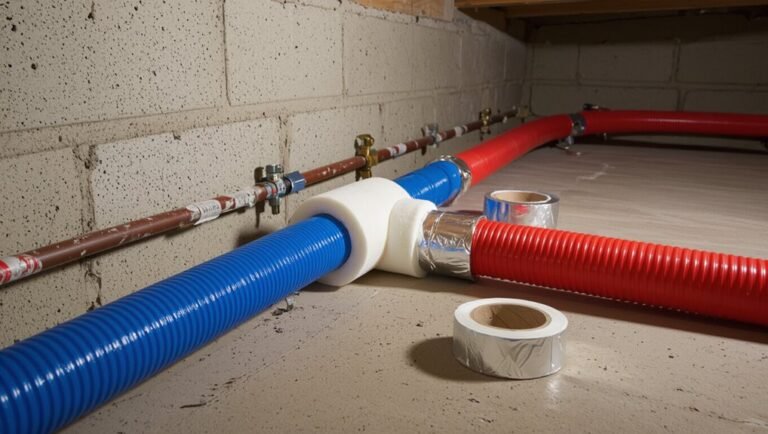
How to Remove Rust From Tap Water: 7 Effective Home Remedies and Filters
If you’re dealing with rust in your tap water, it typically results from corroded pipes or fixtures, leading to reddish-brown discoloration and a metallic taste. To effectively remove rust, you can try several home remedies and filtration options. Start with flushing your lines, cleaning aerators, or decanting settled water. Here are seven effective methods: vinegar aeration, baking soda or citric acid scrubs, hydrogen peroxide oxidation, DIY sediment filters, and certified commercial rust removers. For longer-term solutions, consider point-of-use and whole-house filters, such as sediment, carbon, KDF, and greensand. Continue reading for detailed guidance on filter selection and professional advice.
What causes rust in tap water and how to recognize it
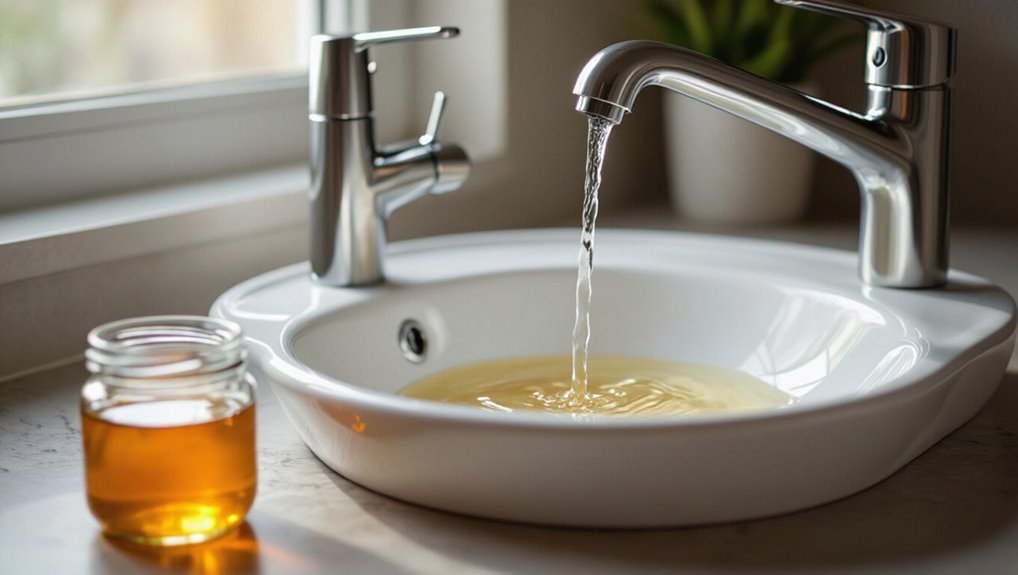
Rust in tap water most often originates from corroded household pipes, aging water mains, or rusted fixtures.
It is usually recognizable by reddish-brown discoloration, metallic taste, and orange stains on sinks, laundry, or fixtures.
Homeowners can confirm iron presence with simple DIY test kits or by sending a sample for professional laboratory analysis.
Common sources of rust in household water (pipes, water mains, fixtures)
Several common sources can introduce iron corrosion into household water systems: aging interior pipes, corroded municipal mains, and fixtures or appliances with deteriorating metal parts.
These sources release iron particles that discolor water and deposit sediment.
Homeowners seeking how to remove rust from tap water should inspect plumbing, check municipal advisories, replace or coat compromised pipes, and service rusty fixtures to minimize ongoing contamination.
Visual, taste, and staining signs of rust contamination
Identifying iron contamination begins with observable clues: discolored water that ranges from faint yellow to deep reddish-brown, metallic or bitter taste, and reddish or brown stains on sinks, tubs, laundry, and fixtures.
Intermittent discoloration after utility work, orange sediment in kettle or toilet, and dulling of fabrics or plumbing finishes further indicate iron presence rather than other contaminants.
How to test water for iron and rust (DIY kits and professional testing)
How can a homeowner be sure that discolored or metallic-tasting water is due to iron rather than another source?
Simple DIY test kits measure ferrous and total iron with colorimetric strips or reagents; follow instructions, compare to charts.
For certainty or complex cases (high turbidity, manganese, bacterial iron), send samples to a certified lab for ICP-OES or atomic absorption analysis and professional interpretation.
Immediate household fixes to stop rusty water flow
Begin by flushing cold and hot lines at multiple faucets, running them until clear and starting with lower fixtures to push sediment out of supply pipes.
If discoloration persists at a single faucet, isolate the fixture, remove and clean aerators and supply stops before testing flow again.
If both hot and cold remain rusty, shut off and inspect the water heater for internal corrosion or sediment buildup.
Flushing the system: steps for faucets, cold and hot lines
Flush the plumbing lines by running water at each faucet to clear rust and dislodged sediment from both cold and hot sides.
Open taps fully, begin with cold, run until water runs clear, then repeat with hot after heating cycle.
Flush showerheads and outdoor spigots.
Check utility sink and appliance supply lines.
Allow several minutes per outlet; monitor for persistent discoloration.
How to isolate and clean a single rusty faucet or fixture
To stop rusty water at a single faucet, isolate the fixture by turning off its shutoff valves and then remove the aerator and any accessible cartridge or stem to inspect for corrosion and trapped sediment.
Clean parts with vinegar or a mild descaler, brush loose rust, rinse thoroughly, and replace worn seals.
Reassemble, open valves, and test flow; repeat if discoloration persists.
When to shut off and inspect the water heater for rust
If isolating and cleaning a single faucet does not stop the discoloration, attention should shift to the water heater as a likely source of rust.
The heater should be turned off and cold water supply closed. Drain a few gallons to check for sediment or brown flow.
Inspect the anode rod, tank interior via inspection port, and consider flushing or professional service if corrosion is evident.
Seven effective home remedies for removing rust from water and surfaces
A concise set of household remedies can address rusty tap water and surface stains with simple chemistry and filtration techniques.
Practical options include:
- Vinegar with aeration to reduce dissolved iron
- Baking soda or citric acid for scrubbing surface rust
- Hydrogen peroxide to oxidize particles and aid settling
- Commercial rust removers, water-safe cleaners, and DIY sediment filters (cloth, sand, charcoal)
Each approach has specific uses and precautions depending on whether the target is dissolved iron in water or visible rust on fixtures and surfaces.
Using vinegar and aeration to reduce dissolved iron
Vinegar and aeration offer a simple, low-cost approach to converting dissolved ferrous iron (clear-water iron) into insoluble ferric particles that can be filtered or settled out.
A small amount of white vinegar lowers pH slightly, aiding oxidation; vigorous aeration (pouring, shaking, or using an aquarium pump) introduces oxygen to promote conversion.
After treatment, allow settling or use a basic particulate filter to remove precipitate.
Baking soda and citric acid for surface rust removal
Combine baking soda or citric acid with water to create gentle, non-toxic pastes or solutions that dissolve surface rust without harsh chemicals.
Apply paste to affected areas, let sit briefly, then scrub with a soft brush or cloth. Rinse thoroughly and dry to prevent reoxidation.
Repeat for stubborn spots. These simple acids and mild abrasives restore finishes safely on fixtures, tools, and small appliances.
Using hydrogen peroxide for oxidation and sediment settling
Use hydrogen peroxide to oxidize dissolved iron and help heavier rust particles settle out of water. A measured dose (typically 3% solution) converts ferrous to ferric iron, forming insoluble particulates that can be filtered or allowed to settle.
After treatment, aeration and slow settling improve removal. Careful dosing prevents excess oxygenation; follow safety guidelines and discard clarified water appropriately.
Commercial rust removers and water-safe cleaners’ how to choose
How should one select commercial rust removers and water-safe cleaners for household use?
One should prioritize NSF/ANSI certification or food-contact safety, check pH and ingredients for non-toxicity, confirm compatibility with plumbing materials, and prefer biodegradable, phosphate-free formulas.
Evaluate manufacturer instructions, contact time, and residue risk.
Choose products with clear labeling, customer reviews, and reliable return policies for safe, effective rust control.
Sediment filtration with DIY filter setups (cloth, sand, charcoal)
Several simple household materials—layers of cloth, graded sand, and activated charcoal—can be assembled into an effective DIY sediment filter to capture rust flakes and reduce turbidity in water.
Construct a sealed container with sequential layers: coarse cloth, fine sand, and activated charcoal, finishing with a clean cloth.
Replace or backwash regularly, and pre-filter large particles to prolong effectiveness and prevent channeling.
Using a water softener for iron control’ what works and what doesn’t
Consider water softeners cautiously when addressing iron in household water: traditional sodium-exchange softeners can reduce small amounts of ferrous (clear-water) iron but are ineffective against ferric (red, particulate) iron and can become fouled by higher iron levels.
Specialized catalytic or oxidizing media and backwashing systems are required for substantial iron removal. Proper system selection, pre-filtration, and periodic maintenance determine effectiveness and longevity.
Boiling, settling, and decanting methods for emergency use
After noting that mechanical filtration and specialized softeners are often required for persistent iron problems, households may still need simple, immediate methods when equipment is unavailable or during emergencies.
Boiling removes biological contaminants but not dissolved iron; it can precipitate some iron as sediment.
Settling allows heavy rust particles to sink; careful decanting preserves clearer water.
Use these as temporary, last-resort measures only.
Home water filtration and treatment options to remove rust
Homeowners can choose from point-of-use filters, whole-house systems, and dedicated iron removal units to address rust in tap water, each with different mechanisms and maintenance needs. The table below summarizes common options and typical benefits to aid comparison. A brief note on performance differences between water softeners and iron-specific filters follows to clarify when each is appropriate.
| System Type | Typical Benefit |
|---|---|
| Point-of-use (sediment, carbon, KDF) | Targets localized rust and improves taste/clarity |
| Whole-house (multi-stage, backwashing sand) | Protects plumbing and appliances throughout the home |
| Iron removal (oxidizing, aeration, greensand) | Removes dissolved and particulate iron effectively |
Point-of-use filters (sediment, carbon, KDF)
Many households rely on point-of-use filters—sediment, activated carbon, and KDF—to reduce visible rust and iron-related taste or odor at faucets and appliances. These units target particulate iron, adsorb dissolved iron compounds, and inhibit microbial growth; selection depends on iron form, flow needs, and maintenance tolerance.
| Filter type | Targets | Maintenance |
|---|---|---|
| Sediment | Particles | Replace cartridge |
| Carbon | Taste/organics | Replace media |
| KDF | Dissolved iron | Periodic cleaning |
Whole-house filters and systems (multi-stage, backwashing sand filters)
Whole-house filtration systems provide thorough rust control by treating water at the point it enters a building, protecting all fixtures and appliances downstream. Multi-stage setups combine sediment prefilters and backwashing sand beds to trap particles and extend media life. They reduce staining and maintenance, offering consistent flow for households.
| Relief | Confidence | Cleanliness |
|---|---|---|
| Less stains | Protected appliances | Clear water |
| Fewer repairs | Predictable service | Peace of mind |
Iron removal systems (oxidizing filters, aeration, greensand, manganese greensand)
Addressing dissolved and particulate iron requires targeted treatment methods such as oxidizing filters, aeration systems, greensand, and manganese greensand media. These remove iron via oxidation, filtration, or catalytic conversion; selection depends on iron form, concentration, and maintenance tolerance.
| Method | Mechanism | Best for |
|---|---|---|
| Oxidizing filter | Oxidize + filter | Low–moderate dissolved iron |
| Aeration | Air oxidation | High dissolved iron |
| Greensand | Catalytic oxidation | Variable iron/manganese |
| Mn greensand | Enhanced catalysis | Manganese + iron |
Water softeners vs dedicated iron filters’ performance comparison
When comparing water softeners and dedicated iron filters for rust removal, the two systems differ fundamentally in mechanism and effectiveness: softeners exchange calcium and magnesium for sodium or potassium and can reduce small amounts of dissolved iron (typically up to ~3–5 ppm ferrous iron) but struggle with higher iron levels, particulates, and oxidized (ferric) iron, whereas dedicated iron filters—oxidizing media, aeration units, or catalytic greensand—are designed to oxidize and capture both dissolved and particulate iron across a wider range of concentrations.
| System | Best for | Limitations |
|---|---|---|
| Softener | Low dissolved iron | Removes up to ~3–5 ppm |
| Oxidizing filter | Dissolved/particulate iron | Needs backwash/regeneration |
| Aeration | High dissolved iron | Requires sediment prefilter |
| Greensand | Variable iron types | Requires regeneration |
| Combination | Broad treatment | Higher cost/complexity |
Step-by-step guide to choosing and installing the right filter
First, water test results are reviewed to identify iron levels and particle size, which guide the choice between sediment, cartridge, or specialty iron-removal filters.
Next, the decision between point-of-entry and point-of-use systems is made based on household flow-rate requirements and proper sizing to maintain adequate pressure.
Finally, a concise installation checklist, routine cartridge replacement schedule, and common troubleshooting steps are outlined for sediment filters and cartridge systems.
How to interpret test results to select filtration type
A clear interpretation of water test results is the foundation for choosing an effective filter. Test data reveal which contaminants—iron (ferrous or ferric), manganese, sediment, or bacterial indicators—are present and at what concentrations, guiding the selection between point-of-use, point-of-entry, mechanical, chemical, or catalytic treatments.
Match contaminant form and level to technologies: mechanical traps for solids, oxidizing/catalytic media for dissolved metals, and disinfection for biologicals.
Sizing and flow-rate considerations for point-of-entry vs point-of-use
One clear step in choosing between point-of-entry (POE) and point-of-use (POU) systems is matching system capacity and flow requirements to household demand and fixture-specific needs.
Calculate peak and average flow rates, consider simultaneous fixture use, and compare to filter maximum GPM and cartridge throughput.
POE units require higher sustained flow and capacity; POU can prioritize lower flow, finer media, and localized protection.
Basic installation checklist for common systems (sediment filter, cartridge, cartridge replacement)
With flow requirements and placement decided, attention turns to selecting and installing the appropriate sediment or cartridge filter and planning routine cartridge replacement.
Verify inlet/outlet sizes, pressure rating, and compatible media. Assemble mounting bracket, shutoff valves, and bypass if needed.
Confirm wrench access, leak-free fittings, and correct cartridge orientation. Record model and purchase spares for timely replacement.
Maintenance schedule and troubleshooting for filter systems
Several simple checks and a predictable replacement cadence keep filter systems performing reliably and prevent water-quality lapses.
Inspect housings monthly, monitor flow rate and taste, and record cartridge install dates.
Replace sediment and cartridge filters per manufacturer interval or sooner if clogging occurs.
For persistent discoloration test iron levels, check pre-filter condition, tighten fittings, and consult a technician for media or system upgrades.
Health, plumbing, and appliance risks of untreated rusty water
Rusty tap water can affect more than taste, with elevated iron sometimes causing stomach upset and staining that interferes with water quality standards.
It can also shorten the life of appliances and fixtures, leave orange-brown marks on laundry, and clog screens and valves.
Over time, corroded pipes increase leak risk and reduced flow, prompting signs—persistent discoloration, sudden pressure loss, or recurring rust—to seek professional inspection.
Potential health impacts of iron and rust in drinking water
Although iron and its oxide particles are not highly toxic at the concentrations typically found in household water, their presence can signal broader water-quality issues and produce indirect health and safety concerns.
Elevated iron may promote bacterial growth, affect taste and odor, stain plumbing fixtures, and interfere with water treatment disinfection.
Individuals with certain metabolic disorders or compromised immunity could experience exacerbated gastrointestinal symptoms or infection risks.
Damage to appliances, fixtures, and laundry from rust
Beyond potential health concerns, iron-laden water poses tangible risks to household systems and belongings.
Rust stains discolor sinks, tubs, and porcelain; clog aerators, showerheads, and valves; and accelerate corrosion in water heaters, dishwashers, and washing machines.
Fabric becomes dingy and stained, reducing garment lifespan.
Filters, pipes, and seals may fail prematurely, increasing repair and replacement costs.
Long-term plumbing risks and signs you need professional repair
When iron accumulation in plumbing goes unaddressed, it progressively undermines pipe integrity and system function, leading to leaks, reduced water pressure, and premature failure of valves, joints, and fixtures.
Corrosion deposits harbor bacteria, stain clothes, and impair appliances. Persistent discoloration, metallic taste, fluctuating pressure, visible corrosion, and recurring clogs warrant a licensed plumber to assess corrosion extent, replace affected sections, and restore safe operation.
When to call a professional and what to expect
Signs that rust persists despite household fixes, discolored or foul-smelling water, sudden spikes in sediment, or visible corrosion on fixtures indicate the need for a plumber or water-treatment specialist.
Homeowners should ask about the professional’s experience with iron contamination, request specific tests (iron/manganese levels, pH, and particulate analysis), and expect on-site diagnostics such as pipe inspections and water sampling.
Estimates should outline likely costs, equipment warranties, and service guarantees so consumers can compare repair versus treatment-system options.
Indicators you need a plumber or water-treatment specialist
Several clear indicators signal the need for a plumber or water-treatment specialist: persistent brown or orange water, metallic taste, visible scale or flaking from fixtures, frequent clogging or reduced water pressure, and recurring stains on laundry or plumbing fixtures.
A professional should assess source contamination, corroded pipes, or compromised treatment devices, advise remediation options, and provide estimates for repairs, replacement, or whole-house filtration.
Questions to ask and tests professionals should perform
Who should be asked what, and which tests will reveal the root cause? Homeowners should request licensed plumbers or certified water specialists to inspect plumbing, supply lines, and municipal connections.
Ask about source identification, corrosion mapping, and recommended fixes.
Professionals should perform visual plumbing inspection, iron/manganese concentration tests, pH and conductivity analysis, and pressure/flow measurements to pinpoint corrosion, sediment, or supply issues.
Typical costs and warranties for repairs and treatment systems
After inspectors identify the likely source of rust—corroded household pipes, aging municipal mains, or high iron content—homeowners need clear expectations about costs and warranties before authorizing work.
Typical quotes range: minor repairs $150–$800, repiping $2,000–$10,000, water softeners/filters $300–$4,000.
Ask for written estimates, parts and labor warranties (1–10 years), and maintenance agreements; require permits and clear timelines.
Practical prevention and maintenance tips to keep water rust-free
A simple, regular inspection schedule for pipes and the water heater helps catch corrosion before it affects water quality.
Seasonal checks and clear emergency steps—such as flushing lines after long shutdowns or isolating a failing appliance—reduce the risk of rust events.
Keeping concise records of tests, maintenance actions, and filter replacement dates makes it easier to track trends and plan timely interventions.
Routine inspection schedule for pipes and water heater
Regular inspections form the backbone of preventing rust in household water systems, with a simple, consistent schedule reducing the chance that corrosion will go unnoticed.
Inspect visible pipes and joints quarterly, check water heater anode and tank for corrosion biannually, monitor pressure and discoloration monthly, and document findings.
Promptly address leaks, loose fittings, or surface rust to prevent escalation and maintain water quality.
Seasonal and emergency steps to prevent rust events
Quarterly and biannual inspections set the baseline, but seasonal shifts and sudden failures call for targeted actions to prevent rust spikes.
Flush seldom-used lines after winter stagnation, insulate exposed pipes against freeze–thaw damage, and purge sediments from heaters before heavy-use seasons.
Keep a basic emergency kit: hose for flushing, replacement fittings, and a portable sediment filter to isolate and reduce immediate contamination.
Record-keeping: testing, maintenance, filter replacement intervals
Many households and facility managers maintain concise logs of water tests, maintenance tasks, and filter changes to track rust risks and responses over time.
Records should note dates, test results (iron, turbidity, pH), cartridge types, flow rates, and observed discoloration.
Scheduled inspections, prompt media or membrane replacement per manufacturer guidance, and trend reviews guide proactive interventions and document liability and performance.
Cost and effectiveness comparison of common rust-removal methods
This section compares short-term remedies and long-term system upgrades for removing rust from tap water, focusing on estimated costs, lifespan, and effectiveness.
It summarizes typical price ranges and expected service lives for point-of-use filters, chemical treatments, water softeners, and whole-house filtration or pipe replacement.
The goal is to provide clear trade-offs so readers can weigh immediate fixes against investments in durable solutions.
Short-term remedies vs long-term system upgrades
Compare short-term remedies and long-term system upgrades by weighing upfront costs, ongoing maintenance, effectiveness at removing iron and rust particles, and expected service life.
Short-term fixes—filters, chemical clarifiers, and periodic flushing—offer low initial expense and immediate improvement but require frequent attention and replaceable media.
Long-term upgrades—whole-house filters, water softeners, or corrosion control—demand higher investment yet deliver consistent, durable control with less frequent intervention.
Estimated costs, lifespan, and effectiveness of each method
After outlining short-term fixes versus long-term upgrades, the discussion shifts to concrete numbers: estimated upfront costs, recurring expenses, expected service life, and measured effectiveness at removing iron and rust particulate. Cost-effective pitchers and cartridges: $20–150 upfront, $20–60/yr, 6–12 months, 30–70% removal. Whole-house filter: $800–3,500, $50–200/yr, 5–15 years, 80–99% removal.
| Method | Summary |
|---|---|
| Pitcher/cartridge | Low cost, moderate removal |
| Whole-house filter | High cost, high effectiveness |
Quick-reference action checklist for homeowners
A concise checklist helps homeowners respond quickly and choose lasting solutions after rust appears in tap water.
Recommended immediate actions and short-term supplies are listed below, followed by the key long-term decision milestones. Use this as a prompt for action and to communicate with plumbers or labs.
- Turn off affected taps and run cold water to test clarity
- Keep bottled water, basic filters, and cleaning supplies on hand
- Schedule a water test and inspect visible plumbing for corrosion
- Follow milestones: test → choose treatment → install system → set maintenance plan
Immediate steps for rusty tap water incidents
When rust appears in tap water, homeowners should act quickly to protect health, plumbing, and appliances:
Stop using affected water for drinking, cooking, or laundry; run cold taps briefly to check persistence; note discoloration timing and areas; inspect visible plumbing for leaks or corrosion; contact the water supplier to report the issue; collect a sample in a clean container for testing; avoid using hot water until resolved.
Short-term fixes and supplies to keep on hand
Having taken immediate precautions and reported the issue, homeowners can use short-term fixes and a small set of supplies to minimize disruption and protect fixtures until the source is resolved.
Keep bottled water for drinking, a pitcher with a filter for cooking, faucet aerator screens, rubber washers, a basic plumbing wrench, white vinegar for cleaning stains, a bucket for flushing lines, and gloves.
Long-term decision milestones (test → choose → install → maintain)
Start by mapping a clear four-step pathway—test, choose, install, maintain—that guides homeowners from diagnosing rust issues through to long-term prevention.
Step 1: test water source, frequency, and iron levels.
Step 2: choose appropriate filter or softener based on results and budget.
Step 3: install per manufacturer or hire certified plumber.
Step 4: maintain scheduled inspections, cartridge changes, and record keeping.
Conclusion
Rust in tap water affects millions: the EPA estimates that aging distribution systems contribute to discoloration complaints nationwide. Homeowners can often stop or reduce rust with simple fixes—flushing lines, replacing corroded fittings, or using point-of-use filters—while whole-house filtration or pipe replacement suits severe cases. Regular maintenance, timely professional assessment, and informed filter choices keep water clear and safe. Taking quick, practical steps prevents stains, extends plumbing life, and restores confidence in household water.