
How to Remove Rust From Sink Drain Fast: 6 Safe DIY Methods
To quickly remove rust from a sink drain, you can use common household items or commercial products. Effective methods include soaking the area with white vinegar or lemon juice, applying pastes made from baking soda or cream of tartar, or using a baking soda and hydrogen peroxide mixture for tougher rust spots. Use a nylon brush to scrub, rinse thoroughly, and repeat if necessary. For persistent corrosion, consider a phosphoric or oxalic acid rust remover, ensuring you wear gloves and work in a well-ventilated space. Follow the full guide for detailed steps, safety precautions, and tips on prevention.
What Works Fast to Remove Rust from a Sink Drain
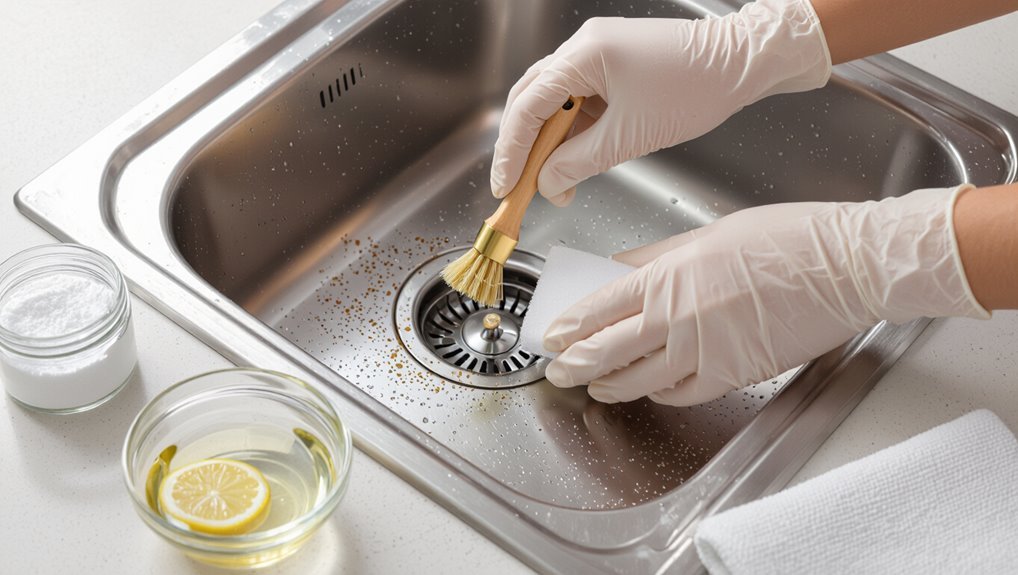
The section lists quick, effective methods for removing rust from a sink drain, including common household cleaners and simple mechanical options.
It also highlights essential safety precautions—gloves, ventilation, and proper tool use—before beginning any treatment.
Readers are encouraged to match method choice to the rust severity and material of the drain.
Quick effective methods summarized for immediate use
Practical steps for quick rust removal focus on safe, readily available materials and minimal scrubbing.
Methods include applying white vinegar or lemon juice with baking soda, using a paste of cream of tartar, or a commercial rust remover rated for sinks.
Let solutions sit, scrub gently with a nylon brush, rinse thoroughly, and repeat until stains fade.
These approaches show how to remove rust from sink drain efficiently.
Safety precautions before starting
Before starting any rust-removal method, assess ventilation, skin and eye protection, and surface compatibility to prevent injury and damage.
Wear gloves, goggles, and a mask when using chemical or abrasive cleaners. Test products on a hidden area to avoid discoloration.
Keep children and pets away, read manufacturer instructions, and prepare neutralizing agents and clean-up materials to handle spills promptly.
Why Rust Forms in Sink Drains
Rust in sink drains typically results from prolonged exposure to water, the composition of the metal, and environmental factors like humidity or exposure to salts and chemicals.
Observing the appearance and texture helps distinguish surface rust—flaky, orange discoloration that often cleans off—from penetrating corrosion, which shows pitting, structural weakness, or deep brown-red staining.
Understanding these causes and signs guides appropriate cleaning or replacement decisions.
Common causes: water, metal type, and environmental factors
Several factors combine to make sink drains prone to corrosion: repeated exposure to water, the chemical composition of the drain metal, and environmental conditions such as humidity, salt, and cleaning agents.
Porous or low-alloy steels rust faster than stainless grades. Hard water deposits trap moisture and electrolytes. Chlorides from salt or cleaners accelerate electrochemical attack, while poor ventilation sustains dampness and prolongs corrosion cycles.
How to identify surface rust vs. penetrating corrosion
Building on the factors that promote corrosion, distinguishing surface rust from penetrating corrosion requires observing appearance, texture, and structural impact.
Surface rust appears as flaky, orange-brown residue that wipes or sands away, leaving sound metal.
Penetrating corrosion shows pitting, holes, weakened edges, and rough, deep cavities.
Tap tests, probing with a screwdriver, and measuring metal thickness confirm severity and guide repair or replacement.
Supplies and Safety Gear You’ll Need
This section lists the household ingredients and common tools that effectively tackle sink drain rust, plus a few commercial rust removers to evaluate.
It also outlines essential personal protective equipment and simple ventilation tips to minimize exposure to fumes and debris.
Readers are encouraged to match the product or remedy to the drain material and to prioritize safety before beginning.
Household ingredients and common tools
A handful of common household ingredients and a few basic tools are usually enough to remove rust from a sink drain safely and effectively.
Baking soda, white vinegar, lemon juice, and salt act as mild abrasives and acids.
Tools include an old toothbrush, non-scratch scrubbing pad, microfiber cloth, plastic scraper, small brush, bucket, and rubber gloves for protection.
Commercial rust removers to consider
After household remedies are discussed, many will consider commercial rust removers for faster or stronger results; these products vary in active ingredients, strengths, and application methods.
Options include phosphoric- or oxalic-acid gels, citric-based cleaners, and chelating agents.
Choose a product labeled for sinks, follow manufacturer directions, test on an inconspicuous area, and select a formulation compatible with metal and finish.
Personal protective equipment and ventilation tips
Wear appropriate personal protective equipment and guarantee adequate ventilation before handling rust removers.
Gloves resistant to chemicals, safety goggles, and a respirator or mask for powder or strong-fume products are recommended. Long sleeves protect skin from splashes.
Open windows, run exhaust fans, and avoid confined spaces. Keep a supply of clean water nearby for rinsing and first aid in case of exposure.
6 Safe DIY Methods to Remove Rust from a Sink Drain
The following concise methods offer practical options for treating rust on sink drains, ranging from mild household remedies to stronger chemical solutions.
Recommended approaches include a vinegar soak, baking soda paste with scrubbing, lemon juice combined with salt, and a cola soak for small removable parts.
For stubborn corrosion, oxalic acid or a cream-based rust remover can be used with appropriate precautions.
Method 1 White vinegar soak
Soak the rusted area with white vinegar to dissolve surface rust without harsh chemicals.
Apply enough vinegar to cover the stain, let it sit 30–60 minutes, then check progress.
For stubborn spots, reapply and repeat.
Rinse thoroughly with water and dry the drain to prevent recurrence.
Repeat weekly until rust is gone, then maintain with occasional vinegar soaks.
Method 2 Baking soda paste and scrubbing
When combined into a thick paste, baking soda provides a mildly abrasive, non‑toxic cleaner that lifts rust without damaging most sink finishes.
Apply paste to stained areas, let sit 10–15 minutes, then scrub with a soft brush or non‑scratch pad. Rinse thoroughly and repeat if needed.
Dry the drain to prevent reoxidation. Use gloves to protect skin.
Method 3 Lemon juice and salt abrasion
Another common household option uses the acidity of lemon juice combined with abrasive salt to loosen and lift rust from a sink drain without harsh chemicals.
Sprinkle coarse salt on rusted areas, squeeze fresh lemon juice over it, let sit 10–20 minutes, then scrub with a soft brush or cloth.
Rinse thoroughly and dry to prevent re-oxidation; repeat if stains persist.
Method 4 Cola soak for small components
Try a cola soak for small removable parts, using the drink’s mild phosphoric acid to loosen surface rust without harsh chemicals.
Remove parts, submerge in cola for several hours, then scrub with a soft brush or cloth. Rinse thoroughly and dry to prevent re‑rusting. Repeat if needed.
Avoid soaking rubber or painted pieces that could degrade from prolonged exposure.
Method 5 Oxalic acid or cream-based rust remover
Apply an oxalic acid-based cleaner or a cream rust remover to tackle stubborn rust on sink drains; these products dissolve iron oxide without aggressive abrasion.
Wear gloves and eye protection, test on an inconspicuous area, then apply per manufacturer directions.
Allow dwell time, scrub gently with a soft pad, rinse thoroughly, and dry.
Repeat if necessary. Dispose of residues safely and ventilate the area.
Method 6 Using a nylon brush or fine steel wool with lubricant
Use a nylon brush or very fine (0000) steel wool with a light lubricant to loosen and lift surface rust without scratching the drain finish.
Apply lubricant (mineral oil or penetrating spray), work gently in circular motions, then rinse and wipe dry.
Repeat sparingly for stubborn spots.
Inspect finish frequently to avoid abrasion.
Dispose of used wool safely; ventilate if using sprays.
When to Use Each Method
When addressing rust on a sink drain, choose a method based on severity and finish.
Gentle solutions like vinegar or baking soda suit light, surface rust, while stronger cleaners and homemade poultices work better for moderate stains.
Abrasive tools should be avoided on delicate or coated finishes to prevent permanent damage.
Best options for light, surface rust
Light, surface rust responds well to gentle, nonabrasive treatments that remove oxidation without damaging the sink finish.
Suitable options include white vinegar soaks, baking soda paste with soft cloth rubbing, lemon juice for mild bleaching, or commercial rust removers labeled safe for the sink material.
These methods work best for recent, shallow stains; test inconspicuous areas and rinse thoroughly after treatment.
Best options for moderate rust stains
Tackle moderate rust stains with stronger, yet still finish-safe approaches that balance effectiveness and caution.
Use a paste of baking soda and hydrogen peroxide for targeted scrubbing, or apply white vinegar soaked cloths for soaking ten to fifteen minutes.
For stubborn spots, a commercial rust remover formulated for plated metals works—test an inconspicuous area first and follow product instructions precisely.
When to avoid abrasive methods to protect finishes
Although stronger abrasives can remove stubborn rust quickly, they can also strip chrome, nickel, or painted finishes and create uneven dull spots. Consequently, abrasives should be avoided on plated, polished, or thinly coated surfaces and reserved for durable, solid-metal drains.
Instead, gentle cleaners, baking soda paste, or vinegar soak techniques are recommended for protected finishes, testing in an inconspicuous area first to confirm compatibility.
Step-by-Step: Removing Rust from Different Drain Types
Different drain types require tailored steps for effective rust removal.
Instructions cover metal pop-up drains and stoppers, contrasts between stainless steel and cast-iron drains, and treatment of rust on porcelain surrounding the drain.
Each scenario emphasizes the right cleaners, tools, and safety precautions for that material.
Metal pop-up drains and stoppers
Metal pop-up drains and stoppers are common in bathroom sinks and tend to accumulate rust around the pivot rod, shaft, and underside of the stopper due to trapped moisture and mineral buildup.
Inspect by removing the stopper and pivot assembly. Clean rust with vinegar or a mild abrasive pad, rinse thoroughly, lubricate moving parts with plumber’s grease, and reassemble.
Repeat as needed to prevent recurrence.
Stainless steel drains vs. cast-iron drains
When tackling rust removal, the type of drain—stainless steel or cast iron—dictates the approach, tools, and chemicals used.
Stainless steel resists corrosion but can stain; use mild abrasives, non‑chlorinated cleaners, and soft pads to avoid scratching.
Cast iron corrodes deeper; remove loose rust, apply rust converters or phosphoric acid treatments, then prime and repaint or replace sections if pitting is severe.
Porcelain sink around-drain rust treatment
Because porcelain glaze is brittle and can chip, treating rust around a sink drain requires a gentle, precise approach: use a soft cloth, mild non-abrasive cleaner, and a paste of baking soda and water.
Apply gently, let sit, rinse, and dry. For stubborn stains, try diluted vinegar sparingly.
Avoid steel wool; repair chips with a porcelain touch-up kit and seal edges to prevent recurrence.
Tools and Techniques for Stubborn Rust
For stubborn rust on a sink drain, recommended approaches combine mechanical, chemical, and protective methods.
- Brushes, scrapers, and varied sandpaper grades
- Chemical boosters and safe combinations
- Rust converters
- Sealants and protective coatings
A clear sequence—mechanical removal, targeted chemicals, then conversion and sealing—offers the best chance of long-term results.
Mechanical tools: brushes, scrapers, and sandpaper grades
Begin with the right tool: brushes, scrapers, and sandpaper offer controlled, nonchemical methods for removing stubborn rust from sink drains.
Stiff nylon or wire brushes dislodge surface flakes; plastic or metal scrapers lift scale without excessive gouging.
Start with fine-grit sandpaper (400–600) for light pits, progress to coarser grits only if necessary, and always test inconspicuous areas first.
Chemical boosters and safe combinations
When mechanical methods cannot fully remove entrenched rust, chemical boosters can accelerate breakdown of iron oxide and loosen scale for easier removal.
Mild acid solutions (vinegar, citric acid) or commercial rust removers work best when used with barriers (gloves, eye protection) and proper ventilation.
Avoid mixing bleach with acids or ammonia.
Rinse thoroughly after treatment and neutralize residues with baking soda solution.
Using rust converters and sealants after cleaning
Apply a rust converter to chemically stabilize remaining iron oxide and provide a paintable surface once mechanical and chemical cleaning have removed loose rust.
After curing, inspect for pits; fill deep areas with epoxy filler designed for metal.
Finish with a water-resistant sealant or automotive-grade primer and topcoat to prevent moisture ingress.
Allow full cure before reinstalling the drain or returning to service.
Preventing Rust Return
To prevent rust from reappearing, the article shifts to practical maintenance strategies.
It outlines routine cleaning and drying habits, the use of protective coatings and rust inhibitors, and simple water-quality improvements to reduce corrosion.
Each approach is presented with concise steps to help maintain a rust-free drain.
Routine cleaning and drying habits
Maintain a consistent routine of wiping, rinsing, and drying the sink and drain after each use to prevent moisture that fosters rust.
Regularly inspect the drain area for mineral buildup, promptly remove soap scum and food debris, and dry crevices with a cloth or paper towel.
Weekly deeper cleans with mild detergent and a soft brush keep surfaces free of residues that can trap water.
Protective coatings and rust inhibitors
Seal the cleaned drain area with a thin protective coating or rust inhibitor to block moisture and oxygen that cause corrosion.
Options include clear enamel, marine-grade varnish, silicone sealant, or commercial rust converters that leave a protective layer.
Apply per manufacturer instructions, allow full cure, and recoat if wear appears.
Periodic inspection guarantees continued coverage and prevents rust recurrence.
Water quality improvements to reduce corrosion
Adjusting water quality can considerably reduce corrosion around a sink drain by limiting the chemical factors that accelerate rust formation.
Testing identifies pH, hardness, and chloride levels; softening hard water, raising pH slightly, and reducing chlorides slow corrosion.
Installing a water softener, neutralizing filter, or activated carbon unit can protect metal fittings.
Regular monitoring guarantees adjustments remain effective and prevents rust recurrence.
Troubleshooting Common Problems
Common troubleshooting covers why rust may return quickly after cleaning and how to address recurring causes.
It also outlines escalation steps when stains resist standard removal methods.
Guidance is provided on protecting the sink finish to avoid damage during rust treatment.
Rust returns quickly after cleaning causes and fixes
Rust that reappears shortly after cleaning usually signals underlying factors that were not addressed rather than a failure of the cleaning itself.
Common causes include persistent moisture, metal surface damage, clogged aerators trapping oxidized particles, and calcium buildup hiding corrosion.
Fixes: improve ventilation, dry the area, replace compromised drain parts or apply rust-inhibiting primer, and inspect plumbing for leaks to prevent recurrence.
Stains that won’t budge escalation steps
If a stubborn stain resists standard cleaning and rust inhibitors, escalate methodically: reassess the stain’s composition (iron, mineral, or organic), test stronger but safe cleaners on a hidden spot, and determine whether the affected surface is stainless steel, plated metal, or cast material before proceeding to mechanical or chemical interventions.
Next, try targeted approaches: mild abrasives, chelating agents, or rust converters, monitoring progress and surface integrity; consult a professional if uncertain.
Protecting sink finish from damage during rust removal
Begin by identifying the sink’s material and finish—stainless steel, chrome-plated, porcelain, or cast iron—because each responds differently to cleaners and abrasion.
Use pH-neutral cleaners for delicate finishes, test abrasives on an inconspicuous spot, avoid steel wool on plated or porcelain surfaces, and apply protective tape around edges.
Rinse thoroughly and dry to prevent further corrosion and finish dulling.
Maintenance Schedule and Long-Term Care
A concise maintenance schedule helps prevent rust recurrence by outlining weekly, monthly, and annual checks of the drain, seals, and surrounding fixtures.
Routine inspections should note minor corrosion, buildup, and loose fittings so small issues can be treated before they worsen.
Parts showing advanced corrosion, persistent leaks, or structural compromise should be replaced rather than repaired to guarantee long-term function.
Weekly, monthly, and annual checks
Establish a simple schedule for weekly, monthly, and annual inspections to catch rust early and prevent recurrence:
Weekly checks guarantee drains stay dry, debris-free, and free of surface stains.
Monthly inspections include scrub, sealant touch-ups, and tighter fittings.
Annual reviews assess protective coatings, clear hidden buildup, and document recurring spots for targeted maintenance, preserving finish and preventing deeper corrosion.
When to replace parts instead of repairing
When should a part be replaced rather than repaired? The guideline prefers replacement when rust compromises structural integrity, causes persistent leaks, or when repeated repairs fail.
Replace fittings with deep pitting, cracked seals, or bent components that prevent proper sealing.
Also replace when replacement cost is similar to repair, parts are obsolete, or corrosion threatens adjacent plumbing, ensuring long-term reliability and safety.
Comparison of DIY vs. Professional Rust Removal
A concise comparison highlights how DIY and professional approaches differ in cost, time, effectiveness, and risk. The table below summarizes key trade-offs for quick reference. Readers can use this to decide whether to attempt rust removal themselves or hire a pro.
| Aspect | DIY vs Professional |
|---|---|
| Cost | Lower upfront (DIY) vs higher but includes labor and guarantees (Pro) |
| Time | Variable and may take longer (DIY) vs faster scheduled service (Pro) |
| Effectiveness & Risks | May be less effective and risk damage or incomplete removal (DIY) vs more reliable with warranty but costlier (Pro) |
Cost, time, effectiveness, and risks comparison
Many homeowners weigh DIY methods against professional services by comparing upfront cost, time investment, effectiveness, and potential risks.
DIY typically costs less in cash but demands more time and carries a higher chance of incomplete removal or surface damage.
On the other hand, professionals charge more but usually deliver faster, more reliable results with lower risk of unintended harm.
DIY suits small, low-risk stains; pros are better for extensive corrosion, warranties, and complex materials.
Quick Reference: Best Methods by Situation
A concise quick-reference helps match rust-removal approaches to who is responsible and what they can legally or practically do.
The following one-line recommendations clarify options for renters, homeowners, and landlords, plus a general emergency step.
- Renters: use noninvasive cleaners and notify the landlord for major issues.
- Homeowners: try stronger DIY methods first, then call a pro if needed.
- Landlords: arrange professional repair for stubborn or recurring rust.
- Emergency: apply a temporary barrier and schedule a proper fix promptly.
One-line recommendations for renters, homeowners, and landlords
When time, tools, or permissions vary, quick one-line recommendations clarify the safest, most effective rust-removal approach for renters, homeowners, and landlords.
Renters: use mild vinegar-soaked cloths or commercial rust remover with landlord approval to avoid damage.
Homeowners: employ abrasive pads, baking soda paste, or naval jelly for stubborn stains.
Landlords: arrange professional removal for deep corrosion and document repairs for liability.
Conclusion
In closing, the guide reassures that rust in a sink drain is conquerable with simple household tools and mindful care. Each method offers a balance of speed, safety, and effectiveness so homeowners may choose what fits their situation. Regular maintenance prevents recurrence, preserving both function and appearance. Like a pocket watch ticking through modern plumbing, small consistent actions restore order and comfort, turning a stubborn nuisance into a solved, almost forgotten problem.