
How to Never Run Out of Hot Water: Simple Fixes, Upgrades, and Pro Tips
To ensure you never run out of hot water, start by checking your water heater’s power or pilot light, adjusting thermostat settings, and looking for any visible leaks. You can also stagger showers and install low-flow fixtures to conserve hot water. For more permanent solutions, consider flushing your tank, replacing worn dip tubes, or descaling tankless units. Upgrading to larger or dual tanks, tankless or hybrid systems, point-of-use heaters, adding pipe insulation, or implementing recirculation systems can provide a continuous supply. Below are practical, step-by-step options for each approach to help you maintain a steady flow of hot water.
How to Stop Running Out of Hot Water Today
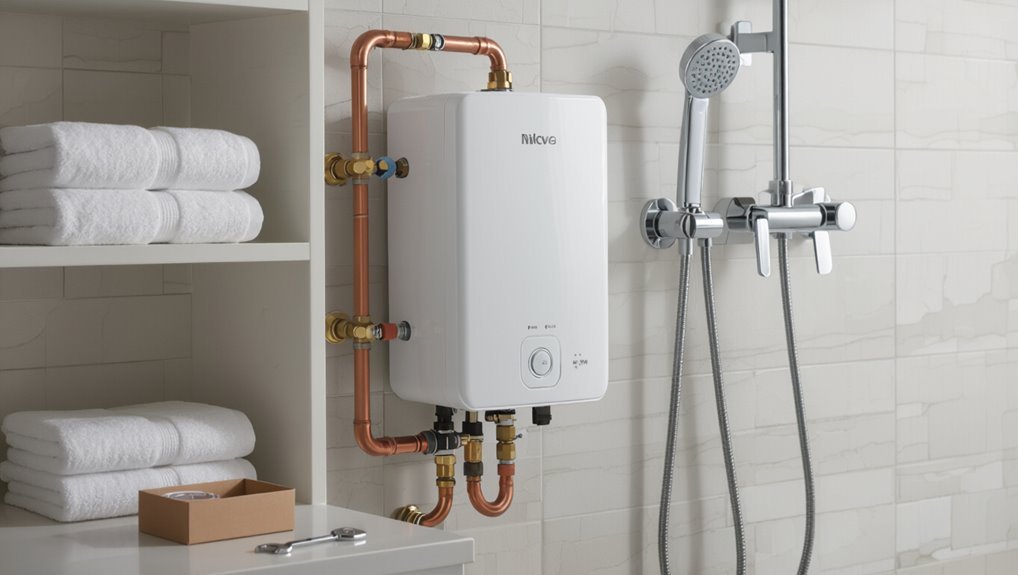
The section outlines immediate checks to restore hot water quickly, such as verifying power or pilot status and resetting the thermostat.
It then covers quick, tool-free fixes homeowners can apply right away, like adjusting valves or flushing a showerhead.
Finally, it specifies clear signs that warrant calling a professional immediately, including leaks, no heat after basic checks, or gas smells.
Immediate checks to restore hot water quickly
Start by checking the quickest, most likely causes so hot water can be restored with minimal delay.
Verify pilot light or power to the water heater, thermostat settings, and gas or circuit breakers.
Inspect visible leaks, supply valves, and any mixing valves.
Confirm no recent changes in household hot water usage.
These immediate checks help reveal simple fixes and inform longer-term how to never run out of hot water.
Quick temporary fixes you can do without tools
If those quick checks don’t restore hot water, there are several no-tool fixes that can provide immediate relief while a permanent solution is arranged.
Stagger showers, shorten durations and lower mixer temperature. Run cold water briefly to blend with remaining hot water.
Use a kettle boiled on a stove for supplements.
Insulate exposed pipes with towels to slow cooling until repairs occur.
When to call a professional right away
When should a professional be contacted immediately?
Immediate help is warranted for:
- gas smell
- pilot light failure
- no hot water after power reset
- leaking tank
- ruptured pressure relief valve
- unusual noises signaling imminent failure
- when multiple fixtures lack hot water despite correct settings.
Also call if the homeowner lacks tools, confidence, or the job requires permits or gas/electrical expertise.
How Hot Water Systems Work (Essential Basics)
Hot water systems come in three main types—tank, tankless, and heat pump—each delivering hot water in different ways and with different limits on capacity and efficiency.
Key components such as the thermostat, dip tube, and recovery rate directly influence how much hot water is available and how quickly it is replenished.
Household demand and fixture flow rates then determine whether a given system can meet simultaneous draws without running out.
Differences between tank, tankless, and heat pump water heaters
Three basic types of residential water heaters—storage-tank, tankless (on-demand), and heat pump—differ fundamentally in how they store, heat, and deliver water, affecting efficiency, capacity, installation, and operating costs.
Storage tanks hold and continuously heat a volume for immediate use; tankless units heat water on demand with higher efficiency but limited flow rate.
Heat pump heaters extract ambient heat, offering superior efficiency in suitable climates.
Key components that affect hot water availability (thermostat, dip tube, recovery rate)
Availability of hot water depends as much on specific internal parts as on the heater type: the thermostat controls target temperature, the dip tube directs cold inlet water to the tank bottom, and the unit’s recovery rate determines how quickly the system can replenish heated volume after use.
Proper thermostat setting, an intact dip tube, and sufficient recovery capacity together guarantee consistent usable hot water and efficient operation.
How household demand and fixture flow rates determine supply
Because household demand is the sum of simultaneous fixture flows, system supply is dictated by peak use and individual flow rates. A shower, dishwasher, and faucet running at the same time can exceed a water heater’s delivery and recovery capacity.
Calculating peak gallons per minute and comparing it to heater first-hour and recovery rates identifies shortfalls.
Reducing fixture flow or adding storage/boosters resolves deficits.
Diagnosing Why You Run Out of Hot Water
When hot water runs out, a systematic diagnosis separates tank issues (sediment buildup, failing thermostats, or corroded elements) from tankless problems (scale buildup, undersized units, or ignition failures).
Distinguishing inadequate capacity from mechanical malfunction relies on observing patterns—short bursts of hot water suggest capacity limits, while inconsistent temperatures or complete loss point to faults.
Measuring household usage (flow rates, simultaneous fixtures, and daily demand) helps determine whether an upgrade, repair, or simple maintenance is needed.
Common causes for tank water heaters
Many homeowners who repeatedly run out of hot water face a few predictable problems with tank-style heaters.
Common causes include undersized tanks, sediment buildup reducing capacity and heating efficiency, failing heating elements or burners, faulty thermostats, and leaks.
Long recovery times, mineral scaling on heat exchangers, and poor insulation also limit available hot water.
Regular maintenance and correct sizing prevent most issues.
Common causes for tankless water heaters
Tankless systems eliminate tank storage but bring their own failure modes that can leave a home without hot water.
Common causes include scale buildup reducing heat exchanger efficiency, clogged inlet filters, malfunctioning flow sensors or gas valves, ignition or venting problems, and electrical faults in electric models.
Improper installation or undersized units worsen issues; regular maintenance and proper venting mitigate most failures.
Signs of inadequate capacity vs. malfunction
A homeowner evaluating recurrent cold runs should first distinguish between inadequate capacity and mechanical malfunction, because the remedies differ: capacity issues require load management or a larger unit, while malfunctions need repair or maintenance.
Signs of capacity limits include gradual temperature decline during heavy simultaneous use; signs of malfunction include sudden temperature drops, inconsistent recovery, error codes, strange noises, leaks, or reduced flow suggesting clogged components or failing controls.
How to measure household hot water usage patterns
After distinguishing capacity limits from mechanical faults, the next step is to quantify when and how hot water is used to identify peak demand patterns and mismatches with supply.
Track timestamps and durations of showers, laundry, dishwasher cycles, and faucet use for a week. Measure flow rates with a bucket and timer or install a smart water meter.
Log data, identify overlaps, and calculate peak gallon-per-minute demand.
Simple Repairs and Tune-Ups You Can Do Yourself
Homeowners can address common causes of limited hot water with a few straightforward maintenance tasks.
Regularly flushing the tank to remove sediment, replacing a faulty thermostat or heating element, and repairing a worn dip tube each restore capacity and efficiency.
Carefully adjusting the thermostat within safe limits further maximizes usable hot water without professional help.
Flushing a tank to remove sediment
Flushing a water heater tank removes the mineral sediment that accumulates over time and reduces capacity, efficiency, and lifespan.
Periodic flushing restores performance, prevents corrosion, and can be done annually.
Drain with a hose to a safe location, open the drain valve, and flush until clear.
Follow safety: shut power/gas and cold supply first.
- Inspect
- Drain
- Flush
Replacing a faulty thermostat or heating element
Diagnose whether the unit’s thermostat or heating element is failing by checking for uneven temperatures, no hot water, or tripped breakers; simple multimeter tests and visual inspection can confirm faults.
Power off, drain necessary water, and remove access panels. Replace a burned element or faulty thermostat with manufacturer-approved parts, torquing connections and resealing gaskets.
Restore power, test functionality, and monitor for leaks.
Fixing or replacing a worn dip tube
Inspect the dip tube for cracks or disintegration, since a worn tube sends cold water into the top of the tank and reduces available hot water.
If damaged, drain the tank partially, remove the cold inlet, and replace the dip tube with a compatible model.
Verify proper fit and seat, check for leaks, and restore water.
Test several hot taps to confirm restored stratification and capacity.
Adjusting the temperature safely to maximize usable hot water
Adjusting the water heater thermostat a few degrees can considerably increase usable hot water without major repairs.
The homeowner should lower risk by checking current temperature, turning off power or gas, then adjusting thermostat in small increments (2–5°F).
Verify with a thermometer at a faucet after settling.
Keep settings below 120°F to prevent scalding while preserving capacity and safety.
Upgrades That Prevent Running Out of Hot Water
Homeowners can consider targeted upgrades to eliminate hot water shortages, such as increasing tank capacity or installing a second tank for greater storage.
Alternatives include tankless or hybrid units for continuous supply and point-of-use heaters at high-demand fixtures to shorten delivery time.
Improving recovery with a higher-capacity burner or heating element further reduces wait times between uses.
Increasing tank size or adding a second tank
Upgrading to a larger storage tank or installing a second unit directly increases a household’s reserve of hot water, reducing the chance of running out during peak use.
Choosing appropriate capacity requires evaluating typical demand and recovery rate.
Installation considerations include space, plumbing, and venting.
Dual tanks can be piped for priority or blended output, offering simple, reliable redundancy without changing heating technology.
Installing a tankless or hybrid water heater
After increasing storage capacity, some households may prefer a different approach: replacing the storage tank with a tankless unit or installing a hybrid (heat-pump) water heater to change how hot water is produced rather than merely how much is stored.
Tankless systems deliver continuous flow on demand and save space; hybrids greatly improve efficiency by extracting heat from air.
Both require proper sizing and professional installation.
Adding a point-of-use water heater for high-demand fixtures
Consider installing a point-of-use (POU) water heater near high-demand fixtures such as showers, dishwashers, or distant bathroom sinks to deliver near-instant hot water and reduce wait times and heat loss from long pipe runs.
These compact units supply supplemental capacity, lower crossover demand on a central heater, and can be electric or small tankless.
Proper sizing and local code-compliant installation guarantee reliable performance.
Upgrading to a higher recovery-rate burner or element
Point-of-use units reduce demand on the main water heater, but households still benefit from increasing the central system’s ability to replenish hot water quickly.
Replacing burners or heating elements with higher recovery-rate models shortens recovery time, raising available hot-water throughput.
Professionals should verify compatibility, tank limits, and local codes; improved recovery often requires upgraded controls or modest fuel-system adjustments for safe, efficient operation.
Efficiency Improvements to Stretch Hot Water Supply
Efficiency improvements can greatly stretch a home’s hot water supply by lowering demand and reducing heat loss.
Installing low-flow fixtures and showerheads, insulating pipes or adding recirculation systems, and using smart controllers or timers all target waste at different points.
Reducing standby losses through better tank insulation and strategic placement further preserves available heat.
Low-flow fixtures and showerheads to reduce demand
Installing low-flow fixtures and showerheads reduces the volume of hot water used per minute, directly extending available supply without changing user habits.
These devices maintain pressure while cutting gallons per minute, saving energy and lowering bills. Selection should balance flow rate and comfort; aerating or laminar models work differently.
- Choose 1.5–2.0 GPM models
- Verify spray pattern
- Check certifications (EPA/WaterSense)
Pipe insulation and recirculation systems to reduce heat loss
Many homes lose significant heat from hot water as it travels through uninsulated pipes.
So insulating and using recirculation systems can preserve temperature and reduce wait times at fixtures.
Pipe insulation reduces standby losses and raises delivered temperature without higher tank settings.
Demand or timed recirculation systems return cooled water to the heater, cutting wasteful flushing and improving perceived supply without increasing actual consumption.
Smart controllers and timers to align heating with usage
A handful of smart controllers and timers can synchronize water heating with actual household routines, reducing standby losses and peak demand without sacrificing comfort.
Programmable schedules, learning thermostats, and remote control focus heat when needed; vacation and boost modes prevent waste.
Integration with occupancy sensors and time-of-use electricity rates shifts demand, lowers bills, and stretches available hot water for peak periods without manual intervention.
Reducing standby losses with better insulation and placement
Because heat loss from stored water occurs continuously, minimizing standby losses through improved insulation and strategic placement yields immediate and lasting gains in usable hot water.
Wrapping tanks and pipes with high-R insulation, reducing exposed runs, and situating heaters near demand zones cut heat escape.
Even modest upgrades lower reheating cycles, conserve energy, and extend available hot water without changing tank capacity.
Comparing Solutions: Capacity, Cost, and Performance
Choices between tank, tankless, and hybrid water heaters hinge on upfront cost, operating cost, and expected lifespan, while point-of-use versus centralized layouts change performance and convenience by scenario. The comparison below summarizes typical trade-offs to guide selection based on capacity needs and budget. Readers should weigh long-term operating savings against installation complexity and replacement intervals.
| Option Type | Typical Upfront Cost | Key Considerations |
|---|---|---|
| Tank | Low–moderate | Simple, limited capacity, shorter lifespan |
| Tankless/Hybrid | Moderate–high | Higher efficiency, longer life, variable flow |
| Point-of-use vs Centralized | Varies | Point-of-use reduces wait/loss; centralized easier maintenance |
Tank vs. tankless vs. hybrid upfront cost, operating cost, lifespan
When evaluating water-heating systems, upfront purchase price, ongoing energy and maintenance expenses, and expected service life together determine total cost of ownership and practical value.
Tank heaters are cheapest to buy but higher energy and shorter lifespans (8–15 years).
Tankless units cost more upfront, run more efficiently, and can last 15–25 years.
Hybrids sit between: moderate purchase price, improved efficiency, and lifespan near tankless.
Point-of-use vs. centralized systems pros and cons by scenario
Beyond upfront and operating trade-offs among tank, tankless, and hybrid units, the layout of a home’s plumbing and hot-water demand pattern often determines whether a single centralized heater or multiple point-of-use (POU) units make more sense.
Centralized systems simplify maintenance and supply whole-house peak loads but incur distribution losses; POU units reduce wait time and heat loss, suit retrofits, and lower peak capacity needs yet raise installation and maintenance points.
How to Size a Water Heater for Your Home
Sizing begins with calculating peak hour demand and comparing it to a tank’s first-hour rating to guarantee recovery meets household use.
For tankless systems, required flow rate and temperature rise determine unit capacity and how many fixtures can run simultaneously.
Simple rules of thumb—per-person hot water estimates, extra capacity for multiple bathrooms, and conservative sizing for rentals—help translate calculations into practical choices.
Calculating peak hour demand and first-hour rating
How many hot-water fixtures will run at once and for how long determines the peak hour demand, a metric that quantifies the maximum gallons per hour a household requires during its busiest hour.
Pairing that figure with a water heater’s first-hour rating (FHR) guarantees the chosen unit can supply the initial surge of hot water plus ongoing recovery.
Calculate fixture usage, sum gallons per minute across simultaneous draws, convert to hourly demand, and select a tank with an FHR at or above that value to avoid shortages during peak use.
Sizing tankless units by flow rate and temperature rise
After establishing peak-hour demand and matching it to a tank-style heater’s first-hour rating, attention shifts to tankless systems, which are sized differently: by the simultaneous flow rate they must supply and the temperature rise required.
Calculate total GPM of concurrent fixtures, determine incoming groundwater temperature, then choose a unit whose GPM at the needed temperature rise meets or exceeds that demand.
Rules of thumb for families, multi-bath homes, and rentals
For many households, a few straightforward rules of thumb simplify the process of choosing a water heater: match capacity to household size and usage patterns, plan for simultaneous demand in multi-bath homes, and select slightly larger units for rentals or variable-occupancy dwellings to avoid complaints and cold showers.
Calculate peak hour demand, add safety margin, prefer higher recovery for tanks, or size tankless for combined fixture flow.
Preventive Maintenance Schedule to Avoid Cold Showers
A clear preventive maintenance schedule separates monthly, annual, and multi-year tasks to keep a water heater reliable and avoid unexpected cold showers.
For each interval, inspectors should check items like pressure relief valves, sacrificial anodes, sediment buildup, thermostat accuracy, and venting or combustion components.
Cost-effective checks to bundle with a plumber visit include flushing the tank, testing the TPR valve, inspecting connections for leaks, and replacing worn anodes as needed.
Monthly, annual, and multi-year maintenance tasks
Routine checks and scheduled servicing form the backbone of a preventive maintenance plan that keeps hot water systems reliable.
Monthly tasks catch minor issues early; annual inspections, servicing, and safety tests restore efficiency. Multi-year replacements and major component upgrades prevent failures.
Follow a simple calendar, document actions, and contract professionals for complex work.
- Monthly visual and minor cleaning tasks
- Annual professional service and safety checks
- Multi-year replacements and system upgrades
What to inspect during each maintenance interval
Several clearly defined checkpoints guide inspections at monthly, annual, and multi-year intervals to guarantee consistent hot water delivery.
Inspect pressure relief valve operation, visible tank corrosion, and leaks.
Check burner or heating-element condition, pilot or ignition function, and thermostat accuracy.
Flush for sediment buildup frequency.
Verify insulation integrity, expansion tank pressure, and venting or flue clearance.
Record findings and corrective actions.
Cost-effective service checks to include with a plumber visit
Including a plumber for scheduled preventive visits yields high value when the technician performs targeted, cost-effective checks that prevent breakdowns and extend water heater life.
Recommended items:
- test pressure relief valve,
- inspect and flush tank for sediment,
- check anode rod condition,
- verify thermostat accuracy and gas/electrical connections,
- examine venting and combustion,
- assess insulation and piping for leaks or heat loss.
Common Mistakes That Cause Frequent Shortages
Frequent hot water shortages often trace back to avoidable mistakes such as undersizing the system for peak usage.
Homeowners who ignore sediment buildup and corrosion warnings risk reduced capacity and premature failure.
Tweaking thermostat settings rather than addressing underlying problems only postpones and sometimes worsens shortages.
Undersizing the system for peak usage
When a hot water system is undersized for peak usage, households routinely encounter shortages during high-demand periods such as mornings or evenings.
Insufficient tank capacity or heater recovery rate forces staggered showers and appliance delays.
Proper sizing requires calculating peak flow and simultaneous demands, then selecting a unit with adequate first-hour rating or higher recovery.
Undersizing increases wear and reduces comfort; correct sizing prevents shortages.
Ignoring sediment and corrosion warnings
Neglecting sediment buildup and corrosion warnings allows diminished heat transfer and restricted water flow, which quickly reduce a system’s effective capacity and recovery.
Mineral deposits insulate heating elements and clog ports; rust weakens tanks and valves, causing leaks and inefficiency.
Ignoring indicators—odd noises, discolored water, pressure drops—accelerates failure.
Regular inspection, flushing, and timely part replacement prevent recurring shortages and costly emergency repairs.
Relying on thermostat changes instead of addressing root causes
Tweaking the thermostat is a quick fix that often masks deeper issues rather than resolving them.
Homeowners may crank temperatures to extend hot water without investigating failing elements: a worn dip tube, sediment-clogged heat exchange, faulty thermostatic mixing valves, or undersized tank.
Temporary thermostat boosts raise energy bills and risk scalding; diagnosing and repairing root causes restores reliable, efficient hot water service.
Real-World Scenarios and Solutions
Practical cases illustrate how different households must tailor hot-water strategies: a large family facing simultaneous showers, an older home with poor insulation and a small tank, and a vacation property used intermittently.
Each scenario calls for distinct solutions—tankless or high-capacity systems and staggered schedules for the first, improved insulation and supplemental heating for the second, and holiday-ready maintenance plus smart controls for the third.
The following section compares these options and outlines cost-effective implementation steps.
Solution for large family with frequent simultaneous showers
How can a household of six reliably provide simultaneous hot showers without depleting supply?
The recommendation focuses on high-capacity solutions: install a tankless or large electric water heater, or a dual-tank system with priority pumping.
Add a recirculation loop with a programmable controller, stagger peak usage via schedules, and conduct pipe balancing to reduce cold wash-in.
Regular maintenance guarantees consistent performance.
Solution for older homes with poor insulation and small tanks
Older homes with small hot-water tanks and minimal insulation present predictable challenges: rapid cooldown of stored water, excessive standby heat loss, and long wait times at fixtures.
Solutions prioritize reducing losses and increasing supply: add tank insulation blanket and pipe insulation, lower recovery time with a point-of-use electric or tankless booster, upgrade to a slightly larger tank if space allows, and stagger hot-water use patterns.
Solution for vacation homes with intermittent use
Vacation properties, unlike continuously occupied homes, face heat loss from idle systems, sediment buildup from sporadic use, and freeze risk in cold climates.
Solutions consequently shift from maximizing continuous supply to preserving water quality and preventing system damage while ensuring ready hot water on arrival.
Recommended measures include tank flushes before and after season, insulation and pipe heat trace, smart thermostats with remote control, and small point-of-use heaters.
Cost Estimates and Return on Investment for Upgrades
Typical costs for common repairs and upgrades are summarized to give homeowners a clear budget baseline.
Estimated energy savings and simple payback timelines for efficiency measures are presented to gauge long-term value.
Available financing options and incentives for high-efficiency systems are noted to reduce upfront expense and shorten return on investment.
Typical costs for common repairs and upgrades
When addressing repairs and upgrades related to hot water systems, homeowners should weigh upfront costs against likely energy savings and equipment lifespan.
Typical expenses: minor repairs (thermostat, dip tube) $100–$400; tank flushes or element replacements $75–$300; new conventional tank $600–$1,500; tankless unit $900–$2,500+; thermostatic mixing valves or smart controllers $150–$600.
Labor varies by region.
Energy savings and payback timeline for efficiency measures
After reviewing repair and replacement costs, attention turns to how those investments translate into annual energy savings and the time required to recoup them.
Upgrading to a high-efficiency water heater, adding insulation, or installing a heat-pump can cut water-heating bills 20–60%.
Typical payback ranges from 2–10 years depending on measure cost, local energy rates, and household hot-water demand.
Financing options and incentives for high-efficiency systems
How can homeowners bridge the upfront cost of high-efficiency water-heating upgrades while maximizing long-term savings?
Homeowners can use rebates, federal/state tax credits, utility incentives, and manufacturer promotions alongside low-interest loans, on-bill financing, or PACE programs.
Cost estimates and ROI vary by system, local energy prices, and incentives; a simple payback analysis and contractor quotes clarify expected savings and financing suitability.
Signs It’s Time to Replace Your Water Heater
Age and visible corrosion or leaks often mark a water heater nearing the end of its service life.
Other clear signals include persistent temperature fluctuations and repair bills that approach or exceed replacement cost.
Homeowners should balance these indicators against an appropriate replacement timeline to avoid unexpected failures.
Age, rust, leaks, inconsistent temperature indicators
Several clear warning signs indicate a water heater is nearing the end of its useful life: persistent rust, visible leaks, fluctuating hot-water temperatures, and simply being older than its expected service span.
Corrosion on fittings or tank surfaces, recurring drips, and erratic thermostat readouts suggest internal failure.
When these signs appear, replacement planning prevents sudden loss of service and potential water damage.
When repair costs exceed replacement value
After spotting rust, leaks, or erratic temperatures, homeowners should next weigh repair costs against replacement value to avoid throwing money into a failing system.
If repair estimates approach half the price of a new unit, parts are obsolete, or multiple failures occur, replacement often yields better reliability, warranty coverage, and long-term savings.
Prioritize total cost, expected lifespan, and energy efficiency.
Choosing the right replacement timeline
When should a homeowner stop patching and plan for replacement? A clear timeline emerges from age, repeated failures, rising repair bills, inefficiency, and safety risks.
Regularly assess performance: frequent pilot issues, leaks, rusty water, or fluctuating temperatures signal decline.
Balance remaining service life against upgrade benefits—efficiency, capacity, and warranty—and schedule replacement before emergency failure to minimize discomfort and cost.
Checklist: Steps to Ensure You Never Run Out of Hot Water Again
Start by surveying the household’s hot water needs and current system to identify weak points and immediate fixes.
Then follow a concise checklist to prevent shortages, prioritize upgrades, and schedule maintenance. Focus on flow, storage, and controls.
- Inspect tank, valves, and insulation; repair leaks.
- Optimize settings, install a timer, or upgrade capacity.
- Schedule annual maintenance and test backups.
Conclusion
The article concludes that the theory—small changes and informed upgrades can end hot-water shortages—holds true: when systems are understood, diagnosed, and properly maintained, comfort is reliably restored. This realization brings quiet relief; households regain mornings without frantic taps or chilly surprises. Practical fixes, targeted upgrades, and timely replacements transform anxiety into confidence, proving that predictable hot water is not luck but a manageable outcome of attention, investment, and simple, decisive action.
