How to Turn Off a Sump Pump Safely: Step-by-Step Guide for Homeowners
To safely turn off a sump pump, start by isolating the power supply. Switch off the appropriate circuit breaker and verify with a noncontact tester. If accessible, unplug the pump. Next, secure the discharge line and open any unions to relieve pressure. For specific systems like pedestal, submersible, or battery-back pumps, follow device-specific procedures: disconnect the battery, relieve the union, and secure float switches. Always wear personal protective equipment (PPE) and label the breaker to alert others. The following steps will detail device-specific procedures, safety checks, and restoration methods.
Why and When You Should Turn Off a Sump Pump
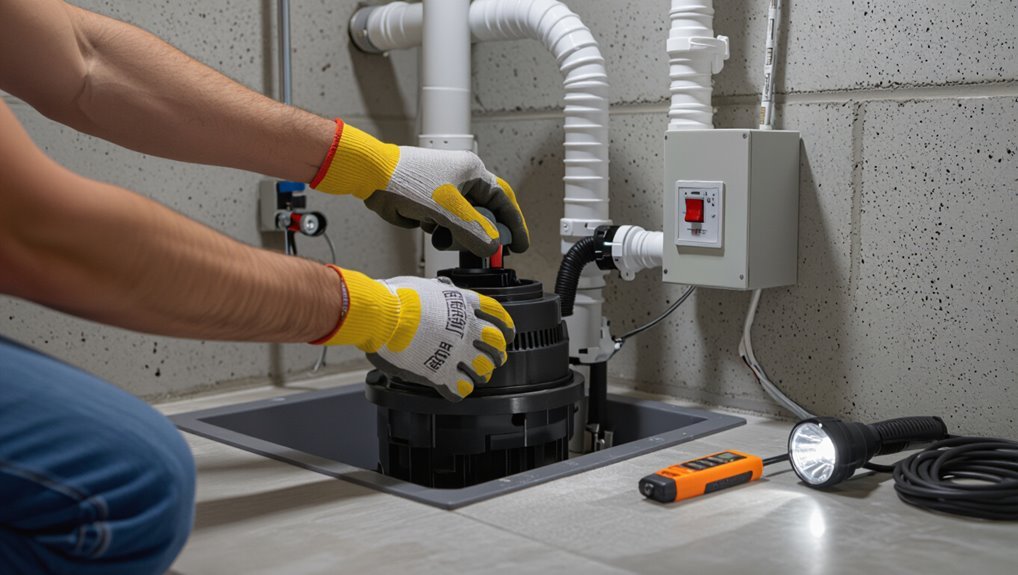
A homeowner may need to shut off a sump pump for reasons such as prolonged power outages, planned maintenance, or flooding that could damage the unit.
Visible signs like continuous cycling, unusual noises, or water backing up into the basement can indicate a temporary or permanent shutdown is required.
Improper shutdowns can harm the pump, void warranties, or increase flood risk, so the decision should balance safety and equipment protection.
Common reasons to shut off a sump pump safely
When is it appropriate to shut off a sump pump? Common reasons include prolonged dry spells, scheduled maintenance, electrical storms, or suspected mechanical failure.
Homeowners may need instructions on how to turn off a sump pump during repairs or before replacing components. Temporary shutdowns prevent damage or unsafe operation; documented procedures and power isolation guarantee safety while avoiding unnecessary water intrusion risks.
Signs that indicate temporary or permanent shutdown is needed
Recognize clear indicators that a sump pump requires temporary or permanent shutdown to prevent damage, safety hazards, or unnecessary operation.
Signs include persistent loud grinding or burning smells, repeated short-cycling, visible motor overheating, water backing into the pit despite operation, chronically clogged or frozen discharge lines, and structural damage to the basin or float mechanism.
Persistent electrical tripping or water contamination also warrants shutdown and inspection.
Risks of improper shutdown for home and pump
Shutting off a sump pump incorrectly can cause extensive harm to both the home and the pump itself.
Improper shutdown risks basement flooding, mold growth, structural damage, and ruined belongings.
For the pump, abrupt power cycling, running dry, or blocked discharge can damage the motor and seals, shorten lifespan, and void warranties.
Safe procedures minimize these hazards and costly repairs.
Quick, Safe Steps to Turn Off a Sump Pump (Direct Action)
The following steps provide a concise, safety-focused procedure for shutting down a sump pump.
First, the area should be prepared and assessed before cutting power at the circuit breaker.
Then the pump’s switch can be used or the unit unplugged with care.
Finally, test to confirm the pump is off and secure and label the pump so others in the household are aware.
Step 1 Prepare and assess the area
A quick visual inspection should confirm that the area around the sump pit is clear of debris, standing water, and loose items that could obstruct access or become hazards when power is turned off.
The homeowner should note pump model, visible damage, cord routing, and nearby drains.
Verify adequate lighting, stable footing, and that any tools or covers needed are nearby and accessible.
Step 2 Turn off power at the circuit breaker
With the area assessed and tools at hand, attention shifts to removing electrical power before handling the pump.
The homeowner locates the correct breaker in the panel, turns it fully to OFF, and labels it if necessary.
Verify power is off using a noncontact tester at the pump’s cord or outlet.
Do not proceed until the tester confirms no live voltage.
Step 3 Use the pump’s switch or unplug safely
Next, operate the pump’s built-in switch or carefully unplug its cord to cut power directly at the device.
The person guarantees hands are dry and stands on a nonconductive surface, then flips the float or rocker switch to off or pulls the plug straight out without yanking the cord.
Secure loose cords and return the breaker cover if previously opened.
Step 4 Test to confirm the pump is off
Confirm the pump is off by observing and testing both mechanical and electrical indicators: watch the float to verify it rests in the off position, listen for motor noise, and check that the power light (if present) is dark.
Next, pour a small amount of water into the pit; the float should not trigger activation.
Finally, recheck the circuit breaker and GFCI for unchanged positions.
Step 5 Secure and label the pump for others in the household
Secure the sump pump to prevent accidental reactivation and clearly label its power source for household members.
Attach a durable tag to the pump switch and breaker noting status and reason for shutdown. Lock or tape the switch in the off position if practical.
Inform householders verbally and via a visible note near the breaker panel to prevent unintended restart until maintenance or testing is complete.
Detailed Pre-Shutdown Safety Checklist
Before shutting down the sump pump, a concise safety checklist should be reviewed to prevent injury and water damage.
It includes confirming the use of appropriate personal protective equipment and observing electrical safety, checking basin water levels and pump activity, and inspecting discharge lines and check valves for blockages.
The final step is to locate and identify the correct breaker and switch that control the pump before power is removed.
Personal protective equipment and electrical precautions
Safety underpins every step of a sump pump shutdown, so the operator should don appropriate personal protective equipment and follow electrical precautions to eliminate hazards.
Recommended PPE includes insulated gloves, eye protection, waterproof boots, and a respirator if mold or fumes are present.
Confirm power is isolated at the breaker, verify lockout/tagout, use a noncontact voltage tester, and avoid working in standing water.
Checking for water levels and pump activity
A concise visual and audible inspection of the sump pit and pump should be conducted to assess water level, float position, and current pump activity before any shutdown procedures begin. Observe rise/fall, listen for cycling, note unusual noises, and verify float moves freely. Record observations and only proceed when levels are stable and pump is inactive.
| Item | Check |
|---|---|
| Water level | Visible height |
| Float | Free movement |
| Motor sound | Normal/abnormal |
| Cycling | Frequency |
| Notes | Timestamped observations |
Inspecting discharge lines and check valves
Several components of the discharge system should be inspected to verify proper flow and prevent backflow before shutdown.
Inspect visible piping for cracks, corrosion, loose fittings and secure clamps.
Confirm the discharge line is unobstructed and slopes away from the foundation.
Check the check valve for proper orientation, leaks or debris and ascertain its seal operates freely to prevent reverse flow into the sump.
Locating the correct breaker and switch for the pump
With the discharge line and check valve confirmed clear and secure, attention shifts to isolating the electrical supply before any shutdown.
Locate the dedicated circuit breaker in the main panel, verify labeling, and switch it off.
Check for a local shutoff or wall switch near the sump.
Confirm power is off with a noncontact voltage tester at the pump cord before proceeding.
How to Turn Off Different Types of Sump Pumps
The section compares step-by-step shutdown procedures for common sump pump types: submersible and pedestal units.
It also covers isolating battery backup systems and coordinating shutdown for combination main-and-backup setups.
Clear, sequential instructions will follow for each configuration.
Submersible pumps step-by-step shutdown
Begin by ensuring power to the submersible pump is cut at the source to prevent accidental activation; this typically means switching off the dedicated circuit breaker or unplugging the unit if accessible.
Verify power off, then remove float or control wiring connections if present.
Allow the pump to cool, lift it carefully from the sump using the retrieval cord, inspect for debris, and store or service as needed.
Pedestal pumps step-by-step shutdown
Shut down a pedestal sump pump by first cutting electrical power at the dedicated circuit breaker or unplugging the unit, then confirm the motor is fully de-energized.
Close or clamp the discharge pipe to prevent backflow, then open the discharge union to relieve pressure.
Remove debris from the impeller area, secure the float switch to prevent accidental activation, and label the breaker if work will follow.
Battery backup systems isolating backup power
Isolate a sump pump’s battery backup by first disconnecting its auxiliary power source at the battery terminals or quick-disconnect harness.
Then verify the system is powered down using the unit’s status LEDs or a multimeter.
After isolation, remove the battery fuse or switch if present, secure terminals to prevent accidental reconnection, and label the system as offline.
Dispose or service batteries per manufacturer guidance.
Combination systems coordinating main and backup shutdowns
After isolating the battery backup, attention turns to combination systems where the primary pump and its backup must be coordinated to power down safely. The homeowner should switch off the main circuit, then the backup, verify float switches are neutral, and label controls. Testing follows after restoration to confirm sequencing and alarms function.
| Step | Action | Verify |
|---|---|---|
| 1 | Main off | No power to primary |
| 2 | Backup off | Battery isolated |
| 3 | Float check | Neutral position |
| 4 | Label controls | Clear identification |
| 5 | Restore test | Sequence correct |
What to Do After Turning Off the Pump
After the pump is turned off, the area should be checked for standing water and drained or siphoned to prevent flooding and mold.
The pump and pit require a brief cleaning and inspection for debris, corrosion, or damaged components.
If signs of mechanical failure, persistent leaks, or electrical issues are found, a qualified professional should be contacted for repairs or replacement.
Draining and managing standing water
Once the sump pump is off, remaining water should be evaluated and removed promptly to prevent mold, structural damage, and mosquito breeding.
Assess depth and spread, then use a wet/dry vacuum, submersible utility pump, or buckets for large volumes.
Direct extracted water away from the foundation.
Dry surfaces with fans and dehumidifiers, and monitor moisture levels until the area is fully dry.
Cleaning and inspecting the pump and pit
Inspect the sump pump and pit carefully before restoring power to confirm safe operation and prevent future failures.
Remove debris, sludge, and sediment from the pit; clear the float and switch path.
Wipe corrosion or mineral buildup from housing and connections.
Check the discharge pipe for obstructions and secure fittings.
Verify the pump sits level and the pit drain is unobstructed before testing.
When to call a professional for repairs or replacement
Several clear signs indicate professional intervention is needed: persistent grinding or unusual noises, repeated cycling without effective pumping, visible motor or electrical damage, significant corrosion, or a cracked or misaligned housing.
A qualified technician should assess wiring, replace failed seals or impellers, test the check valve and float switch, and recommend replacement if repair costs exceed expected service life or if reliability remains compromised.
Troubleshooting Common Problems During Shutdown
If the pump keeps running after power is removed, several causes should be considered.
Common culprits include electrical faults or a tripped breaker that allow intermittent power, and mechanical or wiring issues.
Faulty float switches or a malfunctioning control box can also prevent proper shutdown and require inspection.
Pump won’t stop despite power off possible causes
A sump pump that continues running after power is cut indicates an underlying electrical or mechanical fault that requires careful evaluation.
Possible causes include a stuck or jammed float, seized pump bearings, a faulty check valve causing backflow and repeated cycling, or a control module failure permitting motor operation.
Inspect float position, debris, impeller movement, and plumbing for backflow before calling a technician.
Electrical issues and tripped breakers
Why did the pump trip the breaker? A tripped breaker often signals an electrical fault: motor overload, short circuit, or ground fault.
Inspect for burnt wires, loose connections, or a failing capacitor. Turn power off at the panel before examining.
Test the circuit with a multimeter if qualified; replace damaged wiring or call a licensed electrician to restore a safe, code-compliant circuit.
Float switch and control box malfunctions
Inspect the float switch and control box next when a sump pump fails to shut down normally, because these components commonly cause false runs or stalls. Check for sticking floats, frayed wires, corrosion, or loose terminals. Replace faulty switches and reset or service the control box. Consult a technician if unsure.
| Issue | Symptom | Action |
|---|---|---|
| Stuck float | Continuous run | Free or replace |
| Corrosion | Intermittent shutoff | Clean/replace |
| Loose wire | No response | Tighten/test |
| Faulty relay | Erratic cycling | Service/replace |
Preventive Measures to Avoid Frequent Shutdowns
Preventive measures focus on reducing the need to shut a sump pump off by addressing common failure causes.
Regular maintenance and a clear service schedule help identify wear, clogs, and mechanical issues before they force shutdowns.
Upgrading to automatic controls or alarms and protecting the unit from freezing and debris further minimize unplanned stoppages.
Routine maintenance tasks and schedule
Although rarely dramatic, regular maintenance is essential to keep a sump pump reliable and reduce the need for unexpected shutdowns.
Inspect the pit monthly, remove debris, test the float and switch, and run the pump briefly.
Clean or replace the inlet screen quarterly.
Check the discharge line for clogs or freezing before wet seasons.
Record inspections and address wear promptly to prevent failures.
Upgrading to automatic controls or alarms
When owners want to reduce manual intervention and the risk of unnoticed failures, upgrading a sump pump with automatic controls and alarms provides reliable, proactive protection.
Smart float switches, dual‑float systems, and automatic timers limit unnecessary cycling. Audible and wireless alarms notify homeowners of high water or pump faults.
Professional installation guarantees proper integration with existing wiring and battery backup to maintain continuous operation.
Protecting the pump from freezing and debris
A few straightforward measures can greatly reduce the risk of freeze damage and clogging that force a sump pump offline: insulating exposed discharge lines, installing a check valve with a freeze-resistant cap, fitting a screened intake or debris trap, and ensuring the pit stays clear of sediment and trash.
Regular inspections, timely removal of debris, and seasonal winterizing prevent ice formation and blockages, maintaining reliable operation.
Safety Mistakes to Avoid When Shutting Off a Sump Pump
When shutting off a sump pump, certain common mistakes can create safety hazards or leave a home vulnerable to flooding.
The most critical errors include:
- Unsafe electrical practices
- Ignoring backup power systems
- Failing to document shutdown for household members
- Overlooking warning signs before cutting power
A clear checklist and brief household communication can prevent these problems.
Unsafe electrical practices
Because water and electricity are a dangerous combination, anyone shutting off a sump pump must respect basic electrical safety to avoid shocks, fires, or equipment damage.
They should never touch cords or outlets with wet hands, avoid unplugging by pulling the cord, verify the circuit breaker is identified before switching, and refrain from makeshift wiring or overloaded extension cords that can cause short circuits or overheating.
Ignoring backup power systems
After addressing electrical hazards, attention must turn to backup power systems, which are often overlooked during shutdown procedures.
Failing to disconnect battery backups or standby generators can allow the sump pump to restart unexpectedly, risking water flow or electrical faults.
Procedures should include isolating and labeling all auxiliary power sources and verifying they remain off before completing the shutdown.
Failing to document shutdown for household members
If household members are not informed in writing about a sump pump shutdown, someone may unknowingly restore power or attempt repairs, creating safety and flood risks.
A clear, dated note placed at the circuit panel and near the pump explains why it’s off, who shut it down, and when it can be reactivated.
This prevents accidental activation and unsafe interventions.
When to Shut Off Temporarily vs. Permanently
The article distinguishes between temporary shutdowns—used for maintenance, power outages, or short-term repairs—and permanent decommissioning when a pump is obsolete or a crawlspace is regraded.
It outlines clear signs that justify permanent removal, such as repeated failures, system upgrades, or a changed drainage plan.
It then previews the required steps for safe permanent removal, including isolation, removal of electrical and plumbing connections, and proper disposal or replacement.
Temporary shutdown scenarios and best practices
Decide whether a shutdown is temporary or permanent by evaluating the cause, duration, and downstream risks of disabling the sump pump. Temporary scenarios include repairs, testing, or controlled dry weather; best practices: isolate power, place warning signs, monitor pit, and restore promptly after fixes. Use the table for quick reference.
| Scenario | Best Practice |
|---|---|
| Repair | Isolate power |
| Testing | Supervise |
| Dry weather | Monitor |
| Overflow risk | Restore quickly |
Signs that indicate permanent decommissioning
After considering temporary shutdown criteria like repairs or testing, attention shifts to markers that justify permanent decommissioning of a sump pump.
Signs include persistent dry basements, reliable alternative drainage systems, repeated pump failures with high replacement cost, obsolete or incompatible basin infrastructure, and drainage plans approved by codes or professionals.
Homeowner confidence in long-term water management completes the justification for permanent shutdown.
Steps for safe permanent removal of a sump pump
Begin by confirming that conditions warrant permanent removal rather than a temporary shutdown: persistent dry conditions, verified alternative drainage, and professional approval.
Isolate power, disconnect electrical and control wiring, unplug or remove the pump, cap and seal the discharge pipe, remove or secure the basin cover, inspect for contaminants, document changes, and update maintenance records.
Schedule a final professional inspection to certify decommissioning.
Quick Reference: Shutdown Tools and Materials
A concise checklist helps guarantee a safe and efficient sump pump shutdown by grouping necessary tools and parts.
Key items include electrical safety gear, basic plumbing supplies, and common replacement parts for quick fixes. Suggested items to keep accessible:
- Insulated screwdrivers and a voltage tester
- Rubber gloves, safety goggles, and a GFCI extension cord
- Hose clamps, pipe sealant, and plumber’s tape
- Replacement float switch, impeller, and backup fuse
Electrical tools and safety gear
Several essential electrical tools and safety items are required to shut down a sump pump safely and isolate its circuit.
A non-contact voltage tester, insulated screwdrivers, lockout/tagout kit or breaker lock, circuit tester, and insulated gloves enable safe de-energizing.
Safety glasses and rubber-soled footwear protect against sparks and shock.
A flashlight and portable multi-meter aid verification and troubleshooting.
Plumbing and pump maintenance supplies
Tools for plumbing and pump maintenance collect the items required to safely shut down, isolate, and service a sump pump without causing leaks or damage.
Include bucket, assorted wrenches, slip-joint pliers, adjustable pipe wrench, hose clamps, plumber’s tape, pipe thread sealant, PVC cutter, replacement hose sections, rubber couplings, drain plugs, and absorbent towels.
Keep a work light and inspection mirror.
Replacement parts to have on hand
Spare parts kept near a sump pump enable quick, confident shutdowns and prevent minor failures from becoming water damage incidents.
Recommended items: replacement float switches, impellers, check valves, shaft seals, O-rings, and electrical fuses.
Include common hose clamps, threaded pipe adapters, and a waterproof extension cord.
Store basic hand tools and a compact repair kit in a labeled, dry container for immediate access during shutdowns.
Emergency Actions if Flooding Occurs While the Pump Is Off
If flooding begins while the sump pump is off, immediate actions should focus on stopping the water source if possible, moving valuables to higher ground, and using buckets or a wet/dry vacuum to remove standing water.
The homeowner should contact a licensed pump technician for urgent repairs and a water damage restoration specialist if interior flooding is significant.
Photographs and notes of the damage, including time stamps and affected items, should be recorded promptly for insurance claims.
Immediate steps to mitigate flooding
Act quickly to limit water damage: shut off power to affected areas, move valuables and electronics to higher ground, and direct water away from critical systems with sandbags or temporary barriers.
Contain and channel water to safe drainage points, mop or wet-vac standing water, ventilate to reduce humidity, and document damage with photos.
Monitor for structural risks and avoid contaminated water contact.
Who to contact for urgent pump repair or water damage help
Who should be called when a sump pump is offline and flooding begins?
Contact a licensed emergency plumber or sump pump specialist for immediate repair.
If water threatens the home, call a professional water damage restoration company to extract water and prevent mold.
For electrical hazards, contact the local utility or a licensed electrician.
If flooding is severe, notify local emergency services.
Documenting damage for insurance purposes
Begin photographing and cataloging all visible damage immediately, focusing on structural areas, personal property, and any electrical components affected by water.
Record dates, locations, and short descriptions; keep originals and copies of receipts. Notify the insurer promptly and follow their claim instructions.
Useful evidence includes:
- Wide-angle room photos
- Close-ups of items and wiring
- Video walkthrough with timestamp
- Inventory list with values
Conclusion
Like a seasoned conductor signaling the orchestra to breathe, a homeowner who pauses a sump pump guides the basement’s chorus from motion to stillness. Thoughtful, stepwise action prevents discord—flooding, shock, or equipment harm—while clear checks and the right tools keep safety in tune. Whether silence is temporary or final, careful planning and respect for power, water, and mechanical limits guarantee the quiet is deliberate, not disastrous.