
How to Fix an Artesian Well: Step-by-Step Repair Guide for Leaks, Low Flow, and Pressure Issues
To effectively fix an artesian well, start by identifying common issues such as leaks, low flow, and unstable pressure. Begin with a visual inspection, measure static and pumping pressures, and conduct a bucket flow test. Solutions may involve tightening fittings, replacing caps, seals, or valves, and possibly mechanical redevelopment methods like jetting or surging. Always disinfect and retest the well after repairs. Prioritize safety, obtain necessary permits, and consider hiring qualified contractors for complex issues. The following sections will detail specific repair methods, required tools, and guidance on when to seek professional help.
What an Artesian Well Is and How It Works
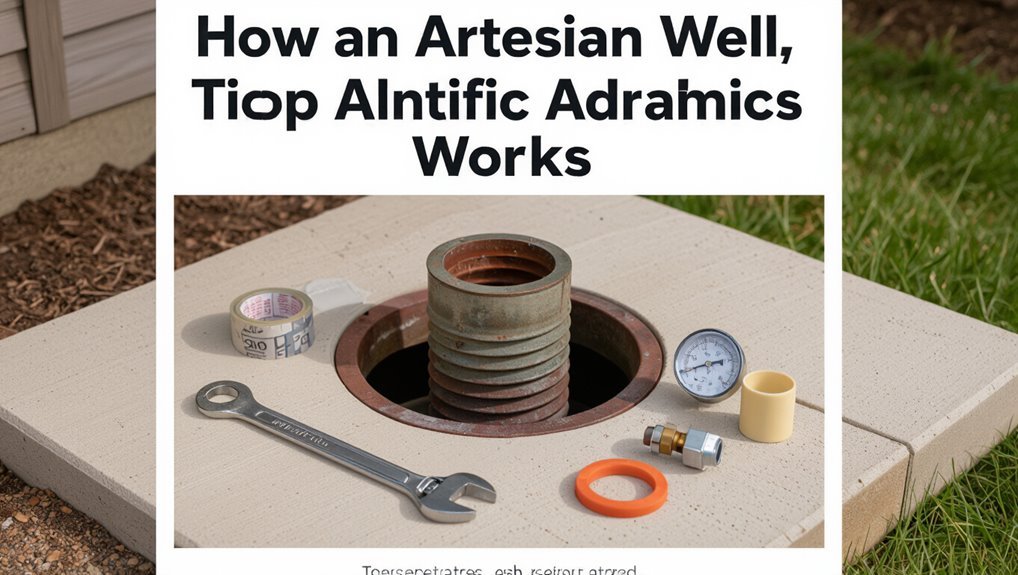
An artesian well is a bore that taps a confined aquifer where groundwater is under pressure, causing the potentiometric surface to stand above the top of the aquifer and in some cases above ground level.
Basic hydrogeology explains this behavior by describing impermeable layers that trap water and generate the natural pressure driving flow.
Typical installations include casing, wellhead fittings, and screens or slotted casing designed for specific aquifer depths and flow conditions.
Definition and distinguishing features of artesian wells
Artesian wells tap confined aquifers where groundwater is trapped between impermeable rock or clay layers under pressure, causing water to rise toward the surface without mechanical pumping.
Distinguishing features include flowing or pressurized discharge, reduced need for pumping, and sensitivity to wellhead integrity.
Understanding these traits helps diagnose issues and informs how to fix an artesian well, particularly for leaks, flow reduction, and pressure anomalies.
Hydrogeology basics: confined aquifers, potentiometric surface, natural pressure
Confined aquifers are layers of permeable rock or sediment sandwiched between impermeable strata that trap groundwater under pressure.
When a well penetrates such an aquifer, the water level rises to the potentiometric surface, the theoretical elevation to which water would climb without pumping.
Natural pressure reflects recharge elevation and hydraulic head differences, driving flow toward lower heads and determining artesian occurrence and sustainable discharge.
Typical artesian well components and installation types
Following the explanation of potentiometric surfaces and natural pressure, attention turns to the physical elements and installation methods that allow pressurized groundwater to be accessed and controlled.
Typical components include casing, well screen, packer or grout seal, wellhead assembly, pressure tank or control valves, and surface discharge piping.
Installations range from simple uncapped artesian flows to capped, pressure-regulated wells with monitoring ports and safety vents.
Quick Diagnosis: Determine If Your Artesian Well Needs Repair
A quick diagnosis begins with noting common signs such as leaks, reduced flow, or unstable pressure.
Simple at-home checks—visual inspection of fittings, reading a pressure gauge, and a bucket flow test—can help confirm problems.
If issues persist, involve a professional for sealed-system repairs or complex pressure faults, while straightforward fixes like tightening fittings may be handled by a competent DIYer.
Signs of leaks, low flow, or pressure problems
When an artesian well shows sudden drops in output, intermittent pulses, or unusually low pressure at fixtures, these symptoms often indicate leaks, clogged intakes, or failing pressure components that require prompt diagnosis.
Additional signs include water discoloration, sputtering faucets, unexpected motor cycling, muddy or reduced spring emergence, and damp ground or unusual vegetation near the wellhead.
Documenting patterns helps prioritize professional evaluation.
Simple tests to perform at home (visual inspection, pressure gauge, bucket flow test)
After noting symptoms like sudden output drops or sputtering faucets, a homeowner can run a few straightforward checks to narrow down causes before calling a professional.
Inspect visible piping and fittings for leaks, corrosion, or damp soil. Measure static and running pressure with a gauge at an accessible spigot.
Perform a bucket flow test: timed volume in one minute to estimate gallons per minute and compare to normal.
When to call a professional vs. DIY
How should a homeowner decide whether to tackle an artesian well issue or call a professional?
Assess complexity, safety, and equipment needs: minor tasks (cleaning surface debris, tightening visible fittings, simple pressure checks) suit DIY.
Call a licensed pump technician for persistent low flow, contamination, unexplained pressure fluctuations, deep leaks, electrical or submersible pump work, or when local regulations require certified intervention.
Safety Precautions Before Any Repair
Before beginning any work on an artesian well, the operator guarantees appropriate personal protective equipment is worn and electrical hazards are addressed.
Power to pumps and related circuits is isolated and locked out to prevent accidental startup.
The operator also verifies environmental risks and regulatory requirements are identified, including contamination controls and necessary permits.
Personal protective equipment and electrical safety
Personal protective equipment and strict electrical precautions are essential to prevent serious injury when working on an artesian well. Workers should don insulated gloves, safety glasses, hard hats, and steel-toed boots before approaching equipment and confirm all electrical sources are identified and de-energized.
Additionally, use nonconductive tools, ground portable equipment, verify lockout/tagout procedures, maintain dry footing, and guarantee a qualified electrician inspects wiring before any intervention.
Shutting off pumps and isolating power sources
Having confirmed appropriate PPE and de-energized visible circuits, the next step is to shut off pumps and isolate all power sources to eliminate unexpected startup or electrical hazards.
Verify pump disconnects at control panels, lockout/tagout energy-isolating devices, and confirm no stored energy in capacitors or pressure switches.
Test circuits with a meter and document isolation before beginning mechanical or plumbing repairs.
Environmental and legal considerations (contamination risks, permits)
Because artesian wells tap confined aquifers and can mobilize contaminants if disturbed, technicians must assess contamination risks and legal obligations before any repair.
They should test water, secure containment to prevent surface or groundwater pollution, document findings, and notify authorities when required.
Permits, local codes, and reporting protocols must be verified; compliance avoids liability, protects public health, and preserves aquifer integrity.
Tools, Materials, and Equipment Needed
A concise inventory of tools and materials is essential before beginning any artesian well repair. This includes a basic DIY toolkit for general tasks, specialized well-repair instruments such as pressure gauges, packers, and well liners, and a checklist of common replacement parts like seals, check valves, and casing collars.
Proper selection and inspection of these items reduce downtime and help guarantee a safe, effective repair.
Basic DIY toolkit for well repairs
Repairing an artesian well requires a compact, reliable toolkit tailored to pressurized systems and confined spaces.
Essential items include adjustable wrenches, pipe cutters, Teflon tape, thread sealant, hose clamps, plumber’s tape, stainless steel hose, rubber gasket material, utility knife, flashlight, safety gloves, eye protection, bucket, clean rags, basic socket set, and a cordless drill with assorted bits for small fastening and removal tasks.
Specialized well-repair tools (pressure gauges, packers, well liners)
Specialized tools for artesian-well repair enable accurate diagnostics and safe intervention under pressure. Pressure gauges verify static and dynamic head to pinpoint anomalies.
Packers isolate zones for targeted sealing and testing. Well liners restore structural integrity and protect against contamination.
Torque wrenches, retrieval tools, and compatible fittings guarantee secure installation. Proper calibration and rated components reduce risk and improve repair longevity.
Replacement parts checklist (seals, check valves, casing collars)
Following the inspection and use of pressure gauges, packers, and liners, attention shifts to the specific replacement parts required for safe, reliable artesian-well repairs.
Essential items include nitrile or Viton seals sized to the pump and casing, spring-loaded check valves matched to flow and pressure, threaded or welded casing collars, stainless fasteners, and backup O-rings.
Verify material compatibility and dimensions before ordering.
Step-by-Step Repair for Common Artesian Well Problems
The guide outlines concise repair steps for the most common artesian well problems, prioritizing safety and sanitary integrity.
It summarizes procedures for addressing leaks, damaged casings and caps, failing seals and packers, and pathways for surface water intrusion. Readers are directed to follow manufacturer instructions and local codes before attempting any repairs.
- Fixing external leaks around the wellhead
- Repairing or replacing a damaged well casing or cap
- Sealing leaks in joints and fittings and replacing worn seals/gaskets/packers
- Repairing surface water intrusion and sanitary defects
Fixing external leaks around the wellhead
When a wellhead shows external leakage, assess the source and severity before any repairs begin.
Small drips around the cap or casing flange often indicate worn seals or loose fittings, while persistent spray or pooling suggests a cracked casing, corroded pipe, or failed connection requiring immediate attention.
Isolate power and pressure, dry area, tighten fittings, replace O-rings or gaskets, clamp minor pipe leaks, monitor for recurrence.
Repairing or replacing a damaged well casing or cap
Begin by evaluating the extent of damage to the casing or cap, noting visible cracks, corrosion, misalignment, and any signs of water or soil intrusion that indicate compromised integrity.
Determine whether patching, sleeve installation, or full replacement is needed.
Remove debris, cut and fit replacement sections or caps to code, secure joints, restore sanitary seal, and verify structural alignment and pressure containment before backfilling.
Sealing leaks in joints and fittings
Identify the source and severity of leaks in joints and fittings before any repair work proceeds.
Inspect visible connections, pressure gauges, and surrounding soil for seepage.
Tighten loose fittings, apply thread sealant or plumber’s tape where appropriate, and replace corroded clamps.
Test system pressure after repairs and monitor for recurrence.
Document locations and corrective actions for future maintenance.
Replacing worn seals, gaskets, and packers
Before replacing any component, confirm that the well pump is de-energized and the pressure has been relieved to prevent injury and contamination.
Inspect seals, gaskets, and packers for cracks, compression set, or chemical degradation. Match materials to well chemistry and temperature.
Remove old elements, clean seating surfaces, install correctly sized replacements with proper torque, then test for leaks and restore system pressure gradually.
Repairing surface water intrusion and sanitary defects
Addressing surface water intrusion and sanitary defects requires a methodical inspection and repair sequence to protect water quality and well integrity.
The technician assesses casing condition, well cap seal, drainage, and nearby contamination sources.
Repairs include replacing caps and seals, grouting annular spaces, installing risers and vented caps, regrading surface drainage, and verifying disinfection and bacteriological safety before returning the well to service.
Restoring Low Flow in an Artesian Well
A technician evaluating low flow in an artesian well first distinguishes causes such as screen or formation clogging, excessive drawdown, or reduced aquifer recharge.
Rehabilitation options—mechanical jetting, surging, and airlifting—are evaluated alongside targeted chemical treatments when biological or mineral encrustation is present.
If improvement is insufficient, redevelopment or deepening of the well is considered as a last resort.
Identifying causes of low flow (clogging, drawdown, reduced recharge)
When an artesian well begins to yield less water than expected, the cause typically falls into three categories—clogging of the borehole or formation, excessive drawdown from overpumping or lowered potentiometric surface, or reduced recharge to the aquifer—and distinguishing among them requires systematic observation and simple tests.
Inspect for turbidity, measure static and pumping levels, check nearby extractions and seasonal recharge patterns to isolate the culprit.
Well rehabilitation techniques (jetting, surging, airlifting)
Use targeted rehabilitation methods to restore flow rather than replace the well whenever possible.
Jetting dislodges accumulated sand and biofilm by high-pressure water pulses; surging alternately forces and draws water to break loose fines and improve gravel pack permeability.
Airlifting uses compressed air to lift debris and mobilize fines.
Selection depends on clog type, well construction, and access, often combining techniques for best results.
Chemical treatments and when to use them
Consider chemical treatments when mechanical methods cannot remove biofilm, mineral scale, or iron/manganese encrustations that restrict artesian flow.
Professionals select disinfectants, acid descalers, chelating agents, or oxidizers based on deposit type and well materials.
Follow label directions, neutralize and flush thoroughly, and test water quality post-treatment.
Regulatory compliance, safety precautions, and contractor expertise are essential to avoid contamination or casing damage.
When to consider redeveloping or deepening the well
If artesian flow remains below functional levels after standard cleaning and chemical treatments, redeveloping or deepening the well may be warranted to restore pressure and yield.
Decision relies on flow testing, aquifer assessment, well construction records, and cost-benefit analysis.
Redevelopment (surging, jetting, acidizing) is less invasive; deepening requires drilling, permitting, and geologic confirmation that productive strata exist deeper.
Addressing Pressure Issues and Irregular Artesian Flow
The section distinguishes between true pressure loss and variable or fluctuating pressure to guide appropriate corrective actions.
It outlines inspection and adjustment or replacement of pressure-control devices such as valves and regulators, plus procedures for managing blowouts and uncontrolled artesian flows.
Recommendations for installing or repairing containment and relief systems are provided to restore safe, predictable operation.
Diagnosing pressure loss vs. fluctuating pressure
How can one distinguish true pressure loss from normal fluctuations in an artesian well?
Record pressure continuously over several days, noting baseline, peak, and trough times.
Correlate changes with usage, barometric shifts, and pump cycles.
True loss shows a sustained downward trend unlinked to external factors; fluctuations are transient, cyclical, and reproducible with known demand or environmental patterns.
Adjusting or replacing pressure-control equipment (valves, regulators)
Begin by inspecting the well’s pressure-control components—pressure-reducing valves, regulators, relief valves, and associated gauges—for wear, improper settings, or visible damage.
Verify setpoints against target pressure, tighten or replace leaking fittings, and recalibrate gauges.
Replace worn or seized regulators with correctly sized units.
After adjustments, monitor pressure stability and flow for several hours to confirm resolution; document changes and parts used.
Managing artesian blowouts and uncontrolled flows
Many artisian wells capable of producing uncontrolled flow require immediate containment to prevent erosion, property damage, and safety hazards.
Responders should secure the site, shut off nearby utilities, and evacuate people.
Assess source, flow rate, and contamination risk.
Use temporary barriers and diversion ditches until licensed well contractors evaluate casing integrity, downhole pressures, and safe methods for repressurization or controlled shut-in.
Installing or repairing flow containment and relief systems
Addressing pressure issues and irregular artesian flow requires installing or repairing containment and relief systems that safely control upward forces and variable discharge.
Technicians evaluate casing integrity, install blowout preventers, pressure-rated valves, and surface collection tanks.
Relief wells or controlled venting reduce formation pressure.
Routine testing, corrosion protection, and calibrated gauges guarantee functionality.
Compliance with regulations and emergency shutoff protocols minimizes environmental and safety risks.
When to Replace Major Components or Abandon a Well
Assessment should determine whether full casing replacement or drilling a new well is warranted based on structural integrity, yield loss, and contamination risk.
Decision-making must weigh repair and replacement costs against expected remaining lifespan of components and future maintenance needs.
If abandonment is required, the well should be sealed following local regulations and documented to guarantee environmental and legal compliance.
Criteria for full casing replacement or drilling a new well
When corrosion, repeated casing failures, severe deformation, or chronic contamination render repairs ineffective or uneconomical, full casing replacement or drilling a new well becomes the prudent course.
This decision hinges on structural integrity, water quality trends, life-cycle costs, and site constraints. Indicators include irreparable collapse, persistent fecal or chemical contamination, loss of annular seal, inadequate depth to productive aquifer, or regulatory mandates requiring abandonment.
Cost and lifespan considerations for major repairs
Cost-effectiveness guides decisions about major well work: owners must weigh repair costs, expected service life after intervention, and the probability of recurrent problems against the expense and disruption of full replacement or abandonment.
Financial comparisons should include labor, parts, downtime, and long‑term maintenance. If remaining useful life is short or failures likely, replacement often becomes more economical than repeated major repairs.
Proper abandonment procedures and regulatory compliance
Decide on replacement or abandonment based on well condition, projected risks, and applicable laws.
The owner should consult local regulations, obtain permits, and hire certified contractors for plugging.
Proper abandonment includes disinfecting, removing pumps and casings if required, filling with approved grout, and documenting actions.
Records must be filed with authorities.
Noncompliance risks fines, contamination liability, and future land-use restrictions.
Preventive Maintenance to Avoid Future Problems
Preventive maintenance reduces unexpected failures and extends the service life of an artesian well.
A concise routine of inspections, seasonal and post-storm checks, water quality monitoring, and basic homeowner tasks can catch issues early.
The following checklist highlights the essential items to track and act on.
- Regular inspection schedule: what to record (pressure, flow, seals, visible wear)
- Seasonal checks and post-storm inspections
- Water quality monitoring and early warning signs
- Simple maintenance tasks homeowners can perform
Regular inspection schedule and what to record
Although artesian wells are often reliable, a consistent inspection schedule is essential to detect wear, contamination, or pressure changes before they escalate.
Inspections monthly and after any unusual event should verify casing integrity, fittings, pump operation, pressure readings, flow rate, water clarity, and odor.
Record date, inspector, measurements, anomalies, corrective actions, and photos. Maintain logs for trend analysis and contractor reference.
Seasonal checks and post-storm inspections
Schedule seasonal checks and immediate post-storm inspections to catch issues that develop with changing weather and after extreme events.
Inspections focus on wellhead integrity, venting, casing exposure, surface drainage, and access road conditions.
Note shifts, erosion, debris, loose fittings, and electrical or pump enclosures affected by water.
Document findings, prioritize urgent repairs, and schedule follow-up maintenance to prevent minor damage escalating into costly failures.
Water quality monitoring and early warning signs
Regular water quality monitoring and attention to early warning signs provide the fastest route to catch contamination, mechanical decline, or biological growth before they require major repairs.
Routine testing for turbidity, odor, taste, pH, and bacterial presence identifies problems early. Sudden pressure drops, discoloration, or metallic taste warrant prompt professional assessment.
Document results and trends to guide interventions and detect gradual deterioration.
Simple maintenance tasks homeowners can perform
When homeowners perform basic preventive tasks—such as inspecting caps and vents, keeping surface runoff away from the wellhead, and testing water seasonally—they reduce the chance of contamination and mechanical failure.
Regular actions include clearing debris, tightening fittings, checking pressure gauges, lubricating accessible moving parts per manufacturer guidance, and documenting observations.
Promptly addressing minor issues prevents escalation and preserves pump lifespan and water quality.
Common Mistakes and Pitfalls to Avoid During Repairs
Repair efforts can fail when improper sealing or incompatible materials are used, allowing leaks or material breakdown.
Excessive or incorrectly dosed chemicals, neglected wellhead sanitation, and contamination risks further compromise water quality.
Uninformed DIY interventions can exacerbate artesian pressure issues and should be avoided or supervised by a qualified professional.
Improper sealing and using incompatible materials
Sealing an artesian well with improper materials or methods can quickly compromise its function and contaminate the aquifer.
Repair guidance emphasizes compatible sealants, pressure-rated fittings, and corrosion-resistant components.
Temporary fixes, mismatched pipe sizes, or non-potable adhesives cause leaks, blockages, and cross-contamination.
Professional-grade materials and manufacturer specifications preserve flow integrity and prevent long-term damage; documented compatibility checks are essential before installation.
Overusing chemical treatments or incorrect dosages
Overapplying chemical treatments or miscalculating dosages can damage well components, upset aquifer chemistry, and create health risks for downstream users.
Technicians should follow label instructions, calculate volumes to match well casing and water volume, and use appropriate concentrations.
Excessive oxidizers, acids, or biocides can corrode seals, mobilize metals, and disrupt microbial balance; record treatments and monitor water quality post-application.
Ignoring wellhead sanitation and contamination risks
Neglecting wellhead sanitation invites contamination that can undermine repairs and endanger water quality.
Technicians who skip cleaning, fail to seal openings, or use dirty tools risk introducing bacteria, sediments, and chemicals.
Contaminated wells complicate diagnostics, require costly disinfection, and pose health hazards.
Proper sanitation protocols, tool hygiene, and secure well caps should be standard during any repair to prevent contamination.
DIY actions that can worsen artesian pressure problems
Attempting DIY fixes on an artesian well without understanding pressure dynamics can compound problems quickly.
Untrained attempts to over-tighten valves, alter casing depth, or install improper vents may trigger surges, seal failures, or contamination.
Using mismatched fittings, temporary plugs, or unsupported pressure gauges obscures diagnostics.
Professional assessment prevents irreversible damage, unstable flow, and costly remediation.
Cost Estimates, Permits, and Hiring a Professional
Typical cost ranges for common repairs and rehabilitations are outlined to help homeowners budget and compare estimates.
Guidance is provided on evaluating licenses, insurance, and references when choosing a licensed well contractor.
A concise list of key questions to ask prospective well service providers before hiring is included.
Typical cost ranges for common repairs and rehabilitations
Cost estimates for artesian well repairs and rehabilitations vary widely depending on the scope of work, site access, and local labor rates; minor repairs such as pump replacement or pressure tank servicing commonly range from $500 to $2,500, medium interventions like well cleaning, seal repairs, or casing patching often fall between $2,500 and $10,000, and major rehabilitations—including deepening, full casing replacement, or new well drilling—can exceed $10,000 to $30,000 or more.
| Repair type | Typical cost |
|---|---|
| Minor | $500–$2,500 |
| Medium | $2,500–$10,000 |
| Major | $10,000+ |
How to evaluate and choose a licensed well contractor
After reviewing likely repair price ranges and the scope of work, homeowners should focus on selecting a licensed well contractor who can provide accurate estimates, secure necessary permits, and perform compliant, safe work.
Verify licensing, insurance, and bond status; confirm experience with artesian systems; request written, itemized estimates and permit handling details; check references and local reviews; guarantee clear timelines and warranty terms before hiring.
Questions to ask a well service provider before hiring
What should a homeowner ask before signing a contract with a well service provider?
The homeowner should request written cost estimates, detailed scope of work, payment schedule, and warranty terms.
Confirm licenses, insurance, and required permits, who obtains permits, and inspection procedures.
Ask for timelines, references, prior work examples, and dispute resolution methods.
Verify emergency availability and clear change-order policies.
Real-World Repair Scenarios and Case Summaries
The article presents brief case summaries illustrating common artesian well problems and their fixes.
One case describes stopped flow caused by screen clogging that was cleared to restore yield.
Other cases cover an uncontrolled artesian flow contained with surface sealing and a recurring pressure drop cured by valve replacement.
Case: Stopped flow due to screen clogging and outcome
A rural artesian well ceased flowing when mineral and biological fouling accumulated on its intake screen, drastically reducing permeability and hydraulic connection to the artesian aquifer.
Diagnostics revealed low static head at the casing, high turbidity during attempted pumping, and a pressure recovery pattern consistent with screen blockage rather than aquifer decline.
Mechanical brushing and chemical descaling restored permeability, flow resumed to expected yield, and long‑term monitoring showed stable head with scheduled maintenance.
Case: Uncontrolled artesian flow and containment solution
Following recovery from screen clogging, attention turned to a contrasting failure: an artesian well producing uncontrolled flow at the surface.
Technicians assessed discharge rate, pressure, and possible casing breaches. A temporary manifold and shutoff assembly redirected water to storage while a permanent pressure-sealing packer and reinforced casing section were installed.
Monitoring confirmed stabilized output and no surrounding erosion or contamination risk remained.
Case: Intermittent pressure drops resolved by valve replacement
Technicians traced recurring drops in wellhead pressure to a partially seized downhole check valve that intermittently failed to seal under fluctuating drawdown conditions.
Inspection via camera confirmed pitting and sleeve wear; pressure log showed correlation with pump cycles.
Replacement with a stainless steel spring check restored one-way integrity.
Post-repair testing demonstrated stable pressure, consistent flow rates, and elimination of transient depressurizations.
Useful Resources and Reference Materials
The section directs readers to local government websites and permitting offices for regulations, inspections, and technical assistance.
It lists recommended manufacturer manuals and vetted parts suppliers for pumps, seals, and fittings.
Finally, it provides curated links to authoritative resources on groundwater science and well construction for further study.
Where to find local regulations, permits, and technical help
Several key places provide reliable information on local regulations, permits, and technical assistance for artesian wells: municipal or county planning departments, state water resource agencies, and licensed well contractors.
Other useful sources include local extension services, environmental health offices, and professional associations (e.g., state groundwater or drilling associations).
Contacting licensed hydrogeologists or certified pump installers guarantees compliance, permitting guidance, and qualified technical support.
Recommended manufacturer manuals and parts suppliers
When sourcing manuals and replacement parts, owners and service providers should prioritize materials from original equipment manufacturers (OEMs) and reputable distributors to secure compatibility and warranty preservation.
Recommended sources include manufacturer service manuals, parts catalogs, and cross-reference guides from brands like Grundfos, Franklin Electric, and Goulds.
Use certified dealers, authorized online parts stores, and documented OEM part numbers to guarantee correct assemblies and traceable purchases.
Links to further reading on groundwater and well construction
Many authoritative sources cover groundwater science, well construction, and regulatory guidance; this section compiles key textbooks, government publications, industry standards, and professional organizations for further study.
- USGS groundwater basics and publications
- EPA well construction and abandonment guidance
- ASTM and ANSI standards for well components
- National Ground Water Association technical resources and training
Conclusion
Like a weathered map folded and refolded, the guide leaves the reader standing at the well’s rim, tools in hand and knowledge as a lamp. Repairs once mysterious now read like plotted routes: diagnose, secure, act. Small breaches and whispering pressures submit to careful hands; larger faults call for seasoned help. With caution, patience, and respect for the underground currents, an artesian well can be coaxed back into steady, life-giving flow.