
How to Find the Source of an Electrical Burning Smell Quickly and Safely
If you detect an electrical burning smell, act quickly: evacuate the area, alert others, and check for smoke or flames. If you see fire, call emergency services immediately. If it’s safe, turn off the power at the panel and unplug any suspicious devices. Then, methodically inspect each room for heat, buzzing noises, scorch marks, or melted insulation using a flashlight and insulated tools. For hidden hotspots, utilize a non-contact voltage tester or thermal scanner. Follow these steps to ensure safety and identify the source of the smell effectively.
What to do immediately when you smell electrical burning
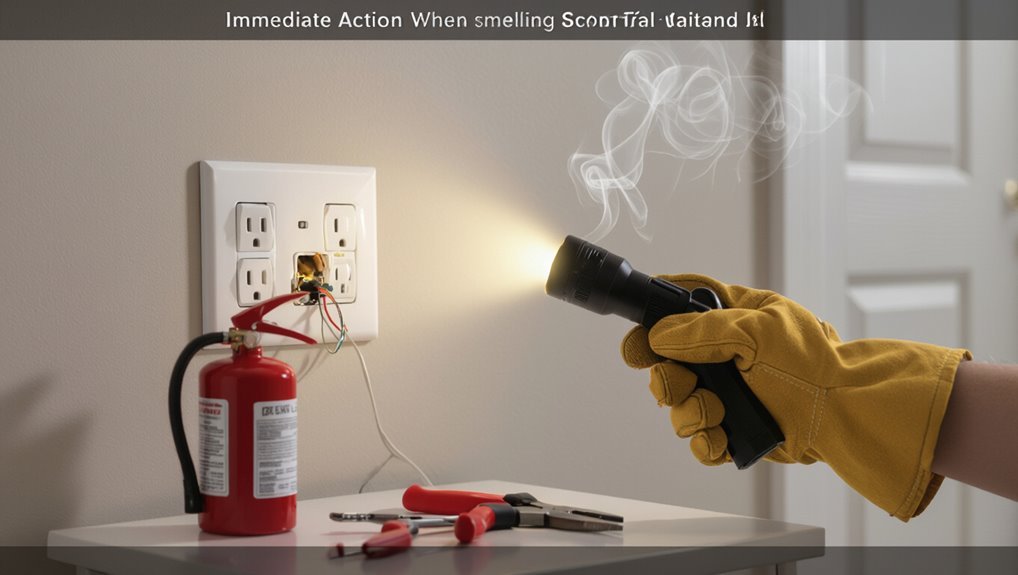
Upon detecting an electrical burning smell, the person should immediately prioritize safety by moving away from the source and warning others while evaluating if smoke or flames are present.
If there is visible fire, heavy smoke, or inability to locate the source quickly, they should evacuate and call emergency services without delay.
If conditions appear controlled, they may carefully unplug affected devices if reachable without touching metal and then shut off the circuit breaker to cut power before reapproaching.
Safety first actions to take within the first 60 seconds
Act immediately: when an electrical burning smell is noticed, occupants should stop what they are doing and prioritize safety by moving away from the odor source, warning others, and cutting power if it can be done quickly and safely at the circuit breaker or main switch.
Then visually scan from a safe distance, note offending areas for responders, and avoid touching devices while documenting steps related to how to find source of electrical burning smell.
When to evacuate and call emergency services
Evacuate immediately and call emergency services if the smell of burning electrical insulation is strong, worsening, or accompanied by visible smoke, sparks, sizzling sounds, flickering lights, or burning plastic/metal sensations.
These signs indicate an active or escalating electrical fire hazard that requires professional response.
Move occupants to a safe distance, account for everyone, warn neighbors if threat extends, and await responders without reentering the building.
How to safely unplug devices and cut power at the breaker
Disconnect appliances and cut power promptly but calmly when an electrical burning smell is detected to reduce fire and shock risk.
The occupant should unplug nearby devices by gripping plugs, not cords, and move away.
If the source is unclear or outlets smoke, turn off the circuit at the breaker panel, switching labeled breakers or the main if necessary.
Call an electrician before restoring power.
Common indicators that point to an electrical burning source
Different odors often signal specific problems: a sharp plastic smell can indicate melting wiring, a metallic or ozone scent may point to arcing, and a musty hot-insulation odor suggests overheated components.
Audible and visual signs such as popping, buzzing, or visible smoke help confirm an electrical origin. Localized heat — warm walls, outlets, or appliances — further narrows the likely source.
Different smells and what they often mean (plastic, ozone, hot insulation)
When an electrical fault produces a burning odor, the specific scent can narrow the likely source: a sharp, sweet plastic smell often indicates melting wire insulation or overheated connectors; a metallic, slightly ozone-like tang suggests arcing or corona discharge around high-voltage components; and a heavy, musty hot-insulation odor typically points to transformers, motors, or overloaded appliances.
Prompt investigation and power isolation are advised.
Audible and visual clues to watch for (popping, buzzing, smoke)
Listen for and look for sudden, unusual signals—popping, buzzing, visible sparks, smoke, or unexplained discoloration—that often accompany an electrical burning source.
These signs indicate arcing, overloaded circuits, or failing components.
Observe whether noises coincide with appliance use, notice intermittent flickering or dimming lights, and watch for persistent smoke or smoldering odors.
Document observations and evacuate if fire risk appears imminent.
Heat and warmth as location clues (walls, outlets, appliances)
Warmth felt on surfaces often pinpoints an electrical fault before flames or smoke appear. Inspect walls, outlets, switches, and appliances for unusual heat.
Warm patches, discolored plates, or hot cords indicate overloaded circuits, loose connections, or failing components. Note locations, avoid touching hot elements, and disconnect power if safe.
Prioritize professional inspection for persistent or spreading warmth to prevent fire risk.
Step-by-step method to locate the source safely
Before beginning, the person should gather basic safety gear—gloves, safety glasses, a flashlight, and insulated tools—and switch off circuits if a clear hazard is suspected.
They should then perform a systematic room-by-room inspection, checking outlets, switches, light fixtures, major appliances, and electronics for discoloration, melting, burning odor concentration, or heat.
Finally, the electrical panel and breakers should be examined for warm breakers, scorch marks, or a persistent smell, and the person should stop and call a licensed electrician if anything abnormal is found.
Preparing for a safe inspection (tools, PPE, flashlight)
A brief checklist of tools and personal protective equipment (PPE) helps confirm a focused, safe inspection: insulated gloves, eye protection, a flashlight with fresh batteries, a non-contact voltage tester, and a basic set of insulated hand tools.
Verify flashlight function, fit gloves and goggles, and ascertain tools are rated for household voltages.
Keep a phone nearby and avoid touching suspect wiring until power is isolated.
Systematic room-by-room check procedure
With tools checked and PPE on, begin a systematic room-by-room inspection to pinpoint the burning odor without creating new hazards.
Move slowly, ventilate if safe, and note odor intensity and direction.
Check near appliances, cords, panels, and junction points for heat or discoloration.
Isolate suspected circuits, unplug devices, and mark locations for targeted follow-up or professional service.
How to inspect outlets, switches, and light fixtures
Begin by visually scanning each outlet, switch, and light fixture for signs of overheating—discoloration, melting, scorch marks, or a faint smoky residue—while keeping a safe distance and using a flashlight to reveal hidden damage.
Turn circuits off before removing cover plates, smell near but avoid touching components, note looseness or buzzing, and document suspect locations for immediate repair by a qualified electrician.
How to check major appliances and electronic devices
Move methodically from room to room, powering down and unplugging major appliances and electronic devices one at a time while noting any lingering burning odor, warm surfaces, visible scorch marks, melting, or smoking components.
Inspect cords, plugs, vents, and control panels for heat damage. Smell near rear and underside areas.
Do not attempt internal repairs; isolate suspect items and contact a qualified technician or disconnect power if danger is apparent.
What to look for at your electrical panel and breakers
After isolating suspect appliances and devices, attention should shift to the electrical panel and breakers to trace odor sources back to the service entrance or branch circuits.
Inspect for scorch marks, melted insulation, discolored terminals, burning odors near breakers, loose or vibrating breakers, tripped or warm breakers, and buzzing.
Turn off main power before tightening connections; if damage or persistent smell exists, contact a licensed electrician immediately.
Using tools and technology to identify hidden problems
The examiner should consider basic and advanced tools to pinpoint unseen electrical hazards. Non-contact voltage testers check live circuits safely.
Thermal cameras or infrared thermometers reveal hot spots in panels and wiring. Smoke or carbon monoxide detectors, plus continuous monitoring devices, provide early warning of developing faults.
Proper selection and correct use of these instruments can distinguish between benign and dangerous conditions without unnecessary exposure.
When and how to use a non-contact voltage tester
A non-contact voltage tester provides a quick way to detect live electrical wiring without touching conductors, making it an essential first step when tracking an electrical burning smell.
The user should power off circuits only after confirming absence of voltage, test known live sources to verify the tool, scan outlets, switches, and junction boxes from the exterior, and maintain proper distance and insulated handling.
Thermal cameras and infrared thermometers for hot spots
Non-contact voltage testers help locate live conductors, but they cannot reveal components running hot. Thermal cameras and infrared thermometers are used to detect abnormal heat signatures behind walls, inside panels, and at connections.
Inspectors scan panels, outlets, and junctions for hotspots, compare temperatures to nearby components, and document readings. Proper distance, emissivity settings, and calibrated tools improve accuracy and reduce false positives.
Smoke detectors, carbon monoxide concerns, and monitoring devices
Smoke and carbon monoxide alarms, along with networked monitoring devices, serve as the frontline for detecting hidden electrical faults that can produce combustion or toxic gases. They provide early warning, continuous baseline data, and remote alerts.
Users should verify detector placement, battery/back-up power, and interoperability with smart hubs. Regular testing and prompt investigation of alerts reduce exposure and limit fire progression.
Common sources of electrical burning smells and how to recognize them
A burning odor often points to specific electrical faults that require prompt attention. Common sources include overloaded circuits or cords, faulty appliances, damaged wiring, loose connections, and failing motors or transformers; recognizing the scent and location helps prioritize action.
Consider these urgent possibilities to guide inspection and response:
- Overloaded circuits and extension cords
- Faulty appliances and electronics
- Damaged wiring inside walls or device cords
- Loose connections in outlets, switches, or panels
Overloaded circuits and extension cords
Inspectors often find that overloaded circuits and improperly used extension cords are frequent culprits behind electrical burning smells. Excessive load causes wiring to overheat, insulation to scorch, and outlets to discolor.
Extension cords used long-term, daisy-chained, or undersized for the appliance create similar risks. Signs include hot outlets, flickering lights, melting plastic, and a persistent acrid odor—requiring immediate power disconnection and professional inspection.
Faulty appliances and electronics
Faulty appliances and electronics often produce an acrid, burning odor when internal components overheat, short, or melt.
Typical culprits include space heaters, toasters, microwaves, power supplies, and chargers.
Signs: intermittent operation, smoke, warm casings, scorch marks, burning plastic smell localized near the device.
Immediate action: unplug safely, ventilate, inspect visually, and replace or have a qualified technician test the unit before reuse.
Damaged wiring inside walls or device cords
While faulty appliances and electronics often announce themselves with localized heat or melting plastic, damaged wiring inside walls or frayed device cords can produce a similar but more concealed burning odor that signals a higher fire risk.
Such wiring may char insulation, emit acrid, persistent smells without visible heat, and cause intermittent power loss, sparks, or scorch marks around outlets.
Immediate inspection and professional repair are advised.
Loose connections in outlets, switches, or panels
A loose connection in an outlet, switch, or panel can generate heat and a distinctive burnt or metallic odor as resistance at the joint causes arcing or partial contact; this often produces intermittent power, flickering lights, warm faceplates, or small scorch marks near terminals.
Inspect visible devices for discoloration, buzzing, or movement when loaded, and shut power before tightening, replacing, or calling a qualified electrician.
HVAC, motors, and transformers
Check HVAC units, motors, and transformers promptly when an electrical burning smell appears, since these components commonly produce distinct odors tied to specific failures.
Burnt insulation often signals motor windings overheating; ozone or metallic scents indicate arcing or failing capacitors; acrid, chemical odors may point to transformer oil breakdown.
Inspect exterior for smoke, humming, vibration, tripped breakers, and call a qualified technician if suspected.
Immediate fixes versus problems that require a professional
The homeowner can try a few safe, immediate actions—unplug suspect devices, reset tripped breakers, or replace frayed cords—to see if the smell clears.
If there is visible smoke, persistent burning odor, arcing sounds, or heat from outlets or panels, power should be shut off and a licensed electrician contacted immediately.
Any observations, photos, and the sequence of steps taken should be recorded to provide clear information for the professional and for insurance purposes.
Minor actions homeowners can take safely (unplug, reset breakers, replace cords)
Homeowners can take a few immediate, low-risk steps—unplugging suspect devices, resetting tripped breakers, or replacing frayed cords—to reduce fire risk and gather information about the source of an electrical burning smell.
They should inspect cords for damage, test devices one at a time after cooling, and document which outlet or appliance was involved.
If smell persists or heat recurs, seek professional evaluation.
Warning signs that demand shutting off power and calling an electrician
After attempting low-risk steps like unplugging devices or replacing damaged cords, recognize when an electrical burning smell signals a serious hazard that warrants immediate power shutdown and a call to a licensed electrician.
Immediate signs include visible sparks, smoke, hot outlets or switches, melting plastic, repeated breaker trips, or loss of power in part of the home.
Evacuate if flames or persistent smoke appear.
How to document findings for professionals or insurance
Several clear photos, timestamps, and a brief written log help frame the problem for electricians and insurers: document where the odor originated, any visible damage (scorch marks, melted plastic, discolored outlets), the sequence of events (when the smell began, any devices in use, circuit breaker behavior), and steps already taken (unplugging devices, resetting breakers, turning off power).
Record contact info, appliance serial numbers, repair estimates, and receipts.
Long-term prevention and maintenance to avoid future burning smells
Preventive measures focus on correct use of extension cords and power strips, routine appliance care, and timely wiring upgrades.
Regular electrical inspections identify aging or overloaded circuits and indicate when rewiring is necessary.
Clear guidelines on appliance maintenance and replacement further reduce the risk of recurring burning smells.
Safe usage of extension cords and power strips
Many households rely on extension cords and power strips to meet temporary and permanent power needs, but improper selection, placement, and maintenance of these devices often lead to overheating and burning odors.
Use cords rated for device amperage, avoid daisy-chaining, keep vents clear, replace frayed or discolored units, and prefer surge-protected strips with thermal cutoff.
Unusual warmth or smell warrants immediate disconnection and replacement.
Scheduled electrical inspections and when to upgrade wiring
Although routine visual checks catch obvious hazards, scheduled electrical inspections by a licensed electrician provide a systematic assessment of wiring condition, load capacity, grounding, and code compliance to prevent odors from overheating or arcing.
Regular inspections identify degraded insulation, loose connections, overloaded circuits, and outdated knob‑and‑tube or cloth‑insulated wiring. Replacement or retrofitting is recommended when inspection reveals deterioration, capacity shortfalls, or noncompliant installations.
Appliance maintenance and replacement guidelines
After a professional inspection identifies wiring integrity and capacity, attention should turn to appliances, which are frequent sources of overheating smells when motors, heating elements, or internal wiring degrade.
Establish manufacturer-recommended cleaning, vent clearance, and lubrication schedules; replace frayed cords, scorched plugs, or devices older than safety lifespans; prefer certified technicians for repairs; document service and retire appliances showing recurring overheating or electrical faults.
What to tell an electrician or first responders when they arrive
When professionals arrive, they should be told exactly what the smell resembled, where it was strongest, when it was first noticed, and whether it has changed or returned.
Note any actions already taken—circuits turned off, breakers tripped, appliances unplugged—and communicate which rooms or cabinets may conceal wiring or equipment.
Provide clear directions and keys or access codes for panels, basements, attics, or locked utility closets so responders can inspect hidden areas promptly.
Key details to report about smell, timing, and actions taken
If the odor persists or is accompanied by visual signs, the responder should be given a concise account that includes where the smell was first noticed, its intensity and character (e.g., sharp, acrid, metallic), any progression or fading over time, and exact times of onset and any changes.
Also report which devices or circuits were off or unplugged, duration of ventilation, any noises or heat felt, and occupants’ symptoms.
How to provide access to hidden areas and panel information
A clear, prioritized briefing helps electricians and first responders reach problem areas quickly.
The occupant should indicate exact locations of panels, meters, junction boxes, crawlspaces, attics, and concealed wiring routes; confirm which breakers control affected circuits; provide keys, access panels, and any floor plans or photos; note hazards (wet areas, flammables) and recent modifications.
Maintain a safe distance until professionals assume control.
Safety checklist to keep at home for electrical smell incidents
A concise home safety checklist helps occupants respond quickly and calmly to any electrical burning smell. Consider:
- Emergency contacts and main shut-off locations
- Fire extinguisher, flashlight, and means to disconnect power
- Backup phone and smoke/CO detector batteries
- Records of monthly visual checks and annual professional inspections
Keeping these items organized and known to everyone in the household reduces panic and speeds safe action.
Emergency contacts and shut-off locations
Several clear, easily accessible emergency contacts and mapped shut-off locations are essential for any household safety checklist addressing an electrical burning smell.
A printed and digital list should include the local emergency number, utility company, licensed electrician, and landlord.
A simple diagram marks main breaker, meter, and appliance shut-offs.
Keep copies near the breaker panel and with household phones for rapid action.
Tools and supplies to have on hand
Most households should keep a small, clearly organized kit of tools and supplies ready for an electrical burning smell incident.
Include insulated gloves, safety goggles, a flashlight with fresh batteries, a non-contact voltage tester, basic insulated screwdrivers, wire cutters, electrical tape, a multi-tool, and a fire extinguisher rated for electrical fires.
Keep contact numbers, a flashlight, and a notebook for observations.
Routine items to check monthly/annually
Following the basic kit and contact list, homeowners should keep a short, regular inspection routine to catch early signs of electrical overheating.
Monthly: check outlets, power strips, visible cords, and smoke/CO alarms; guarantee vents clear and avoid overloaded circuits.
Annually: inspect breaker panel for discoloration, test GFCI/AFCI devices, review appliance cords and schedule professional electrical inspection if any heat, burning odor, or tripped breakers occur.
Quick reference troubleshooting flowchart
A concise flowchart guides users through immediate checks and escalation steps when an electrical burning smell is detected, prioritizing safety actions (power off, evacuate, call emergency services) before diagnostic tasks. It directs safe verification (visual, smell source, hot spots), escalation triggers, and qualified-contact points. Follow steps sequentially; stop and call professionals if uncertainty or heat persists.
| Action | Check | Next step |
|---|---|---|
| Safety | Power off/evacuate | Call emergency |
| Inspect | Visual/smell source | Isolate circuit |
Conclusion
A faint scent of ozone prompts a hurried check of outlets; coincidentally, the circuit labeled “kitchen” trips as a lamp cools. The occupant, noting scorched plastic near the breaker and a humming wall outlet, calls emergency services and an electrician who arrive to confirm a loose neutral—ironically at the same moment the neighborhood experiences transformer work. The discovery is unsettling yet clarifying: small signs aligned into a clear source, prompting repairs and renewed vigilance.