How to Check Pressure on a Boiler: Step-by-Step Guide for Safe Home Maintenance
To check the pressure on your boiler, start by locating the pressure gauge. The normal range is typically between 1–2 bars. When the boiler is cold, note the reading and ensure it falls within the green safe zone. If the pressure is low, use the filling loop to add mains water until it reaches approximately 1–1.5 bars. For high pressure, isolate the system and release water via a drain or by bleeding radiators. If you’re unsure about any steps, it’s best to stop and contact a certified engineer for assistance.
What Boiler Pressure Is and Why It Matters for Home Safety
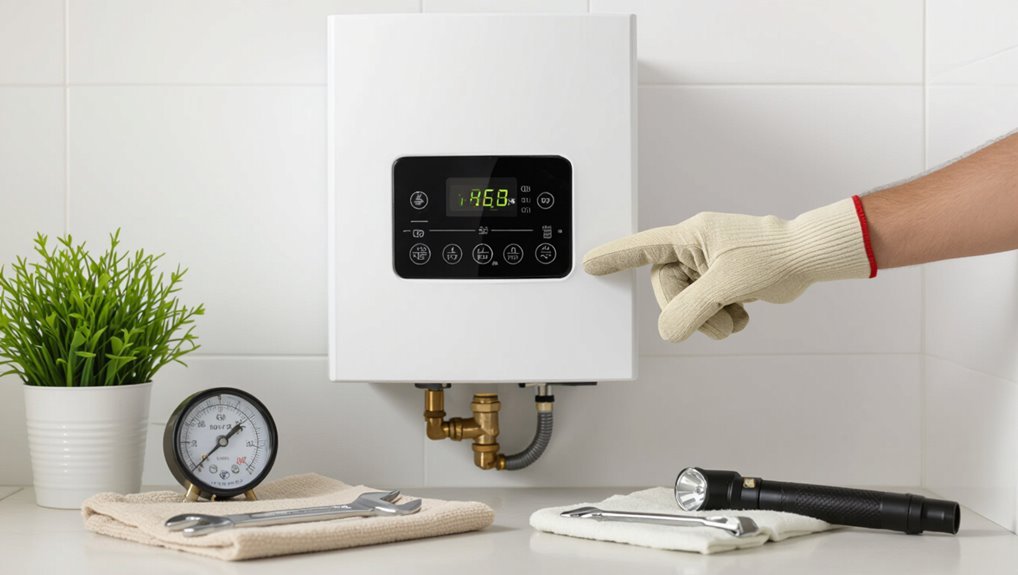
Boiler pressure is the force of the heating system’s water measured in bars or psi on the boiler’s gauge, indicating whether the system is operating within safe limits.
For most residential boilers, the normal range is about 1–2 bars (14–29 psi), with slight variation by model.
Pressures below or above this range can cause poor heating, pump damage, leaks, or in extreme cases component failure and safety valve discharge.
Definition of boiler pressure and how it’s measured
Pressure inside a residential heating system is the force per unit area exerted by the water and steam within the sealed circuit, typically measured in pounds per square inch (psi) or bar.
Measurement uses a gauge on the boiler or an external manometer, reading static and dynamic pressure.
Understanding measurement methods helps homeowners follow guides on how to check pressure on boiler safely and accurately.
Typical pressure range for residential boilers
A properly operating residential heating system typically maintains a pressure between 1 and 2 bar (about 14–29 psi) when cold and can rise to roughly 2.5 bar (≈36 psi) under hot, active conditions.
Staying within this range prevents both inefficient heating and risk of leaks or relief-valve discharge.
Manufacturers specify ideal operating pressures for individual models; homeowners should consult manuals or service labels and monitor gauges regularly.
Risks of incorrect boiler pressure (low and high)
Maintain balanced water pressure in a home heating system to prevent both underperformance and safety hazards: pressures that are too low can cause cold spots, circulating-pump strain, and airlocks that lead to corrosion and system damage, while pressures that are too high risk leaks, burst pipes, and automatic discharge from the relief valve—any of which can result in property damage, loss of heating, and potential scalding or water intrusion.
Low pressure reduces efficiency and may cause frequent boiler lockouts; high pressure accelerates wear, stresses joints and radiators, and raises flood and scalding risks, requiring prompt adjustment or professional inspection.
Quick Way to Check Your Boiler Pressure Right Now
The reader is directed to the boiler unit’s pressure gauge—typically located on the front panel or near the pipework on combi, system, and conventional models—to begin a quick check.
The gauge should be read in bar (or psi) and compared to the manufacturer’s safe range, usually around 1–1.5 bar when cold, with colored markers often indicating normal and danger zones.
If the gauge shows a rapid rise, persistent low pressure, or values in the red zone, professional service should be called immediately.
Where to find the pressure gauge on common boiler models
Boiler pressure gauges are usually mounted on the front face or lower edge of the boiler casing, often near the control panel and alongside the filling loop and isolation valves.
On wall-hung combi units, the dial sits below the burner cover; on system and conventional boilers, it may be on the boiler body or adjacent pipework.
External packaged units can have remote gauges on manifolds.
Reading the gauge: units and safe range indicators
After locating the gauge on the boiler casing or nearby pipework, a quick visual check will show pressure in either bar or psi and, on many models, a marked safe range.
Read the needle or digital display; residential boilers typically show 1–1.5 bar (15–22 psi) when cold.
Red or yellow zones indicate low or high pressure respectively. Note units before acting.
When to call a professional immediately
When should a professional be called right away? Immediate contact is advised if pressure exceeds manufacturer limits, repeatedly drops to zero, or fluctuates unpredictably.
Also call if there is visible leaking, hissing, burning smells, or Pilot light issues.
Electrical faults, frozen condensate pipes, or repeated pressure relief valve discharge require urgent professional inspection to prevent damage, injury, or carbon monoxide risk.
Step-by-Step Guide to Checking Boiler Pressure Safely
The guide lists the essential tools and safety gear required, and explains how to shut down and cool the boiler before inspecting it.
It then describes how to read a traditional pressure gauge step by step and how to interpret readings on digital control panels.
Each instruction emphasizes safe practices and checks to confirm accurate pressure measurement.
Tools and safety gear you need
Gathering the correct tools and safety gear is the essential first step before checking a boiler’s pressure. A reliable pressure gauge or built‑in gauge, adjustable wrench, flashlight, and ladder (if needed) are required.
Safety gloves, eye protection, and sturdy footwear protect against burns and slips. A leak detection cloth and notebook for readings complete the kit; keep a phone nearby for emergencies.
Preparing the boiler (shutdown and cool-down steps)
After assembling the tools and safety gear, the technician should prepare the boiler by powering it down and allowing it to cool to a safe touch temperature.
Isolate fuel and electrical supplies, close relevant valves, and wait for pressure and temperature indicators to stabilize.
Verify residual heat is minimal with gloved contact or thermometer.
Confirm adequate ventilation before proceeding.
Reading the pressure gauge step by step
Begin by locating the boiler’s pressure gauge—typically mounted on the front panel or near the pump—and guarantee the technician remains at a safe distance while observing.
Note the needle or digital indicator, compare to the recommended cold range (usually 1–1.5 bar), record the value, and watch for fluctuations.
If pressure is out of range, document readings and proceed to corrective steps per manufacturer guidance.
Checking pressure on digital control panels
Several models feature a digital control panel that displays boiler pressure alongside other system data; the technician should first identify the pressure readout and the panel’s navigation buttons or touchscreen icons.
Verify units (bar, psi), compare to recommended range, and note trends.
Use menu or info screens to access history or diagnostics.
If readings are absent or implausible, consult manual and isolate power before troubleshooting.
How to Adjust Boiler Pressure If It’s Too Low
If the boiler pressure reads low, a common corrective action is to repressurise the system using the filling loop, following the manufacturer’s instructions to open and close the valves safely.
Successful repressurisation is indicated by the pressure gauge returning to the normal range and stable readings after the system has run briefly.
If pressure repeatedly falls or cannot be maintained, this may indicate a leak or another fault requiring professional inspection.
Repressurising using the filling loop:
To repressurise a combi boiler using the filling loop, the homeowner locates the flexible silver braided hose or integrated valve assembly beneath the boiler.
Next, they verify both the boiler and the heating system are off and cold.
Then, they open the loop valves briefly to admit mains water until the gauge reads the required pressure (typically 1–1.5 bar) before closing the valves and bleeding any radiators as needed.
- Confirm isolation and cold system.
- Connect or open filling loop.
- Monitor pressure gauge slowly.
- Close loop and purge air from radiators.
Signs of a successful repressurisation
Check the boiler pressure gauge and observe the heating behavior to confirm successful repressurisation: a stable reading within the recommended 1–1.5 bar range, immediate restoration of hot water and central heating function, absence of persistent warning lights or error codes on the boiler display, and no unusual noises or leaks around joints indicate the system is correctly pressurised.
Radiators warm evenly, thermostat responds, and pressure remains steady.
When low pressure is a symptom of a leak or other fault
Recognise that low boiler pressure can signal more than a simple top-up is needed; it may indicate a leak, a faulty component, or system corrosion requiring repair.
Inspect visible pipework, radiators and valves for damp, stains or drips.
Monitor pressure after isolated repairs. If loss persists, consult a Gas Safe engineer to diagnose hidden leaks, damaged heat exchanger, pump seals or expansion vessel faults before attempting further adjustments.
How to Respond If Boiler Pressure Is Too High
If boiler pressure rises above the recommended level, immediate steps should be taken to lower it safely, such as reducing heat and isolating the system if necessary.
Bleeding radiators can release trapped water and drop system pressure; instructions for doing this correctly should be followed to avoid scalding and water damage.
Persistent or rapidly recurring high pressure may signal a failing pressure relief valve or a compromised expansion vessel and warrants professional inspection.
Immediate actions to lower pressure safely
When boiler pressure rises above safe limits, immediate steps should be taken to reduce it without creating additional hazards: isolate the boiler by turning off the boiler and closing the system’s feed valves.
Open an external tapped drain or waste valve slowly to release excess water and pressure.
Monitor the pressure gauge continuously, and contact a qualified technician if pressure does not drop or leaks are observed.
Bleeding radiators to reduce system pressure: how-to
Bleed radiators to release trapped air and lower system pressure by opening each radiator’s bleed valve until a steady stream of water appears; this allows air pockets that elevate pressure readings to escape and restores proper circulation.
Follow steps succinctly:
- Turn off central heating and let system cool.
- Use a key and container.
- Open valve slowly until water flows.
- Close, check pressure, repeat.
When high pressure indicates valve or expansion vessel failure
After bleeding radiators, persistently high pressure often signals a malfunctioning component rather than trapped air; the two most common causes are a faulty pressure relief or filling valve and a compromised expansion vessel.
The boiler should be isolated and cooled. A leaking or stuck filling valve can overfeed water; a ruptured or waterlogged expansion vessel cannot absorb thermal expansion.
Call a qualified engineer to test and replace.
Common Causes of Pressure Problems and How to Diagnose Them
Common pressure issues typically stem from identifiable causes that can be checked systematically.
Inspectors should look for visible leaks at radiators, pipe joints, and the boiler unit, test the pressure relief valve and expansion vessel for proper function, and listen or bleed radiators to confirm the presence of trapped air.
Age-related wear of components and corroded parts should also be considered when diagnosing recurring pressure problems.
Leaks in the system and where to inspect
Inspecting the heating system for leaks is a critical step when diagnosing pressure problems, since even small drips can cause gradual drops and larger failures lead to rapid loss.
Check visible pipe joints, radiator valves, pump seals, boiler connections and condensate drains. Look for corrosion, damp patches, stains or pooling.
Use a flashlight; tighten fittings or call a qualified engineer if leaks persist.
Faulty pressure relief valve or expansion vessel issues
Several components can fail within the boiler’s safety and pressure-control systems, but two frequent culprits are a faulty pressure relief valve (PRV) and a compromised expansion vessel.
A leaking or stuck PRV releases water and lowers pressure; inspect for drips and valve corrosion.
A ruptured or de-pressurised expansion vessel causes pressure rises and fluctuations; check vessel pre-charge and membrane integrity.
Air in the system and how to detect it
How can air enter a boiler system and what signs indicate its presence?
Air can enter via maintenance, leaks, or improper filling.
Signs include noisy radiators, cold spots, fluctuating pressure, and intermittent circulation.
Detect by bleeding radiators, listening for gurgling, checking pressure after bleeding, and observing trapped air pockets.
Prompt removal restores steady pressure and efficient heating.
Boiler component wear and age-related causes
Wear and tear on a boiler’s components and the gradual effects of aging are frequent causes of pressure instability, often presenting as slow leaks, failed seals, or weakened expansion vessels.
Corroded pipes, degraded valves, and failing pressure relief valves reduce system integrity.
Routine inspections, pressure trend monitoring, targeted leak checks, and component testing identify aging failures; timely replacement or professional servicing restores reliable pressure control.
Routine Maintenance Checklist to Prevent Pressure Issues
A concise routine keeps boiler pressure within safe limits and reduces the chance of unexpected faults.
Recommended actions cover frequency of checks and professional servicing, straightforward homeowner tasks that lower risk, and key qualifications or checks when hiring a heating engineer.
The following checklist summarizes practical steps to prevent pressure issues.
- Check pressure weekly and book annual professional servicing.
- Bleed radiators, inspect for visible leaks, and top up the system as needed.
- Keep the area around the boiler clear and monitor the pressure gauge after any system changes.
- Hire a Gas Safe–registered engineer, confirm insurance and guarantees, and request a written service report.
How often to check pressure and schedule professional servicing
Regularly monitoring boiler pressure is essential to catch deviations before they cause system damage or inefficient operation.
Homeowners should check pressure weekly during peak seasons and monthly otherwise. Document readings and anomalies.
Schedule professional servicing annually, or sooner if persistent fluctuations, leaks, or error codes occur.
Technicians perform thorough inspections, safety checks, and corrective adjustments to maintain ideal pressure and prolong boiler lifespan.
Simple homeowner tasks that reduce risk
Several straightforward tasks can greatly reduce the risk of boiler pressure problems and extend system life.
Homeowners should regularly inspect visible pipework and valves for leaks, bleed radiators to remove trapped air, check expansion vessel indicators if accessible, top up system pressure within manufacturer limits when needed, and keep the area around the boiler clean and unobstructed to guarantee proper ventilation and access.
What to include when hiring a heating engineer
When hiring a heating engineer, homeowners should request a clear, itemised routine maintenance checklist that specifically addresses boiler pressure controls, expansion vessel condition, safety valve operation, and system leak checks.
The list should include calibration, pressure gauge inspection, vent and condensate drain clearance, pipework integrity, documentation of readings, recommended corrective actions, parts replacement suggestions, and confirmation of compliance with manufacturer and safety standards.
Troubleshooting Table for Pressure Readings and Likely Causes
The troubleshooting table helps the reader match observed pressure readings to likely causes and appropriate next steps. Below is a concise reference that pairs common pressure ranges with recommended actions for quick decision-making.
| Pressure Reading | Likely Cause / Next Step |
|---|---|
| Low (below 1.0 bar) | Check for leaks, repressurise the system, inspect expansion vessel. |
| Normal (1.0–1.5 bar) | No action required; monitor regularly. |
| High (above 2.5 bar) | Bleed radiators, check pressure relief valve, consult a technician. |
How to use the table to decide next steps
How can the troubleshooting table be used to determine appropriate actions for a boiler’s pressure readings?
The table pairs common pressure ranges with probable causes and recommended responses. Users compare the measured value, identify the matching row, and follow indicated steps—adjusting via filling/draining, checking valves, or calling a technician.
Prioritize safety notes and escalate to professional service when warnings are listed.
Safety Precautions and When to Stop DIY Work
The section outlines clear warning signs—such as gas smells, visible leaks, severe pressure spikes, or abnormal noises—that should prompt an immediate shutdown.
It also notes legal and warranty limits on homeowner repairs and when attempting fixes could void coverage or violate regulations.
Finally, it lists the key information to collect (pressure readings, error codes, recent maintenance and photos) before contacting a qualified technician.
Warning signs that require immediate shutdown
Any sudden hissing, visible leaks, or unusual smells around a boiler signals an immediate halt to any DIY work.
Additional shutdown triggers include pressure gauge readings well above or below normal, steam escaping from safety valves, scorch marks or hot surfaces, and erratic burner behavior.
Electric faults, sparking, or fainting occupants also demand immediate power cutoff and professional attention.
Legal and warranty considerations for DIY repairs
Several jurisdictions and manufacturers impose strict limits on homeowner repairs to boilers. Undertaking work without the necessary certifications or following prescribed procedures can void warranties, breach local codes, or expose the owner to liability.
Homeowners should confirm warranty terms, check local regulations, and avoid sealed or safety-critical component repairs.
When in doubt, stop and hire a licensed technician to prevent legal and insurance complications.
How to prepare information before calling a technician
Gather key details before calling a technician to speed diagnosis and guarantee safety: note the boiler make, model, serial number, age, recent service history, visible error codes or indicator lights, current pressure reading, unusual noises or smells, and any recent changes to plumbing, fuel supply, or electrical work.
Also document when the issue began, steps already taken, photo or video of displays, and whether occupants are at risk or require temporary heating alternatives.
Useful Tools, Parts, and Replacement Components to Keep on Hand
A concise toolkit and a few spare parts help homeowners respond quickly to common pressure issues without unnecessary delays.
Recommended items include accurate pressure gauges, flexible hoses, replacement valves, and a basic set of hand tools sized for the boiler’s fittings.
Sourcing compatible parts requires matching model numbers, checking manufacturer specifications, and preferring OEM or clearly compatible aftermarket components.
- Pressure gauge (0–30 psi or appropriate range for the system)
- Flexible connection hoses and compression fittings
- Filling and safety relief valves sized to the boiler model
- Manufacturer-matched part numbers or verified aftermarket equivalents
Recommended gauges, hoses, and valves for homeowners
Homeowners should keep a small set of reliable pressure-monitoring and control items on hand: a 0–30 psi dial gauge for accuracy, a flexible braided stainless-steel hose with compatible fittings, and a replaceable pressure-relief or automatic fill valve sized to the boiler’s specifications.
Include brass or stainless fittings, a shutoff isolation valve, and a compact wrench; store spares for quick replacement.
How to source compatible parts for your boiler model
Locate parts by matching the boiler’s make, model number, and serial information to manufacturers’ catalogs or verified distributor databases.
Cross-reference part numbers, specifications, and revision codes. Prefer OEM components; when using aftermarket parts, verify compatibility and certifications.
Keep common spares: pressure gauges, relief valves, seals, and thermostatic elements.
Maintain purchase receipts, warranty data, and a trusted supplier list for quick replacement.
Final Checklist: Confirming Proper Boiler Pressure After Any Intervention
After any adjustment or repair, the technician observes boiler pressure readings at regular intervals over the next 24 to 48 hours to confirm stability and detect slow leaks or pressure drift.
A concise log is kept noting time-stamped pressure values, temperature, system events (pump cycles, bleeding, or refill) and any corrective actions taken.
These records serve as a baseline for future checks and help identify recurring issues early.
Steps to verify stability over 24 to 48 hours
A brief monitoring period of 24 to 48 hours is essential to confirm that any pressure adjustments or repairs hold steady and no intermittent leaks or system errors remain.
Observe the gauge periodically, note any fluctuations during heating cycles, and inspect visible joints and valves for moisture.
If pressure drifts beyond safe range or sudden drops occur, isolate the system and consult a qualified technician promptly.
What to log and monitor for future checks
Record key readings and observations immediately following any adjustment or repair to create a clear baseline for future checks.
Note pressure values (cold and hot), date/time, ambient temperature, recent interventions, visible leaks, unusual noises, and thermostat settings.
Log frequency of pressure drops or spikes and any corrective actions taken.
Store entries in a simple logbook or digital file for trend analysis and technician reference.
Conclusion
Like a gardener tending a greenhouse, the careful homeowner watches boiler pressure grow within safe bounds, knowing balance yields warmth and calm. Regular checks, modest adjustments, and timely calls to professionals keep the system humming like a well-tuned instrument. When readings stray, prudent hands and the right tools restore order; when uncertainty remains, wisdom follows the older rule—better a quiet tempering by an expert than a hurried repair that sings of trouble.