
How to Block Water Drainage From Neighbor’s Yard: Effective DIY Fixes and Legal Steps
To effectively block water drainage from your neighbor’s yard, start by mapping flow paths and documenting any pooling issues. For immediate relief, consider using sandbag berms, extending downspouts, creating gravel swales, or installing temporary drains. For a more lasting solution, explore options like shallow French drains, regrading your yard, raised beds, permeable pavers, or rain gardens. Regularly maintain your gutters and clear any debris to prevent blockages. It’s also crucial to communicate with your neighbor about the issue, keeping records of photos and dates. If necessary, consult a surveyor or attorney for guidance, and be aware that permits may be required for significant alterations. Further sections will detail costs, timelines, and potential legal remedies.
How to Stop Water from Draining Into Your Yard from a Neighbor’s Property
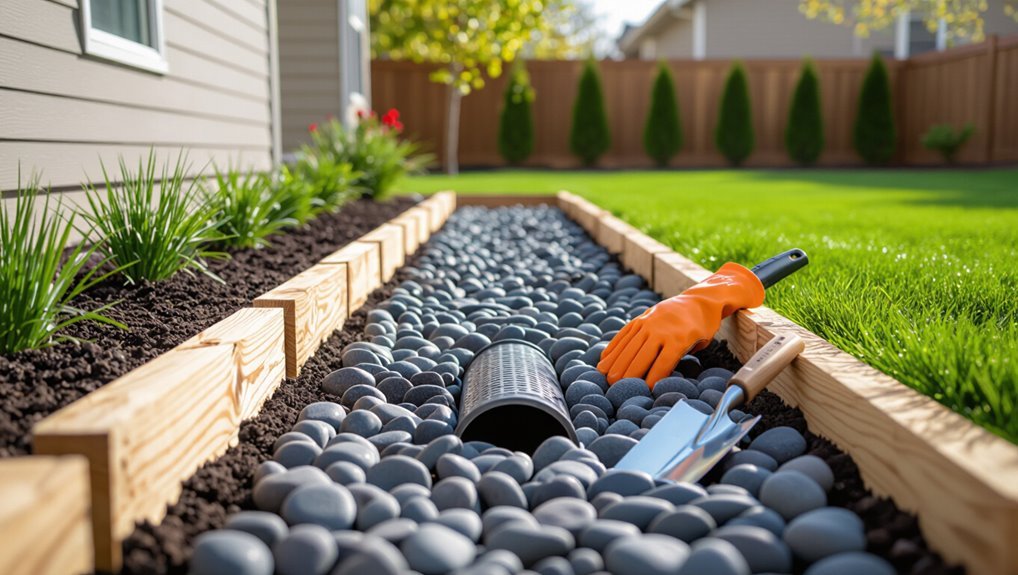
First, the author outlines immediate measures homeowners can take to reduce water entering their yard, such as temporary barriers, grading adjustments, and clearing drains.
Next, criteria for when to discuss the issue with the neighbor are presented, focusing on communication, documentation, and shared solutions.
Finally, guidance is given on when to hire a professional for permanent fixes or legal advice if informal resolution proves unsuccessful.
Immediate steps to reduce water entering your yard
Begin by evaluating visible water flow paths and pooling areas along the property line to identify immediate interception points. This allows targeted, short-term measures such as temporary berms, sandbags, or sand-filled channels to redirect runoff away from vulnerable lawn and foundation areas.
Then install quick drains, extend downspouts, add gravel swales, and use absorbent mulch to reduce saturation — practical how to block water drainage from neighbors yard steps.
When to involve the neighbor or a professional
After short-term measures like berms, sandbags, and downspout extensions have reduced immediate risk, the homeowner should assess whether the problem requires involving the neighbor or a professional.
If pooling persists, property damage threatens structures, or grading and shared drainage are implicated, the neighbor should be notified and documentation prepared.
Hire a landscaper, civil engineer, or attorney when technical solutions or legal mediation become necessary.
Understanding the Cause of the Drainage Problem
Common sources of runoff from a neighbor’s property include roof and downspout discharge, improper grading, and overspray from irrigation systems.
The slope and contour of adjacent lots determine whether that water is directed away or toward a yard.
Seasonal patterns and heavy storms can magnify these issues, turning minor runoff into persistent drainage problems.
Common sources of neighbor-originating runoff (roof, downspouts, grading, sprinklers)
When investigating neighbor-originating runoff, the most frequent culprits are roof and gutter discharges, misdirected downspouts, altered yard grading, and overzealous or poorly placed sprinklers; each produces distinct flow patterns that suggest different remedies.
Roof runoff often concentrates along eaves, downspouts send concentrated jets, disturbed soil channels create sheet flow, and sprinkler overspray wets borders—each source guides targeted fixes and documentation.
How property slope and grading affect water flow
Although grading may seem like a subtle feature, the angle and contour of a property determine both the direction and speed of surface water movement. Even slight slopes channel runoff toward low points, accelerate flow across hard surfaces, and concentrate water where soil or landscaping cannot absorb it.
Improper grading directs neighbor runoff into foundations, yards, or drainage systems, increasing erosion, saturation, and pooling risks that require corrective regrading or diversion.
Seasonal and weather factors that worsen drainage
Because seasonal patterns and short-term weather events alter both volume and timing of runoff, they are central to diagnosing drainage problems caused by a neighbor’s yard.
Spring thaws, heavy rains, and saturated soils increase runoff and reduce absorption.
Drought hardens ground, shifting flow paths when rain returns.
Wind-driven storms and frozen ground also redirect water, intensifying episodic or recurring drainage impacts.
Assessing Your Property and the Boundary Drainage
A basic site inspection helps determine where water enters and exits the property and which low spots or flow paths are causing ponding or erosion.
The homeowner should follow safety precautions, use simple tools (level, tape measure, flags) to record slopes and erosion signs, and note measurements for reference.
If boundaries are unclear or the problem is complex, a surveyor, drainage specialist, or civil engineer should be engaged.
How to perform a DIY site inspection (safety, tools, measurements)
Begin by conducting a methodical site inspection to document how water moves across the property line and to identify safety hazards.
Wear boots, gloves, eye protection; avoid unstable banks.
Carry a tape measure, level or laser, GPS/phone, camera, notebook, flags, and stakes.
Measure slopes, distances to drains and structures, note utilities, take photos from multiple angles, record timestamps and weather conditions.
Identifying low spots, flow paths, and erosion signs
When evaluating boundary drainage, the inspector maps visible low spots, flow paths, and signs of erosion to determine where water concentrates and where it exits the site.
They note depressions, rills, exposed roots, undercutting, and sediment deposits.
Surface runoff lines, compacted channels, and pooled areas get logged and photographed.
This inventory guides targeted repairs like grading, swales, or localized reinforcement.
When to hire a surveyor, drainage specialist, or civil engineer
Having mapped low spots, flow paths, and erosion evidence, the property owner must determine whether professional expertise is needed to resolve boundary drainage issues.
A surveyor verifies lot lines and grade responsibilities; a drainage specialist assesses surface and subsurface flows and proposes practical mitigation; a civil engineer designs structural solutions, stormwater plans, or legal reports.
Hire when disputes, permit requirements, complex hydraulics, or recurrent damage occur.
Quick DIY Fixes to Redirect or Block Water
Short-term, low-cost measures can provide immediate relief from unwanted runoff by using sandbags, temporary berms, or flexible drain pipes to redirect flow.
For a more lasting solution, medium-term yard improvements such as regrading soil, installing swales, or adding dry creek beds can guide water away from vulnerable areas.
These approaches can be combined to address urgent problems while planning more durable changes.
Short-term, low-cost measures
Short-term, low-cost options offer immediate ways to redirect or block surface water from a neighbor’s yard.
Common solutions include sandbags and temporary berms, shallow gravel trenches with rock riprap, and portable drain channels or water speed bumps.
Each method provides a temporary barrier or conveyance and can be installed quickly with basic tools.
Sandbags and temporary berms
Sandbags and temporary berms offer a fast, low-cost way to divert or block runoff from a neighbor’s yard during heavy rain or a sudden drainage problem.
They are placed along property lines or low spots to redirect flow, stacked to form a barrier and covered with plastic for seepage control.
Inspect, replace after storms, and avoid obstructing shared drainage easements or causing downstream harm.
Gravel trenches and rock riprap
After using sandbags or berms to temporarily stop surface flow, homeowners can add gravel trenches or rock riprap to slow, redirect, or infiltrate runoff with low-cost materials and basic tools.
Properly sized trenches filled with angular gravel increase infiltration; riprap placed on slopes dissipates energy and prevents erosion.
Both require grading, compacting fabric to limit clogging, and periodic maintenance to remain effective.
Portable drain channels and speed bumps for water
Install portable drain channels and temporary speed-bump-style barriers to quickly redirect sheet flow away from foundations, doorways, or low spots.
These lightweight, interlocking channels collect runoff and convey it to safe discharge points; rubber or plastic speed-bump barriers stop shallow overland flow and protect thresholds.
Secure units with stakes or sandbags, maintain clear debris paths, and remove after storms to prevent drainage changes or neighbor disputes.
Medium-term yard improvements
Medium-term yard improvements offer durable, DIY ways to manage water before it reaches a property line.
Options include installing shallow French drains, constructing raised garden beds or berms along the boundary, and adding gravel or permeable pavers to increase infiltration.
Each method has different space, labor, and maintenance requirements that should be matched to site conditions.
Installing shallow French drains
A shallow French drain offers a practical compromise between quick fixes and major grading work, channeling surface and near-surface runoff away from property lines using a trench filled with gravel and a perforated pipe.
It requires shallow trenching, landscape fabric to block silt, proper slope toward an approved outlet, and periodic maintenance to prevent clogging; permits may be needed depending on local drainage rules.
Building raised garden beds or berms along the boundary
If a shallow French drain is not feasible or more visual screening is desired, constructing raised garden beds or earthen berms along the property line offers a practical, medium-term way to redirect or block surface runoff.
Proper grading, compacted soil, and native plantings stabilize structures; include subtle swales to channel water away.
Check local setback rules and neighbor agreements before altering boundaries.
Adding gravel or permeable pavers to improve infiltration
Install gravel or permeable pavers to increase surface infiltration and slow runoff along the property edge.
Gravel beds or interlocking permeable pavers allow water to percolate, reducing sheet flow and pooling. Incorporate a geotextile base and compacted aggregate beneath to stabilize.
Grade slightly toward a dry well, swale, or storm drain. Maintain by removing sediment and replenishing stone periodically.
Permanent Landscaping Solutions
Permanent landscaping solutions address chronic runoff with durable changes to grade, drainage infrastructure, and vegetation.
Options include regrading and reshaping the yard, installing long French or curtain drains, constructing dry creek beds, bioswales, or retaining and toe walls, and planting deep‑rooted species or rain gardens to enhance infiltration.
A comparison of lifespan, cost, and maintenance helps determine which combination best protects the property long term.
Regrading and reshaping the yard to divert runoff
Regrading and reshaping the yard involves changing soil contours to create a gentle slope that directs surface runoff away from property lines and foundations, reducing prolonged pooling and erosion.
Proper grading establishes swales, berms, and low-profile slopes to channel water toward safe discharge points. Compaction, soil selection, and turf or planting stabilize surfaces.
Professional surveys guarantee correct slope, drainage capacity, and compliance with local codes.
Long French drain systems and curtain drains
Long, subsurface French drains and curtain drains provide durable, low-profile solutions for intercepting and conveying groundwater and surface runoff before it reaches property lines or foundations.
Placed along grades or uphill of structures, they use perforated pipe, gravel, and geotextile to collect water and direct it to safe outlets.
Proper slope, outlet location, and maintenance guarantee longevity and compliance with local drainage rules.
Dry creek beds and bioswales for natural infiltration
When designed to mimic natural channels, dry creek beds and bioswales direct and infiltrate runoff using graded stone, engineered soil, and native plants that slow flow and promote absorption.
Proper grading, underdrains, and overflow outlets prevent erosion and standing water.
Selection of deep‑rooted, site‑adapted vegetation enhances filtration and stability.
Installation requires soil testing and periodic maintenance to retain capacity and function.
Retaining walls, toe walls, and surface diversion structures
Install retaining walls, toe walls, and surface diversion structures to intercept and redirect overland flow before it reaches a property line.
These hardscape measures stabilize slopes, create grade breaks, and channel runoff toward approved outlets.
Proper design includes adequate drainage (weeps, gravel, perforated pipe), reinforced footings, and permits where required.
Professional assessment guarantees structural integrity and legal compliance to prevent transferring problems to neighbors.
Plant-based solutions: deep-rooted plants and rain gardens
Several perennial and woody species with deep, fibrous root systems can reduce runoff and increase soil infiltration along property boundaries.
Planted buffers, native grasses, shrubs, and trees stabilize soil, slow flow, and encourage groundwater recharge.
Rain gardens collect and absorb roof and surface runoff, using amended soil and tolerant plants to handle periodic inundation.
Proper placement and maintenance guarantee long-term effectiveness and neighbor-friendly aesthetics.
Working with Neighbor and Community Resources
When addressing water drainage from a neighbor’s yard, homeowners should begin with clear, polite communication that outlines the issue and proposed solutions.
They should document evidence with photos, measurements, and a timeline to support any claims and facilitate discussions.
If direct talks fail, mediation, HOA channels, or neighborhood dispute resolution services can provide structured options for reaching an agreement.
Best practices for communicating with your neighbor
Begin conversations calmly and respectfully, focusing on specific drainage issues, observed impacts, and desired outcomes rather than assigning blame.
Suggest collaborative solutions, share relevant information, and listen to the neighbor’s concerns.
Propose reasonable timelines and offer to cost-share minor fixes.
If agreement stalls, mention mediation or community association input as next steps while keeping interactions documented and polite.
Documenting the problem: photos, measurements, and timelines
After initiating calm, solution-focused conversations, the next step is to document the drainage issue methodically so observations and requests are supported by clear evidence.
Photograph damage from multiple angles, note dates and weather, measure water flow paths, pooling depth, and affected areas.
Record maintenance attempts and neighbor interactions with timestamps. Compile these records into an organized file to present to contractors or authorities if needed.
Mediation, HOA involvement, and neighborhood dispute resolution
Several community options exist for resolving a drainage dispute without immediately resorting to litigation.
Neighbors may pursue mediation to negotiate solutions with a neutral facilitator.
Homeowners associations can enforce covenants, require corrective action, or coordinate shared drainage improvements.
Local neighborhood councils or dispute resolution centers offer low‑cost services and referrals.
These community routes often save time, money, and preserve relationships compared with court proceedings.
Legal Rights, Responsibilities, and Remedies
The reader should understand basic property law principles governing drainage and nuisance, including distinctions between natural flow and artificial alterations.
Local permit requirements and municipal stormwater rules can constrain remedies and should be checked early. An attorney may be warranted when violations or repeated harm occur; relevant evidence includes photos, dates, measurements, and communications.
Legal options range from demand letters and seeking injunctions to pursuing damages in small claims court depending on severity and local law.
Basic property law principles on water drainage and nuisance (natural vs. artificial)
Disputes over surface water often hinge on longstanding property law principles that distinguish natural drainage from artificial alterations and define when a landowner’s actions constitute an actionable nuisance.
Courts typically allow reasonable, natural flow across adjoining land but may restrict artificial changes or intentional diversions that unreasonably harm neighbors.
Remedies include injunctions, damages, or orders restoring prior conditions, depending on jurisdiction and harm.
Local permit requirements and municipal stormwater regulations
Because municipal authorities regulate stormwater to protect public infrastructure and downstream properties, property owners must often obtain permits before altering drainage patterns, installing hardscape, or discharging concentrated flows.
Local codes set standards for runoff control, erosion prevention, and outlet locations. Compliance may require engineered plans, inspections, and stormwater management measures; noncompliance can trigger fines, stop-work orders, or mandated remediation.
When to consult an attorney and what evidence to collect
If attempts at direct negotiation, municipal remedies, or simple corrective measures fail to resolve persistent or damaging drainage issues, an attorney should be consulted to evaluate legal rights, potential claims, and practical remedies.
Collect dated photos, videos, site plans, drainage maps, repair receipts, correspondence, witness statements, and municipal reports.
Preserve original documents and make organized copies for legal review.
Possible legal actions: demand letters, injunctions, and small claims
Consider several tiered legal responses when informal measures fail: a demand letter to prompt remediation, a request for an injunction to stop ongoing harm or require corrective work, or pursuing monetary recovery through small claims court for quantifiable damages.
Each option carries costs, timelines, and proof requirements; remedies vary by jurisdiction.
Parties should document harm, estimate repair costs, and assess likelihood of enforcement before proceeding.
Cost Estimates and Material Comparisons
The section compares typical costs for DIY fixes versus hiring professionals and summarizes expected lifespan and maintenance needs for common materials. It highlights upfront expense, recurring upkeep, and long-term value so the reader can weigh options objectively. A concise table below presents representative cost ranges, durability, and maintenance frequency for popular solutions.
| Solution | Typical Cost Range | Longevity & Maintenance |
|---|---|---|
| Gravel trench (DIY) | $50–$300 | 3–10 years; occasional regrading and debris removal |
| PVC or corrugated pipe (pro installed) | $500–$2,000 | 10–30 years; periodic flushing and inspection |
| Concrete swale or retaining wall (pro) | $2,000–$15,000+ | 25–50+ years; low maintenance but occasional repairs |
Typical costs for DIY vs. professional solutions
Many homeowners face a clear choice between lower upfront costs for DIY fixes and higher, but often more reliable, expenses for professional drainage work.
Typical DIY projects—French drains, swales, or barrier installation—range $100–$1,000 in materials.
Professional solutions, including site evaluation, permits, and installation, commonly cost $1,000–$10,000+.
Labor, complexity, and local permit fees drive final prices.
Longevity and maintenance considerations for each option
Evaluating longevity and maintenance for DIY versus professional drainage solutions hinges on material durability, installation quality, and site conditions; inexpensive DIY options like gravel-filled French drains or simple swales typically last 5–15 years with annual clearing and occasional regrading.
Whereas professionally installed systems using high-grade perforated pipe, geotextile fabric, and proper grading can function effectively for 20–50 years with periodic inspections and occasional debris removal.
Routine checks, timely vegetation control, and sediment management extend service life.
Common Mistakes to Avoid
Readers are warned that certain actions can increase legal liability or worsen overall drainage by redirecting water onto neighboring property.
Skipping required permits or choosing unsafe DIY installations often leads to costly repairs or fines.
Careful planning and adherence to regulations help prevent these common mistakes.
Actions that can increase liability or worsen drainage
Ignore quick fixes that reroute water without addressing underlying flow; such measures often shift problems onto neighbors and create legal exposure.
Cutting corners—burying drainage lines shallowly, piling soil to form unapproved berms, blocking shared drains, or dumping debris into swales—can worsen erosion, flood basements, and trigger liability claims.
Documented complaints and visible alterations amplify legal and financial risk.
Improper permit avoidance and unsafe DIY installations
Many homeowners underestimate the regulatory and safety risks of skipping permits or attempting complex drainage fixes without professional oversight.
Unauthorized alterations can violate codes, trigger fines, void insurance, and create hazards like erosion or structural damage.
Improper installations—poor grading, blocked flows, unstable retaining walls—often worsen disputes and increase liability.
Always verify permits, follow local standards, and consult licensed professionals for significant drainage work.
Maintenance Checklist to Keep Problem from Returning
A straightforward maintenance checklist helps guarantee temporary fixes do not become recurring problems.
It should cover seasonal inspection tasks, a plan for long-term monitoring, and clear criteria for when to re-engage a professional. Regular, simple actions reduce risk and protect property lines.
- Inspect drains, gutters, and grading each spring and fall.
- Clear debris after storms and check for new erosion or pooling.
- Record observations quarterly to track trends and effectiveness.
- Contact a licensed drainage or landscaper if changes persist or problems worsen.
Seasonal inspection tasks
Regular seasonal inspections help guarantee that measures taken to block water drainage from a neighbor’s yard remain effective and that minor issues are caught before they escalate.
Inspect gutters, downspouts, swales, berms, and drainage outlets for debris, erosion, or compaction.
Test grading and runoff after storms, tighten or repair fasteners and seals, refill eroded soil, and document findings with dates and photos for reference.
Long-term monitoring and when to re-engage a pro
Establish systematic long-term monitoring to guarantee initial fixes remain effective and to detect gradual changes before they become failures.
Schedule quarterly visual checks, post-storm inspections, and annual professional reviews, and record observations, measurements, and photos in a single, dated log to track trends and trigger timely intervention.
Re-engage a professional when erosion, persistent saturation, new pooling, structural distress, or recurring clogging appears, or when logs show worsening trends.
Sample Timeline to Resolve a Neighbor Drainage Dispute
A clear timeline outlines milestones from initial inspection through negotiation, repairs, and final verification.
It should list expected timeframes for quick DIY fixes, typical durations for hiring contractors, and potential delays if legal action becomes necessary.
This framework helps set realistic expectations and guide each party toward timely resolution.
Step-by-step milestones from inspection to resolution
Begin with a clear timeline outlining key milestones—from initial inspection and documentation through communication, remediation attempts, and, if necessary, legal action—so each step and expected timeframe is visible to all parties.
Next: inspect, photograph, record damage; notify neighbor in writing; propose fixes; attempt cooperative remediation; hire professionals if needed; mediate; pursue formal complaints or legal steps as final recourse.
Expected timeframes for DIY fixes, professional work, and legal processes
When a neighbor drainage dispute arises, a realistic sample timeline helps set expectations by distinguishing quick DIY remedies, mid-range professional interventions, and the longer legal or administrative routes.
Typical DIY repairs—grading soil, installing simple swales, or adding gutters—often take a weekend to two weeks including materials and weather delays.
Contracted professional work like drainage design, trenching, or retained stormwater systems commonly requires 2–8 weeks from estimate to completion.
Formal remedies such as mediation, municipal complaints, or litigation can span months to years depending on local procedures, court schedules, and whether appeals occur.
DIY follow-up and monitoring add days to months.
Permits, surveys, and contractor scheduling drive professional timelines; legal processes are least predictable.
Conclusion
Like a quiet dam at the edge of a restless stream, practical measures and patient communication can turn a backyard deluge into manageable flow. By diagnosing causes, choosing thoughtful DIY or permanent fixes, and following legal steps if needed, homeowners rebuild calm one ridge, swale, or legal notice at a time. With care, maintenance, and neighborly tact, troubled yards can settle into harmony, where water finds its proper course and peace returns.
