How Does a Backflow Valve Work? Simple Explanation, Key Parts, and Why It Matters
A backflow valve is a crucial device that prevents contaminated water from flowing back into a clean supply. It automatically closes when the direction of water flow or pressure changes, ensuring that clean water remains uncontaminated. Key components include a body, disc and seat, spring, seals, and test cocks, which facilitate normal flow while preventing backpressure or siphonage. Common types of backflow valves, such as check valves, double-check assemblies, RPZ units, and vacuum breakers, address various contamination hazards. Proper installation, testing, and maintenance are essential for system reliability and public health protection.
What a Backflow Valve Does and Why It Matters
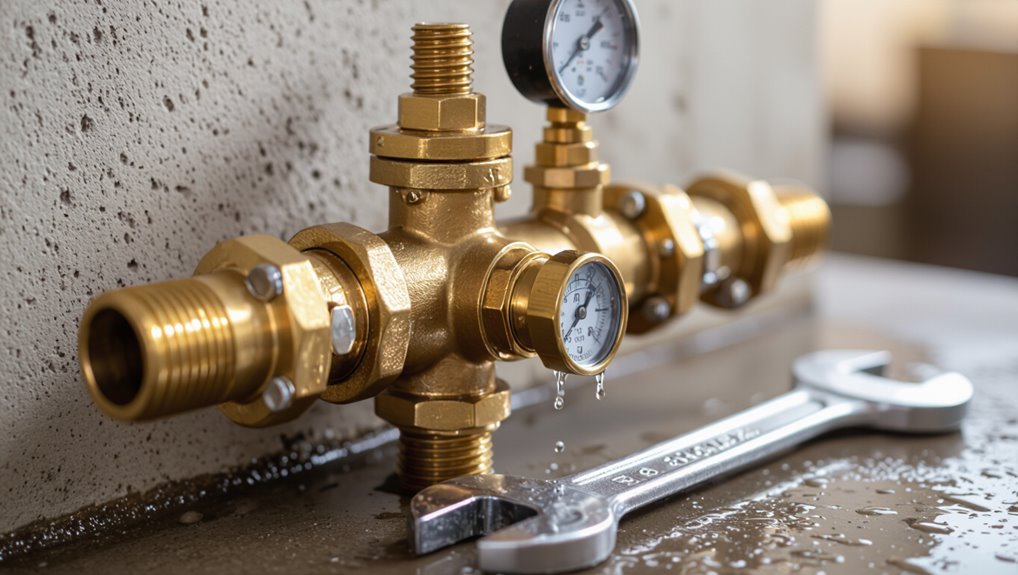
A backflow valve prevents contaminated water from flowing backward into a clean water supply.
It is critical in situations such as irrigation systems where fertilizers or pesticides could be siphoned back, commercial buildings with boiler or sprinkler systems, and residential properties with hose-end attachments.
The device protects public health and maintains water system integrity.
Direct answer in one clear sentence
Prevents contaminated water from flowing backward into a clean supply by allowing only one-way flow, protecting public health and maintaining system integrity.
The device answers how does a backflow valve work by using pressure differentials and a check mechanism to stop reverse flow; it minimizes contamination risk, preserves potable systems, and guarantees compliance with safety standards through reliable, passive operation requiring periodic inspection and maintenance.
One-line examples of common situations where backflow valves are critical
When water pressure drops or flow reverses, backflow valves stop contaminants from siphoning into potable lines—examples include irrigation systems drawing fertilizer back into mains, fire sprinkler testing pushing stagnant water toward drinking supplies, and commercial boilers sending chemical-laden condensate into potable loops.
Other scenarios include garden hoses submerged in puddles creating cross-connections, hospital sterilizer drains, car wash recirculation, rooftop tanks refilling, and lawn fertilizer injectors.
Basic Understanding What Is Backflow and Backflow Valve Basics
Backflow occurs when water reverses direction and risks contaminating a potable supply through cross-connections.
A backflow valve is a device installed to prevent reverse flow and protect system integrity by closing or isolating the line when contamination is possible.
Unlike transient events such as water hammer, pressure drop, or siphonage, backflow specifically refers to the unwanted reversal of flow that can transport contaminants.
Definition of backflow (contamination and cross-connection)
Contamination of a potable water supply can occur when water flows reverse direction due to pressure changes, allowing non-potable liquids or pollutants to enter the clean system; this phenomenon is known as backflow and typically arises from two mechanisms—backpressure, where downstream pressure exceeds supply pressure, and back-siphonage, where negative pressure in the supply draws contaminants in.
Cross-connections—physical links between potable and non-potable systems—enable contamination when backflow happens.
Definition and purpose of a backflow valve
Having established how pressure changes and cross-connections allow non-potable fluids to enter a potable system, a backflow valve is introduced as a mechanical device installed in a water line to prevent reverse flow.
It permits normal downstream flow while automatically closing when pressure reverses, protecting water quality.
Common types include check valves and reduced-pressure assemblies, chosen by hazard level and installation needs.
How backflow differs from water hammer, pressure drop, and siphonage
Although all involve changes in pressure within a plumbing system, backflow is a sustained or transient reversal of flow that allows unwanted fluids into the potable supply, whereas water hammer is a short, high-pressure shock caused by sudden flow stoppage.
A pressure drop is a reduction in system pressure that can draw contaminants in, and siphonage is flow reversal driven specifically by negative pressure or elevation differences.
Backflow prevention targets sustained or transient contamination risks; water hammer and pressure fluctuations require dampening or pressure management; siphonage often needs air gaps or vacuum breakers.
Key Parts of a Backflow Valve and How Each Works
A backflow valve consists of core parts—check body, disc and seat, spring, seals, and test cocks—each contributing to controlled flow and maintenance access.
Function depends on pressure differentials acting across the one-way mechanism to keep water moving forward and prevent reversal.
Different designs (double-check, reduced pressure zone, vacuum breaker) arrange these internals differently to achieve varying levels of protection and response.
Main components (check body, disc/seat, spring, seals, test cocks)
The main components of a backflow valve work together to permit forward flow while preventing reverse flow:
The check body houses internal parts and ports; the disc and seat form the sealing interface; the spring returns or holds the disc; seals guarantee leak-tight operation; test cocks provide access for pressure testing and maintenance.
Each part is designed for durability, alignment, and reliable isolation.
Role of pressure differential and one-way flow mechanism
Building on the components outlined previously, operation of a backflow valve depends on pressure differential across the check assembly to enforce one-way flow: higher upstream pressure pushes the disc off its seat against the spring, opening the passage.
While any rise in downstream pressure or drop upstream forces the disc back onto the seat so the spring and seals create a tight closure. This balance prevents reverse flow and contamination.
Common valve types and internal differences (double-check, reduced pressure zone, vacuum breaker)
Several common backflow assemblies—double-check, reduced pressure zone (RPZ), and atmospheric vacuum breaker—employ distinct internal configurations to achieve one-way protection, each optimized for different risk levels and installation conditions.
The double-check uses two spring-loaded check valves in series; the RPZ adds a pressure-monitored relief valve between checks.
The vacuum breaker prevents siphonage via an atmospheric vent that opens when downstream pressure drops.
How a Backflow Valve Works Step-by-Step Operation
The sequence begins with normal flow: supply pressure opens the valve and allows water to pass.
If supply pressure drops or reverses, conditions arise that can push water back toward the supply. The valve then responds by closing, sealing, or venting to block reverse flow and protect the system.
Step 1: Normal flow operation (supply pressure pushes valve open)
When supply pressure is present, it forces the valve disc or poppet away from its seat, creating an open passage that allows water to flow downstream. A spring or gravity may assist in stabilizing the open position but does not oppose the incoming pressure sufficiently to close the valve.
Flow is directed through the valve body, downstream pressure equalizes, and seals remain uncompressed, permitting normal system operation.
Step 2: Condition leading to backflow (Step 2: pressure drop or reversal)
If supply pressure falls or downstream demand suddenly exceeds upstream delivery, flow direction can diminish or reverse, creating conditions that allow contaminants to be drawn back toward the source.
Such pressure drops arise from pump failure, line breaks, firefighting draws, or simultaneous high usage.
Backflow risk increases when downstream outlets create suction or when upstream supply cannot sustain required pressure, permitting ingress.
Step 3: Valve response to prevent reverse flow (Step 3: closing, sealing, or venting)
Pressure reversal or a sudden drop in supply prompts the backflow valve to react immediately, activating internal mechanisms that halt reverse movement and protect the source.
The valve either closes a check disc, seats a spring-loaded piston, or opens a vent to atmosphere.
Sealing surfaces compress, springs engage, and trapped fluid is isolated, preventing contamination until normal flow resumes.
Types of Backflow Prevention Devices Comparison
A brief comparison contrasts simple one-way check valves and double-check assemblies, noting the latter’s redundancy for higher-risk situations.
The reduced pressure zone (RPZ) device is highlighted for its ability to create a pressure differential and vent to prevent contamination under backflow conditions.
Atmospheric and pressure vacuum breakers are then distinguished by installation orientation and suitability for intermittent versus continuous pressure applications.
Check valve (simple one-way) vs. double-check assembly
Compare the simple check valve and the double-check assembly by focusing on construction, reliability, and typical applications.
A check valve uses one sealing element to allow flow one way; it is compact and economical but less tolerant of wear.
A double-check assembly contains two independent valves and test cocks, offering greater redundancy and reliability for moderate hazard protection in commercial and irrigation systems.
Reduced pressure zone (RPZ) device how it prevents contamination
One common high‑protection backflow preventer is the reduced pressure zone (RPZ) device, which uses two check valves separated by a monitored, lower‑pressure chamber to block and vent backflow.
If either check leaks or downstream pressure rises, the relief valve opens to discharge to atmosphere, maintaining a pressure differential that prevents contaminated water from reversing into the potable supply.
Atmospheric and pressure vacuum breakers when to use each
Several situations call for choosing between atmospheric vacuum breakers (AVBs) and pressure vacuum breakers (PVBs) based on installation conditions and protection needs. AVBs suit low‑risk, non‑pressurized outlets; PVBs handle continuous pressure and higher hazard irrigation. Selection depends on backflow risk, required maintenance, and local code.
| Device | Best Use |
|---|---|
| AVB | Short‑term, no downstream pressure |
| PVB | Continuous pressure, irrigation |
| Code | Local regulations determine choice |
When and Where Backflow Valves Are Used
Backflow valves are installed in a range of residential settings such as irrigation systems, boilers, and connections to the potable water supply to prevent contamination.
They are also common in commercial and industrial facilities—laboratories, HVAC systems, and chemical feed lines—where process fluids or additives pose contamination risks.
Municipal regulations and health department codes frequently dictate where and which type of backflow prevention is required.
Residential scenarios (irrigation, boilers, potable supply)
Many homes face situations where contamination risk requires a check valve to prevent reverse flow: irrigation systems with fertilizers or standing water, boilers and hydronic systems with chemical treatments, and potable supply lines exposed during repairs or cross-connections.
Homeowners should install appropriate backflow preventers at irrigation mains, boiler fill connections, and hose bibs; regular testing and maintenance guarantee continued protection of household water quality.
Commercial and industrial applications (labs, HVAC, chemical feed)
When plumbing in commercial and industrial settings connects to processes that introduce chemicals, biological agents, or reclaimed water, check valves and more complex backflow preventers are required to protect municipal and on-site potable supplies.
Laboratories, HVAC systems with condensate or glycol loops, chemical feed stations, and reclaimed-water irrigation employ device tiers—simple check valves, reduced pressure assemblies, or double-check units—based on contamination risk and system pressure dynamics.
Regulatory and code-driven requirements (municipalities, health departments)
Because protecting public water supplies depends on consistent oversight, municipalities and health departments establish specific rules that dictate where and when backflow prevention devices must be installed.
Codes require assessments, approved device types, certified installers, and regular testing schedules.
Enforcement links to building permits, service connections, and risk classifications; violations can prompt fines, mandatory repairs, or service disconnection to safeguard public health.
Installation and Maintenance Practical How-To Steps
Before installing a backflow valve, a technician verifies the correct type, size, and location to match system pressure and access requirements.
Installation follows a clear workflow: orienting the device per manufacturer markings, securing connections, and installing isolation valves.
Afterward the unit is pressure-tested and checked for leaks, then entered into a routine maintenance schedule for regular inspections, functional tests, and common servicing tasks.
Pre-installation checks (selecting type, size, location)
Although site conditions vary, a systematic pre-installation check guarantees the correct backflow valve type, size, and location are chosen to meet code and operational needs.
Inspect piping material, flow rates, pressure, and potential contaminants. Verify local codes, required test ports, and access for maintenance.
Measure available clearance, orientation constraints, and isolation valve placement. Confirm compatible materials and spare parts availability before procurement.
Step 1: basic installation workflow and orientation
Begin the installation by confirming the valve orientation and workflow sequence: position the backflow assembly in the designated piping run with inlet and outlet clearly aligned to the flow direction, guarantee test cocks and isolation valves are accessible, and orient the unit per manufacturer markings and local code (horizontal or vertical as specified).
Secure supports, align flanges or unions, purge debris, and tighten connections to torque specs.
Step 2: testing and commissioning (pressure tests, leak checks)
One careful set of pressure and leak checks verifies that the backflow assembly is sealed, oriented correctly, and functional before service is resumed.
Technicians isolate the section, pressurize to specified test pressure, monitor gauges for steady readings, and inspect all joints and valve seats for leakage.
Any detected loss prompts immediate correction, retest, and documentation of test pressures, durations, and outcomes.
Step 3: routine maintenance schedule and common servicing tasks
Regularly scheduled maintenance keeps a backflow valve reliable and compliant; typical intervals are monthly visual checks, semiannual functional tests, and annual full inspections.
Technicians clean strainers, lubricate moving parts, exercise test cocks, replace worn seals, and verify relief valve operation. Records document dates, findings, and corrective actions.
Prompt repairs prevent contamination, preserve warranty, and guarantee inspection readiness.
##
A backflow valve prevents contaminated water from reversing into a clean supply by allowing flow in only one direction and sealing closed when pressure reverses.
Manufacturers specify installation orientation, pressure ratings, and material compatibility; installers guarantee correct alignment and access for testing.
Periodic testing verifies operation and leak-free seals.
- Installation orientation matters
- Match pressure ratings
- Use compatible materials
- Guarantee testing access
Common Problems, Failures, and Mistakes to Avoid
Common failures include a stuck disc, worn seals, and debris accumulation that impair valve seating.
Installation errors such as incorrect orientation or faulty shutoff valves can create backflow risk.
A concise diagnostic checklist—inspection for leaks, operation tests, and seal condition—helps identify a failing backflow prevention device.
Typical failure modes (stuck disc, seal wear, debris)
Inspectors identify three primary failure modes in backflow valves: a stuck disc that prevents movement, seal wear that allows leakage, and debris accumulation that impedes operation.
Technicians note discs jam from corrosion or deposits, seals degrade from age and chemicals, and particles block seating or channels.
Regular inspection, cleaning, timely seal replacement, and flushing reduce these risks and restore reliable valve function.
Installation mistakes that cause backflow risk (wrong orientation, improper shutoffs)
Installers sometimes orient backflow assemblies incorrectly or tie off shutoff valves in ways that defeat the device’s ability to prevent reverse flow.
Incorrect orientation, missing relief ports, unsupported piping, or using isolation valves that block required air gaps compromises function.
Temporary bypasses left permanent, improper valve types, and failure to follow manufacturer alignment or clearances increase contamination risk and regulatory noncompliance.
Regular verification after installation is essential.
Diagnostic checklist to identify failing backflow prevention
When backflow prevention shows signs of distress, a focused diagnostic checklist helps pinpoint failures quickly and prioritize repairs.
Inspect valve orientation, visible leaks, and corrosion. Verify test cocks, spring tension, and diaphragms for wear. Confirm shutoff integrity and bypass condition.
Check pressure differentials under load. Review recent maintenance, freeze or surge history, and compliance with testing records to determine corrective actions.
Prevention, Best Practices, and Cost Considerations
Practical prevention combines correct device selection, professional installation, and a scheduled testing regimen matched to local codes.
Routine measures—such as water filtration, regular maintenance, and winterization—help extend service life and prevent failures.
Typical costs vary by valve type, labor complexity, and permit or inspection fees, so budget ranges should be considered alongside long‑term maintenance needs.
Best practices for selection, installation, and testing frequency
Several clear criteria guide the selection, installation, and testing frequency of backflow valves to guarantee reliable protection of the potable water supply.
Choose certified types sized for flow and pressure, compatible with system materials and hazard level.
Install per codes with accessible shutoffs and orientation.
Establish testing intervals based on risk, local regulations, and manufacturer guidance; document results and promptly repair failures.
Tips to extend valve life (water quality, filtration, winterization)
Extending the service life of a backflow valve hinges on controlling factors that cause wear and corrosion—primarily water quality, particulate load, and freeze exposure.
Routine measures like buffering incoming supply chemistry, installing appropriate filtration, and winterizing exposed assemblies considerably reduce failure rates and maintenance costs.
Regular inspection, prompt replacement of seals, flushing debris, and keeping records of water tests and maintenance schedules preserve function and predict failures.
Typical cost ranges and factors that influence price (device type, labor, permits)
Cost is driven by the device type, installation complexity, and local requirements: a simple residential double-check valve typically costs less in parts and labor than an industrial reduced-pressure assembly, while additional expenses can arise from permits, site preparation, and required testing.
Typical residential install ranges $150–$600; commercial or RPZ units can exceed $1,000.
Labor rates, permits, accessibility, and certification/testing increase total price.
Real-World Scenarios and Case Examples
The article presents two concise case examples: an irrigation system cross-connection blocked by a backflow preventer and an industrial chemical line safeguarded with a reduced pressure zone (RPZ) device.
Each case highlights the specific hazards, chosen device, and outcomes.
A short checklist follows to guide selection of the appropriate backflow device for similar scenarios.
Scenario 1: Irrigation system cross-connection prevented by backflow valve
A suburban landscape irrigation system created a potential cross-connection between treated potable water and nutrient-rich fertilizer solution stored in an adjacent tank.
A properly installed backflow valve kept contaminants from entering the public supply by allowing flow only away from the household plumbing when pressure conditions changed.
Routine testing, correct orientation, and periodic maintenance guaranteed reliable operation, protecting neighbors and meeting local code requirements.
Scenario 2: Industrial chemical containment using RPZ device
Industrial facilities handling corrosive or toxic liquids relied on a reduced pressure zone (RPZ) backflow preventer to isolate process piping from the municipal potable supply. This ensured that sudden downstream depressurization or backpressure could not allow hazardous chemicals to migrate into public water lines.
Routine testing, corrosion-resistant materials, and fail-safe drainage protocols preserved containment integrity while meeting regulatory standards and protecting public health.
Short checklist for deciding which device fits your scenario
Following the RPZ example, practitioners can use a compact checklist to match backflow devices to site-specific risks and regulatory requirements.
Assess hazard severity, assess potential contaminants, verify local code and testing intervals, evaluate pressure dynamics and drainage, confirm installation space and access, consider maintenance capability and cost, and select the minimum device providing required protection (e.g., air gap, RPZ, reduced-pressure principle assembly).
Closing Summary Key Takeaways
The conclusion underscores that backflow valves are essential for protecting water quality and preventing contamination.
It recommends regular inspections and informed selection based on system needs and local codes.
Readers are encouraged to prioritize certified testing and consult professionals for appropriate valve choice and maintenance.
why backflow valves matter and next steps (inspection, selection)
Recognize that backflow valves protect water quality and public health by preventing contaminated or non-potable water from entering a clean supply; consequently, regular inspection and careful selection based on system pressure, fluid type, and code requirements are essential to confirm they perform reliably.
Routine testing, certified technicians, documented maintenance, and choosing valves rated for the specific application reduce failure risk and ensure regulatory compliance.
Conclusion
A concise understanding of backflow valves underscores their role in protecting water supplies from contamination. By permitting flow in one direction and closing against reverse pressure, these devices safeguard public health and plumbing systems. Proper selection, installation, testing, and maintenance prevent failures and costly repairs. Awareness of common types and failure modes helps property owners and professionals choose appropriate solutions. Ultimately, consistent inspection and adherence to standards guarantee reliable backflow prevention and long-term safety.