How to Safely Bypass a Reverse Osmosis System: Alternatives, Risks, and Step-by-Step Options
To safely bypass a reverse osmosis system, you can temporarily redirect water flow to restore pressure or avoid wastewater for nonpotable uses. This involves identifying the necessary lines, isolating the system, and using a temporary bypass line. However, be aware of risks like microbial exposure and code violations. Always wear proper PPE, label components clearly, and test for leaks and water quality. For detailed steps and safety checks, continue reading.
What It Means to Bypass a Reverse Osmosis System
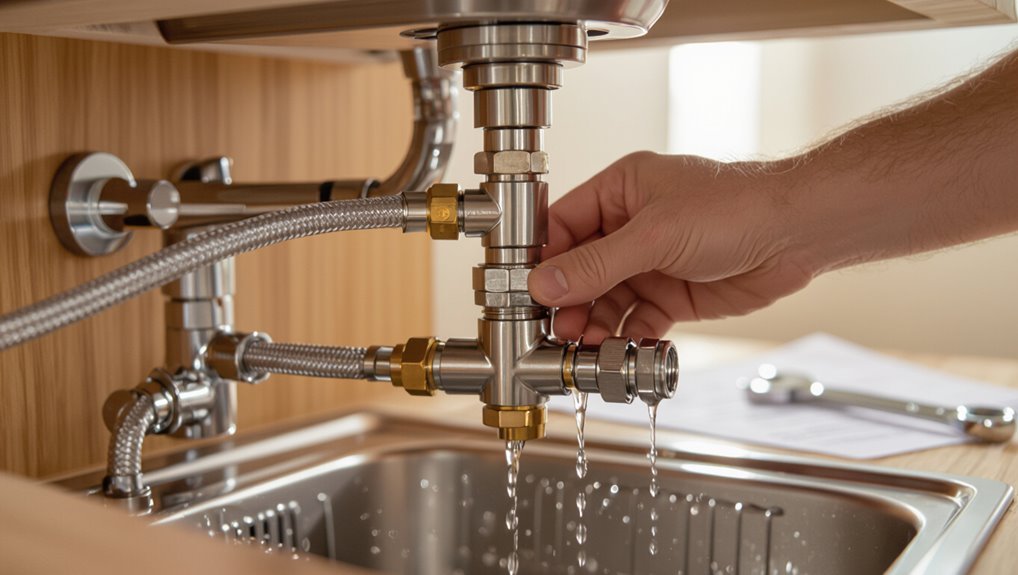
A reverse osmosis system typically channels tap water through pre-filters and a semipermeable membrane to produce purified water while sending concentrated waste to the drain.
Bypassing the system refers to rerouting water around these components so untreated or partially treated water reaches the faucet.
Homeowners consider bypassing for reasons such as temporary maintenance, low water pressure, or the need for untreated water for appliances or plants.
How reverse osmosis systems normally operate
Many household reverse osmosis (RO) systems rely on a sequence of pre-filtration, membrane separation, and post-filtration stages to remove dissolved solids and contaminants from water.
They use sediment and carbon filters, a semi-permeable membrane, storage tank, and often a remineralization stage.
Understanding flow paths and valve locations clarifies how do you bypass a reverse osmosis system safely and what changes occur in water quality.
Common reasons homeowners consider bypassing an RO system
Owners who understand an RO system’s flow and components sometimes choose to bypass it for practical reasons.
Common motivations include restoring water pressure, avoiding wasted wastewater, providing untreated water for gardening or appliances, simplifying maintenance during repairs, or supplying higher-mineral water preferred for taste.
Cost concerns, frequent filter replacement, or temporary system failure also prompt homeowners to install a bypass valve or alternate feed.
Quick Safety Overview and Immediate Considerations
Bypassing a reverse osmosis system can introduce health and regulatory risks if untreated water enters the supply, so the potential for contamination and local code violations should be noted upfront.
Temporary bypasses may be acceptable in limited emergency situations or during short-term maintenance when alternative safe water sources are available.
A professional plumber or water treatment expert should be consulted for any longer-term bypass, unclear legal requirements, or complex plumbing changes.
Health and regulatory risks of bypassing filtration
Although designed to simplify equipment maintenance, diverting water around a reverse osmosis membrane immediately undermines its ability to remove contaminants, creating acute health hazards and potential regulatory violations.
Drinking, cooking, or processing with bypassed water risks exposure to microbes, chemicals, and particulates. Facilities may violate local water treatment codes, face fines, and incur liability for illness or product contamination; documentation and corrective action are required.
Situations where temporary bypass may be acceptable
When system repair or emergency operations necessitate temporary diversion of flow, limited bypassing can be acceptable only under tightly controlled conditions.
Acceptable situations include short-duration maintenance to prevent freezing or flooding, confirmed non-potable uses (e.g., irrigation), and verified alternative disinfection.
Immediate measures: label bypass clearly, restrict access, monitor water quality, restore filtration promptly, and document duration and reasons for the temporary bypass.
When to consult a professional plumber or water treatment expert
After any temporary diversion, evaluating whether professional assistance is required should be prompt and practical: complex repairs, uncertain water quality results, persistent leaks, or loss of disinfectant residual warrant contacting a licensed plumber or water treatment specialist.
Immediate consultation is advised when user lacks tools, when pressure or flow anomalies persist, when contamination is suspected, or when local codes and warranty conditions may be impacted.
Direct Alternatives to Bypassing an RO System
The article outlines practical options that preserve system integrity while providing unfiltered or adjusted water without fully bypassing the reverse osmosis unit.
Each option emphasizes correct plumbing, appropriate fittings, or component replacement to maintain safety and performance. These alternatives can meet varied needs—such as separate unfiltered lines or blended faucets—without compromising the RO system.
- Use dedicated separate plumbing lines for unfiltered water
- Install an RO bypass valve assembly with proper fittings
- Use point-of-use mixers or blended water faucets
- Replace or upgrade RO components instead of bypassing
- Consult a qualified plumber or certified RO technician before implementing changes
Use dedicated separate plumbing lines for unfiltered water
A separate plumbing line dedicated to unfiltered water provides a safe, code-compliant alternative to tampering with a reverse osmosis (RO) system.
Installing distinct supply lines and labeled fixtures isolates non-potable uses (e.g., irrigation, laundry), preventing contamination of potable plumbing.
Professional installation guarantees proper backflow prevention, compliance with local codes, and clear maintenance access without altering or compromising the RO unit.
Install an RO bypass valve assembly with proper fittings
Install an RO bypass valve assembly to create a controlled, reversible path around the reverse osmosis membrane without compromising plumbing integrity.
A professionally sized three-way bypass valve, compatible tubing, and secure fittings allow isolation of the RO unit while maintaining water flow.
Properly installed, labeled, and accessible valves minimize contamination risk and permit routine testing, maintenance, or temporary bypass without permanent system alteration.
Use point-of-use mixers or blended water faucets
Consider point-of-use mixers or blended-water faucets as compact alternatives that deliver a controlled mix of treated and untreated water without altering the main RO plumbing.
These devices mount at the sink, allow adjustable ratios, and preserve RO unit integrity while supplying higher flow or remineralized water.
Installation is typically simple, reversible, and minimizes system stress; choose certified fixtures and follow manufacturer guidelines.
Replace or upgrade RO components instead of bypassing
Explore component replacement or targeted upgrades as practical alternatives to bypassing a reverse osmosis system: swapping worn membranes, upgrading pre- and post-filters, installing a booster pump, or adding a remineralization cartridge can restore flow, improve water quality, and address specific issues without compromising the unit’s protective function.
Technicians or knowledgeable owners should assess diagnostics, replace failed parts, and optimize pressure and storage to avoid permanent system degradation.
Tools, Materials, and Safety Gear Needed Before Any Work
Before attempting any modification, one should assemble the proper tools, testing equipment, and safety gear to guarantee the job is done correctly and without harm. Key items include common plumbing tools and compatible fittings, water quality testing kits or sensors to verify outputs, and personal protective equipment alongside clear shutoff and isolation procedures.
Proper preparation minimizes leaks, contamination, and injury.
- Adjustable wrench, tubing cutters, and compression fittings
- TDS meter, pH strips, or inline sensors
- Replacement tubing and quick-connect adapters
- Safety gloves, eye protection, and a waterproof mat
- Main water shutoff knowledge and valve-locking tools
Plumbing tools and fittings
Plumbing work requires a specific set of tools, fittings, and safety gear to guarantee a secure, leak-free connection and to protect the installer; a basic kit should include an adjustable wrench, tubing cutter, plumber’s tape, appropriate compression or quick‑connect fittings sized for the system, replacement tubing, a shutoff valve, and gloves and eye protection.
Also useful are hose clamps, T‑adapters, ferrules, a small flashlight, and a bucket for drips.
Water quality testing kits and sensors
Accurate water quality testing equipment is essential for diagnosing reverse osmosis performance and guaranteeing any modifications are safe and effective.
Recommended tools include TDS meters, pH strips or meters, chlorine test kits, and hardness/colorimetric kits.
Inline sensor options monitor flow, pressure, and conductivity continuously.
Calibration solutions, spare probes, and clear documentation guarantee reliable readings before any system bypass or alteration decisions are made.
Personal protective equipment and shutoff procedures
Because working on a reverse osmosis system involves pressurized water and potential chemical exposure, personnel must assemble appropriate personal protective equipment and follow clear shutoff procedures before any intervention.
Required PPE includes safety goggles, chemical-resistant gloves, face shield, and protective clothing.
Prior to work, isolate feed and concentrate valves, depressurize the system, lock out valves, and tag controls to prevent accidental reactivation.
Step-by-Step Options to Temporarily Bypass an RO System
The section outlines three practical methods for temporarily bypassing an RO system.
Option A explains using the unit’s built-in shutoff and directing feed water past the membrane.
Option B covers installing a temporary bypass line, while Option C describes switching to a blended faucet or an existing unfiltered outlet.
Option A Using the RO system’s built-in shutoff and direct feed
The procedure begins by identifying the feed line, storage tank, check valve, and shutoff valve so their roles are clear before any intervention.
Next, a concise step-by-step method is followed to close the RO shutoff, open a direct feed path, and verify flow and seals.
Finally, instructions for reversing the steps and testing the system are provided to restore normal RO operation.
Identify parts: feed line, storage tank, check valve, shutoff valve
Identifying the feed line, storage tank, check valve, and shutoff valve is the essential first step before attempting Option A, which uses the RO system’s built-in shutoff to direct feed water past the unit.
The feed line brings raw water into the unit, the storage tank holds treated water under pressure, the check valve prevents backflow into the membrane, and the shutoff valve isolates the system to enable a temporary direct-feed connection.
Step-by-step shutoff and direct feed procedure
Begin by shutting off the RO unit at its built-in shutoff valve to stop feed water to the membrane.
Then verify the storage tank valve is open to allow pressurized water flow.
Once isolated, open the system’s bypass or manually connect the feed line to the post-membrane side following manufacturer guidance so treated water is supplied directly to the faucet while preventing backflow into the membrane.
Close any auxiliary valves and test flow.
How to restore the RO system afterward
Restore the RO system by reversing the temporary connections and reactivating the built‑in shutoff so feed water resumes through the membrane and treated water returns to normal flow.
Close bypass valves, reconnect inlet and outlet tubing, secure fittings, and open prefilter valves.
Check for leaks, purge air by flushing per manufacturer instructions, verify tank pressure and permeate quality, then confirm normal flow and disposal line function.
Option B Installing a temporary bypass line around the RO unit
The technician outlines a clear plan for routing the temporary bypass and isolating the RO unit’s inlet and outlet valves.
Next, concise step-by-step instructions cover cutting lines, installing quick-connect fittings or valves, and securing the bypass hose.
Finally, the procedure concludes with pressure testing for leaks and labeling the bypass to prevent accidental use of the RO while it is offline.
Planning the bypass route and isolating connections
Carefully map the existing plumbing and RO components to determine the shortest, most accessible bypass route that maintains proper flow direction and pressure.
Identify inlet, prefilters, membrane housings, and outlet valves.
Select isolation points with shutoff valves and union fittings to minimize disturbance.
Note tube sizes, pressure ratings, and available clamp or compression options.
Plan labeling and temporary supports for secure, leak-free connections.
Step-by-step instructions for connecting a temporary bypass
One clear option is to install a temporary bypass line around the RO unit that uses existing shutoff points and quick-disconnect fittings to maintain flow while isolating the system.
Shut main and feed valves, cap RO inlet/outlet, measure and cut tubing, attach quick-disconnects, insert bypass tubing, secure clamps, gradually reopen feed valve, and monitor pressure.
Remove bypass and restore original fittings when service completes.
Testing for leaks and ensuring proper labeling
After reinstalling flow, inspect all connections for leaks and verify clear, durable labeling on the bypass and original lines.
The technician pressurizes the line, checks fittings, valves, and joints for seepage, and monitors for several minutes.
Any drip warrants tightening or reseating.
Labels indicate flow direction, bypass status, and restoration date.
Document actions and inform occupants of temporary configuration and precautions.
Option C Swapping to a blended faucet or dedicated unfiltered outlet
Option C covers swapping to a blended faucet or adding a dedicated unfiltered outlet as an alternative to routing water through the RO unit.
It outlines how to select an appropriate blended faucet or mixer valve, step-by-step installation and plumbing connections, and factors to weigh when choosing this approach for temporary versus longer-term use.
Practical guidance emphasizes compatibility with existing supply lines, ease of reversion to RO service, and situations where maintaining or bypassing filtration is preferable.
Choosing the right blended faucet or mixer valve
Which faucet or mixer valve best suits a temporary bypass depends on flow needs, installation constraints, and whether a single-lever blended faucet or a dedicated unfiltered outlet is preferred.
Consider valve compatibility with existing fittings, materials resistant to corrosion, and certification for potable water.
Prioritize ease of swapping, minimal tools required, and the ability to clearly mark the outlet as unfiltered to prevent accidental consumption.
Installation steps and plumbing considerations
Several practical steps outline how to swap in a blended faucet or install a dedicated unfiltered outlet safely and temporarily.
Identify cold-water feed, shut main valve, relieve pressure, and disconnect RO branch.
Fit mixer or dedicated line with appropriate fittings, use T-adapter or isolation valve, secure connections with compression or push-fit fittings, check for leaks, restore supply, and sanitize if required.
When to use this for long-term vs short-term needs
After installing a blended faucet or dedicated unfiltered outlet and confirming proper connections and leak-free operation, the next consideration is whether the modification should remain temporary or be adopted long-term.
Short-term use suits emergencies, testing, or maintenance.
Long-term adoption requires water quality monitoring, filter upgrades, compliance with health standards, and awareness of savings versus potential contaminant exposure before committing permanently.
Permanent Bypass and Modification Options
Consideration of permanent bypass and modification options includes installing a dedicated bypass valve assembly to isolate the RO unit without disrupting water service.
Alternatives include converting to a dual-line configuration that supplies both filtered and unfiltered outlets.
Whole-house filtration or point-of-entry systems can be integrated as a longer-term solution to reduce reliance on the RO system.
Installing a permanent bypass valve assembly
Install a permanent bypass valve assembly to allow uninterrupted water flow around the reverse osmosis unit for maintenance or in low-demand situations.
A three-valve or four-valve manifold lets users isolate the RO, divert feed water, and control drain flow.
Properly sized fittings, pressure-rated valves, and secure mounting prevent leaks.
Professional installation guarantees watertight seals, code compliance, and preserved water quality.
Converting to a dual-line system (filtered + unfiltered)
When household needs require both purified and untreated water lines, converting an RO setup to a dual-line system provides a permanent solution that routes filtered water to select taps while preserving raw feed water for others.
Implementation involves adding a dedicated feed splitter, installing separate shutoff valves and labeled lines, and ensuring pressure and flow compatibility.
Regular maintenance schedules for the RO remain essential.
Integrating whole-house filtration alternatives
If a home demands whole-house untreated supply alongside localized reverse osmosis output, integrating permanent bypasses or modifying inlet plumbing provides a reliable solution that keeps RO-treated water confined to designated fixtures while routing raw feed to the main distribution.
Professional installation guarantees correct valve placement, backflow prevention, and code compliance.
Consider sediment/carbon whole-house filters, pressure regulation, and accessible shutoffs to maintain safety and serviceability.
Water Quality, Testing, and Monitoring After Bypass
After bypassing a reverse osmosis system, attention must shift to monitoring for key contaminants such as dissolved solids, chlorine, heavy metals, and microbial indicators.
A clear testing plan—combining regular TDS readings with periodic lab analyses and routine chlorine/biological checks—is recommended, with frequency adjusted to source water risk and system changes.
Consistent record-keeping of measurements and any corrective actions helps guarantee water safety and detect trends early.
Key contaminants to test for when bypassed
Which specific contaminants pose the greatest risk when a reverse osmosis (RO) system is bypassed depends on the original feed water source and local treatment history.
Priority analytes include microbial indicators (total coliform, E. coli), turbidity, nitrate/nitrite, lead and other heavy metals, chlorine and disinfection byproducts, volatile organic compounds (VOCs), and hardness ions.
Results guide interim mitigation and targeted treatment.
Recommended testing frequency and methods
A pragmatic testing schedule balances the immediacy of public-health risks with resource constraints: high-priority parameters (microbial indicators, turbidity, residual disinfectant) should be checked daily to weekly during initial bypass conditions.
Meanwhile, chemical contaminants of concern (nitrate/nitrite, lead, VOCs, disinfection byproducts, and hardness) can be monitored weekly to monthly depending on prior baseline data and the duration of bypass.
Establish baseline, document results, and adjust frequency based on trends and exposure risk.
Using TDS meters, lab tests, and chlorine/biological checks
How can operators quickly distinguish gross changes in water quality from issues requiring lab confirmation?
Operators use handheld TDS meters and free chlorine strips for immediate screening; significant deviations or positive microbial indicators trigger certified lab tests (TPC, E. coli, coliforms, chemical panels).
Record all results, compare to baseline, and escalate per protocol.
Regular calibration of instruments and chain-of-custody for samples guarantee reliability.
Risks, Liability, and Maintenance Implications
Bypassing a reverse osmosis system can introduce health risks if bacteria, lead, or other contaminants reach the tap.
It may also cause damage to appliances and fixtures not designed for untreated water.
Owners should be aware of warranty voiding and insurance implications before altering filtration.
Health risks from bacteria, lead, or other contaminants
While reverse osmosis systems effectively remove many dissolved solids, they can still pose health risks if membranes or post-filters become compromised, allowing bacteria, protozoa, or dissolved lead to re-enter the treated water.
Contamination risks include gastrointestinal illness, chronic lead exposure, and opportunistic infections.
Regular testing, timely filter/membrane replacement, disinfecting storage tanks, and documenting maintenance reduce liability and protect occupants’ health.
Potential damage to appliances and fixtures
Recognize that improper installation, neglect, or malfunction of a reverse osmosis (RO) system can harm household appliances and plumbing fixtures by altering water chemistry, changing pressure dynamics, or introducing particulate contaminants.
Damage may include scale buildup or corrosion from unconditioned water, clogged valves and filters, accelerated wear on dishwashers and ice makers, and leaks from weakened seals.
Regular inspection and proper maintenance mitigate risk.
Warranty and insurance considerations
Liability concerns arise when a reverse osmosis system is altered or improperly maintained, because such actions can void manufacturer warranties and complicate homeowners’ insurance claims.
Owners should document modifications, consult warranty terms, and notify insurers before changes.
Unauthorized bypasses may shift responsibility for water damage or appliance failure to the homeowner; professional installation and written approvals reduce dispute and claim risk.
Cost, Time, and Complexity Comparison of Options
A concise comparison of bypass options helps clarify trade-offs in cost, time, and required skill so readers can make informed choices. The table below summarizes typical material and labor costs, estimated time for temporary versus permanent fixes, and the skill/tools needed for each method.
| Option | Cost (materials, labor) | Time & Skill required |
|---|---|---|
| Temporary bypass | Low materials, minimal labor | Minutes–hours; basic tools, low skill |
| Permanent reroute | Moderate–high materials, professional labor | Hours–days; plumbing experience, specialized tools |
| Valve modification | Low–moderate materials, possible labor | Minutes–hours; moderate skill, common tools |
Cost breakdown (materials, labor)
One section compares the upfront and ongoing costs associated with bypassing a reverse osmosis system, separating materials, labor, and hidden expenses to clarify trade-offs.
Materials include fittings, valves, tubing, and replacement filters; prices range widely by quality.
Labor varies by complexity and professional rates.
Hidden costs may include water damage risk, increased utility bills, and potential code compliance or permit fees.
Time required for temporary vs permanent solutions
Frequently, homeowners weighing whether to bypass a reverse osmosis system must balance the time investment against the permanence of the solution:
Temporary bypasses—such as quick disconnects or inline adapters—typically require 10–60 minutes and can be reversed same day.
Permanent modifications—plumbing reroutes or dedicated feed valves—often take several hours to a day and may require scheduling, inspections, or professional follow-up.
Skill level and tools required for each method
Several common bypass methods vary markedly in required skill and tools, ranging from simple quick-disconnects that need only pliers and basic hand tools to permanent reroutes demanding pipe cutters, soldering or crimping equipment, and moderate plumbing experience.
Temporary inline adapters: low skill, minimal tools, 10–30 minutes.
Valve additions: basic plumbing knowledge, adjustable wrench.
Full reroute: advanced skills, specialty tools, 1–4 hours.
Troubleshooting Common Issues After Bypass
After bypassing a reverse osmosis system, the user may encounter leaks, pressure fluctuations, or changes in flow that require systematic inspection of fittings and valves.
Taste, odor, or cloudiness can indicate contamination or depleted post-filters and should prompt testing and targeted filter replacement.
If the bypass caused membrane or component damage, performance restoration will involve identifying degraded parts, sanitizing the system, and replacing or reconditioning affected elements.
Dealing with leaks and pressure changes
Inspecting the system promptly for leaks and monitoring pressure is essential when a reverse osmosis unit has been bypassed. Changes in flow paths and tank pressure can reveal seal failures, loose fittings, or improper valve positions.
Check all fittings, tubing, and shutoff valves for moisture. Tighten or replace faulty components, verify tank precharge and line pressure, and isolate sections to pinpoint sources before resuming regular use.
Addressing taste, odor, or cloudiness
Taste, odor, and cloudiness often signal that water is picking up contaminants or air after a reverse osmosis unit has been bypassed.
So the first step is to identify whether the issue originates from the bypassed path, the storage tank, or downstream plumbing.
Test for chlorine, sediment, biological growth, and dissolved gases; flush lines, sanitize the tank, replace inline filters, and recheck to isolate and resolve the source.
Restoring RO performance if bypass caused damage
If bypassing the RO system introduced contaminants, pressure imbalances, or membrane exposure, restoring full performance requires a methodical assessment of both component integrity and system balance.
Inspect and replace fouled prefilters and membrane as needed, sanitize storage tank and lines, verify feed and pump pressures, test water quality, confirm proper valve orientation and flow restrictor function, then retest to guarantee recovery.
Practical Scenarios and Recommended Approaches
The section outlines practical contexts where bypassing an RO system may be considered and matches each with appropriate responses. It distinguishes temporary measures from seasonal or long-term arrangements and highlights safety and convenience trade-offs. Recommendations prioritize water quality, regulatory compliance, and user needs.
- Use bottled water only as a short-term drinking and cooking substitute during repairs.
- Implement a seasonal bypass for outdoor irrigation, car washing, or filling pools while preserving indoor RO use.
- Establish clear agreements and maintenance plans when bypassing in rental or shared properties.
- Guarantee backflow prevention and labeling to avoid cross-connection and accidental consumption.
- Prefer professional consultation for long-term alterations to maintain compliance and safety.
Short-term bottled-water alternative during repair
Offer a portable, reliable bottled-water supply to bridge the gap while a reverse osmosis system is repaired.
Caregivers or homeowners should stock sealed bottled water from reputable sources, estimate daily consumption per person, and rotate stock to maintain freshness.
Use containers with FDA-approved materials, label purchase dates, and keep bottles in a cool, dark place.
Dispose and replace after extended storage.
Seasonal bypass for specific outdoor uses
Plan seasonal bypasses for outdoor tasks where untreated tap water is acceptable—such as garden irrigation, vehicle washing, and filling ornamental ponds—so the reverse osmosis (RO) system is preserved for indoor potable needs.
Implement a simple valve or diverter to route feed water around the RO during warmer months.
Label plumbing clearly, lock or cap access points, and restore RO service before potable demand resumes.
Long-term solution for rental properties or shared systems
When managing reverse osmosis for rental properties or shared systems, stakeholders should adopt durable, low-maintenance configurations that balance water quality with access and liability concerns.
Recommended long-term approaches include installing lockable divert valves, clearly labeled dual-feed taps, routine professional maintenance schedules, and written agreements on responsibilities.
These measures preserve tenant access, guarantee safe potable supply, reduce disputes, and limit owner liability.
Safety Checklist Before, During, and After Any Bypass Work
The author emphasizes that bypass work requires a strict safety checklist covering actions before, during, and after the procedure to protect equipment and water quality.
Preparatory shutdowns and clear labeling prevent accidental operation. Active monitoring and contamination controls reduce in-process risks, and post-work testing plus documentation restore safe service. These checkpoints are presented as concise, actionable steps for any technician performing a bypass.
- Verify system shutdown, isolate valves, and apply clear labels and lockout tags.
- Drain and depressurize lines; confirm PPE and tools are available.
- Monitor for leaks, use sanitary caps, and avoid cross-connections during work.
- Perform microbial and TDS tests before returning the system online.
- Record steps taken, test results, and any deviations in the maintenance log.
Pre-work shutdown and labeling steps
Before any bypass work begins, personnel must power down the RO system, isolate feed and concentrate valves, depressurize lines, and lock out energy sources while posting clear labels indicating system status and estimated restart time.
A designated supervisor verifies isolation, records valve positions, tags switched components, notifies affected departments, and secures written authorization before any bypass connections or further procedures commence.
During-work leak and contamination prevention
Although bypassing an RO system may be necessary for maintenance, during-work leak and contamination prevention requires strict adherence to a concise safety checklist that minimizes risk to personnel and water quality.
Personnel must monitor pressure, secure temporary fittings, isolate potable lines, and use approved materials.
Collect and contain drips, wear PPE, avoid cross-connections, and maintain sanitized tools and surfaces to prevent microbial or chemical ingress.
Post-work testing and documentation
Several clear verification steps must follow any bypass procedure to confirm system integrity and water safety.
The technician documents actions, parts changed, and valve positions.
Pressure and leak tests are recorded; water is sampled for turbidity, chlorine, and TDS; results are logged with timestamps and signatures.
A service report and follow-up inspection schedule are filed and communicated to the owner.
When to Stop and Call a Professional
If unexpected leaks, persistent pressure loss, contaminated water, or damaged components appear, professional intervention is recommended.
The technician should be given details on system model, recent maintenance actions, observed symptoms, and any water test results.
Promptly contacting a licensed plumber or water specialist can prevent further damage and guarantee safe restoration.
Red flags indicating professional intervention is required
When unusual noises, persistent leaks, electrical faults, or water quality that fails standard tests appear, the situation exceeds routine troubleshooting and requires a licensed professional.
Other red flags include sudden pressure loss, repeated clogging, mold or biofilm growth, foul odors, sewage-like backflow, visible membrane damage, or failed certification testing.
Stop attempts and contact certified service to prevent contamination, injury, or further system damage.
What information to provide to a plumber or water specialist
What specific details should be ready for the technician upon arrival? Provide system make, model, installation date, and visible modifications. Note leak locations, water quality symptoms, pressure readings, filter ages, recent maintenance, and any DIY attempts. Specify household water source (municipal or well), relevant shutoff locations, accessibility constraints, and preferred availability times. Include photos and error codes if present.
Conclusion
Like a sailor charting a detour around a storm, one should weigh the maps, the knots, and the crew before diverting a reverse osmosis line. Practical alternatives and careful, temporary measures can keep water flowing, but hidden currents — contamination, pressure problems, warranty voids — demand respect. When uncertainty rises like fog, hands should be stilled and a qualified technician summoned to steer the system back to safe harbor.