
How Do Heat Pumps Work in Winter? A Clear, Beginner-Friendly Explanation
A heat pump efficiently heats your home in winter by transferring heat from the outside air, even in cold temperatures. It works by evaporating a refrigerant, compressing it to increase its temperature, and then releasing that heat indoors. Unlike a furnace, it doesn’t generate heat but moves it. In winter, the heat pump operates continuously at varying speeds, using defrost cycles to clear frost from the outdoor coil. In extremely cold weather, it may rely on electric resistance or a backup furnace for additional heat. Its efficiency depends on proper sizing, insulation, and the local climate.
How heat pumps keep homes warm in winter a clear, concise answer
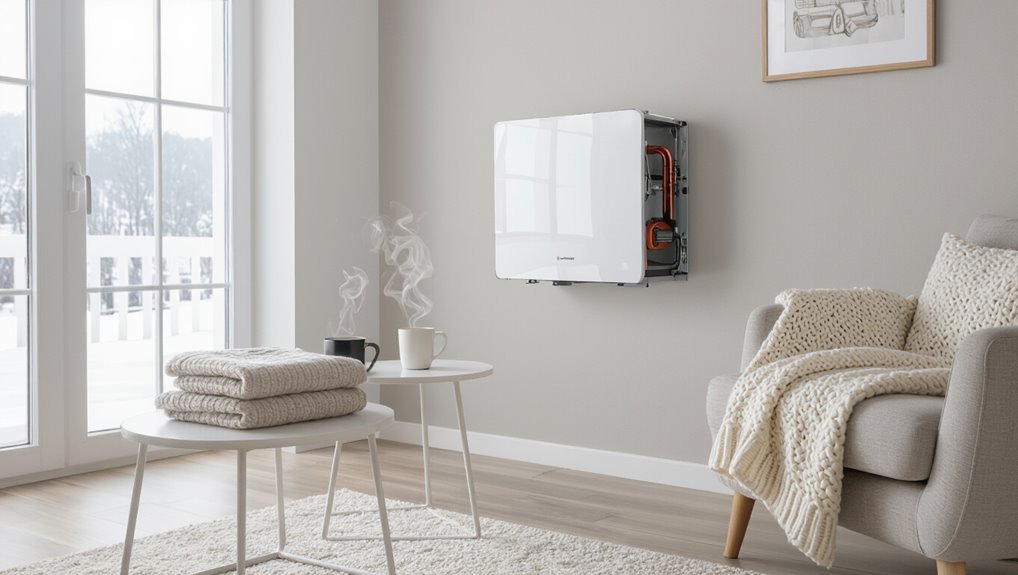
A heat pump extracts heat from outdoor air and concentrates it indoors using a refrigerant cycle, running continuously at varying speeds to meet demand.
In cold weather, it prioritizes steady, efficient heat delivery rather than short, intense bursts from a furnace. Homeowners can typically expect comfortable indoor temperatures in the mid-60s to low-70s Fahrenheit, with performance depending on system size, insulation, and outdoor conditions.
What a heat pump does during cold weather
Although outdoor temperatures drop, a heat pump continues to extract ambient heat from the outside air (or ground) and transfers it indoors by evaporating, compressing, condensing, and expanding a refrigerant in a closed loop.
It reverses refrigeration to release heat inside, modulates compressor speed for efficiency, and may use supplemental resistance when extremes reduce extracted heat.
This answers how do heat pumps work in winter.
Typical indoor temperature performance you can expect
When outdoor temperatures remain within a system’s designed range, a properly sized heat pump typically maintains indoor temperatures within about 1–3°F (0.5–1.5°C) of the thermostat setpoint by running longer at lower capacity rather than short cycling.
As conditions drop toward the equipment’s balance point, the heat pump runs more continuously and may rely on staged or supplemental electric heat to hold comfort, resulting in slightly wider indoor swings and higher energy use.
Homes often see modest temperature drift during defrost cycles, near-vent registers, or in poorly insulated rooms.
Zoning, proper sizing, and insulation reduce swings and improve steady performance without excessive backup heating.
Basic principles: how heat pumps move heat instead of generating it
The refrigeration cycle transfers heat by circulating a refrigerant that absorbs heat at low temperature and releases it at higher temperature.
Key components—the compressor, evaporator, condenser, expansion valve, and the refrigerant itself—each perform a specific role in that cycle during winter operation.
A brief explanation of how each part works together will clarify why the system moves heat rather than creating it.
Refrigeration cycle explained in simple terms
A refrigeration cycle is a series of controlled steps that transfers heat from one place to another using a circulating refrigerant and a few key components: an evaporator, a compressor, a condenser, and an expansion valve.
The refrigerant absorbs low‑grade outdoor heat, is compressed to raise temperature, releases heat indoors, then expands to cool and repeat, enabling continuous heat transfer rather than on‑site generation.
Key components and their winter roles (compressor, refrigerant, evaporator, condenser, expansion valve)
Having outlined the refrigeration cycle, attention turns to each component’s role in winter operation:
The compressor raises refrigerant pressure and temperature to push heat inward. The refrigerant carries energy between outdoors and indoors.
The outdoor evaporator absorbs external heat; the indoor condenser releases it.
The expansion valve reduces pressure, cooling the refrigerant before it returns to collect more ambient heat.
Types of heat pumps and how each performs in winter
The article now contrasts common heat pump types and their winter performance.
It outlines conventional air-source units, cold-climate air-source variants optimized for low temperatures, ground-source (geothermal) systems with stable underground heat, and hybrid or dual-fuel setups that combine heat pumps with a backup burner.
Each type’s efficiency, capacity, and temperature limits are summarized to guide system selection for cold climates.
Air-source heat pumps
Although outdoor air temperatures drop, air-source heat pumps remain the most common residential option by moving heat from outside to inside using a refrigerant cycle and a compressor.
They extract ambient heat efficiently down to moderate cold, switching to auxiliary electric resistance or backup systems as performance falls.
Installation simplicity, lower upfront cost, and compatibility with existing ductwork make them widely adopted.
Cold-climate air-source heat pumps
While standard air-source units often struggle as temperatures fall, cold-climate air-source heat pumps are engineered to sustain high efficiency and capacity in much colder conditions.
They use advanced compressors, enhanced refrigerants, improved heat exchangers, and variable-speed fans to extract heat at low outdoor temperatures.
Backup electric resistance or hybrid systems remain possible but are needed less often due to improved low‑temperature performance.
Ground-source (geothermal) heat pumps
Ground-source (geothermal) heat pumps draw heat from the relatively stable temperatures of the ground or a buried loop field, allowing them to maintain high efficiency and capacity through winter without the steep performance drop-off seen in air‑source systems.
Their closed-loop or open-loop configurations extract consistent thermal energy, yielding lower operating costs and reliable indoor warmth, though higher upfront installation and site requirements apply.
Hybrid/dual-fuel systems
When paired with a fossil‑fuel or electric resistance backup, hybrid (dual‑fuel) heat pump systems automatically switch between the heat pump and the secondary source to optimize efficiency and maintain capacity during cold snaps.
Control logic selects the most economical heat source based on outdoor temperature, fuel prices, and demand. This preserves comfort, reduces operating costs in frigid conditions, and extends equipment lifespan.
Step-by-step winter operation cycle inside and outside the home
The winter operation cycle begins with the outdoor unit extracting heat from cold air and compressing the refrigerant to raise its temperature.
That heat is transferred indoors through the condenser coil while controls and the thermostat regulate flow and setpoints for comfort and efficiency.
Periodic defrost cycles reverse the flow to melt frost accumulation, and the system’s sensors and logic decide timing to minimize energy loss.
Outdoor heat extraction process
Although outside temperatures drop, a heat pump continues extracting ambient heat by circulating a refrigerant through an outdoor coil where it absorbs latent and sensible heat from air or ground.
Frost control and defrost cycles prevent ice buildup on the coil.
Fans and fanspeed modulation move air across the coil, while refrigerant flow and expansion valves regulate pressure and temperature to maximize heat uptake.
Compression and heat transfer to indoor air
After the outdoor coil gathers heat and refrigerant vaporizes, the cycle continues as the compressor raises the refrigerant’s pressure and temperature, preparing it to release heat indoors.
The hot, high-pressure vapor flows to the indoor coil where it condenses, releasing latent and sensible heat.
Air blown across the coil absorbs this heat and circulates warm air throughout the home before refrigerant returns to expand.
Defrost cycles and why they happen
Frequently, a thin layer of frost accumulates on the outdoor coil during winter operation, prompting the heat pump to enter a defrost cycle to restore efficient heat transfer.
The system temporarily reverses refrigerant flow or activates electric heaters to melt ice, suspending heat delivery briefly.
Sensors detect coil temperature and duration, ending defrost once frost clears so normal heating resumes with recovered performance.
How thermostats and controls manage frosting and efficiency
A thermostat and its control board coordinate indoor comfort and outdoor coil behavior by monitoring temperatures, calling for heat, and sequencing defrosts and auxiliary heat to maintain efficiency.
Sensors detect coil frost and ambient conditions; controller suspends compressor, starts defrost (reversing valve or electric heat), and rechecks temperatures.
Stages of backup heat engage if output falls, balancing comfort, efficiency, and system protection.
Factors that affect winter efficiency and heating capacity
Winter performance varies with several predictable factors: outdoor temperature and seasonal extremes directly reduce heat pump capacity, while system sizing and proper selection determine whether the unit can meet peak loads.
Building envelope characteristics—insulation, airtightness, and overall heat load—set the baseline demand the heat pump must supply.
Equipment details such as refrigerant type, system age, installation quality, and maintenance status further influence efficiency and reliability.
Outdoor temperature and seasonality
Although heat pumps extract heat from outdoor air, their efficiency and capacity are tightly linked to ambient temperature and seasonal patterns. Colder air contains less usable heat and forces the compressor to work harder, reducing coefficient of performance (COP) and maximum output.
Seasonal trends—shorter days, prolonged cold spells, ice buildup—lower seasonal performance and may trigger defrost cycles, increasing energy use and lowering steady-state heating.
System size and proper sizing considerations
When sized correctly for the building and climate, a heat pump maintains efficient operation and meets heating demand without excessive cycling or undue strain on components.
Proper sizing considers design winter temperatures, desired indoor setpoints, system capacity curves, and backup heat integration.
Oversized units short-cycle and reduce efficiency; undersized units run continuously, struggle at low outdoor temperatures, and may require supplemental heating.
Accurate load calculations are essential.
Insulation, airtightness, and home heat load
Efficiency in cold months depends as much on the building envelope as on the heat pump itself: insulation levels, airtightness, and the resulting heat load determine how hard the system must work to maintain setpoints.
Poor insulation and drafts increase heat loss, causing more frequent compressor cycling and higher energy use.
Reducing heat load through upgrades improves comfort, lowers capacity demand, and raises seasonal efficiency.
Refrigerant type and system age
Upgrading insulation and sealing reduces the heating load that a heat pump must meet, but the unit’s refrigerant type and its age determine how effectively it can deliver heat at low outdoor temperatures.
Newer refrigerants and modern compressors maintain pressure and heat transfer in cold weather; older systems with phased-out refrigerants or worn components lose capacity and efficiency, reducing low‑temperature performance.
Installation quality and maintenance status
Although proper sizing and careful installation are often invisible to occupants, they critically determine a heat pump’s winter performance: correct refrigerant charge, precise airflow, accurate thermostat placement, and secure duct connections guarantee the system can reach rated capacity and operate efficiently at low outdoor temperatures.
Regular maintenance—filter changes, coil cleaning, fan and compressor checks, and leak repairs—preserves capacity, prevents icing, and sustains efficiency.
Performance metrics and what to look for
Performance evaluation begins with established metrics like Coefficient of Performance (COP) and Heating Seasonal Performance Factor (HSPF), which quantify efficiency under specified conditions.
Attention should be paid to rated capacity versus expected real‑world output in cold climates, since lab ratings can overstate seasonal performance.
When comparing models, interpret efficiency numbers in the context of test conditions, temperature ranges, and installation factors rather than as absolute guarantees.
Coefficient of Performance (COP) and Heating Seasonal Performance Factor (HSPF)
Understanding efficiency is central when evaluating heat pumps for winter use.
COP measures instantaneous efficiency: heat output divided by electrical input at a given temperature. Higher COP means more heat per watt.
HSPF represents seasonal performance, averaging efficiency across winter conditions.
When comparing models, prioritize higher COP at relevant temperatures and higher HSPF for better year‑round heating efficiency and lower operating costs.
Rated capacity vs. real-world output in cold climates
Compare rated capacity numbers against expected on-site output, because lab-rated kilowatt and BTU figures often assume mild conditions that do not reflect cold‑climate operation.
Manufacturers report capacity at specific temperatures; installers should check performance curves showing output vs. outdoor temperature.
Look for cold‑rated models, defrost impacts, and backup heating needs.
Verify realistic capacity at local design temperatures rather than nameplate values.
How to interpret efficiency numbers when comparing models
How should efficiency numbers be read when choosing a heat pump model? One should compare SEER/HSPF for cooling/heating, COP at relevant low temperatures, and cold-climate rated performance. Look beyond peak numbers to seasonal and low-temperature metrics to predict real savings.
| Metric | What it shows |
|---|---|
| SEER/HSPF | Seasonal efficiency |
| COP (0°C) | Low-temp performance |
| Rated capacity | Peak output |
| Defrost impact | Real-world losses |
Common winter problems and how to diagnose them
Common winter problems include frequent defrost cycles, reduced heating capacity, and complete loss of heat or short cycling.
Each symptom has a narrow set of common causes—frosted coils, low refrigerant or failing compressors, and electrical or control faults respectively—and simple checks can distinguish among them.
The following section provides targeted diagnostic steps and a brief troubleshooting checklist for each issue.
Frequent defrost cycles and causes
When outdoor units enter defrost more often than expected, it signals an imbalance between frost accumulation and the system’s ability to clear it, which can reduce efficiency and comfort.
Frequent defrosting often stems from restricted airflow (dirty filters, blocked coils), malfunctioning fans, improper refrigerant charge, or a faulty defrost control or sensor.
Inspect airflow, coil cleanliness, and defrost timers to pinpoint cause.
Reduced heating capacity likely reasons
Although a heat pump is designed to extract heat from cold outdoor air, reduced heating capacity in winter is a frequent symptom of several diagnosable issues: restricted airflow, low refrigerant charge, iced or dirty outdoor coils, failing reversing valves or compressors, and degraded auxiliary heat.
Technicians check filters, ductwork, refrigerant pressures, coil condition, defrost operation, and component voltages to isolate causes before repair or part replacement.
No heat or short cycling troubleshooting checklist
Troubleshooting no-heat or short-cycling issues begins with a systematic checklist that narrows probable causes quickly and safely.
Inspect thermostat settings and wiring; confirm mode, setpoint, and batteries.
Check air filters, outdoor unit frost, and airflow.
Verify defrost cycle and refrigerant odor/leaks.
If unresolved, call a licensed technician.
- thermostat and controls
- airflow and filters
- outdoor unit/frost and refrigerant
Practical tips to maximize winter performance and comfort
Practical tips cover simple thermostat strategies, a seasonal maintenance checklist, and targeted home upgrades that boost heat pump efficiency and comfort.
Recommendations include setback and setback-avoidance settings, inspecting filters and outdoor unit clearance, and improving insulation, air sealing, and ventilation.
Guidance also notes when a backup or hybrid heating source becomes cost-effective or necessary.
Recommended thermostat settings and control strategies
How should a thermostat be set to balance comfort, efficiency, and defrost cycles when outdoor temperatures drop?
The recommendation is a modest setback: maintain steady indoor temps (around 18–20°C/64–68°F) to reduce compressor cycling and minimize defrost events.
Use programmable or smart controls for gradual setbacks, recovery periods, and dual-fuel staging if available.
Avoid frequent large setpoint changes that trigger auxiliary heat.
Maintenance checklist before and during winter
A seasonal maintenance checklist guarantees a heat pump will run reliably and efficiently through cold weather by addressing airflow, refrigerant, electrical connections, and outdoor unit access.
Inspect filters, clear debris around the outdoor unit, and verify defrost cycles and heating output. Schedule professional refrigerant and electrical checks if performance lags.
- Clean or replace filters
- Keep outdoor unit clear
- Verify defrost and controls
Home upgrades that improve heat pump effectiveness (insulation, sealing, ventilation)
Upgrading a home’s building envelope directly boosts a heat pump’s winter performance by reducing heat losses and balancing indoor airflow.
Add attic and wall insulation, seal gaps around windows, doors, and ductwork, and install proper weatherstripping.
Improve mechanical ventilation with heat-recovery ventilators to maintain air quality without heat loss.
Prioritize insulation and airtightness first; ventilation upgrades preserve comfort and system efficiency.
When to consider a backup or hybrid heating source
After tightening the building envelope and improving ventilation, homeowners should assess whether a backup or hybrid heating source is warranted for cold snaps or peak demand.
Consider local climate extremes, heat pump low-temperature performance, fuel costs, and electrical capacity. Options include electric resistance, gas furnace hybrid systems, or wood stoves.
Prioritize automatic switching, appropriate sizing, and compatibility to guarantee comfort and efficient operation.
Cost, savings, and environmental impact in winter
A concise comparison of winter operating costs shows heat pumps often use less energy than electric resistance and can be cheaper than fuel furnaces depending on local electricity and fuel prices.
Key drivers of savings include system efficiency at low temperatures, proper sizing and installation, and available incentives, all of which affect payback periods.
The carbon footprint of winter heating shifts with the regional electricity mix, so emissions benefits grow where grids are cleaner.
Typical operating costs compared to furnaces and electric resistance
Because heat pumps move heat rather than generate it, their winter operating costs are typically lower than electric resistance and can be competitive with or better than high-efficiency gas furnaces depending on climate, electricity prices, and system efficiency.
Operational expense varies with COP at outdoor temperatures, supplemental electric backup use, and utility rates.
Emissions often fall with cleaner electricity, reducing carbon impact versus fossil-fuel heating.
Energy savings drivers and payback considerations
The key drivers of winter energy savings and payback for heat pumps are upfront cost, seasonal performance (COP or HSPF across expected outdoor temperatures), local fuel and electricity prices, and the fraction of heating load met without electric resistance or fossil-fuel backup.
Other influences include installation quality, system sizing, incentives or rebates, maintenance costs, and expected lifetime; together these determine annual savings and simple payback period.
Carbon footprint implications
Several factors determine the wintertime carbon footprint of heat pumps: the grid emissions intensity where electricity is sourced, the heat pump’s seasonal efficiency across cold temperatures, the share of heating supplied without backup resistance or fossil furnaces, and the embodied emissions associated with manufacturing and installation.
Operational emissions typically fall versus combustion when grids are low-carbon and COPs remain high; upfront emissions are often recovered within years through lower fuel use and avoided onsite combustion.
Choosing the right heat pump for cold climates
Selecting a heat pump for a cold climate requires asking installers about required specifications, performance at low temperatures, and warranty details.
Attention should be paid to contractor credentials, references, and visible signs of quality installation like correct sizing and reliable refrigerant line work.
The choice between a cold-climate air-source unit and a geothermal system hinges on incremental efficiency gains, upfront cost, and site-specific factors such as ground conditions and long-term energy goals.
Questions to ask installers and specifications to request
Because cold-climate performance hinges on model capabilities and installation quality, homeowners should prepare targeted questions and request specific specifications to guarantee a heat pump will meet winter heating needs.
Ask about rated heating capacity at -15°C, cold-climate COP or HSPF, and recommended backup strategy.
Request:
- Cold-weather performance datasheet
- Full equipment model numbers
- Detailed system sizing calculations and assumptions
Signs of a quality installation and contractor credentials
When evaluating a prospective installer, look for concrete indicators of quality work and appropriate credentials rather than vague promises: Verified licensing, manufacturer certifications for cold-climate models, and documented local experience with similar installations.
Request references, site photos of previous work, written system sizing and load calculations, clear warranty terms, and proof of insurance.
Transparent communication and timely, itemized estimates signal professionalism.
When geothermal or cold-climate models are worth the extra cost
Having verified installer credentials and reviewed past work, homeowners must next weigh whether a geothermal system or a cold‑climate air‑source model justifies the higher upfront cost.
Geothermal offers stable efficiency and lower operating costs where ground access exists; cold‑climate air‑source suits retrofit situations and moderate budgets.
Decisions hinge on climate severity, utility rates, available incentives, site constraints, and long‑term payback calculations.
Real-world examples and scenarios
The section presents three compact case studies to illustrate heat pump performance in winter.
One considers a modest home in a mild winter climate using a standard air-source heat pump.
The others compare a cold‑climate ASHP’s performance and a hybrid heat pump-plus-fossil-fuel setup for very cold regions.
Example: modest home in a mild winter climate
A modest single-family home in a mild winter climate—about 1,200 to 1,800 square feet with typical insulation levels—provides a clear example of how a heat pump performs:
An air-source heat pump maintains comfortable indoor temperatures with high efficiency, often achieving COPs of 2.5–4.0.
Supplementary electric resistance heat rarely activates; utility bills fall compared to electric resistance systems, and occupants notice consistent warmth and quiet operation.
Example: cold-climate performance with a cold-climate ASHP
Moving from mild climates to colder regions, cold-climate air-source heat pumps (ccASHPs) demonstrate markedly different operational patterns and outcomes.
In a well-insulated 1,800 ft² home at -10°C, a ccASHP maintains comfort with reduced COPs, running longer cycles and drawing more auxiliary power but still outperforming resistive heat.
Proper sizing, defrost controls, and backup strategies yield reliable, efficient winter performance.
Example: hybrid system used in very cold regions
In many very cold regions, hybrid heating systems—combining cold-climate air-source heat pumps with high-efficiency gas or electric furnaces—provide a pragmatic balance between efficiency and reliability.
Controllers switch to the furnace when heat pump capacity or efficiency drops below a set threshold, minimizing fossil fuel use while ensuring comfort.
Installations often include zoning, smart thermostats, and incentives to optimize cost, emissions, and performance.
Quick summary and actionable next steps for homeowners
The summary highlights a few immediate steps homeowners can take to improve winter performance, such as tightening drafts, raising thermostat setbacks, and cleaning or replacing filters.
It also notes signs that warrant professional attention, including persistent frost, unusual noises, or a sudden loss of capacity.
The next steps recommend trying simple fixes first and scheduling an inspection or upgrade when problems persist or efficiency gains justify it.
Immediate steps to improve winter heating from a heat pump
Start by checking and adjusting key settings to restore heating performance quickly: confirm the thermostat is set to a steady heat schedule, switch the system to “heat” or “auto” mode, raise the setpoint a few degrees to test responsiveness, and verify auxiliary or emergency heat is only used when necessary.
Clean or replace filters, make sure outdoor unit is clear of snow/debris, bleed radiators if applicable, and improve insulation and draft-sealing.
When to call a professional for inspection or upgrade
If basic checks and quick fixes do not restore reliable winter heating, homeowners should consider a professional inspection or upgrade.
A technician can diagnose refrigerant issues, compressor wear, defrost problems, airflow restrictions, or control faults.
Schedule service when performance drops, noise increases, energy bills rise, or the unit is over 10–15 years old.
Consider upgrades to higher-efficiency models or supplemental heating solutions.
Conclusion
Like a lantern drawing warmth from the night, the heat pump extracts hidden energy from cold air or ground and brings it inside, turning scarcity into comfort. It is a cycle of subtle exchange—compressing, moving, releasing—where efficiency, sizing, and climate act as the frame that shapes the light. For homeowners, choosing the right system, maintaining it, and understanding limits allows the lantern to glow steadily through winter’s dark.
