How Do Gas Leaks Happen and What You Can Do to Prevent Them
Gas leaks happen when flammable gases escape from appliances, pipes, or fittings due to issues like corrosion, damage, poor installation, or component failure. These leaks can lead to serious risks such as poisoning, asphyxiation, fires, and explosions. Common signs of a gas leak include a rotten-egg smell, headaches, dizziness, and hissing noises. To detect leaks, use sensors, conduct smell checks, and perform regular inspections.
If you suspect a gas leak, immediately evacuate the area, avoid any ignition sources, and contact your utility provider. Regular maintenance, professional inspections, and prompt repairs are essential for preventing gas leaks. Further guidance is available on effective prevention and response strategies.
What a gas leak is and why it’s dangerous
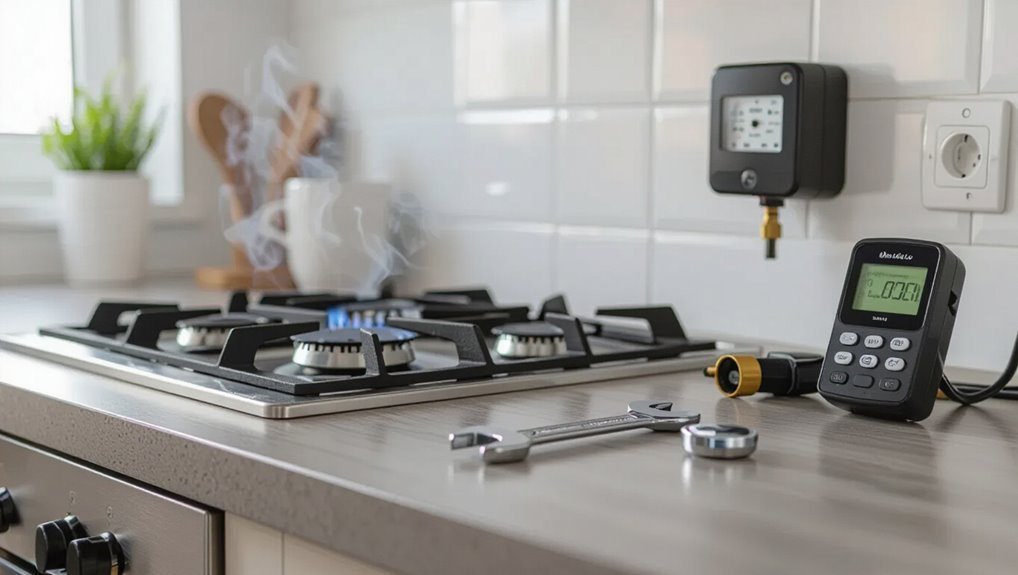
A gas leak occurs when natural gas, propane, or other industrial gases escape containment and accumulate in buildings or the environment. Such releases pose acute health and safety risks—including poisoning from inhalation, fire or explosion hazards, and environmental contamination.
Typical signs and symptoms of exposure include the smell of rotten eggs (for odorized gases), hissing sounds, dead vegetation, headaches, dizziness, nausea, and difficulty breathing.
Definition of a gas leak (natural gas, propane, other gases)
Gas leaks occur when flammable gases such as natural gas (methane), propane, or industrial gases escape containment and enter an unintended space.
A gas leak is the uncontrolled release from pipelines, tanks, fittings, appliances, or valves. It involves pressure loss, odorant presence, and detectable concentrations.
Explanations of how gas leaks happen include corrosion, mechanical damage, faulty installation, and equipment failure.
Health and safety risks (poisoning, explosion, fire, environmental impact)
Following the causes and modes of escape, attention turns to the risks that leaking gases pose to people, property, and the environment.
Leaked gas can cause poisoning through inhalation, displacement of oxygen, and asphyxiation; it creates explosion and fire hazards when mixed with air and ignited; and it harms ecosystems and contributes to greenhouse gas emissions and soil or water contamination.
Typical signs and symptoms of exposure
When inhaled or encountered in confined spaces, leaking gases produce recognizable physiological and sensory effects that signal danger to occupants and responders.
Symptoms vary by gas: odorants cause pungent smells, eye and throat irritation, coughing, headaches, dizziness, nausea, and vomiting.
High concentrations bring confusion, loss of coordination, unconsciousness, respiratory failure, and death.
Prompt evacuation and medical evaluation are essential.
Common causes of gas leaks
Common causes of household gas leaks include failures of appliances such as stoves, heaters, and water heaters.
Other frequent sources are aging or corroded piping and fittings, poor installation or maintenance, and damage to gas lines from digging or construction.
Faulty regulators, valves, and connectors also contribute to leaks and warrant regular inspection.
Household appliance failures (stoves, heaters, water heaters)
Household appliance failures—such as faulty stoves, space heaters, and water heaters—are a frequent source of domestic gas leaks, typically arising from worn valves, cracked fittings, improper installation, or inadequate maintenance.
Regular professional inspections, correct installation by licensed technicians, replacing defective components, and following manufacturer maintenance schedules reduce risks.
Promptly addressing strange odors, pilot light issues, or performance changes prevents escalation.
Aging or corroded piping and fittings
Because metal and connectors degrade over time, aging or corroded piping and fittings become frequent origins of gas leaks in buildings.
Corrosion, mechanical wear, chemical exposure and stress fractures thin walls, loosen joints and create pinholes.
Hidden deterioration in basements, crawlspaces or behind walls can go unnoticed until odor or pressure loss appears.
Regular inspections and timely replacement address these risks.
Poor installation or maintenance work
Improper installation or maintenance frequently creates conditions for gas leaks when fittings are misaligned, seals are poorly seated, or components are left loose or damaged.
Technicians who skip torque specs, omit thread sealant, or reuse worn parts increase leak risk.
Inadequate testing, improper venting, and failure to follow codes or manufacturer instructions allow unnoticed leaks.
Regular certified inspections and corrective action mitigate these hazards.
Damaged gas lines from digging or construction
While faulty installation and maintenance often create internal weaknesses, external forces from digging or construction account for a large share of gas-line breaches.
Excavation, trenching, or heavy equipment can nick, crush, or displace buried pipes and fittings. Unmarked utilities, inadequate site surveys, and careless contractors increase risk.
Consequences include leaks, explosions, service interruptions, and costly repairs; prevention relies on proper locating, planning, and supervision.
Faulty regulators, valves, and connectors
Faulty regulators, valves, and connectors frequently initiate gas leaks by failing to control pressure or maintain secure seals. Worn diaphragms, corroded seats, loose fittings, and cracked housings all create paths for gas to escape.
Regular inspection, torque checks, replacement of deteriorated components, and use of compatible materials reduce risk.
Professional testing after repairs verifies integrity and prevents undetected leaks.
Seasonal factors and temperature-related failures
Because materials contract, expand, and age differently across seasons, temperature swings and seasonal conditions often provoke failures that lead to gas leaks.
Cold causes brittle pipes and seal shrinkage; heat accelerates aging, softens seals, and increases pressure.
Freeze–thaw cycles and moisture intrusion loosen fittings.
Regular seasonal inspections, timely replacement of weathered components, and proper insulation mitigate these risks.
How gas leaks typically develop over time
Gas leak incidents range from small, slow seepages that may go unnoticed for days to sudden major ruptures that pose immediate danger.
Over time a minor leak can escalate as corrosion, pressure changes, or continued wear widen the breach, turning a manageable repair into an emergency.
The following case scenarios illustrate typical development patterns and decision points for detection, response, and prevention.
Small slow leaks vs. sudden major ruptures
Leaks manifest on a spectrum from imperceptible slow seepage to abrupt catastrophic ruptures, and their development paths differ markedly.
Slow leaks often originate from corrosion, loose fittings or hairline cracks, releasing small amounts over long periods and allowing detection and repair.
Sudden ruptures result from impact, severe material failure or overpressure, producing rapid, large releases that demand immediate evacuation and emergency response.
Progression from unnoticed leak to hazardous situation
Over time, an initially minor escape can evolve through predictable stages—from slow seepage unnoticed by occupants to accumulation in confined spaces and finally to an ignition-ready concentration—driven by factors such as leak rate, ventilation, temperature gradients, and system pressure.
Small increases in release or reduced airflow raise ambient concentration; odors may be masked. Eventually, flammable limits or toxic thresholds are reached, creating immediate risks.
Case scenarios illustrating common leak development
To illustrate how a minor escape can become dangerous, several typical scenarios are presented that map the progression from small failure to hazardous condition.
A slow appliance seal leak accumulates indoors, reaching flammable concentration.
A corroded pipe develops a pinhole, expanding under pressure.
A faulty regulator causes intermittent high flow, dispersing gas into voids where ignition sources trigger explosions.
How to detect a gas leak quickly
Detection begins with sensory and observational cues: a rotten-egg odor when mercaptan is present, hissing, blowing, or roaring sounds, and visual signs like dead vegetation, dust plumes, or frost on a pipe.
Electronic gas detectors and combustible gas monitors provide rapid, objective confirmation when sensors are available.
Professional inspection and leak detection should be sought whenever signs are uncertain, prolonged, or involve large concentrations.
Smell: recognizing the rotten-egg odor and when it may be absent
Although utility-grade natural gas is odorless, a sulfur-like “rotten egg” scent is deliberately added to aid quick recognition of leaks. When that smell is present, it is the most immediate and reliable cue to take action.
Absence of odor can occur with low concentrations, if olfactory fatigue sets in, or with leaked propane lacking odorant. Always treat suspected leaks seriously and evacuate promptly.
Sound: hissing, blowing, or roaring noises
When a gas leak occurs, audible cues such as hissing, blowing, or a low roaring can provide an immediate indication of escaping gas.
These sounds are often loudest near the leak source—valves, pipe joints, or appliance connections—and may vary with pressure, wind, and the size of the opening.
Promptly investigate unusual persistent noises, avoid ignition sources, evacuate if unsure, and contact emergency services or the utility provider.
Visual cues: dead vegetation, dust blowing, frost on pipe
Visual indicators can reveal a subsurface or leaking gas line long before an odor is noticed: patches of dead or discolored vegetation, unexplained plumes of dust or soil being blown upward, and localized frost or condensation forming on a pipeline or its fittings are all signs of escaping gas.
Observers should note unusual ground disturbances, persistent dry spots, or icy buildup near buried lines and report them to the utility promptly.
Using gas detectors and combustible gas monitors
Activate a portable gas detector to locate leaks faster and with greater certainty than by smell alone. The device indicates concentration, warns at thresholds, and guides searching along pipes, fittings, and appliances.
Regular calibration and fresh batteries guarantee accuracy; keep a safe distance and ventilate if alarmed.
- Select sensor type for expected gas
- Calibrate per manufacturer
- Check batteries before use
- Scan seams and joints
- Record alarm locations
When to rely on professional inspection and leak detection
How should a homeowner decide to call a professional rather than rely on DIY checks? When odor persists, appliances malfunction, or detectors trigger repeatedly, a licensed technician should inspect.
Professionals use calibrated instruments, perform pressure tests, and check concealed lines and regulators. Immediate contact is warranted for unexplained symptoms, multiple leak sources, or after suspicious work.
Prompt professional detection prevents escalation and guarantees safe repairs.
Immediate actions to take if you suspect a gas leak
If a gas leak is suspected, occupants should evacuate immediately, refrain from using phones, switches, engines, or open flames, and avoid actions that could create a spark.
If it is safe to do so without re-entering the building, the emergency gas shutoff valve may be closed following manufacturer or utility guidance.
Once at a safe distance, contact the gas utility and emergency services and arrange for a certified technician to inspect before returning.
Step-by-step emergency response (evacuate, avoid flames, shut off gas if safe)
Upon detecting a suspected gas leak, occupants should immediately leave the building, refrain from using matches, lighters, electrical switches, or phones inside, and move upwind to a safe distance before calling emergency services.
If trained and it can be done without entering the affected area, a responsible person may shut off the gas at the meter using the valve following utility guidance.
Others warn neighbors, prevent reentry, and await responders.
How and when to use the emergency gas shutoff valve
Locate the emergency gas shutoff valve quickly but only consider using it when the leak is obvious, evacuation is complete, and doing so does not require re-entering the hazardous area.
Turn the valve perpendicular to the pipe with a wrench or dedicated key, if trained and safe.
After shutting off, move to a safe distance, warn others, and await professionals to confirm denser-than-air pockets are cleared.
Who to call: utility company, emergency services, certified technician
A clear chain of contact is essential when a gas leak is suspected: occupants should evacuate, then notify the gas utility immediately to report the leak and request isolation.
If there is an immediate danger, emergency services should be called.
After the scene is declared safe, engage a certified gas technician for inspection, repairs, and issuance of a safety clearance before reoccupying the premises.
What to avoid doing (no phones, switches, engines, or open flames)
If a gas leak is suspected, occupants should immediately evacuate without using phones, light switches, engines, or open flames, because any spark can ignite leaking gas.
They should avoid operating electrical devices, starting vehicles, or lighting matches. Doors should be closed lightly behind them.
Once at a safe distance, call emergency services or the gas company from a mobile phone or neighbor’s phone.
Preventive maintenance to reduce gas leak risk
Preventive maintenance substantially lowers the risk of gas leaks through scheduled professional inspections and routine homeowner visual checks.
Replacing aging appliances and components on a planned timeline, along with ensuring proper installation by qualified technicians, addresses many common failure points.
Seasonal preparation, including winterization, further reduces vulnerability by catching weather-related issues before they escalate.
Regular professional inspections and scheduling checks
Scheduling regular professional inspections guarantees gas systems remain safe and functional by identifying wear, corrosion, and improper installations before they escalate into leaks.
Certified technicians perform pressure tests, detector calibrations, appliance evaluations, and ventilation assessments. They document findings, recommend prioritized repairs, and verify compliance with codes.
Planned service intervals and prompt corrective actions greatly reduce undetected failures and liability while prolonging equipment life.
Routine homeowner checks and simple visual inspections
Homeowners should routinely perform basic visual inspections and simple functional checks to catch early signs of gas system issues before they worsen.
Inspections focus on connections, smells, and appliance behavior to prompt timely professional attention.
- Check flexible hose condition and fittings
- Smell for rotten-egg odor periodically
- Verify pilot lights and burners ignite cleanly
- Inspect meter and regulator for damage
- Confirm ventilation near appliances is clear
Replacing old appliances and components on a schedule
Replace aging gas appliances and components on a regular timeline to reduce wear-related failures and the chance of leaks.
Scheduled replacement of valves, hoses, connectors, and aging burners limits material fatigue and corrosion.
Keeping records of service dates and expected service life guides timely swaps.
Prioritizing high-risk items and following manufacturer lifespan recommendations minimizes unexpected failures and cumulative leak risk.
Proper installation standards and hiring qualified technicians
Make certain gas systems are installed to current codes by technicians certified for the specific appliance and fuel type, because correct installation is the foundation of leak prevention.
Qualified professionals follow manufacturer specifications, use approved materials, pressure-test connections, and document work.
Homeowners should verify credentials, request permits and receipts, and avoid DIY gas plumbing to minimize installation errors that lead to leaks.
Seasonal preparation and winterization steps
After ensuring installations meet code and are performed by certified technicians, attention should turn to seasonal preparation and winterization to further reduce gas leak risk.
Inspect and insulate exposed pipes, tighten fittings, test detectors and carbon monoxide alarms, clear vents and flues, service heaters and gas appliances, shut off exterior shutoffs before freezing weather, and schedule professional audits to confirm seals and regulator operation.
Safety upgrades and products that improve protection
The discussion shifts to practical safety upgrades and products that reduce the likelihood and impact of residential gas incidents.
Topics include proper placement of gas detectors, differences between carbon monoxide and combustible gas sensors, automatic shutoff valves and smart monitors, and the use of flexible connectors and approved piping materials.
Guidance emphasizes choosing devices and installations that meet standards and suit the specific fuel and layout of the home.
Residential gas detectors and placement guidelines
Where should gas detectors be installed to provide reliable early warning? They should be installed near potential leak sources—kitchen, furnace, gas dryer—and on each level, especially sleeping areas.
Install carbon monoxide and combustible gas detectors per manufacturer height recommendations (natural gas higher, propane lower).
Avoid corners, direct drafts, or blocked locations. Test monthly, replace per lifespan, and follow local codes for best protection.
Automatic shutoff valves and smart gas monitors
Many households now rely on automatic shutoff valves and smart gas monitors to reduce leak duration and improve detection accuracy.
These systems combine sensors, connectivity, and valve actuators to stop flow when concentrations exceed thresholds or when unusual pressure changes occur.
Integration with alarms, smartphones, and utility alerts enables faster response.
Professional installation, periodic testing, and firmware updates maintain reliability and reduce false triggers.
Flexible connectors and approved piping materials
Upgrade efforts often focus on replacing outdated rigid lines with approved flexible connectors and modern piping materials that resist corrosion, vibration, and environmental stress.
Qualified technicians select connectors rated for fuel type and pressure, secure proper fittings, and follow code for routing and support.
Regular inspections, timely replacement of worn components, and use of certification-marked materials reduce leak risk and simplify maintenance.
Carbon monoxide vs. combustible gas detectors: differences
A clear distinction exists between carbon monoxide (CO) detectors and combustible gas detectors: CO alarms identify an odorless, colorless toxic gas produced by incomplete combustion, while combustible gas detectors sense flammable hydrocarbons such as natural gas or propane to warn of explosion and fire risk. Installation, placement, sensor type differ; both improve safety when maintained and tested regularly.
| Feature | CO Detector | Combustible Gas |
|---|---|---|
| Detects | Toxic CO | Flammable gases |
| Placement | Near sleeping areas | Near appliances |
Legal requirements, codes, and utility responsibilities
Legal frameworks shape how gas systems are designed, installed, and maintained, with building codes specifying materials, clearances, and ventilation requirements.
Utility companies are obligated to monitor networks, respond to alarms and leaks, and coordinate emergency shutoffs according to established protocols.
Permits, inspections, and thorough documentation for any gas work create accountability and guarantee compliance with safety standards.
Typical building code mandates for gas systems
Many jurisdictions require that gas systems comply with specific building codes and utility regulations to confirm safe design, installation, inspection, and operation.
Codes typically mandate approved materials, proper venting, leak detection, pressure testing, clearances, shutoff valves, labeling, and certified installer qualifications.
Regular inspections, documented permits, and adherence to appliance-specific standards minimize leak risks and confirm accountability during construction and renovation.
Utility company obligations and emergency response protocols
Beyond building code requirements for installations, responsibility for public safety frequently shifts to utilities once gas enters the distribution network.
Utilities must monitor pipelines, maintain records, conduct leak surveys, and comply with federal and state pipeline safety regulations.
Emergency response protocols require timely leak reporting, rapid isolation, public notification, coordination with first responders, and corrective actions to restore safe service and prevent recurrence.
Permits, inspections, and documentation for gas work
While local, state, and federal statutes define the framework for gas work, permits, inspections, and documentation form the operational backbone that guarantees compliance and public safety. Contractors and utilities must obtain the correct permits, submit required plans, and retain records of inspections, tests, and certifications.
Regulators enforce codes, require qualified personnel, mandate corrective actions, and guarantee utility oversight, traceability, and auditability of all gas installations.
Common mistakes that increase leak risk and how to avoid them
Common mistakes that increase gas leak risk include DIY repairs and improper installations, which often lack the skill and tools required for safe connections.
Ignoring warning signs or delaying professional repairs allows small issues to worsen into hazardous failures.
Using incompatible parts or materials further undermines system integrity and should be avoided by following manufacturer specifications and hiring qualified technicians.
DIY repairs and improper installations to avoid
Attempting gas-related repairs or installing equipment without proper training markedly elevates the risk of leaks and related hazards.
Unapproved fittings, incorrect pipe sizing, and improper sealing are common errors. DIY appliance hookups, reused connectors, and neglecting manufacturer specifications compromise integrity.
Always hire certified technicians, use approved materials, obtain permits, and request pressure testing and documentation to guarantee safe, code-compliant installations.
Ignoring warning signs and delaying repairs
Recognize early warning signs—hissing sounds, a rotten-egg odor, dead vegetation near gas lines, or unexplained pilot outages—and act immediately rather than postponing repairs.
Failure to address such indicators allows small issues to worsen, increasing explosion and poisoning risks.
Homeowners should shut off gas, ventilate, evacuate if needed, and contact licensed professionals promptly.
Timely maintenance prevents escalation and reduces liability.
Using incompatible parts or materials
Many repairs and DIY upgrades introduce risk when parts or materials are mismatched to gas systems. Using the wrong fittings, sealants, or piping can create leaks, corrosion, or failed connections.
Professionals recommend certified components, manufacturer-approved sealants, and proper thread types. Mixing metals, improper pipe grades, or nonrated adhesives shortens service life and raises leak risk.
Verify compatibility and follow codes to prevent failures.
Preparing a household gas-safety plan
A concise household gas-safety plan outlines evacuation routes, designated meeting points, and clear communication procedures for all occupants.
It also assigns basic detection and response tasks to family members and schedules brief, regular training so everyone knows how to act.
Emergency contacts, the gas shutoff location and step-by-step shutoff instructions should be stored in an accessible spot and shared with all household members.
Creating an evacuation and communication plan
Developing a clear evacuation and communication plan guarantees every household member knows exactly what to do, where to go, and how to stay in contact if a gas leak occurs.
The plan assigns roles, establishes primary and secondary meeting points, lists emergency contacts, identifies escape routes, and specifies how to notify neighbors and authorities without re-entering the home.
- Assigned roles
- Meeting points
- Emergency contacts
- Escape routes
- Notification steps
Training family members on detection and response
Train household members to recognize gas leak indicators and respond swiftly: teach the smell of rotten eggs or sulfur, listen for hissing sounds, and watch for physical signs such as dead vegetation, bubbling water near buried lines, or unexplained illness.
Assign roles for alerting occupants, practicing rapid evacuation drills, instructing non-use of electronics or flames, and reviewing appliance shutoff procedures periodically.
Storing emergency contacts and gas shutoff instructions
With roles assigned and evacuation drills practiced, households should compile and store clear emergency contact information and step-by-step gas shutoff instructions so everyone can act quickly when a leak is suspected.
Contacts include utility provider, emergency services, landlord, and a trusted neighbor.
Instructions should show valve locations, turning technique, and photographic labels.
Keep printed copies, digital backups, and place one near the meter.
When to replace versus repair gas infrastructure
Decision-making on repair versus replacement hinges on clear indicators—extensive corrosion, repeated leaks, or compromised structural integrity—that typically warrant full replacement.
A pragmatic assessment weighs component lifespan and replacement costs against ongoing repair expenses and residual safety risk.
Priority should be given to actions that eliminate imminent hazards first, while scheduling less urgent work according to risk reduction per dollar spent.
Indicators that warrant full replacement
When corrosion, repeated repairs, or structural failures compromise pipeline integrity beyond safe operational limits, full replacement should be prioritized over continued patching.
Indicators include widespread wall thinning, multiple leak sites, extensive joint degradation, buried or inaccessible defects, persistent pressure loss despite repairs, and regulatory noncompliance.
Replacement is also warranted when inspection reveals imminent failure risk or when repair would not restore original safety margins.
Cost-benefit considerations and lifespan of components
Often guided by risk assessments and budget constraints, evaluations of whether to repair or replace gas infrastructure hinge on quantified cost-benefit analyses that compare immediate repair costs, projected maintenance expenses, and the expected remaining service life of components against the safety, regulatory, and reliability gains from replacement.
Decision-makers weigh failure probability, downtime impacts, residual value, and long-term liability exposure to select the most economical, safest option.
How to prioritize repairs for maximum safety
Prioritize repairs by ranking assets according to their immediate risk to life, property, and system integrity, using objective criteria such as leak severity, proximity to occupied buildings, population density, system pressure, and corrosion or material degradation indicators.
Replace components when inspections reveal irreversible deterioration, repeated failures, or high-consequence locations.
Repair temporarily for isolated, low-risk defects with documented monitoring and scheduled replacement to minimize cumulative risk.
Real-life examples and lessons learned
The article presents brief case summaries of residential gas leaks, outlining causes, responses, and outcomes to illustrate common patterns.
Each example highlights actionable lessons for homeowners, such as signs to watch for, when to shut off service, and the importance of timely professional inspection.
These cases inform practical prevention steps and decision points for repair versus replacement.
Short case summaries of residential gas leaks and outcomes
Summaries of residential gas leak incidents illustrate common failure points and practical lessons for homeowners and responders.
One account describes a corroded pipe discovered after persistent odor reports; evacuation prevented injury.
Another involves improper appliance installation causing a slow leak detected by a CO alarm, prompting timely repair.
A third details excavation damage to a service line, resulting in temporary displacement and expedited utility coordination.
Key takeaways and practical lessons for homeowners
Drawing on the case summaries, several practical lessons emerge that homeowners can apply to reduce risk and speed response.
Regularly inspect appliances, connectors, and meters for corrosion or damage.
Install and test carbon monoxide and gas detectors.
Schedule professional pipeline and appliance maintenance.
Know emergency shutoff locations, evacuation routes, and utility contact procedures.
Report suspicious smells immediately and avoid DIY gas repairs.
Resources for further help and verified information
For immediate concerns, contact local utility providers, emergency services, or a licensed plumber to assess and address any suspected gas leak.
For guidance on safe practices and codes, consult reputable sources such as national safety agencies, utility commissions, and recognized industry organizations.
These verified resources help guarantee responses and preventative measures align with current standards.
Who to contact locally (utility, emergency services, licensed plumbers)
Immediate action and accurate contacts are essential when a gas leak is suspected: residents should call the local gas utility or emergency services (911 or the regional emergency number) first to report the leak and receive evacuation or shutoff instructions.
Then contact a licensed plumber or certified gas fitter for inspection and repairs once the scene is declared safe.
Keep utility account numbers, address, and a portable phone handy.
Reputable industry standards and guideline sources
After contacting the gas utility or emergency services and arranging professional repairs, homeowners and technicians should consult authoritative standards and guidance to confirm proper procedures and code compliance.
Reliable sources include national codes, industry associations, and government agencies offering inspection, installation, and safety protocols. Refer to these for verification and training.
- NFPA (National Fire Protection Association)
- ANSI (American National Standards Institute)
- ASME codes
- Local building codes
- EPA and state utility regulators
Conclusion
Coincidentally, the neighbor who once ignored a faint smell of gas later discovered a hidden pipe corroding beneath a shared fence, a reminder that small signs often precede danger. Awareness, timely detection, and planned responses converge to prevent tragedy: regular inspections, prompt repairs, clear household plans, and informed decisions about replacement versus repair. When chance reveals risk, preparedness turns coincidence into safety, ensuring communities learn and act before leaks become calamities.