How to Tell If Your Water Pressure Regulator Is Bad: 7 Signs and Fixes
If your water pressure regulator is failing, you may notice signs like high or erratic pressure, loud banging pipes, uneven flow from fixtures, visible leaks or corrosion, sudden drops in pressure over 20 psi, and unusual noises or changes in water quality. To diagnose the issue, use a pressure gauge at a hose bib to compare inlet and outlet pressures, and visually inspect the regulator for any damage. If you encounter leaks or significant pressure fluctuations, it’s best to consult a plumber. For detailed tests, fixes, and guidance on when to seek professional help, continue reading.
What a Water Pressure Regulator Does and Why It Matters
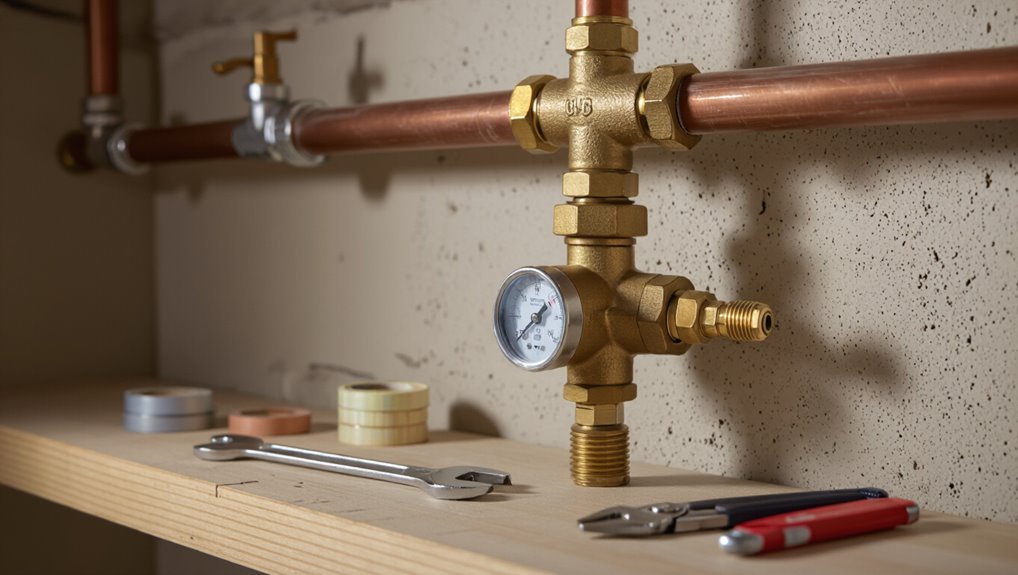
A water pressure regulator reduces the higher pressure from the municipal supply to a steady, safer level for a home’s pipes and fixtures.
Regulators are typically spring-loaded or pilot-operated devices located near the main shutoff or meter, and similar valves may appear at individual appliances.
When a regulator fails, overpressure can cause leaks, burst pipes, and shorten the lifespan of water heaters and other appliances.
How a pressure regulator works in a residential plumbing system
Pressure regulators maintain a steady, safe water pressure by reducing high incoming pressure from the municipal supply to a controlled level suitable for household plumbing.
A diaphragm and spring balance inlet force against downstream demand, modulating flow to prevent spikes.
Observing fluctuations, banging, or inconsistent faucets helps homeowners learn how to tell if water pressure regulator is bad and when to test or replace it.
Common types and locations of regulators in homes
Different designs of water pressure regulators serve similar roles but appear in several common forms and locations throughout a home.
Typical types include bell-shaped diaphragm regulators, piston-style units, and adjustable screw-top models.
They are usually installed at the main service line near the shutoff, at meter connections, or on branch lines for specific fixtures like boilers or irrigation systems for localized control.
Risks of a failing regulator (damage, leaks, appliance lifespan)
While regulators come in various styles and sit at key points like the main shutoff or meter, their primary job—keeping household water at a safe, steady pressure—directly impacts system health.
A failing regulator causes pressure spikes that stress pipes, joints and fixtures, increasing leak risk and accelerating wear on water heaters, dishwashers and valves.
Prompt repair preserves safety and appliance lifespan.
Quick Indicators Your Water Pressure Regulator Is Bad
A failing water pressure regulator often announces itself through clear, observable signs that homeowners can check quickly.
Common indicators include sudden spikes or persistently high pressure readings, frequent water hammer or loud banging pipes, and inconsistent pressure between fixtures.
Visible leaks at the regulator or nearby fittings, changes in water quality, and unusual noises from the regulator further suggest a malfunction.
Sudden spike or consistently high water pressure readings
How can homeowners tell if pressure behavior signals a failing regulator?
Sudden spikes or consistently high readings on a pressure gauge indicate the regulator may be stuck or its spring diaphragm failed.
Persistent pressure above 60 psi risks fixture damage and appliance wear.
Confirm with a reliable gauge at an outdoor hose bib; if elevated, replace or adjust the regulator and retest to guarantee stable pressure.
Frequent water hammer or banging pipes
Hear sharp knocks or rattling pipes when faucets shut off; frequent water hammer often points to a failing pressure regulator.
Persistent banging indicates excessive velocity or pressure spikes that the regulator no longer dampens. This can strain fittings, valves, and appliances.
Inspection should prioritize the regulator, its shock-absorbing components, and inlet pressure; replacing or adjusting the regulator typically resolves repetitive hammering.
Uneven pressure between fixtures
Uneven water flow between fixtures—strong in one tap, weak in another—often signals a malfunctioning pressure regulator failing to distribute pressure evenly throughout the system.
The condition may fluctuate with demand: one fixture dominates while others starve. A stuck or misadjusted regulator, clogged internal screen, or failed diaphragm can cause imbalance.
Professional inspection and adjustment, cleaning, or replacement restores uniform pressure.
Leaking at the regulator or nearby fittings
A small puddle or steady drip at the regulator body or its nearby fittings is a direct sign that the device may be failing.
Visible corrosion, wet seals, or mineral buildup around joints indicate compromised connections or internal diaphragm damage. Persistent leaks can reduce pressure control and waste water.
Inspect fittings, tighten connections, and replace worn seals or the regulator if leaks continue.
Water quality changes or noisy regulator
Beyond visible leaks, changes in water quality or unusual noises from the regulator can signal internal failure.
Sediment, discoloration, or metallic taste may indicate internal corrosion or diaphragm wear allowing debris into the system.
Humming, banging, or whistling sounds suggest trapped air, loose components, or pressure fluctuations.
Prompt inspection and cleaning or replacement prevent contamination and protect downstream plumbing and fixtures.
Repeated failure of pressure-sensitive appliances
Monitor appliances like water heaters, boilers, ice makers, and washing machines for repeated failures or shortened lifespans, as these are clear indicators of a malfunctioning pressure regulator.
Persistent leaks, burst hoses, frequent valve replacements, or premature motor burnout often trace to excessive or fluctuating pressure.
Tracking repair history and correlating failures with pressure spikes helps confirm regulator issues and prioritizes inspection or replacement.
Regulator adjustment knob won’t turn or is stuck
Why won’t the regulator adjustment knob move? Corrosion, mineral buildup, or internal seizure can seize the knob, preventing adjustment.
A stuck knob indicates internal diaphragm or spring failure, frozen linkage, or debris accumulation.
The regulator should be isolated, depressurized, and inspected; often replacement is required.
Attempting forced turns can cause further damage or leaks, so proceed cautiously or call a plumber.
How to Test and Diagnose a Faulty Regulator
To test and diagnose a faulty water pressure regulator, the technician gathers basic tools—pressure gauge, wrench, bucket, and flashlight—and follows a stepwise procedure.
They measure both static and dynamic pressure, compare readings to accepted thresholds, and perform a visual inspection for external damage or corrosion.
Finally, they run isolation tests to distinguish regulator failure from shutoff valves or municipal supply issues.
Tools you’ll need (pressure gauge, wrench, bucket, flashlight)
Before beginning tests, assemble a small kit of essentials: a reliable water pressure gauge to read static and running pressure, an adjustable wrench suitable for the regulator and fittings, a bucket to catch any discharge when loosening connections, and a flashlight to inspect hard-to-see components.
Also include thread seal tape, a cloth for spills, and safety glasses; keep a notebook and pen for recorded readings.
How to measure static and dynamic water pressure
When diagnosing a pressure regulator, measuring both static (no-flow) and dynamic (flowing) pressures provides the information needed to determine whether the regulator is maintaining proper downstream pressure or failing under load.
Attach a gauge to an outdoor hose bib or test port. Record pressure with fixtures off, then while running a sink.
Visualize:
- Gauge needle steady at rest
- Needle dipping under flow
- Hose and fittings under load
Interpreting pressure readings and thresholds for concern
How should the recorded static and dynamic readings be interpreted to reveal a failing regulator? Readings showing high static (>80 psi) or large drops between static and dynamic (>20 psi) suggest regulator failure. Stable readings within 40–60 psi typically indicate proper function. Persistent fluctuation or inability to hold setpoint warrants replacement or adjustment.
| Condition | Concern |
|---|---|
| Static >80 psi | High pressure |
| Drop >20 psi | Flow loss |
| 40–60 psi | Normal |
| Fluctuating | Intermittent failure |
Visual inspection checklist for external damage or corrosion
A thorough visual inspection focuses on external signs that indicate compromise: examine the regulator body, bonnet, and fittings for cracks, deep pitting, blistering paint, green or white mineral deposits, and threaded joint corrosion; check for wetness, salt buildup, or mineral streaks that signal slow leaks; verify that mounting brackets and supports are intact and that adjustment screws or caps are present and free of deformation; and note any evidence of mechanical impact, heat discoloration, or previous repairs that could affect sealing or diaphragm integrity.
- Flaking bronze with green streaks along a seam.
- Hairline crack across a plastic cap near a threaded joint.
- Rusted bolt with dried white mineral trails beneath the outlet.
Test to distinguish regulator failure from other issues (valves, municipal supply)
Why does pressure remain unstable after replacing or adjusting a regulator? A systematic isolation test helps.
Measure inlet pressure at the shutoff before the regulator, then outlet pressure at the house connection with downstream valves open and closed.
Compare readings to municipal supply reports. If inlet fluctuates, the issue is supply or street valve; if inlet is steady but outlet varies, suspect regulator or internal plumbing valves.
Temporary Fixes and On-the-Spot Adjustments
When immediate action is required, technicians can make on-the-spot adjustments by turning the regulator screw clockwise in small increments to lower downstream pressure while monitoring a gauge.
Temporary measures such as adding an air chamber or briefly throttling supply valves can reduce water hammer and short pressure spikes until a permanent repair is made.
If leaks, severe pressure surges, or loss of control occur, the main should be shut off and the regulator isolated to prevent further damage.
How to safely adjust the regulator screw to lower pressure
To lower excessive downstream pressure quickly, the regulator’s adjustment screw can be turned clockwise in small increments to reduce spring tension and drop the setpoint; this should be done only after confirming system isolation, relieving nearby taps to verify change, and using the correct screwdriver or wrench to avoid damaging the screw head.
- Small quarter-turns, watch the gauge.
- Isolate zone, open test faucet.
- Recheck for leaks and stability.
How to temporarily relieve water hammer and pressure spikes
Several simple actions can temporarily reduce water hammer and pressure spikes until a permanent repair is made.
Close fixtures slowly, open nearby faucets slightly to bleed pressure, and cushion pipes by securing loose runs or adding temporary padding at anchor points.
Install a portable water hammer arrester on affected lines or depressurize the system briefly by opening an outdoor hose bib.
Monitor for improvement.
When to shut off the main and isolate the regulator
Shut off the main only when evidence suggests the regulator is failing or an urgent leak or pressure surge threatens fixtures or appliances.
Then isolate the regulator by closing its upstream and downstream valves, drain residual pressure, and tag the shutoff for safety.
Call a qualified plumber before reactivation.
Temporary isolation prevents damage and allows safe inspection, testing, or replacement without risking the home’s plumbing.
Permanent Repair and Replacement Options
When a regulator shows recurring faults or internal damage, assessment will determine whether repair is practical or full replacement is required.
The discussion will outline a homeowner-friendly replacement sequence — required tools, safety precautions, and step-by-step actions — plus guidance on selecting the correct regulator by size, PSI rating, and materials.
It will also summarize typical cost and time estimates for DIY replacement versus hiring a professional.
When repair is feasible vs. when to replace the regulator
How can one decide whether to repair a pressure regulator or replace it outright?
Assessment hinges on age, leak severity, diaphragm and spring condition, and availability of replacement parts.
Repair suits recent units with minor wear or replaceable internals.
Replacement is advised for corroded, extensively damaged, or obsolete regulators, recurring failures, or when cost and reliability favor a new certified unit.
Step-by-step replacement process for homeowners (tools, safety, steps)
If inspection shows repair is impractical or parts are unavailable, replacing the regulator is the practical next step. The homeowner should gather tools, verify local plumbing codes, and plan for a controlled water shutoff before starting.
Essential steps: isolate supply, relieve pressure, remove old unit, install new unit, test for leaks, and restore service.
- adjustable wrench and pipe tape
- bucket and rags
- replacement regulator and fittings
Choosing the right replacement regulator (size, PSI rating, materials)
Though a replacement regulator must match the home’s plumbing and pressure needs, selecting the correct unit hinges on three core factors: inlet/outlet size, desired downstream PSI, and construction materials compatible with local water quality and code. Consider flow capacity, adjustable range, and corrosion resistance. Compare options:
| Factor | Recommendation |
|---|---|
| Size/Flow | Match pipe diameter; guarantee required GPM |
| PSI/Material | Settable 40–60 PSI; brass or stainless steel |
Typical costs and time estimates for DIY vs. professional service
Cost and time estimates for replacing a water pressure regulator vary by approach: a homeowner tackling a DIY swap can expect to spend $40–$200 on a replacement valve and basic fittings and complete the job in 1–3 hours depending on experience and access.
In contrast, hiring a licensed plumber typically costs $150–$600 for parts and labor and requires 1–2 hours for a straightforward replacement or half a day if additional work (pipe modifications, permits, or leak remediation) is needed.
DIY saves labor costs but risks improper installation and voided warranties; pros guarantee correct sizing, pressure calibration, code compliance and usually provide a warranty.
Emergency callouts, complex piping, or aging systems raise professional fees.
Preventive Maintenance to Extend Regulator Life
A simple preventive maintenance routine can greatly extend a water pressure regulator’s service life.
Regular inspections should note leaks, corrosion, and unusual pressure readings, with seasonal checks and winterizing steps performed before freezing weather.
Attention to incoming water quality and transient pressure spikes will help explain wear patterns and guide corrective action.
Regular inspection schedule and what to look for
Regular inspections performed on a consistent schedule are essential to catch early signs of wear or malfunction in a water pressure regulator before they escalate into failures.
Inspect quarterly, after service work, and following pressure spikes. Check for corrosion, leaks, and erratic gauge readings.
Visual cues include mineral buildup, damp seams, and a wandering needle.
- Corroded body
- Weeping joints
- Fluctuating gauge
Seasonal checks and winterizing tips
Because temperature swings and freezing conditions accelerate wear and cause hidden failures, seasonal checks and winterizing steps are essential to preserve a regulator’s function and prevent burst pipes.
Inspect for insulation gaps, secure exposed piping, drain nearby lines where applicable, and verify relief valve operation.
Apply approved heat tape or insulation, seal drafts, and schedule a professional check before cold spells to avoid damage.
How water quality and pressure fluctuations affect lifespan
Following seasonal preparations and insulation checks, attention turns to conditions inside the water system that gradually undermine regulator performance.
Corrosive or mineral-rich water accelerates diaphragm and valve wear, while sediment clogs screens and impairs responsiveness.
Frequent supply pressure spikes stress internal parts and spring tension, causing premature failure.
Regular water testing, filtration and pressure stabilization extend regulator life and reduce maintenance needs.
When to Call a Professional Plumber
If persistent pressure fluctuations, visible leaks, or a complete loss of regulated flow occur, a professional plumber should be contacted immediately.
Homeowners should prepare a brief list of questions about diagnosis, replacement options, expected costs, and what the service visit will include.
The plumber can also advise on required permits, local code compliance, and warranty implications for regulator replacement.
Signs that require immediate professional attention
Several clear indicators mean the pressure regulator may be failing and require immediate professional attention.
Sudden, extreme pressure spikes, consistent hammering noises, visible leaks at the regulator, and repeated rapid cycling of pumps are urgent.
Scalding hot water that fluctuates with other fixtures, major pressure loss affecting multiple outlets, or signs of regulator corrosion demand prompt diagnosis and repair by a licensed plumber.
Questions to ask a plumber and what to expect on the service visit
When calling a plumber about a suspected pressure regulator failure, homeowners should prepare a short list of specific questions and a clear description of observed symptoms so the visit is focused and efficient.
The plumber will inspect, test pressure, and advise repair or replacement.
Ask about timeline, diagnostic fee, and warranty.
Visualize the service:
- Technician measuring pressure gauge
- Accessible regulator near main shutoff
- Replacement parts on truck
Permits, codes, and warranty considerations for regulator replacement
Because replacing a pressure regulator can affect plumbing safety, water supply, and municipal compliance, homeowners should understand permit, code, and warranty implications before work begins.
Local codes may mandate permits, licensed installers, or inspection; failing compliance risks fines and insurance denial.
Manufacturer warranties often require professional installation and proof.
When uncertain, hire a licensed plumber to guarantee code adherence, permit handling, and warranty protection.
Troubleshooting Matrix for Common Pressure Problems
How can a homeowner quickly identify the root cause of pressure issues? A concise troubleshooting matrix helps narrow causes: regulator, supply, valves, fixtures, or blockages. Systematic checks and simple tests isolate likely faults before calling a pro.
| Symptom | Likely Cause |
|---|---|
| High steady pressure | Faulty regulator |
| Fluctuating pressure | Supply variability |
| Low pressure | Partially closed valve |
| Intermittent drops | Fixture blockage |
Summary: Steps to Confirm a Bad Regulator and Resolve It
After using the troubleshooting matrix to narrow likely culprits, the homeowner can follow a concise sequence to confirm whether the pressure regulator is at fault and then restore proper pressure.
Inspect, measure, adjust, then act:
- Gauge reading above 80 psi at main shutoff
- Visible corrosion, leaking, or stuck diaphragm
- Pressure normal after bypass or replacement
Confirm, replace or calibrate, then retest.
Conclusion
In closing, the guide frames the water pressure regulator as a quiet guardian whose failure can ripple through a home’s plumbing. By noting seven clear signs, performing simple tests, and choosing between temporary fixes or full replacement, homeowners gain a practical roadmap. Regular maintenance acts like preventive armor, while a plumber steps in for complex faults. With these steps, one can confirm a bad regulator and restore steady, safe water pressure with confidence.