
How to Thaw a Frozen Furnace Exhaust Pipe Safely and Prevent Future Freezes
To safely thaw a frozen furnace exhaust pipe, first turn off the furnace and gas supply, ventilate the area, and keep people away from the space. Gently thaw the pipe using warm water-soaked towels or a hair dryer/heat tape set to low; avoid using open flames or boiling water. Before restarting the furnace, check for ice blockages, signs of corrosion, and ensure the pipe is properly pitched. Always use a carbon monoxide (CO) alarm. To prevent future freezes, improve insulation, consider adding self-regulating heat cable, and ensure vent terminations are clear. For detailed methods, costs, and guidance on when to consult a professional, continue reading.
What to do immediately when a furnace exhaust pipe is frozen
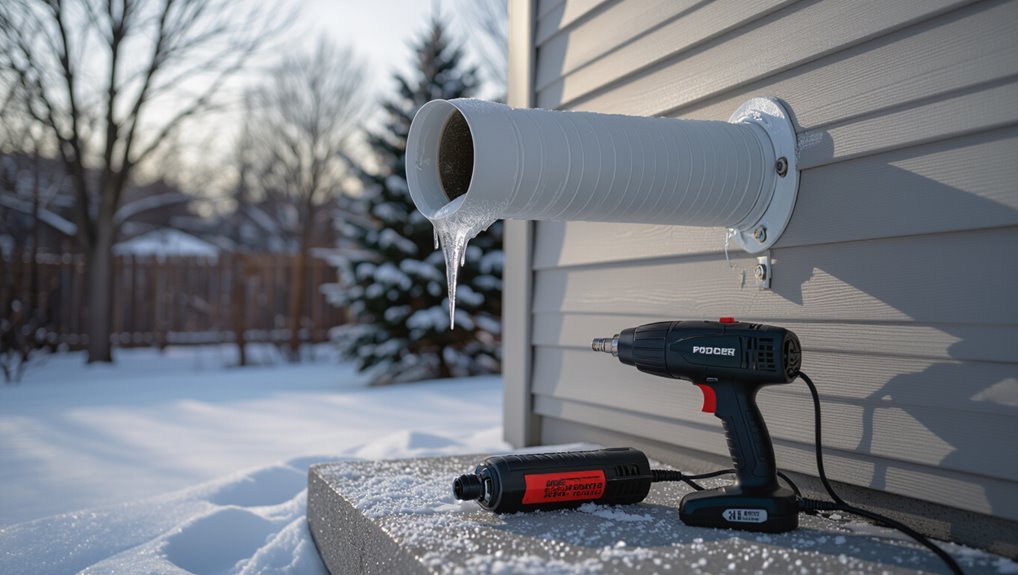
The homeowner should first distinguish a frozen exhaust pipe from other issues by checking for visible ice buildup, diminished or no venting, and unusual furnace behavior.
Immediate safety steps include shutting off the furnace, turning off the gas if applicable, and ensuring the area is well ventilated to prevent carbon monoxide buildup.
Before attempting thawing, they should gather basic tools and materials such as a hair dryer or heat gun on low, towels, a bucket for melting water, and protective gloves and eyewear.
How to recognize a frozen exhaust pipe versus other exhaust problems
How can one tell a frozen exhaust pipe from other furnace issues? The observer notes external frost, weak airflow, and repeated short cycling; error codes may indicate blocked venting. Immediate actions focus on diagnosis and planning how to thaw frozen furnace exhaust pipe safely without starting extensive repairs.
| Sign | Likely cause |
|---|---|
| Frost on pipe | Freeze/blockage |
| Weak draft | Restriction |
| Short cycling | Venting fault |
| Error codes | Sensor/pressure switch |
| No exhaust smell | Complete blockage |
Safety first turning off equipment and gas/ventilation precautions
Shut down the furnace and close the gas valve immediately upon confirming a frozen exhaust pipe to eliminate combustion and prevent dangerous buildup of unvented gases.
Ventilate the area by opening windows and doors.
Turn off any draft-inducing fans that could alter pressure.
Post a warning sign, keep occupants clear, and contact a qualified HVAC technician before restoring operation to guarantee safe thawing and inspection.
Tools and materials to have on hand before thawing
Prepare a compact kit of essential tools and materials before attempting to thaw a frozen exhaust pipe to guarantee safety and efficiency. Items include gloves, a non-sparking heat source, pipe-safe deicing solution, flashlights, and basic hand tools. Keep a phone handy for emergencies and carbon monoxide alarm nearby.
| Tool | Purpose |
|---|---|
| Gloves | Protection |
| Heat source | Thawing |
| Deicer | Ice removal |
| Phone | Emergency contact |
Step-by-step safe methods to thaw a frozen furnace exhaust pipe
The section outlines a clear inspection to locate exterior ice and identify the blockage.
It then presents safe thawing options—warm water and towels, controlled use of a heat gun or hair dryer on metal vents, and heat tape or pipe heating cable—along with guidance on when each method is appropriate.
Finally, it specifies signs that indicate a professional HVAC technician should be contacted.
Inspecting the exterior and locating the ice blockage
Before applying any tools or heat, an observer should conduct a careful exterior inspection to determine where ice has formed and whether the blockage is accessible from outside.
They should note pipe joints, low spots, nearby vents, and visible frost.
Check for cracks, loose fittings, and accumulated snow.
Record the frozen segment’s length and proximity to electrical components before planning interventions.
Gentle thawing with warm water and towels when and how to use it
Sometimes a simple, low-risk approach is the best first step: warm (not boiling) water applied with absorbent towels can gradually melt ice in an exhaust pipe without risking damage.
Use lukewarm water, wring towels, wrap around the frozen section, and replace as they cool.
Monitor progress, avoid soaking insulation or electrical components, and stop if water enters the vent or thawing stalls.
Using a heat gun or hair dryer safely on metal vent pipes
A heat gun or hair dryer can warm a frozen metal vent pipe quickly and controllably when used with care, offering a faster alternative to wet methods for clear-blocked furnace exhausts.
Maintain safe distance, move heat source continuously, avoid overheating joints or flexible sections, and monitor pipe temperature by touch or infrared.
Wear gloves and eye protection, unplug when not in use, and stop if paint blisters.
Applying heat tape or pipe heating cable for controlled thawing
Apply heat tape or pipe heating cable as a controlled, low-risk method to thaw a frozen furnace exhaust pipe when power and access are available.
Select UL-listed tape sized for pipe material, clean and dry the surface, wrap per manufacturer instructions, secure with electrical tape or ties, plug into a GFCI outlet, monitor temperature, and inspect for damage.
Remove or leave per long-term freeze-prevention guidance.
When to call a professional HVAC technician
If the exhaust pipe shows signs of severe blockage, visible damage, recurring freezes despite mitigation efforts, or if the homeowner lacks safe access or tools, a licensed HVAC technician should be contacted promptly.
Professionals can diagnose combustion safety, prevent carbon monoxide risks, and use proper tools and permits to thaw and repair the system.
A technician assesses vent integrity, tests exhaust flow, replaces damaged sections, and advises long-term preventative measures.
Preventing future freezes of furnace exhaust pipes
Preventing future freezes centers on proper system design and targeted protections that minimize condensation and ice buildup.
Key considerations include routing and pitch to prevent water pooling, suitable insulation and materials, and the use of heat tape or trace cable where appropriate.
Additional measures such as larger-diameter or concentric vents and adequate clearance with wind protection at the terminus further reduce freeze risk.
Proper routing and pitch of exhaust piping to avoid water pooling
Route exhaust piping with a consistent downward pitch toward the condensate drain or outlet so that any internal moisture flows away from the furnace rather than collecting in low spots.
Pipes should slope at least 1/8 to 1/4 inch per foot, avoid horizontal runs and sags, use smooth gradual bends, and maintain accessible cleanouts.
Proper routing minimizes pooling, freeze risk, and corrosion.
Insulation options for exhaust pipes and recommended materials
Insulating furnace exhaust pipes reduces heat loss, prevents condensation from freezing, and protects surrounding materials; selecting the right insulation depends on pipe temperature, exposure, and local code requirements.
Recommended materials include closed-cell elastomeric foam for moderate-temperature runs, mineral wool with vapor barrier for high-heat sections, and continuous rigid foam for exterior wall penetrations.
All insulation must be rated for flue temperatures and installed to maintain vent clearances.
Installing heat tape or trace cable: selection and installation tips
Several practical options exist for applying heat tape or trace cable to furnace exhaust pipes to keep them from freezing, and selection should be based on pipe material, maximum operating temperature, and whether the run is exterior or within conditioned space.
Choose UL-listed self-regulating or constant-wattage cable rated for exhaust temperatures; follow manufacturer spacing, secure with stainless clips, seal penetrations, and use a GFCI-protected circuit.
Using larger-diameter or concentric venting to reduce condensation risk
One effective strategy to reduce condensation and the risk of frozen exhaust pipes is to increase vent diameter or switch to concentric (coaxial) venting.
Larger or double-walled assemblies help maintain flue gas temperature and limit cold-air infiltration. Larger-diameter runs lower gas velocity and heat loss; concentric vents add insulation and sealed air paths, reducing internal condensation and corrosion while improving draft stability.
Ensuring adequate clearance and wind protection at the vent terminus
Because wind-driven cold and nearby obstructions can rapidly chill and block a vent terminus, ensuring adequate clearance and wind protection is essential to prevent exhaust pipe freezing.
Install vents above prevailing snow drift and roofline, keep clearances per code, and shield with windbreaks or screened hoods that do not impede flow.
Regularly inspect for icicles, drifting snow, or debris buildup and correct promptly.
Seasonal maintenance checklist to reduce freeze risk
A seasonal maintenance checklist helps identify and address conditions that raise the risk of a frozen exhaust pipe.
It should include off-season inspections for cracks, blockages, and insulation gaps, monthly checks during cold weather for ice buildup or condensation, and routine servicing of the furnace and flue to reduce excess exhaust moisture.
Consistent attention to these items lowers freeze risk and simplifies troubleshooting if problems occur.
Off-season inspections and what to look for
When should an exhaust system receive a thorough off-season inspection to prevent freezing issues? Ideally after heating season ends and before cold returns.
Inspect flue and vent caps for corrosion, cracks, blockages, and animal nests.
Check sealing at joints, slope, and clearances.
Verify insulation on exposed sections and drain integrity.
Document findings and schedule repairs before temperatures drop.
Monthly checks during cold weather
Following the off-season inspection and any necessary repairs, monthly checks during cold weather keep the exhaust system functioning and reduce freeze risk.
Technicians or homeowners should inspect vent terminations, clear snow and ice, verify secure fittings, check for condensation pooling, confirm proper slope and supports, and test combustion air intake screens.
Record findings and address anomalies promptly to prevent exhaust blockage and freeze-related damage.
Servicing the furnace and flue components to minimize exhaust moisture
Inspecting and servicing furnace and flue components before and during cold months reduces combustion moisture and the risk of exhaust pipe freezing.
Technicians should include burner tune-ups, heat exchanger checks, condensate trap cleaning, vent and fluepipe resealing, and proper drainage verification in a seasonal maintenance checklist.
Routine inspections confirm vent pitch, clear obstructions, tighten joints, replace degraded seals, verify trap operation, and document actions to prevent moisture buildup and freezes.
Common causes of exhaust pipe freezing and how to fix them
Common causes of exhaust pipe freezing include condensation buildup, blocked or improperly installed termination caps, low-efficiency venting layouts, and roof or wall penetration leaks that promote icing.
Each issue has distinct signs—water pooling or rust, visible obstructions or misaligned caps, long horizontal runs or undersized vents, and stains or drafts at penetrations—and corresponding fixes.
Addressing diagnosis and corrective measures, replacement or reconfiguration options, and sealing penetrations can greatly reduce freeze risk.
Condensation buildup: diagnosis and corrective measures
When moisture in exhaust gases cools rapidly against metal surfaces, water can condense inside the pipe and freeze, creating blockages that reduce flow and raise backpressure.
Diagnosing condensation-related freezing requires checking for short-trip driving patterns, damaged or missing insulation, clogged drain passages, and excessive engine coolant leaks that increase exhaust moisture.
Corrective measures: improve insulation, extend run times, clear drains, repair coolant leaks, and add condensate traps.
Blocked or improperly installed termination cap: signs and solutions
If a termination cap is clogged or fitted incorrectly, exhaust gases and moisture can pool at the outlet and freeze, obstructing flow and raising backpressure.
Signs include visible ice, soot buildup, unusual burner behavior, or exhaust spillage near the termination.
Solutions: clear debris, replace damaged caps, verify correct orientation and clearance, and tighten fittings.
If unsure, consult a qualified technician.
Low-efficiency venting configuration and upgrade options
Recognize that low-efficiency venting setups—undersized pipes, long horizontal runs, inadequate slope, or use of materials that promote heat loss—reduce exhaust temperature and increase condensation, which then freezes in cold weather.
Upgrade options include upsizing pipe diameter, minimizing horizontal length, restoring proper slope, switching to insulated or concentric PVC/CPVC, and adding condensate drains or heat-traced sections to maintain positive flow and prevent ice buildup.
Roof or wall penetration leaks that create icing problems
A compromised roof or wall penetration—loose flashing, torn boot seals, or improperly sealed pipe collars—allows warm, moist exhaust air and exterior moisture to enter cavities where it can condense and freeze around the vent.
Inspect penetrations for gaps, replace or reseal flashing and boots with appropriate sealant, guarantee proper collar fit, and restore insulation and ventilation to prevent condensation and recurring ice buildup.
Risks and hazards associated with frozen exhaust pipes
Frozen exhaust pipes can create serious safety risks, including carbon monoxide buildup if leaks form or backpressure prevents proper venting.
Repeated freezing and thawing may accelerate corrosion and cause structural damage that compromises pipe integrity.
Improper thawing methods—such as open flames or makeshift electrical heating—introduce fire and electrical hazards.
Carbon monoxide buildup and how to detect leaks
Carbon monoxide is an odorless, colorless gas that can accumulate rapidly when an exhaust pipe is blocked by ice, creating a deadly indoor hazard as engines run.
Occupants may experience headache, dizziness, nausea, or loss of consciousness.
Install and maintain certified CO detectors, test batteries regularly, and ventilate spaces if alarm sounds.
Evacuate immediately and call emergency services for suspected leaks.
Corrosion and structural damage from repeated freezing
Repeated cycles of freezing and thawing accelerate exhaust system deterioration by forcing water and road salts into microcracks, expanding them as ice forms and promoting electrochemical corrosion.
Over time, this weakens pipe walls, joints, and welds, increasing the risk of leaks, fractures, and structural failure.
Repeated damage shortens component lifespan, raises maintenance costs, impairs exhaust flow, and can necessitate premature replacement to restore safe operation.
Fire and electrical hazards from improper thawing methods
Exercise caution when thawing a blocked exhaust pipe, because using open flames, high-wattage heat sources, or improvised electrical devices can ignite nearby combustible materials, damage heat-sensitive components, or cause electric shock. Professionals recommend safe alternatives, circuit isolation, and keeping combustibles clear. Report damaged wiring and avoid DIY repairs; prioritize certified technicians for repairs and thawing.
| Hazard | Cause | Mitigation |
|---|---|---|
| Fire | Open flame | Remove combustibles |
| Shock | Improvised devices | Isolate power |
| Damage | Excess heat | Use controlled heat |
| Carbon risk | Incomplete venting | Call technician |
Cost, materials, and product recommendations
Costs for DIY thawing methods versus professional repair are summarized to help readers weigh savings against labor and risk.
Recommended products include specific heating cables, high-temperature insulation wraps, and vent caps suitable for common exhaust materials.
Guidance is offered on when investing in an upgraded or rerouted exhaust is justified by recurring freeze issues or long-term reliability.
Estimated costs for DIY fixes vs professional repair
A basic DIY thaw using common tools—propane torch or heat gun, gloves, rust-penetrant spray, and replacement clamps—typically costs between $20 and $80 in materials.
Hiring a professional to diagnose and repair exhaust freezing or related damage generally ranges from $100 to $400 depending on labor, parts, and local rates.
DIY saves money but risks missed damage; pros offer warranty, inspection, and safer repairs.
Recommended heating cables, insulation wraps, and vent caps
Several effective solutions exist for preventing exhaust pipe freezing: electric heating cables, insulated wraps, and vented end caps each target different causes and installation constraints.
Recommended options balance cost, durability, and safety:
- Self-regulating heating cables (midprice, weatherproof, easy install)
- Closed-cell foam wraps with foil jacket (low cost, high R-value)
- Corrosion-resistant vent caps with bird screens (moderate cost, reduce ice buildup)
When an upgrade or reroute is worth the investment
Evaluate the long-term benefits before committing to an exhaust upgrade or reroute: when recurring freezing, frequent repairs, or safety risks persist despite insulation and heating solutions, investing in modified routing, larger-diameter piping, or higher-grade materials can be justified.
Cost ranges from moderate for stainless steel to higher for double-wall, insulated systems.
Prioritize corrosion-resistant materials, proper slope, and professional installation; consider warranty-backed products.
Real-world scenarios and quick solutions
Common incidents include a frozen horizontal sidewall vent, a roof-terminated exhaust iced after a snowstorm, and intermittent blockage from heavy condensation.
For a frozen sidewall vent, immediate actions focus on safely clearing the blockage and restoring airflow without damaging the vent.
When icing or recurring condensation occurs, the discussion shifts to safe short-term responses and practical long-term fixes such as insulation, rerouting, or adding heat and drain improvements.
Frozen horizontal vent on a sidewall: immediate actions
When a horizontal vent on a sidewall freezes, occupants should first cut power to the connected appliance and inspect the exterior termination from a safe distance for visible ice accumulation or blockages.
Then carefully remove loose ice with a plastic scraper or warm (not boiling) water applied via a jug. Avoid forcing tools into the pipe.
Restore power only after full drainage and visual clearance, and schedule a professional inspection if unsure.
Roof-terminated exhaust iced over after snowstorm: safe response
After a heavy snowstorm leaves a roof-terminated exhaust iced over, occupants should first verify the appliance is shut off at its power source and gas supply (if applicable) to eliminate risk while evaluating the situation from the ground or a secure vantage point.
If accessible, knock loose light snow, melt rim ice with warm water applied in small amounts, or call a qualified technician for rooftop ice removal.
Intermittent freezing due to heavy condensation: long-term fixes
Following roof-terminated icing, intermittent freezing driven by heavy condensation presents a different set of challenges that often require both behavioral changes and system upgrades.
Recommend insulating and insulating condensate traps, extending or rerouting exhaust to reduce cool airflow, installing a condensing-furnace-specific neutralizer or heat tape, improving return-air balance, and scheduling combustion-efficiency tuning.
Monitor drainage and humidity to prevent recurrence; consult a qualified HVAC technician.
Signs that professional intervention is required
If repeated DIY attempts fail and ice returns quickly, professional evaluation is recommended.
Visible soot, corrosion, or signs of exhaust leakage indicate possible combustion or sealing issues that require a technician.
Likewise, when the vent cannot be reached or thawed safely without risk, a trained professional should be called.
Persistent re-freezing after DIY measures
Recognize when repeated thawing attempts fail to solve the problem: persistent ice buildup, recurring blockages within days of thawing, unusual exhaust sounds, visible rust or damage around the pipe joints, or exhaust odors inside the vehicle indicate underlying issues beyond simple freezing.
In such cases, a qualified technician should inspect ventilation paths, seals, slope, and heat tracing to diagnose insulation, drainage, or drafting faults requiring professional repair.
Evidence of soot, corrosion, or exhaust leakage
Soot deposits, visible corrosion, or signs of exhaust leakage on or around the pipe are clear indicators that thawing alone will not resolve the issue and that a professional inspection is necessary. These signs suggest combustion inefficiency, metal degradation, or dangerous flue breach requiring trained assessment and repair.
| Sign | Implication |
|---|---|
| Soot buildup | Incomplete combustion |
| Corrosion | Structural failure risk |
| Odor or staining | Exhaust escape |
Inability to safely access or thaw the vent without risk
Attempting to access or thaw an exhaust vent should stop immediately when physical hazards or access limitations make the task unsafe; examples include unstable roofs, icy or steep surfaces, blocked access points inside the building, or proximity to live electrical wiring and gas lines.
In such cases, a qualified HVAC technician or emergency responder should be contacted to assess risk, perform safe thawing, and repair or replace compromised venting.
Resources and further reading
The article points readers to manufacturer guidance and local code resources to guarantee thawing methods and repairs comply with equipment specifications and regulations.
It also outlines ways to locate a certified HVAC technician, including verifying credentials and asking about experience with exhaust systems, warranties, and safety protocols.
Contacting local trade associations or consumer protection agencies is recommended for additional referrals and standards information.
Manufacturer guidance and local code considerations
Several manufacturers publish specific instructions for thawing frozen exhaust pipes that prioritize safety and warranty preservation.
Users should consult appliance manuals and manufacturer websites for approved thawing methods, temperature limits, and required clearances.
Additionally, local building codes and venting regulations may impose installation or repair standards; compliance guarantees safe operation and avoids permit issues.
Document guidance and follow prescribed procedures.
How to find a certified HVAC technician and what questions to ask
Where can a homeowner locate a certified HVAC technician and what should they ask?
Homeowners should search state licensing boards, NATE directories, and local utility or trade association referrals.
Ask about license number, insurance, experience with furnace venting, references, warranty, diagnostic fee, safety procedures, and permit handling.
Verify credentials online and request a written estimate before scheduling service.
Conclusion
When a furnace exhaust pipe freezes, act swiftly yet calmly: thawing is urgent, not apocalyptic. Even a single clogged vent can turn a home into arctic chaos in one exaggerated heartbeat, so prioritize safety and proper thawing methods to avoid catastrophe-level consequences. Regular preventive steps—insulation, slope correction, heat tape, and maintenance—are utterly heroic defenses against icy doom. Treat signs of trouble seriously; timely fixes prevent melodramatic, avoidable disasters and keep systems functioning.