How to Turn Off Navien Tankless Water Heater: Quick Step-by-Step Guide
To quickly turn off your Navien tankless water heater, cut the power at the unit or breaker, close the gas shutoff valve, and shut the cold- and hot-water isolation valves. Open a nearby hot faucet to relieve pressure and ensure the display and LEDs are off. In case of gas leaks or emergencies, evacuate the area, ventilate if safe, and contact your gas company and a licensed technician. For detailed procedures and safety steps, continue reading below.
How to Turn Off a Navien Tankless Water Heater Quickly and Safely
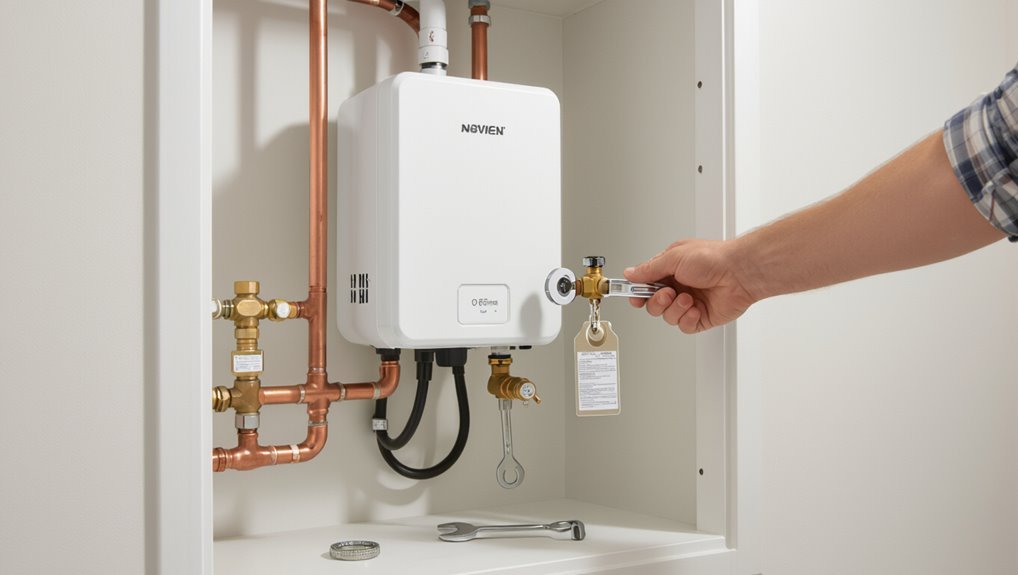
The procedure for a rapid and safe shutdown begins with an immediate, step-by-step sequence to minimize risk and prevent damage.
First, the unit’s power should be switched off at the control or breaker. Then, the gas supply (natural gas or propane) must be closed, and the inlet and outlet water valves should be shut.
If the situation requires it, any residual water should be drained from the unit following manufacturer guidance.
Immediate step-by-step shutdown (quick action)
When an urgent shutdown is required, a technician or homeowner can safely power down a Navien tankless water heater by following a concise sequence: locate the main gas or water supply, close the appropriate valve(s), turn off the isolation valves for hot and cold lines, and relieve pressure by opening a nearby faucet.
This quick method answers how to turn off Navien tankless water heater safely and promptly.
Turning off power at the unit
Locate the unit’s power switch or circuit breaker and cut electrical supply before performing any maintenance or shutdown.
The technician verifies the display is dark and any indicator LEDs are off.
If hardwired, they open the breaker panel and flip the dedicated breaker; if plugged, they remove the plug from the outlet.
They lock out or label the circuit to prevent accidental re-energizing.
Shutting off the gas supply (natural gas or propane)
After confirming the unit is de-energized, attention shifts to stopping the gas feed to prevent ignition or leaks during service.
Locate the gas shutoff valve on the appliance or nearby line. Turn the valve perpendicular to the pipe for natural gas or propane.
Verify gas is off by checking pressure gauge or appliance readout and, if unsure, contact a qualified technician before proceeding.
Closing the water supply valves
Shut off the cold and hot water isolation valves feeding the Navien unit to prevent flow while servicing; this stops incoming water and isolates the heater so residual water can be drained safely.
Confirm both valves are fully closed by turning clockwise until firm.
Verify no water is entering by checking nearby fixtures for flow.
Label valves if unclear for future maintenance.
Draining residual water from the unit (if required)
Drain any residual water from the Navien unit by opening the service drain valves and a nearby hot faucet to relieve pressure and allow water to flow out; this prevents spills and protects internal components during maintenance.
Allow complete drainage, then close the drain valves. Capture wastewater in a bucket or hose to a floor drain.
Verify no dripping before proceeding with repairs or winterization.
Where to Find Controls and Shutoff Points on Navien Models
Navien models typically place key controls and shutoff points on the unit’s front or lower side, with locations varying by series.
The main electrical power is controlled by a visible power switch or the dedicated circuit breaker, while a manual gas shutoff valve is usually mounted on the gas line near the heater.
Cold water inlet and hot water outlet isolation valves are found on the plumbing connections at the unit for quick water shutoff.
Common exterior control locations by model series
When identifying exterior controls and shutoff points on Navien model series, technicians and owners should first locate the main control panel, gas shutoff, and water isolation valves, which are typically grouped for service access.
Older models (NPE-A) place controls behind a bottom access panel; compact combi units often mount valves beneath the unit.
Larger commercial series use side-access banks for grouped isolation.
Identifying the power switch and circuit breaker
Most units have a clearly labeled power switch on the exterior or immediately behind the access panel, while the corresponding circuit breaker is located in the building’s electrical panel and should be marked for the water heater.
Technicians should visually confirm the switch position and breaker labeling before beginning any service.
Additional controls include a recessed rocker or toggle and sometimes a fused disconnect; verify continuity with a meter and tag the breaker when isolating power.
Locating the gas shutoff valve
Locate the gas shutoff valve immediately upstream of the water heater’s gas inlet—the valve is typically a lever or round handle on the gas line just outside the unit or behind the access panel.
Technicians and owners should verify valve orientation (parallel=open, perpendicular=closed) and confirm a visible gas supply pipe leading to the heater.
If unclear, consult the unit’s labeling or a qualified gas professional.
Finding inlet and outlet water isolation valves
On Navien tankless units, the inlet (cold) and outlet (hot) isolation valves are normally installed on the plumbing connections at the bottom or side of the unit—look for two shutoff handles or ball valves labeled COLD/IN and HOT/OUT or marked with blue and red indicators.
Close both to stop water flow before servicing.
Confirm orientation by testing downstream fixtures and relieving system pressure.
Safety Precautions Before and During Shutdown
Before shutting down a Navien tankless water heater, the user should don appropriate personal protective equipment and guarantee adequate ventilation to disperse any fumes.
They must take steps to prevent scalding by closing hot water outlets and allowing the unit to cool, and should be alert for signs of gas leaks or other fire risks.
If there are unclear odors, persistent leaks, or uncertainty about control operation, a licensed technician should be contacted rather than attempting further adjustments.
Personal protective equipment and ventilation
Wear appropriate personal protective equipment and assure adequate ventilation before interacting with a Navien tankless water heater to minimize exposure to hot surfaces, gas, and combustion byproducts.
Use heat-resistant gloves, eye protection, and long sleeves.
Assure combustible gas detectors function and open nearby windows or vents when accessing the unit.
If gas odor is detected, evacuate and contact a qualified technician immediately.
Preventing scalding and hot water hazards
Several simple steps can greatly reduce the risk of scalding and hot-water injuries when preparing to shut down a Navien tankless water heater.
Users should cool water by running faucets until temperature drops, warn occupants about hot-water interruption, close hot-water outlets, and avoid testing taps with bare hands.
Inspect hoses and valves for heat damage and allow the unit to cool before performing any maintenance.
Avoiding gas leaks and fire risks
After cooling faucets and securing hot-water outlets, attention should shift to preventing gas leaks and fire risks when shutting down a Navien tankless heater.
Close the gas supply valve, verify pilot and ignition are off, and extinguish nearby flames or heat sources.
Confirm adequate ventilation, avoid blocking vents, and inspect fittings for odor or hissing.
Use a flashlight, not open flame, for checks.
When to call a licensed technician
When should a licensed technician be contacted during shutdown procedures?
A technician should be called if there are persistent gas odors, visible leaks, damaged venting, ignition failures, error codes that persist after reset, or signs of carbon monoxide.
Also request professional service if the homeowner lacks confidence in isolating gas or water, or if repairs beyond simple valve operation are required.
Step-by-Step Procedures for Specific Situations
The guide now outlines clear step-by-step procedures tailored to common scenarios: brief shutdowns for short-term repairs or maintenance, full shutdowns for extended absences or winterization, and emergency shutdowns when a gas leak or malfunction is suspected.
Each scenario presents specific valve positions, power controls, and safety checks to follow. Readers are advised to follow the sequence for the situation at hand and contact a professional if uncertainty remains.
Temporarily turning off for short-term repairs or maintenance
Begin by isolating the Navien tankless unit to allow safe short-term repairs or maintenance: shut off the cold-water supply valve feeding the heater and the gas supply valve, then switch the unit to its “Off” or “Standby” mode per the model’s control panel.
Close any nearby isolation valves, relieve pressure by opening a hot faucet, tag valves as “Work in Progress,” and follow basic lockout/tagout.
Shutting down for extended absence or winterization
Prepare the Navien tankless water heater for extended shutdown or winterization by fully isolating water and gas supplies, draining internal and external lines, and protecting components from freezing or stagnant water damage.
Close gas valve, shut main water inlet, open isolation valves, attach drain hose, flush heat exchanger and condensate trap, remove and store filters, add non-toxic antifreeze where required, and seal vents and external openings.
Emergency shutdown for suspected gas leak or malfunction
If a gas odor or malfunction is suspected, immediately stop using the unit and perform an emergency shutdown to prevent ignition or further damage: close the gas supply valve, shut off the water inlet, and switch the power to the heater off at the breaker or main disconnect.
Evacuate occupants, avoid sparks, ventilate the area when safe, and contact the gas provider and a qualified technician before restoring service.
Post-Shutdown Checks and What to Do Next
After shutdown, the technician confirms the Navien unit is fully powered down by checking the display, breakers, and fuel supply valves.
They inspect for visible leaks and any lingering gas odor, addressing issues before proceeding.
A concise restart checklist is prepared, covering system purging, pressure checks, and control reset steps.
Verifying the unit is fully powered down
Confirming the Navien tankless water heater is fully powered down requires a quick checklist:
Verify the control panel display is dark, guarantee power switch or breaker is off, confirm indicator LEDs are unlit, and disconnect any external timers or smart controls.
Listen for fan or pump silence and feel for absence of vibration or warmth.
Log the shutdown time for records.
Checking for leaks and residual gas smell
Several quick visual and olfactory checks help guarantee safety following shutdown: inspect all visible pipe connections, valves, and the heater cabinet for moisture or pooling; smell for any faint sulfurous or rotten-egg odor that indicates gas; run a dry-paper towel along joints to detect small drips; and note any hissing sounds that could signal escaping gas or pressurized water.
If leaks or odor persist, ventilate area and contact a qualified technician.
Restart checklist after shutdown
One clear checklist helps guarantee the Navien tankless water heater is safe and ready before reactivation: verify no leaks or lingering gas smell, confirm power and gas supplies are intact, inspect venting and combustion air paths, assure condensate and drain lines are clear, and reset any tripped safety devices per the manufacturer’s instructions.
Then document observations, restore utilities, power on following sequence, and monitor for errors.
Troubleshooting Common Problems When Shutting Off the Unit
When the Navien unit does not power down, common causes include electrical faults, control board errors, or a stuck power switch, and each requires a specific diagnostic approach.
If the gas valve fails to close, inspection of the valve actuator, wiring, and inlet pressure can identify the issue before attempting manual shutoff or professional service.
Persistent water flow after shutdown usually points to a faulty isolation valve or incorrect valve position, so checking and, if needed, replacing the isolation hardware is recommended.
Unit won’t power down causes and fixes
Investigate common causes if a Navien tankless water heater refuses to power down, since persistent operation can waste energy and mask underlying faults.
Check electrical supply, remote controller settings, and firmware or control board errors.
Inspect stuck relays, faulty thermostats, or incorrect DIP/switch configurations.
Reset unit per manual, clear error codes, and replace failed control components.
If unresolved, contact certified service.
Gas valve won’t close troubleshooting steps
If the heater continues to run after electrical and control issues have been ruled out, the gas valve itself should be examined as a likely cause of failure to shut off.
Inspect for debris, corrosion, or visible damage; verify actuator movement when power is removed; test valve coil resistance per manufacturer specs; confirm gas supply isolation before any disassembly.
Replace faulty valve components or call a qualified technician.
Water won’t stop flowing isolation valve issues
Check the isolation valves on both the cold and hot water lines first, since a stuck, partially closed, or leaky valve is a common reason water continues to flow even after the Navien unit is turned off.
Inspect for corrosion, handle position, and visible leaks. Operate valves gently to free them.
If they remain faulty, replace or call a licensed plumber to prevent damage and guarantee proper shutoff.
Maintenance Tips Related to Shutting Down the Heater
Before shutting down a Navien tankless heater for an extended period, the owner should schedule seasonal maintenance tasks such as inspecting valves, checking for leaks, and protecting exposed pipes from freezing.
The unit should be flushed and descaled to remove mineral buildup that can cause corrosion or reduced performance during storage.
Battery backup and electronic control settings also require attention to prevent control board damage and to retain programmed settings.
Seasonal maintenance tasks to perform during shutdown
Prepare a concise checklist of seasonal maintenance tasks to complete when shutting down a Navien tankless water heater to prevent damage and guarantee reliable restart.
Include:
- Draining accessible water from external lines.
- Isolating supply and gas valves.
- Turning off power.
- Removing debris from intake and vent areas.
- Protecting exposed pipes with insulation or antifreeze solutions as recommended.
- Documenting the shutdown date and any observed issues for technician reference.
Flushing and descaling before long-term shutdown
After completing the shutdown checklist, attention should turn to flushing and descaling to remove mineral buildup that can damage heat exchangers during long idle periods.
Disconnect power and water per manufacturer guidance, attach a pump and hoses, circulate a manufacturer-approved descaling solution for the recommended duration, then thoroughly flush with clean water.
Inspect filters and valves; replace or service as needed before sealing the system.
Battery backup and electronic control considerations
Check the status of batteries and electronic controls to prevent loss of programming or diagnostic capability during a shutdown.
Batteries in remote controls or backup modules should be replaced if weak.
Disconnecting power can reset error logs and schedules; document settings first.
If long-term shutdown is planned, remove batteries to avoid leakage and store control modules in a dry, temperature-stable location.
Comparison of Shutdown Steps by Navien Model
Different Navien series require slightly different shutdown sequences, and a brief comparison helps users follow the correct steps. The table below highlights key distinctions among the NPE, NR, and NCB lines. Following this summary, specific step-by-step differences will be outlined for each model.
| Model | Typical shutdown notes |
|---|---|
| NPE series | Often electronic controls; power switch and water isolation recommended |
| NR series | Simpler controls; may require manual gas valve shutoff and water drain |
Navien NPE series vs. NR series vs. NCB series
When comparing shutdown procedures across Navien’s NPE, NR, and NCB series, each model follows the same basic safety principles but differs in controls and sequence details; the NPE uses an advanced digital interface, the NR relies on a simpler keypad, and the NCB features more basic mechanical switches. Differences affect button sequence, display prompts, and manual valve use.
| Model | Key difference |
|---|---|
| NPE | Digital prompts |
| NR | Keypad steps |
| NCB | Mechanical valves |
Common Mistakes to Avoid When Turning Off a Tankless Water Heater
When shutting down a Navien tankless water heater, certain avoidable errors can lead to safety risks or system damage. The following list highlights three common mistakes to watch for during shutdown and restart procedures. Awareness of these points helps guarantee a safe, effective shutdown and reliable restart later.
- Failing to shut off the gas supply before servicing or long-term shutdown.
- Not relieving system pressure before draining, which can cause leaks or injury.
- Restarting improperly after winterization, such as neglecting to purge air or check seals.
Skipping gas shutoff
Failing to shut off the gas supply before powering down or servicing a Navien tankless water heater creates a serious safety hazard.
Technicians and homeowners must always close the gas valve to prevent leaks, explosions, or carbon monoxide exposure. Skipping this step risks ignition from electrical sparks or pilot relighting.
Confirm the valve position and, if unsure, consult a qualified gas professional before proceeding.
Not relieving pressure before draining
Neglecting to relieve system pressure before draining a Navien tankless water heater can forcefully expel hot water and steam, risking scalds and equipment damage.
A technician should open a hot water tap or use the pressure relief valve to safely vent residual pressure before loosening drain fittings.
Failing to do so can warp components, cause leaks, and create hazardous conditions for anyone nearby.
Improper restart after winterization
Restarting a Navien tankless water heater improperly after winterization can introduce trapped air, debris, or residual antifreeze into the system, leading to poor ignition, noisy operation, or damage to heat exchanger components.
Technicians should flush lines, purge air, remove antifreeze fully, inspect filters and condensate traps, and run controlled test cycles.
Skipping steps risks corrosion, blockage, and voided warranties.
When to Contact Navien Support or a Licensed Plumber
If warning lights, persistent error codes, gas smells, leaks, or repeated ignition failures occur, professional inspection is recommended.
Before contacting Navien support or a licensed plumber, have the model and serial number, recent error codes, water and gas shutoff status, and a brief timeline of events ready.
Providing these details speeds diagnosis and guarantees appropriate safety steps are taken.
Signs that require professional inspection
Contacting Navien support or a licensed plumber is warranted when the heater exhibits persistent faults, safety-related behavior, or performance issues beyond basic troubleshooting.
Signs include repeated error codes, unexplained gas or water leaks, combustion smells, frequent shutoffs, overheating, low or no hot water despite correct settings, unusual noises indicating combustion or pump failure, and visible corrosion or venting damage.
What information to have ready before calling support
When preparing to call Navien support or a licensed plumber, gather concise system details and a clear sequence of observed symptoms so the technician can diagnose the issue efficiently.
Include model and serial numbers, installation date, recent maintenance, error codes or LED indicators, water/gas pressure readings if available, exact times of failures, steps already taken to troubleshoot, and contact information for follow-up.
Visual Guide and Diagrams
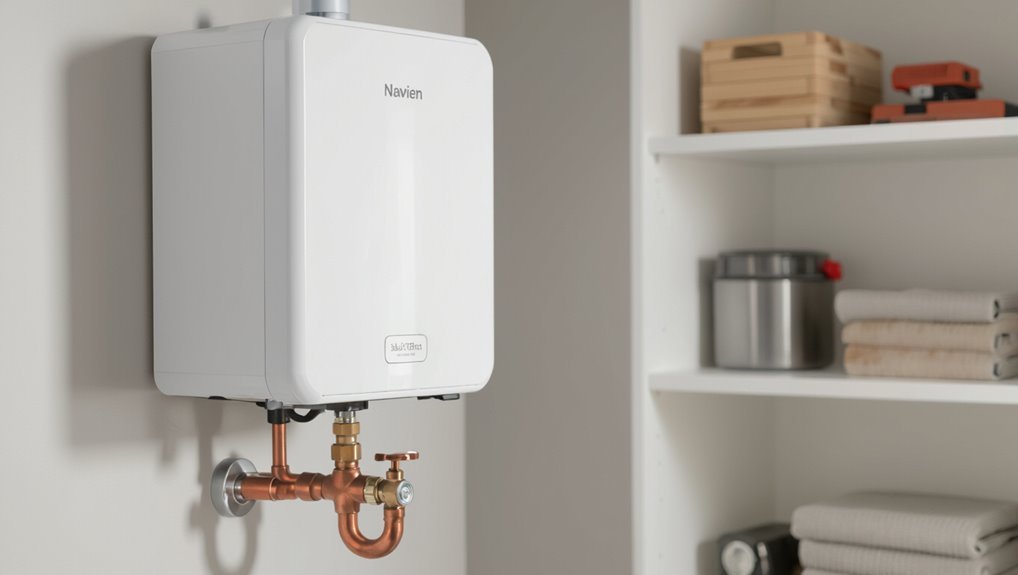
A clear visual guide helps identify the control panel buttons and the sequence for shutting down the unit.
Diagrams showing the typical control panel layout alongside labeled gas and water valve locations make the process easier to follow.
The following images and captions will illustrate these key components for safe shutdown.
Typical control panel diagram for shutting down
The diagram shows the Navien control panel layout with labeled buttons, LED indicators, and the digital display to guide a proper shutdown sequence.
It highlights power, mode, and reset buttons; temperature up/down controls; and status LEDs for error, ignite, and operation.
Arrows indicate button press order: power off, confirm via display, then hold reset if required.
Labels are clear and minimal.
Gas and water valve location illustrations
Following the control-panel shutdown steps, attention shifts to the physical valves that isolate gas and water feed lines. Clear illustrations should show their exact locations, orientation, and labeling relative to the heater cabinet.
Diagrams should depict upstream and downstream shutoffs, ball-valve handles (open/closed positions), union joints, condensate and pressure-relief connections, and recommended service access clearances for safe, unambiguous operation.
Conclusion
In summary, the operator completed the Navien tankless water heater shutdown with deliberate care, closing isolation valves, turning off the gas or electrical supply, and flushing the system when required. Like a mariner stowing sails before a storm, the procedure balanced practicality and ritual. Attention to manufacturer guidance, avoidance of common errors, and timely consultation with Navien or a licensed plumber guarantee that the unit remains safe and ready for future use.