How to Bleed Hot Water Baseboard Radiators: Step-by-Step Guide for Even Heat
Bleeding hot-water baseboard radiators is essential for removing trapped air that leads to cold spots, gurgling noises, and decreased heating efficiency. To effectively bleed your radiators, follow these steps:
- Cool the System: Turn off your heating system to avoid burns.
- Locate the Bleed Valve: Find the bleed valve at the top of each radiator.
- Prepare for Water Spillage: Place a cloth and a container beneath the valve to catch any water.
- Open the Valve: Use a radiator key or screwdriver to slowly open the valve until you see a steady stream of water, then close it.
- Repeat: Start from the top floor and work your way down, ensuring each radiator is bled.
- Check Boiler Pressure: After bleeding, monitor your boiler’s pressure and top up if necessary.
For comprehensive instructions and troubleshooting, make sure to refer to additional resources.
What Bleeding a Hot Water Baseboard Radiator Means and Why It Matters
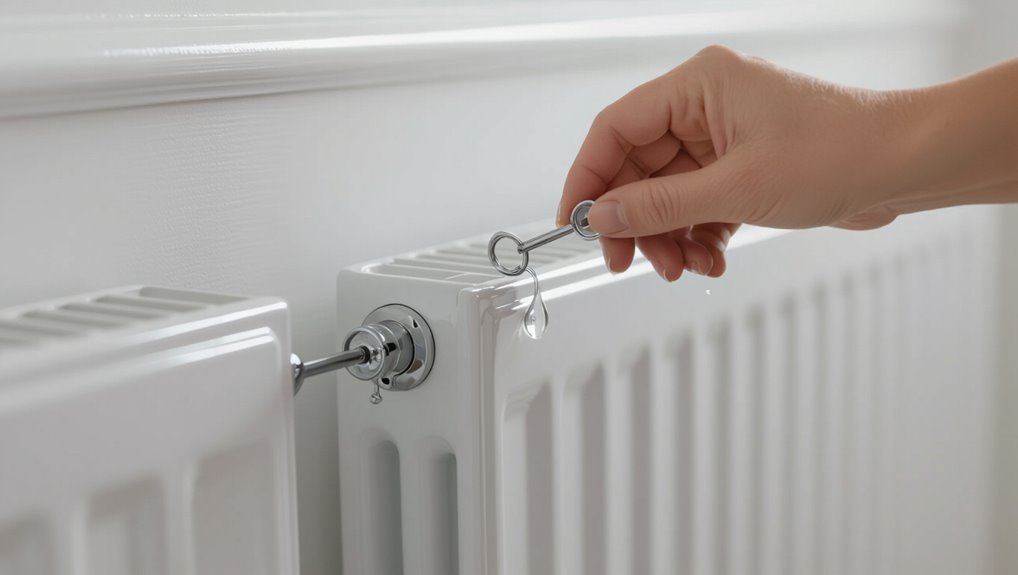
Trapped air in a hot water baseboard radiator creates cold spots and uneven heat distribution by preventing hot water from fully circulating.
Visible signs that a radiator needs bleeding include gurgling noises, cold sections along the unit, and reduced overall heat output.
Regular bleeding improves system efficiency, lowers energy use, and helps prevent corrosion and wear that shorten the radiator’s lifespan.
How trapped air affects heat distribution
Air pockets within a hot water baseboard system interrupt the steady flow of heated water, creating cold spots and uneven room temperatures.
Trapped air reduces convective heat transfer and forces hotter water away from affected sections, lowering overall efficiency.
Learning how to bleed hot water baseboard eliminates these obstructions, restores balanced circulation, and improves consistent room warmth while reducing boiler strain and energy waste.
Signs your radiator needs bleeding
Uneven warmth, gurgling sounds, and cold sections along the baseboard are common indicators that a radiator requires bleeding.
Additional signs include sluggish heating response, visible air pockets when covers are removed, and pressure fluctuations on the boiler gauge.
Persistent tapping or knocking in pipes can also signal trapped air.
Recognizing these symptoms prompts timely bleeding to restore consistent circulation and temperature balance.
Benefits of regular bleeding for efficiency and longevity
Noticing symptoms like gurgling or cold spots often leads homeowners to bleed a radiator.
Doing so regularly yields clear operational and financial gains.
Routine bleeding restores proper circulation, improves heat distribution, reduces boiler cycling, and lowers energy consumption.
Preventing trapped air also limits corrosion and wear, extending system life and cutting maintenance costs while maintaining consistent, reliable warmth throughout the home.
Tools and Safety Precautions You Need Before You Start
Before beginning, a concise list of essential tools and materials—bleed key or screwdriver, a container for water, towels, and adjustable wrench—should be assembled.
The worker should also wear basic personal protective equipment like gloves and eye protection and follow simple safety tips to avoid burns and water damage.
If radiators are old, corroded, or the system shows persistent issues, a professional plumber should be contacted.
Essential tools and materials
An organized set of basic tools and simple safety gear makes bleeding hot water baseboard radiators safe and efficient.
The task requires a few reliable items and consumables, prepared before starting to avoid spills or delays.
- Radiator key or flathead screwdriver
- Bucket and absorbent cloths
- Adjustable wrench and pliers
- Small hose or tubing for draining
Personal protective equipment and safety tips
With the tools gathered and absorbents ready, attention turns to personal protective equipment and safety measures that reduce risk while bleeding baseboard radiators.
Wear gloves and safety glasses to protect from hot water and debris. Use closed-toe shoes and long sleeves.
Guarantee good ventilation, clear floor space, and stable step stool if needed. Keep a towel and container to catch drips.
When to call a professional instead
When should a homeowner stop and call a licensed technician?
If bleeding fails to restore even heat, if radiators remain cold despite proper procedure, or if persistent leaks, loud banging, or pressure loss occur, a professional should be contacted.
Also call a technician for boiler issues, corroded valves, confined-space concerns, or any uncertainty about system components to avoid damage or injury.
Preparing Your Heating System
Before bleeding begins, the boiler should be switched off and the system allowed to cool to avoid scalding and false pressure readings.
The technician locates every radiator and reviews the system schematic to guarantee all zones and valves are identified.
Boiler pressure is checked and a plan is made to top up water if pressure is below the recommended range.
Turning off the boiler and allowing the system to cool
Shut down the boiler and allow the system to cool completely before attempting any work on the radiators.
Confirm the boiler’s power switch is off and any thermostats are lowered or disconnected.
Wait until pipes and radiators feel cool to the touch.
Cooling prevents burns, reduces pressure, and stabilizes system components.
Only proceed once temperature and pressure are safe for manual bleeding.
Locating all radiators and the system schematic
A complete walkthrough of the heating layout begins by identifying every radiator and tracing the system schematic so the bleeding process can be done methodically and without missed sections.
Inspect each room, note radiator locations, valves, and return lines.
Locate main supply and return manifolds, zone valves, and the boiler connection.
Sketch or photograph the layout for reference during bleeding.
Checking boiler pressure and preparing to top up water
How should the boiler’s pressure be checked and adjusted to guarantee safe bleeding of the radiators?
The technician reads the pressure gauge on the boiler with the system cold; target is typically 12–15 psi for residential systems.
If low, they isolate the fill valve, open it until pressure reaches target, then close and purge any air from the fill line.
Recheck gauge before proceeding.
Step-by-Step Guide to Bleeding Hot Water Baseboard Radiators
The procedure begins by locating the bleed valve and clearing access to it. A container and cloth are positioned beneath the valve before it is opened slowly to release trapped air until a steady stream of water appears.
The valve is then closed and the process repeated for each radiator, starting at the top floor and working down to the lowest.
Step 1 Identify the bleed valve and access point
Before any tools are used, locate the radiator’s bleed valve and the most accessible point for reaching it.
The bleed valve is usually at the radiator’s end or top edge, often a small square or slotted screw.
Confirm access clearance, note nearby trim or pipes, and choose the nearest unobstructed access point for safe, straightforward operation without moving heavy fixtures.
Step 2 Place a container and cloth beneath the valve
Place a shallow container directly beneath the bleed valve and lay an absorbent cloth or rag over the area to catch drips and protect flooring or trim; this guarantees escaping water and trapped air are collected and prevents stains or water damage while the valve is opened.
Position the container to fully catch runoff, fold the cloth for extra absorption, and keep a wrench or key nearby.
Step 3 Slowly open the bleed valve and release air
Turn the bleed valve slowly counterclockwise with the appropriate key or wrench until a hissing of trapped air is heard; maintain a controlled, steady motion to avoid sudden spurts.
The operator holds the container and cloth ready as air escapes.
Listen for diminishing hissing and occasional sputters.
Continue until only air noise subsides, monitoring for any unexpected leaks from the valve assembly.
Step 4 Close the valve when water flows steadily
Close the bleed valve as soon as a steady, uninterrupted stream of water replaces the escaping air.
The operator tightens the valve gently to prevent leaks and stripping.
After closure, the radiator is checked visually for drips and touched near the connection for warmth indicating circulation.
Any remaining dampness is wiped away, and the bleed key or screwdriver is stored for subsequent radiators.
Step 5 Repeat for every radiator from top floor to lowest
With one radiator bled and the valve securely shut, the operator moves on to the remaining units, working from the top floor down to the lowest.
Each radiator is opened briefly until steady water appears, then closed and wiped.
The process repeats systematically, checking for trapped air and consistent flow at every unit to restore balanced heating throughout the system.
Step 6 Check and restore boiler pressure if needed
After bleeding each radiator, inspect the boiler pressure gauge to verify the system remains within the manufacturer’s recommended range—typically 12–15 psi for cold systems and slightly higher when hot.
If pressure has dropped, shut the boiler, open the fill valve or auto-fill until pressure returns to spec, then close it.
Recheck for leaks and monitor pressure for stability before proceeding.
Step 7 Turn the system back on and verify even heat
Restart the boiler and circulate water through the system to confirm heat distribution is even.
Allow several minutes for radiators to warm, then check each unit from valve to end for uniform temperature.
Listen for unusual noises and inspect for leaks.
If cold spots remain, re-bleed affected radiators and verify pump operation and proper zone valve functioning before finalizing the procedure.
Troubleshooting Common Problems During Bleeding
When bleeding a baseboard radiator, several issues can indicate different faults: no air or water escaping may mean a blocked valve or closed system, while continuous air return after bleeding often points to trapped pockets or a failing auto air vent.
A leak at the bleed valve requires tightening or replacing the valve to prevent loss of system pressure.
Repeated pressure drops after bleeding suggest a hidden leak or a faulty pressure relief or expansion tank that should be inspected.
No air or water comes out
Check the valve and key fit first: if turning the bleed screw produces no air or water, the screw may be seized, stripped, or the radiator may be isolated from the system.
Confirm radiator inlet valve is open and close isolation valves correctly.
Use penetrating oil on a seized screw, replace a stripped screw, and verify system pressure and pump operation before assuming trapped air prevents discharge.
Continuous air returns after bleeding
Observe whether air keeps returning through the bleed valve after the initial purge: continuous air flow usually indicates a persistent leak, a faulty check valve, or ongoing air ingress from the boiler or piping rather than a single trapped pocket.
If air reappears, inspect system makeup valves, automatic air vents, and pump seals.
Run pressure tests and isolate sections to locate source before repeating bleeding.
Leak at the bleed valve
If air continues to appear during bleeding, attention should next turn to the bleed valve itself, since a faulty or improperly seated valve can allow water to escape once opened.
Inspect for stripped threads, damaged packing, or loose fittings.
Tighten gently, replace worn valves or seals, and reuse correct tools to avoid damage.
Test after repair for a dry, secure seal.
Pressure drops repeatedly after bleeding
A recurring drop in system pressure after bleeding usually indicates a leak, an open zone valve, or air trapped elsewhere in the loop rather than a problem with the radiator bleed itself.
The technician should inspect fittings, supply lines, and the boiler pressure relief valve, verify all zone valves and circulator pumps are closed, and perform a controlled pressure test to locate and repair the loss.
Maintenance Tips to Prevent Air Build-Up
A regular bleeding schedule tailored to the heating system type helps prevent recurring air accumulation and maintains efficiency.
Proper balancing of radiators guarantees even heat distribution and reduces the chance of trapped air in low-flow zones.
Periodic system flushing or a professional power-flush should be scheduled when persistent air or sludge indicates a need for deeper cleaning.
Routine bleeding schedule by system type
When scheduling routine bleeding, homeowners should follow intervals tailored to the system type—monthly checks for high-use or older systems, seasonal checks at the start of heating and again mid-season for standard residential setups, and quarterly inspections for well-maintained, modern systems with automatic air purgers.
Record each session, note stubborn radiators, and prioritize units near boilers or upstairs.
Call a pro if frequent air returns occur.
How to properly balance radiators for even heat
Following routine bleeding records and attention to problem radiators, balancing guarantees each unit receives the correct flow so heat distributes evenly and trapped air is minimized.
Adjust return valves or thermostatic radiator valves incrementally, starting at the boiler and working outward. Measure surface temperatures or use a flow meter to confirm uniform heat.
Recheck after system stabilization and repeat adjustments if cold spots persist.
When to flush or power-flush the system
Properly scheduled flushing—or a more aggressive power-flush—becomes necessary after several seasons of use if radiators show recurring cold spots, the boiler operates inefficiently, or system water appears discolored or contains sludge.
A routine flush every 3–7 years prevents buildup; power-flushing is recommended when heavy sludge or persistent air pockets resist standard bleeding.
Hire a professional for power-flushes to protect valves and components.
Comparison of Bleed Valve Types and Tools
A concise comparison highlights the practical differences between manual screw bleed valves and key-operated valves, and between automatic air vents and manual bleeding methods. Considerations include ease of use, reliability, and maintenance frequency when choosing a solution for baseboard radiators. The brief table below summarizes key trade-offs to guide selection.
| Feature | Manual Screw / Key-Operated | Automatic Vent / Manual Bleeding |
|---|---|---|
| Ease of use | Requires tool or key | Hands-off vs. occasional manual action |
| Reliability | Simple and durable | Prevents air buildup but may need replacement |
| Maintenance | Periodic manual checks | Less frequent manual intervention |
Manual screw bleed valves vs. key-operated valves
When comparing manual screw bleed valves to key-operated valves, the focus falls on ease of use, control precision, and compatibility with existing radiator fittings.
Manual screws allow fingertip adjustments but may be harder to reach and risk overtightening.
Key-operated valves offer safer reach and finer control with a proper key, though they require the correct tool and can be slower for quick checks.
Using an automatic air vent vs. manual bleeding
While both automatic air vents and manual bleeding serve to remove trapped air from hot water baseboard systems, they differ markedly in operation, maintenance, and suitability for various installations.
Automatic vents evacuate air continuously with little user effort but can fail or leak and need periodic replacement.
Manual bleeding requires homeowner intervention with a key or screwdriver but offers simple reliability, control, and lower upfront cost.
Common Mistakes to Avoid When Bleeding Radiators
Common errors can turn a simple radiator bleed into a recurring problem or a safety hazard.
The most frequent issues include:
- Over-bleeding or opening valves too quickly
- Ignoring boiler pressure and repeating issues
- Skipping safety precautions
Careful attention to these points prevents damage and reduces the need for repeat maintenance.
Over-bleeding or opening valves too quickly
Over-bleeding or opening the bleed valve too quickly can force air pockets further into the system, cause a sudden rush of water, and create pressure spikes that stress pipes and fittings.
Technicians should open valves slowly, monitor flow until a steady stream of water appears, then promptly close.
Rapid release risks leaks, valve damage, and redistributed trapped air that worsens circulation and requires repeated corrective bleeding.
Ignoring boiler pressure and repeating issues
Neglecting boiler pressure checks before and after bleeding can turn a simple maintenance task into a recurring problem.
Failure to monitor pressure may allow air to re-enter, trigger low-pressure shutoffs, or cause the pump to cavitate.
Repeating bleeding without addressing underlying pressure loss or leaks only postpones repair.
Verify and restore correct system pressure, then test radiators to confirm the issue is resolved.
Skipping safety precautions
After checking and restoring boiler pressure, attention must turn to basic safety steps that are often skipped when bleeding radiators.
The operator should wear gloves and eye protection, verify the system is cooled, and place a catch container and towel beneath vents.
Failure to isolate the circuit or to relieve pressure can cause burns, water damage, or equipment harm.
Follow manufacturer guidance.
When Bleeding Won’t Fix the Problem: Signs of Bigger Issues
If bleeding a baseboard radiator does not restore proper heat, it may indicate more serious problems such as corrosion, sludge buildup, or system balancing issues that restrict flow.
Persistent cold spots or uneven heating can also point to a failing circulating pump or malfunctioning zone valves.
Repeated failures, pressure fluctuations, or unusual noises often signal boiler faults that warrant professional inspection and repair.
Corrosion, sludge, or balancing issues
Several common symptoms—persistent cold spots, discolored discharge from bleed valves, and unusually noisy pipes—indicate problems beyond simple air pockets.
Corrosion and mineral buildup impair heat transfer and can flake into system sludge, restricting flow.
System balancing faults cause uneven distribution despite trapped air removal.
Professional inspection, chemical cleaning or flushing, and pipe/radiator repair or rebalancing are typically required to restore proper operation.
Faulty circulating pump or zone valve problems
Investigate the circulation system when bleeding fails to restore heat, because a malfunctioning pump or a stuck zone valve can prevent hot water from reaching certain radiators despite the removal of air.
Check for pump noise, vibration, or lack of flow and inspect zone valves for closed or unresponsive actuators.
Faulty electrical connections or seized components often require replacement or targeted repair to restore circulation.
Boiler malfunctions requiring professional service
When bleeding and checking valves or the pump do not restore heat, the problem may lie within the boiler itself and requires professional diagnosis.
Persistent issues can include a failed heat exchanger, malfunctioning gas valve, ignition or flame sensor faults, pressure control failures, or corroded components.
These conditions risk safety and efficiency; a licensed technician should inspect, test controls, and perform repairs or replacement as needed.
Quick Reference Checklist for Bleeding Baseboard Radiators
A concise checklist guides the user through the essential steps to bleed hot water baseboard radiators safely and efficiently.
It summarizes preparation, bleeding, and verification tasks for quick use.
- Shut off boiler and allow cooling.
- Place container and towel under bleed valve.
- Open valve slowly until steady water flows, then close.
- Restore boiler and check for balanced heat and leaks.
Conclusion
Sunlight through a window lands on a row of baseboards, as quietly as a coincidence, where air pockets and warm water meet and slowly trade places. The home’s hush shifts when a tiny hiss is coaxed out and heat returns, like two strangers recognizing each other on a street. Bleeding radiators restores balance, conserves energy, and reveals when a simple fix suffices—or when a deeper search for leaks, pump issues, or trapped air must follow.