How to Remove Hard Water Deposits: Simple, Faster Methods That Actually Work
How to Remove Hard Water Deposits: Quick and Effective Methods
Hard water deposits, caused by calcium and magnesium, can dull your fixtures, clog appliances, and increase energy costs. To effectively remove these deposits, soak removable parts in vinegar or citric acid, run vinegar through kettles and coffee makers, scrub glass with a baking soda paste, and use commercial descalers for tough buildup. Always wear gloves and ensure good ventilation when using these products. Regular maintenance, such as flushing water heaters annually and cleaning aerators monthly, can help prevent future buildup. Below, you’ll find detailed step-by-step methods and safety tips for tackling hard water deposits on common household surfaces.
What Causes Hard Water Deposits and Why They Matter
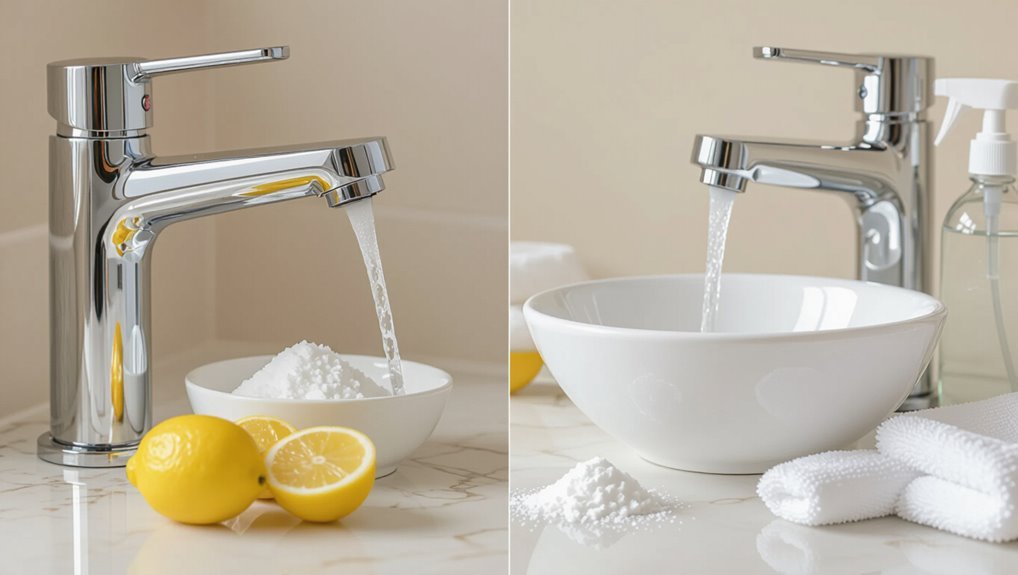
Hard water contains dissolved minerals, primarily calcium and magnesium, that precipitate when water evaporates or heats.
These minerals form hard, chalky scale on fixtures, glass, heating elements, and inside pipes through predictable chemical reactions.
Left untreated, scale reduces appliance efficiency, clogs plumbing, and degrades the appearance and function of surfaces.
What hard water is (minerals involved: calcium, magnesium)
Mineral-laden water contains elevated levels of calcium and magnesium ions, which precipitate as scale when water evaporates or is heated. These solid deposits build up on fixtures, appliances, and pipes, reducing efficiency and promoting staining.
Hard water is quantified by dissolved mineral concentration and varies regionally. Understanding mineral composition guides choices about treatment, prevention, and how to remove hard water deposits effectively.
How deposits form on surfaces (scale chemistry and common locations)
Because calcium and magnesium ions become less soluble when water evaporates or is heated, they precipitate as solid carbonate and sulfate compounds that adhere to surfaces as scale.
Scale forms where water pools, flows slowly, or repeatedly wets surfaces: faucets, showerheads, kettles, boilers, pipes, glass, and tiles.
Roughness and existing deposits promote buildup, concentrating minerals until visible, hard-to-remove crusts develop.
Risks and damage from untreated hard water deposits (appliances, plumbing, aesthetics)
Scale accumulation damages appliances, clogs plumbing, and mars finishes by reducing efficiency and accelerating wear.
Hot-water systems lose heat transfer efficiency, boosting energy bills and shortening lifespans. Faucets, showerheads, and valves restrict flow and fail prematurely.
Glass, tiles, and fixtures stain and etch, degrading appearance. Untreated deposits foster corrosion and bacterial niches, raising repair costs and health concerns over time.
Quick Ways to Remove Hard Water Deposits (Fast Results)
Practical, fast-acting options exist for removing hard water deposits from common household surfaces.
Simple home remedies include vinegar soaks for faucets and showerheads, baking soda paste for countertops, tubs and tiles, and lemon juice for small stains and glassware.
For tougher buildup, commercial descalers offer rapid, professional-strength removal.
Vinegar soak method for faucets, showerheads, and fixtures
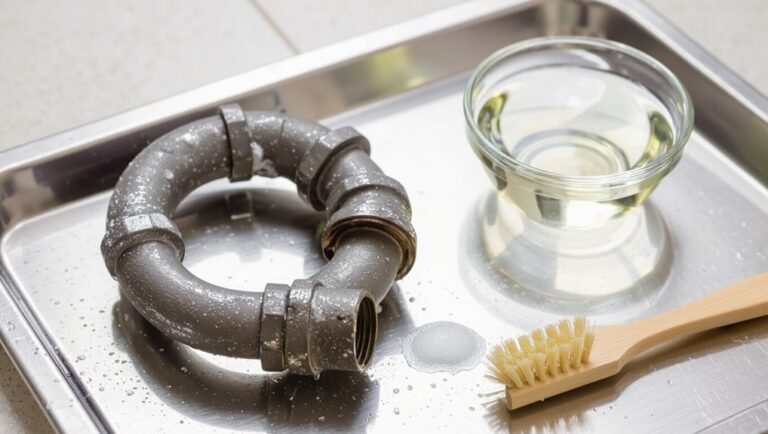
Soak small fixtures in white vinegar to dissolve mineral buildup quickly and safely: remove aerators and detachable parts, submerge them in a bowl of full-strength vinegar for 30–60 minutes, then scrub with an old toothbrush.
For fixed showerheads, fill a plastic bag with vinegar, secure it around the head, and leave for an hour. Rinse thoroughly and run water to clear residue.
Baking soda paste for countertops, tubs, and tiles
Mix a thick paste of baking soda and water to create a gentle, mildly abrasive cleaner that lifts mineral deposits from countertops, tubs, and tiles without scratching most surfaces.
Apply, let sit 10–15 minutes, scrub with a soft cloth or nonabrasive pad, then rinse thoroughly.
Repeat for stubborn buildup. Safe for many finishes; test a hidden area first and avoid porous stone unless sealed.
Lemon juice technique for small stains and glassware
For quick, light stains on glassware and small fixtures, lemon juice offers an effective acidic option that complements a baking soda paste’s mild abrasiveness.
Dabbing juice on spots, letting it sit 5–10 minutes, then rinsing and buffing with a soft cloth dissolves mineral film. It brightens rims, faucets, and glassware without harsh chemicals; test on finishes first to avoid etching.
Commercial descalers for rapid removal
Commercial descalers dissolve mineral buildup quickly by using stronger acids or chelating agents than household remedies. They are formulated for kettles, showers, and appliances; always follow label directions and ventilate.
Protective gloves and eye protection are recommended. Rinse thoroughly after use to prevent residue and corrosion.
- industrial-strength acids or chelators
- short contact times
- targeted applicators or gels
- safety precautions and rinsing
Step-by-Step Removal for Common Household Surfaces
The following section provides clear, step-by-step methods for removing hard water deposits from common household surfaces.
It covers descaling showerheads, faucets, kettles, coffee makers, and water heaters, as well as cleaning glass doors, mirrors, tiles, grout, and metal fixtures.
Each procedure emphasizes safe, effective techniques and the appropriate cleaners or tools for the surface.
Removing scale from showerheads and faucets
The section outlines the basic tools and materials needed to remove scale from showerheads and faucets, including household acids, brushes, and protective gear.
It then presents a clear, step-by-step procedure for soaking, scrubbing, and reassembling fixtures.
Finally, concise safety tips warn about ventilation, skin protection, and proper disposal of cleaning solutions.
Tools and materials needed
Several basic tools and a few common materials are required to remove scale from showerheads and faucets effectively.
Essential items include white vinegar or a descaling solution, a plastic bag, rubber bands or zip ties, an old toothbrush, soft cloths, a small wrench or pliers with protective tape, and gloves.
Optional: baking soda, toothpick, and a microfiber towel for final polishing.
Step-by-step procedure and safety tips
One clear set of steps guides the safe removal of scale from showerheads and faucets: isolate the fixture, apply a descaling agent, allow adequate dwell time, agitate to loosen deposits, rinse thoroughly, and reassemble or polish as needed.
Use gloves and eye protection, work in ventilated areas, test cleaner on a small spot, avoid abrasive tools on finishes, and dispose of solutions per label instructions.
Cleaning glass shower doors and mirrors
The section lists the essential tools and materials for safely removing hard water stains from glass shower doors and mirrors, including mild acids, non-abrasive pads, microfiber cloths, and squeegees.
It then presents a concise, step-by-step procedure that emphasizes correct solution application, gentle agitation, and thorough rinsing to prevent residue.
Final steps focus on drying and polishing techniques to avoid streaks and restore clarity.
Tools and materials needed
Essential tools and materials for removing hard water from glass shower doors and mirrors include a squeegee, microfiber cloths, a non-abrasive scrub sponge, white vinegar or a mild acidic cleaner, a spray bottle, baking soda for stubborn spots, rubber gloves, and a plastic razor or scraper designed for glass.
Additional items: distilled water for final rinse, a bucket, and painter’s tape to protect adjacent caulking.
Step-by-step procedure to avoid streaks
A clear, methodical approach prevents streaks when removing hard water from glass shower doors and mirrors.
Work top to bottom, mist vinegar solution, let sit two to five minutes, agitate with a nonabrasive sponge, rinse with clean water, squeegee each panel immediately, then dry edges and hardware with a microfiber cloth.
Finish with a circular buffing motion to eliminate remaining streaks.
Descaling kettles, coffee makers, and water heaters
The section lists the basic tools and materials—white vinegar or citric acid, a soft brush, measuring cup, and gloves—needed to descale kettles, coffee makers, and water heaters.
It then presents concise, step-by-step procedures for each appliance, including safe flushing and rinsing methods.
Finally, it gives frequency recommendations based on water hardness and appliance usage to prevent buildup.
Tools and materials needed
Several basic supplies enable effective descaling of kettles, coffee makers, and water heaters: white vinegar or citric acid, a soft brush or cloth, a measuring cup, and access to fresh water for rinsing.
Additional useful items include rubber gloves, a non-abrasive sponge, a funnel for tight openings, and a thermometer to check water temperature.
Disposable towels and a small plastic scraper complete the kit.
Step-by-step procedure and frequency recommendations
With the toolkit assembled, attention turns to practical steps and how often each appliance should be treated to prevent buildup and maintain performance.
Kettles: boil equal parts water and vinegar, soak 15–30 minutes, rinse; monthly.
Coffee makers: run vinegar cycle then two water-only cycles; monthly.
Water heaters: flush tank annually, inspect anode rod every 1–3 years; increase frequency for hard-water areas.
Removing deposits from tiles and grout
The section lists essential tools and materials for treating tile and grout, including pH-balanced cleaners, white vinegar or citric acid, soft brushes, and microfiber cloths.
It then outlines a clear step-by-step procedure for removing deposits—testing a small area, applying the cleaner, agitating gently, rinsing thoroughly, and repeating as needed.
Finally, grout-safe alternatives and precautions are presented for sensitive or colored grout to prevent damage while restoring surface appearance.
Tools and materials needed
A small set of basic tools and a few effective cleaning materials are sufficient to tackle hard water deposits on tiles and grout.
Required items include a soft-bristled brush, nylon grout brush, microfiber cloths, spray bottle, rubber gloves, and safety goggles.
Cleaning agents: white vinegar, diluted dish soap, baking soda, commercial descaler labeled grout-safe, and a plastic scraper for stubborn buildup.
Step-by-step procedure and grout-safe alternatives
Several clear steps guide removal of hard water deposits from tiles and grout while protecting grout integrity.
Begin by dampening surfaces, apply a grout-safe cleaner or diluted vinegar (test first), let sit briefly, scrub with a soft brush along grout lines, rinse thoroughly, and dry.
For stubborn buildup, repeat or use a paste of baking soda and water.
Seal grout after complete drying.
Treating faucets, stainless steel, and chrome fixtures
A concise list of necessary tools and materials precedes the procedure, including mild acids, microfiber cloths, soft brushes, and protective gloves.
The step-by-step instructions cover safe application of cleaners, gentle removal of mineral buildup, and techniques for polishing stainless steel and chrome to restore shine.
Final steps explain applying a protective finish to repel future deposits and maintain the repaired surfaces.
Tools and materials needed
Essential tools and materials for treating faucets, stainless steel, and chrome fixtures include soft microfiber cloths, non-abrasive sponges, a soft-bristled toothbrush, white vinegar or a commercial descaling solution, baking soda (optional), rubber gloves, and a small bowl for mixing solutions.
Additional items: spray bottle, plastic wrap for soaked applications, cotton swabs for crevices, and a towel to protect surfaces and collect runoff.
Step-by-step polishing and finish protection
Begin by rinsing treated areas with clean water and gently patting them dry to remove loosened mineral residue and cleaning solution.
Next, apply a small amount of metal polish or stainless cleaner with a soft cloth, buffing in circular motions until shine returns.
Wipe away residue, then protect finishes with a thin coat of carnauba wax or silicone-free protectant to repel water and delay future deposits.
Homemade vs Commercial Cleaners: Which to Use When
Homemade remedies such as vinegar, baking soda, and lemon offer low-cost, mild descaling for many surfaces but can be ineffective on heavy buildup and may harm stone or delicate finishes.
Commercial acidic descalers and detergents often remove stubborn mineral deposits more quickly but require careful handling, ventilation, and adherence to manufacturer instructions to avoid injury or surface damage.
Choosing between them depends on the deposit’s severity, the material involved, and safety or compatibility constraints.
Pros and cons of household ingredients (vinegar, baking soda, lemon)
A quick comparison of common household cleaners—white vinegar, baking soda, and lemon—reveals distinct strengths and limitations for tackling hard-water deposits.
Vinegar excels at dissolving mineral scale but can damage stone and some finishes.
Baking soda provides gentle abrasion for surface residue without scratching most surfaces.
Lemon offers mild acidity and fresh scent but is less potent and can bleach or etch delicate finishes.
Pros and cons of acidic commercial descalers and detergents
Consider commercial acidic descalers and detergents when mineral buildup is heavy, stubborn, or involves appliances and surfaces that tolerate stronger chemistry.
These products use calibrated concentrations of acids (like sulfamic, phosphoric, or citric blends) and surfactants to dissolve scale faster than household remedies, often with built-in corrosion inhibitors and rinse agents to protect finishes and reduce residue.
They deliver rapid, repeatable results but cost more and can require specialized application or disposal.
Safety considerations and surface compatibility
Many factors determine whether a DIY solution or a commercial cleaner is appropriate, with safety and surface compatibility foremost among them. The choice hinges on material sensitivity, ventilation, protective gear, and chemical concentration. Test inconspicuous spots, follow labels, and avoid acidic cleaners on stone or coated surfaces. When in doubt, choose a milder commercial product designed for the substrate.
| Surface | Recommendation |
|---|---|
| Glass | Vinegar or mild descaler |
| Stone | pH-neutral commercial cleaner |
| Chrome | Mild acid or remover |
| Porcelain | Vinegar or baking soda mixture |
Preventing Hard Water Deposits Before They Form
Preventing hard water deposits begins with consistent maintenance routines and simple daily habits that interrupt buildup.
Regular wiping and drying of surfaces, using filters where appropriate, and adopting point-of-use measures can dramatically reduce residue.
For long-term protection, whole-house water softeners or targeted treatment systems offer more durable prevention.
Regular maintenance routines and schedules
Establishing a simple, consistent maintenance routine greatly reduces the buildup of hard water deposits on fixtures and appliances.
A schedule should include periodic inspections, timed deep-cleaning sessions for vulnerable areas, calendar reminders, and documentation of results.
Frequency varies by water hardness and usage: biweekly to monthly for high-risk spots, quarterly for general plumbing.
Professional servicing is recommended annually to assess and adjust the plan.
Simple habits to reduce buildup (drying, wiping, filter use)
After setting a maintenance schedule, simple daily habits further limit hard water buildup by stopping mineral deposits before they form.
Regularly drying fixtures and glass with a microfiber cloth prevents spotting.
Wiping shower walls and faucets after use removes moisture.
Installing and replacing faucet or showerhead filters captures minerals at the point of use.
Promptly addressing drips avoids continuous mineral accumulation on surfaces.
Long-term solutions: water softeners and point-of-use systems
Long-term prevention focuses on treating water before it reaches fixtures, with residential ion-exchange softeners exchanging calcium and magnesium for sodium or potassium to stop scale formation.
Point-of-use alternatives include magnetic or template-assisted crystallization units that alter mineral behavior and reverse osmosis systems that remove dissolved minerals entirely.
Each option has different costs, maintenance needs, and effectiveness depending on water hardness and household priorities.
How ion-exchange softeners work
Ion-exchange softeners remove hardness by exchanging calcium and magnesium ions in water for sodium or potassium ions contained on resin beads inside the unit.
As hard water passes through the resin tank, positively charged hardness ions bind to the beads and are replaced with non-scaling ions, producing softened water downstream.
Periodically the resin regenerates using a brine solution, flushing captured hardness to drain and restoring exchange capacity.
Alternatives: magnetic, template-assisted crystallization, reverse osmosis
Explore alternatives such as magnetic conditioners, template-assisted crystallization (TAC), and reverse osmosis (RO) to prevent scale without relying solely on traditional ion-exchange softeners.
Magnetic devices claim to alter mineral crystallization but show mixed evidence.
TAC converts hardness ions into inert microcrystals that stay suspended.
RO removes dissolved minerals entirely at point-of-use, offering reliable scale prevention though requiring maintenance and waste-water management.
Troubleshooting Tough or Recurrent Buildup
If deposits resist standard cleaning, the article outlines escalation steps such as stronger descalers, mechanical removal, and protective resealing.
It explains how to distinguish mineral scale from soap scum or rust by appearance and simple tests so appropriate treatment can be chosen.
Guidance is provided on when persistent or damaging buildup warrants calling a professional plumber or appliance technician.
When deposits won’t come off: escalation steps
Escalation is warranted when routine cleaning fails to remove mineral deposits or when buildup returns quickly; this section outlines systematic troubleshooting steps to identify causes and apply stronger or professional remedies.
Inspect plumbing and fixtures for leaks, test water hardness, increase exposure time with acidic cleaners, use mechanical removal (scrapers, pumice) cautiously, consider commercial descalers, and hire a pro for persistent or large-scale scaling.
Identifying mineral vs. soap scum vs. rust stains
When routine methods fail or scaling recurs despite corrective steps, the next diagnostic move is to distinguish mineral (hard water) deposits from soap scum and rust stains, since treatment differs for each.
Mineral feels gritty, white or translucent and dissolves with acid; soap scum is filmy, grayish and scrapes away with alkaline cleaners; rust is red-brown, pits metal and requires chelators or rust removers.
When to call a professional plumber or appliance technician
Call a professional plumber or appliance technician when persistent or widespread buildup resists standard cleaning, recurs rapidly after treatment, or appears to impair function.
Professionals diagnose hidden scale in pipes, heaters, or valves, assess water hardness and corrosion, and recommend descaling, part replacement, or water-softening systems.
Engage help if DIY risks damage, warranty limits apply, or repeated maintenance fails to restore performance.
Safety, Materials Compatibility, and Environmental Notes
Before starting removal, the text notes that acidic cleaners can damage natural stone and some metal or painted finishes, so material compatibility should be checked.
It advises using appropriate personal protective equipment and ensuring good ventilation when working with concentrated cleaners.
It also recommends minimizing chemical use, choosing eco-friendlier options when possible, and disposing of rinse water and residues according to local regulations.
Surfaces and materials to avoid acids on (natural stone, some finishes)
Although acidic cleaners are effective on many mineral deposits, they can severely damage certain surfaces: natural stone (marble, travertine, limestone), some metal finishes (brass with lacquer, painted or powder-coated metals), and sensitive sealants or grout.
Alternative nonacidic methods—soap, baking soda paste, mild chelators, or commercial neutral cleaners—are recommended.
Test in an inconspicuous spot and consult manufacturer guidance before proceeding on vulnerable materials.
Personal protective equipment and ventilation
Wear appropriate personal protective equipment and guarantee adequate ventilation when removing hard water deposits: chemical-resistant gloves and eye protection protect skin and eyes from acidic or alkaline cleaners, while durable aprons or long sleeves guard clothing and exposed skin.
Respirators with appropriate cartridges are advised for strong fumes or powdered cleaners, and work should occur in well-ventilated areas or with local exhaust to disperse vapors and aerosols.
Follow label instructions, inspect PPE, and avoid confined spaces without ventilation.
Eco-friendly disposal and minimizing chemical use
When possible, prioritize methods that reduce chemical use and guarantee residues are collected for proper disposal rather than rinsed directly into drains or soil.
Use mechanical removal, biodegradable cleaners, or diluted vinegar and citric acid where safe for surfaces.
Neutralize and contain spent solutions, follow local hazardous-waste guidelines, and avoid mixing chemicals.
Inspect material compatibility to prevent corrosion and unintended releases.
Maintenance Checklist and Recommended Products
A concise maintenance checklist separates tasks by frequency—weekly, monthly, and annual—to prevent and address hard water buildup before it becomes costly.
Recommended tools and products are listed alongside each task so users can match cleaners, brushes, and descalers to specific surfaces and fixtures.
This section focuses on practical schedules and product choices for effective, safe upkeep.
Weekly, monthly, and annual maintenance checklist
Regular maintenance divided into weekly, monthly, and annual tasks keeps hard water deposits from accumulating and reduces the need for aggressive treatments.
A concise checklist guarantees consistent prevention and timely intervention.
- Weekly: wipe faucets, squeegee glass, check showerheads
- Monthly: descale aerators, deep-clean tile grout
- Quarterly: inspect water softener, test water hardness
- Annual: professional plumbing check, replace worn fixtures
Recommended tools and products by task
Select tools and products tailored to each maintenance task to make prevention efficient and effective: A concise kit avoids overbuying and speeds routine care.
Recommended items match surfaces and frequency, minimizing damage and residue.
- Vinegar or citric acid cleaner for fixtures and glass
- Descaling solution for appliances
- Soft-bristle brush and microfiber cloths
- Water-softening system or replacement cartridges
Conclusion
Hard water deposits, caused by mineral-rich water, are both common and avoidable. Remarkably, the U.S. Environmental Protection Agency notes that more than 85% of U.S. homes have hard water, underscoring the widespread need for effective prevention and removal. With targeted cleaning methods, regular maintenance, and appropriate treatments—whether simple vinegar soaks or commercial descalers—households can quickly restore fixtures, extend appliance life, and reduce recurring buildup with minimal effort.