
How to Remove Sulfur Smell From Hot Water Heater: Easy Fixes That Work
If you’re dealing with a rotten-egg sulfur smell in your hot water, it typically results from hydrogen sulfide gas produced by bacteria or a corroding anode rod in your water heater. To eliminate this odor, start by checking both your hot and cold water taps for comparison. Then, flush the tank, briefly raise the temperature, or disinfect it with a diluted bleach solution. If the problem persists, consider replacing magnesium anodes with aluminum or zinc ones, or installing catalytic carbon or chlorination systems for well water. Always follow safety precautions and think about professional testing for ongoing issues. Detailed procedures are available for further assistance.
Why Your Hot Water Heater Smells Like Sulfur
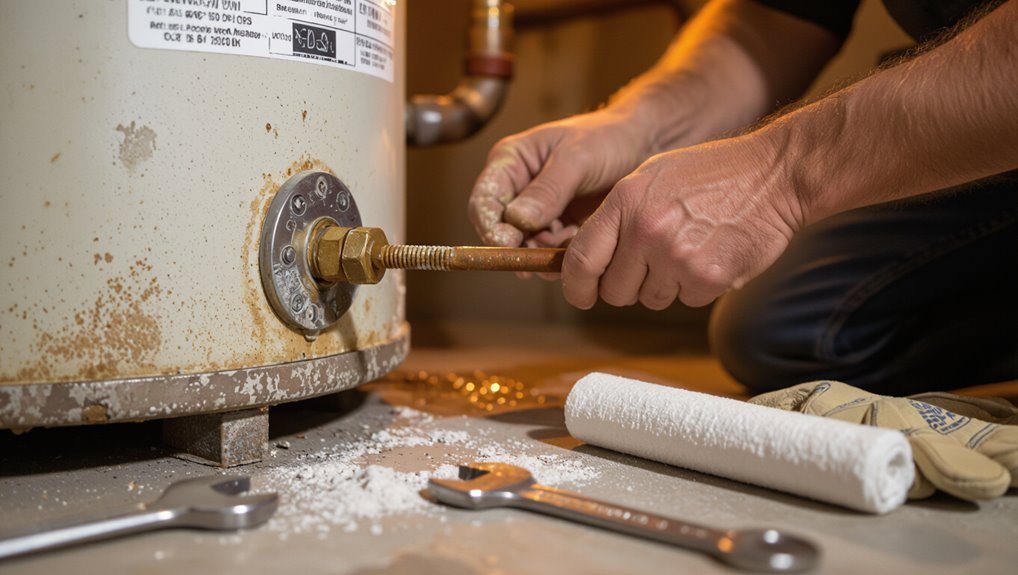
A sulfur or “rotten egg” smell in hot water most often stems from hydrogen sulfide gas produced when bacteria react with sulfate in the tank or supply.
Contributing factors include sacrificial anode rods, sulfur-rich well water, and certain plumbing materials that promote bacterial growth.
While often a nuisance, persistent or strong odors can signal corrosion, contamination, or conditions that warrant safety or health attention.
Common causes of rotten egg odor in hot water
When water from a household heater carries a rotten egg smell, it usually stems from chemical or biological reactions inside the tank.
Common causes include sulfide-rich source water reacting with anode rods, mineral-laden corrosion, and sulfur bacteria contamination.
Identifying the source guides remedies and informs instructions on how to remove sulfur smell from hot water heater, such as anode replacement, flushing, or disinfection.
How bacterial growth produces hydrogen sulfide
Microbial activity in water heaters produces hydrogen sulfide through anaerobic bacteria that metabolize sulfate and organic matter, releasing the gas as a metabolic byproduct.
These bacteria thrive in warm, low-oxygen conditions inside tanks where biofilms form on surfaces. Their metabolic processes reduce sulfate to sulfide, which accumulates in water and is released when water is heated or agitated, causing the characteristic odor.
Role of anode rods, well water, and plumbing materials
Investigate the interplay of anode rods, well water chemistry, and plumbing materials to understand why a hot water heater emits a sulfur odor.
Sacrificial anodes (magnesium or aluminum) can react with sulfate-rich well water, promoting hydrogen sulfide formation.
Corroding pipes or fittings release metals that catalyze odors.
Material choice, anode condition, and well water composition together determine sulfur smell intensity and persistence.
When the smell indicates a safety or health concern
The interaction of anode rods, well water chemistry, and plumbing materials can sometimes produce harmless odors. However, certain sulfur smells signal a potential safety or health issue.
Persistent rotten-egg odor alongside corrosion, blackening, gastrointestinal symptoms, or sulfurous gas near pilot lights warrants immediate attention.
Hydrogen sulfide can indicate bacterial contamination or chemical reactions. Consult a plumber, test water, and consider disinfection or venting promptly.
Quick Steps to Confirm the Source of the Smell
A few simple checks can help identify whether the sulfur odor originates from the water heater or the main supply.
The homeowner is advised to compare hot and cold water at multiple taps, perform basic in‑home tests for hydrogen sulfide, and note whether the smell appears only after water is heated.
If results are unclear or the odor persists, a professional inspection is recommended.
Distinguishing hot water vs cold water odor
How can one quickly confirm whether the sulfur (rotten-egg) odor comes from the hot water system or the cold supply?
A simple check: run a cold tap briefly, smell; then run hot and smell.
If only hot smells, the heater or its anode likely causes it.
If both smell, the source is upstream in the cold supply or municipal well.
How to test water at different taps
Where should one sniff first to pinpoint a sulfur odor?
One should sample cold and hot taps separately: kitchen sink, bathroom taps, laundry, and outdoor spigots.
Run each tap briefly, note whether odor appears with hot only, cold only, or both.
Record strengths and locations to determine if the water heater, a specific pipe, or municipal supply is implicated.
Simple home tests for hydrogen sulfide
After noting which taps emit the odor, simple home tests can confirm whether hydrogen sulfide is present and whether the water heater is the source.
Collect cold and hot samples in sealed clear jars, sniff immediately, then heat a portion of cold water to see if smell develops.
Add a pinch of copper sulfate or a bit of household bleach to test for odor reduction.
When to call a professional for diagnosis
Call a professional when simple home tests cannot pinpoint the source of the rotten-egg odor or when corrective steps—such as flushing the tank, replacing the anode rod, or adding shock chlorination—fail to eliminate it.
A technician can perform diagnostic water chemistry, inspect plumbing cross-connections, test gas lines for sulfur compounds, evaluate bacterial contamination, and recommend targeted treatments or component replacement to guarantee safe, lasting resolution.
Immediate Fixes You Can Try Today
The article outlines several immediate steps homeowners can take to reduce or eliminate a sulfur odor from hot water.
Recommended actions include flushing the water heater tank, briefly raising the heater temperature with safety precautions, and running hot water with a diluted bleach solution to kill bacteria while following clear instructions and warnings.
It also advises flushing and disinfecting faucets and fixtures to remove residual contamination.
Flushing the water heater tank
Flush the water heater tank to remove sediment and sulfur-producing bacteria that can cause a rotten-egg odor. A thorough flush often reduces odor by removing the habitat for bacteria and deposits.
Steps include:
- Turn off power/gas and water supply
- Attach hose to drain valve
- Open drain and vent tank
- Flush until clear
- Close valves and refill slowly
Temporarily increasing water heater temperature (safety notes)
Temporarily raising the water heater thermostat can help kill the hydrogen sulfide–producing bacteria responsible for a sulfur smell, but it must be done cautiously to avoid scalding and system damage.
Follow safety steps before and during adjustment:
- Turn off power/gas supply
- Increase temperature modestly (avoid >140°F)
- Monitor for leaks or odors
- Limit exposure time
- Restore normal setting promptly
Running hot water with bleach to kill bacteria (instructions and precautions)
Run hot water with household bleach through the system to disinfect bacteria that cause a sulfur smell, following clear steps and safety precautions.
One-time treatment can reduce odor; wear gloves and ventilate. Use proper dilution and avoid mixing chemicals. Flush thoroughly afterward.
- Turn off water heater power
- Isolate cold inlet
- Add diluted bleach to tank
- Run hot taps until smell appears
- Flush until clear
Flushing and disinfecting faucets and fixtures
Begin by shutting off the water supply to each fixture and opening the hot taps to relieve pressure.
Then detach aerators and showerheads for separate cleaning; this allows direct flushing of lines and prevents debris from re-entering the outlets.
Flush each fixture with hot water, scrub aerators and soak them in diluted bleach or vinegar.
Then reassemble and run hot water to clear residual disinfectant.
Permanent Solutions to Remove Sulfur Smell
Permanent solutions target the source of hydrogen sulfide rather than masking the odor. Options include replacing the anode rod with alternatives like aluminum/zinc or powered anodes, installing whole-house treatment or catalytic carbon filters, or implementing aeration systems.
Well owners may also consider scheduled shock chlorination to control bacterial production.
Replacing or upgrading the anode rod (types and benefits)
Replacing or upgrading the anode rod addresses the root cause of sulfur odors by changing the metal that corrodes inside the tank and interacts with bacteria or dissolved sulfates.
Switching from a magnesium to an aluminum-zinc or sacrificial zinc-tipped rod reduces hydrogen sulfide formation.
Stainless steel rods resist corrosion longer but don’t offer sacrificial protection.
Proper selection and periodic replacement restore water quality and extend tank life.
Installing a whole-house filtration or treatment system
A whole-house filtration or treatment system offers a thorough, long-term approach to eliminating hydrogen sulfide and related sulfur odors from a home’s water supply by treating all incoming water at the point of entry. Professional selection, proper sizing, and maintenance guarantee consistent odor-free water. Costs and aesthetics vary; benefits include whole-home protection and peace of mind.
| Relief | Confidence |
|---|---|
| Fresh water | Safe showers |
| Clean laundry | No lingering smell |
| Home value | Health reassurance |
Shock chlorination for well systems (procedures and frequency)
Shock chlorination disinfects a private well by introducing a concentrated bleach solution to eradicate bacteria and neutralize hydrogen sulfide-producing microbes that cause rotten-egg odors.
The procedure involves calculating bleach volume, circulating the solution through the well and plumbing, contact time (typically 8–24 hours), then flushing until chlorine is gone.
Frequency depends on contamination recurrence—commonly annual or after contamination events.
Installing a catalytic carbon filter or aeration system
Consider installing a catalytic carbon filter or an aeration system when recurring hydrogen sulfide cannot be controlled with temporary fixes; both provide long-term removal of sulfur odors by targeting H2S through adsorption or oxidation/stripping respectively.
Catalytic carbon catalyzes H2S oxidation to soluble sulfate, requiring periodic media replacement.
Aeration vents H2S gas for removal and often pairs with aeration basins and degasifiers; professional sizing and maintenance are recommended.
Detailed How-To: Replacing the Anode Rod
The section lists the tools and materials required, outlines safety precautions to follow before starting, and gives a clear step-by-step procedure for removing and installing an anode rod.
It also explains how to select the correct anode rod based on water chemistry and tank compatibility.
Readers are guided to common pitfalls and verification steps to guarantee the sulfur odor source is addressed.
Tools and materials needed
A concise checklist of tools and materials guarantees the anode rod replacement proceeds efficiently and safely.
The technician prepares specific items and a replacement rod sized to the heater model, plus basic consumables for corrosion control.
- Replacement anode rod (correct length/type)
- Pipe wrench or breaker bar
- Socket and extension for hex head
- Teflon tape and plumber’s grease
- Bucket and rags
Safety precautions before starting
Having gathered the listed tools and a correctly sized replacement anode rod, the technician confirms power and water supplies are secured before work begins.
Safety checks and precautions include:
- Verify circuit breaker off and lockout/tagout applied
- Drain enough water to reduce pressure
- Wear gloves and eye protection
- Vent nearby gas appliances
- Keep a bucket and towel for residual leakage
Step-by-step removal and installation
Once power and water are secured and the tank partially drained, the technician locates the anode rod access—usually on the tank top—and readies tools and fittings for removal.
They loosen the hex head, extract the corroded rod, inspect threads and sealing surfaces, apply plumber’s tape or new gasket, insert the replacement, torque to specification, refill the tank, bleed air, restore power, and check for leaks.
How to choose the right anode rod for your water type
Why choose a specific anode rod for a given water chemistry?
The correct rod — magnesium for soft, mildly corrosive water; aluminum or alloy for hard or high-mineral water; or zinc-aluminum for sulfur-prone systems — extends tank life and reduces hydrogen sulfide.
Test water for hardness, pH, and sulfur; match rod material to conditions and replace per manufacturer intervals for peak protection.
Water Treatment Options Based on Source
Treatment choices vary with the water source, so municipal supplies, private wells, and homes with water softeners require different approaches.
For city water, the focus is on point-of-entry disinfectant removal or in-tank corrective flushing, while well systems often need aeration, chlorination, or targeted filtration.
The role of water softeners is noted because they can exacerbate sulfur odors; options include bypassing the softener, regenerating more frequently, or installing additional sulfur-specific filtration.
Solutions for municipal (city) water
Municipal water systems rarely contain the high levels of dissolved hydrogen sulfide found in private wells, but occasional sulfur odors can still arise from pipe biofilms, seasonal chemistry shifts, or disinfection byproducts.
Addressing these issues typically focuses on point-of-entry and point-of-use fixes such as carbon filtration, chlorination flushes, and targeted plumbing repairs.
Professionals recommend activated carbon filters, shock chlorination of affected lines, aeration units, and replacing contaminated fixtures.
Solutions for private well water
Private well systems commonly produce higher and more variable hydrogen sulfide levels than municipal supplies.
Corrective approaches begin with accurate source identification—measuring H2S concentration, checking for bacterial contamination, and determining whether the odor originates from the well, distribution piping, or the water heater.
Treatment options include chlorination shock, continuous chlorination with retention, activated carbon filters for low H2S, and oxidizing filters (manganese greensand, aeration) for higher levels.
When water softeners worsen the problem and how to mitigate it
How can a water softener make a sulfur smell worse?
Softeners can promote hydrogen sulfide production by adding organic carbon or by reducing oxidizing disinfectants, creating anaerobic conditions in resin beds.
To mitigate, inspect and clean resin, regenerate more frequently, use chlorination or air injection ahead of the softener, or install a catalytic activated carbon or manganese greensand filter upstream to remove H2S.
Costs, Timeframe, and What to Expect
Typical costs for DIY fixes versus professional services are outlined, giving readers a sense of budget expectations.
The expected timeframe for treatments to reduce or eliminate the odor is summarized, with notes on immediate versus gradual improvements.
Clear indicators of resolution and signs that the issue persists are listed to help assess results and next steps.
Typical costs for DIY fixes vs professional services
Fixing a sulfur smell from a water heater can range from a simple, low-cost DIY task to a more expensive professional service depending on the root cause. Typical DIY fixes: $10–$100 (anode replacement, flushing). Professional service: $100–$800 (diagnosis, disinfection, parts). Expect inspection fees and variable part costs.
| Fix Type | Typical Cost | Notes |
|---|---|---|
| Flush | $0–$20 | DIY labor |
| Anode | $20–$100 | DIY or plumber |
| Disinfect | $10–$50 | Supplies |
| Pro service | $100–$800 | Includes labor |
How long treatments take to eliminate odor
Following cost estimates, the expected timeline for eliminating a sulfur smell varies with the chosen remedy and the underlying cause.
Simple flushes or anode replacements often reduce odor within days to a week.
Chlorine or hydrogen peroxide treatments typically require 24–72 hours plus aeration.
Complex issues or professional repairs may take several days to a couple of weeks for full resolution.
Signs the problem is resolved vs persistent issues
When the sulfur odor is gone from taps and hot water outlets for several consecutive days, it generally indicates the treatment succeeded; conversely, recurring or fluctuating smells, especially after periods of inactivity or when only hot water is affected, suggest a persistent issue requiring further action.
Resolved signs include consistent odor-free water and lower inspection costs.
Persistent issues often need technician diagnosis, parts replacement, or longer treatment, increasing time and expense.
Maintenance Checklist to Prevent Sulfur Odor Recurrence
A concise maintenance checklist helps prevent a return of sulfur odors by keeping the heater and water chemistry in proper condition.
Key actions include routine flushing, scheduled inspections, timely anode-rod replacement, and water-quality monitoring to catch issues early.
Suggested items to follow include:
- Flush tank at least annually to remove sediment buildup
- Inspect pressure relief valve and fittings during each service
- Replace magnesium anode rod every 3–5 years or when depleted
- Test water for sulfates and bacteria annually or after odor recurrence
- Record service dates and any water-quality results for trend tracking
Regular flushing and inspection schedule
Establish a regular flushing and inspection schedule to prevent hydrogen sulfide buildup and detect early signs of bacterial contamination or anode deterioration.
Schedule tank flushing every 6–12 months, inspect fittings, valves, and sacrificial components for corrosion, and test hot water periodically for odor.
Record actions and findings, adjust frequency based on water quality and usage, and engage a professional if unexplained odors persist or inspections reveal abnormalities.
When to replace the anode rod
Periodic flushing and inspection should prompt consideration of the anode rod’s condition, since a depleted or corroded rod often precedes recurrent sulfur odors.
Replace the rod when more than 50% consumed, heavily pitted, or coated with black sulfur-producing deposits.
Also replace after several years if homeowners notice odor recurrence despite maintenance.
Use a compatible magnesium or aluminum/zinc rod per manufacturer recommendations.
Monitoring water quality and periodic testing
Monitor water quality regularly and conduct targeted tests to detect conditions that promote sulfur odor—such as low disinfectant residuals, high sulfate levels, elevated dissolved hydrogen sulfide, or excessive bacterial counts.
Establish a testing schedule (quarterly or semiannually), record results, and correlate with odor incidents. Use certified labs for sulfate, H2S, and microbial assays.
Adjust treatment—chlorination, filtration, or anode replacement—based on data.
Troubleshooting Common Complications
When the sulfur smell returns after treatment, the guide outlines likely causes and corresponding fixes to isolate persistent sources.
It compares diagnostics for multiple affected faucets versus a single fixture to direct appropriate repairs.
It also notes signs of corrosion or excess sediment encountered during service and recommends when component replacement is necessary.
Odor returns after treatment likely causes and fixes
If the rotten-egg odor returns after initial treatment, common causes include incomplete disinfection, a seeded anode rod, bacterial recolonization in the tank or plumbing, or a persistent sulfur source in the water supply; diagnosing which requires systematic checks of the anode, water source, and recent maintenance history.
Remedies include repeat chlorination, replacing a sulfurous anode with aluminum-free or zinc, tank flushes, and checking municipal well treatments.
Multiple faucets affected vs single fixture diagnostics
How can one tell whether a sulfur smell originates in the water heater or a single fixture?
The person tests hot water at multiple taps: if odor appears at most or all hot outlets, the heater or incoming supply is implicated.
If only one fixture emits odor, the problem likely lies within that fixture’s trap, aerator, or supply line.
Isolate and test to confirm.
Corrosion or sediment issues detected during repair
Inspecting a tank or its components often reveals corrosion, scale, or sediment that complicates odor remediation and can impair heater function.
When detected, document affected areas, flush sediment, and assess sacrificial anode condition.
Replace heavily corroded parts, consider power-flush or professional descaling, and test water chemistry.
Post-repair, monitor performance and odors; persistent issues may require tank replacement.
When to Hire a Plumber or Water Treatment Specialist
If the sulfur odor persists after basic troubleshooting, professional assessment is advisable to identify issues such as bacterial contamination, anode rod failure, or supply-water hydrogen sulfide.
Homeowners should ask contractors or testing labs about diagnostic methods, treatment options, timelines, and references to verify expertise.
Clarify expected warranties, performance guarantees, and maintenance or follow-up terms before authorizing work.
Clear signs you need professional help
When should a homeowner call a professional? Persistent rotten-egg odor after standard troubleshooting, black or cloudy water, corrosion or leaks around the heater, repeated bacterial regrowth despite disinfection, or unusually high sulfur levels from lab tests indicate professional assessment.
Also call when treatment requires complex systems—anode replacement, chlorination, or whole-house filtration—or when safety (gas connections, pressure relief) is uncertain.
Questions to ask a contractor or lab
What should homeowners ask to make sure a plumber or water-treatment lab can diagnose and fix sulfur odors effectively?
Ask about diagnostic steps, tests performed (bacteria, hydrogen sulfide, source tracing), treatment options, expected timeline, credentials and experience with similar cases, sample handling and reporting, estimated costs and itemized quotes, follow-up procedures, and references or case studies demonstrating successful odor removal.
Expected warranties and guarantees for treatments
Warranties and guarantees for sulfur-odor treatments should be clear, written, and specific about scope, duration, and remedies: homeowners should expect coverage for product failure, reoccurrence within a stated period, and workmanship on installed equipment.
Contracts must define exclusion conditions, claim procedures, and transferability. Reasonable durations are typically 1–5 years; extended warranties may be available.
Retain documentation and verify provider licensing before hiring.
Practical Tips to Minimize Disruption During Repairs
When repairs are planned to address a sulfur odor in the hot water heater, clear steps can reduce inconvenience and hazards for the household.
Prior notice, simple temporary solutions for bathing and cooking, and basic safety measures for handling bleach and hot water help maintain routine and prevent accidents.
The following practical items summarize key actions to take before and during service:
- Notify all household members of the expected water outage and its duration
- Stock bottled water and prepare cold-water meal options or use a camp stove
- Schedule showers around service times or use gym/community facilities as alternatives
- Wear gloves and eye protection when using bleach; ventilate the area well
- Run faucets slowly after service to flush lines and check water temperature before use
Preparing household members for water outage
How should household members be informed and prepared ahead of a planned water outage to limit inconvenience and maintain safety?
Notify everyone promptly with outage timing, expected duration, and affected fixtures.
Assign responsibilities—pets, medications, hygiene needs—and identify critical tasks to complete beforehand.
Advise conserving existing water, locating shutoff valves, and keeping phones charged.
Provide clear contact information for questions or emergencies.
Temporary alternatives for bathing and cooking
Several straightforward options allow household members to maintain hygiene and food preparation during a water outage.
Use bottled water for drinking and cooking, heat small kettles or pans on a stove for washing, and employ sponge baths with pre-filled basins.
Consider microwave or stovetop meal prep using minimal water, and use disposable plates and utensils to reduce cleanup until repairs restore normal hot water.
Safety steps for handling bleach and hot water
A few simple precautions can greatly reduce risks when using bleach with hot water:
wear gloves and eye protection, guarantee ventilation, and avoid mixing bleach with ammonia or acids.
Use measured dilute solutions, add bleach to water (not vice versa), keep children and pets away, and neutralize spills with plenty of water.
Rinse surfaces thoroughly and store bleach securely after use.
Resources and Further Reading
For readers seeking verification of water chemistry or contamination sources, local water testing labs and municipal water quality resources provide authoritative analysis and guidance.
Manufacturer guidance for specific water heater models can clarify recommended maintenance, anode replacement, and warranty considerations related to sulfur odors.
Together these sources help users choose appropriate tests and follow model-specific procedures for safe, effective odor remediation.
Water testing labs and municipal resources
When homeowners suspect hydrogen sulfide or other contaminants in their hot water, certified water testing labs and municipal water quality offices provide reliable analysis and guidance.
They offer sampling protocols, contaminant identification, and remediation recommendations.
Useful resources include:
- Accredited laboratory directories
- Local water quality reports
- Sampling kit vendors
- Contact info for municipal labs
- Links to state environmental agencies
Manufacturer guidance for common water heater models
Having reviewed lab and municipal testing options, attention turns to manufacturer guidance for specific water heater models to address sulfur odors effectively.
Manufacturers advise model-specific maintenance, anode replacement, and warranty considerations; owners should consult manuals and support.
Common recommendations include:
- Check anode type and replacement interval
- Follow flushing procedures
- Use approved disinfectants
- Record serial/model numbers
- Contact authorized service centers
Conclusion
A faint rotten-egg scent lingers, then fades—until it doesn’t. Readers are left with the image of a quiet basement, the tank’s metal skin humming, a single wrench poised above the anode rod. Small fixes may banish the smell at once; deeper work promises lasting calm. If odors persist, professional help waits beyond the door. The outcome hangs on a choice: act now, and the water runs clear; delay, and the mystery returns.