How to Install a Stiebel Eltron Tankless Water Heater: Step-by-Step DIY Guide
Installing a Stiebel Eltron tankless water heater can be done by homeowners with the right preparation and tools, though it’s recommended to hire a licensed professional for complex electrical or venting tasks. The installation process involves assessing the site, checking model specifications, shutting off utilities, mounting the unit, and making compliant plumbing and electrical connections. Additionally, you’ll need to install valves and filters, conduct startup tests, and ensure maintenance readiness. Remember to secure necessary permits, ensure proper grounding, and register your warranty. For detailed step-by-step instructions and helpful tips, continue reading.
How to Install a Stiebel Eltron Tankless Water Heater: Quick Overview and Key Considerations
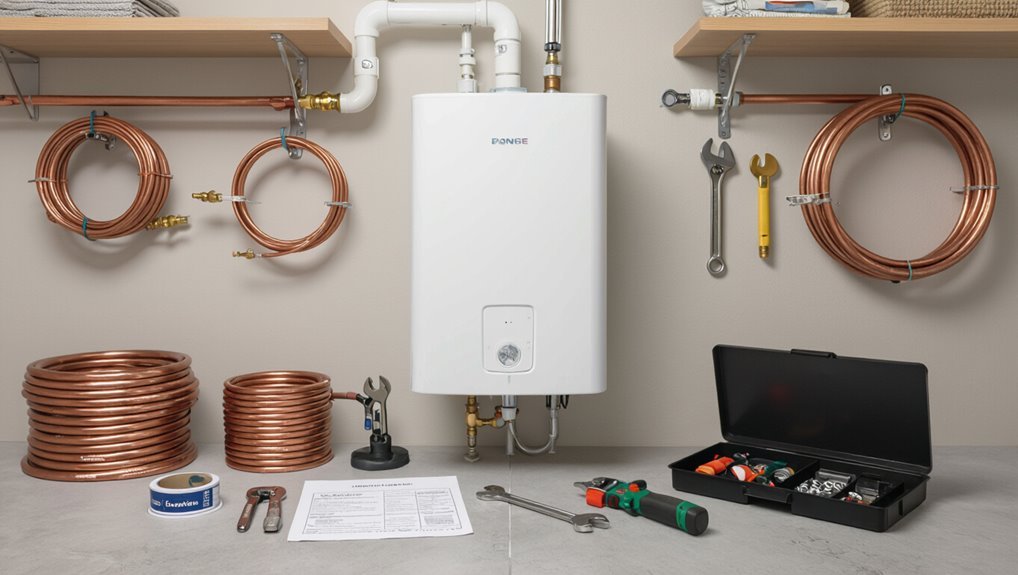
This section outlines who is suited to install a Stiebel Eltron tankless unit and when a licensed plumber or electrician should be consulted.
It summarizes model compatibility, electrical and plumbing requirements, and site considerations.
It also provides a practical estimate of time and cost and a concise tools and materials checklist.
Who should install this unit and when to consult a professional
Evaluate skill level and local code requirements before attempting installation: homeowners with solid electrical and plumbing experience, familiarity with gas lines (if applicable), and comfort working to code may install a Stiebel Eltron tankless unit.
Anyone lacking those competencies—or facing complex venting, high electrical demand, or strict permit processes—should hire a licensed professional.
For guidance on how to install Stiebel Eltron tankless water heater consult manuals.
Model compatibility and basic requirements summary
After deciding whether a homeowner or licensed professional should handle the job, attention must turn to model compatibility and the unit’s basic requirements.
Confirm water flow, inlet temperature, and desired output match model specifications.
Verify electrical service, breaker size, and wire gauge for electric units, or proper gas supply and venting for gas models.
Space, mounting, and local code compliance are essential.
Time, cost estimate, and tools checklist
A realistic installation timeline, a concise cost estimate, and a focused tools checklist help set expectations before work begins.
Typical DIY install: 4–8 hours; professional: 2–4 hours.
Estimated cost: $400–$1,800 (unit, materials, permits, electrical upgrades variable).
Tools and materials are specific; preparation avoids delays.
- Basic tools: drill, pipe cutter, wrench set
- Electrical: multimeter, wire strippers
- Plumbing: fittings, Teflon, sealant
Required Tools, Materials, and Safety Equipment
The installer should assemble a concise toolkit covering both electrical and plumbing tasks, including multimeter, wire strippers, conduit tools, pipe wrenches, and soldering or compression fittings.
Specific replacement parts and manufacturer-recommended components for Stiebel Eltron models—such as pressure relief valves, filter screens, and model-matched mounting brackets—must be on hand.
Appropriate personal protective equipment (gloves, safety glasses, hearing protection) and adherence to safety precautions for live electrical work and pressurized plumbing are essential.
Tools list for electrical and plumbing work
Several specific tools, materials, and safety items are required to install a Stiebel Eltron tankless water heater safely and to code.
The installer needs basic electrical and plumbing tools, testing instruments, and PPE. Proper grounding and shutoff capability are essential; local code compliance and permit tools should be considered before starting.
- Multimeter, wire stripper, conduit tools
- Pipe cutter, torch or crimp kit, fittings
- Safety glasses, gloves, lockout/tagout kit
Materials and replacement parts specific to Stiebel Eltron models
Gathering model-specific materials and replacement parts guarantees a Stiebel Eltron tankless water heater performs reliably and meets warranty and code requirements.
Required items include manufacturer-approved inlet/outlet fittings, compatible electrical connectors and junction boxes, and OEM mounting brackets or vibration isolators.
Use genuine replacement sensors, flow switches, and element assemblies matched to the exact model number to confirm proper operation and compliance.
- OEM sensors and flow switches
- Model-matched fittings and brackets
- Manufacturer electrical connectors
Personal protective equipment and safety precautions
Alongside model-specific parts, proper personal protective equipment and clear safety procedures protect both the installer and the appliance during installation.
Gloves, eye protection, and hearing protection reduce injury risk; lockout/tagout and gas shutoff prevent hazards; ventilation avoids fume buildup. Use rated tools and follow manufacturer torque and clearance specs.
- Safety gloves and eye protection
- Lockout/tagout and gas shutoff
- Adequate ventilation and hearing protection
Pre-Installation Planning and Site Preparation
Before beginning work, the installer evaluates the proposed location for adequate ventilation, manufacturer-required clearances, and convenient access for maintenance.
They verify the electrical service for sufficient panel capacity, correct breaker sizing, and proper wiring gauge, and confirm water supply flow and pressure meet unit specifications.
Finally, the installer reviews applicable local codes, obtains necessary permits, and schedules any required inspections.
Choosing the optimal location: ventilation, clearance, and accessibility
When selecting a site for a Stiebel Eltron tankless water heater, the homeowner or installer must prioritize proper ventilation, required clearances, and ease of access to confirm safe operation and simplified maintenance.
Choose an indoor wall with adequate air pathways, maintain manufacturer-specified clearance distances around the unit, avoid combustible materials, warrant unobstructed access for service and filter changes, and position near existing plumbing runs to minimize pipework.
Checking electrical supply: panel capacity, breaker requirements, and wiring gauge
Although electrical preparations vary by model and household load, verifying the home’s panel capacity, correct breaker sizing, and appropriate conductor gauge is essential before installing a Stiebel Eltron tankless water heater.
Verify available amperage and spare slots, match breaker type and amp rating to unit specifications, guarantee copper conductors of required gauge, and plan for dedicated circuits and proper grounding per local code and manufacturer requirements.
Assessing water supply and pressure requirements
Because inlet water quality and flow directly determine a tankless unit’s performance, the installer must verify incoming supply characteristics—including available flow rate, static and dynamic pressure, and water temperature—against the Stiebel Eltron model’s minimum requirements.
Confirm minimum GPM and pressure, check for sediment, hardness, or chlorination issues, and plan for required filtration, softening, or pressure adjustment to guarantee reliable operation and warranty compliance.
Local codes, permits, and inspections checklist
Any installation must align with applicable local codes, permit requirements, and inspection protocols to guarantee legal compliance and safe operation.
The installer should verify zoning, electrical, and plumbing regulations, obtain required permits, and schedule inspections. Documentation and model-specific compliance statements help approvals.
Follow inspector guidance and retain certificates.
- Confirm permit types and fees
- Prepare compliance documentation
- Schedule pre/post-install inspections
Preparing the Existing Plumbing and Electrical Systems
Before beginning the install, all water and electrical supply must be shut off and verified de-energized.
The old water heater should be drained and removed, with existing pipe runs (copper, PEX, CPVC) inspected and prepped for connections.
Any required electrical service or dedicated circuit upgrades must be identified and arranged prior to mounting the new unit.
Shutting off water and power safely
Power to the unit and the household water supply must be isolated and verified prior to any work on the plumbing or electrical systems.
The installer locates and shuts the circuit breaker for the heater, locks/tagges it out, then closes the main water valve and any local shutoffs.
Verification includes testing breakers with a voltage tester and confirming zero water flow at nearby fixtures.
Draining and removing the old water heater
Begin by relieving pressure and draining the existing tank to prevent spills and burns: attach a garden hose to the tank’s drain valve, route it to a suitable drain or outside, open a hot-water tap on a nearby fixture to vent the system, then slowly open the drain valve and allow the tank to empty.
Disconnect water lines, cap supply valves, shut off gas or power, and unbolt mounting.
Inspecting and prepping pipe runs (copper, PEX, CPVC)
With the old tank removed and service lines isolated, the installer inspects existing supply runs for compatibility with the Stiebel Eltron’s flow and temperature requirements.
Copper, PEX, and CPVC are checked for size, condition, and routing.
Corrosion, pinholes, fittings, and unsupported runs are noted. Necessary repairs, reroutes, or adapters are planned to guarantee proper flow, pressure, and code-compliant connections.
Upgrading electrical service or circuit if required
If the existing electrical supply cannot meet the Stiebel Eltron’s amperage and voltage requirements, the installer evaluates whether a dedicated circuit, subpanel, or service upgrade is necessary.
The technician verifies load calculations, inspects panel capacity, and determines wire gauge, breaker size, and conduit.
Permits and utility coordination are arranged when service upgrades are required.
Compliance with code and safety testing follows installation.
Mounting and Mechanical Installation
The installer begins by accurately marking wall locations, selecting appropriate anchors for the wall type, and ensuring the unit is perfectly level before lifting.
Different mounting details and clearances are noted for indoor and outdoor models to meet ventilation and weatherproofing requirements.
Finally, inlet and outlet plumbing connections are firmly secured with recommended fittings and supports to prevent stress on the heater.
Wall mounting the Stiebel Eltron unit: marking, anchors, and level
Begin by identifying the exact mounting location that meets clearance, structural support, and access requirements specified by Stiebel Eltron.
Transfer the template or bracket holes to the wall, confirm level with a torpedo or laser level, and mark anchor points.
Select anchors rated for wall material and heater weight.
Drill pilot holes, insert anchors, and hang the unit temporarily to verify alignment before final tightening.
Mounting for indoor vs. outdoor models
Many installations require different mounting approaches depending on whether the Stiebel Eltron unit is designed for indoor or outdoor use.
Indoor units need secure, vibration-isolating brackets on load-bearing walls, with attention to clearances and condensation drain routing.
Outdoor models require weather-resistant fasteners, corrosion-resistant mounting surfaces, and sealed penetrations.
Both follow manufacturer clearance specs and local code for safe, durable installation.
Securing inlet and outlet plumbing connections
Secure inlet and outlet plumbing connections using properly sized, code-compliant fittings and supports to prevent leaks, strain, and thermal movement.
Install flexible connectors where allowed, backing with rigid shutoffs and unions for serviceability.
Use thread sealant or tape specified for potable water, torque fittings to manufacturer specs, slope condensate/drain lines correctly, and secure piping with insulated clamps to minimize vibration and noise.
Plumbing Connections and Water Treatment
The installer should describe step-by-step connections for the cold water inlet and hot water outlet, and the correct placement of the pressure relief valve, isolation valves, and check valves to guarantee safe operation and serviceability.
Condensate management and drainage requirements must be addressed where applicable to prevent water damage and system corrosion.
Recommended water treatment options — filtration, softening, and periodic descaling — should be specified to protect heat exchanger longevity and maintain performance.
Connecting cold water inlet and hot water outlet step-by-step
Begin by identifying the unit’s marked cold inlet (usually blue) and hot outlet (usually red) and confirm the water supply is shut off and drained before making any connections.
Apply thread sealant or PTFE tape to male fittings, attach appropriate fittings and adapters, and tighten to manufacturer torque.
Route supply and outlet lines without strain, purge air, inspect for leaks, and restore water pressure slowly while checking connections.
Installing pressure relief valve, isolation valves, and check valves
Install the pressure relief valve, isolation valves, and check valves in clear, accessible locations near the unit to protect the heater and simplify future maintenance.
Attach a temperature and pressure relief valve to the hot outlet per manufacturer spec, install shutoff isolation valves on both inlet and outlet, and fit a check valve on the cold inlet to prevent backflow.
Test for leaks and proper operation.
Managing condensate (if applicable) and drainage
After confirming leak-free connections and functioning isolation and relief valves, attention moves to condensate management and drainage to protect the unit and surrounding areas.
The technician inspects whether the model produces condensate, installs a corrosion-resistant drain line with proper slope, connects to an approved drain point or condensate neutralizer if required, and secures fittings to prevent leaks and backflow.
Recommended water filtration, softening, and descaling devices
Water quality directly affects the performance and lifespan of a Stiebel Eltron tankless water heater, so selecting appropriate filtration, softening, and descaling measures is essential.
Recommend a sediment pre-filter (5–20 µm), a carbon filter for chlorine and organics, and a salt-based or template-assisted crystallization softener for hard water.
Schedule periodic descaling with manufacturer-approved acidic descalers and inline scale inhibitors where needed.
Electrical Wiring and Controls
Attention to the electrical wiring and controls is essential for safe, reliable operation of the Stiebel Eltron unit.
The section outlines hardwiring to the breaker panel, proper grounding and bonding, and any required GFCI/RCD protection, plus installation of external controllers, thermostats, and remote sensors.
It also covers verifying correct voltage and amperage and performing startup diagnostics before commissioning.
Hardwiring the unit to the breaker panel: step-by-step
Begin by confirming the electrical requirements for the specific Stiebel Eltron model—voltage, total amperage, and recommended breaker configuration—since correct circuit sizing and grounding are critical for safe, code-compliant hardwiring.
Isolate power, mount a proper-rated multi-pole breaker, run appropriately sized conductors in conduit, land wires to the unit’s terminal block per diagram, torque connections to spec, label the circuit, and restore power for testing.
Grounding, bonding, and GFCI/RCD considerations
One critical element in installing a Stiebel Eltron tankless unit is ensuring proper grounding, bonding, and appropriate GFCI/RCD protection to reduce shock risk and meet electrical code.
The installer must connect equipment grounding conductors to the unit’s ground terminal, bond to incoming metal water piping if required, and install GFCI/RCD devices per local code and manufacturer instructions to protect personnel and detect leakage faults.
Installing external controllers, thermostats, and remote sensors
Install external controllers, thermostats, and remote sensors according to the manufacturer’s wiring diagrams and local electrical codes to guarantee accurate temperature control and reliable communication with the Stiebel Eltron tankless unit.
Use shielded low-voltage cable where specified, maintain proper polarity and terminal tightening, and mount sensors away from direct heat.
Verify secure connections, label wires, and follow recommended conduit or cable protection practices.
Verifying voltage, amperage, and startup diagnostics
Verify that the incoming supply matches the unit’s nameplate ratings for voltage and phase, and confirm branch-circuit ampacity and breaker sizing before energizing the Stiebel Eltron tankless water heater.
Measure line voltage under load, verify each conductor and neutral continuity, and confirm breaker trip characteristics.
Observe startup diagnostics and error codes on the unit display, document readings, and correct wiring or grounding faults before final commissioning.
Startup, Configuration, and Testing
The installer begins by filling the plumbing, purging trapped air, and inspecting all connections for leaks.
After confirming a dry system, power is applied and temperature limits are programmed according to the manufacturer’s guidelines.
Finally, the unit is tested for flow rates, temperature rise, and performance at multiple fixtures while noting any error codes for troubleshooting.
Filling the system, purging air, and checking for leaks
Begin by slowly filling the unit and connected plumbing with water, opening the cold inlet valve first and then the hot outlet to allow water to flow through the heat exchanger. This controlled sequence helps minimize trapped air and reduces pressure spikes.
Continue opening fixtures to purge remaining air until a steady stream appears. Inspect all joints, valves, and fittings for drips, tighten as needed, and recheck pressure.
Initial power-up and setting temperature limits
Power the unit only after confirming water-filled lines and closed gas/breaker controls; energizing without flow can damage the heat exchanger.
Restore power, observe startup indicators, and verify no error codes.
Enter the temperature limit via the controller per local codes and user comfort—typically 120°F (49°C) for safety.
Lock settings if available and document configuration for future reference.
Running performance tests: flow rates, temperature rise, and multiple fixtures
Start performance testing by confirming steady inlet pressure and stable fuel/electrical supply before measuring flow rates, temperature rise, and multi-fixture behavior.
Measure maximum and minimum flow using a calibrated flow meter at each fixture. Record inlet and outlet temperatures to calculate temperature rise.
Test simultaneous demand by opening multiple fixtures, noting whether unit maintains set temperature and recommended minimum flow rates without cycling or alarm.
Troubleshooting common startup issues and error codes
When commissioning a Stiebel Eltron tankless unit, technicians should first verify installation parameters and supply conditions before addressing startup faults or error codes.
Inspect electrical connections, water pressure, and inlet filters. Consult the manufacturer code list for diagnostics. Clear minor blockages, reset per manual, and retest. Escalate persistent faults to certified service.
- Check codes against manual
- Verify supply voltages/pressures
- Reset and retest
Maintenance, Troubleshooting, and Longevity Tips
Routine maintenance—regular flushing, timely filter changes, and periodic inspections—keeps the unit operating efficiently and prevents premature failure.
In hard water areas, scheduled descaling is essential and should follow manufacturer recommendations to preserve heat exchanger performance.
Clear troubleshooting steps for no-hot-water, low-flow, and error codes help determine when issues can be resolved by the owner and when to contact Stiebel Eltron support or a licensed technician.
Routine maintenance schedule: flushing, filter changes, and inspections
A regular maintenance schedule keeps a Stiebel Eltron tankless water heater operating efficiently and extends its service life.
Perform visual inspections every 3–6 months, check for leaks, corrosion, and venting issues.
Replace or clean inlet filters quarterly or per manual.
Flush the unit annually to remove sediment and verify pressure/temperature settings.
Record dates and findings to track performance and plan professional service when needed.
Descaling procedures and frequency for hard water areas
Descale tankless Stiebel Eltron units more frequently in hard water areas to prevent mineral buildup that impairs heat exchange and reduces flow.
Manufacturers typically recommend annual descaling, but homes with high hardness (over 7–10 grains per gallon or >120–170 ppm) should consider descaling every 3–6 months.
Use vinegar or manufacturer-approved descaling solution, isolate the unit, circulate solution per instructions, then flush thoroughly and restore normal operation.
How to diagnose and fix common problems (no hot water, low flow, error codes)
Diagnose common Stiebel Eltron tankless water heater issues by systematically checking power, water supply, and error codes to isolate whether the problem is electrical, hydraulic, or thermal.
Inspect breakers, wiring, and reset procedures for no power.
For no hot water, confirm inlet temperature, flow sensor, and heating element status.
Low flow often stems from clogged filters, scale buildup, or supply valves; reset or replace components per manual.
When to call Stiebel Eltron support or a licensed technician
When should professional help be sought for a Stiebel Eltron tankless water heater?
Professional support or a licensed technician is advised for persistent error codes, gas or electrical concerns, leaks from internal components, inadequate combustion or venting, major component replacement, or failed diagnostics after basic troubleshooting.
Contact Stiebel Eltron support for warranty-covered repairs, product-specific guidance, or to locate authorized service providers.
Energy Efficiency, Cost Savings, and Warranty Considerations
A comparison of energy use and operating costs versus traditional tank heaters helps quantify potential savings from a Stiebel Eltron unit.
Practical tips—proper sizing, temperature setbacks, descaling, and insulating hot lines—can further improve efficiency and reduce bills.
Reviewing the manufacturer’s warranty terms and completing product registration guarantees coverage and clarifies required maintenance for valid claims.
Estimating energy savings vs. tank water heaters
Estimate energy and cost differences between a Stiebel Eltron tankless unit and a conventional storage tank by comparing system efficiencies, typical hot water usage patterns, and local energy prices.
Calculate annual consumption using measured gallons per day, temperature rise, and heater EF or energy factor.
Include standby losses for tanks, fuel type rates, and expected payback period; present results as annual kWh/therms and dollars.
Tips to maximize efficiency and reduce operating costs
Optimize operation by matching device settings and household habits to the Stiebel Eltron’s strengths: set temperature conservatively, reduce peak simultaneous demand with low-flow fixtures and staggered appliance use, and maintain inlet water temperatures and flow rates within the unit’s specified ranges to prevent unnecessary modulation and recirculation.
Schedule regular descaling and inlet filter checks, insulate hot lines, balance loads across circuits, and review performance periodically to spot inefficiencies.
Understanding Stiebel Eltron warranty terms and registration steps
Many homeowners find that understanding Stiebel Eltron’s warranty scope and registration procedure is essential for protecting their investment and maximizing long-term savings.
The manufacturer typically offers limited parts and labor coverage; terms vary by model and region.
Timely online registration, retaining purchase and installation records, and following maintenance requirements preserve eligibility.
Review exclusions, claim processes, and warranty durations before completing installation to avoid surprises.
Comparison and Model Selection Guidance
When choosing a Stiebel Eltron tankless water heater, the author compares models by flow rate, electrical requirements, and recommended applications to guarantee the unit matches household demand and local climate. The following quick reference helps frame those differences and sizing considerations:
| Feature | Consideration | Outcome |
|---|---|---|
| Flow rate (GPM) | Peak simultaneous usage | Determines model capacity |
| Electrical needs | Available breaker/amperage | Guides installation feasibility |
Practical selection balances peak GPM with incoming water temperature and available electrical service to avoid undersizing or excessive upgrade costs.
Key model differences: flow rate, electrical requirements, and ideal applications
Choosing the right Stiebel Eltron tankless water heater hinges on three measurable criteria: flow rate (gallons per minute), electrical demand (amperage and phase), and the projected application (single fixture, whole-house, or point-of-use).
Models vary by maximum GPM, required circuit size (single vs. three-phase, 30–200+ amps), and compactness.
Select higher GPM and voltage for whole-house; lower-capacity, lower-current units suit point-of-use.
Matching unit size to household demand and climate
After selecting candidate models based on flow rate and electrical capacity, the next step is to match unit size to the household’s actual hot-water demand and incoming groundwater temperature.
Calculate peak simultaneous fixture usage, adjust required temperature rise for climate, then choose a model with sufficient kW rating and flow at that rise.
Factor seasonal variations and future usage to guarantee consistent performance.
Common Installation Mistakes to Avoid and Best Practices
Common installation mistakes often stem from incorrect electrical or plumbing connections and improper venting, which can compromise performance and safety.
The article highlights typical DIY pitfalls—such as undersized wiring, inadequate grounding, and improper flue installation—and explains how to prevent them.
It also outlines best practices to guarantee safe, code-compliant installation, including following manufacturer specifications, obtaining permits, and scheduling inspections.
Typical DIY pitfalls and how to prevent them
Many DIY installers make predictable errors during Stiebel Eltron tankless water heater installations, but most are avoidable with attention to code, proper tools, and manufacturer guidance.
Common pitfalls include incorrect electrical sizing, poor venting alignment, and improper water connections. Prevent them by verifying specifications, using level measurements, and testing for leaks and proper flow before finalizing.
- Verify electrical capacity and connections
- Confirm vent runs are straight and sealed
- Pressure-test plumbing and check fittings
Best practices for safe, code-compliant installation
Building on the typical mistakes already outlined, installers should follow clear, code-aligned steps to guarantee a safe Stiebel Eltron tankless water heater installation.
Verify local codes, obtain permits, and schedule inspections. Use proper electrical and gas sizing, corrosion-resistant fittings, correct venting, seismic strapping where required, and backflow prevention.
Test for leaks, proper combustion, and functional thermostatic controls before final sign-off.
Final Checklist and Post-Installation Documentation
Before powering the unit, a concise pre-start checklist should confirm gas/electrical connections, venting, water flow, and leak-free fittings.
The installer should record serial numbers, settings, inspection approvals, and photos required for permits.
Clear documentation of the installation, commissioning results, and warranty information should be retained for future service and claims.
Pre-start checklist to verify before first use
A concise final checklist guarantees the Stiebel Eltron tankless water heater is safe, compliant, and ready for operation.
The installer verifies electrical and plumbing connections, confirms proper venting and clearance, and checks for leaks and correct flow rates.
Perform an initial power-on and observe error codes, then run hot-water outlets to confirm consistent temperature and stable operation.
- Electrical and plumbing integrity
- Venting and clearances
- Initial power-on and flow test
What to document for permits, warranties, and future service records
One concise record package should be created and retained after installation to satisfy permit requirements, preserve warranty eligibility, and support future service.
Include clear, dated items that technicians and inspectors can use for verification and troubleshooting.
- Installation certificate, permit closure, inspector sign-off, and photos of completed work
- Serial number, model, purchase receipt, and warranty registration proof
- Wiring diagrams, gas/water service notes, maintenance log
Conclusion
The installer concludes that fitting a Stiebel Eltron tankless water heater rewards careful planning, correct tools, and adherence to electrical and plumbing codes. Like tuning a precision instrument, each connection and setting must align to achieve quiet, efficient performance and long service life. Attention to venting, grounding, and manufacturer instructions preserves warranty coverage and energy savings. With the checklist completed, the system stands ready to deliver on-demand hot water reliably and economically.