
How to Stop an Artesian Well From Flowing: Safe Methods, Legal Tips, and Step-By-Step Fixes
To stop an artesian well from flowing, start by assessing safety and documenting the flow rate and wellhead condition. It’s crucial to notify local authorities and verify any necessary permits. For temporary solutions, consider using caps, weighted plugs, inflatable packers, or diversion and pumping methods to manage the flow. For a permanent fix, you can install a compliant cap, rebuild seals, convert to controlled discharge, or hire professionals to plug the well with grout. Always adhere to legal requirements and seek expert guidance to ensure a safe and lasting resolution. More detailed procedures and examples are provided below.
What an Artesian Well Is and Why It Might Flow Uncontrolled
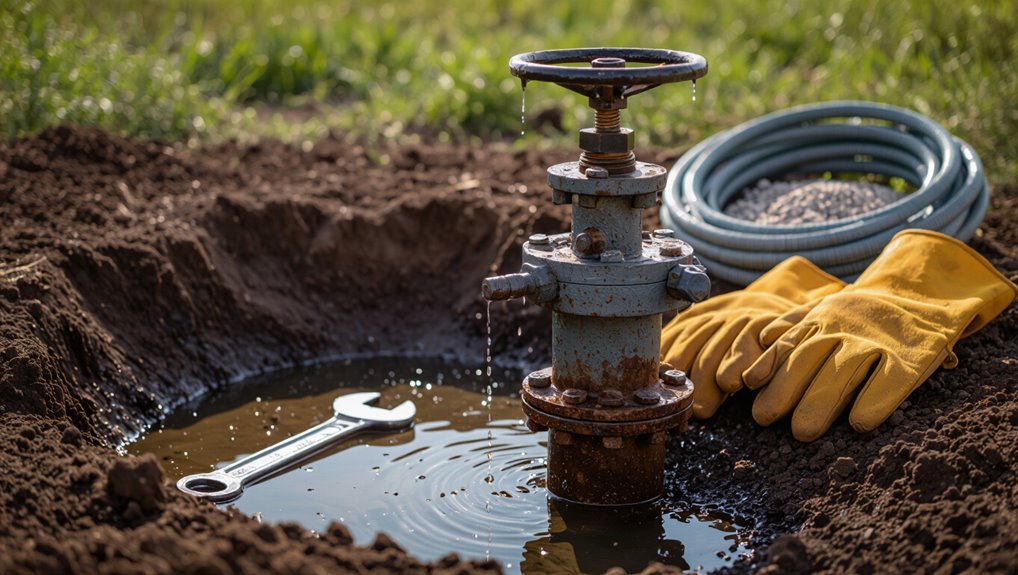
An artesian well taps a confined aquifer where groundwater is under pressure between impermeable layers, causing water to rise in a borehole without pumping.
When pressure is sufficient to reach the land surface the well is called a flowing artesian well, a condition distinct from unconfined or nonflowing confined aquifers.
Indicators that a well is artesian and actively flowing include persistent surface discharge, bubbling or overflowing casing, and measurable positive pressure at the wellhead.
Definition and hydrogeologic conditions that create artesian pressure
Artesian pressure occurs when groundwater is confined between impermeable layers and recharged at a higher elevation than the wellhead, creating enough hydraulic head for water to rise without pumping.
Geological settings include tilted aquifers, permeable recharge zones, and impermeable caps that trap water.
Understanding these conditions helps assess risk, plan interventions, and determine legal responsibilities related to how to stop an artesian well from flowing.
Differences between artesian, flowing artesian, and confined aquifers
Groundwater confined between impermeable layers can behave differently depending on pressure and well construction: a confined aquifer describes the geologic setting where a permeable layer is capped above and below by low-permeability strata.
Artesian refers to that confined system when hydraulic head is above the top of the aquifer so water is under pressure, and a flowing artesian condition occurs when head exceeds ground surface and water discharges at the well without pumping.
Confined denotes setting; artesian denotes pressurization; flowing artesian denotes active discharge.
Common signs that a well is artesian and actively flowing
Several clear indicators signal that a well is under artesian pressure and may be discharging on its own.
Observable signs include continuous water flow at the surface without pumping, bubbling or geysering, unusually high static water levels above ground elevation, sediment-laden or pressurized discharge, and steady wetting or erosion around the casing.
Neighbors’ nearby flowing wells and sudden pressure changes also suggest artesian conditions.
Quick Safety Precautions Before Any Intervention
Before attempting any control measures, immediate hazards such as flooding, erosion, contamination, and electrical risks should be assessed and secured.
Appropriate personal protective equipment and site-control measures must be implemented to protect responders and bystanders.
Clear criteria for evacuation and prompt notification of emergency services should be established if conditions exceed safe intervention limits.
Immediate hazards: flooding, erosion, contamination, and electrical risks
Any uncontrolled artesian flow can create immediate hazards that demand rapid, cautious response: sudden flooding can inundate structures and access routes, rapid erosion can undermine foundations and slopes, uncontrolled discharge may mobilize contaminants into soil and aquifers, and standing water can reach electrical systems causing shock or fire.
Assess inundation paths, interrupt power where safe, and isolate sensitive receptors before intervention.
Personal protective equipment and site control measures
A concise set of personal protective equipment (PPE) and strict site-control measures are essential before personnel approach an uncontrolled artesian flow.
Personnel should don waterproof boots, gloves, eye protection, hard hats, and high-visibility clothing.
Establish barriers, signage, and a single controlled access point.
Use grounding for nearby electrical equipment and spill containment.
Assign a safety observer and document all actions.
When to evacuate and when to call emergency services
If conditions indicate imminent danger—escaping gas odor, visible contamination, rapid pressure buildup, uncontrolled high-volume flow, electrical sparking, or structural collapse—personnel must evacuate immediately and maintain a safe perimeter.
Emergency services should be summoned for fire, hazardous releases, medical injury, inability to control flow, or compromised infrastructure.
Only trained responders with proper authority and equipment may re-enter; document and report the incident promptly.
Legal and Regulatory Considerations
Before taking any action to stop an artesian well, the author notes that permits, local water rights, and well abandonment regulations must be confirmed.
Required notifications to neighbors and relevant authorities should be identified and scheduled according to jurisdictional rules.
Potential liabilities and insurance implications are highlighted so decision-makers can assess risk and compliance before proceeding.
Permits, local water rights, and well abandonment regulations
What permits and local water-rights rules apply to stopping an artesian well depends on jurisdiction and the well’s classification.
Professionals must check state and municipal statutes for drilling, capping, or abandonment permits; water-rights holders and groundwater allocation laws may limit actions.
Licensed contractors often must perform abandonment to code; required records and reporting to agencies guarantee compliance and avoid fines or liability.
Notification requirements for neighbors and authorities
When planning to stop an artesian well, property owners and contractors must determine and fulfill notification obligations to neighbors and relevant authorities, because requirements can affect liability, public safety, and compliance.
They should notify adjacent landowners, municipal water departments, environmental agencies, and local health or emergency services as required by statute or ordinance.
Written notices, timelines, and proof of delivery are often mandated.
Potential liabilities and insurance implications
Notifying neighbors and authorities is only one component of legal exposure; stopping an artesian well can create a range of potential liabilities and influence insurance coverage.
Property owners may face claims for damage, contamination, or lost water rights. Insurance policies might exclude intentional modifications or require endorsements.
Contractors’ negligence can shift liability. Documenting permits, professional work, and notifications minimizes dispute risk and supports claims.
Assessing the Situation: How to Inspect a Flowing Artesian Well
Inspection begins with safe measurement of flow rate and static water level using appropriate gauges and distance from the vent to avoid hazards.
Concurrent testing for contaminants and a visual evaluation of the casing, cap, and surface infrastructure determine immediate risks and repair needs.
If measurements, contamination, or structural issues exceed basic DIY capability, a licensed hydrogeologist or well contractor should be engaged.
How to measure flow rate and water level safely
Evaluating flow rate and water level requires care and the right tools to avoid injury or equipment damage. Personnel should first secure the area, wear appropriate PPE, and confirm that electrical hazards and nearby traffic are controlled.
Use calibrated flow meters, weirs, or bucket-and-timer for surface discharge; employ tape, pressure transducer, or float gauge for static level.
Record steady readings, note fluctuations, and photograph setups for records.
Testing water quality and contamination risks
Water quality testing is a critical step to determine whether the artesian flow poses health or environmental risks and to guide remediation choices.
Inspectors collect representative samples, test for bacteria, nitrates, hydrocarbons, heavy metals, and pH, and consider seasonal variability. Results inform immediate containment, treatment needs, and regulatory reporting.
Accredited labs and chain-of-custody protocols guarantee defensible, actionable data for cleanup planning.
Evaluating well casing, cap, and surface infrastructure
Assess the physical state of the wellhead, casing, cap, and nearby surface structures to identify defects that could worsen flow, allow contamination, or impede control measures.
Inspect for corrosion, cracks, loose or missing caps, and improper seals. Note surface drainage, vents, electrical or piping intersections, and signs of past repairs.
Document dimensions, materials, and accessible features for planning safe, compliant intervention.
When to hire a licensed hydrogeologist or well contractor
When should a licensed hydrogeologist or well contractor be called in to address a flowing artesian well?
A professional is needed if flow persists despite basic fixes, if structural damage, contamination risk, or unexplained pressure exists, or when local regulations require certified closure or alteration.
Hire for flow measurement, diagnostic testing, permit navigation, safe shutoff, or permanent sealing to guarantee compliance and long-term safety.
Immediate Temporary Controls to Stop or Reduce Flow
The discussion now turns to immediate, temporary methods for stopping or reducing an artesian flow, focusing on practical field options.
Options include installing a temporary cap or flange with appropriate sealing materials, using weighted plugs or inflatable packers for short-term control, and constructing diversion ditches or containment to manage overflow.
Where appropriate, temporary pumping into storage tanks or ponds can supplement these measures until permanent repairs are made.
Installing a temporary cap or flange (materials and sealing methods)
Install a temporary cap or flange to quickly reduce or stop an artesian flow while longer-term repairs are arranged.
Use threaded steel or ductile iron caps, flange adapters matching casing diameter, and gaskets rated for groundwater exposure.
Apply pipe thread sealant or anaerobic compound and compressible gasket material.
Secure bolts uniformly, test for leaks, and monitor pressure until permanent remediation is implemented.
Using weighted plugs and inflatable packers for short-term control
Deploy weighted plugs or inflatable packers as immediate, short-term measures to reduce or halt artesian flow while permanent repairs are planned.
Operators select size-rated plugs or packers, position them below the bore throat, inflate or seat to create a pressure seal, and monitor leakage.
These tools permit controlled pressure reduction, ease subsequent repair work, and require proper retrieval tools and safety precautions to avoid sudden releases.
Constructing diversion ditches and containment to manage overflow
Several simple diversion ditches and containment measures can quickly redirect or hold artesian overflow to minimize erosion and property damage while longer-term fixes are prepared.
Trenches lined with sandbags, gravel berms, or temporary soil berms channel water to safe discharge points or temporary ponds.
Guarantee slopes prevent undermining, stabilize edges with erosion control fabric, and monitor for seepage until permanent repairs or professional intervention occur.
Pumping and storage options as interim measures
Begin by selecting portable pumps capable of handling the artesian flow rate and expected debris load; centrifugal trash pumps are often suitable for clear to moderately dirty water, while submersible pumps with solids-handling capability are needed for heavier sediment.
Temporary storage in tanks or lined ponds permits controlled discharge or reuse. Monitor levels, provide overflow protection, and secure permits for storage or transport.
Permanent Solutions to Stop a Flowing Artesian Well
Permanent remedies focus on durable interventions such as properly capping the well with pressure-rated valves and reconstructing the wellhead to reinforce casing seals.
Options range from converting the bore to a controlled outlet with pressure-reducing valves and piping to full abandonment using staged grouting and plugging techniques.
The choice between plugging and converting hinges on water quality, long-term use plans, cost, and regulatory requirements.
Proper well capping and pressure-rated valve installation
A secure, code-compliant well cap combined with a pressure-rated downhole or surface valve provides the most reliable long-term means of stopping an artesian flow by controlling static pressure and preventing uncontrolled discharge.
Installation requires certified equipment, pressure ratings matching aquifer conditions, corrosion-resistant fittings, and torque-specified seals.
Testing after installation confirms integrity.
Documentation and permits guarantee regulatory compliance and aid future maintenance.
Wellhead reconstruction and reinforcing casing seals
Reconstructing the wellhead and reinforcing casing seals restores structural integrity and creates a durable barrier against uncontrolled artesian discharge.
Technicians inspect casing, remove corroded sections, and weld or sleeve joints. They install new sanitary seals, grout annuli with nonshrink cement, and anchor the head to bedrock or concrete pads.
Documentation, pressure testing, and corrosion protection complete a permanent, code-compliant repair.
Converting to a controlled outlet: pressure-reducing valve and piping
Convert the uncontrolled artesian discharge into a managed system by installing a pressure-reducing valve (PRV) and appropriately sized piping to safely convey flow to a designated outlet or storage.
Select a PRV rated for expected head and corrosion conditions, include isolation valves for maintenance, guarantee pipe material and slope prevent air locks and erosion, and route discharge to approved drainage or storage per local regulations.
Full well abandonment and grouting procedures
When conversion to a controlled outlet is unsuitable or the well must be permanently closed, full abandonment and grouting provide a long-term remedy by sealing the borehole and preventing upward flow.
A licensed driller removes casing, disinfects, and places neat cement slurry to fill annulus and fractures.
Steps visualize:
- Remove equipment, clean bore.
- Pump grout from bottom up.
- Cap and restore surface.
Pros and cons of plugging versus converting to a useful water supply
Weighing the choice between plugging a flowing artesian well and adapting it into a controlled supply requires comparing long-term risks, costs, regulatory constraints, and site-specific hydrogeology. Plugging reduces liability and maintenance but may be costly and irreversible. Conversion provides resource value yet requires treatment, permits, and ongoing management.
| Option | Benefit | Drawback |
|---|---|---|
| Plugging | Liability reduction | Irreversible cost |
| Conversion | Water use | Regulatory burden |
Step-by-Step Guide: Safely Plugging and Abandoning an Artesian Well
The procedure outlines a concise pre-work checklist covering permits, required equipment, and a site-specific safety plan.
It then proceeds stepwise: securing the site, removing or altering surface equipment, and cleaning and disinfecting the borehole.
Finally, it addresses selecting an appropriate grout type and proper mixing and placement techniques for permanent abandonment.
Pre-work checklist: permits, equipment, and safety plan
Before any field work begins, a concise pre-work checklist must be completed covering permits, required equipment, and a site-specific safety plan to guarantee legal compliance and worker protection.
The checklist lists required permits, notification contacts, specialized plugging materials, venting and sealing tools, PPE, emergency rescue gear, trained personnel, soil and hydrogeologic data, waste disposal arrangements, and a documented communication and incident response protocol.
Step 1 Shutting down and securing the site
Begin by isolating the well and controlling all access to create a secure work zone.
Workers should post signage, install temporary fencing, and establish entry protocols.
Shut off nearby pumps, electrical sources, and valves; confirm energy lockout/tagout.
Assess immediate hazards—unstable ground, pressure, contaminants—and position emergency equipment and communication.
Document conditions and notify authorities before proceeding with abandonment tasks.
Step 2 Removing or modifying surface equipment
With the site secured and hazards documented, attention shifts to surface equipment that may impede plugging operations or pose safety risks.
Personnel assess and photograph wellheads, pumps, valves, piping, and electrical connections. Unnecessary components are removed or isolated using lockout/tagout.
Reusable items are cataloged; contaminated or compromised equipment is disposed of per regulations.
All actions are logged and photographed for compliance records.
Step 3 Cleaning, disinfecting, and preparing the borehole
Prepare the borehole by removing debris, disinfecting interior surfaces, and verifying downhole access to guarantee a clean, controlled environment for plugging.
Inspect casing integrity, record depth and obstructions, and flush sediments with clean water.
Disinfect using approved agents, then rinse and dry as required.
Confirm tools and gauges function, secure safe entry points, and document conditions before proceeding to sealing operations.
Step 4 Selecting grout type and mixing procedures
Choose a grout formulation based on well depth, hydraulic pressure, soil composition, and regulatory requirements to secure an effective, durable seal; common options include neat cement, cement-bentonite blends, and bentonite slurries, each offering different set times, shrinkage characteristics, and permeability.
The practitioner determines mix ratios, water content, admixtures, and temperature adjustments, documents batch testing for consistency, and confirms equipment and safety procedures are in place.
Step 5 Placing grout in stages and verification methods
After selecting and testing the grout formulation, the operator stages placement from the bottom up to control hydrostatic pressure and prevent washout of fresh material.
Each lift is tremied or pumped to specified heights, allowed to set, and monitored for returns.
Verification uses pressure logs, downhole temperature or resistivity changes, and flow cessation checks; records of volumes and set times confirm placement integrity.
Step 6 Restoring surface and documenting abandonment
Finalize surface restoration and complete regulatory documentation to guarantee the abandoned artesian well poses no future hazard.
Backfill and grade to match surroundings, replace topsoil and seed or sod, repair fences and installations, and remove debris and equipment.
Photograph the site, record GPS coordinates, submit abandonment reports and plug logs to authorities, and retain copies for future reference and liability protection.
Converting a Flowing Artesian Well into a Safe, Usable System
Converting a flowing artesian well into a safe, usable system begins with a feasibility assessment that quantifies flow rate, analyzes water quality, and matches those findings to the planned use.
Based on that assessment, a pressure-and-flow control arrangement of valves, tanks, and meters is designed and paired with appropriate filtration, treatment, and backflow prevention when potable water is required.
A clear monitoring and maintenance plan guarantees continued performance and regulatory compliance.
Feasibility assessment: flow rate, water quality, and intended use
A feasibility assessment begins by quantifying the well’s flow rate, testing water quality, and clarifying the planned use, since these factors determine whether the flowing artesian well can be controlled, treated, and integrated into a safe supply.
Professionals estimate sustainable yield, identify contaminants (microbial, chemical, mineral), evaluate seasonal variability, and match treatment and storage needs to designated domestic, agricultural, or industrial uses before recommending conversion, mitigation, or abandonment.
Designing a pressure-and-flow control system (valves, tanks, meters)
Designing a pressure-and-flow control system for a flowing artesian well begins with balancing the well’s static pressure and measured flow against planned use and safety requirements.
The designer specifies shutoff and pressure-reducing valves, surge and storage tanks sized to absorb transients, and flow meters for monitoring.
Redundancy, accessible isolation points, pressure relief, and compliance with codes guarantee controllable, maintainable operation.
Filtration, treatment, and backflow prevention for potable use
How should water from a flowing artesian well be treated to meet potable standards while preventing contamination of the distribution system?
The wellhead requires sediment prefiltration, targeted chemical or UV disinfection based on testing, and corrosion control.
Install certified backflow preventers and pressure-rated check valves, plus accessible sampling points.
Components must comply with local codes and be sized for sustained artesian flow.
Ongoing monitoring and maintenance plan
Effective ongoing monitoring and maintenance secure the converted artesian well remains safe, compliant, and reliable over time.
A scheduled program should include periodic water quality testing, pressure and seal inspections, pump and valve servicing, and documentation of repairs.
Remote sensors and alarms aid early detection.
Assign responsibilities, maintain a log, and review regulatory requirements annually to secure continued safe operation and legal compliance.
Equipment, Materials, and Costs Overview
A concise inventory of typical tools and heavy equipment—hand tools, pumps, cranes or excavators, and rigging—frames the practical requirements for controlling a flowing artesian well.
Essential materials for capping, grouting, and abandonment include steel or threaded caps, cementitious grout, bentonite, packers, and sealing compounds.
Ballpark cost ranges for temporary control, repair/conversion, and full abandonment are presented to set expectations for budgeting and contractor selection.
Typical tools and heavy equipment needed
Stopping an artesian well requires a mix of handheld tools, specialized fittings, and heavy equipment chosen for the well’s flow rate, depth, and site conditions.
Typical items include adjustable wrenches, pipe cutters, torque tools, sealing flanges, valve assemblies, pressure gauges, and portable pumps.
Heavy equipment may involve excavators, cranes, skid steers, and transit trailers for casing removal and secure transport.
Materials list for capping, grouting, and abandonment
Following the list of tools and heavy equipment, a concise materials inventory outlines what is required for capping, grouting, and permanent abandonment, and helps estimate costs and logistics.
- Cementitious grout, bentonite, Portland cement, admixtures, and mixing pallets.
- Steel or threaded well cap, flange adapters, sealing gaskets, and corrosion protection.
- Backfill aggregate, geotextile fabric, PVC/steel casing plugs, and safety signage.
Ballpark cost ranges for temporary control, repair, conversion, and abandonment
This section summarizes typical cost ranges for temporary flow control, repairs, conversion to a controlled system, and permanent abandonment, broken down by equipment, materials, and labor so stakeholders can make informed budgetary decisions.
Temporary plugs and bypass fittings: $200–$2,000.
Professional capping and grout: $1,000–$5,000.
Controlled pump installation: $3,000–$15,000.
Full abandonment with heavy rigging: $5,000–$25,000.
Permit and testing: $200–$1,500.
Common Mistakes and How to Avoid Them
Common failures when stopping an artesian well include improper sealing methods that give way under pressure and legal missteps such as neglecting required permits.
Ignoring potential groundwater contamination pathways can worsen environmental and liability risks.
Clear signs a DIY attempt has failed—persistent flow, erosion, or new surface seeps—indicate it is time to hire qualified professionals.
Improper sealing techniques that fail under pressure
Sealing an artesian well incorrectly can quickly lead to leaks, blowouts, or rapid deterioration of the plug and surrounding casing when subterranean pressure is underestimated.
Common failures include using underspecified plugs, inadequate bonding between materials, insufficient venting for pressure equalization, and reliance on temporary filler compounds.
Effective prevention requires pressure-rated seals, compatible materials, proper torqueing, and verification testing to confirm long-term integrity.
Legal missteps and failing to obtain required permits
When local regulations and water-rights statutes are overlooked, well-owners can face costly fines, mandated remediation, or forced reworking of closures.
Ignoring permit requirements, failing to notify authorities, or hiring unlicensed contractors creates legal exposure.
Proper steps include researching statutes, obtaining necessary permits, documenting approvals, and using certified professionals.
Early engagement with regulators prevents delays, penalties, and rejection of closure efforts.
Underestimating groundwater contamination pathways
Because subsurface flow paths are often complex and hidden, many well-owners underestimate how contaminants can travel from a flowing artesian well into aquifers, nearby wells, or surface water.
Assuming contaminants remain local risks spreading pollution. Proper hydrogeologic assessment, tracer tests, conservative buffer zones, and consultation with local water authorities reduce risk.
Documented monitoring and conservative remediation planning prevent unintended contamination migration.
Signs a DIY attempt has failed and when to call professionals
Underestimating contamination pathways can quickly turn a homeowner’s repair into a broader problem. Certain clear signs indicate a DIY attempt to stop an artesian well has failed and professional help is needed.
Persistent uncontrolled flow, worsening water quality, sinking ground, structural damage, or failed sealing despite attempts warrant immediate contact with licensed well contractors, environmental inspectors, and local regulators to prevent hazards and legal liability.
Case Studies and Real-World Examples
Two contrasting case studies illustrate practical outcomes: one where an artesian well was successfully converted into a regulated community water supply, and another requiring emergency abandonment after erosion and flooding compromised the site.
Each account is summarized with the technical steps taken and the decision criteria used.
Key lessons extracted from both cases highlight planning, monitoring, and prompt risk-based action.
Example 1: Successful controlled conversion to a community supply
One rural township successfully turned an unwanted artesian flow into a reliable community water supply by carefully controlling the wellhead, upgrading distribution infrastructure, and coordinating regulatory approvals.
Engineers installed a pressure-controlled casing, filtration, and metering. Local officials secured permits, funded hookups, and established maintenance protocols.
The conversion reduced waste, provided potable water to households, and created a sustainable management plan with community oversight and emergency contingencies.
Example 2: Emergency abandonment after erosion and flooding
Faced with sudden bank collapse and rising floodwaters, authorities executed an emergency abandonment of an artesian well after erosion compromised the surrounding casing and access road.
Crews capped the well, installed temporary seals, and diverted surface water while coordinating environmental monitoring.
Sediment and contamination risk assessments guided disposal of pumped fluids.
Access was rebuilt later for permanent remediation and regulatory closure documentation completed.
Key lessons learned from each case
While each incident presented unique triggers and constraints, common themes emerged that inform future artesian well response: prompt assessment, regulatory notification, and prioritizing safety consistently reduced harm.
Proper documentation aided legal compliance and remediation planning.
Preventive maintenance and clear property records minimized recurrence.
Coordination with experienced drillers and environmental agencies shortened resolution time and limited ecological damage.
Maintenance, Monitoring, and Long-Term Risk Management
Routine inspections and scheduled flow-rate checks help detect changes early and verify that control measures remain effective.
Accurate recordkeeping, timely reporting, and periodic compliance audits create an auditable trail for regulatory review and operational decision-making.
Contingency plans addressing recurrence or shifting groundwater conditions should be maintained and revised based on monitoring data.
Routine inspections and flow-rate checks
Inspectors should perform scheduled visual inspections and quantitative flow-rate checks at consistent intervals to detect changes in artesian pressure, seal integrity, and surface discharge patterns.
Use calibrated meters, timed-volume tests, and pressure gauges to quantify trends. Note sediment, corrosion, odor, or seepage.
Trigger maintenance when flow-rate deviates beyond predefined thresholds or when physical deterioration suggests risk, prioritizing safety protocols and qualified technicians.
Recordkeeping, reporting, and compliance audits
Establish and maintain thorough records detailing inspections, flow-rate measurements, maintenance actions, and incident reports to guarantee traceability and regulatory compliance.
Records should be timestamped, signed, and stored securely with backups.
Submit required reports to authorities on schedule, respond to audit queries, and correct deficiencies promptly.
Periodic internal audits verify record accuracy, procedural adherence, and support enforcement defense.
Contingency plans for recurrence or changing groundwater conditions
When groundwater behavior shifts or an artesian flow recurs, a clear, tiered contingency plan guarantees rapid, proportionate responses that protect infrastructure, water quality, and public safety.
The plan defines monitoring triggers, escalation thresholds, communication protocols, temporary control measures, and repair sequencing.
It assigns responsibilities, documents resources, schedules periodic review, and integrates regulatory notification, ensuring adaptive responses as hydrogeologic conditions evolve.
Resources and Contacts
A list of vetted contacts and references helps guarantee safe and compliant cessation of an artesian flow.
It should include licensed well contractors and certified hydrogeologists, links to relevant state and federal regulatory offices and guidance documents, and citations of recommended industry standards and technical manuals.
Readers are encouraged to consult these resources before attempting any remedial work.
How to find licensed well contractors and hydrogeologists
Where can property owners turn for verified expertise when an artesian well must be controlled or capped?
Local licensed well contractors and hydrogeologists can be located through state licensing boards, professional associations (e.g., NGWA), and university extension services.
Seek contractors with well-capping experience, verifiable references, insurance, and written estimates.
Confirm hydrogeologists’ credentials, project history, and familiarity with regional aquifer conditions before hiring.
Relevant state and federal regulatory contacts and guidance documents
After locating qualified contractors and hydrogeologists, property owners should consult the regulatory agencies that govern well construction, water resources, and environmental protection to guarantee compliance and obtain authoritative guidance.
Contact state departments of natural resources or environmental protection, state water resources boards, and local health departments.
Reference EPA guidance, state well codes, permit offices, and spill-report hotlines for reporting, permitting, and remediation instructions.
Recommended industry standards and technical manuals
Several key industry standards and technical manuals provide the detailed procedures, design criteria, and safety practices necessary for safely stopping an artesian well.
Reference materials include state well construction codes, API and ASTM standards, and FEMA guidance.
Practical manuals and schematics aid technicians in sealing, plugging, and pressure control.
- API well control guides
- ASTM material specifications
- State well construction manuals
Conclusion
An artesian well demands respect: to inspect calmly, to act safely, to follow lawfully; to apply temporary measures thoughtfully, to pursue permanent fixes diligently, to document events carefully. Communities benefit from coordinated planning, regulators from informed reporting, and owners from routine maintenance. By balancing immediate control with long‑term management, by combining technical skill with legal compliance, and by prioritizing safety alongside practicality, risks are reduced and water resources are responsibly stewarded.