How to Neutralize Furnace Condensate Safely: Step-by-Step Guide
To safely neutralize furnace condensate, use a properly sized neutralizer trap filled with alkaline media or an inline cartridge/chemical dosing system for higher flows. This process ensures the acidic wastewater from high-efficiency furnaces is treated before discharge. Install the system downstream of the condensate pump, wear appropriate PPE, and regularly test the effluent pH. Maintain the neutralizing media to prevent corrosion and septic damage. Adhere to local codes, document maintenance activities, and consult a professional for complex installations to ensure all safety procedures are followed.
What furnace condensate is and why it needs neutralizing
Furnace condensate from high‑efficiency units is a watery byproduct containing dissolved combustion gases and weak acids, primarily carbonic and sometimes nitric acids, that lower its pH.
Its acidity can corrode metal pipes, damage plastic fittings, and harm septic systems or municipal drains if discharged untreated.
Local plumbing codes and environmental regulations often specify allowable disposal methods and may require neutralization to prevent infrastructure and ecological harm.
Chemical composition of condensate from high-efficiency furnaces
Condensate from high-efficiency gas furnaces is a mildly acidic liquid formed when water vapor in combustion gases cools and condenses in the heat exchanger and flue.
Its acidity and dissolved contaminants arise primarily from dissolved carbon dioxide (forming carbonic acid) and small amounts of combustion byproducts such as nitrogen oxides and trace sulfur compounds.
Analysis shows low pH, dissolved CO2, nitrate/nitrite traces, and occasional particulates.
Guidance for how to neutralize furnace condensate depends on measured acidity, flow, and applicable codes.
How acidic condensate can damage plumbing, drains, and septic systems
Corrosive acidic liquid from high-efficiency gas heating systems can etch and pit metal pipes, degrade solder and fittings, and accelerate wear in drains and septic components.
Its low pH and dissolved gases also disturb microbial ecosystems in septic tanks and can leach heavy metals from plumbing materials into wastewater.
Untreated condensate shortens fixture lifespan, clogs traps via corrosion byproducts, promotes pipe leaks, and impairs septic biological treatment.
Local code and environmental considerations for condensate disposal
Many high-efficiency gas heating systems produce an acidic wastewater during operation that must be handled according to local codes and environmental regulations because of its potential to damage plumbing and harm septic or municipal treatment processes.
Compliance requires consulting municipal ordinances, plumbing codes, and wastewater authorities; permits or approved neutralization devices may be mandated.
Proper disposal prevents fines, infrastructure damage, and environmental harm.
Quick answer: When and how to neutralize furnace condensate
A homeowner or technician first checks condensate pH and local code thresholds to determine whether neutralization is required.
If neutralization is needed, common approaches include neutralizer traps filled with media, inline filters, or controlled chemical dosing systems.
Each option balances cost, maintenance, and installation complexity, so selection should match system size and regulatory requirements.
Determining if your condensate requires neutralization
When should furnace condensate be neutralized? Determination relies on pH testing and local regulations.
If condensate pH measures below about 5.5–6.0 or the municipality prohibits acidic discharge, neutralization is required.
Consider appliance type—high-efficiency condensing units produce more acidic water—and system frequency.
Repeated low pH results, corrosion signs, or drain staining indicate intervention is necessary to protect plumbing and comply with codes.
Overview of safe neutralization methods (neutralizer traps, inline filters, chemical dosing)
If testing or local code indicates condensate acidity needs correction, several practical neutralization options are available.
Neutralizer traps use alkaline media (crushed limestone or ceramic) to raise pH passively and suit low-flow condensate.
Inline filters combine media with a cartridge for easier replacement.
Chemical dosing systems inject controlled alkaline solutions for high-flow or variable loads.
Select method based on flow, pH target, maintenance capability.
Safety precautions before working on condensate systems
Before any work on condensate systems, the author emphasizes appropriate personal protective equipment and ensuring adequate ventilation to prevent exposure to acidic or contaminated liquids and fumes.
They recommend isolating power to the furnace and shutting off condensate water lines before opening or modifying piping.
If electrical, drainage, or corrosion issues exceed basic homeowner skills, the author advises contacting a licensed HVAC or plumbing professional.
Personal protective equipment and ventilation
A small but essential set of personal protective equipment (PPE) and proper ventilation are required before anyone handles furnace condensate systems to reduce risks from acidic liquids, airborne fumes, and biological contaminants.
Required PPE includes chemical-resistant gloves, splash goggles, and an apron; a respirator is recommended for poor ventilation.
Guarantee cross-ventilation, exhaust fans, and avoid confined spaces; have eyewash nearby.
Isolate the furnace and condensate line’ power and water steps
Several clear steps must be taken to isolate both the furnace and its condensate line to prevent electrical shock, flooding, or unintended startup while work is performed.
Power is cut at the furnace switch and at the breaker; verify with a noncontact tester.
Close the condensate trap and any shutoff valves, drain residual liquid into a bucket, and secure piping to prevent backflow or accidental reopening.
When to call a licensed HVAC or plumbing professional
After isolating power and securing the condensate plumbing, assess whether the issue exceeds routine maintenance or personal skill.
Call a licensed HVAC or plumbing professional for persistent leaks, foul odors, recurring clogs, corrosion, acid damage, electrical faults, or complex neutralizer installations.
Professionals guarantee code compliance, proper disposal, and safe handling of acidic condensate and tools, reducing risk of injury, system failure, or property damage.
Tools, materials, and products needed
The section lists common neutralizer media such as calcite, limestone, and soda ash cartridges and the equipment used to house and apply them.
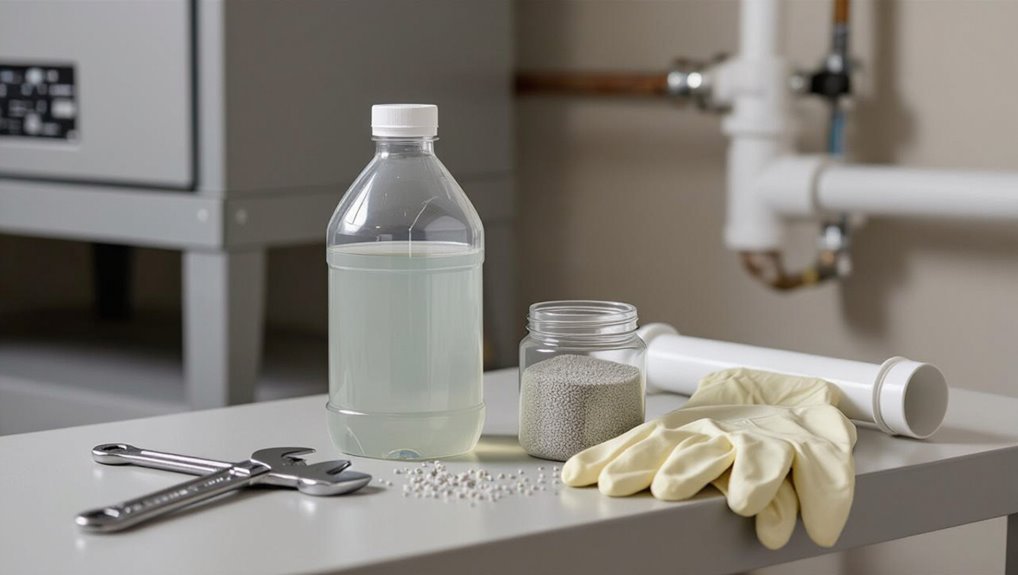
Essential tools include neutralizer traps and inline cartridges, pH test strips or a digital pH meter for verification, and optional supplies like tubing, check valves, condensate pumps, fittings, and protective gloves.
These items cover the basic materials and accessories needed to install and maintain a condensate neutralization system.
Common neutralizer media (calcite, limestone, soda ash cartridges)
Effectiveness in neutralizing furnace condensate depends on choosing the right media and having the proper tools and supplies on hand.
Common options include calcite (high-purity calcium carbonate) for gradual neutralization, crushed limestone for cost-effective buffering, and soda ash cartridges (sodium carbonate) for compact, rapid correction.
Each media differs in neutralizing capacity, lifespan, solubility, and suitability for system flow and pH targets.
Equipment: neutralizer traps, inline neutralizer cartridges, test strips, pH meter
Proper equipment selection supplies the foundation for safe, effective condensate neutralization.
Neutralizer traps capture and retain media; inline neutralizer cartridges provide compact, replaceable treatment.
pH test strips offer quick spot checks for acidic discharge. A calibrated pH meter supplies accurate readings for verification and system tuning.
Select durable materials rated for condensate chemistry and flow to guarantee reliable, code-compliant performance.
Optional supplies: tubing, check valves, condensate pump, fittings, gloves
Many installations also benefit from a few optional supplies that simplify plumbing and improve safety: flexible tubing sized to match condensate lines, one-way check valves to prevent backflow, a condensate pump where gravity drainage is inadequate, appropriate fittings and adapters for secure connections, and chemical-resistant gloves for handling media.
Additional useful items include hose clamps, PVC or copper connectors, a small drip pan, and thread sealant.
Step-by-step installation of a standard neutralizer trap
The following section outlines a concise, practical procedure for installing a standard condensate neutralizer trap, emphasizing correct sizing, placement, and verification steps.
It covers preparing the condensate line, fitting and mounting the neutralizer, loading media and performing an initial flush, then confirming effluent pH and making adjustments as required. Clear attention to each step guarantees safe operation and regulatory compliance.
- Match neutralizer capacity to expected condensate volume and acidity to avoid premature exhaustion.
- Choose an accessible, frost-protected location near the furnace with secure mounting and proper slope for drainage.
- Cut and connect the condensate line with appropriate fittings, fill the trap with media, flush, and test pH, adjusting media or flow as needed.
Sizing the neutralizer for condensate volume and acidity
Sizing a condensate neutralizer requires matching the unit’s capacity to both the furnace’s condensate flow rate and the condensate acidity so the media can neutralize effluent before discharge.
Determine typical and peak flow (gallons per hour) and measure pH and acid load.
Select media volume and type to neutralize calculated acid over expected service interval, allowing margin for depletion and backpressure.
Locating the neutralizer: ideal placement and mounting
After selecting a neutralizer sized for expected condensate volume and acidity, attention turns to its placement and secure mounting.
The neutralizer should sit on a level, stable surface near the furnace yet accessible for maintenance and media replacement. Mounting brackets or a shelf prevent tipping and vibration.
Confirm proximity to a drain or safe discharge point and maintain clearances for inspection without obstructing airflow or controls.
Cutting and connecting the condensate line to the trap
Begin by shutting off the furnace condensate pump or water source and confirming there is no flow in the condensate line.
Measure and mark cut points for inlet and outlet, allowing room for trap access. Cut pipe squarely and deburr ends.
Fit appropriate adapters or clamps to match trap fittings, apply primer and cement for PVC or compression fittings for flexible tubing.
Tighten, align, and test for leaks.
Filling the trap with media and initial flushing
With the condensate line securely cut, connected to the trap, and checked for leaks, attention turns to loading the neutralizing media and performing the initial flush.
The installer pours the specified media—typically limestone or calcite—into the trap chamber to manufacturer depth, reseals access, then slowly introduces water from the furnace to flush fines and settle media.
Inspect for proper flow and reseal.
Testing pH after installation and adjusting if needed
Once the trap has been filled and flushed, the installer verifies the condensate’s pH to confirm the neutralizer is functioning correctly.
They collect a sample downstream, use pH strips or a meter, and record results.
If acidic, they add more media or replace exhausted media; if alkaline, they flush and reassess.
Final documentation includes pH value, date, and any corrective actions taken.
Installing inline cartridges and granular media systems
The section compares cartridge-style and granular-bed neutralizers to help readers select the best option for flow rate, space, and maintenance preferences.
It then outlines straightforward installation steps for inline cartridge units and for granular-canister systems, including inlet/outlet connections, venting, and secure mounting.
Finally, routine inspection intervals and clear procedures for replacing cartridges or renewing granular media are summarized to guarantee continued neutralization performance.
Choosing between cartridge vs. granular media systems
When selecting between cartridge and granular media systems for furnace condensate neutralization, installers should weigh space constraints, flow variability, maintenance access, and chemical consumption to determine the most practical option.
Cartridge units suit compact spaces and predictable flows with simpler cartridge swaps; granular beds handle variable flows and higher loads but require periodic media replacement, proper containment, and attention to channeling and settling for consistent neutralization.
Installation steps for inline cartridge neutralizers
Begin installation by confirming system requirements: verify condensate flow rate, pH target, available clearance for the cartridge housing, and correct cartridge size for the expected acid load.
Mount housing vertically with inlet/outlet orientation per manufacturer, install cartridge seals, secure fittings, and slope condensate piping toward the unit.
Flush system, check for leaks, then test effluent pH under normal operating flow.
Installation steps for granular-bed neutralizer canisters
Installers prepare for granular-bed neutralizer canister installation by confirming flow rates, expected acid load, available vertical clearance, and proper media type and quantity for the system.
They shut off condensate flow, position and level the canister, connect inlet and outlet with proper fittings and sloping, install a sediment/strainer upstream, add granular media per manufacturer instructions, secure access cover, and pressure-test for leaks.
Routine checks and how to replace cartridges or media
After commissioning and pressure-testing a granular-bed canister or inline cartridge, routine inspections verify continued neutralization performance and identify when media replacement is required.
Inspect monthly: check pH downstream, visual sediment, flow restrictions, and physical integrity.
Replace cartridges per manufacturer schedule or when pH exceeds setpoint.
For granular media, drain, remove spent media, refill with fresh media, reassemble, pressure-test, and record service date.
Using chemical dosing and pumping systems for difficult situations
Chemical dosing and pumping systems are recommended when condensate flow is high or when pH extremes exceed the capacity of passive media.
Typical reagents include dilute alkaline solutions like sodium hydroxide or potassium hydroxide, handled with appropriate PPE, secondary containment, and clear labeling.
Compact dosing pumps can be configured with flow-proportional or pH-based controls to maintain target pH while minimizing chemical use.
When chemical dosing is appropriate (high flow or low pH extremes)
When condensate volumes exceed the capacity of passive neutralization or when measured pH values consistently fall below safe discharge limits, controlled chemical dosing and pumping systems become appropriate; these systems allow precise addition of neutralizing agents and reliable conveyance of treated condensate to drainage or sewer connections.
They’re chosen for sustained high flow rates, frequent peak loads, or persistent acidity that passive media cannot correct, ensuring compliance and system stability.
Typical chemicals used and safe handling
Selection of neutralizing agents for dosing systems centers on strong, soluble bases—most commonly sodium hydroxide (caustic soda), potassium hydroxide, and concentrated sodium carbonate (soda ash)—with occasional use of magnesium hydroxide slurries or specially formulated alkaline blends for specific applications.
Personnel must use appropriate PPE, corrosion-resistant containers, secondary containment, spill kits, clear labeling, and training.
Store chemicals separately, control concentrations, and document safety data sheets.
Setting up small dosing pumps and control strategies
Having chosen an appropriate neutralizer and established safe handling practices, attention turns to configuring small dosing pumps and control strategies for treating challenging condensate flows.
Select metering pumps sized to peak flow and corrosive chemistry. Implement pulse or proportional dosing controlled by pH probes, flow sensors, or timers.
Include backflow prevention, secondary containment, and alarmed low-chemical and pH setpoint interlocks for safe, reliable operation.
pH testing and monitoring procedures
Proper pH testing begins with safe condensate sampling—wearing gloves and eye protection, collecting representative aliquots, and avoiding splash or inhalation hazards.
Comparisons between pH strips and calibrated digital meters should note that strips offer quick checks while meters provide greater accuracy and require routine calibration with standard buffers.
Aim for a neutralized discharge within the locally recommended pH range (typically about 6.0–9.0) and document all readings and calibration records.
How to sample condensate safely
Begin by preparing a safe, consistent sampling setup: don chemical-resistant gloves and eye protection, use clean, inert containers (glass or compatible plastic) labeled with date and location, and guarantee sampling tools are rinsed with condensate before collection to avoid contamination.
Collect mid-flow samples, avoid surface scum, record temperature and time, store samples chilled if delayed, and transport promptly for testing.
Using pH strips vs. digital pH meters’ accuracy and calibration
How does one choose between pH strips and a digital pH meter for furnace condensate testing?
pH strips offer quick, inexpensive approximate readings and require no calibration, but limited precision.
Digital meters provide higher accuracy and repeatability when properly calibrated with buffer solutions; they need routine maintenance, electrode care, and periodic recalibration.
Selection depends on required precision, budget, and testing frequency.
Recommended target pH range for disposal
A safe target pH range for furnace condensate prior to disposal is typically between 6.0 and 9.0, which balances regulatory limits, drain pipe material compatibility, and sewer-system acid buffering.
Many local codes require neutralization to at least pH 6.0 while some industrial or municipal systems may specify tighter bands.
Operators should document tests, use calibrated meters, log results, and adjust neutralizers to maintain compliance.
Maintenance schedule and troubleshooting
A clear maintenance schedule outlines routine tasks and recommended intervals for inspecting and servicing furnace condensate neutralizers.
Signs that a neutralizer requires attention or replacement include persistent low or high pH readings, visible media degradation, or recurring odors.
Common issues—such as clogging, bypassing, and foul smells—are addressed with targeted fixes like media replacement, line cleaning, seal checks, and flow adjustments.
Regular maintenance tasks and intervals
Establishing a clear maintenance schedule guarantees furnace condensate systems remain safe and functional over time.
Inspect neutralizer media quarterly, replace media annually or per manufacturer, clean trap and drain lines every six months, verify pH monthly with test strips, check pump operation and venting during seasonal service, and document all actions.
Promptly address leaks, blockages, or abnormal readings to prevent corrosion and spills.
Signs a neutralizer needs servicing or replacement
When should a neutralizer be serviced or replaced?
Routine checks should coincide with seasonal furnace servicing; media depletion, visible erosion, or reduced pH at the discharge indicate attention.
Replacement is warranted when media no longer neutralizes condensate to acceptable pH, structural damage or persistent leaks occur, or manufacturer interval is reached.
Record dates, test results, and actions for ongoing maintenance tracking.
Common problems (clogging, bypassing, odors) and fixes
Common problems that affect condensate neutralizers include media clogging, system bypassing, and foul odors, each requiring distinct diagnostic steps and remedies.
Technicians should inspect flow, sediment and media condition; clean or replace compacted media, flush lines, and clear traps.
Verify proper piping to prevent bypassing and tighten fittings.
Eliminate odors by replacing spent media, cleaning the unit, and checking venting and trap seals.
Alternatives for condensate disposal and system integration
The article compares direct discharge to a municipal sewer with routing condensate to an indirect waste receptor, noting code and backflow considerations.
It also examines how neutralizer cartridges, condensate pumps, and neutral pH traps can be integrated for reliable treatment and disposal.
Finally, it outlines alternatives for homes on septic systems or with sensitive drainage, including neutralizer sizing, alternate discharge points, and professional assessment.
Direct drain to municipal sewer vs. indirect waste receptor
Evaluate available disposal options by comparing direct drainage to a municipal sewer against routing condensate to an indirect waste receptor; each approach carries distinct regulatory, plumbing, and maintenance implications.
Municipal connections may require permits, pH limits, and corrosion-resistant piping.
Indirect receptors prevent sewer cross-connections, allow visual inspection, and can simplify compliance but need regular cleaning and proper venting.
Choose per local codes and site constraints.
Integrating neutralizers with condensate pumps and neutral pH traps
Consideration of neutralizer placement and integration with condensate pumps and neutral pH traps focuses on achieving reliable neutralization, preventing backflow, and maintaining accessibility for service.
Proper sequencing—neutralizer before pump or after trap—depends on pump design and trap function. Install check valves, accessible housings, and inspection ports.
Verify materials resist corrosion, size devices for flow rate, and follow local code for indirect connections and maintenance access.
Options for homes on septic systems or with sensitive drainage
When homes rely on septic systems or drain to environmentally sensitive areas, condensate disposal choices must minimize biological disruption and prevent plume formation in leach fields.
Options include neutralizing and diverting to sanitary sewer where permitted, installing sealed condensate holding tanks emptied by licensed contractors, using evaporative/absorption systems away from drainfields, or routing treated condensate to landscape irrigation with soil buffers and local authority approval.
Cost estimates and lifespan of neutralization solutions
Costs and lifespan vary by neutralizer type, with initial purchase, yearly upkeep, and media changes affecting total ownership cost. Typical upfront cost, annual maintenance, and media replacement intervals should be compared against projected savings from avoided plumbing or septic repairs. The table below summarizes representative figures to help estimate payback and ongoing expense.
| Item | Typical Range | Notes |
|---|---|---|
| Upfront cost | $50–$400 | Depends on unit size and materials |
| Annual maintenance | $20–$100 | Inspection, cleaning, minor parts |
| Media replacement | 6–36 months | Frequency varies with condensate load |
| Long-term savings | $200–$2,000+ over lifetime | Avoided drain/septic repairs and corrosion |
Typical upfront cost, annual maintenance, and media replacement frequency
Budgetary planning for furnace condensate neutralization typically separates initial equipment purchase from ongoing operating expenses.
Typical upfront costs range from modest DIY kits ($30–$150) to commercial neutralizers ($150–$600).
Annual maintenance commonly includes inspection and pH testing ($20–$75).
Media replacement frequency varies: crushed limestone or soda ash cartridges usually need replacement every 6–24 months, depending on condensate acidity and usage.
Long-term savings from avoiding plumbing and septic damage
Installing a proper condensate neutralizer can prevent the accelerated corrosion and biological imbalance that acidic boiler or furnace discharge causes in drains and septic systems, translating into measurable long-term savings.
Avoided expenses include fewer pipe replacements, reduced septic tank repairs, and extended pump lifespans. Typical payback spans 2–7 years depending on system size; media lasts 3–5 years, with routine checks minimizing unexpected costs.
Environmental and regulatory best practices
The text addresses the need to confirm local permitting and applicable building or plumbing codes, and to evaluate EPA guidance when designing and installing condensate neutralization systems.
It recommends specifying procedures for the handling and disposal of spent neutralizing media and used cartridge elements in accordance with local waste regulations and any hazardous-waste determinations.
The discussion emphasizes documenting compliance steps and retaining disposal records to support inspections or audits.
Local permitting, code references, and EPA considerations
Local jurisdictions and federal agencies each impose specific requirements for neutralizing and discharging furnace condensate.
Professionals must verify applicable permits, plumbing and mechanical codes, and EPA guidance before beginning work. They should consult local building departments, state environmental agencies, and municipal sewer authorities for permit thresholds, allowable discharge limits, sampling requirements, and required documentation to guarantee compliance and avoid fines or service interruptions.
Proper disposal of spent neutralizing media and used cartridge elements
Handle spent neutralizing media and used cartridge elements as potentially regulated waste, evaluating their chemical character and contamination level before disposal.
Test pH, metals, and hazardous constituents; segregate alkaline, acidic, and oily materials.
Follow local, state, and federal disposal rules, use licensed hazardous waste contractors when required, document chain of custody, and retain manifests and disposal records to demonstrate compliance and facilitate audits.
Practical tips to extend neutralizer life and ensure safety
Practical maintenance can greatly extend the life of a neutralizer and reduce safety risks associated with acidic condensate. Routine seasonal checks, measures to inhibit biological growth and sediment, and systematic record-keeping form the core of effective care.
These steps help maintain performance and simplify compliance with service intervals.
- Conduct seasonal inspections and winterization to prevent freeze damage and guarantee flow paths remain clear.
- Implement simple strategies—such as regular flushing and using biostatic media—to limit biological growth and sediment accumulation.
- Keep detailed service records and set reminders for media replacement, inspections, and pH testing.
Seasonal checks and winterization advice
Because furnace condensate neutralizers are exposed to seasonal temperature swings and varying flow rates, routine seasonal checks and simple winterization steps are essential to maintain function and safety.
Inspect for cracks, ice, or displaced piping before cold spells. Empty and insulate outdoor drain lines, secure the unit against freezing, verify outlet flow after thaw, and schedule a post-winter check to confirm integrity.
Preventing biological growth and sediment buildup
After completing seasonal inspections and winterization, attention should turn to preventing biological growth and sediment buildup inside the neutralizer.
Regularly flush with clean water to dislodge sediments, inspect and replace media per manufacturer intervals, and use enzymatic cleaners if biofilm appears.
Maintain proper pH to discourage microbes, guarantee good drainage and airflow, and remove accumulated debris promptly to extend neutralizer lifespan and maintain safe operation.
Record-keeping and service reminders
Consistency in record-keeping is the backbone of long-term neutralizer performance. Logs should note installation date, media changes, pH readings, flow rates, and inspections.
Set periodic reminders for visual checks, media replenishment, and annual professional service. Retain records for warranty and regulatory compliance.
Clear, dated entries enable trend analysis, timely maintenance, and reduce failure risk while preserving safety and neutralization effectiveness.
When to hire a professional and what to expect
When condensate neutralizer selection or installation exceeds basic maintenance skills, a qualified HVAC or licensed plumber should be engaged.
Homeowners should ask candidates for relevant certifications, examples of prior neutralizer installations, a clear scope of work with timelines and cost breakdowns, and proof of liability insurance.
Red flags include vague estimates, lack of references or insurance, and any warranty exclusions that leave the owner responsible for future failures.
Choosing a qualified HVAC or plumbing contractor
Who should handle condensate neutralization and under what circumstances is a professional warranted?
A qualified HVAC or licensed plumber should be chosen for complex systems, code compliance, or unclear drainage/venting.
Verify credentials, insurance, and local licensing. Prefer contractors with condensate-neutralization experience and positive references.
Expect a written estimate, permit handling if needed, and clear timelines; avoid unverified low bids.
Questions to ask and scope of work for neutralizer installation
Why ask specific questions before hiring a contractor? A homeowner should confirm installer experience with condensate neutralizers, required permits, proposed neutralizer type and sizing, estimated timeline, site preparation, disposal method for old components, and a clear written quote.
Expect scope to include system inspection, pipe modifications, neutralizer placement, testing for pH and leaks, and brief user instructions upon completion.
Red flags and warranty/insurance considerations
How can a homeowner tell if a condensate neutralizer job exceeds typical DIY scope and requires a licensed pro?
Look for electrical modifications, corroded drain lines, permits, or gas/combustion concerns.
Red flags include persistent acidic leaks, structural damage, or failed inspections.
Verify contractor licensing, manufacturer warranty impacts, and insurer notification.
Expect documentation, code compliance, and a clear written estimate before work begins.
Conclusion
Furnace condensate neutralization protects plumbing and the environment by correcting acidic runoff. Like a tiny reef buffering ocean acidity, a properly installed neutralizer absorbs acid, prolonging equipment life and preventing corrosion. Regular checks, timely media replacement, and adherence to safety and local regulations keep systems effective. For complex installations, or if effluent tests remain acidic, consult a qualified HVAC or plumbing professional to guarantee compliance and long-term, trouble-free operation.