
How to Keep Yard Drains From Clogging: Simple Prevention Tips That Work
To prevent yard drains from clogging, regular maintenance is key. Clear grates, use strainers or leaf guards, and add gravel and geotextile around inlets. Inspect drains seasonally and after storms. For organic buildup, consider enzyme cleaners, while mechanical snaking can tackle stubborn blockages. Additionally, regrade low spots, keep noninvasive plants away from drain lines, and schedule annual flushing or camera inspections. This proactive approach will help keep your yard drains functioning effectively.
Why Yard Drains Clog and Why Prevention Matters
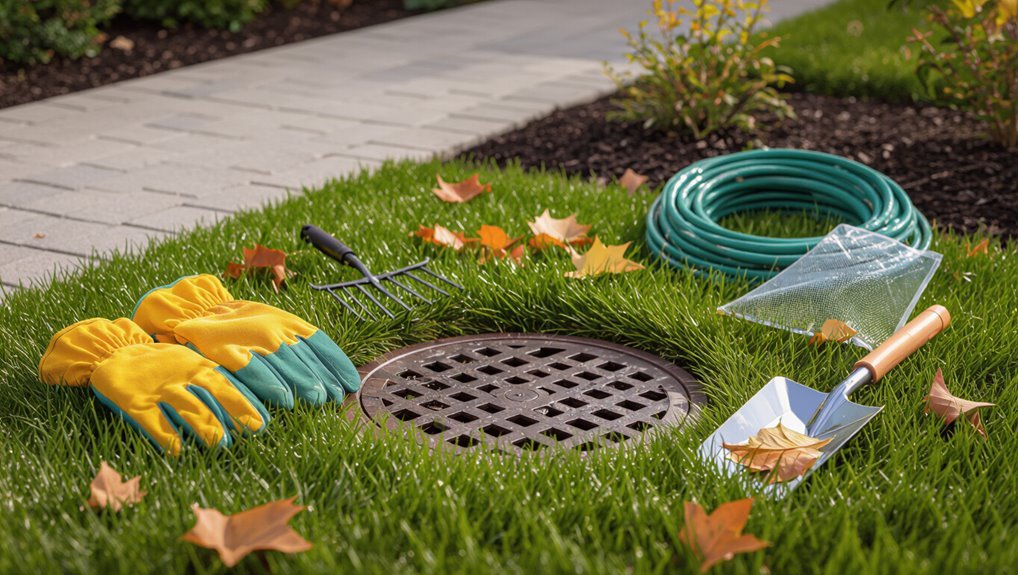
Yard drains commonly clog with leaves, sediment, roots, and other debris carried by runoff.
Left unaddressed, blockages can cause localized flooding, soil erosion, foundation damage, and standing water that breeds mosquitoes.
Regular inspections—especially after storms and during leaf-fall and spring thaw—help catch problems before they escalate.
Common causes of yard drain clogs (leaves, sediment, roots, debris, runoff)
Clogging of outdoor drains commonly results from a mix of organic and inorganic materials that block flow and reduce system capacity.
Leaves, grass clippings, and sticks create surface mats; sediment and silt accumulate in pipes; invasive roots infiltrate joints; and urban debris and runoff carry trash and oil.
Understanding these causes informs practical how to keep yard drains from clogging maintenance and screening strategies.
Risks of clogged drains (flooding, erosion, foundation damage, mosquito breeding)
Even a minor obstruction in a yard drainage system can quickly escalate into serious problems: standing water increases mosquito breeding and disease risk, surface runoff concentrates and accelerates erosion, floodwaters can saturate soil and overwhelm landscaping, and prolonged saturation near structures can lead to foundation cracking and costly repairs.
Clogged drains also damage plantings, reduce property usability, increase cleanup costs, and raise long-term maintenance liabilities.
How often to inspect yard drains and seasonal considerations
How frequently should inspections occur to catch small blockages before they become costly failures? Inspections are recommended monthly during fall and spring, and after major storms.
In summer and winter, check seasonally unless heavy leaf drop or thawing increases debris.
Focus on grates, visible pipes, and outlet points.
Prompt removal of leaves, sediment, and nesting materials prevents progressive clogging and damage.
Quick Checklist to Prevent Yard Drain Clogs
A concise checklist helps homeowners keep yard drains flowing and prevents costly backups.
Recommended actions can be grouped as:
- Weekly/monthly tasks
- Seasonal tasks (fall leaf management, spring thaw)
- Annual deep maintenance tasks
The following section outlines practical steps for each category.
Weekly and monthly tasks
Regular weekly and monthly checks help prevent small blockages from becoming serious problems, so a concise checklist keeps tasks manageable:
Inspect visible grates and covers, remove debris, clear surface gutters, run water through drains to confirm flow, check for odors or slow drainage, tighten loose fittings, and note any sediment buildup.
Schedule minor repairs promptly and record recurring issues for professional assessment.
Seasonal tasks (fall leaf management, spring thaw)
Two seasonal checkpoints—fall leaf management and spring thaw—are critical to preventing yard drain clogs because they address the largest, most predictable sources of debris and sediment.
During fall, remove leaves from lawns, gutters, and drain inlets; use screens and timely collection.
In spring, clear accumulated sediment, inspect for winter damage, and guarantee meltwater flows freely away from drains to prevent backups.
Annual deep maintenance tasks
After handling the seasonal clearing of leaves and spring thaw inspections, homeowners should schedule an annual deep maintenance check to catch issues that routine cleanups miss.
A thorough inspection includes flushing lines, inspecting and repairing pipe joints, clearing sediment from catch basins, testing slope and flow, removing root intrusions, and replacing damaged grates.
Document findings and schedule repairs promptly to prevent recurring clogs.
Easy Tools and Materials You Need
A concise set of tools and materials makes routine yard drain maintenance practical for most homeowners. Basic items—gloves, a rake, a hand trowel and a sturdy drain cover—handle daily debris and minor cleanups, while specialty tools such as a drain snake, pressure washer, rooter and catch-basin scooper address tougher blockages.
For longer-term upgrades, durable grates, pop-up emitters, gravel and geotextile fabric improve flow and reduce future clogs.
Basic homeowner tools (gloves, rake, hand trowel, drain cover)
Basic hand tools make routine yard drain maintenance quick and effective: sturdy gloves protect hands from debris and sharp edges, a garden rake clears leaves and sediment from surface grates, a hand trowel lifts compacted soil around drain inlets, and a fitted drain cover prevents large debris from entering the system.
These simple tools enable safe, regular clearing, minor adjustments, and quick inspections to reduce clog risks.
Specialty tools (drain snake, pressure washer, rooter, catch basin scooper)
Keep specialized tasks efficient and effective with a small set of purpose-built tools: a drain snake for dislodging deeper blockages, a pressure washer for blasting compacted sediment from grates and pipes, a motorized rooter for cutting through stubborn root intrusions, and a catch basin scooper for removing accumulated debris from inlet sumps.
Each tool targets specific problems; proper selection and safe operation reduce repair costs and prevent recurring clogs.
Materials for upgrades (grates, pop-up emitters, gravel, geotextile fabric)
When upgrading yard drainage, selecting the right grates, pop-up emitters, gravel, and geotextile fabric guarantees long-term performance and minimal maintenance.
Durable metal or heavy-duty plastic grates resist clogging and damage. Pop-up emitters disperse runoff away from foundations.
Washed gravel promotes drainage while preventing compaction. Geotextile fabric separates soil from aggregate, reducing sediment ingress and extending system life.
Proper sizing and installation are essential.
Step-by-Step Preventive Maintenance Routine
A concise preventive routine keeps yard drains functioning and prevents small issues from becoming costly repairs.
Suggested actions include:
- Inspect grates, inlets, and catch basins; clear leaves and surface debris.
- Flush drains with a hose to test flow and remove sediment from basins and sump pits.
- Monitor and address minor root intrusions before they progress.
Regular, scheduled checks focusing on these steps will maintain reliable drainage.
Inspecting visible grates, inlets, and catch basins
Begin by visually scanning all accessible grates, inlets, and catch basins for obvious debris, standing water, or displaced covers; this quick appraisal identifies immediate hazards and priorities for more detailed inspection.
Note corrosion, cracked concrete, misaligned frames, and sediment buildup. Record locations needing repair, measure grate fit, and confirm water flow paths remain unobstructed.
Schedule follow-up maintenance or professional assessment as needed.
Clearing surface debris and managing leaves
After noting problem areas around grates and basins, attention shifts to clearing surface debris and managing leaves to prevent blockages before they form.
Routine removal of leaves, twigs, and mulch from drains and nearby surfaces reduces organic buildup.
Use rakes, leaf blowers, or hand tools to collect material into bags or compost. Dispose responsibly and repeat during peak shedding seasons.
Flushing drains and testing flow with a hose
Flush the drain lines with a garden hose to verify flow and dislodge minor blockages before they escalate.
Direct steady water into grates and downspouts, observing drainage speed and any backing-up.
Repeat from multiple access points to confirm connectivity.
Note slow spots or unusual sounds, then mark locations for deeper inspection or professional service.
Record results for routine maintenance.
Removing sediment from catch basins and sump pits
Once hose testing identifies slow spots or backups, attention turns to catch basins and sump pits where accumulating sediment commonly restricts flow.
Staff or homeowners remove grates, scoop settled silt and debris into buckets, and vacuum residual slurry. Inspect inlet/outlet pipes for obstructions, flush remaining fines with a controlled hose flow, then reinstall grates.
Repeat seasonally or after heavy storms.
Addressing minor root intrusions before they worsen
Inspecting and treating minor root intrusions promptly prevents small encroachments from developing into blockages that require costly excavation.
Regular inspection with a flashlight or camera locates shallow roots. Trim roots back and apply a root-killing gel or foaming herbicide labeled for drains.
Flush the line after treatment, monitor regrowth seasonally, and consult a professional if roots recur or pipe integrity is compromised.
Simple Upgrades to Reduce Future Clogs
Simple, targeted upgrades can greatly cut the frequency of yard drain clogs.
Practical options include installing strainers, grates, or leaf guards, adding gravel and geotextile fabric around inlets, and fitting pop-up or mesh filters on downspouts.
Regrading low spots or creating swales to redirect debris-laden runoff further reduces clogging risk.
Installing strainers, grates, and leaf guards
Install strainers, grates, and leaf guards to block debris before it reaches yard drains, reducing clogging and easing maintenance.
Select durable, corrosion-resistant models sized to existing inlets. Secure fittings to prevent displacement during storms.
Clean or replace covers seasonally and after heavy leaf fall. Properly fitted guards shorten maintenance intervals, protect pipes from large debris, and preserve drainage capacity without altering surrounding landscaping.
Adding gravel and geotextile fabric around inlets
Layering coarse gravel around yard drain inlets and covering it with geotextile fabric creates a permeable barrier that keeps sediment and organic matter from entering the drainage system while maintaining water flow.
Gravel resists compaction, disperses runoff, and reduces surface erosion; fabric prevents fines from migrating into the stones.
This low‑maintenance retrofit prolongs inlet function and simplifies periodic surface cleaning.
Adjusting grading and swales to divert debris-laden flow
When surface grading and shallow swales are recontoured to channel runoff away from inlets and vulnerable yard areas, incoming water carries less sediment, leaves, and debris into the drainage system.
Proper slope, defined swale paths, and occasional check dams slow flow, promoting sediment drop-out before water reaches drains.
Periodic inspection and minor reshaping maintain effectiveness and prevent concentrated erosion that could undermine systems.
Using pop-up or mesh filters for downspouts
A few simple additions to downspouts—such as pop-up emitters or fine mesh strainers—can greatly reduce the amount of leaves, twigs, and sediment entering yard drainage systems.
Pop-up outlets extend flow away from foundations and resist clogging; mesh filters trap debris before it reaches pipes.
Regularly remove collected material, choose corrosion-resistant fittings, and match filter size to downspout capacity for reliable, low-maintenance protection.
Landscaping Practices That Prevent Clogs
Effective landscaping reduces the likelihood of yard drain blockages through careful choices and placement.
Selecting plants with noninvasive roots and situating them away from drainage lines limits root intrusion.
Using stable mulches or low-erodibility groundcovers and arranging beds and hardscapes to channel debris away from drain inlets further minimizes wash-off and clog risk.
Plant selection and placement to limit root interference
Plant choices and their placement have a direct impact on underground root spread and the risk of yard drain blockages.
Select low-rooting shrubs and native grasses for proximity to drains, and plant trees with aggressive roots at least 30–40 feet away.
Use root barriers where necessary and cluster deep-rooted species away from drainage lines.
Regularly inspect root growth near inspection points to prevent intrusion.
Mulch and groundcover choices that minimize wash-off
Several mulch types and groundcovers differ markedly in their tendency to erode and carry sediment into yard drains, so choosing materials with strong soil-holding properties—coarse wood chips, shredded bark, crushed stone, and dense mat-forming perennials—reduces wash-off risk.
Stable options resist displacement during heavy rain, limit fine organic fines, and promote infiltration.
Avoid lightweight, easily washed mulches and sparse plantings that expose bare soil.
Designing beds and hardscapes to keep debris away from drains
Choosing erosion-resistant mulches and dense groundcovers helps reduce sediment, but layout and hardscape choices determine whether leaves, twigs, and soil ever reach drain inlets.
Grade beds away from drains, install permeable edging and gravel trenches as buffers, and position walkways to intercept runoff.
Use raised planting beds, curbs, and debris-catching grates to divert organic matter and simplify routine clearing.
When to Use Chemical or Mechanical Treatments
When clogs persist despite preventive landscaping, attention turns to chemical or mechanical treatments.
Preference should be given to drain-safe enzymes and biodegradable cleaners that break down organic matter without harming soil or plants, while harsh chemicals are best avoided because they can damage pipes and local ecosystems.
For stubborn blockages, mechanical tools such as hand snakes, motorized augers, or professional hydro-jetting provide effective, targeted removal.
Safe use of drain-safe enzymes and biodegradable cleaners
Use enzyme-based products and biodegradable cleaners sparingly and according to label instructions to break down organic buildup in yard drains without harming plants or soil microbiota.
Select formulations rated safe for outdoor use, apply at recommended dosages, and avoid runoff into sensitive areas.
Repeat treatments only when necessary, monitor results, and combine with physical debris removal for best, low-impact drainage maintenance.
When to avoid harsh chemicals (environmental and plumbing risks)
Although enzyme blends and biodegradable cleaners are generally low-impact, there are clear limits to chemical approaches for clearing yard drains.
Strong caustics and solvents harm beneficial microbes, leach into soil and waterways, and can corrode older pipes and seals.
Avoid harsh chemicals near vegetation, wildlife habitats, impermeable soils, or where plumbing history is unknown; prefer targeted, minimal-risk methods instead.
Mechanical options for stubborn blockages (snakes, augers, hydro-jetting)
Tackle stubborn yard drain blockages with mechanical methods—augers, drain snakes, and hydro-jetting—when physical removal is necessary or chemical options are inappropriate.
Professionals use hand snakes for short lines, motorized augers for compacted roots and debris, and hydro-jetting to blast away grease and mineral buildup.
Choose tools based on blockage type, pipe material, and access; prioritize safety and avoid damage to older plumbing.
How to Spot and Fix Common Problems Early
Early detection of yard drain issues hinges on distinguishing partial clogs—manifested by slow drainage, gurgling, or faint odors—from complete blockages that cause standing water or persistent wet spots.
Observable signs like localized soggy areas or unusual smells help pinpoint problem zones before they worsen.
Simple temporary measures, such as removing surface debris, using a hand auger, or applying a safe enzyme treatment, can restore flow temporarily until a professional can assess or repair the system.
Signs of partial clogs vs complete blockages
How can homeowners tell whether a yard drain is partially clogged or completely blocked?
Partial clogs show reduced flow, intermittent backups during heavy rain, and slower drainage at nearby fixtures.
Complete blockages produce standing water at the grate and no flow beyond the obstruction.
Inspect visible grates, run water tests, and probe accessible pipes; partial obstructions often respond to snaking, while full blockages may need professional clearing.
Wet spots, slow drainage, gurgling and odor clues
When a yard drain starts showing wet spots, sluggish runoff, gurgling sounds, or unpleasant odors, these clues often indicate developing issues that merit prompt attention.
Standing water, damp patches, slow ponding after rain, bubbling drains and foul smells commonly signal partial blockages, root intrusion or trapped debris.
Early inspection, clearing surface debris, checking grate alignment and monitoring recurrence help identify causes before more serious backups develop.
Temporary fixes until professional help arrives
Noticing wet patches or gurgling alone does not always require immediate professional intervention; simple, temporary measures can limit damage and buy time until help arrives.
Clear visible debris from grates, use a wet/dry vacuum or plunger on accessible inlets, divert water with sandbags or trenches, and apply a biodegradable enzyme cleaner to reduce organic buildup.
Monitor for worsening signs.
When to Call a Professional and What to Expect
When recurring backups, major root intrusion, or a collapsed pipe appear, a homeowner should consider professional intervention.
Typical services and diagnostics include:
- Camera inspection to locate blockages or damage
- Hydro-jetting for heavy buildup and root cutting
- Pipe repair or replacement based on findings
Before hiring, the homeowner should ask about inspection fees, warranties, timeline, and request written, itemized estimates for comparison.
Situations that require pro intervention (repeated clogs, major root intrusion, collapsed pipe)
Several clear signs indicate the need for professional intervention rather than DIY fixes: persistent or recurring clogs despite repeated cleaning, major root intrusion visible after inspection or detected on a camera survey, and evidence of a collapsed or severely damaged pipe.
Professionals assess structural damage, identify underlying causes beyond routine maintenance, provide estimates for repair or replacement, and recommend preventative measures to avoid repeated failures.
Typical professional services and inspection methods (camera inspection, hydro-jetting, pipe repair/replacement)
What does a homeowner face after deciding a pro is needed?
A technician typically begins with a CCTV camera inspection to pinpoint blockages, roots, or damage.
Options include hydro-jetting to clear debris, mechanical snaking for localized clogs, and spot repairs or full pipe replacement for structural failure.
The provider summarizes findings, recommends solutions, and outlines costs and timelines.
Questions to ask a contractor and how to get accurate estimates
How should a homeowner vet a contractor and verify estimates before work begins?
A homeowner should request licenses, insurance, references, and written bids detailing scope, materials, timeline, and warranties.
Compare at least three bids, confirm inspection findings (camera reports, hydro-jetting needs), ask about permits and change-order policies, and insist on a clear payment schedule.
Verify reviews and check for complaints.
Cost Estimates and Long-Term Savings
Typical DIY fixes like clearing grates and using a hand auger often cost under $100 in tools and materials, while hiring a professional can range from $150 to $600 or more depending on blockage severity.
Routine preventive maintenance, such as seasonal cleaning and minor repairs, tends to lower the likelihood of costly emergency services and pipe replacement.
Comparing upfront DIY expenses to professional rates helps homeowners weigh immediate savings against potential long-term repair costs.
Typical DIY costs vs professional service ranges
When comparing expenses for unclogging yard drains, homeowners face a clear trade-off between the lower upfront cost of DIY methods—mainly tools and materials like manual augers, drain cleaners, or simple trenching supplies—and the higher but more extensive pricing of professional services that include inspection, heavy equipment, and guarantees. Typical ranges:
| DIY | Professional |
|---|---|
| $10–$200 | $150–$800 |
| Tools only | Inspection + repair |
| Short-term fix | Warranty included |
How preventive maintenance reduces repair costs over time
Lower upfront spending on DIY fixes can lead to higher cumulative costs if routine upkeep is neglected.
Regular preventive maintenance—such as seasonal clearing, grate inspection, and minor repairs—reduces the frequency of major clogs and extends the life of drain components.
Over time, routine care lowers emergency service calls, minimizes replacement needs, and yields measurable savings compared with sporadic, costly interventions.
Maintenance Schedule Template You Can Use
A clear maintenance schedule helps prevent blockages before they start and assigns simple tasks across the year.
Suggested checklist:
- Monthly: clear surface debris and test flow.
- Quarterly: inspect grates, clean traps, and flush lines.
- Annual: full inspection, professional cleaning, and replace worn parts; add seasonal reminders and quick action items for storms and leaf fall.
Monthly, quarterly, and annual task breakdown
Because consistent small actions prevent larger problems, a clear maintenance schedule breaks tasks into monthly, quarterly, and annual checks that keep yard drains flowing and durable.
Monthly: clear debris, inspect grates, flush lines after heavy storms.
Quarterly: trim nearby vegetation, test catch basins, check slope and connections.
Annual: perform deep cleaning, inspect underground piping, repair or replace damaged components as needed.
Seasonal reminders and quick action items
After outlining monthly, quarterly, and annual tasks, the schedule shifts to seasonal reminders and quick action items that help users respond to changing weather and avoid urgent repairs.
It lists fall leaf clearing, winter ice checks and gutter heating options, spring sediment flushing and turf grading, and summer inspection of grates and drainage paths.
Each item includes timing, simple tools needed, and immediate corrective steps.
Troubleshooting Guide for Specific Scenarios
When yard drains clog after heavy storms, the guide outlines rapid-assessment steps to clear debris and check for inlet damage.
It also explains how concentrated downspout discharge can create localized blockages and offers adjustments to redirect flow.
For recurring root intrusion, the guide recommends inspection methods and targeted remedies to prevent repeated line failures.
Yard drains clogged after heavy storms
Inspecting yard drains after heavy storms reveals a distinct set of causes and fixes compared with routine blockages.
Floodborne debris, sediment buildup, and displaced grate covers often obstruct flow.
Recommended steps: clear visible debris, flush lines with a strong water jet, remove accumulated silt with a shovel or wet vacuum, inspect inlet alignment, and schedule professional hydro-jetting for persistent compaction or collapsed sections.
Regular post-storm checks prevent recurrence.
Downspout discharge causing localized blockages
Check downspout discharge paths for concentrated flow that can overwhelm small yard drains and deposit leaves, mulch, and sediment at the inlet.
Inspect where water exits, redirecting with extenders, splash blocks, or buried piping to disperse flow.
Install a debris screen or catch basin upstream and grade soil to prevent ponding.
Regularly clear gutters and downspout openings to reduce repeated buildup.
Roots repeatedly clogging same drain line
Roots invading the same drain line indicate a persistent breach in the pipe that provides constant access and moisture, allowing regrowth after any removal effort.
Inspect for cracks, loose joints, or broken fittings; replace damaged sections with sealed, root-resistant pipes.
Excavate only as needed, install root barriers, and consider targeted herbicide or professional hydrojetting plus regular inspections to prevent recurrence.
Real-World Examples and Small Projects
The section presents simple homeowner fixes with concise step-by-step mini-projects for common yard drain issues.
Each project outlines required tools, time estimates, and clear instructions for safe, effective execution.
Before-and-after scenarios illustrate typical problems, the interventions performed, and measurable outcomes.
Simple homeowner fixes with step-by-step mini-projects
Start small with a handful of practical mini-projects that an average homeowner can complete in an afternoon to prevent and clear yard drain clogs.
Suggested tasks: remove debris from grates, flush lines with garden hose, install simple leaf screens, regrade soil to improve runoff, and reset displaced grate covers.
Each task lists tools, safety notes, step sequence, expected time, and basic troubleshooting.
Before-and-after scenarios (common fixes and outcomes)
When homeowners apply simple fixes—clearing grates, flushing lines, adding leaf screens, or regrading a shallow slope—visible improvements often follow quickly, turning chronically soggy patches into dry, usable yard and restoring proper surface runoff.
Before-and-after accounts show reduced pooling, fewer insects, and healthier turf. Small projects often prevent costly repairs: cleaned channels, aligned outlets, and installed guards consistently yield reliable drainage and lower maintenance.
Resources and Further Reading
A concise list of recommended products and reputable brands for grate guards, filter screens, and gutter extensions can help readers choose effective tools.
Sources for certified inspection and professional drain services, including how to verify licenses and read reviews, are also provided.
Together these resources guide homeowners to reliable purchases and qualified help when problems exceed DIY options.
Recommended products and brands to consider
While product choice depends on yard size and local conditions, several reliable categories and specific brands consistently perform well for preventing drain clogs:
heavy-gauge metal or UV-resistant plastic grates (e.g., Oatey, NDS),
pop-up or surface drain assemblies from Hayward and Zurn,
coarse-mesh leaf guards like Gutterglove and LeafGuard,
and enzymatic drain cleaners such as Bio-Clean for biological buildup.
Also consider sturdy PVC piping, stainless anchors, silicone sealants, and rust-resistant screws.
Where to find professional help and inspection services
Finding qualified professionals for yard drain inspection and maintenance starts with identifying licensed landscapers, plumbers, or drainage specialists who list stormwater management and surface drainage among their core services.
Search local business directories, trade associations, and online review sites for certified contractors.
Request references, proof of insurance, written estimates, and inspection reports.
Municipal public works or cooperative extension offices can provide referrals and regulatory guidance.
Conclusion
Consistent, simple care keeps yard drains flowing like a well-tuned watch: small, regular actions prevent big failures. By understanding clog causes, using basic tools, following a brief maintenance routine, and adding a few smart upgrades, homeowners can avoid costly repairs and protect landscapes. The provided checklist, schedule template, and troubleshooting tips make upkeep manageable, turning drain care from an occasional chore into an easy habit that preserves functionality and peace of mind.
