
How to Identify Your Kohler Toilet Model: Step-by-Step Guide to Finding Model Numbers, Codes, and Age
To identify your Kohler toilet model, start by checking inside the tank, under the lid, and at the bowl junction for any stamped or printed model numbers and date codes. Look for base numbers, configuration codes, and suffixes that indicate the bowl shape, flush type, color, and rough-in dimensions. Take photographs of any markings, turn off the water supply, and use basic tools for safe access. Finally, cross-reference the codes with Kohler’s parts lookup or catalogs to estimate the manufacture date. Follow these step-by-step methods for a comprehensive identification process and troubleshooting tips.
How to Quickly Identify Your Kohler Toilet Model
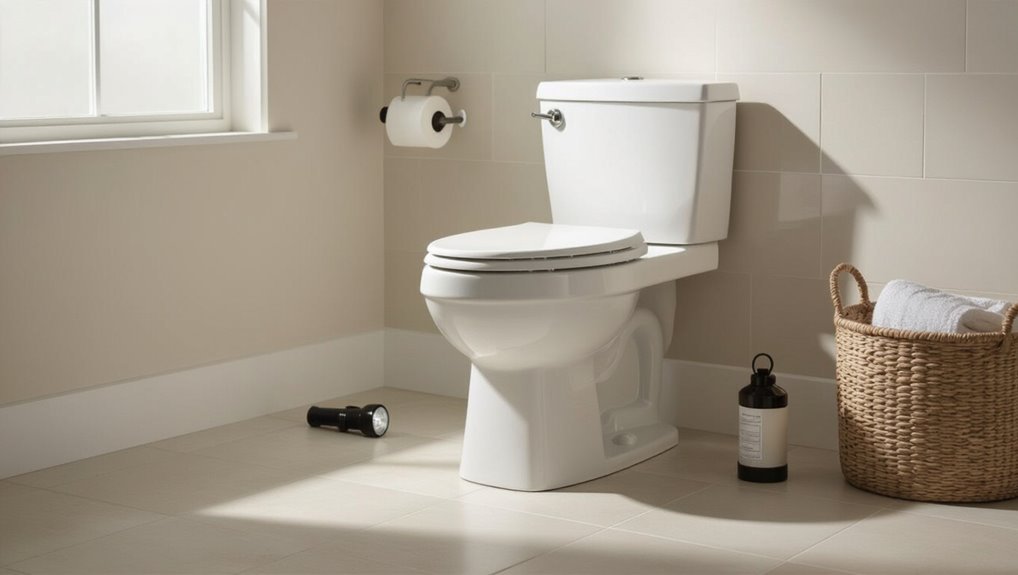
The first step is to inspect the toilet for a stamped or molded model number, typically found inside the tank, under the tank lid, or on the bowl near the back.
Model numbers often include a base number plus codes or suffixes that indicate finish, configuration, or minor revisions; understanding which segments are core versus descriptive helps avoid confusion.
Distinguishing the model family (the base number) from specific part numbers or trim codes guarantees the correct replacement parts or documentation are selected.
Where to look first for the model number on a Kohler toilet
Locating a Kohler toilet model number usually begins with a quick visual check of the most accessible spots: under the tank lid, on the inner tank wall, and around the bowl-to-tank junction.
Next, inspect the underside of the tank lid, the back of the bowl near the floor, and the base rim. These areas often display stamped or printed identifiers useful for how to identify Kohler toilet model.
How to interpret model numbers, codes and suffixes
Many Kohler model numbers combine a base model, a configuration code, and suffixes that indicate color, trim, or special features; understanding this structure lets a user decode what each part means.
The base identifies the core toilet. Configuration codes show bowl shape, flush type, or rough-in. Suffixes denote glaze, color codes (e.g., 0 or 47), or accessory packages, clarifying exact factory options.
How to tell model family versus specific part numbers
How can a Kohler toilet be identified as part of a model family rather than a specific part number?
The guide explains that family names (e.g., Cimarron, Santa Rosa) appear in manuals and marketing, while part numbers reference exact components or configurations.
Cross-reference stamped model codes with Kohler catalogs to map a family designation to precise replacement parts or trim variations for accurate identification.
Step-by-Step Guide to Finding Model Numbers and Codes
Before beginning, the technician gathers basic tools and prepares the area to prevent damage and water spills.
A systematic inspection proceeds from the tank interior and lid to the bowl, checking for imprints, stickers, stamped or molded numbers, and any cast markings under the tank or on the bowl.
If necessary, the tank is removed safely to expose hidden identification marks, and the underside of the bowl and cloakroom areas are examined for cast numbers.
Tools and preparation before inspecting the toilet
A basic toolkit and a few safety steps streamline the search for a Kohler model number: a flashlight, a screwdriver, rubber gloves, and a clean towel are essential, along with turning off the water supply and protecting the floor around the toilet to prevent slips and water damage.
Gather a notepad, camera or phone for photos, and a small mirror to view tight spaces; wear eye protection.
Inspecting the tank interior: common imprint and sticker locations
Inside the tank, manufacturers typically place model imprints and stickers in predictable spots—along the back wall, under the lid, on the overflow tube, or near the flush valve—so systematic inspection increases the chance of finding identifying marks quickly.
The inspector should wipe surfaces, lift removable components, check adhesive labels on the inner walls and fill-valve base, and photograph any numbers or codes for later reference.
Checking under the tank lid and on the bowl for stamped or molded numbers
After inspecting the tank interior, attention should turn to the tank lid and the upper rim of the bowl, where Kohler often stamps or molds model numbers and manufacturing codes.
Carefully lift the lid and inspect its underside edges and center.
Examine the bowl’s upper inner rim, under the lip.
Numbers may be faint; use a flashlight and wipe away grime to read stamped or molded codes.
Removing the tank safely to find hidden identification marks
Begin by shutting off the toilet’s water supply and flushing until the tank is empty to reduce weight and prevent spills.
Disconnect the supply line, remove tank-to-bowl bolts and lift the tank straight up with two people, supporting porcelain.
Inspect interior tank walls, rear flange, and mounting surfaces for stamped or molded numbers.
Replace using new gaskets and hand-tighten bolts to prevent leaks.
Inspecting the underside of the bowl and cloakroom areas for cast numbers
Turn the bowl slightly or lift the seat to gain clear access to the underside and cloakroom recesses, where cast numbers and date codes are often impressed into the porcelain.
Examine with a flashlight and a mirror for faint impressions, cleaning grime with a soft brush first.
Record any alphanumeric stamps, typically near bolt holes or trapway curves, and photograph them for reference.
Visual Identifiers and Design Features by Kohler Model Lines
Visual cues often reveal a Kohler toilet’s family before any serial number is checked.
Consider these key identifiers when comparing model lines:
- Two-piece vs one-piece construction and overall silhouette.
- Bowl shape/size, flush system and trapway profile.
- Tank and lid contours that match specific Kohler groups.
Two-piece vs one-piece Kohler toilets: identifying features
Distinguishing between two-piece and one-piece Kohler toilets relies primarily on the tank-to-bowl connection and the styling cues used across Kohler model lines.
Two-piece models show a visible seam where tank meets bowl and often have classic, modular profiles; one-piece models are molded as a single unit with smoother lines, integrated bases, and contemporary silhouettes.
Hardware placement and flush lever styles also help identification.
Distinctive bowl shapes and bowl sizes used in major Kohler lines
Bowl geometry and size are among the quickest clues for identifying Kohler model lines, since each family favors characteristic contours—elongated or round fronts, skirted or exposed traps, and varying rim profiles—that reflect both aesthetics and seat comfort.
Cachet and Veil often use compact elongated bowls; Cimarron and Persuade favor traditional round or elongated options; modern Verdera and Artifacts emphasize skirted, streamlined profiles for a sleeker look.
Flush type and trapway designs unique to specific Kohler families
Flush mechanisms and trapway profiles serve as reliable fingerprints for separating Kohler model families, since each line pairs specific flushing technologies with characteristic trap shapes to meet performance and installation goals.
Some families use canister or tower-venturi flush valves and oversized glazed trapways for clog resistance; others favor siphon-jet ports with narrower S-shaped traps for quieter draws and compact rough-ins, aiding quick visual identification.
Common tank and lid shapes tied to model groups
Several recurring tank and lid profiles serve as quick visual cues for identifying Kohler model groups: low, rounded tanks with slightly domed lids often indicate older or classic lines; tall, rectangular tanks with flat lids correspond to traditional two-piece models and some comfort-height designs; slim, compact tanks with gently tapered tops are typical of modern, space-saving families; and integrated one-piece units show seamless changes between bowl and tank with molded lids or minimal seams.
Subtle trim, handle placement, and hinge styles further narrow identification to specific Kohler series, while decorative contours or squared edges point toward designer or transitional collections.
Using Codes, Stamps and Manufacture Dates to Determine Age
Kohler fixtures often carry date codes and batch stamps that reveal manufacture timing and production runs.
Product codes, serial formats and suffix letters further narrow model identity and factory details.
When only partial markings remain, comparing known code patterns and incremental changes in suffixes allows a reasonable estimate of year of manufacture.
Decoding date codes and batch stamps on Kohler fixtures
Many Kohler fixtures carry small date codes and batch stamps molded or stamped into the ceramic or metal, and decoding these marks provides a reliable way to establish manufacture date and production run.
These markings often use compact numeric or alphanumeric formats indicating year, month, and plant code.
Photograph stamps, compare to Kohler reference charts, and record batch details for verification.
Interpreting product codes, serial formats and suffix letters
A single product code, serial number, and any trailing suffix letters together encapsulate a fixture’s model, production sequence, and often its manufacture date.
Product codes identify the model family; serial formats reveal production run and factory. Suffix letters denote finish, trim, or design revisions.
Cross-referencing Kohler documentation or parts lists decodes these elements to confirm exact model and applicable components.
How to estimate year of manufacture when only partial codes exist
When product codes, serial numbers, or suffix letters are incomplete, remaining marks—date stamps, manufacturing plant identifiers, and partial code patterns—offer the best clues for estimating manufacture year.
Cross-reference visible month/year stamps with known plant code timelines, compare partial model fragments to dated catalogs or service sheets, and consult online databases or Kohler support.
Combine multiple small indicators to narrow the probable production year.
Online and Offline Resources to Confirm Model and Age
Readers can consult Kohler’s official parts and product lookup tools to match model numbers and manufacture dates, and cross-check findings with third-party databases, parts sellers, and dedicated toilet forums.
If searches are inconclusive, contacting Kohler customer support with the toilet’s codes, photos, and any purchase information often yields definitive identification.
Clear, well-lit photos of the bowl, tank interior, stamps, and fittings help experts on forums or support staff confirm model and age.
How to search Kohler’s official parts and product lookup tools
Begin by using Kohler’s official resources to cross-check any identifying numbers or physical features found on the toilet.
Use Kohler’s Product Search, Parts Lookup, and Owner Support pages to enter model numbers, serial codes, or descriptive keywords.
Match tank and bowl images, review exploded parts diagrams, and note manufacture dates or CPC codes.
Save or print results for reference when ordering parts or confirming age.
Using third-party databases, parts sellers and toilet forums
After checking Kohler’s official tools, many users expand their search to third-party databases, plumbing parts retailers, and dedicated toilet forums to confirm model details and approximate manufacture dates.
These sources offer photo-matching, parts cross-references, archived catalogs, and community knowledge.
Verify multiple matches, note part numbers or trim details, and save source links. Treat forum replies cautiously and prioritize corroborated evidence.
When to contact Kohler customer support and what information to provide
Contact Kohler customer support when documentary or visual searches leave uncertainty about a model, when parts or repair guidance depend on exact identification, or when warranty and serial/production-date verification are required.
Provide the toilet’s model or code if known, serial/production numbers, purchase date, retailer, clear descriptions of markings and dimensions, and any previous repair or part-change records.
How to use photos to get identification help from experts
If uncertainty remains after gathering serial numbers, purchase details, and descriptive notes, photos can quickly narrow possibilities and attract expert input.
Take clear, well-lit images: full toilet, tank interior, underside of lid, bowl base, and any labels or numbers.
Share images with Kohler support, plumbing forums, retailer product specialists, or local plumbers for verification and approximate age estimates.
Matching Parts and Replacements to Your Kohler Model
Matching replacement parts to a specific Kohler model begins with identifying the toilet’s flush mechanism, valves, and flappers, since these components vary by model and affect compatibility.
Seats, tanks, and bowls should be matched using model numbers, measurements, and Kohler’s compatibility charts to guarantee proper fit.
Buyers should compare OEM and reputable aftermarket options, noting common interchangeable components and where authorized dealers or online stores stock correct parts.
Identifying flush mechanisms, valves and flappers by model
When identifying the correct flush mechanisms, valves, and flappers for a Kohler toilet, precise model recognition is essential because many parts appear similar but have different dimensions, mounting styles, and performance specifications.
Verify model number, tank configuration, and flush type (gravity, pressure-assisted, or dual-flush).
Inspect part numbers stamped on components, note mounting clips or rod styles, and cross-reference Kohler parts diagrams for exact replacements.
How to match replacement seats, tanks and bowls to the correct model
After confirming the correct flush mechanism and valve components, determining compatible seats, tanks, and bowls requires careful comparison of model numbers, measurements, and mounting configurations.
Verify stamped or molded model codes, measure bolt spacing, bowl rim shape, and tank-to-bowl attachment points.
Cross-reference Kohler parts diagrams and OEM part numbers, photograph fittings, and consult Kohler support or authorized dealers before ordering replacements.
Parts compatibility rules and common interchangeable components
Consulting clear compatibility rules helps guarantee repairs use parts that fit and function as meant.
Kohler parts list, model cross-reference charts, and dimensions determine fit: flange spacing, bolt patterns, and tank-to-bowl connections.
Common interchangeable components include flappers, fill valves, trip levers, and some seats when mounting holes match.
Verify part numbers and measure before replacing to avoid leaks or misalignment.
Where to buy OEM vs aftermarket parts
Having confirmed which components fit a specific Kohler model, the next step is choosing where to source replacement parts: original equipment manufacturer (OEM) options versus aftermarket alternatives.
OEM parts, sourced from Kohler dealers or the manufacturer, guarantee fit and warranty.
Aftermarket parts, available from hardware stores and online retailers, often reduce cost but vary in quality and compatibility; verify specifications and return policies before purchasing.
Common Problems Encountered During Identification and How to Solve Them
The guide next outlines common obstacles encountered when identifying a Kohler toilet and practical fixes for each.
It covers recovery techniques for faded or missing model labels, how to recognize original features when parts have been modified or replaced, and approaches for tracing older or discontinued models with sparse documentation.
Concrete steps and resources are provided to help resolve these issues efficiently.
Faded or missing model labels: recovery techniques
When model numbers and decals are faded or missing, identification shifts from simple label-reading to a methodical search using alternate clues.
Inspect tank interiors, bowl underside, and mounting flanges for stamped codes. Photograph faint markings and enhance contrast digitally.
Compare shape, trim, and flush lever style to Kohler catalogs and online databases. Record measurements to narrow model matches precisely.
Modified or replaced parts that obscure original identification
If faded labels and missing decals leave identification uncertain, attention must turn to altered hardware that can mask original factory features.
Inspect replacement tanks, seats, bolts, flanges, and fill/flush mechanisms for non‑OEM parts.
Compare visible casting marks, mold lines, and bolt patterns to Kohler diagrams or photos.
Document measurements and take clear photos before removing parts to trace original model cues.
Dealing with older or discontinued models with limited documentation
Although older or discontinued Kohler toilets often lack online records, identification can proceed methodically by combining physical clues, archived resources, and community expertise.
Inspect casting marks, stampings, glaze color, trapway shape, and bolt patterns.
Consult vintage catalogs, part manuals, and museum archives.
Post clear photos on specialty forums and contact plumbing historians or Kohler support; cross-reference findings to confirm likely model and era.
Practical Tips to Record and Preserve Your Toilet’s Identification
A concise record of each toilet’s model number, clear photos of identifying marks, and purchase details helps guarantee accurate future reference.
Labeling tank lids discreetly and storing spare lids or labels in a dedicated spot prevents loss of identification.
Compiling this information into a household plumbing inventory streamlines maintenance, repairs, and parts ordering.
How to document model numbers, photos and purchase information
Recording a Kohler toilet’s identifying details guarantees faster repairs, parts matching, and resale clarity.
Photograph bowl, tank interior, underside of lid, and stamped numbers.
Note model, serial, manufacture date, purchase receipt, vendor, and installation date in a single digital file and printed copy.
Store images with filenames and timestamps; back up to cloud and external drive.
Retain original receipt and warranty documents.
Best practices for labeling and storing tank lids for future reference
After photographing and cataloging tank details, attention should turn to labeling and storing the tank lid so identification stays with the unit.
Use a removable, water-resistant label on the lid’s underside with model number, date, and location.
Store lids upright in a padded, labeled rack or shelf near spare parts.
Keep a digital photo linked to the label for quick verification.
Creating a household plumbing inventory for maintenance and repairs
Creating a household plumbing inventory helps homeowners streamline maintenance and speed repairs by keeping each toilet’s model, serial number, installation date, and key photos in one place.
A simple spreadsheet or cloud folder keyed by room records parts, water meter readings, and last service dates.
Include purchase receipts, warranty info, and vendor contacts.
Update after repairs and before resale to preserve value.
Quick Reference Table of Typical Kohler Model Markings and Locations
A compact reference table helps users quickly locate common Kohler model markings and their typical placement on the toilet. The table below summarizes usual marking types and where to check: model number, manufacture date, serial code, cast logo, and flush valve marking, with concise location cues for each to streamline identification.
| Marking | Typical Location |
|---|---|
| Model number | Inside tank rear |
| Manufacture date | Tank underside |
| Serial code | Tank rim |
| Cast logo | Base or back |
| Flush valve mark | Under tank lid |
Conclusion
After a thorough, detective-like inspection, the owner discovers that identifying a Kohler toilet was never the monumental mystery imagined—just lift, look, and note. Ironically, the “ancient” porcelain holds neat stamped codes and polite model numbers, behaving far better than most household appliances. With a photo, a date stamp, and a little patience, the mystery evaporates; the toilet quietly reveals its identity, ready for parts, repairs, or retirement without further melodrama.