How to Fix Delayed Ignition on a Gas Furnace: Quick Troubleshooting & Repair Guide
Delayed ignition in a gas furnace can lead to loud bangs and safety hazards. To fix this issue, first, turn off the power and gas supply. Inspect the burners and flame sensor for clogs; clean or replace them as needed. Check the igniter for proper resistance or spark, and confirm gas pressure and airflow are adequate. After making these checks, restart the furnace and test for proper ignition while monitoring for any flame rollout. Follow the detailed step-by-step repair instructions, and know when it’s time to call a professional for assistance.
What Delayed Ignition on a Gas Furnace Means and Why It’s Dangerous
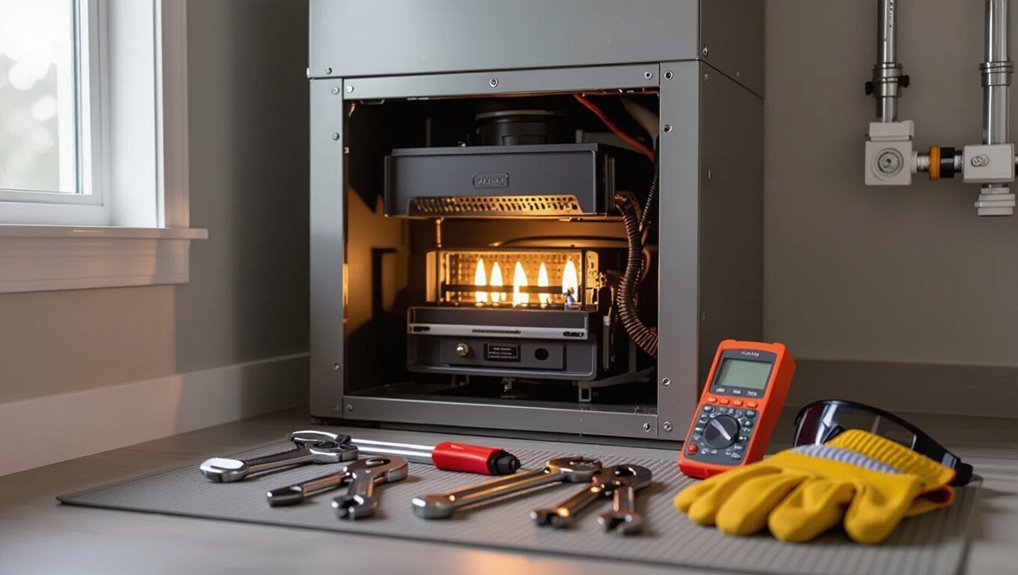
Delayed ignition occurs when gas accumulates before the burner ignites, often signaled by a loud bang at startup, yellow or flickering flames, or intermittent heating.
It creates serious safety risks including carbon monoxide buildup, flame rollout that can ignite surrounding materials, and accelerated wear or damage to furnace components.
If these signs appear, the furnace should be shut down immediately and a qualified technician contacted.
Definition and common symptoms of delayed ignition
A gas furnace delayed ignition occurs when gas is released into the burner chamber but the ignition source fails to light it immediately, allowing a build-up of unburned fuel before a sudden ignition.
Common symptoms include loud bangs at start-up, soot or blackened burners, uneven heating, and repeated short cycling.
Homeowners researching how to fix delayed ignition on gas furnace should note these clear diagnostic signs.
Safety risks: carbon monoxide, flame rollout, and equipment damage
When ignition lags, unburned gas can accumulate and ignite explosively or burn incompletely, creating several serious hazards.
Delayed ignition raises carbon monoxide risk from partial combustion, causing poisoning without obvious odor.
Flame rollout can occur, exposing heat exchangers and nearby components to flames and heat, increasing fire risk and accelerating equipment wear.
Repeated events shorten component life and may warp heat exchangers.
When to shut down the furnace and call a professional
Many homeowners should shut down a gas furnace immediately if ignition hesitates repeatedly or is followed by loud bangs, a sulfur-like odor, visible soot, or pilot outages.
Then call a qualified HVAC technician. Continued operation risks explosion, carbon monoxide exposure, and permanent heat exchanger damage.
Power off the unit, ventilate the area, avoid using open flames, and wait for professional diagnosis and repair.
Quick Diagnosis How to Confirm Delayed Ignition
A quick diagnosis starts with listening for a loud bang, puff, or noticeably delayed flame and scanning the burner area for soot, scorch marks, or exhaust odors.
A flashlight and mirror help inspect hard-to-see areas while a multimeter can check ignition components and electrical continuity.
If a carbon monoxide alarm is triggered or readings are elevated, the furnace should be shut down and serviced immediately.
Listening and visual checks (bang, puff, delayed flame)
Inspectors should first rely on sound and sight to detect delayed ignition: a noticeable puff or small bang at furnace startup, visible flame lifting or delayed flame appearance after the burners open, and a brief cloud of combustion odor or spitting noise are strong indicators.
They then observe flame color, flame response timing to ignition sequence, and burner flame pattern for inconsistencies suggesting improper ignition timing or gas buildup.
Inspecting exhaust smell and soot or scorch marks
Check the furnace exhaust and surrounding surfaces for telltale odors and markings that confirm delayed ignition: a faint gasoline- or rotten-egg smell near the flue, soot buildup at vent exits, or scorch marks on burners and nearby metal indicate intermittent ignition allowing unburned gas to escape before combustion.
Note discoloration patterns, greasy soot accumulation, and localized heat damage as objective evidence for further inspection or professional service.
Using simple tools: flashlight, mirror, and a multimeter
Start by gathering a bright flashlight, a small inspection mirror, and a multimeter to perform a quick, low-risk assessment of delayed ignition.
Use the flashlight and mirror to inspect burner flames, pilot assembly, and heat exchanger for irregular ignition, soot, or misaligned burners.
Use the multimeter to verify continuity of safety switches and ignition transformer output within manufacturer specifications.
When a carbon monoxide alarm indicates a problem
When a carbon monoxide alarm sounds, it signals a potentially dangerous combustion problem that warrants immediate attention and a focused diagnostic approach; delayed ignition is among the faults that can produce CO, so the technician should treat the alarm as a priority, secure the area by ventilating and evacuating occupants as needed, and then proceed with a rapid, on‑site confirmation sequence to determine whether delayed ignition is the likely cause.
Technician checks combustion odors, soot, burner flame color and pattern, CO meter readings near the furnace and room, ignition timing, and flame rollout switches; if indicators point to delayed ignition, isolate fuel, tag the system, and arrange repair before re‑commissioning.
Common Causes of Delayed Ignition
Several recurring issues commonly produce delayed ignition in gas furnaces.
These include dirty or clogged burners and ports, weak or failing ignition components (such as hot surface or spark igniters), a dirty or failing flame sensor, inadequate gas pressure or valve problems, and improper air-to-fuel mixture or blocked combustion airflow.
Identifying which of these is present directs the appropriate repair or maintenance steps.
Dirty or clogged burners and ports
Accumulated dust, soot, and debris can obstruct burners and ports, disrupting the proper air-fuel mixture and causing the furnace to ignite slowly or sputter.
Restricted openings lead to uneven flame patterns, delayed combustion, and increased carbon monoxide risk.
Routine inspection and gentle cleaning of burner assemblies restore correct gas flow and flame stability; replace corroded parts and guarantee proper reassembly for safe, reliable operation.
Faulty or weak ignition components (hot surface igniter, spark igniter)
Beyond blocked burners, another frequent source of delayed ignition lies in the furnace’s ignition components themselves.
Worn or cracked hot surface igniters heat slowly or fail; weak or misaligned spark igniters produce intermittent sparks. Both reduce reliable ignition timing, causing gas buildup before flame.
Technicians test resistance, inspect for visible damage, and replace faulty igniters to restore prompt, safe ignition.
Dirty or failing flame sensor
A dirty or failing flame sensor can prevent a furnace from detecting pilot or burner flame, prompting repeated shutdowns and delayed ignition as the system cycles gas on and off trying to establish a safe flame.
Accumulated soot or corrosion reduces sensor current, causing the control board to kill gas. Cleaning with fine emery or replacing a weak sensor typically restores reliable flame sensing and normal ignition timing.
Inadequate gas pressure or valve issues
While a fouled flame sensor directly affects ignition detection, delayed ignition can also stem from fuel delivery problems.
Low gas pressure, partial blockages, or sticky/failed gas valves reduce or interrupt flow at spark or hot surface ignition, causing ignition lag or multiple ignition attempts.
Technicians check line pressure, regulator operation, valve seating, and connections before replacing components to restore reliable, timely ignition.
Improper air-to-fuel mixture and blocked combustion airflow
Improper air-to-fuel mixture and restricted combustion airflow disrupt the precise balance needed for immediate ignition, causing delayed or intermittent lighting.
Accumulated soot, clogged burners, dirty air filters, blocked intake or venting, and obstructed combustion chambers reduce oxygen availability and alter flame characteristics.
Technicians should inspect and clean burners, verify venting paths, replace filters, and correct combustion air provisions to restore proper ignition.
Ignition control board or thermostat faults
Mechanical obstructions and fuel-air imbalances can coexist with electrical control issues that cause ignition delays.
Faulty ignition control boards, corroded connections, or intermittent relay failures can delay spark or gas valve timing.
Thermostat miscalibration, wiring shorts, or communication errors between thermostat and control board also produce late ignition.
Diagnosis requires voltage checks, error code review, and replacement of defective components by a qualified technician.
Step-by-Step Troubleshooting and Repair Procedures
The following procedures guide a technician through systematic troubleshooting and repair to correct delayed ignition on a gas furnace. Emphasis is placed on safety, inspection and cleaning, component testing, and gas system verification to isolate and resolve common faults.
These steps progress from simple visual checks to measured adjustments or part replacement as needed.
- Confirm power and gas are safely shut off and follow a basic safety checklist before starting work.
- Inspect and clean burners and the combustion chamber to remove soot, debris, or corrosion.
- Clean or replace the flame sensor, and test the hot surface igniter or spark electrode for proper operation.
- Check gas pressure and gas valve function, and adjust or replace components if readings fall outside specifications.
Safety first power and gas shutoff checklist
Before any inspection or repair begins, power and gas to the furnace must be shut off and verified de-energized to prevent fire, explosion, or electric shock.
Confirm thermostat is off, switch off circuit breaker, and close the gas valve.
Use a non-contact voltage tester and gas detector to verify.
Tag controls, wait five minutes for residual gas to dissipate before proceeding.
Visual and cleaning steps for burners and combustion chamber
With power and gas secured and verified, attention moves to inspecting the burners and combustion chamber for visible signs of sooting, corrosion, cracks, or misalignment.
Remove burner assembly per manufacturer instructions, brush soot and loose debris with a soft brush, and vacuum with a non-sparking nozzle.
Wipe accessible surfaces with a damp cloth, check burner ports for blockage, and realign or replace damaged components before reassembly.
Cleaning or replacing the flame sensor
Inspect the flame sensor visually for buildup or discoloration, then decide whether cleaning will suffice or replacement is necessary.
Power off and disconnect the furnace, remove the sensor, and clean gently with fine abrasive pad or emery cloth; avoid bending.
Reinstall and test for proper flame detection.
If corrosion, pitting, or persistent fault codes occur, replace the sensor with the exact OEM type.
Testing and replacing the hot surface igniter or spark electrode
Test the hot surface igniter or spark electrode as the next step when delayed ignition is suspected, since a weak or failed igniter is a common cause.
Inspect visually for cracks or damage, then measure resistance with a multimeter (HSI typically 40–90Ω). Replace if open, cracked, or out of spec.
For spark electrodes, verify spark presence and alignment; replace damaged electrodes.
Checking and adjusting gas pressure and gas valve operation
Verify gas pressure and gas valve operation as a critical next step, since improper pressure or a sticking/failing valve commonly causes delayed ignition.
Measure inlet and manifold pressures with a manometer per manufacturer specs.
Inspect valve diaphragms, solenoids, and linkage for wear or debris.
Adjust regulator or replace faulty valve components.
Recheck pressures and cycle furnace to confirm prompt ignition.
Inspecting and repairing blocked vents, flues, and air intake
With gas pressure and valve operation confirmed, attention turns to the venting system and air intake, since blockages or restricted airflow can produce delayed ignition and unsafe combustion.
Inspect intake screens, combustion air openings, flue pipe joints and exhaust vents for debris, nests, corrosion or sagging.
Clear obstructions, repair damaged flue sections, guarantee proper slope and secure all connections.
Test airflow and restart.
Resetting or testing the ignition control board and thermostat wiring
Begin by isolating power to the furnace and accessing the control compartment to inspect the ignition control board and thermostat wiring for signs of damage, loose connections, or fault indicators.
Then follow a systematic reset and diagnostic sequence using the manufacturer’s reset procedure, a multimeter, and the furnace’s diagnostic LED codes to determine whether the board, wiring, or thermostat signal is causing delayed ignition.
Diagnose open/short circuits, verify 24V call, and swap or replace faulty components as identified.
Post-repair testing: startup observation and CO/combustion gas testing
After completing control-board and thermostat checks, power is restored and the furnace is observed through a controlled startup sequence to confirm ignition timing, flame stability, and proper sequencing of the inducer, gas valve, and ignition module.
Technicians monitor for delayed ignition, flame rollout, and abnormal sounds.
Combustion and CO levels are measured at the flue and living space; any unsafe readings prompt shutdown and further repair.
Tools, Parts, and Materials Needed
A concise list of tools, parts, and materials helps streamline diagnosis and repair of delayed ignition on a gas furnace.
Basic homeowner toolkit items—screwdrivers, pliers, socket set, multimeter—are usually sufficient for common checks, while keeping replacement parts like an igniter, flame sensor, and filters on hand saves time.
Specialized instruments such as a manometer or combustion analyzer are recommended when verifying gas pressure or combustion quality or when troubleshooting persistent issues.
Basic homeowner toolkit items
When tackling delayed ignition on a gas furnace, a homeowner should assemble a compact toolkit that covers basic diagnostic and safe repair tasks.
Include insulated screwdrivers, adjustable wrench, multimeter, flashlight, small mirror, needle-nose pliers, nut drivers, shop vacuum or brush, cleaning cloths, gloves, safety goggles, and a wire brush.
Keep a non-contact voltage tester for added safety.
Replacement parts to have on hand (igniter, flame sensor, filters)
Stocking a few common replacement parts can prevent lengthy downtime and simplify troubleshooting for delayed ignition on a gas furnace.
Recommended spares include a compatible hot surface igniter or pilot assembly, a flame sensor matching the furnace model, and several high-efficiency air filters in correct sizes.
Keep basic connectors, heat-resistant leads, and manufacturer-recommended screws or brackets for quick, safe swaps.
When specialized instruments are required (manometer, combustion analyzer)
Several specialized instruments become necessary once basic troubleshooting fails or when safety and compliance checks are required.
A manometer verifies gas pressure and draft to detect regulator or venting issues; a combustion analyzer measures oxygen, CO, and efficiency to identify improper fuel/air mix or incomplete combustion.
Technicians should use calibrated tools and follow manufacturer and code procedures to guarantee accurate diagnosis and safe repair.
When to Call a Professional HVAC Technician
If delayed ignition persists after basic troubleshooting or any signs of gas leaks, certified HVAC technicians should be contacted due to safety and code requirements.
Complex symptoms — such as suspected gas valve failure, frequent recurring ignition delays, or irregular combustion — indicate professional diagnosis and possible parts replacement.
A service visit typically includes inspection, testing, and repair with costs varying by region and needed parts, which the technician should itemize beforehand.
Safety and code-related issues requiring certified techs
When delayed ignition persists despite basic troubleshooting, situations involving gas leaks, damaged heat exchangers, improper venting, or persistent ignition failure require intervention by a certified HVAC technician.
These conditions pose immediate safety hazards and may violate local building codes, so only trained professionals should perform diagnosis, repairs, and any gas-related adjustments.
Technicians guarantee compliance, test combustion, replace unsafe components, and provide documentation for inspections.
Signs of complex problems (gas valve failure, repeated ignition delay)
Recognize persistent ignition delay, repeated clicking without a sustained flame, strong gas odors, or loud bangs at startup as indicators of more serious faults like a failing gas valve or intermittent ignition control.
Additional signs include frequent flame rollout, repeated lockouts, unexplained pressure loss, or burners that light unevenly.
These symptoms warrant immediate professional diagnosis to prevent safety hazards and further equipment damage.
What to expect from a professional service visit and typical costs
What should a homeowner expect during a professional HVAC service call for delayed ignition?
A technician will inspect the ignition system, burners, gas pressure, flame sensor, and venting. They will run diagnostics and perform cleaning or part replacement.
Expect a written estimate, safety checks, and post-repair testing.
Typical costs range $150–$400 for diagnostics and minor repairs; major component replacement can reach $500–$1,200.
Preventive Maintenance to Avoid Delayed Ignition
Preventive maintenance greatly reduces the risk of delayed ignition by keeping ignition components, burners, and airflow pathways clean and properly adjusted.
A consistent schedule of filter changes, airflow checks, and annual professional tune-ups with combustion testing prevents buildup and identifies wear before it causes failure.
Homeowners can also perform basic visual inspections and replace filters between services to maintain safe operation.
- Regular cleaning and inspection schedule
- Filter replacement and airflow maintenance
- Annual professional tune-ups and combustion testing
- Simple homeowner checks between service visits
Regular cleaning and inspection schedule
Establishes a routine cleaning and inspection schedule to catch the early signs of delayed ignition before they escalate.
Technicians perform seasonal checks: burners, ignition system, flame sensor, combustion chamber, venting and gas connections.
Create a checklist, log findings, note patterns, and schedule corrective actions promptly.
Regular documentation helps identify gradual deterioration and justify professional servicing to prevent unsafe delayed ignition events.
Filter replacement and airflow maintenance
Proper airflow is a fundamental factor in preventing delayed ignition, and maintaining clean filters is the simplest, most effective control. Filters should be checked monthly and replaced per manufacturer recommendations or when visibly dirty.
Restricted airflow stresses the burner, causes overheating and ignition delay. Additionally, keep vents, return grilles and blower compartment clear; confirm correct filter size and proper installation to preserve airflow.
Annual professional tune-ups and combustion testing
Schedule annual professional tune-ups and combustion testing to catch developing issues before they cause delayed ignition.
Certified technicians inspect burners, ignition systems, gas pressure, and venting, adjusting or replacing parts as needed.
Combustion analysis verifies proper fuel-to-air ratio and detects carbon monoxide or incomplete combustion.
Regular professional service prevents delayed ignition, improves efficiency, and guarantees safety over time.
Simple homeowner checks between service visits
Between professional visits, a few quick homeowner checks can greatly reduce the risk of delayed ignition and extend furnace life.
Inspect and replace filters monthly during heavy use, clear vents and returns, guarantee burners and pilot areas are free of debris, verify proper thermostat operation, and listen for abnormal ignition sounds.
Report persistent issues to a licensed technician promptly.
Troubleshooting Scenarios and Quick Fixes
Troubleshooting common delayed ignition cases helps isolate whether the issue is a simple DIY fix or requires professional service. Below is a concise reference linking symptom, likely cause, immediate DIY fix, and when to call a pro to guide quick action. Refer to the table for clear, actionable scenarios.
| Symptom | Likely cause | Quick action / When to call a pro |
|---|---|---|
| Loud bang at startup | Gas build-up from delayed ignition | Turn off furnace and pilot, ventilate; call a pro if it recurs |
| Yellow or weak flame | Dirty burner or inadequate airflow | Clean burners and replace filters; call a pro if flame stays yellow |
| No ignition or repeated attempts | Faulty ignition control or gas valve | Check power and reset; call a pro for control/gas valve diagnostics |
Symptom, likely cause, immediate DIY fix, and when to call a pro
When a furnace hesitates before the burners ignite, the homeowner can identify the symptom quickly and check a few likely causes—dirty flame sensor, weak pilot/igniter, or delayed gas valve response—and try simple fixes like cleaning the sensor with fine emery cloth, ensuring the igniter is unobstructed, or resetting the system; if ignition remains delayed after these steps, or if there is any smell of gas, sparking, or repeated lockouts, a licensed HVAC technician should be called.
| Symptom | Likely cause |
|---|---|
| Delay then bang | Dirty sensor |
| Weak spark | Faulty igniter |
| Intermittent | Gas valve issue |
| Smell of gas | Call pro immediately |
Safety Reminders and Legal/Code Considerations
Before performing furnace repairs, the author notes that functioning carbon monoxide detectors must be installed and alarms placed per manufacturer and local guidance.
Technicians and homeowners should follow applicable local codes for any gas work and hire licensed professionals when required.
All service actions, parts replaced, and dates should be documented to protect warranties and maintain compliance records.
Carbon monoxide detection and alarm placement
Where should carbon monoxide (CO) alarms be placed to provide reliable warning of a leaking furnace?
Alarms should be installed outside sleeping areas, on each level of the home, and near attached garages.
Position at breathing height—wall-mounted about 5 feet up or ceiling-mounted—avoiding corners, drafts, and direct proximity to fuel appliances.
Test monthly, replace units per manufacturer recommendations, and heed any alarm immediately.
Local codes for furnace servicing and gas work
Local codes and regulations govern who may service gas furnaces, the scope of permitted work, and required permits and inspections; compliance is essential for safety, liability, and insurance coverage.
Technicians must hold specified licenses or certifications. Required permits, inspections, and adherence to local ventilation, combustion air, and appliance placement rules prevent hazards and fines.
Homeowners should verify contractor credentials before work begins.
Documenting service and warranty implications
After confirming that licensed technicians and required permits are in place, documenting all service actions becomes an important part of maintaining safety and preserving warranty rights.
Detailed records should include date, technician credentials, diagnostic steps, replaced parts with serial numbers, and invoices.
Retain manufacturer instructions and warranty forms.
Clear documentation supports future claims, demonstrates code compliance, and reduces liability for homeowners and service providers.
Conclusion
A homeowner once described a furnace’s delayed roar as “a sigh before a shout,” and that simple image captures the risk: small delays often mask larger faults. With routine checks—cleaning burners, inspecting ignition components, and heeding safety codes—many problems are prevented; industry data show maintenance cuts failures by roughly 40%. When troubleshooting proves inconclusive or smells of gas appear, relinquishing repairs to a licensed HVAC pro keeps occupants safe and systems reliable.