How to Find My Sewer Drain: Step-by-Step Guide to Locating Your Main Sewer Line
To locate your main sewer line, follow these steps: Start by identifying where the main sewer line exits your home’s foundation, typically running downhill to the street or septic tank. Check for interior convergence points and cleanouts in basements, crawlspaces, or along exterior walls. For precise mapping, use tools like a probe, shovel, pipe locator, or sewer camera, marking confirmed sections as you find them. Additionally, observe the yard’s grade and roof runoff paths to determine the direction of the line. Continue reading for detailed methods and tools to assist you in this process.
Where Your Sewer Drain Is and How to Find It Fast
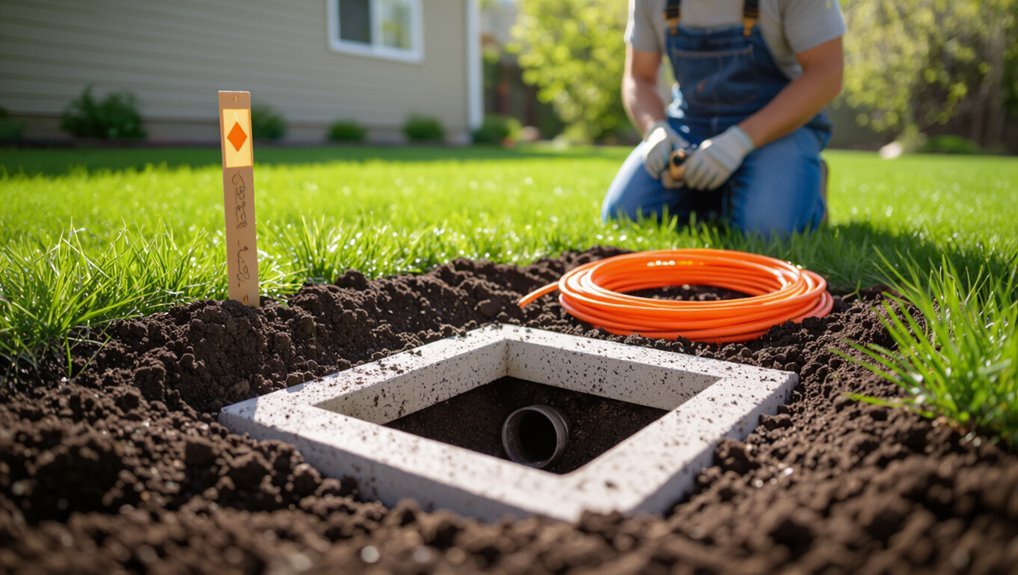
The sewer drain is typically located where the house’s main waste line exits the foundation and connects to the municipal sewer or septic system.
Main lines commonly run from a basement or crawlspace toward the street, under a driveway, or along the side yard, with cleanouts near the foundation or property line.
If there is sewage backup, foul odors, or multiple slow drains, a professional plumber should be called immediately.
One-sentence direct answer
Although layouts vary, a homeowner can usually locate the main sewer drain by identifying the lowest point where household drains converge—often near the foundation, at a basement wall, or outside where the sewer cleanout or inspection port is visible.
For a quick answer: inspect basement walls, follow drain lines to their convergence, look for exterior cleanouts, and consult plumbing plans or a pro when uncertain — how to find my sewer drain.
Typical locations for main sewer lines (summary)
Moving from quick checks to a broader sense of where main sewer lines are typically found, most run along the lowest grade of a property and exit the house near the foundation—commonly at a basement or crawlspace wall, under a slab floor, or through an exterior wall toward the street sewer or septic system.
- Relief: locate it fast
- Frustration: hidden under slab
- Urgency: low spots matter
- Confidence: follow grade and foundation
When to call a pro immediately
When sewage backs up repeatedly, emits strong odors indoors, or water drains from multiple fixtures at once, a professional should be contacted immediately to locate the main sewer drain and assess the problem.
Rapid response is also warranted for sinkholes, persistent gurgling, visible sewage in yard, or suspected broken lines.
Technicians provide camera inspections, leak detection, and safe remediation to prevent health risks and property damage.
Basic Understanding What Is the Main Sewer Line and Why Its Location Matters
The main sewer line is the primary pipe that carries wastewater from a property to the municipal system or a private septic connection, distinct from laterals that serve individual buildings and from cleanouts that provide access for maintenance.
Knowing its location is critical for timely repairs, safe renovations, and accurate assessments of property value and risk. Responsibility for the main line versus the lateral typically falls to the municipality for public mains and to the property owner for on-site laterals, though local codes can vary.
Definition of main sewer line vs. lateral vs. cleanout
A home’s plumbing system centers on three distinct components: the main sewer line, laterals, and cleanouts.
The main sewer line is the primary pipe carrying waste from the property to the municipal sewer or septic.
Laterals are smaller branch pipes linking fixtures and buildings to the main.
Cleanouts are capped access points for inspection, clearing blockages, and maintenance.
Why knowing the sewer location matters for repairs, renovations, and property value
Knowing the exact location of a home’s main sewer line is essential for efficient repairs, safe renovations, and accurate property valuation.
Contractors can target defects, minimizing excavation and cost. Renovation plans avoid cutting into or overlying sewer paths, preventing setbacks and contamination.
Clear documentation supports disclosure, influences appraisals, and reduces future liability, preserving functionality and marketability.
Common municipal vs. private responsibility rules
Because responsibility for sewer maintenance varies by locality, homeowners should first determine whether the municipality or the property owner is liable for the main sewer line and its connection to the public system.
Common rules: municipalities often maintain public mains and the lateral up to the property line; owners typically handle laterals from the line into the building.
Local codes, deeds, or utility maps clarify responsibility.
Tools and Materials You’ll Need Before Searching
Before beginning a search, one should gather basic homeowner tools such as a shovel, probe, tape measure, and flashlight.
For more stubborn or uncertain locations, consider advanced equipment or rental options like a sewer camera, pipe locator, or metal detector.
Appropriate safety gear and any required permits should be confirmed before work begins.
Basic homeowner tools (shovel, probe, tape measure, flashlight)
A handful of basic tools—shovel, probe, tape measure, and flashlight—will cover most preliminary searches for a sewer drain and keep the task efficient and safe.
These items help locate, expose, and measure lines without specialist gear.
- Shovel: steady, controlled digging
- Probe: careful detection of pipe edges
- Tape measure: accurate distance checks
- Flashlight: clear inspection in dark spots
Advanced tools and rental options (sewer camera, pipe locator, metal detector)
Several specialized tools can make locating and diagnosing a sewer line far quicker and less invasive than manual probing.
A sewer camera inspects pipe interiors and pinpoints blockages; a pipe locator traces buried lines using sonde signals; a metal detector helps find cast-iron fittings or buried covers.
Many hardware stores and rental centers offer these tools by the day, often with brief usage instructions.
Safety gear and permits to check first
Protective gear and required permits should be confirmed before any ground is disturbed: hard hat, eye protection, waterproof gloves, steel-toe boots, and a respirator for confined-space entry protect against common hazards, while high-visibility clothing is advisable near traffic.
Confirm local excavation and utility-locate permits, follow confined-space rules, and verify insurance or contractor credentials.
Keep first-aid and gas-detection equipment on site.
Step-by-Step Guide to Locating Your Main Sewer Line
The guide outlines a clear process for tracking the main sewer line, beginning at interior fixtures and following the direction of each drain.
It instructs the reader to identify the building sewer exit, locate any indoor and outdoor cleanouts, and trace the grade toward the street or septic system.
If the pipe path remains uncertain, a probe or metal rod can be used to detect the buried line.
Step 1 Start at the plumbing fixtures: trace the drain direction
Begin at each plumbing fixture—sinks, toilets, showers—and observe the direction of wastewater flow by following visible pipes under sinks, watching where floor drains slope, and noting which fixtures share a wall or stack; this establishes the immediate routing that leads to the home’s main sewer line.
Record pipe materials, junction locations, and apparent downstream angles to map connections toward the building drain.
Step 2 Locate the building sewer exit point (basement/crawlspace/slab)
After mapping how individual fixtures feed into shared stacks and branch lines, attention shifts to where the building’s internal piping meets the outside sewer system.
Inspect basements, crawlspaces, and slab penetrations for larger-diameter pipes exiting the foundation. Note pipe material, direction, slope, and any junctions.
Photograph locations and measure distances to exterior walls to aid locating the underground main connection.
Step 3 Find the cleanout(s) inside and outside the house
One practical next step is to identify cleanouts—access points that allow straight, fast entry to the main sewer line—both inside and outside the structure so the exact service connection can be confirmed and accessed for inspection or clearing.
Inspect walls, floors, utility rooms and exterior yards for capped pipes, plugs or access lids.
Note locations, orientations and any obstructions before proceeding.
Step 4 Follow the slope or grade toward the street or septic system
Trace the low points of the yard and interior floors to determine the direction the main sewer line follows, since gravity dictates that wastewater flows downhill toward the street sewer or a septic tank.
Observe roof runoff paths, driveway crowns, and landscaping contours.
Mark the downhill azimuth from the house foundation toward the public right-of-way or suspected septic location to narrow search and excavation planning.
Step 5 Use a probe or metal rod to detect buried pipe path
Having established the downhill line toward the street or septic tank, the next step is to use a soil probe or long metal rod to confirm the buried pipe’s path.
The technician probes at regular intervals along the inferred line, feeling for consistent resistance or voids.
Marking confirmed points with flags or spray paint creates a tentative route for later verification, minimizing unnecessary digging.
Step 6 Use a pipe locator or sewer camera for precise mapping
Bring in a pipe locator or insert a sewer camera to move from tentative probing to precise mapping.
The operator traces signal from the locator aboveground to pinpoint pipe depth and direction.
Alternatively, a camera fed through a cleanout verifies pipe condition, junctions, and bends while recording footage for reference.
Combine locator and camera data to produce an accurate, documented map of the sewer route.
Step 7 Confirm connection point at the municipal main or septic tank
Verify whether the property’s sewer line ties into the municipal main or terminates at a septic tank by locating the exact connection point and inspecting its condition.
Observe joints, seals, cleanouts, and visible corrosion or leaks. Record coordinates or reference markers.
If linked to the municipal main, note the curb stop or manhole; if septic, confirm tank inlet/outlet integrity and access for maintenance or repairs.
Alternative Methods and Tools (Supporting Framework: Listicle & Comparison)
This section compares alternative methods and tools for locating a sewer drain, from simple surface clues to advanced equipment.
It outlines visual inspection and common indicators, the pros and cons of dye and smoke tests, and the trade-offs between electronic locators and CCTV inspection.
It also explains when a plumber’s truck-mounted equipment becomes necessary.
Visual inspection and common surface clues
A careful visual inspection often reveals surface clues that indicate the location of a sewer drain: depressions or soft spots in the yard, persistent wet or greener patches, lines of sinking curb or sidewalk, and clusters of lush vegetation over otherwise dry ground.
Observers note subtle patterns suggesting flow or collapse:
- Unease at sinking soil
- Relief when greener spots explain odors
- Anxiety over cracked pavement
- Curiosity about odd plant growth
Using dye tests and smoke testing pros and cons
Several practical diagnostic options exist for locating sewer drains beyond surface clues, with dye tests and smoke testing each offering distinct advantages and limitations.
Dye tests are inexpensive, simple, and show flow paths but can miss deep leaks and rely on visible outfalls.
Smoke testing detects leaks, illegal connections, and joint failures over broad areas yet may require permits, produce false positives, and needs trained operators.
Electronic locators vs. CCTV inspection
After comparing dye and smoke methods, attention turns to electronic locators and CCTV inspection as technology-driven alternatives. Electronic locators trace buried lines via signal sonde; CCTV inspects internal pipe condition with cameras. Choice depends on detection vs. diagnosis, cost, and access.
| Purpose | Strength |
|---|---|
| Locator | Fast detection |
| CCTV | Visual diagnosis |
When a plumber’s truck-mounted equipment is necessary
Call in a truck-mounted unit when line access, distance, or damage exceed what hand-held tools and portable cameras can handle.
Such units offer high-pressure water jetting, powerful drums for long cable runs, and integrated high-resolution camera systems with live tracking.
They are necessary for deep mains, extensive root intrusion, collapsed sections, or repeat blockages where efficiency, safety, and thorough cleaning outweigh rental or manual options.
Common Problems and Mistakes When Searching for the Sewer Line
Common errors when locating a sewer line often stem from misreading slope or surface clues and mistaking other underground features for the target pipe.
Probing or excavation can damage landscaping or unknown utilities if done without proper detection.
Investigators may also miss multiple cleanouts or lateral branches, leading to false positives from nearby water, gas, or communication lines.
Misreading slope or surface clues
Although surface grade and visible runoff sometimes suggest where a sewer line runs, relying on those cues alone often misleads searchers. Subtle landscaping, buried utilities, and altered drainage patterns can create false slopes that disguise the true pipe alignment.
Investigators should corroborate surface impressions with plans, probes, or camera inspections. Misinterpreting contours wastes time and risks following a wrong, nonfunctional route instead of the main sewer.
Damaging landscaping or utilities while probing
When probing for a sewer line, carelessness with hand tools or power augers can easily damage lawns, irrigation systems, and buried utilities.
Excavation without utility locates risks costly repairs and hazards. Probing should proceed only after marking known lines, using noninvasive locating tools first, and employing hand digging near suspected points.
Document and repair any minor surface impacts promptly to avoid escalation.
Overlooking multiple cleanouts or lateral branches
Because sewer systems often include multiple cleanouts and lateral branches, searchers can mistake one accessible access point for the only connection to the mainline, leading to incomplete inspections or misrouted repairs.
This oversight neglects secondary laterals, buried cleanouts, and service junctions. Consequences include missed blockages, unnecessary excavation, and incomplete camera runs.
Verify plans, map all access points, and trace flow paths before acting.
False positives from other underground lines
Mistaking other underground utilities for the sewer line is a common pitfall after mapping multiple cleanouts and laterals.
Metallic pipes, conduit, water mains, and irrigation lines can register on detectors or appear in excavations, producing false positives.
Verify by checking material, diameter, depth, and flow direction; use CCTV inspection, sewer dye, and utility maps to confirm which line is the active sewer before digging.
Preventive Measures, Best Practices, and Property Documentation
The homeowner should mark and map the sewer route and keep that plan with municipal records, plumbing diagrams, and permits for quick reference.
They should install accessible cleanouts and maintain them regularly to simplify inspections and repairs.
Landscaping and hardscaping should be planned to avoid trenching or root intrusion that could damage the line.
Marking and mapping your sewer route for future reference
How should a homeowner preserve knowledge of their sewer route for future maintenance and property transactions?
Homeowners should create a simple map showing the main sewer line, cleanout locations, and landmarks; mark underground route positions with durable stakes or permanent markers; photograph and digitize maps; record measurements from fixed points; store documents with property records and share copies with plumbers and future owners for clarity and liability avoidance.
Installing and maintaining accessible cleanouts
Install and maintain accessible cleanouts to simplify routine maintenance and reduce emergency excavation.
Property owners should place cleanouts at lot line, building entry, and pipe direction changes, guaranteeing caps are flush, labeled, and unobstructed.
Schedule periodic inspections, clear debris, and document locations on maps and inspection records.
Professional installation guarantees proper fittings, backflow considerations, and compliance with local codes.
Best practices for landscaping and hardscaping to avoid damage
After placing and maintaining accessible cleanouts, attention should turn to landscaping and hardscaping strategies that protect sewer lines from mechanical and root damage.
Use shallow-rooted plants, maintain setback distances, and avoid planting trees near sewer easements.
Route driveways, patios, and heavy equipment away from known line paths; install root barriers and gravel trenches where appropriate.
Mark buried line locations for future reference.
Storing municipal records, plumbing plans, and permits
Although often overlooked, organized storage of municipal records, plumbing plans, and permits is essential for protecting property value and enabling rapid, informed responses to sewer issues.
Homeowners should digitize originals, label files by property address and date, and back up copies offsite.
Maintain an index of inspection reports, repairs, and approvals.
Accessible documentation speeds diagnosis, supports warranty or insurance claims, and clarifies jurisdictional responsibilities.
When to Hire a Professional and What to Expect
When persistent backups, unexplained odor, multiple slow drains, or suspected utility marks appear, a licensed plumber or utility locator should be contacted.
Typical services include camera inspections, locating with radio or ground-penetrating methods, and quoted costs vary by region and complexity.
Before work begins, homeowners should ask about licensing, insurance, scope of work, guarantees, and an itemized estimate.
Signs you should call a licensed plumber or utility locator
Recognize clear indications that professional help is needed: persistent backups, sewage odors, repeated clogs after attempted fixes, water pooling in the yard, or exposed or damaged sewer lines.
Additionally, call a licensed plumber or utility locator if multiple fixtures drain slowly, sinkholes or depressions appear, unexplained high wastewater bills occur, or planned digging/grading could risk striking underground sewer infrastructure.
Typical inspection services and costs
Several common inspection services help diagnose sewer problems and set realistic repair expectations:
video camera line scans to locate blockages, pipe condition assessments to identify cracks or root intrusion, smoke or pressure testing for leak detection, and hydrostatic or dye tests for lateral connections.
Typical costs range from $100–$800 depending on scope; thorough diagnostics with reports and recommendations tend toward the higher end.
Questions to ask a contractor before they start
Why ask questions before work begins? A homeowner should confirm licensing, insurance, and written estimates.
Ask about experience locating sewer mains, methods used (camera, electronic locators), timeline, permits, and disruption expectations.
Request references, warranties, and clear payment terms.
Clarify responsibility for repairs, site restoration, and contingency plans for unexpected findings to avoid surprises and disputes.
Conclusion
Locating the main sewer line empowers homeowners to address backups, plan repairs, and avoid costly mistakes. With basic knowledge, the right tools, and careful steps—inspection of plumbing fixtures, outdoor cleanouts, and use of cameras or sewer scopes—most lines can be found quickly. Alternative methods, preventative documentation, and awareness of common pitfalls reduce risk. For complex layouts or concerns about safety and accuracy, hiring a licensed plumber guarantees proper diagnosis and reliable solutions.