How to Drain a Tub With Standing Water Quickly and Safely
To quickly and safely drain a tub with standing water, first, stop the water source and check for any electrical or contamination risks. Wear protective gear such as gloves, goggles, and a mask. Begin by removing any visible debris and use a plunger to attempt to clear the clog. If that doesn’t work, you can scoop the water into buckets, use a wet/dry vacuum, or employ a drain snake for deeper blockages. Avoid mixing chemical cleaners and opt for enzymatic products when necessary. After draining, sanitize the tub and dispose of any waste properly. For further guidance on tools, chemicals, and when to contact a plumber, refer to the additional steps provided.
What to Do Immediately When a Tub Has Standing Water
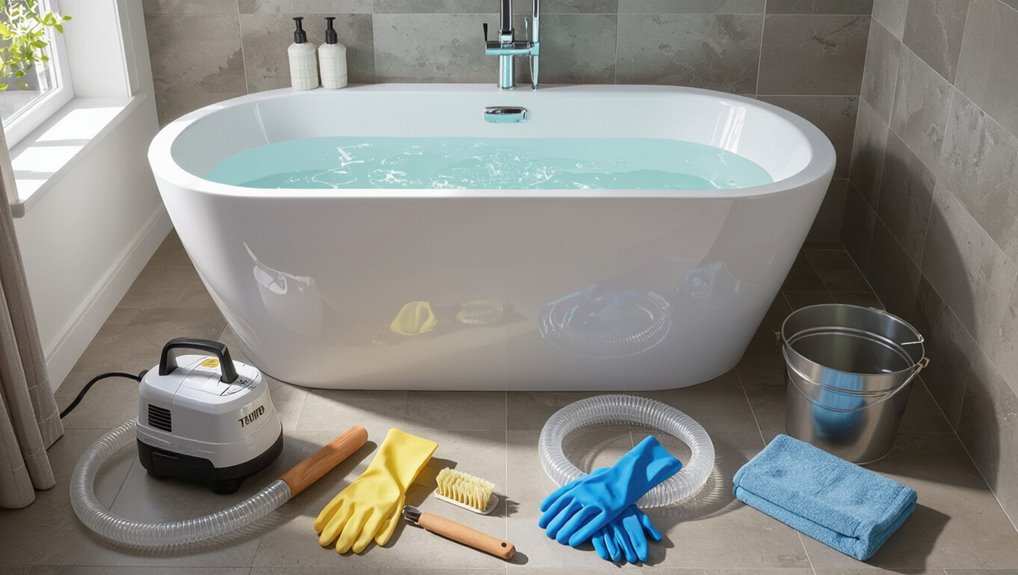
Upon discovering standing water in the tub, one should first assess immediate safety risks such as electrical hazards, sewage backup, or chemical contaminants.
Next, identify the likely cause—whether a clog, an overflow, or a slow drain—to guide the response.
Finally, gather appropriate tools and protective gear before attempting any intervention.
Assess safety risks (electricity, sewage, contaminants)
When a tub contains standing water, the first priority is to assess immediate hazards—electrical risks from nearby outlets or appliances, potential sewage backflow, and biological contaminants—so responders can avoid injury and prevent further damage.
They check power sources, avoid touching water if electricity is suspected, wear gloves and mask for contamination, and call professionals if sewage or hazardous materials are present while planning how to drain a tub with standing water.
Determine cause of the standing water (clog, overflow, slow drain)
Identify the source of the standing water before attempting to drain it: distinguish between a simple clog, an overflowing fixture, or a slow-draining pipe.
Observe water level, listen for gurgling or continuous inflow, check adjacent fixtures for shared backups, and test drain movement with a small drain plug or cup.
Note odors or sewage signs to inform appropriate next steps.
Gather necessary tools and protective gear
A single trip to the utility closet can save time: assemble essential tools and protective gear before touching standing tub water.
One person collects gloves, goggles, a drain snake or plunger, bucket, wet/dry vacuum attachments, and disinfectant.
Disposable towels and a flashlight are useful. Proper footwear and long sleeves protect from contaminants.
Verify tool condition and label chemicals before use.
Quick Methods to Drain a Tub Safely
Several practical, quick methods can restore proper drainage without calling a plumber.
A plunger or a drain snake is recommended for clearing clogs after removing visible debris and hair with gloves, while a wet/dry vacuum offers fast extraction for larger quantities of water.
For small amounts, careful manual scooping with a bucket can safely reduce standing water before attempting mechanical or powered tools.
Use a plunger: step-by-step technique
Grasping a standard cup plunger and positioning it over the tub drain provides the simplest immediate method to clear standing water. When used properly, the plunger’s suction and pressure shifts can dislodge common clogs of hair and soap residue.
Submerge the cup, establish a tight seal, pump steadily 15–20 times, then pull sharply. Repeat until water drains, flushing with hot water.
Remove visible debris and hair by hand or with gloves
Remove any visible hair and gunk by hand or with disposable gloves to clear the most common obstructions before attempting tools.
Inspect the drain and surrounding weep holes, lifting clumps and debris into a waste bag.
Use tweezers or a disposable scraper for stubborn material.
Dispose of waste promptly, sanitize hands and tools, and ventilate the area to reduce odors and bacteria.
Use a drain snake or auger: when and how to use it
When a hand-cleaning step doesn’t clear the clog, a drain snake or auger provides the next level of mechanical reach to break up or retrieve blockages from deeper in the pipe.
Choose a flexible manual snake for minor clogs; use a drum auger for tougher obstructions.
Feed gently, rotate to engage debris, then withdraw slowly.
Clean and disinfect the tool and work area afterward.
Wet/dry vacuum method for fast extraction
A wet/dry vacuum can rapidly extract standing water from a tub by creating strong suction that pulls liquid through a hose into the collection tank.
Use a vacuum rated for water, attach a wide nozzle, seal around the drain or rim to maximize suction, and monitor the tank to avoid overflow.
Disconnect power and empty the tank safely when finished.
Using a bucket and manual scooping safely
Using a sturdy bucket and a small cup or scoop, the person can remove standing tub water quickly without tools.
They should wear gloves, tilt the bucket to avoid splashes, and set the bucket low to reduce bending.
Empty water safely into a floor drain or outside, and dry the tub when finished.
- Wear waterproof gloves
- Use a shallow scoop
- Minimize splashing
- Dispose responsibly
Chemical and Enzymatic Drain Solutions
Chemical drain cleaners can be effective for organic clogs but are best reserved for metal or PVC drains and avoided when corrosion, damaged seals, or recent mechanical attempts are present.
Enzymatic cleaners offer a gentler alternative for organic buildup and should be applied according to label directions, allowing sufficient dwell time for enzymes to work.
Different products must never be mixed and users should wear gloves and eye protection while ensuring good ventilation to minimize chemical hazards.
When chemical drain cleaners are appropriate and when to avoid them
When is it appropriate to reach for a store-bought drain cleaner?
Chemical drain cleaners suit minor organic clogs (hair, soap scum) in metal or PVC pipes when mechanical methods fail.
Avoid them for slow drains indicating deeper blockages, older or damaged plumbing, multi-story systems, or if chemical exposure risks exist (pets, children, respiratory issues).
Never combine products; follow label warnings.
How to use enzymatic cleaners safely and effectively
Choose an enzymatic cleaner formulated for organic buildups and follow the product directions precisely.
The user applies recommended dose, pours slowly, and avoids immediate rinsing to allow enzymes time to work.
Leave specified dwell time, then flush with hot water if instructed.
Repeat only as directed.
Store product sealed, out of reach of children and pets, and dispose of empty containers per label instructions.
Risks and precautions for mixing products
Mixing different drain treatments, especially caustic chemical cleaners with enzymatic solutions, can produce hazardous reactions, reduce effectiveness, or create toxic fumes; consequently, users should never combine products or apply them in rapid succession without consulting labels and manufacturer guidance.
Protective gear, adequate ventilation, and waiting recommended intervals between treatments minimize risk. When in doubt, contact manufacturers or a professional plumber for safe guidance and alternatives.
Plumbing Fixes for Persistent or Severe Blockages
When chemical or enzymatic methods fail, attention turns to mechanical plumbing fixes that often resolve stubborn clogs.
This includes removing and cleaning the tub stopper or overflow plate and, where accessible, accessing and clearing the P-trap.
If these steps do not restore drainage or if the clog is inaccessible, a professional plumber should be contacted.
Removing and cleaning the tub stopper or overflow plate
Remove the stopper or overflow plate to access trapped hair and debris that typically cause persistent backups.
Using appropriate tools, loosen retaining screws or twist the stopper assembly, then lift out carefully.
Clear hair, soap scum, and gunk with gloved hands or a brush; rinse components thoroughly.
Reassemble, test drainage, and replace damaged parts if corrosion or cracks impair sealing.
Accessing and cleaning the P-trap (when applicable)
After checking the stopper and overflow plate, attention shifts to the P-trap beneath the tub or sink, where stubborn clogs often hide.
Turn off water, place a bucket, loosen slip nuts with pliers, and remove the trap.
Clear debris and buildup, inspect seals and washers, reassemble securely, then run water to confirm flow.
Use gloves and eye protection.
When to call a professional plumber
If DIY methods fail to clear standing water or clogs recur quickly, a professional plumber should be contacted to diagnose and resolve the problem.
A plumber assesses pipe integrity, hidden blockages, venting issues, and sewer line backups using cameras and tools.
Hire a licensed professional for recurrent clogs, foul odors, slow drains despite cleaning, sewage smell, or signs of leaks and structural damage.
Preventing Future Standing Water in the Tub
Preventing future standing water focuses on simple, regular actions that keep the drain flowing.
Recommended topics include routine maintenance tasks, effective drain covers and hair traps, and everyday habits that prevent putting grease, large debris, or excess hair down the drain.
Practical examples and product suggestions will help readers adopt preventive measures.
Regular maintenance routines to keep drains clear
Establishing a simple, regular maintenance routine keeps tub drains flowing and reduces the chance of standing water.
Periodic flushing, debris removal, and occasional enzyme treatments prevent buildup. Weekly visual checks catch slow drainage early; monthly deeper cleaning addresses hidden soap and grime.
Track tasks to maintain consistency and reduce emergency clogs.
- Flush drain with hot water weekly
- Remove visible debris after each use
- Use enzyme cleaner monthly
- Inspect stopper and overflow regularly
Best drain covers and hair traps to install
After outlining routine maintenance, attention turns to physical devices that stop hair and debris before they enter the drain.
Recommended options include silicone stretch-fit covers, stainless steel mesh strainers, and pop-up hair catchers designed for tub drains.
Choose corrosion-resistant materials, easy-clean designs, and sizes matching the drain.
Regular inspection and prompt debris removal prolong function and reduce clog-related standing water.
Habits that reduce clogs (what to avoid disposing down the drain)
A few simple changes in daily habits can dramatically cut the risk of tub clogs and the standing water they cause.
Avoid rinsing hair, soap scum, cotton swabs, dental floss, and sanitary products down the drain.
Limit oily or greasy substances and pour grease into disposables.
Use a drain strainer, clear it regularly, and dispose of collected debris in the trash to prevent buildup and blockages.
Troubleshooting Common Scenarios
When partial clearing leaves a slow drain, the next steps focus on repeating mechanical clearing, using enzyme treatments, or calling a professional if flow does not improve.
If foul odors persist after draining, likely causes include trapped debris or bacterial buildup and remedies range from flushing with baking soda and vinegar to using commercial deodorizers and sanitizers.
In an overflow during drainage, immediate actions include stopping water input, containing spills, and redirecting flow while seeking urgent repairs to the blockage or plumbing.
Slow drain after partial clearing: next steps
If a tub still drains slowly after hair and visible debris have been removed, further steps are required to locate and address the remaining restriction.
Inspect the overflow and stopper mechanism for trapped grime or misalignment. Use a plunger, a drain snake, or remove the trap for inspection.
Consider enzymatic cleaners for organic buildup. If clog persists, consult a licensed plumber to prevent damage.
Foul odors after draining: causes and remedies
Following measures to clear remaining restrictions, unpleasant odors lingering after the tub finally drains indicate a separate set of causes that require targeted remedies.
Causes include trapped organic debris in the P-trap, dried drain seals allowing sewer gas, bacterial buildup on surfaces, or stagnant leftover water in overflow channels.
Remedies: clean trap, pour enzymatic drain cleaner, sanitize surfaces, flush overflow, and restore seal integrity.
Overflow during drainage: emergency steps
Act quickly to stop water spilling over the tub edge by cutting off the water source and containing the flow.
The person should block the drain to slow backflow, use towels and buckets to redirect water, and plug nearby drains to prevent spread.
If flooding persists, shut off the main water supply, call a plumber, and move valuables to a dry area immediately.
Safety and Health Considerations
After draining, the tub should be thoroughly sanitized if the water was contaminated to prevent mold and bacterial growth.
Wear gloves, eye protection, and a mask when handling contaminated water or strong cleaners.
If the standing water contains sewage, recommend contacting professional remediation to address health risks and proper disposal.
Sanitizing the tub after draining contaminated water
Begin by thoroughly rinsing and removing visible debris with clean water and a disposable cloth or brush while wearing appropriate PPE (gloves, eye protection, and a respirator if mold or sewage is suspected).
Apply a EPA-registered disinfectant or diluted bleach solution, following label contact times. Scrub all surfaces, rinse, and dry thoroughly.
Dispose of contaminated materials safely and ventilate until odors dissipate.
Protective equipment recommendations
A few essential items of personal protective equipment (PPE) are recommended whenever draining or cleaning a tub with standing or contaminated water.
Use waterproof gloves, chemical-resistant goggles, and a mask or respirator suitable for mold or aerosolized contaminants.
Wear waterproof boots and protective clothing that can be laundered or discarded.
Verify proper fit and remove PPE carefully to avoid cross-contamination.
When sewage backup requires professional remediation
Recognize that sewage backups often introduce hazardous biological and chemical contaminants that exceed routine DIY response; professionals should be contacted when backups involve persistent odors, visible sludge, contaminated HVAC, compromised structural materials, or illnesses among occupants.
Certified remediation crews provide containment, PPE, specialized extraction, disinfection, and proper waste disposal. Immediate professional intervention minimizes health risks, cross‑contamination, and long‑term property damage, ensuring code‑compliant restoration.
Tools and Products Comparison
The following comparison highlights common tools and product types for clearing a tub, focusing on effectiveness, cost, and safety to guide an appropriate choice. A brief table summarizes key trade-offs between plungers, drain snakes, wet/dry vacuums, chemical cleaners, and enzymatic alternatives. Readers are encouraged to weigh speed against safety and environmental impact when selecting a method.
| Item | Notes |
|---|---|
| Plunger vs. Drain Snake | Plunger: low cost, moderate effectiveness; Snake: higher cost, more effective for clogs |
| Wet/Dry Vacuum | Effective for water removal and some clogs; moderate cost and requires setup |
| Chemical Cleaners | Fast acting but corrosive and risky for pipes/skin |
| Enzymatic Cleaners | Safer and eco-friendly but slower acting |
Plunger vs. drain snake vs. wet/dry vacuum (effectiveness, cost, ease)
Compare three common approaches—plunger, drain snake, and wet/dry vacuum—by weighing effectiveness, cost, and ease of use for clearing tubs with standing water.
A plunger is low-cost, simple, and best for minor clogs.
A drain snake handles deeper obstructions affordably but requires some skill.
A wet/dry vacuum is pricier, powerful for large blockages, and demands caution to avoid mess or damage.
Chemical cleaner types vs. enzymatic cleaners (safety, speed, environmental impact)
While chemical drain cleaners and enzymatic alternatives both target clogs, they differ sharply in mechanism, speed, and safety:
Chemical cleaners (alkaline or acidic) act fast, dissolving hair and grease but pose corrosion, toxic fume, and mixing hazards.
Enzymatic cleaners work slower, using microbes to biodegrade organic matter, are safer for pipes and people, and have lower environmental impact but require patience and repeated application.
Quick Checklist for Draining a Tub Now
A concise emergency checklist helps a person act quickly and safely when a tub is full of standing water.
The following steps prioritize immediate actions to stop the problem, protect property, and restore drainage. Keep each task simple and sequential to avoid delays.
- Turn off water sources and stop any active flow into the tub.
- Remove visible debris and attempt manual clearing of the drain cover.
- Use a plunger or a portable pump to extract standing water.
- If initial attempts fail, contact a professional plumber to prevent damage.
Step-by-step emergency checklist to follow immediately
Start by cutting power to nearby electrical outlets and appliances. Then assess the water depth and source to determine if the drain is clogged or the main sewer is backing up.
Wear rubber gloves and boots. Stop incoming water, remove visible debris, use a plunger or drain snake, and bail excess water into buckets.
Monitor for sewage odor, and call a plumber or utility emergency if backups persist or hazards appear.
Conclusion
Water pooled like a small, stubborn pond becomes a mirror of neglect until motion returns. The reader is reminded that draining a tub is more than clearing pipes — it is restoring flow, reclaiming comfort, and easing risk. With practical steps, tools, and precautions outlined, the stagnant surface yields to action: plumbing repaired, clogs prevented, and daily life moving again, like a tide that quietly resets the shore’s calm.