How to Clean a Refinished Bathtub: Step-by-Step Guide for Safe, Long-Lasting Results
To clean a refinished bathtub effectively and ensure its longevity, use gentle methods. Opt for pH-neutral cleaners or mild dish soap, and clean with soft microfiber cloths or non-abrasive sponges. Rinse with lukewarm water, apply the cleaner evenly, and wipe in circular motions before rinsing and drying thoroughly. For mineral deposits, first test with diluted vinegar, and for mildew, use oxygen bleach. Avoid abrasive pads, strong acids, solvents, and high heat to protect the finish. By following these steps, you can maintain your bathtub’s new look and extend its life.
What refinished bathtub means and why cleaning matters
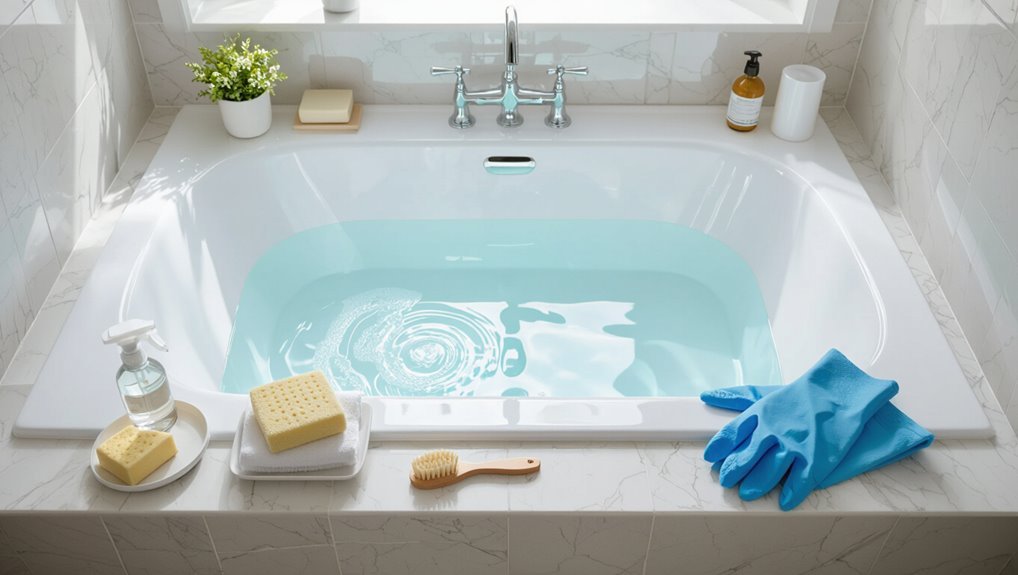
A refinished bathtub has a new surface applied—typically an acrylic, epoxy, or polymer coating—rather than a factory-original glaze.
These coatings have finite durability and are often covered by limited warranties that specify acceptable cleaners and care routines.
Using improper cleaners or abrasive tools can chip or discolor the finish and may void the warranty.
Materials and finishes used in bathtub refinishing
Refinished bathtubs consist of original substrates—usually cast iron, steel, acrylic, or fiberglass—coated with specialized primers and topcoats such as epoxy, urethane, or acrylic enamel to restore appearance and protect the surface.
Each coating varies in hardness, chemical resistance, and porosity, so readers searching for how to clean refinished bathtub should use nonabrasive cleaners, soft cloths, and pH-neutral solutions to avoid damage.
Common durability limits and warranties to consider
Many refinishing coatings last several years but their longevity depends on the original substrate, the type of primer and topcoat used, and how the tub is maintained.
Manufacturers and contractors may offer limited warranties covering adhesion or curing defects for a set period, often one to five years.
Warranty scope, exclusions, and required maintenance routines should be reviewed before hiring or cleaning to preserve coverage.
Risks of improper cleaning (chipping, discoloration, voided warranty)
Following warranty considerations, attention turns to how cleaning practices directly affect a refinished bathtub’s condition and any coverage that protects it.
Harsh abrasives, acidic cleaners, and metal scouring pads can chip or dull the new surface, causing permanent discoloration.
Damage from improper cleaning often voids warranties, leaving owners responsible for costly repairs or recoat work to restore appearance and protection.
Quick overview: Safe cleaning approach for a refinished bathtub
A refinished bathtub should be cleaned routinely—typically once a week—to prevent grime buildup without stressing the new surface.
Gentle, pH-neutral cleaners, soft cloths or non-scratch sponges, and mild household detergents are recommended.
Abrasive pads, strong acids or bleaches, and high heat should be avoided to preserve the finish.
Recommended frequency for routine cleaning
How often should a refinished bathtub be cleaned to maintain its finish and hygiene? Routine light cleaning is recommended weekly to remove soap scum and body oils. A more thorough mild-clean once monthly addresses buildup and grout. Immediate spot-cleaning after stains or harsh substances prevents damage. Adjust frequency for heavy use, pets, or hard water to preserve appearance and longevity.
Summary of safe cleaners and tools to use
Several gentle, nonabrasive cleaners and a few simple tools are sufficient to keep a refinished bathtub clean without risking the finish.
Use mild dish soap, pH-neutral bathroom cleaners, or diluted white vinegar for routine cleaning.
Soft microfiber cloths, non-scratching sponges, and a soft-bristled brush handle soap scum and grout.
A spray bottle, bucket, and squeegee complete the minimal toolkit.
What to avoid: abrasive tools, harsh chemicals, and heat
Avoid abrasive tools, harsh chemicals, and heat when maintaining a refinished bathtub because they can dull, chip, or chemically react with the new surface.
Do not use scouring pads, metal brushes, bleach baths, oven cleaners, or acidic descalers. Avoid steam cleaners and prolonged hot-water exposure.
Instead, opt for soft cloths, mild pH-neutral cleaners, and gentle rinsing to preserve finish and longevity.
Supplies and products you’ll need
A refinished bathtub should be cleaned with gentle, non-abrasive, pH-neutral cleaners to protect the new surface.
Soft tools—microfiber cloths, non-scratch sponges, and nylon brushes—are recommended to remove grime without causing damage.
Workers should use basic protective gear and guarantee good ventilation, with specialty stain or mold products reserved for persistent problems.
Gentle cleaners (non-abrasive, pH-neutral)
For routine maintenance of a refinished bathtub, non‑abrasive, pH‑neutral cleaners are the preferred choice because they remove soap scum and light stains without damaging the new surface.
- Mild liquid dish soap diluted with water for everyday cleaning.
- pH‑neutral bathroom sprays formulated for coated surfaces.
- Vinegar solution (diluted, tested on a small area) for mineral deposits.
Soft tools and accessories (microfiber, nylon brush, sponge)
After choosing a gentle, pH‑neutral cleaner, attention turns to the soft tools and accessories that safely apply and remove residue from a refinished bathtub.
Select nonabrasive microfiber cloths for wiping, a soft nylon brush for grout and textured areas, and a dense cellulose or nonabrasive sponge for rinsing and light scrubbing.
Use each tool only for its designated surface.
- Microfiber cloths
- Nylon brush
- Nonabrasive sponge
Protective gear and ventilation recommendations
Gloves, eye protection, and a respirator form the core of safety gear when cleaning a refinished bathtub.
Protective clothing and closed-toe shoes reduce skin exposure.
Guarantee strong ventilation—open windows and run an exhaust fan—when using cleaners.
- Nitrile gloves
- Goggles and N95 or P100 respirator
- Portable exhaust fan or window ventilation
Optional specialty products for stains and mold
Once safety gear and ventilation are in place, attention can shift to targeted products for stubborn stains and mold that standard cleaners may not remove.
Consider oxygen bleach for organic discoloration, enzymatic mold removers for biofilms, and nonabrasive mildew sprays formulated for refinished surfaces.
Test products in an inconspicuous area, follow manufacturer instructions, rinse thoroughly, and avoid abrasive scrubs or harsh solvents that could damage the finish.
Step-by-step cleaning procedure for normal maintenance
Begin by preparing the area and performing basic safety checks. Then rinse the tub to remove loose debris.
Apply the recommended cleaner and allow the proper dwell time before using a soft cloth or nonabrasive pad with gentle, circular strokes to lift soil.
Finish with a thorough rinse and towel-dry to prevent water spots.
Preparation: room setup and safety checks
Before cleaning, the room should be prepared to protect the refinished surface and secure safety: ventilate by opening a window or running an exhaust fan, remove loose items and textiles from around the tub, place non-slip mats or towels outside the tub to catch drips, and check that lighting is adequate for inspection.
Verify electrical outlets are dry and protected, wear gloves and eye protection, and guarantee stable footing.
Rinse and remove loose debris
Flush the refinished surface with lukewarm water to loosen soap scum and dust.
Use a gentle stream from the faucet or a hand shower, working methodically from top to drain.
Wipe away suspended debris with a soft microfiber cloth or non-abrasive sponge.
Rinse the cloth often and repeat until water runs clear.
Allow excess water to drain before applying cleaner.
Apply cleaner and dwell time guidance
Spray a pH-neutral, non-abrasive tub cleaner evenly over the rinsed surface, covering walls and floor but avoiding concentrated puddles.
Allow the cleaner to sit undisturbed for the manufacturer’s recommended dwell time—typically 5–10 minutes—to loosen soap scum and light stains.
Keep ventilation on and avoid inhalation.
Do not let cleaner dry completely; proceed promptly to the next step after dwell time expires.
Gentle scrubbing technique and motion
Using a soft, non-abrasive sponge or microfiber cloth, the cleaner should be worked in with gentle, overlapping strokes that follow the tub’s contours—start at the highest point and move downward to let loosened soil flow toward the drain.
Moderate pressure removes residue without damaging the finish. Circular motions target spots; linear strokes cover larger areas.
Rinse the sponge frequently to prevent grit reapplication.
Thorough rinsing and drying to prevent water spots
After scrubbing, thoroughly rinse the tub with warm water from the highest point downward so soap and loosened debris flow to the drain; continue until the water runs clear and no suds or film remain.
Then remove excess water with a soft, lint-free towel or microfiber cloth, wiping in consistent strokes.
Finish by airing the area or using a fan to guarantee complete drying and prevent mineral spots.
Removing specific problems without damaging the finish
Addressing common bathtub problems requires targeted techniques that remove residues without abrading or stripping the refinished surface.
Recommended approaches include gentle cleaners and nonabrasive tools for soap scum and oils, mild acidic or chelating agents for mineral buildup, and controlled whitening or topical restorers for light discoloration.
For mold and mildew in caulk and grout, use EPA-registered cleaners or diluted bleach applied carefully, then repair or replace compromised sealant and improve ventilation to prevent recurrence.
Light soap scum and body oils: method and product choices
Light soap scum and body oils can usually be removed without harming a refinished bathtub by choosing mild cleaners and gentle tools.
Use a diluted pH-neutral cleaner or dish soap, apply with a soft sponge or microfiber cloth, rinse thoroughly, and dry with a soft towel.
Avoid abrasive pads, bleach, and harsh solvents.
Repeat weekly or as needed to maintain finish and hygiene.
Hard water stains and mineral deposits: safe treatments
If mild soap scum was handled with gentle cleaners, tougher mineral buildup requires different tactics to protect a refinished surface.
Use a 50/50 white vinegar and water soak applied briefly, followed by rinsing.
For stubborn spots, a paste of baking soda and water gently rubbed with a soft cloth removes deposits.
Avoid abrasives, harsh acids, and metal scouring pads that etch or dull the finish.
Mild discoloration and yellowing: gradual restoration steps
Mild discoloration and yellowing on a refinished bathtub often develop gradually from soap, body oils, and UV exposure, and can usually be improved without aggressive methods; the key is to use gentle, nonabrasive cleaners and stepwise treatments that test and preserve the finish.
Start with diluted dish soap and warm water, progress to a pH-neutral cleaner, spot-test dilute hydrogen peroxide, rinse thoroughly, and dry.
Mold and mildew in caulk and grout: safe removal and prevention
Small patches of mold and mildew commonly appear along a refinished bathtub’s caulk and grout, where moisture and poor ventilation allow spores to thrive.
Use a diluted bleach solution or hydrogen peroxide applied with a soft brush, avoiding excess liquid on the finish. Rinse thoroughly, dry, and improve ventilation.
Replace failing caulk with mildew-resistant silicone and clean regularly to prevent recurrence.
Deep cleaning and periodic maintenance
The discussion distinguishes routine cleaning from deep cleaning by frequency and the presence of stubborn buildup or staining.
It then outlines step-by-step deep-cleaning methods that protect the refinish, including recommended gentle cleaners, soft tools, and safe contact times.
Finally, it reviews reconditioning and polishing products that restore luster and extend the finish’s life, with guidance on when and how to apply them.
When to perform a deep clean vs. routine clean
Although regular wiping and gentle cleaners suffice for day-to-day upkeep, a refinished bathtub requires scheduled deep cleaning when signs of soil, soap scum buildup, or surface dulling appear, and after any heavy use that might introduce oils, hair, or grime.
Routine cleaning can be weekly or biweekly; deep cleaning is warranted monthly, quarterly, or immediately after heavy soiling, depending on frequency of use.
Steps for deep cleaning without damaging the refinish
Begin by gathering only nonabrasive tools and pH-neutral or mild household cleaners approved for refinished surfaces—soft microfiber cloths, a soft-bristled brush, a gentle liquid dish soap or a manufacturer-recommended cleaner, and a spray bottle of diluted white vinegar if needed for mineral deposits.
Rinse surface, apply cleaner, let dwell briefly, agitate gently, rinse thoroughly, towel-dry.
Repeat stubborn spots; avoid bleach, abrasives, and scouring pads.
Reconditioning and polishing products for a longer-lasting shine
Restore and protect a refinished bathtub’s luster with specialized reconditioning and polishing products designed for delicate coated surfaces.
Use mild, nonabrasive polishes and restorative creams recommended by the refinish manufacturer. Apply sparingly with a soft cloth, buffing in circular motions.
Follow curing intervals and frequency guidelines—typically every 3–12 months—to maintain gloss, cover micro-scratches, and extend the finish’s lifespan.
What to avoid: actions and products that damage refinished tubs
The refinished surface should be protected from abrasive powders, scouring pads, and metal cleaners that can scratch or strip the coating.
Strong acids, concentrated bleach, and solvent-based products should also be avoided because they can chemically damage or discolor the finish.
High-heat tools, steam cleaners, and power washers pose a risk of warping or lifting the refinish and are thus not recommended.
Abrasive powders, scouring pads, and metal cleaners
Avoid abrasive powders, scouring pads, and metal cleaners on a refinished bathtub, as their harsh particles and chemicals can quickly scratch, dull, or strip the new coating.
Use only soft microfiber cloths or nonabrasive sponges with mild, pH-neutral cleaners. Wipe gently, rinse thoroughly, and dry.
Immediately stop using any product that leaves visible scratches or matte spots to preserve finish longevity.
Strong acids, bleach concentrates, and solvent-based products
Several common household chemicals — strong acids, concentrated bleach, and solvent-based cleaners — can rapidly degrade a refinished bathtub’s surface by etching, discoloring, or dissolving the coating.
Avoid drain cleaners, muriatic acid, bleach concentrates, paint thinners, nail polish remover, and degreasers with solvents.
Use mild, pH-neutral cleaners and manufacturer-approved products to preserve finish integrity and warranty coverage; rinse thoroughly after cleaning.
High-heat tools, steam cleaners, and power washers
Keep high-heat tools, steam cleaners, and power washers away from refinished bathtubs, as intense heat and high-pressure water can soften, blister, or strip the coating.
Avoid steam mops, heat guns, pressurized washers, and industrial steam cleaners.
Use gentle warm water, soft cloths, and mild detergents.
If stubborn grime persists, consult the refinisher for approved methods to prevent irreversible surface damage.
Troubleshooting common issues after cleaning
After cleaning, minor problems can still appear and require targeted responses.
Small scratches or surface dulling may be improved with gentle polishing or temporary repair kits, while persistent stains often call for stronger chemical treatments or consultation with a professional refinisher.
If the finish peels or chips, the condition should be evaluated to determine whether spot repairs are possible or a full refinishing is necessary.
Small scratches and surface dulling: temporary fixes
Light scratches and a slightly dulled finish are common after refinishing and routine cleaning; they can usually be improved quickly without redoing the entire surface.
For minor scuffs, gently buff with a non-abrasive pad and a mild polishing compound designed for refinished tubs.
Follow with a soft microfiber wipe and a thin coat of recommended polish or paste wax to restore sheen temporarily.
Stains that won’t budge: escalation steps (professional options)
When persistent stains resist consumer-safe cleaners and gentle polishing, professional escalation becomes the practical next step.
Trained technicians can assess whether the discoloration is surface-level, chemical etching, or substrate damage and recommend targeted remedies such as deep-cleaning steam or low-pressure abrasive treatments, re-glazing, or partial resurfacing to restore appearance and prevent further degradation.
Technicians may also perform color-matching, stain testing, and document repairs for warranty considerations.
If finish peels or chips: when to repair or refinish again
How should one decide whether to spot-repair chips and peeling or pursue a full refinish?
Assess extent: isolated small chips and surface peeling can be patched with repair kits.
Widespread flaking, multiple repairs, adhesion failure, or underlying substrate damage warrant a full refinish.
Consider longevity, cost, time, and aesthetics; consult a pro if unsure or if previous refinish failed prematurely.
Preventive habits to extend the life of a refinished bathtub
Regular daily and weekly habits—rinsing the surface after use, wiping dry, and using mild cleaners—help minimize soap scum and mineral buildup on a refinished bathtub.
Choosing bath products with neutral pH, avoiding abrasive tools, and monitoring water hardness reduce premature wear.
Periodic seasonal inspections for chips, soft spots, or persistent stains indicate when to perform maintenance or call a professional.
Daily and weekly habits to minimize buildup
A few simple habits practiced daily and weekly can greatly reduce soap scum, mineral deposits, and grime on a refinished bathtub.
- Rinse and wipe the surface after each use to remove residues and prevent buildup.
- Use a soft microfiber cloth or squeegee weekly to clear water and soap film.
- Clean drain and overflow areas weekly to avoid trapped grime and odors.
Best practices for bath products and water chemistry
Alongside rinsing and wiping, selecting appropriate bath products and managing water chemistry considerably reduces surface wear on a refinished tub.
Use pH-neutral, nonabrasive cleansers and silicone-free soaps; avoid oil-based bath oils and harsh detergents.
Install a water softener or conditioner if hard water is present to prevent mineral etching.
Rinse thoroughly after use and dry to limit residue and prolong the finish.
Seasonal checks and when to call a pro
When should a refinished bathtub be inspected more closely?
Seasonal inspections—spring and fall—should check for chips, peeling, discoloration, caulk gaps, and drainage issues.
Minor damage warrants prompt cleaning and touch-up; persistent stains, widespread cracking, soft spots, or recurring mold indicate professional assessment.
A pro can test adhesion, repair substrate damage, or recommend full refinishing to guarantee longevity and safety.
Product comparison for recommended cleaners and tools
A concise comparison helps readers choose between budget options and professional-grade products based on stain type and surface sensitivity. The table below offers a quick reference for safe choices targeting common problems without risking the refinished finish. This approach clarifies trade-offs in cost, effectiveness, and surface safety.
| Problem | Recommended product/type |
|---|---|
| Light soap scum | Mild dish soap or neutral pH cleaner |
| Tough stains | Non-abrasive heavy-duty cleaner (check label) |
| Mold/mildew | Oxygen bleach solution (non-chlorine) |
| Rust spots | Rust remover labeled safe for refinished surfaces |
| Regular maintenance | Microfiber cloth and pH-neutral daily spray |
Budget options vs. professional-grade products
Choosing between budget cleaners and professional-grade products hinges on trade-offs in concentration, residue control, and surface compatibility.
Cheaper options often remove surface grime effectively but may require more elbow grease and risk buildup.
On the other hand, professional formulations typically offer stronger stain lifting, pH-balanced chemistry, and clearer instructions for refinished surfaces.
Budget buys suit light maintenance; professionals reduce contact time, lower damage risk, and often cost less long term.
Quick reference: safe choices for specific problems
Several targeted cleaners and tools are recommended for specific refinished-bathtub issues, each selected for effectiveness and surface safety.
For soap scum: nonabrasive gel cleaner (pH-neutral).
For disinfecting: diluted hydrogen peroxide or isopropyl alcohol.
For mildew: enzyme mildew remover.
For hard water: vinegar diluted with water.
Tools: microfiber cloth, soft nylon brush, and nonabrasive sponge.
Avoid bleach, abrasive powders, and metal scrubbers.
Quick reference checklist for cleaning a refinished bathtub
A concise checklist helps guarantee a refinished bathtub is cleaned safely and effectively without risking damage.
The list that follows separates tasks into preparatory actions, the cleaning sequence itself, and steps to protect the finish afterward.
Refer to each section as needed to maintain a durable, attractive surface.
- Pre-clean checklist
- Cleaning steps checklist
- Post-clean care checklist
Pre-clean checklist
Before any cleaning begins, gather the necessary supplies and inspect the tub and surrounding area to confirm the finish is intact and free of loose debris.
Verify ventilation, remove mats and items, test a small inconspicuous spot with the chosen cleaner, and guarantee appropriate gloves and nonabrasive tools are available.
Note any chips, soft spots, or strong odors before proceeding.
Cleaning steps checklist
Begin cleaning by following a concise, step-by-step checklist that guarantees the refinished surface is protected while stains and residues are removed efficiently.
Rinse surface, apply pH-neutral cleaner, let dwell per instructions, gently scrub with nonabrasive pad, rinse thoroughly, spot-treat stubborn marks, dry with soft microfiber, inspect for residue.
Repeat only as needed; avoid harsh abrasives or acidic cleaners.
Post-clean care checklist
When cleaning is complete, follow a concise post-clean care checklist to preserve the refinished surface and prevent premature wear:
Rinse thoroughly, dry with a soft cloth, and allow full air-dry before use.
Reapply manufacturer-recommended protectant if advised.
Avoid abrasive tools, harsh chemicals, and heavy impacts.
Maintain weekly gentle cleaning, address stains promptly, ventilate bathroom, and inspect for chips or dulling regularly.
Conclusion
In conclusion, caring for a refinished bathtub requires gentle cleaners, soft tools, and consistent habits to keep the surface looking its best. Following the step-by-step routine prevents damage and addresses stains before they worsen. When tougher issues arise, targeted, nonabrasive treatments usually do the trick; if not, consult the pro who did the refinishing. With steady attention and the right products, the tub will stay in top condition—an ounce of prevention goes a long way.