
How to Clean Quartz Sinks Safely: Step-by-Step Guide for Stain-Free Shine
To clean quartz sinks safely and maintain their shine, follow this simple guide: Rinse away debris daily, wash with mild dish soap and a soft cloth, and dry the surface to prevent mineral spots. For weekly cleaning, use a pH-neutral cleaner or a baking soda paste for tougher stains; diluted vinegar can help with deposits but should be rinsed off quickly. Avoid abrasive cleaners, bleach, and high heat to protect the sink’s finish. Consistently following these steps will keep your quartz sink looking pristine. Further details on targeted stain removal and repairs are available for tougher issues.
What a Quartz Sink Is and Why It Needs Special Care
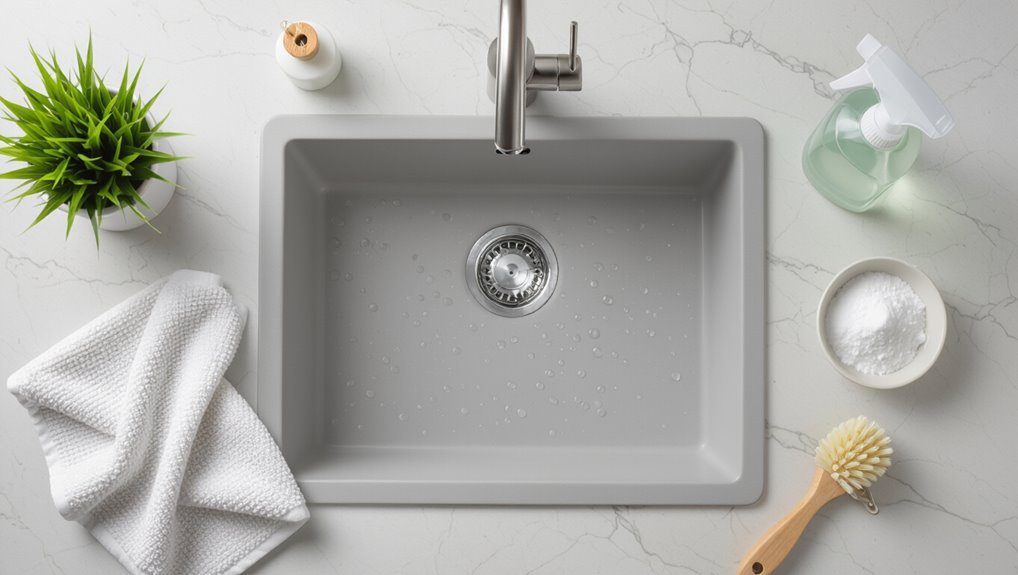
Quartz composite sinks combine natural quartz stone with resin binders to create a hard, non-porous surface that still requires care to maintain its appearance.
Common causes of stains and damage include prolonged contact with harsh chemicals, abrasive cleaners, and high heat.
Proper cleaning and maintenance preserve the sink’s color and finish and help keep any manufacturer warranty intact.
Composition and properties of quartz composite sinks
A quartz composite sink combines roughly 90–95% ground natural quartz with a small percentage of polymer resins and pigments, producing a dense, nonporous material that mimics stone while offering enhanced durability.
Its hardness resists scratches and heat; the resin binds particles, improving impact resistance and color uniformity.
Understanding these traits informs how to clean quartz sinks without abrasive damage.
Common causes of stains and damage on quartz surfaces
Because quartz composite combines natural stone with polymer resins, certain everyday substances and actions can leave stains or cause damage if not addressed properly.
Common culprits include acidic foods (lemon, tomato), oils, wine, and strongly pigmented liquids.
Abrasive scrubbing, harsh chemicals, high heat, and prolonged standing water also compromise sealants and finish, increasing discoloration, etching, or surface dulling over time.
How proper cleaning preserves color, finish, and warranty
Maintaining regular, gentle cleaning routines helps preserve a quartz sink’s color and finish while protecting manufacturer warranties.
Routine care prevents abrasive wear, chemical etching, and staining that can void warranty claims. Following manufacturer-recommended cleaners and techniques maintains surface integrity, prolongs aesthetic appearance, and documents proper maintenance.
Promptly addressing spills and avoiding harsh agents reduces repair needs and preserves resale value.
Quick Answer Safe Everyday Cleaning Method
A simple daily routine is described: rinse the sink, wipe with a soft cloth or nonabrasive sponge, and dry to prevent water spots.
Safe cleaners include mild dish soap, diluted vinegar for mineral deposits, or a gentle, nonabrasive quartz-safe cleaner, applied with soft tools.
Abrasive pads, harsh acids, and bleach are avoided to protect the surface.
One-sentence recommended routine
Wipe the quartz sink daily with a soft cloth or sponge and warm soapy water, then rinse and dry to prevent mineral buildup and water spots.
For routine care, use gentle circular motions, address spills promptly, avoid abrasive scrubbing, and dry fixtures to maintain finish; perform a weekly quick clean to remove residue and inspect for stains, treating any remaining spots per manufacturer guidance.
Overview of safe cleaning agents and tools
Following the daily routine, select mild, nonabrasive cleaners and soft tools to protect the quartz surface during everyday cleaning.
Use pH-neutral dish soap or a gentle all-purpose cleaner diluted with water. Apply with a microfiber cloth or soft sponge; avoid abrasive pads, bleach, or strong acids.
For tougher spots, a paste of baking soda and water applied gently then rinsed preserves finish and prevents damage.
Tools and Supplies You’ll Need
Recommended supplies include pH-neutral cleaners or mild dish soap for routine washing, with baking soda and occasional diluted vinegar as safe household options when used correctly.
Avoid abrasive pads, metal scouring tools, and harsh chemicals that can damage the quartz surface.
For stubborn stains, keep a manufacturer-approved stain-removal product on hand and use it only according to instructions and after testing in an inconspicuous area.
Recommended cleaning solutions (pH-neutral cleaners, mild dish soap)
Gather basic, gentle cleaners and a few simple tools to care for a quartz sink without damaging its surface.
pH-neutral cleaners and mild dish soap are ideal because they remove everyday grime while preserving the resin and silica bonds; avoid acidic, alkaline, or bleach-based products that can dull or etch the finish.
Use diluted solutions, soft cloths or nonabrasive sponges, and rinse thoroughly.
Household items that are safe to use (baking soda, vinegar when to use)
After choosing gentle, pH-neutral cleaners and soft tools, attention can turn to common household items that safely supplement regular care.
Baking soda serves as a mild, nonabrasive scrub for stubborn spots when mixed with water into a paste.
White vinegar is useful diluted for mineral deposits but should be rinsed promptly and used sparingly to avoid prolonged acid exposure to quartz surfaces.
Tools to avoid (abrasive pads, harsh chemicals, metal scouring)
Avoid using abrasive pads, harsh chemicals, or metal scouring tools on quartz sinks, as they can scratch the surface, dull the finish, or damage the resin binder.
Concentrated bleaches, oven cleaners, and acid-based descalers should be excluded. Steel wool and wire brushes are prohibited.
Instead, choose soft cloths, nonabrasive sponges, and pH-neutral cleaners to preserve appearance and longevity.
Optional stain-removal products and when to choose them
Having ruled out abrasive tools and harsh chemicals, consideration can turn to targeted stain-removal products that are safe for quartz.
Choose pH-neutral cleaners, mild non-abrasive stain removers, or poultices formulated for engineered stone. Use them sparingly for persistent stains, following manufacturer instructions and spot-testing first.
Avoid bleach, ammonia, or acidic mixtures. Rinse thoroughly and dry to restore finish.
Step-by-Step Daily and Weekly Cleaning Routine
A simple routine keeps a quartz sink looking its best and prevents buildup. The following points outline quick daily care, a focused weekly deep clean, and the final drying and buffing steps for a streak-free finish. Each step uses common supplies and takes only minutes when done consistently.
- Quick daily rinse and wipe-down with mild soap and a soft cloth
- Weekly deep-clean using nonabrasive cleaner and gentle scrubbing
- Thorough drying and buffing with a microfiber cloth for a streak-free shine
Daily rinse and wipe-down steps
Each day, a quick rinse and wipe-down prevents buildup and keeps the quartz sink looking its best.
Rinse with warm water to remove debris, then apply a few drops of mild dish soap.
Use a soft sponge or microfiber cloth to wipe surfaces, following the grain.
Rinse thoroughly and dry with a clean cloth to avoid water spots and mineral residue.
Weekly deep-clean procedure
Schedule a weekly deep clean to remove stubborn grime and restore the sink’s finish.
Begin by clearing debris, then apply a pH-neutral quartz cleaner or mild dish soap with warm water.
Gently scrub with a non-abrasive sponge and soft brush for seams and drains.
Rinse thoroughly, inspect for stains, repeat targeted treatment if needed, and remove all residues to protect the surface.
Drying and buffing for a streak-free shine
Finish by thoroughly drying and buffing the quartz sink to prevent water spots and restore its natural sheen.
Use a soft, lint-free microfiber cloth to absorb remaining moisture, then apply light circular motions to polish.
For stubborn streaks, mist with distilled water or a 50/50 vinegar solution, then buff dry.
Avoid abrasive pads or harsh chemicals that dull the finish; inspect for even shine.
Removing Specific Stains: Step-by-Step Instructions
Specific stain types require targeted steps to remove them without damaging the quartz surface.
The following list highlights key stain categories and the appropriate approach for each. Clear, gentle methods are emphasized to preserve finish and longevity.
- Water spots and mineral deposits; coffee, tea, and wine stains; grease and oil residues
- Rust and metal marks
- Hard or set-in stains treated with a baking soda paste
Water spots and mineral deposits
Water spots and mineral deposits form when hard water evaporates, leaving behind concentrated salts and mineral films that dull quartz sinks and can etch finishes if left untreated.
To remove them, apply white vinegar diluted 1:1, let sit minutes, gently scrub with a soft cloth or nonabrasive pad, rinse thoroughly, and dry.
Repeat stubborn areas; finish by buffing dry to restore shine.
Coffee, tea, and wine stains
Treat coffee, tea, and wine stains promptly, as their tannins can penetrate the quartz surface seal over time; immediate blotting followed by a gentle cleaning routine prevents permanent discoloration.
For fresh stains, blot, rinse with warm water, and apply a mild nonabrasive cleaner; for set stains, use a paste of baking soda and water, let sit briefly, gently scrub with a soft cloth, then rinse and dry.
Grease and oil residues
Address grease and oil residues promptly to prevent them from seeping into the sink’s sealant and leaving dull, sticky spots.
For fresh spills, blot excess with paper towels, then apply a mild dish soap solution and scrub gently with a soft sponge.
For stubborn residues, use a paste of baking soda and water, allow a few minutes, then rinse and dry to restore shine.
Rust and metal marks
After removing grease, attention should turn to rust and metal marks, which often result from prolonged contact with iron utensils or mineral-laden water.
Apply a diluted citric acid or commercial rust remover formulated for quartz, following label directions. Test inconspicuously, dwell briefly, then rinse thoroughly.
Repeat sparingly; avoid abrasive pads. Dry to prevent recurrence and protect with a nonabrasive sealant if recommended.
Hard or set-in stains with baking soda paste
For hard or set-in stains, a gentle baking soda paste offers an effective, low-risk option: mix baking soda with enough water to form a thick paste, apply it directly to the stain, let it sit for 10–15 minutes, then gently rub with a soft cloth or nonabrasive sponge before rinsing and drying.
Repeat if needed, avoiding abrasive scrubbing. Pat dry and inspect; repeat once more for persistent spots.
Disinfecting safely without damaging the finish
Once baked‑on spots have been lifted with a baking soda paste, attention turns to disinfecting the sink without harming the quartz finish.
Use a diluted 3% hydrogen peroxide solution or mild dish soap with warm water. Apply gently with a soft cloth, let peroxide sit one to two minutes, rinse thoroughly, and dry.
Avoid bleach, abrasive cleaners, and scrubbing pads that dull or etch.
Safe Use of Common Household Cleaners and Chemicals
Guidance on common cleaners helps protect the quartz surface and any surrounding seals.
It should explain when diluted vinegar may be acceptable and when acidic solutions should be avoided, warn against bleach, ammonia, and other harsh chemicals while offering safer alternatives, and emphasize checking commercial product labels for “quartz-safe” claims and harmful ingredients.
Clear instructions reduce the risk of staining, etching, or damaging finish and adhesives.
When vinegar is safe and when to avoid it
Although vinegar is a popular, natural cleaner, it is only safe for quartz sinks in diluted form and for brief, light cleaning tasks; undiluted or prolonged exposure can damage the resin binder and dull the finish.
Use a mild 50/50 water solution sparingly for mineral deposits or mild spots, rinse quickly, and never leave it to soak.
Test on an inconspicuous area first.
Bleach, ammonia, and harsh chemicals: risks and alternatives
Because quartz countertops and sinks rely on a resin binder and factory-applied finish, bleach, ammonia, and other aggressive chemicals pose real risks of discoloration, surface etching, and gradual breakdown of the matrix.
Instead, mild dish soap, pH-neutral cleaners, or a baking soda paste for gentle scrubbing are recommended.
Rinse thoroughly and dry; test any stronger product on an inconspicuous area first.
Using commercial quartz-safe cleaners labels and ingredients to check
How can a shopper quickly determine whether a commercial cleaner is safe for quartz sinks?
Labels should state “quartz-safe,” “non-abrasive,” or list engineered stone.
Check ingredient lists for absence of bleach, ammonia, acids (muriatic, hydrochloric), and strong solvents.
Look for pH-neutral or mild alkaline formulations and EPA Safer Choice or manufacturer endorsement.
Test in an inconspicuous spot before full use.
Tools and Techniques to Avoid Damage
Careful selection and use of tools can prevent common quartz sink damage from abrasive pads, powders, and sharp implements.
Avoid placing hot pots directly on the surface to reduce thermal shock and use sink mats or protective accessories to cushion impacts.
Clear guidelines on safe scrubbing, lifting heavy items, and positioning protective gear will minimize accidental scratches, chips, and heat-related cracks.
Abrasive scrubbing pads and powders
Abrasive scrubbing pads and powdered cleansers present a high risk of scratching the surface and dulling the finish of quartz sinks. They should be avoided; instead, use soft microfiber cloths, nonabrasive sponges, and pH-neutral liquid cleaners.
If stubborn residues persist, apply a paste of baking soda sparingly and test in an inconspicuous spot first to prevent surface abrasion or loss of shine.
High-heat items and hot pots thermal shock risks
After warning against abrasive pads and powders, attention turns to another common hazard: placing high-heat cookware directly on quartz sinks.
Extreme temperature changes can cause thermal shock, leading to cracking, crazing, or adhesive failure.
Use trivets, heat pads, or cooling racks to protect surfaces. Allow hot pots to cool on insulated surfaces before setting them in or near the sink.
Sharp objects and impact damage prevention
Many household tasks expose quartz sinks to sharp edges and sudden impacts that can chip, scratch, or fracture the surface.
Users should handle knives, heavy cookware, and tools away from the basin, lift rather than drag items, and avoid dropping objects.
Promptly remove any abrasive debris that could cause micro-scratches.
Inspect sink edges for chips and address small damage with manufacturer-recommended repair kits.
Proper use of sink mats and protective accessories
Protective accessories provide a practical layer of defense alongside careful handling to reduce chips, scratches, and impact damage.
Sink mats, grid racks, and rubber bumpers cushion dishware, distribute weight, and prevent direct contact with hard surfaces. Select nonabrasive, well-draining products sized to the basin.
Clean accessories regularly to avoid trapped debris that could abrade quartz, and replace worn items promptly.
Maintenance Tips to Keep Your Quartz Sink Looking New
Practical maintenance extends the lifespan and appearance of a quartz sink through simple daily habits that reduce stains and scratches, such as using soft cloths, avoiding abrasive cleaners, and clearing standing water promptly.
The necessity and frequency of routine sealing will be examined to determine whether specific quartz formulations or heavy-use conditions benefit from occasional resealing.
A seasonal deep-maintenance checklist will outline targeted tasks—gentle scouring, stain treatment, and hardware inspection—to keep the sink looking new.
Preventive habits to reduce stains and scratches
A few simple daily habits can greatly reduce stains and scratches on a quartz sink, preserving its finish and extending its life.
Wipe spills promptly, especially acidic or colored liquids. Use a soft cloth or sponge and nonabrasive cleaner. Avoid harsh scrubbing pads and abrasive powders.
Place a silicone mat or sink grid to protect from pots and utensils. Rinse and dry after use.
Routine sealing is it necessary for quartz sinks?
Alongside daily care habits that minimize stains and scratches, homeowners often wonder whether routine sealing is required for quartz sinks.
Manufacturers typically state engineered quartz is nonporous and does not need periodic sealing.
Occasional use of manufacturer-recommended, nonabrasive cleaners preserves finish.
If sealant was applied by installer or damage exposes resin, consult the maker before resealing to avoid voiding warranties.
Seasonal deep maintenance checklist
Seasonal deep maintenance organizes targeted tasks that remove buildup, address minor damage, and restore the surface’s luster.
Inspect drains, edges, and seams for grime or mold; clean with nonabrasive cleaner and soft brush.
Remove mineral deposits with diluted vinegar, rinse thoroughly, and dry.
Polished areas may be buffed gently.
Check for chips or cracks and schedule professional repair if needed to prevent deterioration.
Troubleshooting Common Problems
Common issues with quartz sinks include a dull finish after cleaning, stubborn discoloration, and occasional chips or hairline cracks.
Guidance covers methods to restore shine, signs that indicate a professional assessment is needed for persistent stains, and do-it-yourself repairs plus temporary fixes for minor damage.
Readers are encouraged to match solutions to the specific problem and severity to protect the sink’s surface.
Dull finish after cleaning how to restore shine
Restore the sink’s gloss by identifying whether the dullness stems from mineral buildup, residue from cleaners, or light surface abrasion.
For mineral deposits, apply a diluted vinegar solution briefly, rinse, and dry.
If residue remains, wipe with a mild, pH-neutral cleaner and soft cloth.
For light abrasion, use a non-abrasive polishing cream made for quartz, buffing gently in circular motions.
Persistent discoloration when to call a professional
When should a homeowner call a professional for persistent discoloration of a quartz sink?
If stains resist approved cleaners, bleach-free poultices, and gentle scrubbing after multiple attempts, a professional assessment is warranted.
Also call a pro when discoloration appears widespread, deep, or accompanied by surface deterioration.
Technicians can identify underlying causes, recommend color-matching restoration, or advise replacement if staining indicates structural compromise.
Small chips and cracks: repair options and temporary fixes
Address small chips and hairline cracks promptly to prevent moisture intrusion and further damage.
For minor chips, use a manufacturer-approved epoxy or quartz repair kit, matching color and following cure times.
Hairline cracks may be stabilized with clear epoxy as a temporary measure.
Significant damage requires professional resurfacing or replacement to restore structural integrity and warranty compliance.
Comparison of Cleaning Approaches
A clear comparison helps users choose between homemade remedies and commercial quartz cleaners while weighing abrasive against non‑abrasive techniques. The following table summarizes key trade‑offs to guide safe, effective cleaning choices. Practical examples and recommended precautions follow in the next section.
| Method type | Key advantage | Main drawback |
|---|---|---|
| Homemade cleaner (e.g., vinegar mix) | Low cost, readily available | May damage finish if acidic or overused |
| Commercial quartz cleaner | Formulated for quartz, often pH-balanced | Higher cost, variable quality |
| Abrasive method | Removes stubborn stains quickly | Can scratch or dull surface |
| Non‑abrasive method | Gentle preservation of finish | May require more effort/time |
Homemade solutions vs. commercial quartz cleaners
Numerous homeowners weigh homemade solutions against commercial quartz cleaners to balance cost, convenience, and surface protection.
Homemade mixes—mild dish soap, diluted vinegar sparingly, or baking soda paste—offer affordability and quick stain removal for everyday grime.
Commercial quartz cleaners provide pH-balanced formulas, manufacturer approval, and additives for streak-free shine and protection.
Choice depends on stain severity, warranty considerations, and preference for certified products.
Pros and cons of abrasive vs. non-abrasive methods
Many homeowners must choose between abrasive and non-abrasive cleaning methods for quartz sinks, weighing the trade-offs of effectiveness versus surface safety.
Abrasive pads and powders remove stubborn stains quickly but risk dulling or scratching resin-rich surfaces.
Non-abrasive cleaners and soft cloths preserve finish and color but may require more effort and repeated applications for tough grime.
Choose based on stain severity and manufacturer guidance.
Quick Reference Cheat Sheet
A concise cheat sheet summarizes the essential dos and don’ts for everyday quartz sink care and provides immediate steps for handling spills.
It equips readers with quick actions to minimize staining and prevent damage. The following highlights the most critical points for fast reference.
- Do: Wipe spills promptly with a soft cloth and mild soap; rinse and dry.
- Don’t: Use abrasive pads, harsh chemicals, or bleach on the surface.
- Fast response: For oil or dye spills, blot, apply a gentle cleaner, then rinse and dry immediately.
Dos and Don’ts summary
This quick-reference cheat sheet lists clear dos and don’ts for maintaining quartz sinks, highlighting safe cleaning methods, substances to avoid, and routine precautions to prevent damage.
Do use mild pH-neutral cleaners, soft cloths, and gentle scrubbing; rinse and dry after use.
Don’t use bleach, abrasive pads, high-heat tools, or harsh acids; avoid prolonged standing water and cutting directly on the sink.
Fast stain-response guide (what to do immediately)
Following the dos and don’ts, a fast stain-response guide gives immediate steps to limit damage when spills occur.
Blot liquids—do not rub. Rinse with lukewarm water.
Apply a mild dish soap solution, gently wipe with a soft cloth.
For greasy spots, use isopropyl alcohol sparingly.
For pigment stains, soak with a 1:1 baking soda paste briefly. Rinse and dry.
When to Seek Professional Restoration
Visible deep scratches, chips, persistent stains, or structural damage indicate the sink may require professional repair or refinishing.
Professionals typically assess damage, recommend repair or resurfacing options, and carry out polishing, patching, or full refinishing.
Expect a written estimate outlining the scope of work, timeline, and costs, which commonly range from minor repairs to several hundred dollars for full restoration.
Indicators your sink needs professional repair or refinishing
When should a quartz sink be left to a professional rather than treated with household care?
Deep chips, cracks compromising structure, large or recurrent stains resistant to proper cleaning, extensive surface pitting or erosion, and persistent color fading indicate professional intervention.
Also seek help if repairs require structural bonding, color matching, or refinishing beyond DIY tools to guarantee durability, warranty compliance, and aesthetic consistency.
What to expect from professional services and typical costs
A professional restoration typically begins with a detailed assessment of the sink’s condition, followed by targeted services such as color-matched chip repair, structural bonding for cracks, surface sanding and polishing, and application of protective sealants or coatings to restore appearance and durability.
Costs vary by damage and region: minor repairs often run $100–$300, refinishing or extensive restoration $300–$900, with warranties and cleanup included.
Conclusion
After an elegant sermon on gentleness, the quartz sink—fragile only in homeowners’ imaginations—remains untroubled by harsh rites. Daily soap and a soft cloth suffice; stubborn scuffs retreat to patient, measured effort. Ironically, the fuss over miracle cures usually accelerates damage, while modest care preserves the surface’s luster. In short: reverence for simplicity outperforms heroic chemistry, and the sink, indifferent to drama, rewards quiet consistency with lasting shine.