How to Protect PEX Outside: Essential Methods to Prevent Freezing, UV Damage, and Corrosion
To effectively protect outdoor PEX from freezing, UV damage, and corrosion, insulation, heat tracing, and sunlight shielding are essential. Use closed-cell foam insulation, removable valve covers, and self-regulating heat tape to minimize freeze risk. To prevent UV degradation, apply UV-resistant jacketing or reflective wraps, and consider routing the pipes under eaves. Isolate metal fittings with dielectric unions or opt for stainless or brass hardware to combat corrosion. Additionally, ensure proper supports for thermal expansion and conduct pressure tests before burying the pipes. For more detailed information on materials, installation techniques, and maintenance, please refer to the following sections.
Protecting PEX Pipes Outdoors Quick Overview and Immediate Recommendations
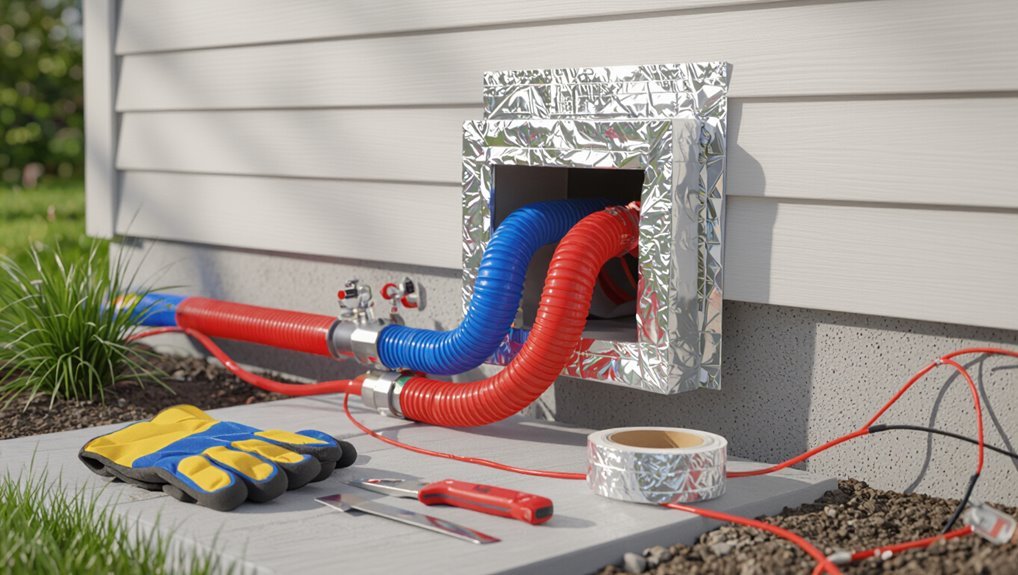
A concise checklist highlights winterizing steps, UV shielding, and corrosion prevention for exposed PEX.
Simple DIY measures—insulation, UV tape, and regular inspections—cover most routine risks, while complex routing, buried lines, or suspected damage warrants a professional.
The following recommendations prioritize immediate actions and clear criteria for when to call an expert.
Rapid checklist for winter, sun, and corrosion protection
Begin by inspecting exposed PEX runs and noting sections most vulnerable to freezing, UV exposure, and galvanic contact.
For clear guidance on how to protect PEX outside, follow a concise checklist to prioritize fixes and materials.
- Insulate with closed-cell foam and heat tape where needed.
- Wrap with UV-resistant tape or conduit.
- Apply dielectric fittings or isolators at metal joins.
- Secure and slope lines to avoid standing water.
When to call a professional vs. DIY
After completing the rapid checklist for insulation, UV protection, and galvanic isolation, homeowners must decide which remaining tasks suit DIY skills and which require a professional.
Simple actions—adding foam sleeves, weatherproof tape, and external covers—are reasonable for competent DIYers.
Complex issues—sustained leaks, buried pipe repairs, pressure irregularities, electrical heat-trace installation, or unclear corrosion—warrant licensed plumbers or electricians for safety and code compliance.
How PEX Performs Outdoors Key Properties to Know
PEX exhibits variable resistance to freezing, ultraviolet exposure, and common chemicals, which influences its suitability for outdoor runs.
Service temperature and pressure ratings differ by type—PEX-A, PEX-B, and PEX-C—so selection should match expected environmental and system conditions.
Typical outdoor failure modes include cracking from freeze damage, embrittlement or surface degradation from UV, and fittings or joints failing under thermal cycling or chemical attack.
PEX resistance to freezing, UV, and chemicals
When exposed outdoors, cross-linked polyethylene (PEX) exhibits specific strengths and limitations regarding freezing, ultraviolet (UV) light, and chemical exposure that determine its suitability and required precautions for exterior installations.
PEX resists moderate freeze-induced cracking when insulated and allowed to expand, but prolonged UV degrades polymer integrity.
Chemical resistance is good to many common fluids, though solvents, fuels, and strong oxidizers can cause swelling or embrittlement.
Temperature and pressure limits for common PEX types (PEX-A, B, C)
Different cross-linked polyethylene formulations—commonly labeled A, B, and C—have distinct temperature and pressure ratings that affect outdoor performance and allowable service conditions. PEX-A tolerates higher flex and repairability, PEX-B offers cost efficiency, and PEX-C has limited use. Selection depends on maximum operating temperature, pressure at temperature, and local code limits.
| Property | Typical Range |
|---|---|
| Max temp | 180°F (82°C) |
| 100°F rating | 80–100 psi |
| 180°F rating | 50 psi |
| Note | Varies by manufacturer and SDR |
Typical failure modes for outdoor PEX
Knowing temperature and pressure limits informs how and why failures occur in outdoor installations.
Outdoor PEX commonly fails from freeze-induced splitting, UV embrittlement, and abrasion where movement or soil contact occurs.
Joint leaks arise from improper fittings or thermal cycling.
Chemical exposure and prolonged high temperatures accelerate oxidation and creep.
Monitoring exposure, securing lines, and using UV/insulation barriers mitigate these modes.
Preventing Freezing of Outdoor PEX
Preventing freeze damage to outdoor PEX begins with evaluating freeze risk by considering local climate, exposure to wind and sun, and the pipe’s location relative to buildings.
Effective measures include properly sized insulation, heat-trace cables or self-regulating electric tape, and correct burial depth and slope for underground runs.
System-level strategies—such as minimizing long dead-end runs, providing drainback or looped configurations, and grading to avoid low spots—further reduce the likelihood of freezing.
Assessing freeze risk: climate, exposure, and pipe location
One key step in protecting outdoor PEX is determining the freeze risk by evaluating local climate patterns, exposure to wind and sun, and the pipe’s placement relative to ground and structures.
Assess seasonal low temperatures, frequency of subfreezing events, microclimates created by buildings or vegetation, elevation, burial depth, and distance from heat sources.
Prioritize vulnerable runs for mitigation planning.
Insulation options and installation best practices
The section outlines practical insulation choices for outdoor PEX, emphasizing closed-cell foam pipe insulation with typical material types and R-values that determine protection levels.
It also covers foam tape for irregular runs and removable insulated covers specifically designed for valves and fittings.
Recommendations focus on matching R-value to climate and ensuring snug, weatherproof installation for continuous coverage.
Closed-cell foam pipe insulation: materials and R-values
When exposed to cold outdoor conditions, closed-cell foam pipe insulation offers a compact, moisture-resistant barrier that slows heat loss from PEX and reduces freezing risk.
Available materials include polyethylene, neoprene, and elastomeric nitrile, each with differing compressive strength and UV tolerance.
Typical R-values range from about R-3 to R-6 per inch; thickness selection balances space, thermal needs, and installation constraints.
Foam tape and removable covers for valves and fittings
Closed-cell foam sleeves and tape protect straight runs, but valves, unions, and other fittings remain vulnerable and require targeted protection.
Foam tape can be wrapped around irregular shapes, sealing seams with waterproof adhesive.
For larger or frequently accessed parts, removable insulated covers—zippered or clamshell styles—offer snug, reusable protection.
Both options reduce freeze risk when combined with heat tape or enclosure and should be secured against wind.
Heat tracing and electric cable methods
Heat tracing options for outdoor PEX include self-regulating and constant-wattage heat tape, each offering different responses to ambient temperature and risk of overheating.
Proper selection requires matching power requirements to pipe length and environmental exposure while ensuring the electrical supply and circuit protection are adequate.
Effective control relies on correct thermostat placement and sensor location to detect pipe temperature rather than ambient air, minimizing energy use and preventing freeze risk.
Self-regulating vs. constant-wattage heat tape
Compare self-regulating and constant-wattage heat tape by their operating behavior and suitability for outdoor PEX protection.
Self-regulating tape adjusts output with temperature, reducing overheating risk and allowing overlap; it suits variable exposure and PEX.
Constant-wattage provides steady heat, simpler and often cheaper, but risks hot spots and requires careful installation and insulation.
Selection depends on exposure, piping layout, and risk tolerance.
Power requirements, controls, and thermostat placement
Determine the electrical load, control strategy, and sensor placement before installing heat-tracing on outdoor PEX to confirm reliable freeze protection and safe operation.
Calculate circuit amperage, voltage drop, and breaker sizing for cable length and ambient conditions.
Choose thermostatic, ambient, or pipe-surface controls with appropriate setpoints.
Locate sensors on the coldest reachable point, insulated from direct sun, and guarantee GFCI protection and local code compliance.
Burial depth and slope considerations for underground runs
When installing PEX for underground runs, proper burial depth and consistent slope together reduce the risk of freezing and standing water accumulation.
Burial below local frost line minimizes cold exposure; follow local codes for depth.
Maintain a gentle, continuous slope toward drainage points to prevent pooling.
Provide protective conduit or sand bedding to prevent soil compaction and mechanical damage while preserving thermal protection.
System design strategies to minimize freeze risk (looping, drainbacks, slope)
Having addressed burial depth and slope, attention turns to system-level strategies that further reduce freeze risk for outdoor PEX.
Designers favor looped circuits to avoid long dead-legs, incorporate gravity drainbacks or automatic drain valves to empty exposed runs, and maintain continuous downhill grades toward drains.
Isolation zones, heat-trace integration, and minimal exposed lengths further limit freeze exposure while simplifying maintenance and winterization.
Protecting PEX from UV Degradation
Ultraviolet radiation can embrittle and discolor PEX, leading to cracks and reduced service life. Visible signs include chalking, surface cracking, and loss of flexibility.
Protective options include factory-applied UV-resistant coatings, aftermarket jacketing or reflective wraps, and paints formulated for PEX.
Strategic placement and simple shading—routing pipe behind structures, under eaves, or using UV-blocking covers—further reduce exposure and prolong performance.
How UV damages PEX and signs of UV exposure
Exposure to sunlight initiates chemical changes in PEX that progressively degrade its polymer chains, reducing flexibility and structural integrity.
UV breaks molecular bonds, causing embrittlement, surface crazing, and microcracks. Discoloration, chalky texture, stiffness, and reduced bend radius indicate exposure.
Over time, cracks propagate, risking leaks and failure under pressure. Regular inspection for these signs enables timely replacement before catastrophic damage.
UV-resistant coatings, jacketing, and wraps
The section outlines practical surface- and enclosure-based methods to shield PEX from UV exposure.
It notes that paints and specialty UV coatings formulated or approved for PEX can provide a convenient surface barrier, while protective conduit, rigid PVC, or EMT sleeves offer mechanical protection and long-term UV resistance.
Considerations include material compatibility, ease of installation, and local code requirements.
Paints and specialty UV coatings compatible with PEX
When installed outdoors, PEX requires coatings or coverings that block UV wavelengths and resist environmental wear without degrading the pipe material.
Compatible options include exterior-grade acrylic latex paints and elastomeric coatings formulated for plastics, plus silicone-based UV sealants.
Coatings should be tested for adhesion, flexibility, and chemical compatibility, applied per manufacturer instructions, and periodically inspected for cracking, peeling, or chalking to guarantee continued UV protection.
Protective conduit, rigid PVC or EMT sleeve options
Consider enclosing outdoor PEX runs in rigid conduit or protective jacketing to provide a durable, physical barrier against sunlight, impact, and abrasion.
Rigid PVC conduit, EMT sleeve, or specialized UV-resistant jacketing shields tubing, eases mounting, and prevents rodents or debris damage.
Guarantee proper fittings, expansion allowances, and sealed terminations to maintain drainage and ventilation.
Select materials rated for UV exposure and local code compliance.
Placement and shading strategies to reduce UV exposure
Although often overlooked, strategic placement and effective shading are essential for minimizing UV exposure to PEX outside.
Install lines away from direct sunlight, routing them along shaded walls, under eaves, or within crawlspaces.
Use physical shields—light-colored covers, fascia-mounted guards, or vegetation screens—that block UV without trapping heat.
Guarantee vents and access points remain serviceable while maintaining consistent shade along exposed runs.
Preventing Corrosion and Chemical Damage
Metal fittings and connections present the greatest corrosion risk and should be isolated with dielectric unions or appropriate protective sleeves, with choices between brass and stainless steel based on soil chemistry and water composition.
Chemical exposure from soil contaminants, de-icing salts, or pool and spa chemicals can degrade PEX or its fittings, so routing and barriers should keep supply lines clear of known sources.
For underground runs, use clean, non-reactive backfill and sand or pea-gravel bedding to prevent point loading and chemical contact.
Corrosion risks at metal fittings and transitions
Several common corrosion pathways can develop where PEX interfaces with metal fittings or junction components, leading to leaks, reduced flow, or premature failure.
Galvanic reactions, stray electrical currents, and chemical incompatibilities can attack metal parts at joints. Exposure to aggressive soils, chlorinated water, or dissimilar metals accelerates degradation.
Regular inspection, proper sealing, and choosing compatible materials reduce risk and extend service life.
Using dielectric unions, brass vs. stainless fittings, and protective sleeves
Effective isolation and material choice are central to preventing corrosion where PEX meets metal fittings.
Dielectric unions prevent galvanic currents at dissimilar metals.
Choosing brass or stainless depends on water chemistry: stainless resists pitting and chloride-induced corrosion, brass offers machinability and cost benefits but can dezincify in aggressive water.
Protective sleeves and compatible sealants further isolate joints and extend service life.
Chemical exposure risks (soil contaminants, pool/spa chemicals) and mitigation
Beyond selecting compatible fittings and isolating dissimilar metals, attention must turn to the chemical environment surrounding buried or exposed PEX lines.
Soil contaminants (acids, hydrocarbons, fertilizers) and pool/spa chlorine, bromine, or salt can degrade PEX, elastomeric seals, and coatings.
Mitigation includes using chemically resistant PEX grades, impermeable conduit or sleeves, local drainage to limit contact, and periodic inspections for discoloration or softening.
Backfill materials and bedding recommendations for underground PEX
In choosing backfill and bedding for underground PEX, materials should be selected to minimize chemical interaction, mechanical stress, and water retention that can concentrate soil contaminants.
Preferred bedding: clean, well-graded sand or pea gravel free of organic debris and aggressive salts.
Use geotextile separation fabric where native soil is reactive.
Avoid coal cinders, reclaimed fill, and high-clay mixes to reduce corrosion and abrasion risks.
Installation Best Practices for Durable Outdoor PEX
Choosing the correct PEX type and SDR rating for exterior exposure is the first step toward a durable installation.
Proper connectors, corrosion-resistant clamps, and appropriate support spacing should be specified, and routing must include expansion loops and secure anchor points to accommodate thermal movement.
Before burying, each run should be pressure-tested and run lengths documented for future reference.
Selecting the right PEX type and SDR rating for exterior use
Material selection and SDR rating determine how well PEX withstands sunlight, temperature swings, and mechanical stress when installed outdoors.
Crosslinked polyethylene types (PEX-A, B, C) offer differing flexibility and repairability; PEX-A resists freeze-induced deformation best.
Choose lower SDR (thicker wall) for buried or exposed runs to improve pressure and impact resistance.
Confirm manufacturer outdoor-use specifications and UV exposure limits before installation.
Recommended connectors, clamps, and support spacing
Several key connector types and properly spaced supports secure long-term performance of outdoor PEX runs.
Use corrosion-resistant fittings—brass, stainless steel, or approved polymer push-fit and crimp systems.
Secure with stainless or UV-resistant clamps sized to pipe diameter.
Space supports per manufacturer guidelines (typically 32–48 inches horizontally, closer for vertical runs).
Confirm clamps avoid crushing insulation and allow slight movement where thermal expansion occurs.
Routing, expansion loops, and anchor points to handle thermal movement
Plan routing to minimize exposure to direct sunlight and avoid sharp bends, keeping runs as straight and gradual as site constraints allow.
Allow for thermal movement with calculated expansion loops and gentle arches installed at regular intervals.
Secure lines with fixed anchor points near changes and at terminations, using slip supports between anchors to prevent stress buildup.
Document anchor spacing and loop details for maintenance reference.
Pressure testing and documenting run lengths before burying
Begin pressure testing each PEX run at the maximum site operating pressure (or the higher test pressure specified by code) and hold for the required duration while checking for drops or visible leaks; record test pressure, duration, and any failures before backfilling.
Measure and document run lengths, routing, depth, and material joints.
Retain labels, diagrams, and test records with site plans for future maintenance and warranty validation.
Maintenance, Inspection, and Monitoring
A concise maintenance routine helps preserve outdoor PEX integrity and prevent costly failures.
A checklist should cover visual signs of wear, fittings and insulation condition, and routine leak-detection methods plus common early-warning signs such as unexplained pressure loss or damp soil.
Seasonal tasks—pre-winter insulation and blowout procedures, and post-winter checks for freeze damage—round out an effective monitoring plan.
Routine visual inspection checklist for outdoor PEX
Routine visual inspections of outdoor PEX focus on identifying signs of physical damage, UV degradation, improper support, and potential leaks before they escalate into failures.
Inspect periodically for abrasion, discoloration, fittings, and fastener stress. Note environmental hazards and enclosure integrity.
- Check surface cuts, kinks, and abrasion.
- Look for UV chalking or color change.
- Verify secure supports and spacing.
- Inspect clamps, insulation, and protective coverings.
Leak detection methods and early-warning signs
After inspecting for physical damage and support issues, attention shifts to methods that reveal active or developing leaks.
Use moisture meters, infrared cameras, and pressure testing to locate seepage.
Listen for hissing, monitor unexpected meter movement, and watch for unexplained vegetation growth or wet soil.
Install simple electronic leak detectors or acoustic sensors for continuous early warning and rapid response.
Seasonal maintenance tasks (pre-winter prep, post-winter checks)
When temperatures begin to drop, operators should complete pre-winter preparations to prevent freezing and frost damage to exposed PEX lines.
Drain or insulate vulnerable runs, verify heat trace and thermostats, and secure insulation jackets.
After thaw, inspect for cracks, joint leaks, UV degradation, and insulation compression.
Document findings, replace damaged sections, and schedule corrective actions to restore full protection.
Cost Considerations and Product Recommendations
A brief cost comparison outlines typical prices for foam and fiberglass insulations, heat tape, conduit, and weather-rated fittings to help prioritize spending.
The discussion contrasts low-cost stopgap measures with higher upfront investments—such as premium insulated conduit and certified outdoor PEX fittings—highlighting expected return on investment through reduced freeze repairs and maintenance.
Specific recommended brands and model types for outdoor-rated components are suggested to match budget and durability needs.
Relative costs: insulation types, heat tape, conduit, and fittings
Budget is a key factor in choosing protection for exterior PEX, and comparing insulation types, heat tape, conduit, and fittings helps prioritize spending for durability and freeze prevention. Costs vary: foam sleeves are cheap, closed-cell and pipe insulation midrange, heat tape higher, rigid conduit and corrosion-resistant fittings costliest; installation complexity affects total expense.
| Option | Typical cost level |
|---|---|
| Foam sleeves | Low |
| Closed-cell insulation | Medium |
| Heat tape | High |
| Rigid conduit/fittings | Highest |
Low-cost vs. premium protection strategies and ROI
Consideration of low-cost versus premium protection for exterior PEX centers on balancing upfront expense, expected service life, and the cost of failure. Inexpensive measures like foam sleeves and basic insulation minimize initial outlay but typically require replacement sooner and offer limited freeze protection.
In contrast, premium options—closed-cell insulation with quality jacketing, certified heat trace, and rigid conduit with corrosion-resistant fittings—carry higher installation costs yet reduce long-term maintenance and failure risk. These premium solutions often yield a favorable return on investment in cold or exposed installations.
Low-cost choices suit mild climates or temporary needs; premium systems are justified where failures are costly, access is difficult, or longevity is prioritized.
Recommended brands and model types for outdoor-rated components
Selecting outdoor-rated components for PEX runs should prioritize proven manufacturers and model lines that combine weather-resistant materials, certified ratings (UV, IP/Ingress Protection, freeze/thaw), and clear installation guidance.
Recommended examples favor corrosion-resistant fittings, insulated manifolds, and UV-stable conduit from reputable brands with warranties and lab certifications.
- Viega ProPress fittings (corrosion-resistant)
- Uponor AquaPEX manifolds (insulated)
- SharkBite outdoor-rated fittings (quick-connect, UV-rated)
- Fernco/NO-COAT conduit and boot accessories (UV/stable)
Common Mistakes and How to Avoid Them
Common mistakes when protecting PEX outside include using insulation that is too thin or leaving gaps, exposing piping to UV or corrosive soils, and misapplying heat tape or making unsafe electrical connections.
Each error increases risk of freeze damage, material degradation, or electrical hazard.
The following section explains how to prevent these issues with correct materials and installation practices.
Improper insulation thickness and gaps
Many installations fail because insulation is either too thin or installed with gaps, reducing its R-value and leaving PEX vulnerable to freezing and heat loss.
Inspectors should specify correct wall thickness and continuous coverage, sealing joints with tape or foam.
Layering suitable insulation and avoiding compressed materials preserves thermal performance.
Regular checks catch settling or damage before system failure.
Exposing PEX directly to sunlight or corrosive soils
Expose PEX to direct sunlight or corrosive soils and its lifespan and performance can be rapidly compromised.
UV degrades outer layers, causing brittleness and leaks; acidic or saline soils promote chemical attack and fittings corrosion.
Proper shielding, UV-resistant jacketed PEX, and corrosion barriers or pipe sleeves prevent exposure.
Inspect buried runs, choose compatible materials, and maintain protective coatings to extend service life.
Incorrect use of heat tape and improper electrical connections
Misapplying heat tape or making improper electrical connections can create fire hazards, damage PEX tubing, or render freeze protection ineffective.
Install manufacturer-approved self-regulating tape, avoid overlapping, and secure with appropriate weatherproof fasteners.
Guarantee ground-fault protection and follow local electrical codes. Consult a licensed electrician for hardwired systems.
Regularly inspect connections and replace damaged tape to maintain safe, reliable freeze protection.
Example Scenarios and Solutions
The article presents three practical situations with clear remedial steps:
an above‑ground exposed run along an exterior wall with a step‑by‑step protection plan,
buried PEX in a cold climate with recommended trenching and backfill practices,
and PEX located near a pool or chemical storage requiring isolation and protective measures.
Each scenario outlines specific materials, installation techniques, and inspection points to reduce risk.
Readers are guided to choose the appropriate solution based on site conditions and local code.
Above-ground exposed run on an exterior wall step-by-step protection plan
Begin by evaluating the wall run’s orientation, sun and wind exposure, and nearby heat sources to determine risks and appropriate protection levels for an above-ground PEX line on an exterior wall.
Secure PEX with UV-resistant clamps, add foam insulation sleeves, wrap with UV-rated tape or conduit, seal wall penetrations with exterior caulk, install freeze-resistant heat cable where needed, and regularly inspect for wear.
Buried PEX in a cold climate recommended trenching and backfill
Moving from above‑ground runs to buried installations, planning for PEX in cold climates requires specific trenching depths, bedding, and backfill to prevent freezing and mechanical damage.
Recommended depth follows local frost lines; use 4–6 inches of sand or fine gravel bedding, gentle bedding contours, and clean backfill free of large rocks.
Mark route with tracer tape and allow inspection before final cover.
PEX near a pool or chemical storage isolation and protective measures
When PEX is routed near a pool or a chemical storage area, it requires deliberate isolation and protective measures to prevent degradation from chlorine, acids, UV exposure, and mechanical contact.
Use chemical-resistant conduit, rigid PVC or stainless steel sleeves, and barrier coatings rated for pool chemicals.
Maintain distance from splash zones, label lines, provide accessible shutoffs, and inspect regularly for corrosion, swelling, or embrittlement.
Quick Reference Guides and Checklists
A concise winterization checklist helps guarantee outdoor PEX is drained, insulated, and protected from freezing temperatures.
A separate materials shopping checklist lists insulation types, heat tape, fittings, and fasteners needed for a DIY outdoor PEX project.
Together, these quick-reference guides streamline preparation and reduce the risk of missed steps.
Winterization checklist for outdoor PEX
Although exposed PEX piping is more flexible than rigid alternatives, outdoor lines still require a clear, step-by-step winterization checklist to prevent freezing damage, insulation failure, and joint stress.
Follow concise actions to drain, protect, and test lines before cold spells.
- Shut off supply and drain lines completely.
- Insulate fittings and vulnerable runs.
- Install heat tape where needed.
- Pressure-test for leaks and relieve trapped water.
Materials shopping checklist for a DIY outdoor PEX project
After completing winter prep steps such as draining, insulating, and pressure-testing, the next task is assembling the correct materials for an outdoor PEX installation.
A concise shopping checklist guarantees durability, UV resistance, and leak-free joints. Prioritize rated components and corrosion-resistant fittings.
- PEX tubing (UV-resistant or conduit-ready)
- Brass or stainless fittings and clamps
- Foam insulation, tape, and conduit
- Drain valves, zip ties, and mounting hardware
Conclusion
In the grand theater of outdoor plumbing, PEX emerges as the plucky understudy—resilient, flexible, and occasionally sunburned. The narrator recommends insulation, UV shielding, proper fittings, and a little common sense, lest the pipe stage a tragic freeze or chemical meltdown. Homeowners are gently mocked for ignoring manuals; nonetheless, with simple protections and sensible maintenance, PEX keeps performing—no drama, fewer leaks, and only the occasional heroic redirect of suburban plumbing fate.