How to Remove Calcium Buildup in Shower Drain: Fast, Safe Methods That Work
To quickly and safely remove calcium buildup in your shower drain, follow these steps: Start by removing the drain cover and scraping or snaking out any visible scale. Next, flush the drain with very hot water, then soak it with white vinegar or a 5–10% citric acid solution for 20–60 minutes. After soaking, scrub the area with a stiff brush. If necessary, clean or remove the P-trap. To prevent future buildup, consider softening your water. More detailed steps and precautions are provided below.
What Causes Calcium Buildup in Shower Drains and Why It’s a Problem
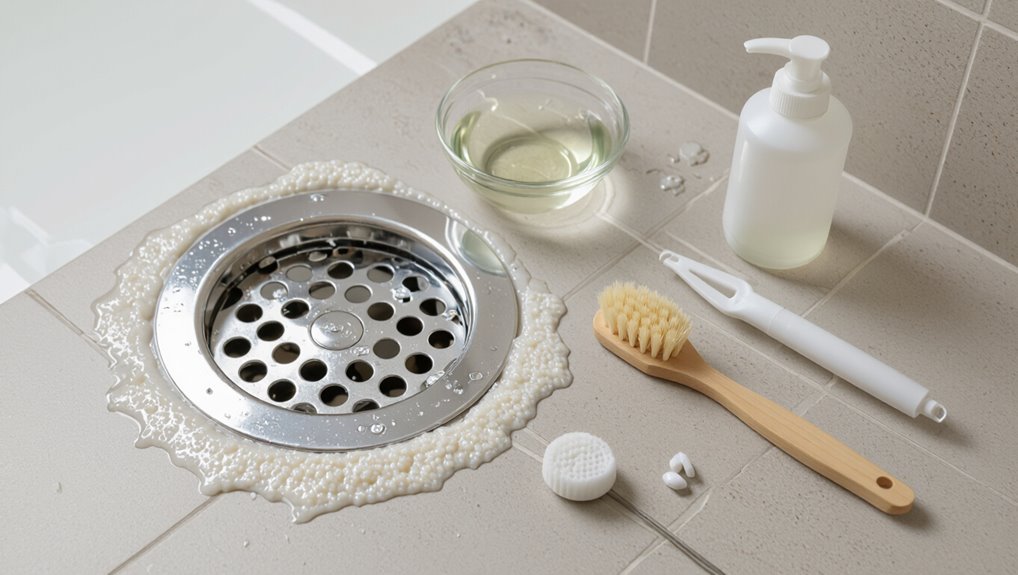
Calcium buildup, or limescale, forms when mineral-rich hard water leaves behind calcium and magnesium salts that precipitate on drain surfaces.
Common signs include slow drainage, unpleasant odors, and visible white or crusty deposits.
Prolonged accumulation can lead to clogs, pipe corrosion, and reduced water flow.
Understanding these causes and symptoms helps prioritize timely cleaning or treatment.
Chemical and mineral origins of limescale and calcium deposits
Although often invisible until it accumulates, hard water minerals—primarily calcium and magnesium bicarbonates—precipitate when heated or when carbon dioxide escapes, forming the chalky, adherent deposits known as limescale on shower surfaces and inside drains.
Crystalline calcium carbonate binds with soap scum and biofilms, narrowing flow, promoting odors, and complicating efforts like how to remove calcium buildup in shower drain without mechanical or chemical assistance.
How hard water contributes to buildup in drains and pipes
Hard water—rich in dissolved calcium and magnesium ions—gradually deposits mineral scale inside shower drains and plumbing as water cools or evaporates.
Over time, successive mineral layers narrow pipe diameters, roughen surfaces, and reduce flow efficiency. Deposits adhere to fixtures and trap soap scum, encouraging bacterial film and corrosion.
Routine descaling prevents accumulation and preserves pipe integrity, water pressure, and appliance lifespan.
Signs you have calcium buildup (slow drain, odors, visible crust)
Frequently, the first indications of mineral scale in a shower drain are straightforward: slower-than-normal drainage, persistent unpleasant odors, and white or chalky crust around the drain or on fixtures.
Other signs include water pooling after use, mineral streaks on tiles and fixtures, and diminished spray from showerheads.
These visible and functional cues point to accumulated calcium deposits requiring attention.
Risks if left untreated (clogs, corrosion, reduced water flow)
Left unchecked, calcium buildup progressively narrows drain openings and roughens pipe interiors, leading to slower water flow, more frequent clogs from trapped hair and soap, and increased risk of corrosion where mineral deposits react with metal fittings.
Over time this accelerates pipe deterioration, raises repair costs, creates persistent odors, reduces shower efficiency, and can cause backups or leaks that damage flooring and adjacent structures.
Immediate Safe Methods to Remove Calcium Buildup (Fast Actions)
Immediate safe actions focus on dislodging and flushing deposits without harsh chemicals.
Simple mechanical tools (a drain snake, wire brush, or zip tool), combined with repeated hot-water flushing or targeted pressure from a handheld sprayer, can break up and wash away buildup.
When further suction is needed, a standard plunger or a wet/dry vacuum applied carefully often removes loosened scale and trapped debris.
Mechanical removal tools and techniques
Mechanical removal offers immediate results by physically breaking and extracting calcium deposits from the drain.
A drain snake or plumbing auger can reach deeper clogs, while wire brushes, a stiff toothbrush, or a plastic scraper are effective for loosening and removing surface buildup.
Proper technique—gentle pressure, controlled rotation, and cautious use of metal tools—reduces the risk of damaging the drain finish or pipes.
Using a drain snake or plumbing auger
A drain snake or plumbing auger provides direct, physical removal of calcium deposits that chemical treatments often cannot fully dissolve. It reaches obstructions, breaks crust, and clears flow.
Use steady feed, rotate clockwise, and extract debris slowly. Observe resistance changes and stop if stuck.
- Choose correct snake size
- Wear gloves and eye protection
- Work gently to avoid pipe damage
- Clean tool after use
- Test drain flow afterward
Wire brush, toothbrush, and scraping best practices
Begin with a firm, deliberate scrubbing using a wire brush for heavy crust and a toothbrush for edges and fixtures.
Use moderate pressure, short strokes, and stainless steel or nylon tools to avoid damage.
Scrape softened deposits with a plastic putty knife.
Rinse frequently, inspect progress, and repeat after applying a descaler.
Wear gloves and eye protection; ventilate the area.
Hot water flushing and pressure techniques
Flush hot water through the drain to loosen and dissolve fresh calcium deposits without chemicals or tools.
Following brief boiling-water pours, alternate with cold water bursts to create thermal shock and dislodge softened residue.
Use a high-flow faucet or detachable shower head to increase pressure.
Repeat in short cycles, then run steady hot tap water to flush loosened material toward the trap.
Suction methods: plunger and wet/dry vacuum procedures
Following hot-and-cold water cycling, suction methods offer a quick mechanical way to dislodge and remove softened calcium deposits.
A plunger creates pressure differentials to loosen scale; guarantee a tight seal and use several firm thrusts.
A wet/dry vacuum with a narrow nozzle and hose adapted for wet use can extract debris—seal overflow, work in short bursts, and empty the collection tank frequently.
Chemical and Natural Cleaners That Effectively Dissolve Calcium
The section compares safe household remedies—such as using a 1:1 vinegar-to-water soak followed by a baking soda flush with specified contact times—and citric acid or lemon juice applications at recommended concentrations for effective calcium dissolution.
It also outlines how to select and apply commercial descalers, noting product strength, compatibility with plumbing materials, and manufacturer instructions.
Finally, it warns when to avoid harsh acids (muriatic, concentrated bleach), describes required safety precautions, and recommends protective gear and ventilation.
Vinegar and baking soda method (safe, household) proportions and timing
Combine white vinegar and baking soda to create a safe, mildly acidic reaction that helps loosen and dissolve calcium deposits in a shower drain.
Use measured proportions and timing for effectiveness:
- 1 cup baking soda
- 1 cup white vinegar
Pour soda, then vinegar slowly.
Wait 30–60 minutes.
Flush with hot water to rinse residue.
Citric acid and lemon juice applications and concentrations
Apply citric acid or concentrated lemon juice as a targeted, effective alternative for dissolving calcium deposits: a 5–10% citric acid solution (about 50–100 g per liter of warm water) or undiluted lemon juice can be poured into the drain, left to work for 30–60 minutes, then flushed with hot water.
For stubborn buildup, use a stronger 10–20% citric solution (100–200 g per liter) with the same contact time, wearing gloves and ensuring good ventilation to avoid skin irritation and corrosion of sensitive fixtures.
After rinsing, repeat if residues persist and protect nearby sealants or metals.
Commercial descalers and calcium remover products how to choose and use
While citric acid and lemon juice offer effective DIY options for light to moderate scale, many situations call for purpose-made descalers that balance strength, safety, and material compatibility. Choose products labeled for bathroom fixtures, follow dilution and contact-time instructions, test on hidden areas, and rinse thoroughly. Compare acidity, surface compatibility, and biodegradability before purchasing.
| Product type | Strength | Best use |
|---|---|---|
| Mild citric blends | Low | Chrome, plastic |
| Phosphoric-based | Medium | Tiles, drains |
| Sulfamic/hydrochloric | High | Heavy scale only |
When to avoid harsh acids (muriatic, concentrated bleach) and safety precautions
Although strong acids and concentrated bleach can rapidly dissolve heavy calcium deposits, they should be avoided on many home surfaces and in poorly ventilated spaces because they pose serious risks to finishes, plumbing, and health.
Use milder acids (vinegar, citric), commercial descalers per label, or mechanical removal.
If strong chemicals are necessary, guarantee full ventilation, chemical-resistant gloves, eye protection, and avoid mixing agents; test inconspicuous areas first.
Step-by-Step Deep Clean for a Clogged/Calcium-Blocked Shower Drain
A concise plan outlines the tools and materials needed, basic safety measures such as gloves and ventilation, and how to remove and inspect the drain cover.
It then describes a combined mechanical and chemical cleaning workflow to dislodge calcium and clear blockages.
The sequence ends with a final flush and verification that normal flow has been restored.
Tools and materials checklist
Gathering the right tools and materials guarantees the calcium removal process proceeds efficiently and safely.
The checklist lists essentials for a focused deep clean without repeating safety setup details reserved for the next section.
- White vinegar or commercial descaler
- Baking soda for reaction cleaning
- Drain snake or wire hanger
- Stiff brush or old toothbrush
- Bucket and rags
Preparing the area and safety steps (gloves, ventilation)
Before any cleaning begins, the work area should be prepared and basic safety measures taken: put on chemical-resistant gloves and eye protection, open windows or run an exhaust fan to guarantee ventilation, and place rags and a bucket nearby to catch drips or removed debris.
Ascertain footwear prevents slipping on wet surfaces, keep children and pets away, and have a phone nearby for emergencies.
Removal of drain cover and inspection
With safety measures in place and the area secured, the next task is to remove the drain cover and inspect the opening for scale, hair, and debris.
Using appropriate tools, lift the cover carefully, note screw types and placement, and photograph if needed.
Visually assess buildup extent, check for trapped objects, and smell for odors.
Record observations before proceeding to targeted cleaning.
Combined mechanical + chemical cleaning workflow
Begin the combined mechanical and chemical cleaning by establishing a clear sequence: mechanical removal of visible hair and scale, application of a descaler to dissolve mineral deposits, and follow-up agitation and rinsing to clear loosened residue.
Next, use a plumber’s snake or brush to dislodge compacted buildup. Apply descaler per label, allow dwell time, agitate with brush or snake, then extract softened material for disposal.
Final flush and verification that flow is restored
Perform a thorough final flush to remove loosened scale and confirm unobstructed flow: run hot water at full pressure for several minutes while intermittently agitating the drain with the snake or brush to encourage remaining debris to exit.
Then switch to a cold rinse to clear any dissolved residue. Observe steady, rapid drainage; check for gurgling, backups, or slow patches.
Repeat agitation and flush until flow is uniform.
How to Remove Calcium Inside Pipes and P-Trap
The article next outlines safe removal and cleaning of the P‑trap, emphasizing proper tools and precautions to avoid spills and damage.
It then explains soak‑and‑flush treatments for in‑pipe scale, including suitable solutions and contact times.
Guidance is provided on when to escalate to mechanical methods such as a plumber’s snake or professional hydro‑jetting.
Removing and cleaning the P-trap safely
To access stubborn calcium deposits, one should first shut off the water supply and place a bucket beneath the P‑trap to catch residual liquid.
Loosening the slip nuts with pliers or by hand allows the curved trap to be removed for inspection.
The trap should be scrubbed with a brush and descaling solution, rinsed thoroughly, checked for damage, and reassembled with new washers to guarantee a watertight seal.
Treating in-pipe scale with soak-and-flush methods
After the P‑trap has been removed, inspected, and reinstalled, attention turns to mineral buildup deeper in the drain line; soak-and-flush methods can reach deposits that brushes and mechanical removal cannot.
A vinegar or citric acid solution is applied to dissolve calcium, allowed to soak per instructions, then followed by repeated hot-water flushes.
Repeat cycles until flow improves; avoid harsh acids on older plumbing.
When to use a plumber’s snake or hydro-jetting
Choose mechanical methods when soak-and-flush cycles fail to restore flow or when hardened calcium deposits remain stubbornly attached to pipe walls.
A plumber’s snake dislodges localized blockages and flexes through bends; use it for accessible P-traps and short runs.
Hydro-jetting clears extensive, adherent scale and restores full-bore flow but requires professional assessment to avoid pipe damage in older or fragile plumbing systems.
Preventing Future Calcium Buildup
Preventing recurrence depends on a few practical steps: a routine maintenance schedule with simple daily habits, monthly DIY treatments using gentle descalers, and occasional hardware upgrades such as showerhead and drain covers to limit debris.
Investing in a whole-house water softener or point-of-use filters can reduce mineral deposits and often pays back through extended fixture life and lower cleaning costs.
The following section compares maintenance tasks, product options, and expected returns to help prioritize efforts.
Routine maintenance schedule and simple habits
A simple, consistent maintenance schedule greatly reduces the chance of calcium buildup in a shower drain. Regular, small actions prevent accumulations and keep drains flowing.
- Rinse drain after each shower
- Weekly vinegar flush
- Monthly mechanical cleaning
- Inspect and remove visible deposits
- Keep soap and shampoo residue minimal
Consistent habit formation saves time and repair costs.
Installing water softeners or point-of-use filters benefits and ROI
Installing a whole-house water softener or point-of-use filter greatly reduces calcium and mineral deposits before they reach shower drains, lowering maintenance needs and extending fixture life. Reduced scaling, fewer clogs, and longer hardware lifespan offset installation costs over time. Typical payback depends on water hardness, system type, and usage.
| Benefit | Cost | Payback |
|---|---|---|
| Fewer repairs | Moderate | 2–6 yrs |
| Lower cleaning time | Low | 1–4 yrs |
| Extended fixtures | Moderate | 3–7 yrs |
Monthly DIY treatments and gentle descalers to use regularly
While whole-house softeners and point-of-use filters cut incoming hardness, routine monthly care keeps residual mineral traces from building into stubborn scale.
Homeowners can flush drains with a cup of white vinegar followed by hot water, or use diluted citric acid solutions for gentler descaling.
A soft-bristled brush and occasional enzymatic drain cleaner prevent organic buildup without aggressive chemistry, preserving pipes and finishes.
Showerhead and drain cover upgrades to minimize debris accumulation
Upgrading showerheads and drain covers reduces places where calcium and debris collect, simplifying maintenance and extending fixture life.
Choose low‑profile, easy‑clean showerheads with fewer crevices and removable nozzles for quick descaling.
Install drain covers with larger mesh and smooth edges to trap hair while allowing flow; opt for stainless steel or silicone for corrosion resistance.
Routine inspection prevents buildup and costly repairs.
Troubleshooting Persistent or Severe Buildup
If residue remains after repeated home treatments, discoloration inside pipes, chronic slow drainage, or recurring clogs indicate the buildup may be beyond DIY repair.
In such cases, a professional plumber can assess the problem, perform mechanical descaling or hydro-jetting, and inspect for pipe damage or replacement needs.
Expect service times from under an hour for a simple descaling to several hours for extensive work, with typical costs ranging from about $150–$600 for routine descaling and higher for repairs or replacements.
How to tell if buildup is beyond DIY repair
How can one tell when calcium buildup has exceeded DIY methods?
Indicators include repeated clog recurrence despite varied treatments, visible hard, crusty deposits that resist scraping or dissolving, and slow drainage unchanged after mechanical removal and descaling.
Foul odors signaling trapped residue and deforming or corroded drain components are also signs to watch for.
Persistent leaks or damage associated with deposits also suggest beyond-basic remedies.
When to call a professional plumber and what to expect
When signs indicate that calcium buildup is beyond household remedies, engaging a professional plumber becomes the next logical step.
The plumber will assess blockage severity, inspect pipes with a camera, and recommend targeted descaling, mechanical removal, or partial replacement.
Expect safety protocols, appropriate tools, and a clear explanation of required repairs.
Request documentation, warranties, and prevention advice before work begins.
Cost ranges and time estimates for professional descaling services
Typical professional descaling for severe shower drain calcium buildup commonly ranges from $150 to $800, depending on factors such as the extent of deposits, pipe accessibility, and chosen method (chemical descaling, mechanical scraping, or hydro-jetting).
Jobs typically take 1–4 hours; simple chemical treatments may finish quickly, while hydro-jetting or extensive manual removal can require more time and possible follow-up visits.
Common Mistakes to Avoid When Removing Calcium Buildup
Common errors when removing calcium buildup include mixing incompatible chemicals that produce hazardous gases or corrode plumbing, and using abrasive tools that scratch fixtures or damage pipes.
Excessive scraping can weaken seals and finishes, while assuming every blockage is mineral scale may overlook mechanical failures or hair clogs.
Recognizing these risks helps choose safer methods and correct diagnoses.
Unsafe chemical combinations and material damage risks
Mixing household cleaners can produce toxic gases or degrade plumbing materials, so professionals warn against combining acids (like vinegar or commercial descalers) with bleach or alkaline drain cleaners.
Strong acids can corrode metal fixtures, damage rubber seals, and weaken PVC joints. Residual chemicals may react later, causing leaks or health hazards.
Always rinse thoroughly and use manufacturer-approved products to prevent material damage.
Over-scraping and pipe/surface scratching issues
After addressing chemical risks and material compatibility, attention must turn to mechanical methods: aggressive scraping or scouring can remove calcium quickly but often at the cost of scratching metal, tile, or plastic surfaces and nicking pipe interiors.
Practitioners should use soft-bristled brushes, plastic scrapers, and nonabrasive pads, apply moderate pressure, and inspect progress frequently to prevent irreversible surface damage and compromised seals.
Misdiagnosing the problem (clog vs. mechanical failure)
How can a stubborn slow-draining shower be correctly diagnosed: as a mineral-clogged line or as a failing mechanical component?
Technicians should inspect the trap, use a camera or wire to check for scale, and test faucet and valve function.
Misidentifying causes leads to unnecessary descaling or missed valve replacements.
Accurate diagnosis saves time, money, and prevents repeated interventions.
Quick Reference: Best Methods by Situation
A concise guide matches the severity of calcium buildup to the right response, from quick home fixes to professional intervention. The table below summarizes when to try safe household remedies, when to use mechanical tools, and when to call a pro. Following entries help readers choose the least invasive effective option.
| Situation | Recommended Action | Expected Result |
|---|---|---|
| Light buildup | Vinegar/baking soda soak | Cleans gently, low risk |
| Moderate buildup | Mechanical tools (brush, pick, auger) | Removes scale with care |
| Heavy/persistent scale | Professional descaling or replacement | Reliable, long-term fix |
Fast, safe home remedies for light buildup
For light calcium buildup in a shower drain, several quick, safe home remedies can dissolve deposits without harsh chemicals or tools; choice depends on available supplies and sensitivity to fumes.
Options include vinegar soaked in a cloth or poured and left, lemon juice applied similarly, baking soda followed by vinegar for fizzing action, or a citric acid soak.
Rinse thoroughly with hot water afterward.
Best mechanical approaches for moderate buildup
Addressing moderate calcium buildup in a shower drain requires simple mechanical methods that remove scale without relying solely on chemicals.
Recommended tools include a drain snake for dislodging chunks, a stiff nylon brush for scrubbing accessible areas, and a plastic scraper or putty knife to chip thicker deposits.
Periodic flushing with hot water and repeated mechanical passes prevent reformation and restore flow efficiently.
Recommended professional solutions for heavy, persistent scale
When mechanical methods fail to clear heavy, persistent calcium scale, professional-grade solutions become necessary.
A plumber may employ high-pressure hydro jetting, rotary drain snakes with carbide cutters, or chemical descalers formulated for commercial use.
Electrochemical descaling and targeted replacement of corroded fittings are options.
Professionals assess pipe material, severity, and safety, then choose the least invasive, longest-lasting treatment.
Useful Products and Tools to Keep on Hand
A concise kit of chemical and mechanical items, plus basic safety gear, makes routine removal of calcium deposits faster and safer.
Essential options range from gentle household descalers to tools for scrubbing and clearing blockages, while protective supplies prevent injury and damage.
The following items cover the typical needs for maintenance and small repairs:
- Household descalers and mild acids (vinegar, citric acid-based products)
- Mechanical tools (drain snake, stiff brush, plunger)
- Replacement drain screens and sealant tape
- Protective gear (gloves, safety glasses, mask)
- Basic maintenance supplies (bucket, old towels, plastic scraper)
Household descalers and safe acids
Keep a small selection of household descalers and mild acids on hand to tackle calcium buildup before it hardens into stubborn deposits.
Effective choices include white vinegar, citric acid powder, and commercial descaler solutions labeled safe for plumbing.
Use diluted mixtures, follow manufacturer instructions, wear gloves and eye protection, and ventilate the area.
Rinse thoroughly after treatment to prevent corrosion and residue.
Mechanical tools (snake, brush, plunger)
After treating softened mineral deposits with mild acids, mechanical tools finish the job by dislodging and clearing remaining debris.
A drain snake reaches deeper clogs; a stiff nylon brush scrubs pipe walls and trap openings; a cup plunger restores flow by creating targeted suction.
Use appropriate tool sizes, work patiently to avoid damage, and repeat passes until water drains freely.
Protective gear and maintenance supplies
When working on calcium buildup, wearing chemical-resistant gloves, safety goggles, and a simple face mask protects skin, eyes, and lungs from splashes and dust. Additionally, keeping a supply of rags, disposable wipes, and a soft-bristle brush on hand simplifies cleanup and prevents residue from reattaching to surfaces.
Store a bottle brush, plastic scraper, vinegar or citric cleaner, a small bucket, and replacement drain stoppers for routine maintenance.
Conclusion
Calcium’s slow, silent accretion turns a bright, functional shower into a stubborn, gray chore; yet simple, careful steps restore flow and calm. With fast wipes or stronger, patient chemistry, a blocked drain yields to attention. The frustration of scraping contrasts with the quiet relief of clear water. Routine prevention keeps buildup from returning, so small, steady care replaces recurring labor—transforming a recurring nuisance into an unobtrusive, reliable part of daily life.