How to Prevent Basement Flooding During Heavy Rain: 12 Expert-Proven Solutions
To prevent basement flooding during heavy rain, it’s essential to address runoff, high groundwater, sewer backups, and failing pipes. Key solutions include regrading soil, fixing gutters and downspouts, installing surface or French drains, upgrading sump pumps and backwater valves, sealing cracks, and applying exterior waterproofing membranes. Regular inspections and seasonal maintenance, along with permeable landscaping, can reduce flooding risks. By implementing these expert-backed strategies, you can effectively stop water at the source and alleviate hydrostatic pressure. Continue reading for detailed solutions and guidance on how to implement them.
Why Basements Flood During Heavy Rain
Basement flooding during heavy rain often results from surface runoff, rising groundwater, sewer backups, or hidden pipe leaks.
Soil type, yard grading, and landscaping choices influence how quickly water reaches foundation walls and whether it pools there.
Cracked foundations, poor exterior drainage, and frequent dampness or mold are common signs a basement is at high risk.
Common causes of basement flooding (surface water, groundwater, sewer backup, pipe leaks)
When heavy rain falls, several distinct mechanisms can let water into below-grade spaces: surface runoff that overwhelms grading and gutters, rising groundwater that seeps through foundation joints, sewer systems that back up into drains, and failing internal pipes that leak or burst.
Identifying these causes guides practical choices in how to prevent basement flooding during heavy rain, prioritizing drainage, seals, backflow prevention, and pipe maintenance.
How soil type, grading, and landscape affect water flow
Beyond plumbing and surface drains, the characteristics of the surrounding soil and the slope of the yard determine how much water reaches a foundation during heavy rain.
Clay soils retain and divert runoff toward basements, while sandy soils drain quickly.
Poor grading, compacted turf, impermeable patios, and downspouts directed at the house concentrate flow.
Strategic grading and permeable landscaping redirect water away from foundations.
Signs of a basement at high flooding risk
A home shows several clear indicators of high flood risk during heavy rain: persistent damp spots on lower walls, recurring musty odors, foundation cracks with efflorescence, low exterior grading that channels water toward the foundation, downspouts discharging near the house, and water stains or mineral lines along the floor perimeter.
Additional signs include sump pump inactivity, clogged drains, basement windows below grade, and warped flooring.
Quick Checklist to Stop Flooding Immediately
When water encroaches during heavy rain, immediate actions—shutting off power, moving valuables to higher ground, and placing sandbags—can reduce damage.
If flooding is rapid, widespread, or involves electrical hazards, a professional should be contacted without delay.
The following checklist outlines practical steps and clear signs that warrant expert intervention.
Emergency steps during heavy rain (power off, move valuables, sandbags)
Shut off electricity and move irreplaceable items to higher ground as soon as heavy rain threatens a basement; these immediate actions reduce life‑safety risks and limit permanent damage.
Next, relocate furniture, documents, and electronics to upper floors or shelves.
Place sandbags or waterproof barriers at doorways and low windows to slow water entry.
Keep a battery light, phone charger, and emergency kit accessible.
When to call a professional immediately
How quickly a professional should be called depends on the severity and source of incoming water: signs that require immediate contact include uncontrolled flow from a burst pipe, sewage backup, rapidly rising groundwater seeping through walls or floor joints, flooding from a storm drain overtopping the property, or persistent water despite initial sandbagging and pumps.
Also call for electrical hazards, structural cracking, contaminated water, or failed sump systems.
12 Expert-Proven Solutions to Prevent Basement Flooding
The following expert-proven solutions address the most common pathways through which water reaches basements, focusing on redirecting surface flow and improving foundation defenses.
Practical measures range from reshaping the landscape and extending downspouts to installing surface and subsurface drainage systems and applying exterior waterproofing. Each approach targets a specific vulnerability to reduce water intrusion and long-term risk.
- Grade and reshape the yard to direct runoff away from the foundation.
- Install or repair gutters and downspouts; extend outlets away from the foundation.
- Add surface drainage like swales or French drains.
- Upgrade foundation drains, weeping tiles, and exterior waterproofing membranes.
Exterior grading and landscape reshaping to divert water
Several targeted adjustments to exterior grading and landscape contours can reliably redirect surface water away from a foundation, reducing the risk of basement seepage and flood damage.
Regrading to create a consistent slope of at least 1 inch per foot for the first 6–10 feet, installing shallow swales, raising planting beds, and using permeable surfaces all channel runoff away, minimizing water pooling near walls.
Install or repair gutters and downspouts; extend downspouts away from foundation
Install and maintain gutters and downspouts to carry roof runoff well away from the foundation, preventing concentrated water at the perimeter that can seep into basements.
Regularly repair leaks, clear debris, and replace sagging sections. Extend downspouts at least several feet using rigid or flexible extensions and splash blocks to disperse flow.
Secure connections and slope extensions away from the house for reliable drainage.
Install a surface drainage system (swales and French drains)
Consider directing surface water away from the foundation using swales and French drains, which together manage runoff before it saturates soil around a house.
Swales are shallow, graded channels that convey excess water to safe discharge points.
Perforated French drains, installed with gravel and geotextile, collect and redirect subsurface flow from low spots, reducing infiltration risk adjacent to foundations.
Install or upgrade foundation drains and weeping tiles
Addressing water that reaches the base of a foundation requires a reliable subsurface collection system. Foundation drains and weeping tiles intercept groundwater before it can seep into the basement by channeling it to a safe discharge point or sump.
Properly sloped perforated pipe, clean gravel bedding, and durable geotextile wrap prevent clogging. Regular inspection, repair of collapsed sections, and connection to a sump or storm line guarantee long-term performance.
Apply exterior waterproofing membranes and coatings
Apply durable exterior waterproofing membranes and coatings to create a continuous barrier that blocks soil moisture and hydrostatic pressure from entering the foundation.
Contractors should excavate to the footing, inspect for cracks, repair with hydraulic cement, then apply a high-quality membrane or liquid-applied coating.
Add protection board and proper backfill. Regular inspections and prompt touch-ups extend service life and prevent seepage.
Install interior basement drain systems and trench drains
Install interior basement drain systems and trench drains to intercept and carry water away from the foundation before it can pool or seep into living spaces.
These systems channel infiltrating water to designated discharge points or a holding area. Proper installation requires sloped drains, gravel bedding, perforated piping, and connection to a safe outlet.
Regular inspection and debris removal maintain performance and prevent blockages.
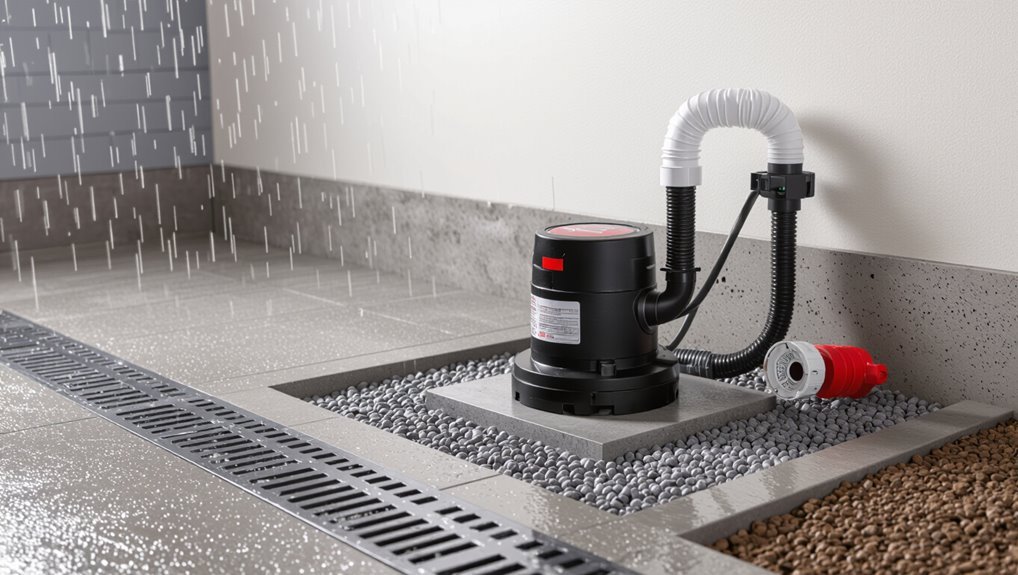
Install an automatic sump pump and battery backup system
A reliable automatic sump pump with a battery backup provides continuous, automated removal of groundwater collected in a basement sump basin, ensuring that rising water levels are expelled even during power outages.
Proper installation locates the pump at basin low point, uses appropriately sized discharge piping with check valve, and pairs a tested battery backup and alarm to maintain operation during storms and utility failure.
Seal cracks in foundation walls and floors (materials and techniques)
Sealing cracks in foundation walls and floors prevents water intrusion and reduces pressure that drives leaks, using targeted materials and proven techniques appropriate to the crack type and location.
Epoxy injections bond structural cracks; polyurethane foams expand to seal active leaks.
Surface repairs use hydraulic cement or masonry caulk.
For larger or shifting gaps, install routed-and-sealed joints and consider professional inspection for underpinning or drainage correction.
Install backwater valves and sewer line protection
Protecting the basement from sewage backflow starts with properly selected backwater valves and thorough sewer-line safeguards that stop reverse flows and reduce risk from municipal backups.
Professional installation, correct sizing, and accessible cleanouts guarantee functionality and maintenance.
Additional measures include backflow preventers, check valves, and exterior sewer line inspections to identify cracks, root intrusion, or slope issues that compromise drainage integrity.
Improve window well and egress window drainage
Beyond sewer-line defenses, attention must turn to window wells and egress windows, common entry points for stormwater when drainage is inadequate or components fail.
Regularly clear debris, install proper grates and sealed covers, slope soil away, and add gravel with a dedicated drain tied into the foundation drainage or sump.
Inspect seals and repair cracks to prevent infiltration.
Install permeable paving and rain gardens to reduce runoff
One effective approach is replacing impermeable surfaces with permeable paving and integrating rain gardens to intercept, absorb, and slow stormwater before it reaches foundation drains.
Permeable materials reduce direct runoff, while rain gardens capture and infiltrate water near downspouts and low spots.
Proper soil mix and native plants enhance infiltration and resilience, lowering peak flows that contribute to basement seepage and local drainage stress.
Maintain and inspect drainage systems regularly (seasonal tasks)
Schedule seasonal inspections and routine maintenance of gutters, downspouts, foundation drains, and exterior grading to keep drainage systems functioning and reduce basement flood risk.
Inspect for clogs, leaks, sagging sections, and erosion; clear debris and flush drains.
Repair or replace damaged components, regrade soil away from the foundation, and test sump pumps.
Document work and schedule follow-ups before and after rainy seasons.
How to Choose the Right Flood-Prevention Solutions for Your Home
Choosing appropriate flood-prevention measures begins with evaluating the home’s risk level to determine whether DIY fixes suffice or professional intervention is needed.
Cost considerations should weigh upfront price against long-term value and maintenance when comparing options.
A simple prioritization matrix — based on cause, severity, and property type — helps rank interventions and allocate resources effectively.
Assessing risk level: DIY vs professional interventions
Because basement flooding risks vary by property, homeowners should first assess specific vulnerabilities—soil type, foundation condition, local drainage, and historic flood patterns—before deciding between DIY fixes and professional work.
Low-risk, visible issues (clogged gutters, grading) suit DIY; structural problems, repeated seepage, or complex sump/backup risks require licensed contractors.
Prioritize inspections, documented evidence, and permits when escalation is needed.
Budgeting: cost ranges and long-term value
After identifying whether problems are suitable for DIY repair or require professional help, homeowners should match prevention options to both budget and expected lifespan.
Estimate upfront costs (sealants, sump pumps, exterior drainage, foundation repair) and factor installation, maintenance, and energy use.
Compare warranties, expected service life, and resale value.
Prioritize solutions offering durability and low recurring expenses for best long-term return.
Prioritization matrix based on cause, severity, and property type
A simple prioritization matrix helps homeowners match flood-prevention measures to the specific cause, severity, and property type by ranking options on effectiveness, cost, and longevity. It guides choices—e.g., sealing, drainage, sump pumps—based on damage risk and budget, prioritizing high-impact, durable fixes first.
| Scenario | Recommended priority |
|---|---|
| Seepage, low severity | Sealants, grading |
| Inflow, high severity | Sump pump, exterior drain |
Step-by-Step DIY Projects for Homeowners
The section outlines practical DIY projects homeowners can perform to reduce basement flooding risk.
It covers regrading soil around the foundation with recommended tools and slope specifications, installing downspout extensions and splash blocks, sealing small foundation cracks safely, and installing a basic sump pump with guidance on placement, discharge, and testing.
Each project is presented in clear, step-by-step instructions and safety notes.
How to regrade soil around the foundation (tools, slope specs)
Proper grading directs water away from a home’s foundation and is one of the simplest, most effective flood-prevention measures a homeowner can perform.
Using a shovel, rake, wheelbarrow, tamper and level, add clean fill soil to create a continuous slope. Aim for 6 inches of drop within the first 10 feet (5% grade).
Compact in layers, check pitch, and slope away from walkways and planting beds.
How to install downspout extensions and simple splash blocks
Install downspout extensions and splash blocks to guide roof runoff at least 3–6 feet from the foundation, reducing soil saturation and basement seepage.
Measure downspout location, select a rigid or flexible extension, cut to length, and attach with screws or slip-fit couplers.
Place a concrete or plastic splash block beneath the downspout, ensuring flow directs away.
Secure connections and test with water.
How to seal small foundation cracks safely
Begin by inspecting the foundation for hairline and slightly wider cracks, noting their length, width, and whether they penetrate to the interior or show moisture stains.
Clean cracks with a wire brush and vacuum.
Apply silicone or polyurethane masonry sealant into gaps, tooling flush.
For wider joints, insert backer rod first.
Allow full cure per manufacturer, then monitor for recurrence.
How to install a basic sump pump (placement, discharge, testing)
A homeowner preparing a basic sump pump installation should first choose a location at the lowest point of the basement floor where water naturally collects.
Clear an area about 24 inches across, and mark the sump pit center.
Excavate an 18–24 inch deep pit, install a lined basin, set the pump on gravel, connect a check valve and discharge pipe routed above grade, and test operation and float switch.
When to Hire a Pro: Signs You Need Expert Intervention
Visible structural cracks, bowed walls, or repeated seepage signal issues beyond routine DIY and warrant professional evaluation and advanced waterproofing.
Persistent drainage problems, standing water after storms, or sewer backup concerns typically require specialized solutions from contractors experienced with sump systems, exterior grading, and sewer line repair.
A qualified inspector will assess causes, recommend options, and provide a written quote outlining scope, timeline, and expected costs.
Structural damage indicators and advanced waterproofing needs
Several clear structural warning signs indicate that routine maintenance won’t suffice and professional waterproofing is required.
Visible foundation cracks widening, bowed or leaning walls, uneven floors, and persistent efflorescence signal compromised integrity.
Chronic interior moisture despite surface repairs suggests failing vapor barriers or drainage.
Professionals assess load-bearing damage, install structural remediation, interior/exterior waterproof membranes, and engineered sump or underpinning solutions to prevent progressive collapse.
Complex drainage and sewer backup solutions professionals provide
Recognize persistent drainage failures and recurring sewer odors as indicators that homeowner fixes have been exhausted and specialized intervention is needed.
Professionals assess clogged mains, collapsed laterals, and inadequate municipal tie‑ins, offering solutions like mainline trenchless repair, backflow preventers, dedicated relief drains, and engineered exterior grading with subdrains.
They coordinate permits, sewer connection upgrades, and durable materials to prevent repeat backups and comply with local codes.
What to expect from a professional inspection and quote
Call a qualified contractor when recurring backups, unexplained wet spots, or persistent odors suggest homeowner fixes have failed; the professional inspection will document current conditions, identify failure points in plumbing, grading, and drainage systems, and collect measurements and photos needed to prepare a repair plan.
The written quote itemizes recommended repairs, timelines, permits, cost breakdowns, warranty terms, and optional preventive upgrades for informed decisions.
Common Mistakes That Increase Flood Risk
Many basements are put at greater risk by common errors such as improper grading and landscaping that direct water toward the foundation.
Failure to maintain gutters and downspouts or to clear debris allows water to accumulate near the house.
Attempting DIY fixes or using inappropriate materials for serious waterproofing issues can worsen problems and delay proper repair.
Improper grading and landscaping errors
When soil and hardscape slope toward a foundation, runoff concentrates against basement walls and increases the likelihood of seepage or structural leaks. Improper grading and landscape choices consequently turn routine rain into a chronic flooding risk.
Planting beds mounded against foundations, compacted soil, and paved surfaces without positive slope block drainage. Proper regrading, soil amendments, and strategic plant placement divert water away, reducing hydrostatic pressure and seepage.
Neglecting gutters, downspouts, and regular maintenance
Failing to maintain gutters and downspouts allows roof runoff to concentrate at the foundation, increasing erosion, basement seepage, and hydrostatic pressure against walls.
Clogged or disconnected systems redirect water, undermine waterproofing, and overload drains.
Regular cleaning, secure connections, proper downspout extensions, and timely repairs prevent concentrated runoff, reduce soil saturation near the foundation, and lower basement flood risk during heavy rain.
Using wrong materials or DIY fixes for serious problems
Attempting quick fixes with inappropriate materials or DIY methods can turn a minor leak into a major, costly failure.
Homeowners who use temporary patching compounds, improper sealants, or undersized sump pumps risk concealed damage, mold growth, and structural deterioration.
Professional assessment and correctly specified materials prevent recurring leaks, guarantee proper drainage, and provide long-term protection against basement flooding during heavy rain.
Long-Term Maintenance Plan to Keep Your Basement Dry
A clear long-term maintenance plan outlines seasonal inspection checkpoints—spring, fall, and before storm season—to verify grading, gutters, and sump pump function.
It schedules routine tasks with recommended timelines, such as cleaning gutters and testing sump systems every 3–6 months.
It also incorporates monitoring and early-warning tools like water alarms and moisture sensors to catch problems before they escalate.
Seasonal inspection checklist (spring, fall, before storm season)
When seasonal weather shifts approach, a concise inspection checklist guarantees the basement’s defenses are evaluated at key intervals—spring thaw, fall preparations, and before storm season—to catch developing issues early and prioritize repairs.
Inspect gutters and downspouts for clogs or damage; verify grading and exterior drainage; check foundation walls, seals, and window wells for cracks or deterioration; test sump pump operation and battery backup readiness.
Routine maintenance tasks and recommended timelines
Establishing a routine maintenance schedule guarantees baseline defenses remain effective and small problems are caught before they escalate into flooding.
Tasks are assigned frequencies and responsibilities, prioritizing gutters, grading, sump pump, and interior checks to prevent moisture intrusion.
- Clean gutters and downspouts — quarterly
- Check grading and exterior drainage — biannually
- Test and service sump pump — annually (plus seasonal checks)
- Inspect basement for cracks and damp — monthly
Monitoring and early-warning tools (water alarms, sensors)
Install readily accessible water alarms and sensors to detect leaks, rising water, or high humidity before visible damage occurs.
Devices with remote alerts, battery backup, and tamper-resistant designs provide continuous monitoring.
Place sensors near sump pumps, basement entrances, appliances, and low points.
Integrate with smart home systems for automated responses.
Regularly test, replace batteries, and log events to guarantee long-term reliability.
Cost vs Benefit: Estimating ROI for Flood-Prevention Upgrades
Cost-benefit analysis helps homeowners compare upfront costs, expected lifetimes, and routine maintenance for common flood-prevention measures. It also considers how upgrades may affect insurance risk profiles and potential premium reductions over time. The following table summarizes typical lifespans, maintenance needs, and likely insurance impacts for representative solutions.
| Solution | Notes |
|---|---|
| Sump pump | 7–15 year life; annual testing and occasional replacement; may lower claim risk if professionally installed |
| French drain | 20–50 year life; periodic cleaning; can reduce interior flooding risk and influence premiums in some cases |
| Backwater valve | 20–30 year life; annual inspections; often viewed favorably by insurers for sewer-backflow protection |
| Waterproofing membrane | 25–40 year life; repair as needed after damage; decreases long-term water intrusion risk |
| Grading & gutters | Indefinite if maintained; seasonal cleaning and repairs; frequently reduces overall flood exposure and insurance exposure |
Typical lifetime and maintenance needs for each solution
Lifespan and upkeep vary widely among flood-prevention measures, so homeowners should evaluate durability, routine maintenance, and replacement intervals when estimating return on investment.
Sump pumps: 5–15 years, annual testing and occasional battery replacement.
French drains and exterior waterproofing: 20–50 years, periodic inspections and clearing.
Interior sealants and backflow valves: 5–10 years, routine checks and part replacement as needed.
Insurance implications and potential premium reductions
When homeowners assess flood-prevention upgrades, insurance implications are a key financial consideration because policy adjustments and discounts can materially affect payback periods.
Insurers often offer premium reductions for sump pumps, backflow preventers, improved grading, and certified waterproofing. Documentation, receipts, and inspections expedite credits.
Reduced flood risk may lower deductibles or qualify properties for broader coverage, improving overall return on investment.
Case Studies and Real-Life Examples
Two brief case studies illustrate practical solutions and measurable results: one describes resolving recurring seepage by installing exterior drainage, and another shows how a backwater valve prevented repeated sewer backups.
Each example summarizes costs, actions taken, and post-installation outcomes. Taken together, they highlight key lessons and quantifiable benefits for homeowners considering similar upgrades.
Short case: Preventing recurring seepage with exterior drainage
Several homeowners in temperate, high-water-table regions resolved persistent basement seepage by installing exterior drainage systems that redirected groundwater away from foundations.
Contractors excavated perimeter trenches, fitted perforated drainpipes, and backfilled with gravel and landscape fabric.
Combined with proper grading and gutter extensions, these measures stopped capillary intrusion and reduced hydrostatic pressure, eliminating recurring damp spots and mold while preserving foundation integrity and lowering long-term maintenance needs.
Short case: Stopping sewer backups with backwater valve installation
Homeowners in urban neighborhoods halted recurring basement sewage intrusions by having contractors install backwater valves on sanitary sewer lines; these one-way devices prevent reverse flow from overloaded municipal systems during heavy rainfall or sewer surcharges.
Technicians excavated short sections, tied valves into existing piping, and tested operation.
Routine inspections and access risers were recommended to guarantee functionality and allow future maintenance without major disruption.
Lessons learned and measurable outcomes
Insight from installed backwater valves underscores clear, measurable reductions in basement sewage incidents and maintenance costs across monitored urban properties.
Comparative data show incident drops of 70–95% within two seasons. Follow-up inspections revealed fewer structural repairs and lower insurance claims.
Lessons emphasize proper sizing, routine testing, and homeowner education. Scaled adoption yielded predictable cost savings and improved occupant confidence in flood resilience.
Additional Resources and Next Steps
The article closes with practical next steps, including a concise checklist for hiring contractors and key questions to ask during interviews.
It also lists recommended products, relevant standards and certifications to look for, and local permit considerations.
Readers are directed to sources for professional help and where to find permits and licensed contractors in their area.
Checklist for hiring contractors and questions to ask
Why verify a contractor’s qualifications and track record before signing a contract?
A concise checklist:
- confirm licensing and insurance,
- request references and recent project photos,
- check warranties and timelines,
- obtain detailed written estimates,
- clarify scope changes and payment schedule,
- verify subcontractors, and
- confirm permits.
Ask about drainage experience, emergency response, and cleanup.
Document all agreements in writing.
Recommended products, standards, and certifications
Consult industry-approved products and recognized standards to confirm basement flood prevention measures are effective and durable.
Recommended items include sump pumps with UL/CSA listings, backflow preventers meeting ASME/ASTM specifications, waterproofing membranes certified to ICC-ES, and GFCI-protected battery backup systems.
Look for manufacturer warranties, third-party test reports, and installer certifications (e.g., IICRC, NWSA) to confirm long-term performance.
Local permit considerations and where to find professional help
Because basement flood-prevention work can affect structural elements, drainage, and electrical systems, homeowners should verify local permitting requirements before beginning any installation or major alteration.
Permits guarantee code compliance, inspections, and insurance validity. For professional help, consult licensed contractors, structural engineers, certified waterproofing specialists, and local building departments.
Recommended steps:
- Contact municipal building department
- Verify permit scope and fees
- Hire licensed professionals
- Obtain inspections and approvals
Conclusion
Basement flooding, like an unwelcome tide, can be kept at bay with a mix of immediate fixes and long-term investments. Homeowners are advised to prioritize drainage, seals, and reliable sump systems, balancing costs with expected benefits. Regular maintenance and informed choices turn reactive repairs into proactive protection, preserving property value and peace of mind. With the right combination of measures, a dry basement becomes a durable shield against future storms.