
How to Connect PVC Pipe Without Threads: 7 Simple, Leak Free Methods
To connect PVC pipe without threads, you can use methods such as solvent welding, push-fit fittings, rubber-sleeve couplings, epoxy slip couplers, heat or thermal fusion, flanged/gasketed joints, and mechanical clamps. Each technique ensures a watertight seal when surfaces are properly prepared and aligned. Choose the method based on factors like pressure rating, permanence, accessibility, and local codes. Remember to use the right tools and prioritize safety. For effective connections, consider tips on insertion depth, clamp torque, and troubleshooting leaks, as well as guidance for selecting the best option for your specific project.
What it means to connect PVC pipe without threads
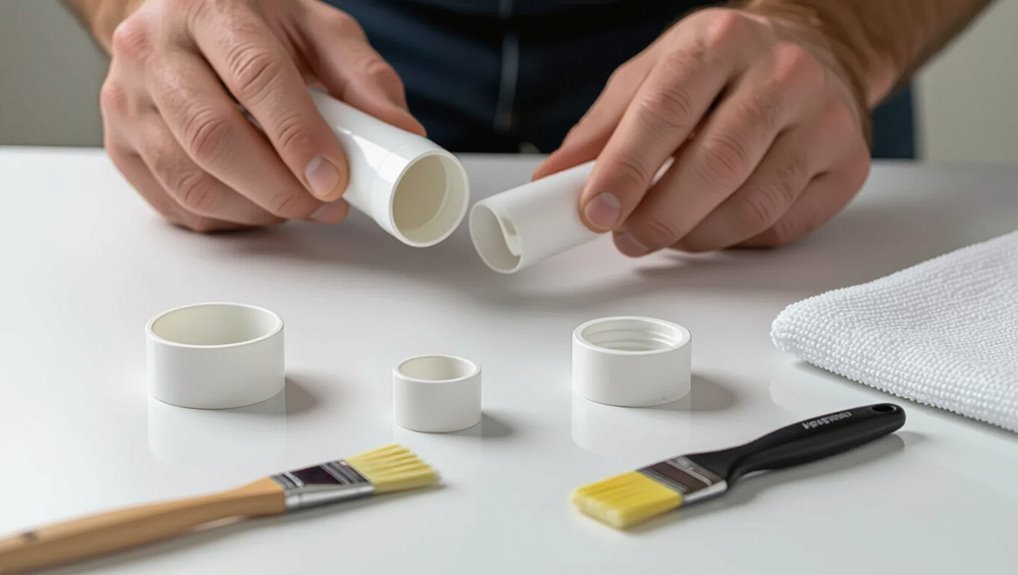
Connecting PVC pipe without threads refers to joining smooth-walled fittings and pipe using solvent welding, mechanical couplings, or push-fit systems rather than screw threads.
These non-threaded methods are common because they create watertight, corrosion-resistant seals and are often faster and simpler for plumbing and irrigation work.
Typical materials and tools include PVC cement and primer, clean cloths, cutters or saws, and occasional rubber-sealed couplings or clamps for removable joints.
Why PVC connections without threads are common and useful
Many common PVC systems rely on smooth, unthreaded joints because they offer a simple, reliable way to join pipe quickly and economically.
Such connections reduce labor, material cost, and leak risk when assembled correctly. They suit irrigation, drainage, and indoor plumbing.
Guidance on how to connect PVC pipe without threads emphasizes alignment, solvent bonding or mechanical couplers, and proper curing for durable, watertight joins.
Materials and tools overview for non-threaded PVC joining
A concise kit of materials and tools is essential for joining PVC pipe without threads. Essential items include PVC solvent cement, primer, and compatible fittings.
Tools: a pipe cutter or saw, deburring tool or file, measuring tape, marker, and gloves.
Optional items: clamps, silicone sealant for added protection, and sandpaper.
Proper selection guarantees secure, leak-free solvent-welded or slip-fit joints.
Quick solution summary: 7 reliable, leak-free methods
A concise overview presents seven reliable, leak-free ways to join PVC when threaded fittings are not an option.
The summary highlights widely used permanent and temporary options suited for pressure and non-pressure applications. Each method balances ease of installation, reliability, and suitability for repair or new work.
- Solvent welding (PVC cement) for permanent joints
- Primer plus cement for pressure-rated connections
- Mechanical push-to-connect fittings (e.g., SharkBite)
- Rubber sleeve couplings with stainless clamps (Fernco)
Method 1 PVC solvent welding (solvent cement)
Solvent welding joins PVC by chemically softening the pipe and fitting surfaces with primer and solvent cement so they fuse into a single, leak-resistant piece.
Surfaces are cleaned, primed if required, cement applied, then joined with proper insertion depth and alignment.
Hold briefly, allow initial set, then cure fully per manufacturer instructions before testing.
Suitable for rigid PVC water, drain, and conduit systems.
Method 2 PVC primer plus cement for pressure-rated joints
Prepare primer and cement when creating pressure-rated PVC joints to guarantee a reliable, leak-free bond.
The primer softens and cleans PVC surfaces; cement chemically fuses fittings and pipe for pressure service.
Properly chamfer, dry-fit, apply primer, then cement; assemble with a quarter-turn and hold per manufacturer cure times.
Inspect joints for full penetration and allow full cure before pressurizing the system.
Method 3 Mechanical compression fittings (push-to-connect / SharkBite-style)
After primer and cement have been discussed for permanent pressure joints, mechanical compression fittings offer a faster, non-solvent alternative for joining PVC without threads.
Push-to-connect fittings grip and seal pipe with internal O-rings and metal teeth; they require correct pipe insertion depth and clean, square cuts.
Suitable for potable water and repairs, they permit quick disassembly and reconnection but cost more than glued joints.
Method 4 Rubber sleeve couplings with stainless clamps (Fernco)
Use a flexible rubber sleeve with stainless-steel hose clamps to join non‑threaded PVC quickly and reliably.
Fernco-style couplings slide over pipe ends, accommodate slight misalignment, and seal under pressure.
Select correct diameter, clean and dry surfaces, center the sleeve, then tighten clamps evenly to manufacturer torque.
Suitable for drainage, vent, and some pressure applications; check compatibility and local codes before use.
Method 5 PVC slip couplers with epoxy for temporary or repair use
While rubber sleeve couplings handle many quick joins, PVC slip couplers bonded with epoxy offer a straightforward temporary or repair option when primer/cement is unavailable or when a quick cure is needed.
Clean and degrease pipe ends, dry-fit the coupler, apply a marine- or structural-grade epoxy evenly, insert pipes to proper depth, wipe excess, and clamp until cured.
Inspect for leaks before pressurizing.
Method 6 Heat fusion (for specific PVC types and professional use)
Heat fusion joins PVC by melting and fusing pipe and fitting surfaces into a single, continuous piece, producing exceptionally strong, permanent seals when performed on compatible PVC types (typically CPVC and some schedule-rated pipes) by trained operators using specialized equipment.
Thermal welding requires precise temperature control, clean cut surfaces, correct alignment, and experienced technicians; it’s best for long runs and critical applications where solvent cement or mechanical joints aren’t suitable.
Method 7 Flanged connections with gasket and bolted clamps
After thermal welding is mentioned as a specialist option, attention shifts to a more accessible method for joining non-threaded PVC: flanged connections with a gasket and bolted clamps.
This approach uses matched flanges bonded or solvent-welded to pipe ends, a compressible gasket for sealing, and evenly torqued bolted clamps or studs.
It provides robust, removable, leak-resistant joints for pressure or drainage systems.
Step-by-step procedures for each method
The following section outlines concise, sequential procedures for each non‑threaded PVC connection method.
For solvent welding and primer-plus-cement, the steps include surface preparation, application technique, and recommended cure and pressure‑test intervals.
Push‑to‑connect fittings, rubber sleeve couplings, and epoxy slip couplers are treated with clear instructions on cutting and deburring, sizing and clamp torque, insertion/removal tips, epoxy selection, and cure schedules.
Solvent welding: step-by-step application and curing times
Prepare a clean, dry workspace and gather PVC cleaner, primer (where required), PVC solvent cement, a brush or applicator, and appropriate fittings before beginning solvent welding.
Cut and deburr pipes, dry-fit parts, then apply cleaner to both surfaces.
Apply solvent cement evenly to pipe and socket, insert with a quarter-turn, hold for specified set time.
Allow full cure per manufacturer before pressurizing.
Primer + cement: preparation, application, and pressure testing
Begin by assembling a clean work area and laying out PVC primer, solvent cement rated for the pipe schedule, applicators, fittings, cutting tools, and safety gear.
Cut square, deburr, and dry-fit parts.
Apply primer to socket and spigot, then a uniform cement coat.
Insert with 1/4 turn, hold per manufacturer.
Allow full cure, then conduct a hydrostatic pressure test at recommended pressure and duration.
Push-to-connect fittings: cutting, deburring, insertion depth, and removal tips
After solvent-weld joints cure and pressure testing confirm integrity, attention turns to push-to-connect fittings for situations needing fast, non-permanent connections.
Cut squarely with a fine-tooth saw, deburr and chamfer edges, mark insertion depth, fully seat pipe until the stop, and verify by gentle pull.
For removal, depress the collet ring with a tool while twisting to extract, inspect O-ring before reuse.
Rubber sleeve couplings: sizing, clamp torque, and installation sequence
Rubber sleeve couplings—also called band or Fernco couplings—join PVC sections where flexibility or quick disassembly is needed; selecting the correct sleeve size and clamp type is critical to guarantee a watertight, pressure-rated connection.
Measure outside diameters, choose sleeve overlapping both pipes by manufacturer minimum, position centered, tighten clamps alternately to specified torque, and retest under pressure.
Trim excess sleeve if needed.
Epoxy slip couplers: surface prep, epoxy selection, and cure schedule
Where a flexible band coupling is unsuitable—for example in a permanent, low-clearance run—an epoxy slip coupler can provide a rigid, low-profile joint.
Clean pipe ends: deburr, sand to bright PVC, and wipe solvent with acetone.
Choose a structural two-part epoxy rated for PVC and wet environments.
Apply evenly inside sleeve and over pipe, assemble within working time, clamp, and follow manufacturer cure schedule before pressure testing.
Heat fusion: equipment, temperature, alignment, and safety precautions
Heat fusion joins PVC by melting mating surfaces to form a continuous, homogenous bond; successful execution depends on proper equipment selection, precise temperature control, accurate alignment, and strict adherence to safety protocols.
Operators use calibrated heaters or socket fusion tools, set temperatures per material thickness, square and jig parts for flush mating, apply controlled dwell and cooling times, and wear PPE to prevent burns and fumes.
Flanged connections: flange selection, gasket placement, bolt pattern, and tightening sequence
Select flanged connections when a removable, leak-resistant joint is required, choosing flange type and material to match pipe size, pressure, and chemical compatibility.
Inspect faces; seat an appropriate gasket centered between flanges. Align bolt holes using dowels or guides, insert bolts hand-tight in a star pattern.
Torque sequentially in opposing pairs to specified values. Recheck torque after initial pressurization.
How to choose the right method for your project
Selection of a joining method should be driven by pipe diameter and schedule (DWV versus pressure) to guarantee mechanical strength and proper fittings.
The project location—above ground versus buried—along with chemical exposure and operating temperature limits will further narrow suitable adhesives, solvents, or mechanical connectors.
Finally, local code requirements and permit obligations must be checked to verify the chosen method is compliant.
Matching method to pipe diameter and schedule (DWV vs pressure)
How should the installer match a joining method to the pipe’s diameter and schedule?
For small diameters (½–2″), solvent welding or push-fit works for both DWV and low-pressure systems.
Larger diameters and pressure-rated pipe require mechanical couplings, flanged connections, or bolted adapters sized to SDR/schedule.
Confirm material compatibility, pressure rating, and local code; choose methods rated for the pipe’s schedule and designated service.
Considerations for above-ground vs buried installations
After matching joining methods to diameter and schedule, the installer must next evaluate whether the run will be above ground or buried, since environmental exposure and access constraints change the acceptable joining options.
Above-ground runs favor exposed solvent-welded joints, mechanical couplings, or threadless flanges for maintainability and inspection.
Buried lines require robust solvent or gasketed joints, deeper bedding, and corrosion-resistant fittings to minimize future excavation and leaks.
Chemical compatibility and temperature limits
Because different adhesives, gaskets, and base PVC formulations respond differently to chemicals and heat, installers must match joining methods to the fluid and operating temperature expected in service.
Select solvent cements rated for the chemical in contact and temperature range; use gasketed or mechanical couplings for higher temperatures or aggressive media.
Verify material datasheets and apply safety factors for intermittent temperature spikes.
Code compliance and permit considerations
Code and permit requirements strongly influence which non‑threaded PVC joining methods are appropriate for a given project.
Local plumbing codes, building inspectors, and permit conditions dictate approved materials, solvent‑cement certifications, pressure ratings, and allowable mechanical fittings.
Verify municipal regulations, obtain necessary permits, and use certified components and installation practices.
Documentation and inspections guarantee compliance, safety, and long‑term system performance.
Tools, materials, and consumables checklist
The section lists the specific tools and consumables needed for each joining method, including PVC cutter, primer, and solvent cement for solvent welding.
It also covers wrenches, clamp kits, and specialty fittings for mechanical and clamp-type connections.
Safety gear and recommended adhesives or sealants are summarized to guarantee proper protection and reliable joints.
Essential tools for solvent welding and primer use
Gathering the right tools and consumables guarantees solvent welding goes smoothly and creates reliable joints. Required items include PVC solvent cement, clear or purple primer, applicator brushes or dauber bottles, clean rags, pipe cleaner or deburring tool, measuring tape, marker, and a square.
Safety gear—gloves, eye protection, and respirator or ventilated workspace—ensures safe, effective bonding and consistent results.
Tools for mechanical and clamp-type fittings
Assemble a compact kit of purpose-built tools and consumables to install mechanical and clamp-style PVC fittings reliably.
Include pipe cutters or a fine-tooth saw, deburring tool or file, measuring tape and marker, torque-controlled screwdriver or nut driver, adjustable wrench, hose clamps or band clamps sized to pipe, stainless steel fasteners, rubber gaskets or sealing sleeves, and replacement clamp screws and spare liners for field repairs.
Safety gear and recommended adhesives/sealants
When working with unthreaded PVC fittings, personal protective equipment and the correct adhesives and sealants reduce injury risk and guarantee durable joints; recommended items include safety glasses, chemical-resistant gloves, a respirator or mask rated for organic vapors, and a drop cloth or disposable pads to protect surfaces.
Also include PVC primer, solvent cement rated for pipe schedule, silicone or polyurethane sealant for joints, and paper towels.
Common causes of leaks and how to prevent them
Common leaks in non-threaded PVC joints most often trace to surface contamination, poor fitting alignment, or inadequate insertion depth.
Excessive clamp torque can crush or nick pipe ends, while selecting materials unsuited for the system’s pressure or chemical exposure invites premature failure.
Addressing these factors—clean, square surfaces; correct insertion and alignment; proper clamping technique; and compatible materials—reduces leak risk.
Improper surface preparation and contamination
Neglecting proper surface preparation or allowing contaminants on PVC surfaces undermines solvent-weld and gasketed joints, creating gaps, weakened bonds, and eventual leaks.
Dirt, oil, paint, and moisture prevent primer and cement from chemically fusing; dust or silicone film hinders gasket sealing.
Clean with approved solvent, dry thoroughly, and remove residues before assembly.
Inspect surfaces and store components clean to guarantee reliable, leak-free connections.
Misalignment and insufficient insertion depth
Many leaks trace back to misaligned fittings or pipes pushed in too shallowly, which prevent full engagement of sockets and gaskets and compromise solvent-weld joints.
Proper alignment, square cuts and chamfered ends guarantee even contact. Mark insertion depth, insert fully until the stop, and hold alignment while adhesive cures.
Verify seating before pressurizing to prevent gaps and stress on joints.
Over-tightening clamps and damaging pipe ends
Over-tightening hose clamps or compression fittings can crush or deform PVC pipe ends, compromising seals and creating stress points that lead to leaks.
Inspect fittings for even compression, tighten to manufacturer torque or until snug, and use a torque-limited driver or calibrated wrench.
Consider rubber-lined or wide-band clamps to distribute pressure.
Replace damaged pipe ends and retest under normal pressure to confirm integrity.
Using wrong materials for pressure or chemical exposure
Select materials based on the system’s pressure rating and chemical compatibility to prevent premature failure.
Installers should verify pipe, fittings, and sealant specifications against operating pressure, temperature, and fluid chemistry.
Avoid standard PVC in solvent-rich or high-temperature environments; choose CPVC, PVDF, or metal where required.
Use certified gaskets and adhesives rated for the application to eliminate swelling, cracking, and leaks.
Troubleshooting leaks and making repairs
The practitioner first locates the leak and identifies the failure mode—crack, incomplete solvent weld, or faulty coupling—before choosing a repair.
Solvent-weld joints typically require cutting out the damaged section and re-gluing, whereas mechanical couplings can often be tightened, reseated, or replaced.
Temporary fixes like clamps or epoxy may stop leakage briefly, but full replacement of the affected section is recommended when integrity is compromised.
Diagnosing leak location and failure mode
Begin by isolating the suspect section and observing where moisture appears or drips. Visual clues such as steady streams, slow weeps, or wet stains help distinguish joint, fitting, or pipe-body failures.
Check for hairline cracks, delamination, or softened material, plus stress marks and misalignment.
Apply gentle pressure tests and dye or soapy-water to reveal leaks.
Record location, pattern, and probable cause before repair.
Repairing solvent-weld joints vs mechanical couplings
Differentiate repair approaches for solvent-weld joints and mechanical couplings based on cause, accessibility, and pipe condition:
Solvent-weld joints usually require cutting out the defective section and recreating a clean, properly primed and cemented bond.
On the other hand, mechanical couplings can often be tightened, reseated, or replaced without solvent work but may demand larger clearances and torque control.
Evaluate material degradation, joint alignment, and available workspace before proceeding.
Temporary fixes and when to replace the section
After evaluating whether a failed joint needs cutting and re‑cementing or can be addressed with a mechanical coupling, attention shifts to temporary fixes and criteria for full replacement.
Temporary measures—rubber repair sleeves, epoxy putty, and hose clamps—stop minor leaks until scheduled repairs.
Replace sections when cracks, extensive corrosion, repeated failures, or misalignment compromise structural integrity or when temporary fixes fail after reasonable testing.
Cost, durability, and performance comparison
A concise comparison of common non‑threaded PVC connection methods clarifies tradeoffs in cost, durability, and performance. The table below summarizes key attributes to guide selection based on cost, ease of installation, leak resistance, suitability for pressure, and expected lifespan. This snapshot prepares the reader for more detailed discussion of each method’s strengths and limitations.
| Method | Summary |
|---|---|
| Solvent weld | Low material cost; moderate skill; excellent leak resistance; suitable for moderate pressure; long lifespan |
| Push-fit | Higher initial cost; fastest installation; very good leak resistance; limited high-pressure use; long lifespan |
| Mechanical clamp/adapter | Moderate cost; moderate installation effort; good leak resistance with proper sealing; suitable for higher pressures with correct hardware; variable lifespan |
| Compression fittings | Moderate to high cost; moderate installation skill; reliable leak sealing if tightened correctly; generally suitable for pressure systems; long lifespan |
Comparison columns: cost, ease of installation, leak resistance, suitability for pressure, expected lifespan
Cost, durability, and performance are compared across common non-threaded PVC connection methods—push-fit fittings, solvent welds, compression fittings, and mechanical couplers—using five columns: cost, ease of installation, leak resistance, suitability for pressure, and expected lifespan. A concise comparison highlights tradeoffs so readers choose by priority.
| Method | Summary |
|---|---|
| Push-fit | Mid cost, easiest, good leak resistance, moderate pressure, 10–25 years |
| Solvent weld | Low cost, moderate skill, excellent leak resistance, high pressure, 25+ years |
Safety, code, and environmental considerations
The discussion shifts to safety, code, and environmental concerns associated with solvent-based and adhesive PVC connections.
Attention is given to VOC emissions, required ventilation and safe handling of chemicals, and how local plumbing codes and inspection requirements can affect installation choices.
Proper disposal and recycling of PVC and chemical wastes are addressed to minimize environmental and regulatory risks.
VOCs, ventilation, and handling of solvents and adhesives
When working with solvent-based PVC cements and primers, fumes containing volatile organic compounds (VOCs) can accumulate quickly in confined spaces, creating inhalation hazards and increasing fire risk.
Adequate ventilation, use of NIOSH-approved respirators when necessary, and elimination of ignition sources are essential.
Store adhesives in labeled, sealed containers, follow manufacturer instructions, limit quantities on site, and dispose of residues per local hazardous-waste guidance.
Local plumbing codes and inspection triggers
Beyond ventilation and solvent handling, compliance with local plumbing codes governs whether a given PVC connection method is legal and subject to inspection.
Installers must verify permitted joint types, pressure ratings, and approved adhesives or mechanical fittings.
Inspections may be triggered by permit requirements, visible alterations, or complaints.
Noncompliance risks failed inspections, required rework, fines, or voided insurance coverage.
Disposal and recycling of PVC and chemical wastes
Because PVC and the solvents used for joining can pose health, fire, and environmental hazards, proper disposal and recycling must follow safety practices, manufacturer guidance, and local regulations.
Creosote, solvent cement, and contaminated scrap require hazardous-waste handling; small amounts may be triple-rinsed and containerized per guidance.
Recyclable PVC should be separated, cleaned, and delivered to approved facilities; documentation and disposal records are advised.
Real-world examples and recommended use cases
This section outlines practical scenarios where non‑threaded PVC connections are most appropriate and which methods work best. It compares approaches for indoor potable repairs, outdoor irrigation, and buried drainage to guide method selection. Examples emphasize durability, code compliance, and ease of maintenance.
- Residential potable water repairs: solvent-weld joints or push-fit fittings for small indoor fixes.
- Irrigation and outdoor systems: mechanical couplings, compression fittings, or barbed fittings with hose clamps.
- Underground drainage and sewer lines: solvent cement with proper bedding, rubber-sleeve couplers, or gasketed joints.
- Temporary or emergency fixes: push-fit connectors or repair couplers designed for quick, tool-free installation.
Best methods for residential potable water repairs
Several practical methods suit residential potable water repairs, each chosen for pipe material, access, and permanence required.
Solvent cement on schedule 40 PVC provides durable, code-compliant joints for indoor cold-water lines.
Push-fit fittings (certified for potable use) enable quick, solder-free repairs.
Mechanical coupling with EPDM seals suits accessible mains.
Always verify local codes, use lead-free materials, and pressure-test before restoring service.
Best methods for irrigation and outdoor systems
Outdoor irrigation and landscape systems call for different joint choices than indoor potable lines, favoring methods that handle UV exposure, soil movement, and seasonal freezing.
Recommended solutions include solvent-welded fittings for permanent aboveground runs, PVC slip coupling with primer/solvent for quick repairs, flexible rubber couplings with stainless clamps at junctions, and barbed fittings with hose clamps for drip lines and temporary layouts.
Best methods for underground drainage and sewer lines
Many underground drainage and sewer installations rely on a mix of solvent-welded joints, gasketed bell-and-spigot fittings, and flexible couplings chosen for load-bearing capacity, groundwater conditions, and maintenance needs.
Cast-iron connection adapters and mechanical seals suit sewer mains; gasketed joints handle minor settlement; solvent welds work in stable trench bedding.
Use flexible couplings at building connections and at expected movement points for reliable, leak-resistant performance.
Conclusion
In a world where PVC pipes refuse to behave, these seven threadless methods become miracle workers—bonding, clamping, and sealing like superhero plumbers. Each technique can silence stubborn leaks, outfox age, and survive the apocalypse of pressure changes. Choose wisely and a single fitting will outlast telescopes and empires; choose poorly and the flood of despair will humbly remind one that even plastic demands respect. Success is sudden, and utterly satisfying.
