How to Clean a Pipe With Baking Soda and Vinegar: Step-By-Step Safe Method
To clean a pipe using baking soda and vinegar, follow this straightforward method: First, remove any standing water and debris from the sink or shower drain. Pour ½–1 cup of baking soda into the drain, then slowly add about 1 cup of vinegar to control the fizzing reaction. Allow the mixture to sit for 15–30 minutes before flushing the drain with several minutes of hot water. Avoid using this method on old corroded pipes, and never mix baking soda and vinegar with commercial cleaners. If clogs persist, it’s best to consult a plumber. More tips are available below.
Overview of Cleaning Pipes with Baking Soda and Vinegar
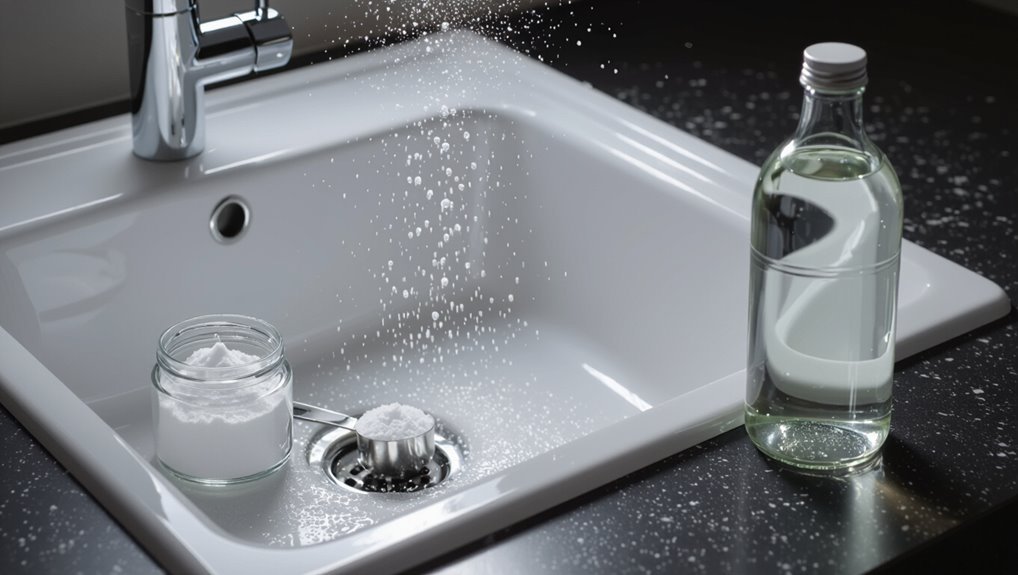
Baking soda and vinegar react to produce fizzing and mild abrasion that can loosen grime and neutralize odors in many household drains.
This method is generally suited for non-corroded PVC, metal sink and shower drains, and slow-clogged traps but is not ideal for main sewer lines or heavily packed blockages.
Users should exercise caution around older metal pipes, avoid mixing with commercial drain cleaners, and refrain from using the technique when chemical residues or structural pipe damage are suspected.
Why baking soda and vinegar work for pipe cleaning
Combine a base and an acid, and a useful chemical reaction takes place: the alkaline sodium bicarbonate reacts with acetic acid to produce carbon dioxide gas, water, and a mild saline solution.
That fizzing lifts soft debris and dislodges grime mechanically while the alkaline residue helps neutralize odors.
This explains why/how to clean a pipe with baking soda and vinegar safely and simply.
Types of pipes and drains suitable for this method
With the fizzing reaction explained, it is useful to contemplate where this method is appropriate: mild clogs and odor issues in household drains and pipes that can tolerate a gentle acid-base rinse.
Suitable: PVC, ABS, metal sink and bathtub drains, shower drains, and slow kitchen or bathroom traps.
Avoid using on corroded, lead, or unknown antique piping and on septic systems without professional advice.
Safety considerations and when to avoid this method
Although generally safe for many household drains, the baking soda and vinegar method requires caution because the reaction and resulting liquids can harm vulnerable plumbing, finishes, or septic systems.
Avoid use on old, corroded, or cracked pipes, fragile fixtures, or systems with active bacterial treatments.
Do not combine with commercial drain cleaners or pourdown bleach; consult a plumber for persistent clogs or uncertain materials.
Quick Preparation Checklist
Before beginning the baking soda and vinegar method, gather the necessary tools and materials—baking soda, vinegar, a funnel, gloves, and a bucket.
The writer recommends basic protective gear and ensuring good ventilation to avoid fumes and splashes.
A quick visual and tactile inspection of the pipe or drain should be performed to identify clogs, leaks, or fragile fittings before treatment.
Tools and materials needed
A concise checklist helps confirm the drain-cleaning process proceeds smoothly and safely. The following items guarantee effectiveness and limit accidental mess while preparing for the baking soda and vinegar method.
- Baking soda (1 cup), white vinegar (1 cup), hot water.
- Plunger, pipe brush or flexible drain snake, measuring cup.
- Bucket, old towels, rubber gloves.
Protective gear and ventilation tips
Wear protective gloves and guarantee adequate ventilation to minimize skin contact and inhalation of fumes during the baking soda and vinegar treatment.
Additionally, recommend safety goggles to prevent splashes, long sleeves to protect skin, and a mask if sensitivity to odors exists.
Open windows, run an exhaust fan, and keep children and pets away until reactions subside and odors dissipate.
How to inspect the pipe/drain before cleaning
With protective measures in place and the area ventilated, the next step is a brief inspection of the pipe or drain to identify visible issues and plan the cleaning.
Examine accessible sections for corrosion, cracks, or loose fittings. Check for standing water, unusual odors, or slow drainage.
Note blockages’ location and severity, and decide if professional help is needed before proceeding.
Step-by-Step Safe Cleaning Method
The instructions outline a clear, safe sequence for cleaning a pipe: remove standing water and debris first, then add a measured amount of baking soda in the right place.
Next, pour vinegar carefully to control the fizz and allow the solution to sit for the recommended dwell time.
Finally, flush thoroughly with hot water and repeat the process if needed.
Step 1 Remove standing water and debris
Begin by clearing any standing water and loose debris from the pipe opening to allow deeper access and accurate inspection.
Use a small bucket, cup, or wet/dry vacuum to remove water.
Pry out visible blockages with gloved hands or a flexible tool, taking care to avoid pushing material further in.
Dry the immediate area with rags or paper towels before proceeding.
Step 2 Add baking soda correctly (amounts and placement)
After clearing water and loose debris, attention shifts to adding the baking soda so it reaches the clog rather than coating the pipe opening.
Measure about half a cup for sinks or one cup for tougher clogs.
Funnel or spoon the powder directly into the drain, tapping gently to settle it.
Avoid dumping on the surface; guarantee the soda falls into the pipe.
Step 3 Pour vinegar and control the reaction
Pour a cup of white vinegar slowly into the drain so it meets the baking soda and produces controlled fizzing; for kitchen sinks or tougher clogs use up to a cup, while smaller bathroom drains may need only half a cup.
The user should cover the drain to contain foam, avoid splashes, and guarantee good ventilation.
Use a cup with a pour spout for steady flow.
Step 4 Wait time and recommended dwell periods
Left to sit on the clog for the right amount of time, the baking soda and vinegar solution needs a measured dwell period to work effectively: typically 15–30 minutes for routine maintenance, up to an hour for stubborn blockages, and longer only if followed by repeat treatments.
During this interval, avoid disturbing the drain, monitor for overflow, and note any persistent odors as signs additional measures may be needed.
Step 5 Flush with hot water and repeat if necessary
Begin flushing the line with a steady stream of hot water to clear loosened debris and neutralize remaining vinegar and baking soda.
Continue for several minutes, monitoring flow and checking for improvement.
If buildup persists, repeat the baking soda–vinegar sequence once more, followed by another hot-water flush.
Stop after flow restores; avoid overdoing repeats to prevent pipe stress.
Step 6 Final rinse and drying
Finish the process with a controlled cold-water rinse to remove any remaining residue and help settle seals and fittings.
After several minutes, inspect for clarity of flow and any leaks.
Dry accessible pipe exteriors and surrounding areas with a clean cloth to prevent corrosion and mold.
Allow internal drying by leaving traps and access panels open where safe, then reassemble and test functionality.
Variations for Different Situations
Different fixtures and clog severities call for adjusted approaches when using baking soda and vinegar. The text compares kitchen sinks, bathroom sinks, and shower drains, contrasts treatments for partial clogs versus slow drains, and notes when boiling water, salt, or dish soap can be added as complements.
Practical guidance follows to match method to situation and minimize risk to pipes.
Cleaning kitchen sink vs bathroom sink vs shower drain
Pipe-cleaning methods with baking soda and vinegar must be adjusted according to the fixture: kitchen sinks contend with grease and food particles, bathroom sinks accumulate hair and soap scum, and shower drains often combine soap residue with tangled hairs and mineral buildup.
For kitchens, use hot water first; for bathroom sinks, remove visible hair before treatment; for showers, loosen surface clogs and follow with a longer vinegar dwell time.
Dealing with partially clogged vs slow drains
Partially clogged drains and slow drains require distinct approaches: a partial clog often responds to a short, forceful treatment to dislodge a localized blockage, while a slow drain benefits from a gentler, longer soak to dissolve dispersed buildup.
For partial clogs, repeat quick baking soda and vinegar pulses with plunging.
For slow drains, allow extended fizzing and follow with a rinse to assess progress before repeating.
Using boiling water, salt, or dish soap as complements
Complementary agents like boiling water, salt, and dish soap can boost the cleaning power of baking soda and vinegar by targeting grease, softening residue, and flushing loosened debris; each works best in specific scenarios—boiling water for fresh grease and soap scum, coarse salt for abrasive scrubbing of mineral buildup, and dish soap for breaking down oily blockages—so selecting the right add-on depends on the drain’s material, the nature of the clog, and safety considerations.
Steam or hot water helps dissolve fats; salt provides mechanical abrasion for scale; mild detergent emulsifies oils.
When This Method Won’t Work and Alternatives
If bubbling and rinse-through fail to clear a drain, visible debris, persistent slow drainage, or gurgling often indicate a clog that requires mechanical removal such as a plumber’s snake or auger.
In cases where baking soda and vinegar are ineffective or inappropriate, safer chemical alternatives or enzyme-based cleaners can break down organic buildup with less risk to pipes.
Persistent, recurrent, or hard-blockage problems warrant calling a professional plumber to diagnose structural issues or perform more extensive mechanical or hydro-jetting work.
Signs the clog requires mechanical removal
Recognize when baking soda and vinegar are insufficient: persistent slow drainage after treatment, water backing up into adjacent fixtures, gurgling noises, or repeated clogs are clear indicators that the blockage is deeper, larger, or composed of solid objects such as tree roots, calcified mineral buildup, or collapsed pipe sections.
Visible debris at the drain, sewage odors, or sudden sink voiding also signal need for mechanical removal by auger, snake, or professional inspection.
Safer chemical alternatives and enzyme cleaners
Consider enzyme-based cleaners and mild, non-corrosive chemical formulations when baking soda and vinegar fail or are inappropriate; these products break down organic matter with less risk to pipes, fixtures, and septic systems than strong acids or caustic alkalis.
- Enzyme cleaners: biological enzymes digest grease, hair, and organic residue safely over time.
- Oxidizing, low-corrosivity formulas: release oxygen to loosen clogs without heavy corrosion.
- Read labels: confirm septic-safe, biodegradable, and compatible with pipe materials.
When to call a professional plumber
Call a professional plumber when basic household remedies like baking soda and vinegar fail to clear a clog, recur quickly, or are accompanied by signs of a more serious problem—such as slow drainage in multiple fixtures, sewage odors, gurgling noises, persistent backups, or visible pipe damage—since these symptoms often indicate a blockage or system issue that requires specialized tools, diagnostics (like a camera inspection), or repairs beyond DIY scope.
If clogs persist, sudden leaks, low water pressure, or sewer smells appear, prompt professional assessment prevents escalation.
A plumber can perform snaking, hydro-jetting, camera inspection, and pipe repair or replacement safely, avoiding damage and health risks.
Common Mistakes to Avoid
Readers should be warned about common mistakes that can undermine safety and effectiveness.
Incorrect proportions or mixing with other chemicals can create hazardous reactions, and pouring boiling water into PVC or fragile fittings can cause damage.
Repeating this treatment too frequently or forcefully can weaken pipes over time and should be avoided.
Incorrect proportions and unsafe mixing
Using incorrect proportions or combining ingredients too quickly can reduce effectiveness and create hazards; diluting vinegar excessively or dumping large amounts of baking soda at once may produce weak reactions or spurting fizz that can splash.
Careful measured additions prevent overflow, pressure buildup, and waste. Follow recommended ratios, add baking soda gradually, allow reaction to subside before pouring more vinegar, and use containment to catch any overflow.
Using boiling water on PVC and other materials
Many homeowners mistakenly pour boiling water down drains without considering pipe material, which can warp PVC, soften seals, or loosen joints.
Metal pipes tolerate heat better but may still be affected if fittings or adhesives are present.
Instead, the guide recommends using hot tap water, testing unknown piping, and allowing cooling intervals.
Extreme temperatures can stress older plumbing and compromise long-term integrity.
Overusing the method and causing pipe damage
Overapplying the baking soda and vinegar routine can steadily erode pipe finishes and seals, especially when done weekly or after every minor clog.
Repeated acid-base reactions and thermal swings may weaken solder, adhesives, rubber gaskets and protective coatings.
Use the method sparingly for genuine blockages, alternate with mechanical cleaning, and inspect vulnerable joints.
Excessive use accelerates leaks and costly repairs.
Maintenance Tips to Prevent Future Clogs
Regular preventive routines—weekly or monthly—help keep pipes flowing and reduce the need for heavy cleaning.
Proper disposal of grease, hair, and food scraps, along with simple habits like using strainers, minimizes buildup.
Keeping a few basic tools on hand (plungers, drain snakes, and a bottle brush) enables quick clearance before clogs form.
Weekly or monthly preventive routines
Once a week or every few weeks, a simple preventive routine can keep drains flowing and reduce the need for deep-cleaning interventions.
- Flush drains with hot water after use to clear light debris and slow buildup.
- Run a quarter cup of baking soda followed by vinegar monthly, then rinse, to break down residues.
- Inspect and remove visible debris from strainers and clean sink stoppers.
Best practices for disposing grease, hair, and food particles
Many households benefit from simple habits that keep grease, hair, and food particles out of drains:
Pour cooled grease into disposable containers for trash, never the sink.
Wipe pans with paper before washing.
Use sink strainers to collect solids and empty them into waste.
Remove hair from shower drains after each use and dispose of it in the trash.
Maintain consistent disposal routines.
Simple tools to keep drains clear
Preventive habits work best when paired with a few simple tools that catch debris before it reaches the pipes.
Mesh strainers, shower drain covers, and sink stoppers trap hair, food scraps, and larger particles. A small bottle brush or flexible drain snake removes buildup early.
Regularly emptying and cleaning these devices prevents accumulation, reducing reliance on chemical cleaners and minimizing plumbing repairs.
Troubleshooting Guide
The troubleshooting guide addresses common signs that the baking soda and vinegar method did not fully clear a pipe.
It notes weak or absent bubbling during the reaction, persistent odors after cleaning, and a drain that remains slow despite repeated attempts.
Each issue is paired with concise next steps and safety reminders.
If bubbling is weak or absent
If bubbling is weak or absent, it indicates that the chemical reaction between baking soda and vinegar is being inhibited or diluted.
Possible causes include residual water diluting reactants, insufficient quantities, or compacted debris blocking contact.
Recommend draining excess water, using measured amounts, and stirring gently to expose surfaces.
If inactivity continues, repeat with fresh ingredients or try a mechanical agitation method to dislodge blockages.
If smell persists after cleaning
When bubbling fails to clear a blockage, lingering odors may still indicate trapped organic matter or moisture further down the line.
The guide recommends flushing with hot water, repeating a baking soda and vinegar cycle, and pouring diluted bleach or enzyme cleaner cautiously if safe for the plumbing.
If odors persist, inspect P-traps and vents; consult a plumber to locate concealed buildup or biofilm.
If drain remains slow after multiple attempts
Start by acknowledging that persistent sluggish drainage after repeated baking soda and vinegar treatments signals a deeper obstruction or mechanical issue rather than a simple surface clog.
Recommend using a plunger, plumbing snake, or removing and cleaning the P-trap.
If the problem persists, advise contacting a licensed plumber to inspect for tree roots, collapsed pipes, or venting issues; avoid harsh chemicals that may damage pipes.
Quick Reference: Measurements and Timing
Because precise proportions and timing determine effectiveness, this quick reference gives exact measurements and step durations for common household drains. It lists recommended baking soda, vinegar, dwell time, and flushing guidelines for sinks, tubs, showers, and slow kitchen drains.
| Drain type | Baking soda | Vinegar/time |
|---|---|---|
| Bathroom sink | 1/2 cup | 1 cup / 10 min |
| Kitchen sink | 1 cup | 1–2 cups / 15 min |
| Tub/shower | 3/4 cup | 1 cup / 20 min |
| Preventive flush | — | Hot water / 1 min |
Conclusion
Cleaning a simple sink or shower pipe with baking soda and vinegar offers a low-cost, eco-friendly option and succeeds in many household cases. One helpful statistic: household chemical drain cleaners cause over 30,000 emergency room visits annually in the U.S., making gentle DIY methods safer for people and plumbing. When used correctly and sparingly, the baking-soda/vinegar approach reduces reliance on harsh chemicals but should be replaced with professional methods for persistent or severe clogs.